

No. 018
Found an Animal Skull? How to Identify It and What the Rules Say About Keeping It
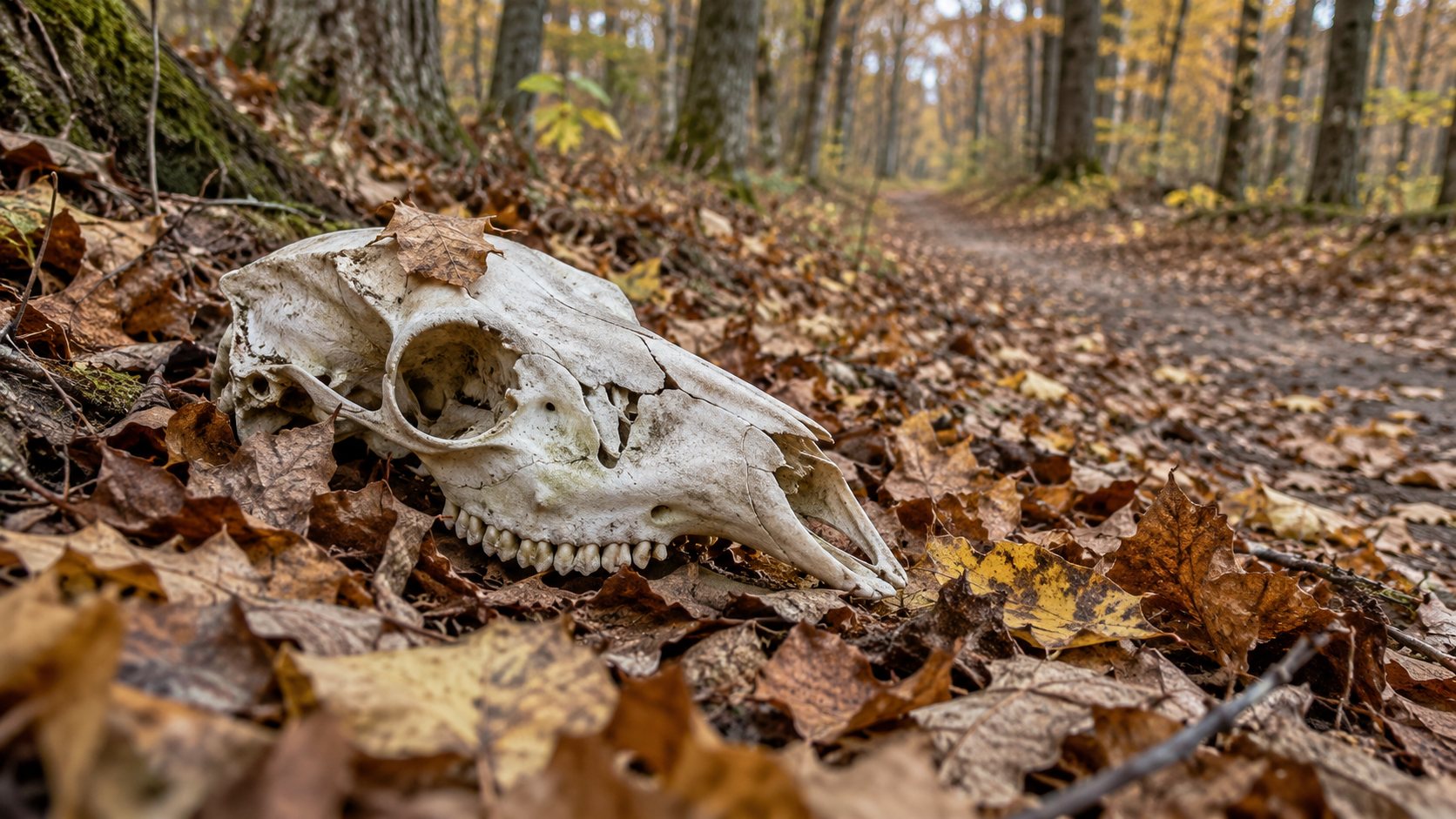
A skull on the trail, in the backyard or washed up on a beach raises two questions right away: what animal was it, and can I take it home? The first has a practical method. Four observations (the teeth, the eye sockets, the size and the overall shape) narrow most skulls to a group, and sometimes to a species. The second depends on the species, where the skull turned up, who owns the land, your state or country, and a handful of federal laws. So, the sensible order is to identify it, check the rules for your location, and only then think about cleaning or keeping it.
> Please read first. This page is general information, not legal advice. Laws differ by state and country, and they change. Nothing here can tell you that a particular skull is legal to keep. For an answer about your find, contact your state wildlife agency or the U.S. Fish and Wildlife Service.
First, make sure it is not human
Before anything else, look at the skull and ask whether it could be human. If there is any chance, leave it alone. Official guidance points the same way: do not move it, clean it, photograph it up close or display it. Leave it where it is, keep other people away, make a mental note of the location without disturbing the ground, and call local law enforcement or the coroner. Authorities can then work out whether the remains are modern, archaeological or from an animal.
Laws on this vary by place, and some are quite specific. Washington's Revised Code section 68.50.645, for example, requires a person who knows of skeletal human remains to notify the coroner and local law enforcement promptly, and it requires ground-disturbing work to stop and the area to be protected. That is one state's wording, but the instinct it describes is the right one anywhere. The National Park Service has its own protocol for possible Native American human remains, which calls for stopping activity, protecting the location and notifying the proper authorities or tribal representatives. Kentucky's transportation archaeology program also publishes guidance on human and archaeological remains.
If you are confident it is an animal skull, read on.
How people identify a skull
Museums and wildlife educators read a skull in a few consistent ways, and the Smithsonian's guide to reading a mammal skull is a good place to start.
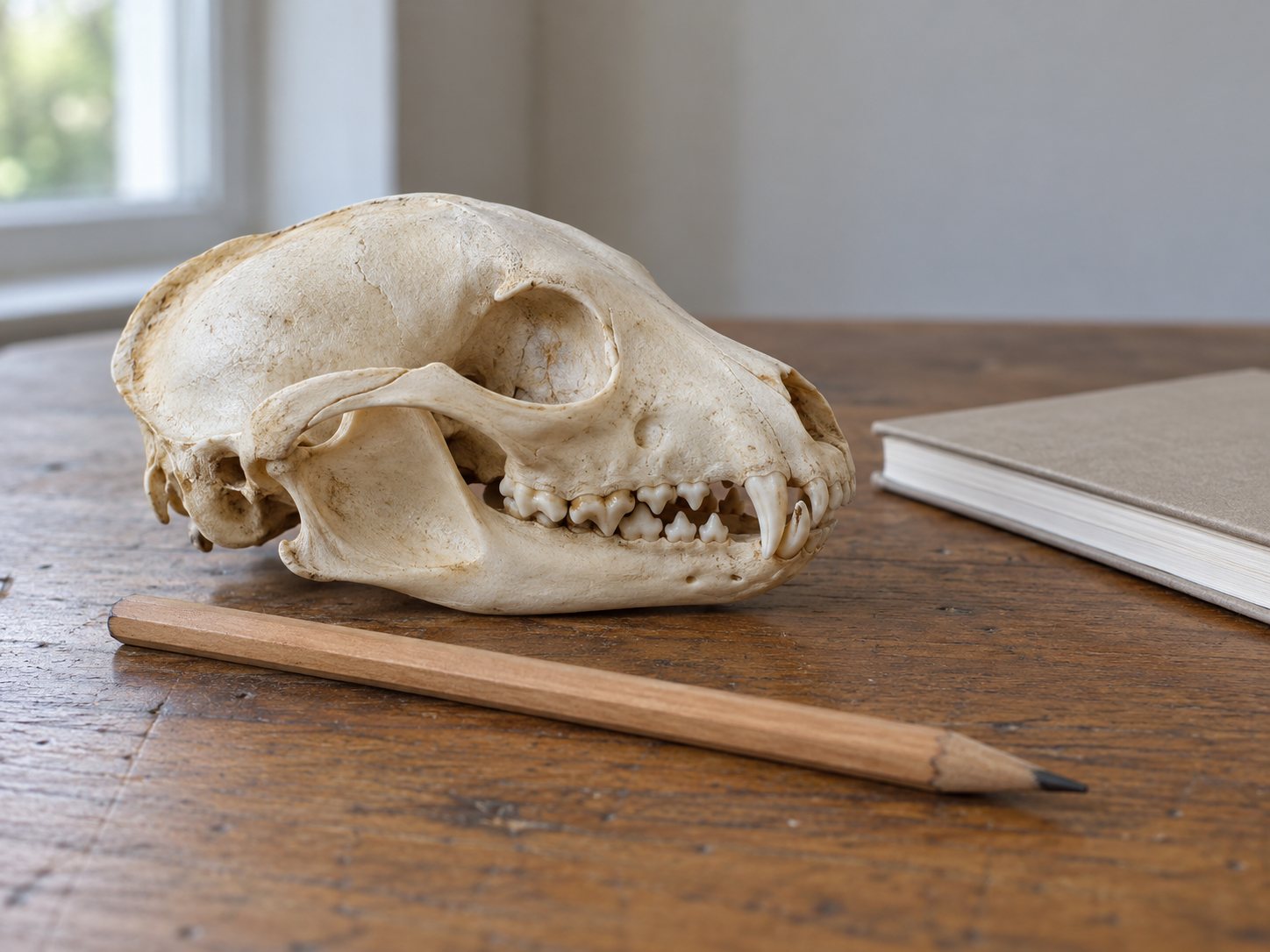
Teeth. Teeth are the best clue to diet. Rodents have large front incisors that never stop growing, no canines, and a gap behind the incisors called a diastema. Plant eaters usually have broad, flat cheek teeth for grinding, with small or missing canines. Meat eaters have long, prominent canines and narrow, sharp cheek teeth for slicing. A mix of canines and broader grinding teeth points to an omnivore. Virginia Tech's mammal guide and the National Park Service's mammal teeth page cover the patterns in more detail.
Eye sockets. Sockets that face forward generally belong to a predator, because forward-facing eyes give depth perception. Sockets on the sides of the skull generally belong to prey animals, which benefit from a wide field of view.
Size and shape. Measure from the tip of the snout to the back of the cranium. Size narrows the field, though age and damage can mislead. Then compare the snout, the jaw, the nasal opening, the cheekbone arches and the tooth count with a regional key. A long, complex nasal passage suggests an animal that relies heavily on smell. The hole at the base of the skull where the spinal cord passed, called the foramen magnum, also helps: its position can separate four-legged animals from two-legged ones.
Be ready for an honest "I'm not sure." A broken skull or a young animal's skull may only be identifiable to a broad group, and a specialist at a museum, university or wildlife agency may be needed for anything more exact. The Cornell comparative skulls activity and the National Park Service's Glacier National Park skulls trunk, a teaching kit built around ten skulls including black bear, wolverine, coyote, wolf, mountain lion, beaver, rabbit and mole, show how teachers use the same clues.
Photographs and identification apps
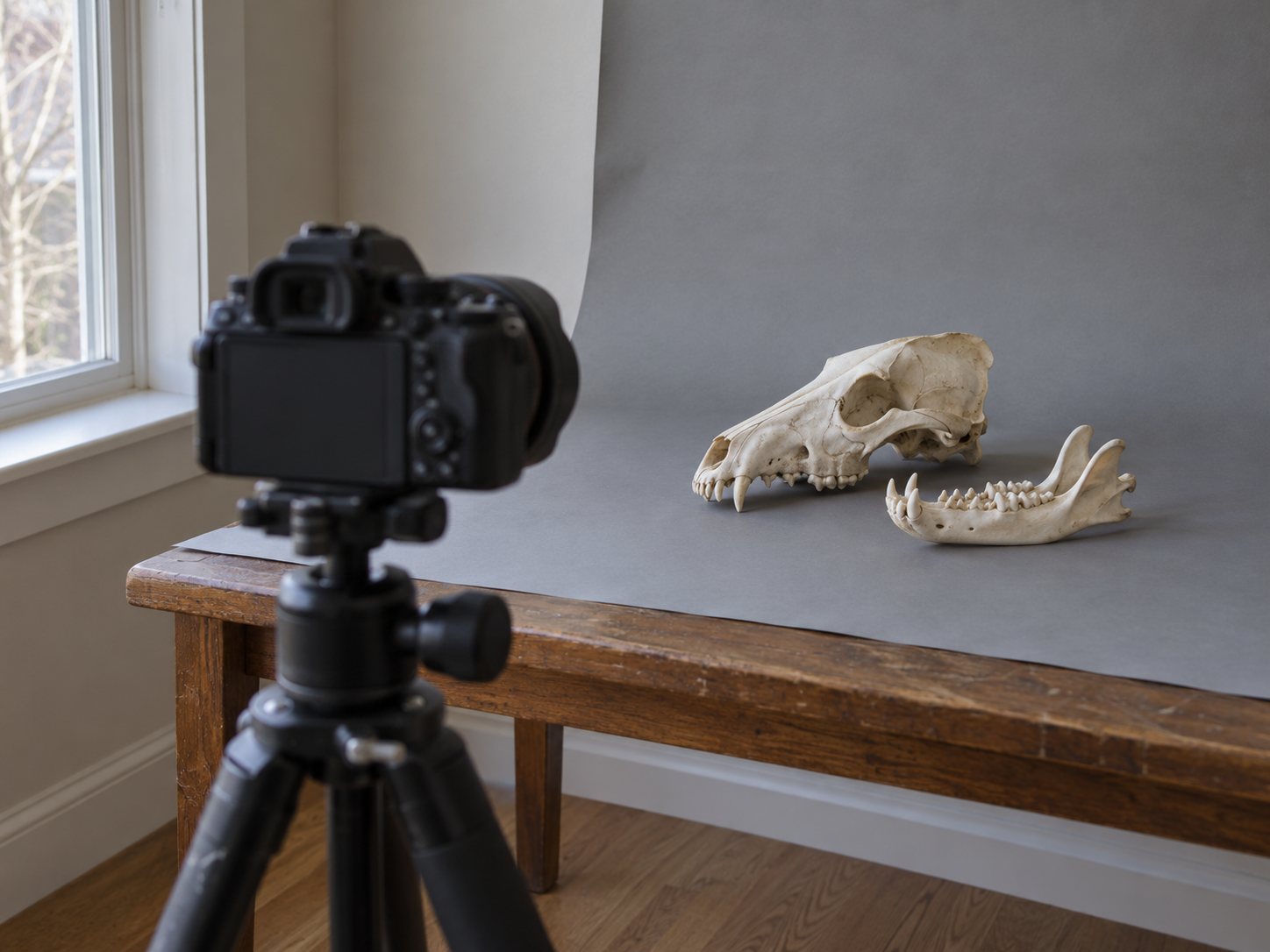
A good set of photographs lets other people help. Shoot the skull from the side, the top, the front, the underside and the rear, and show the lower jaw separately if you have it. Put a ruler or a familiar object beside it for scale, use even light, and skip the filters. Close-ups of the teeth, eye sockets, nasal opening and palate help most. Write down where and when you came across it, the habitat, the rough length and width, and whether other bones were nearby.
For an app, iNaturalist can suggest an identification from a photograph and lets naturalists confirm or refine it. A skull photo may only support a guess at the family or genus level, so treat the result as provisional. Seek by iNaturalist is another option for visual nature identification. Neither replaces a museum, university or wildlife expert. If you have any doubt that the skull is an animal's, go back to the section above before you photograph it.
Common skulls in North America
Some animals turn up again and again. These are identification clues, not guarantees.
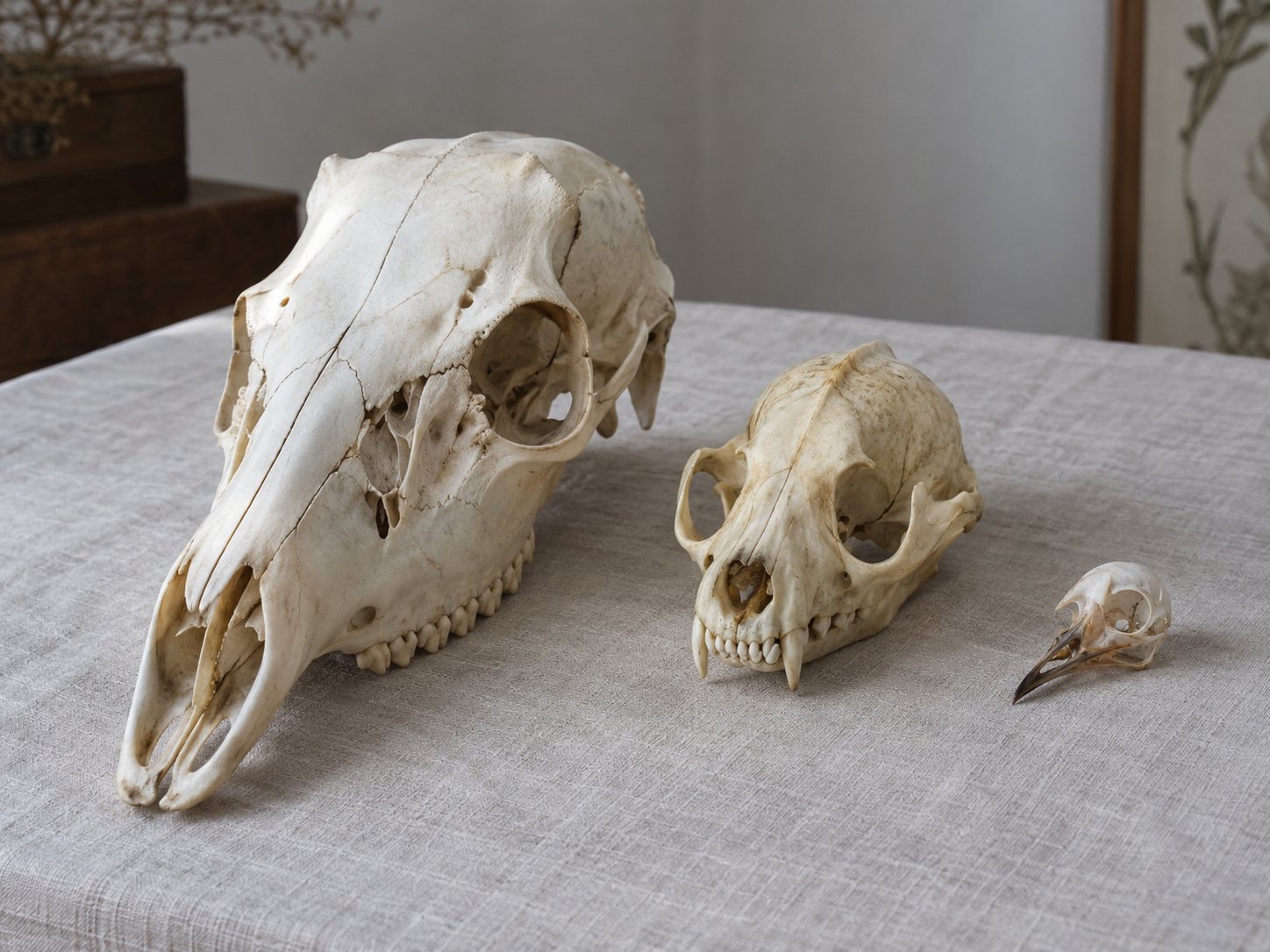
- White-tailed deer: a long skull with no upper incisors, a dental pad instead, and broad cheek teeth. Deer skulls are usually much longer than raccoon or opossum skulls.
- Raccoon: a medium-sized omnivore skull with a pointed snout, obvious canines and relatively broad cheek teeth.
- Opossum: a relatively long, narrow skull with many teeth.
- Fox and coyote: long, narrow canid skulls with big canines and slicing cheek teeth. Coyotes are generally larger and sturdier than foxes. Domestic dogs can look similar, so location, size, tooth wear and overall proportions matter.
- Squirrels and other rodents: large front incisors, no canines and a clear gap before the cheek teeth.
- Cats: a short muzzle, large canines and sharply specialized cheek teeth. Domestic and wild cats can be hard to tell apart from a skull alone.
- Birds: lightweight skulls with a beak instead of teeth. Beak shape can hint at diet, but most native North American bird parts are legally protected, which matters in the next section.
The Virginia Department of Conservation and Recreation compares deer, raccoon, opossum, fox and beaver skulls side by side.
Skull identification checklist
Tap a card to bring it forward.
- Size: Measure the length from snout to back of cranium
- Teeth: Note incisors, canines, premolars, molars and the tooth count
- Eye sockets: Forward-facing or side-facing
- Snout: Short, medium or long
- Jaw: Shape, depth and tooth gaps
- Context: Location, habitat, roadkill or natural death
- Legal status: State, federal, protected-species and land-manager rules
Tap or hover a row to highlight it.
| Feature | What it suggests |
|---|---|
| FeatureEye sockets | What it suggestsDepth perception (forward-facing) versus wider vision (side-facing) |
| FeatureNasal cavity | What it suggestsReliance on smell |
| FeatureCanines | What it suggestsCapturing and tearing prey |
| FeatureSharp, narrow molars | What it suggestsMeat shredding |
| FeatureBroad, flat molars | What it suggestsPlant grinding |
| FeatureEnlarged incisors or a diastema | What it suggestsRodent or herbivore |
| FeatureForamen magnum position | What it suggestsFour-legged versus two-legged locomotion |
Can you keep it? The federal rules
The plain answer is that you cannot assume you can. Whether a skull may be kept, moved, sold or shipped depends on the species and its origin, and several federal laws are involved. The U.S. Fish and Wildlife Service is the agency to ask about most of them, and NOAA Fisheries covers marine mammals.
The Migratory Bird Treaty Act, passed in 1918, generally prohibits taking, possessing, selling, buying, transporting, importing or exporting protected migratory birds and their parts without authorization. The Fish and Wildlife Service says that native North American bird parts, including bones, generally require a permit, with limited exceptions for legally taken migratory game birds and certain Indigenous uses. In practical terms, a native bird skull can be illegal to keep even if the bird was already dead when you found it. See the agency's overview of the law for the details.
The Bald and Golden Eagle Protection Act, first enacted in 1940, covers bald and golden eagles and their parts, skulls included. Permits exist, but only for specific purposes.
The Endangered Species Act, from 1973, prohibits taking listed endangered wildlife and restricts possessing, selling or shipping endangered wildlife taken in violation of the Act. The Marine Mammal Protection Act, from 1972, protects marine mammals and their parts. NOAA Fisheries describes a narrow exception for clean bones, teeth or ivory from certain non-endangered marine mammals picked up on beaches, but the parts must be registered and cannot be sold. NOAA also notes that an old bone is not necessarily a fossil, so age alone does not settle the question.
Federal wildlife laws and one current state rule
Tap or hover a step to follow the order.
1918
The Migratory Bird Treaty Act protects covered migratory birds and their parts
1940
The Bald Eagle Protection Act is enacted
1972
The Marine Mammal Protection Act establishes a moratorium on taking and importing marine mammals and their products
1973
The Endangered Species Act creates the modern federal approach to endangered and threatened species
2025
Oregon's roadkill permit guidance for deer and elk requires a salvage permit within 24 hours and surrender of the head and antlers within five business days; confirm current rules
How state rules differ
States can be stricter than the federal baseline, and they differ from one another a lot. Do not assume that a naturally found skull, a deer head, an antlered skull or an animal killed on a road is fine to keep. These examples show the range, and they are examples, not a list for your state.
- Wisconsin: the Department of Natural Resources says people may collect clean skulls and bones of deer, elk and unprotected wild animals when little or no flesh remains and there is no evidence of illegal killing.
- New Jersey: Fish and Wildlife prohibits possessing antlers from roadkill or naturally deceased deer. Antlers connected to a legally hunted deer may be kept with the required confirmation or seal.
- Illinois: a person can claim a deer killed in a vehicle collision, but possession has to be reported within 24 hours. Other found-dead deer parts need permission from a conservation police officer before they are transported.
- Oregon: roadkill salvage permits exist for deer and elk struck by vehicles. The permit process must be completed within 24 hours, and the head and antlers must be surrendered to the wildlife agency within five business days.
- North Carolina: the Wildlife Resources Commission requires permission for deer, turkey, bear and elk found dead or accidentally killed on a road, and migratory birds and protected species need the proper federal or state permits.
- Utah: the Division of Wildlife Resources publishes its own deadhead guidance.
Before moving a skull, check with the wildlife agency for your state and with the manager of the land where it lies. Land managers can have their own rules, so ask them about the exact property. Keep a record of the location, your photographs and any permit or agency correspondence.
Cleaning and displaying a skull, once you know it is yours to handle
Only get to this step after the legal check and after confirming the skull is not human. Handling dead animals carries health risks. The CDC describes disease concerns from dead animals and animal tissue, including brucellosis and, in areas where chronic wasting disease occurs, exposure concerns involving deer, elk and moose. Do not handle a fresh, decaying or visibly diseased carcass. If handling is allowed, wear disposable gloves, eye protection and protective clothing, keep the material away from food and pets, wash your hands afterward, and clean tools and surfaces. Avoid bare hands whenever there is tissue, blood, droppings or insects on the skull.
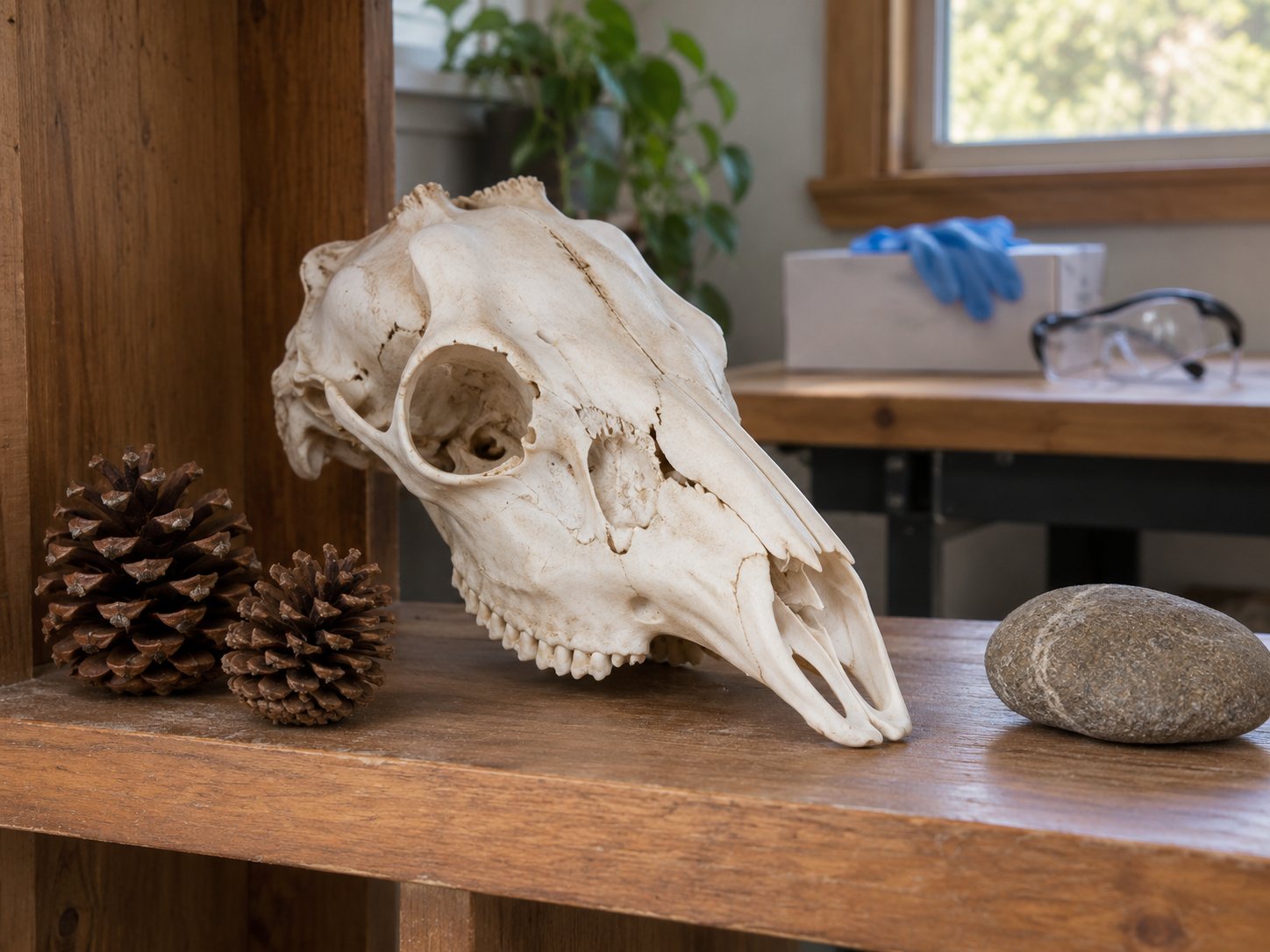
Museums clean skulls in a few ways. The Smithsonian's osteology preparation lab uses dermestid beetles, composting and maceration, which is controlled soaking that lets soft tissue break down. Dermestid beetles eat dried tissue and usually leave delicate bones and teeth intact; the Smithsonian describes the beetle-cleaning tradition as dating to the late 1800s, and the Bell Museum keeps its own colony. After the tissue is gone comes careful degreasing and washing. The Alaska Department of Fish and Game recommends gentle simmering rather than hard boiling, at about 160 degrees Fahrenheit, because too much heat can crack teeth and soften bone. The University of Arizona Cooperative Extension also publishes a guide to cleaning and preserving skulls.
For whitening, museum guidance points to low-strength hydrogen peroxide after cleaning and degreasing, as in University College London's museum notes. Skip household chlorine bleach. The Bell Museum warns that it can keep damaging bone, and a National Park Service conservation resource explains that sodium hypochlorite breaks down collagen and can eventually turn bone to powder. Avoid acids and caustic chemicals unless you are trained and equipped.
Let the skull dry completely before you display it, and keep any loose teeth so they can be reattached.
Skull preparation stages from agency and museum guidance
Tap or hover a step to follow the order.
Legal check
Confirm species and possession rules before processing
Initial handling
Wear gloves and keep remains away from food and pets
Soft-tissue removal
Maceration, composting or dermestid beetles
Cleaning
Controlled simmering and repeated rinsing, as Alaska guidance describes
Whitening
Avoid liquid chlorine bleach; use low-strength hydrogen peroxide after degreasing
Display
Dry completely and keep loose teeth for reattachment
Selling or shipping a skull
Do not sell or ship a skull until the species, origin, state law, federal status and destination rules are all confirmed. Every federal law above can apply, and the Lacey Act adds another layer. It treats wildlife as including dead wild animals and their parts, and it prohibits certain interstate and foreign transactions involving wildlife taken, possessed, transported or sold in violation of an underlying law. False records, labels or species identifications are also prohibited. The statute's text is online at 16 U.S.C. section 3372.
International shipments can require U.S. Fish and Wildlife Service declarations, permits, CITES documents and approval from the destination country. A post office or carrier accepting a box does not make the shipment lawful.
Found-skull quiz
Answer every question to check.
Quick answers about found skulls
Is there an app to identify animal skulls?
Yes, iNaturalist can suggest an identification from a photograph and lets naturalists confirm or refine it. Seek by iNaturalist is another option. A skull photo may only support a family or genus-level guess, so use the answer as a starting point and record the location, rough size and several views.
How do you identify an animal's skull?
Start with the teeth, the eye-socket position, the size and the shape of the snout and jaw. Sharp canines and narrow, slicing cheek teeth suggest a meat eater, and broad, flat molars suggest a plant eater. Location, habitat and nearby bones can narrow things further.
How can I identify a skull from a photo?
Take clear photographs from several angles with a ruler for scale, including the teeth, eye sockets, nasal opening and the back of the skull. Upload them to iNaturalist or an identification forum and ask for the narrowest answer the evidence supports. A photo may separate a carnivore from a plant eater, but it cannot always settle a species.
Can I keep an animal skull I found?
You cannot assume you can, and this page cannot say that any specific find is legal to keep. The answer depends on the species, the place, the landowner, state or country rules and federal laws. Contact your state wildlife agency or the U.S. Fish and Wildlife Service before you move or keep it.
What should I do if the skull might be human?
Do not move it, clean it or photograph it. Leave the area undisturbed and contact local law enforcement or the coroner.
Why not clean a skull with household bleach?
Museum and National Park Service guidance warns that chlorine bleach can break down collagen and eventually leave bone powdery. Low-strength hydrogen peroxide after degreasing is the method museum notes describe for whitening.
Where to go next
If the skull's anatomy raised new questions, the story of how many bones are in the human body goes through the parts of a skull, including the teeth, the jaw and why a skull seems to have no nose. For what skulls have stood for in art and ritual, start with skull symbolism.
Our Vet Tech skull tee is a shirt for people who work with animals for a living.