No. 024
What Does a Skull Symbolize? Meanings by People, Place and Period
A skull means what the people using it meant by it, and those people have meant very different things. In European Christian art it was a reminder that life is short. In Mexico's Día de Muertos it belongs to the remembrance of relatives who have died. In Tibetan Buddhist ritual it points to impermanence. On a chemical label it signals acute toxicity, and on a navy squadron's badge it stands for the unit. So, if the answers you've read online contradict each other, they may each be right about a different community. The tour below goes by people and places, with dates attached, so you can tell which meaning belongs to the skull in front of you.
Europe: the skull that reminds you of death
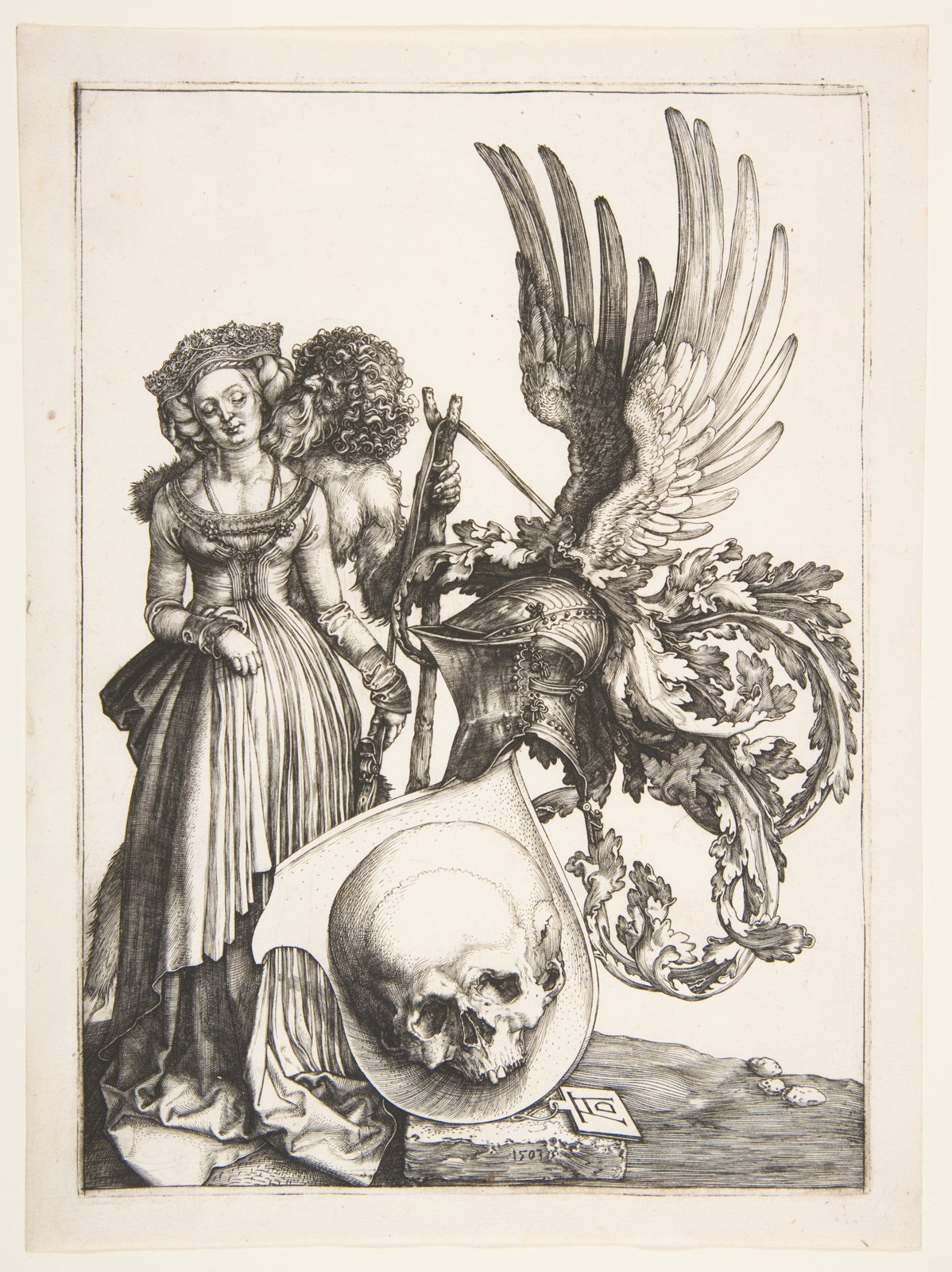
In late medieval and early modern Christian Europe, a skull was a *memento mori*, a reminder of death. It turned up on devotional objects, rosaries, prints, jewelry and portraits, and the message was gentle but firm: earthly life is temporary. The Metropolitan Museum of Art holds a rosary bead from northern France or the southern Netherlands that joins two lovers with a death's head, which makes death a constant companion to earthly love. The Met also describes Albrecht Dürer's 1503 engraving *Coat of Arms with a Skull* as showing the skull as a stand-in for Death hidden inside a wedding-related scene. The British Museum records memento mori jewelry and objects with skulls, hourglasses, decomposing bodies and skeletons carved in ivory and gold.
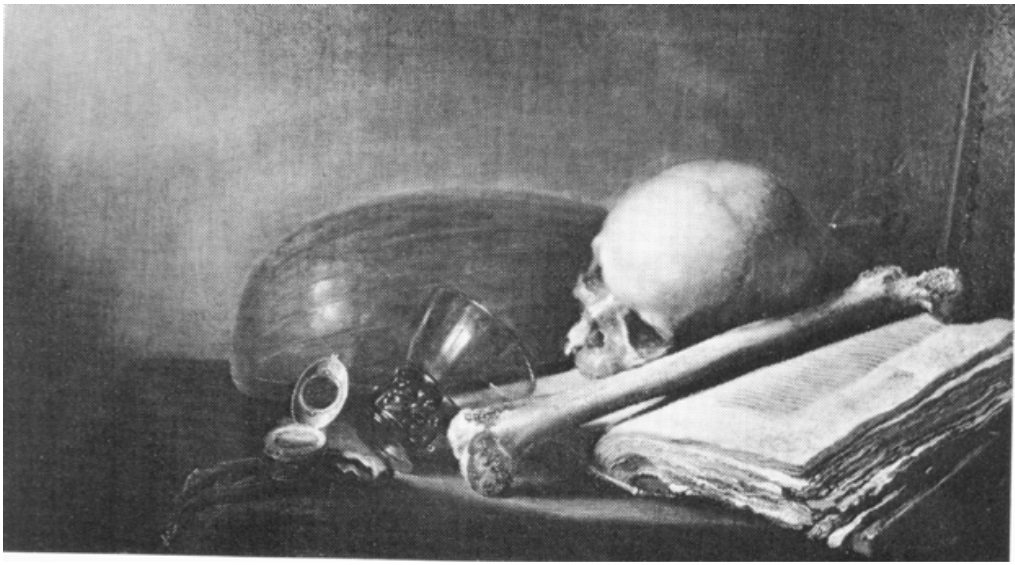
In the seventeenth century, Dutch and Flemish painters turned the idea into a whole genre of still life called *vanitas*. The Met identifies Jacques de Gheyn II's *Vanitas Still Life* of 1603 and Pieter Claesz's *Still Life with a Skull and a Writing Quill* of 1628 as moralizing paintings of this kind. The skull rarely sat alone. An hourglass suggested passing time, and a candle suggested life or its extinguishing. Books, musical instruments, coins, flowers and luxury goods stood for learning, pleasure, beauty and possessions, and the skull among them said that none of it defeats mortality.
Why a skull? It is the durable part of a person, the structure that remains after the soft tissue is gone, so it makes the point at a glance. The Science Museum Group describes a nineteenth-century European memento mori object with a skull and crossed bones as a reminder of the dead and of the fragility of life. If you want the full story of the tradition, what memento mori means and vanitas paintings each have their own guide, and the Christian side of it, from Golgotha to saints painted with skulls, is in skulls in Christianity.
Mexico: remembrance, food and a joke at death's expense
In Mexico, and especially in Día de Muertos traditions, the skull belongs to remembrance. UNESCO describes the Indigenous festivity dedicated to the dead as a commemoration of the return of deceased relatives and loved ones, who are understood to come back to Earth for a short time. Skulls and skeletons appear in ofrendas, in *calaveritas* and in the literary verses that honor relatives who have died, and they keep up a relationship between the living and the dead.
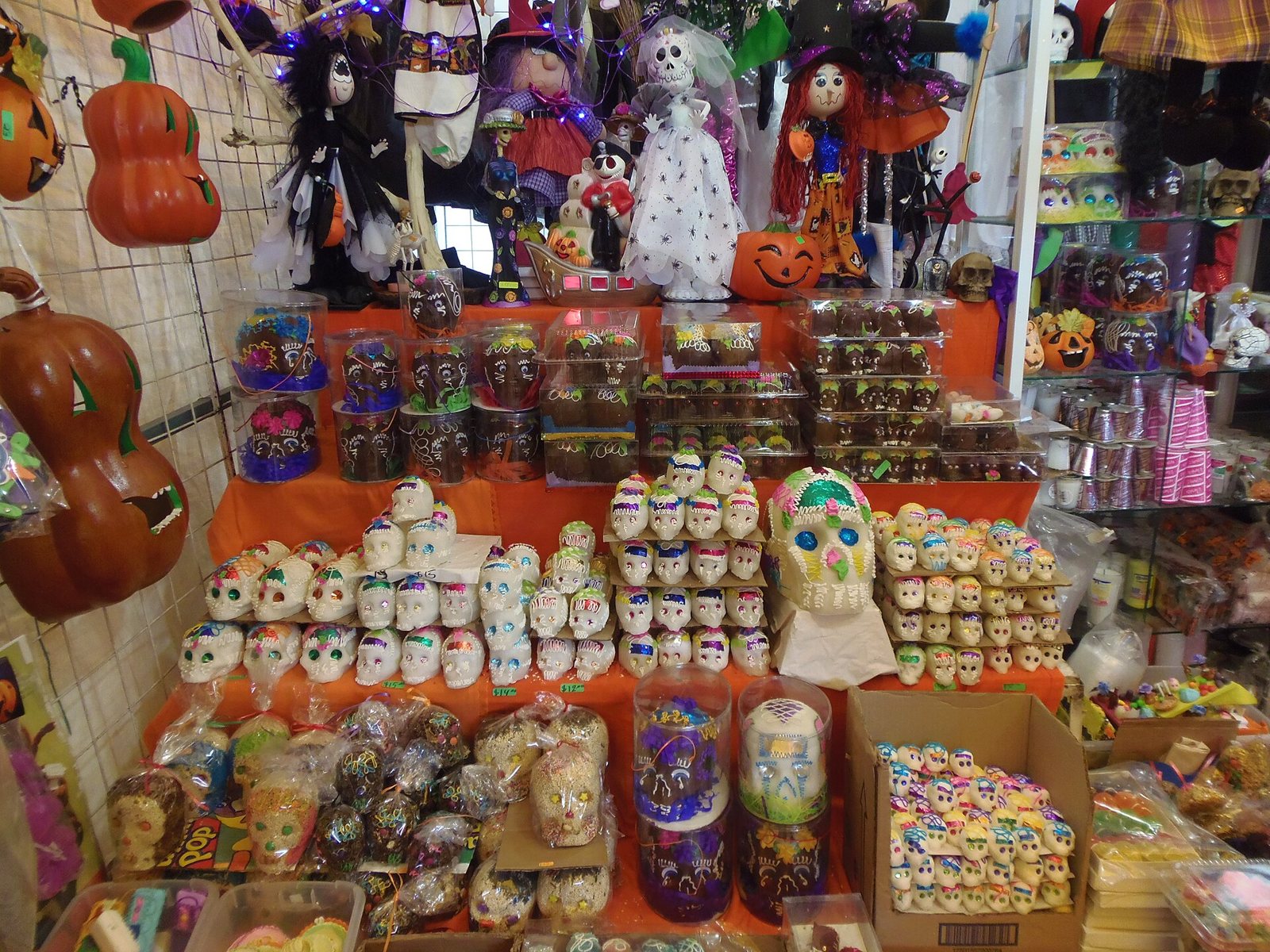
*Calaveritas* can be colorful, edible and funny. INAH material describes the practice of joking about death, with nicknames such as *la calaca*, *la huesuda* and *la flaca*, and of bringing the dead into communal life through food and offerings. The same INAH publication describes Mesoamerican offerings, Mictlán and funerary objects, and a view of death and life as a cycle rather than a simple final opposition, a tradition that kept changing after Spanish colonization. It is a living practice with its own days, foods and rules, and it varies from family to family. For the details, see the guides to Día de Muertos, sugar skulls and the meaning of the calavera.
Tibet: the kapala, a ritual skull cup
In Tibetan Vajrayana Buddhism, in Tibet and the Himalayan regions, a *kapala* is a skull cup used in tantric ritual. It is a sacred object made from a human skull, and it carries meanings that have nothing to do with horror. LACMA identifies its Tibetan skull cup as a kapala, symbolic of the transitory nature of existence and used in Vajrayana meditation, in a practice that stands for destroying negativity and purification. The Rubin Museum of Himalayan Art explains the skull in a similar way, as a sign of the impermanent, illusory and empty nature of things, and ties skull cups to deities and Buddhist masters such as Milarepa and Padmasambhava. The British Museum records Tibetan human-skull kapalas from the nineteenth century.
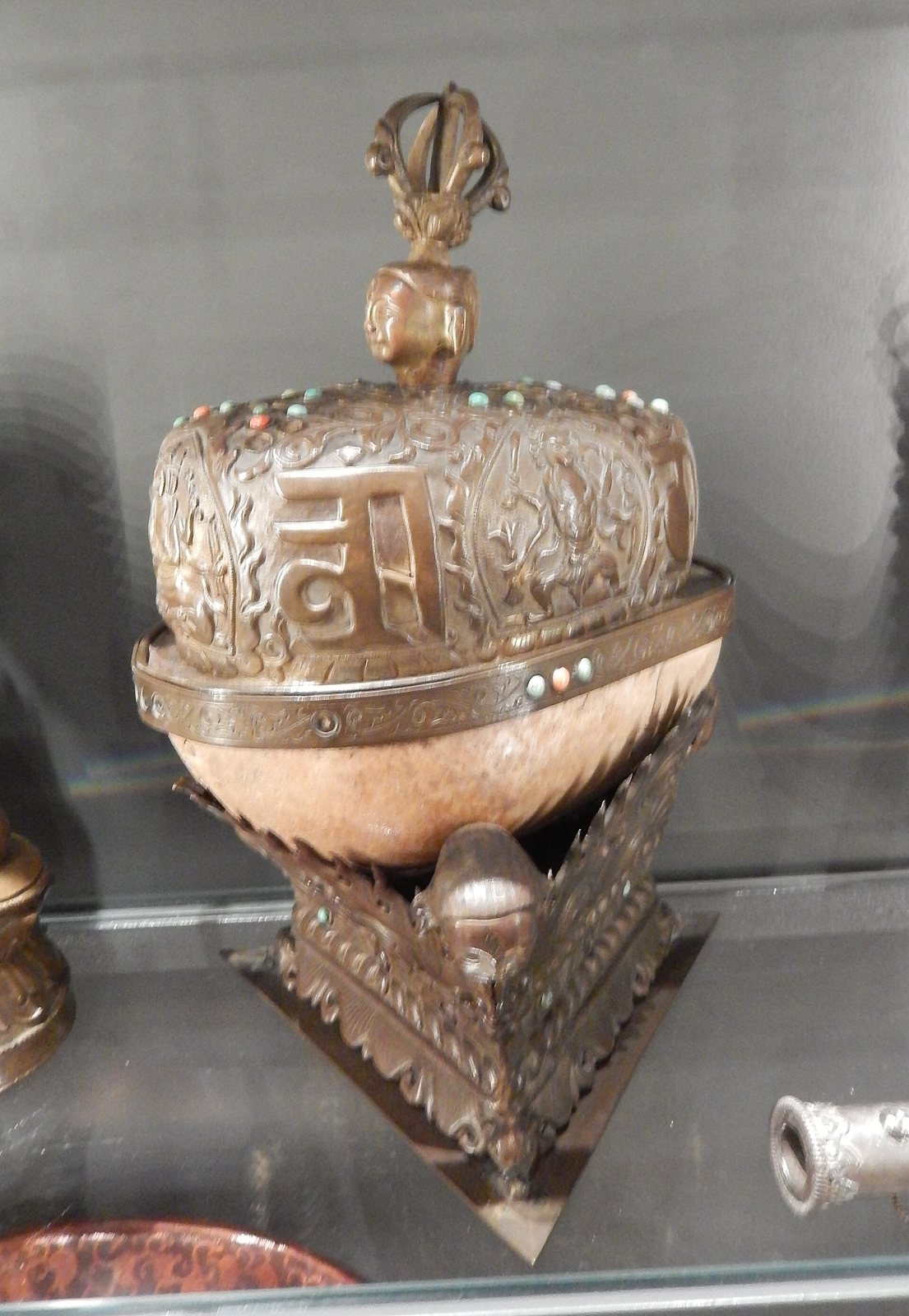
A kapala belongs to a religious practice and to the people who keep it, so it isn't a prop for a gothic costume. The guide to the kapala skull cup goes further.
A warning sign: poison, hazards and one very confusing label
The skull on a bottle of poison has a documented history, and it is more recent than most people expect. New York State passed a law in 1829 requiring containers of poisonous substances to be labeled, and the New York Academy of Medicine says skull-and-crossbones poison labels began appearing around the 1850s.
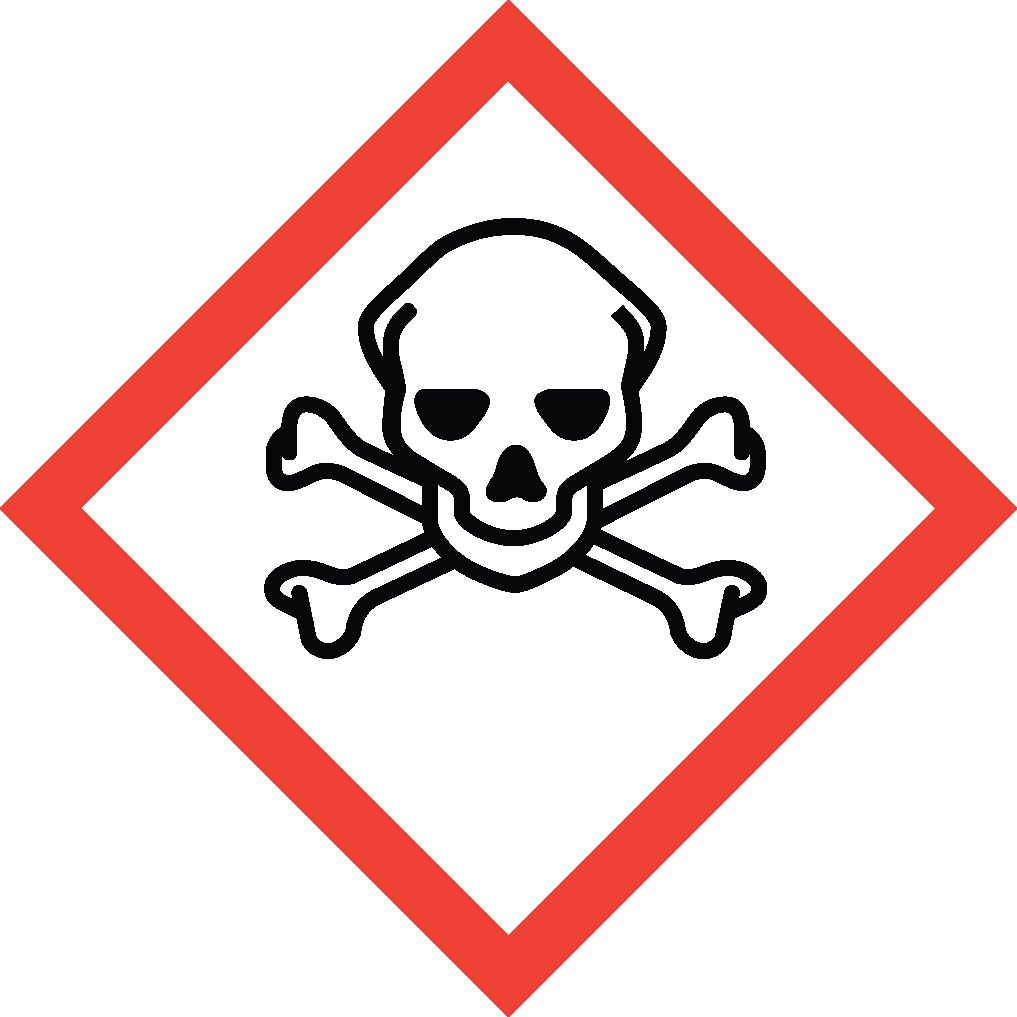
The modern chemical version comes from the United Nations Globally Harmonized System of Classification and Labelling of Chemicals, or GHS. Its first edition was adopted in December 2002 and published in 2003 by the United Nations Economic Commission for Europe. The skull-and-crossbones pictogram marks acute toxicity, meaning substances that may be fatal or toxic if swallowed, inhaled or absorbed through the skin. In the United States, OSHA's Hazard Communication Standard requires a black symbol on a white background inside a red diamond frame. ANSI Z535 is the broader US family of product-safety sign and label standards. The symbol doesn't mean every chemical exposure is fatal. It names a defined toxicity class, and the signal word and hazard statement on the label say the rest.
Context changes the reading, even for the same drawing. Cooper Hewitt describes a 1972 study in which three-year-olds shouted "PIRATES!" when shown a bare skull and crossbones, and "POISON!" when the same symbol sat inside a bottle outline.
Pirates, soldiers and secret societies
The pirate flag is the best known use, and the real flags varied more than one black banner. The National Maritime Museum records the French pirate Emanuel Wynn as the first suspected user of the "Death Head" flag, in 1700, and says the familiar white skull and crossbones became common among pirate flags in the 1720s. If that's the thread you want to pull, the Jolly Roger story follows the real flags, and the guide to the skull and crossbones follows the symbol through gravestones, labels and badges.
Armed forces borrowed the image too. The US Navy fighter squadron VF-17 adopted the Skull and Crossbones identity in January 1943, and the squadron became known as the Jolly Rogers. VF-84 took up the insignia in 1959, and VFA-103 adopted the Jolly Rogers name and insignia on October 1, 1995. In that setting the skull spoke of combat reputation and of continuity with a famous unit. In September 1967, a Seabee unit nicknamed the "Ghost Battalion" flew a black flag with a white skull and crossbones during construction work in Quảng Trị, Vietnam, according to the Navy.
Fraternal groups used it for another purpose. The British Museum records a Nottingham Order of Oddfellows badge with an hourglass, a book, a skull and crossbones, a lamb, a lion, clasped hands and a heart, so there the skull sits inside a larger vocabulary of mortality, knowledge and fellowship. Yale's Skull and Bones society started in New Haven, Connecticut, in 1832, and the Taft Museum names Alphonso Taft as a co-founder.
One use needs plain words. The Nazi SS used the *Totenkopf*, or death's-head. The Imperial War Museums identifies the skull collar badge of an Auschwitz SS guard as marking membership in the *Totenkopfverbände*, the SS death's-head units responsible for the camp system and the implementation of mass murder. Neo-Nazi and white-supremacist groups have reused that imagery. A skull that resembles the SS emblem, or appears beside Nazi symbols or extremist slogans, means something different from a decorative skull, a squadron emblem or a Día de Muertos calavera. The skull alone doesn't settle it, and neither does a naval unit's or a fraternity's use of the crossbones. The full design, the text and the organization behind it do.
Bikers, punk, metal, goth and streetwear
Modern subcultures use skulls as flexible markers of identity, not as a fixed code. A 2016 article in a UNAM journal by César Rebolledo González drew on testimonies from heavy-metal fans in Mexico City and described skull and bone imagery as intimidating, provocative and tied to a public stance toward death, an "identity flag" that unites insiders and sets them apart from the mainstream. Scholarship on punk treats clothing and graphics as part of resistance and opposition to respectable culture, and a skull can join that visual language without carrying one meaning for every scene, band or wearer. Karl and Beverley Spracklen describe goth as growing out of Britain's late-1970s and early-1980s post-punk scene, and skulls there can express fascination with death, romance, melancholy, horror, religious imagery or theatrical self-presentation. Goth can't be reduced to skulls.
For bikers, the meaning depends on the rider and the club. A skull in motorcycle clothing, club patches, jewelry or custom graphics may stand for mortality, courage, danger, remembrance, defiance, club identity or plain style, so the best way to learn what a particular one means is to ask the person wearing it. In streetwear, skulls are often cut loose from older religious, military or subcultural settings and used as a sign of toughness, rebellion or visual intensity. The meaning there belongs to the brand, the designer and the wearer, and a shirt doesn't prove that an older cultural meaning came along with the print. Rings and tattoos work the same way, and the guides to skull rings and skull tattoo meanings take them one design at a time.
The good things a skull can say
Plenty of skull meanings are warm, and each belongs to a particular community. Remembrance is the heart of Día de Muertos. Celebration shows in the colorful, edible calaveritas. Protection and purification belong to Tibetan Vajrayana ritual. Courage and defiance belong to heavy-metal and punk scenes, where skull imagery can confront fear and affirm a group. Continuity belongs to units and societies that carry a skull from one generation to the next, as the Jolly Rogers have.
Then there is equality in death. European memento mori traditions use the skull to show that death reaches people whatever their beauty, wealth, rank or learning. That phrase is an interpretation of the tradition, not a doctrine every historical community held.
The darker reputation has its own history. Skulls became linked with evil in some modern Western settings because the image was tied to death, piracy, poison, violent military insignia and frightening supernatural imagery. The link is historical and contextual. Other traditions use the same image for remembrance, meditation or purification, and a skull alone doesn't show ill intent or bad luck. The same goes for the meanings printed on tattoo, jewelry and merchandise pages that promise protection, wisdom or rebellion. Those are the maker's or the wearer's meanings unless they're tied to a community, place and period, so it helps to ask which community, place, period and surrounding design give a particular skull its meaning.
If the vanitas tradition is the one that speaks to you, our Memento Mori skull tee borrows from it, with a vanitas-style engraving of a skull beside an hourglass and an olive branch, MEMENTO MORI above and USE THE DAY WELL below.
Tap or hover a row to highlight it.
| Skull image or object | Place and period | Meaning |
|---|---|---|
| Skull image or objectSkull with lovers on a rosary bead | Place and periodNorthern France or southern Netherlands, late medieval or early modern | MeaningMemento mori and the transience of life |
| Skull image or objectSkull in a Dutch still life | Place and periodNetherlands, seventeenth century | MeaningVanitas, mortality and the brevity of worldly pleasure |
| Skull image or objectCalaverita and ofrenda | Place and periodMexico, documented Indigenous and Catholic traditions, present-day Día de Muertos | MeaningRemembrance, return of the dead and communal celebration |
| Skull image or objectKapala | Place and periodTibet and Himalayan Vajrayana traditions | MeaningImpermanence, ritual offering and purification |
| Skull image or objectGHS06 skull and crossbones | Place and periodInternational chemical-safety system, 2002 onward | MeaningAcute toxicity |
| Skull image or objectJolly Rogers insignia | Place and periodUS naval aviation, 1943 onward | MeaningUnit identity, combat reputation and continuity |
| Skull image or objectOddfellows skull badge | Place and periodNottingham, nineteenth-century fraternal setting | MeaningMortality, fellowship and moral symbolism |
Skulls on the calendar
Tap or hover a step to follow the order.
1503
Dürer engraves Coat of Arms with a Skull
1603
Jacques de Gheyn II paints Vanitas Still Life
1628
Pieter Claesz paints Still Life with a Skull and a Writing Quill
1700
Emanuel Wynn's "Death Head" flag
1829
New York requires poisonous substances to be labeled
1832
Yale's Skull and Bones society starts in New Haven
About the 1850s
Skull-and-crossbones poison labels appear
January 1943
VF-17 adopts the Skull and Crossbones identity
September 1967
The Seabee "Ghost Battalion" flies a skull-and-crossbones flag in Quảng Trị
December 2002
The first GHS edition is adopted
2003
The first GHS edition is published
2016
UNAM publishes the study of skull imagery and heavy-metal identity in Mexico City
Quick answers
These short answers cover the questions people ask most.
What do skulls symbolize spiritually?
A skull has no single spiritual meaning, because it belongs to whichever tradition is using it. In Tibetan Buddhist tantric practice a skull cup points to impermanence, illusion and the emptiness of a permanent self. In Mexican Día de Muertos traditions calaveras are part of remembering relatives who have died and welcoming their return. In European Christian vanitas art a skull urged meditation on mortality and the brevity of earthly life.
What is the symbolic meaning of a skull?
The symbolic meaning depends on who uses the skull, where and when. A skull in a seventeenth-century Dutch vanitas painting signified mortality and the fragility of life, and a skull and crossbones on an American poison label signified lethal danger by the mid-nineteenth century. On an eighteenth-century pirate flag it communicated threat, and in Día de Muertos it belongs to remembering the dead. Modern meanings like rebellion, resilience or personal identity can describe one person's use without being a universal historical meaning.
Why is a skull a symbol of death?
A skull is tied to death because it is the lasting bone structure left after the body's soft tissue has gone. In European memento mori and vanitas art the visible skull made mortality and the shortness of life easy to recognize at once, and the Science Museum Group describes a skull and crossed bones as a reminder of the dead and of the fragility of life. That association is documented in particular artistic and religious settings, and other communities read the image differently.
Why are skulls associated with evil?
In some modern Western settings, skulls are linked with evil because the image became tied to death, piracy, poison, violent military insignia and frightening supernatural imagery. The National Maritime Museum records skull flags used by some pirates in the early eighteenth century, and the New York Academy of Medicine documents the later link with poison. The connection is historical, not built in, since other traditions use skulls for remembrance, meditation or purification.
Where does the word "skull" come from?
The English noun "skull" appears around 1200 as the Middle English *sculle*. It probably comes from the Old Norse *skalli*, meaning a bald head or skull, and may be related to the Old English *scealu*, meaning husk or shell, though the exact origin is uncertain, according to Etymonline.
Test your skull symbolism
Answer every question to check.
Where to go next
The skull and crossbones travels the most, so its full story, from gravestones to chemical labels, is a good next stop. For the tradition where the skull is a loved one's welcome home, start with Día de Muertos, and for the Christian use of the image, read skulls in Christianity.