

No. 114
Golgotha: What It Means and Why It Was Called the Place of the Skull
Golgotha means "skull" or "place of the skull". It is the Greek form of an Aramaic name, and Calvary, from the Latin calvaria, means the same thing (Encyclopedia of the Bible). In the Gospels it is the place near Jerusalem where Jesus was crucified. The Gospels translate the name, but they never say why the place was called the skull. Later explanations point to a rock shaped like a skull, a place of executions, or the Christian tradition that Adam's skull lay buried there. Today the traditional site is inside the Church of the Holy Sepulchre in Jerusalem's Old City, while the Garden Tomb, north of the Old City, is a nineteenth-century Protestant proposal.
So, the word itself is settled. The reason behind it, and the exact place on the ground, are questions people have been asking for close to two thousand years, and the answers come from scripture, from church tradition, from archaeologists and from painters, each in its own voice.
What the word means
The Aramaic name behind Golgotha is usually reconstructed as gulgaltā, meaning "skull" or "place of the skull". It is related to the Hebrew gulgōlet, which means "skull" or "head" (International Standard Bible Encyclopedia). When the Gospel writers wrote in Greek, they carried the Aramaic name over in Greek letters, which is how we get "Golgotha".
Luke took a different route and translated the name into Greek as kranion, the word that gives English "cranium". Centuries later, when Jerome made his Latin translation of the Bible, the Vulgate, he used calvaria, Latin for "skull", and that is where English "Calvary" comes from (Encyclopedia of the Bible). The lexicographers Louw and Nida describe Golgotha simply as the Aramaic name of an execution hill near Jerusalem (Precept Austin, citing Louw and Nida).
So, if you have wondered whether Golgotha and Calvary are two places, they are one place with two names, one carried through Aramaic and Greek, the other through Latin.
Tap or hover a row to highlight it.
| Language | Word | Meaning |
|---|---|---|
| LanguageAramaic | Wordgulgaltā (usual reconstruction) | MeaningSkull, or place of the skull |
| LanguageHebrew | Wordgulgōlet | MeaningSkull, or head |
| LanguageGreek (Luke) | Wordkranion | MeaningSkull, the source of "cranium" |
| LanguageLatin (Jerome's Vulgate) | Wordcalvaria | MeaningSkull, the source of "Calvary" |
Where the Gospels name it
All four Gospels name the place. In the New International Version, the verses read:
- Matthew 27:33: "They came to a place called Golgotha (which means 'the place of the skull')."
- Mark 15:22: "They brought Jesus to the place called Golgotha (which means 'the place of the skull')."
- Luke 23:33: "When they came to the place called the Skull, they crucified him there, along with the criminals, one on his right, the other on his left."
- John 19:17: "Carrying his own cross, he went out to the place of the Skull (which in Aramaic is called Golgotha)."
(Matthew 27:33, Mark 15:22, Luke 23:33 and John 19:17, NIV)
Matthew and Mark keep the Aramaic name and translate it for their readers. Luke gives only the Greek, "the Skull". John gives both, the description first and then the Aramaic name. None of them stops to explain where the name came from.
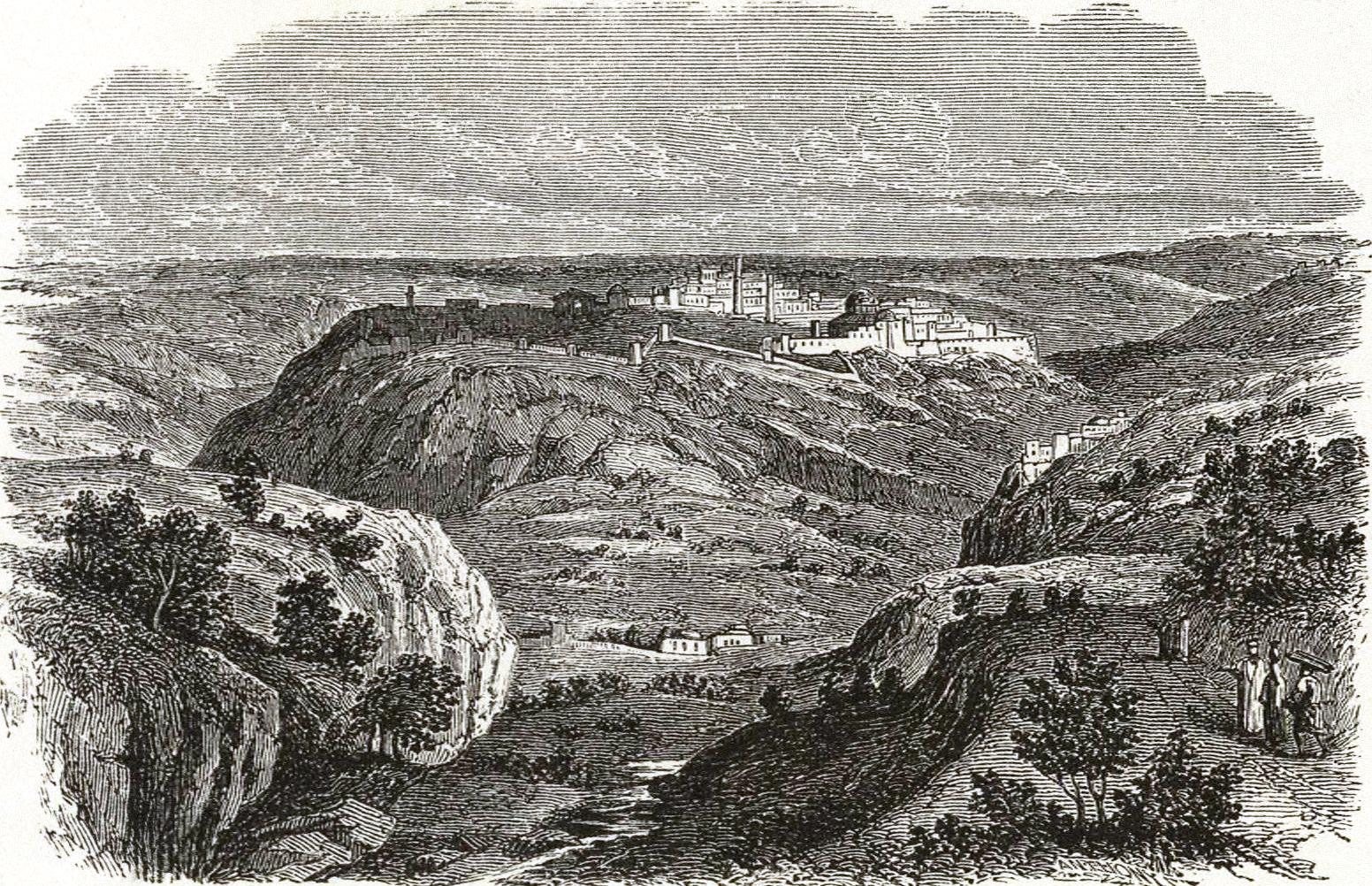
The Gospels do leave clues about where it was. The Encyclopedia of the Bible gathers them: Golgotha lay outside the city gate, near Jerusalem, beside a road that people travelled, and in view of passersby (Encyclopedia of the Bible). Those clues are what every later attempt to find the place has had to fit.
Why "the skull"? Three explanations
Because the Gospels give the meaning but not the reason, Christian writers and scholars have offered several explanations. Three come up again and again, and each has its own history (International Standard Bible Encyclopedia).
The first is the shape of the land. The rock or hill may have looked like a human skull. This idea is tied mostly to later proposals about a rocky escarpment above the Garden Tomb, north of the Old City, which its supporters say resembles a skull (The Garden Tomb). People often ask whether Golgotha really looked like a skull. The Gospels do not describe what the place looked like, so the idea rests on these later proposals.
The second is death itself. Golgotha may have been known as a place of executions. Jerome, writing in the late fourth and early fifth centuries, connected Calvary with places outside Jerusalem where condemned people were executed or beheaded. The evidence for a formal first-century execution ground littered with skulls, though, is uncertain.
The third is Adam. An ancient Christian tradition held that Adam's skull was buried at Golgotha. Origen, writing in the third century, is associated with an early version of it. The tradition became important in Christian theology and in art, as we will see, but it is not stated in the Bible, and it is a tradition of faith rather than an archaeological find. The University of Notre Dame's Church Life Journal traces how that memory took root at the site in The Place of the Skull: Memory and Myth in the Chapel of Adam.
The Church of the Holy Sepulchre
For most of Christian history, the answer to "Where was Jesus crucified?" has been the Church of the Holy Sepulchre, inside Jerusalem's Old City. It is the traditional site of both Golgotha and Jesus's tomb, and a church was established there in the fourth century CE (Custodia di Terra Santa).
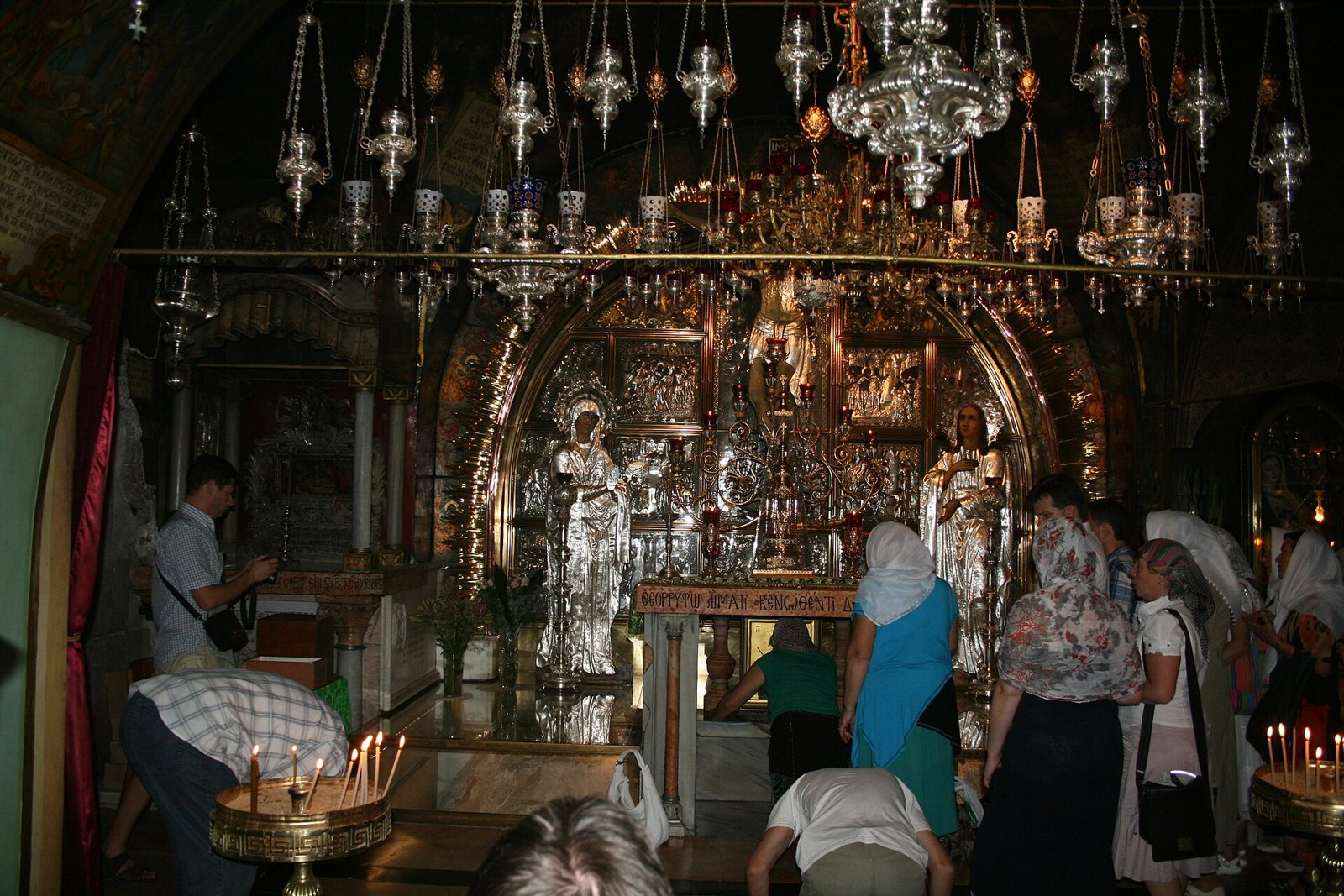
The Custodia di Terra Santa, the Franciscan Custody of the Holy Land, describes Calvary as the place of Jesus's crucifixion and identifies the rock beneath the altar as the traditional place where the cross stood. Pilgrims can touch that rock through an opening under the altar. Below Calvary lies the Chapel of Adam, where a crack in the rock is linked with the tradition that Christ's blood ran down through the stone to redeem Adam.
Archaeology has had its say too. The Franciscan archaeologist Virgilio Corbo excavated and documented the complex between 1960 and 1973. In the first century the site was a quarry outside the city walls, and supporters of the church say that fits the Gospel clues: outside the city, yet near a road and in plain view. The Biblical Archaeology Society sets out the long debate over where Jerusalem's Second Wall ran in Jesus's time, which bears on whether the site lay outside the city, and the archaeologists who have weighed in, including Conrad Schick, Louis-Hugues Vincent and Ute Wagner-Lux (Biblical Archaeology Society, Where Is Golgotha?).
The Garden Tomb and Skull Hill
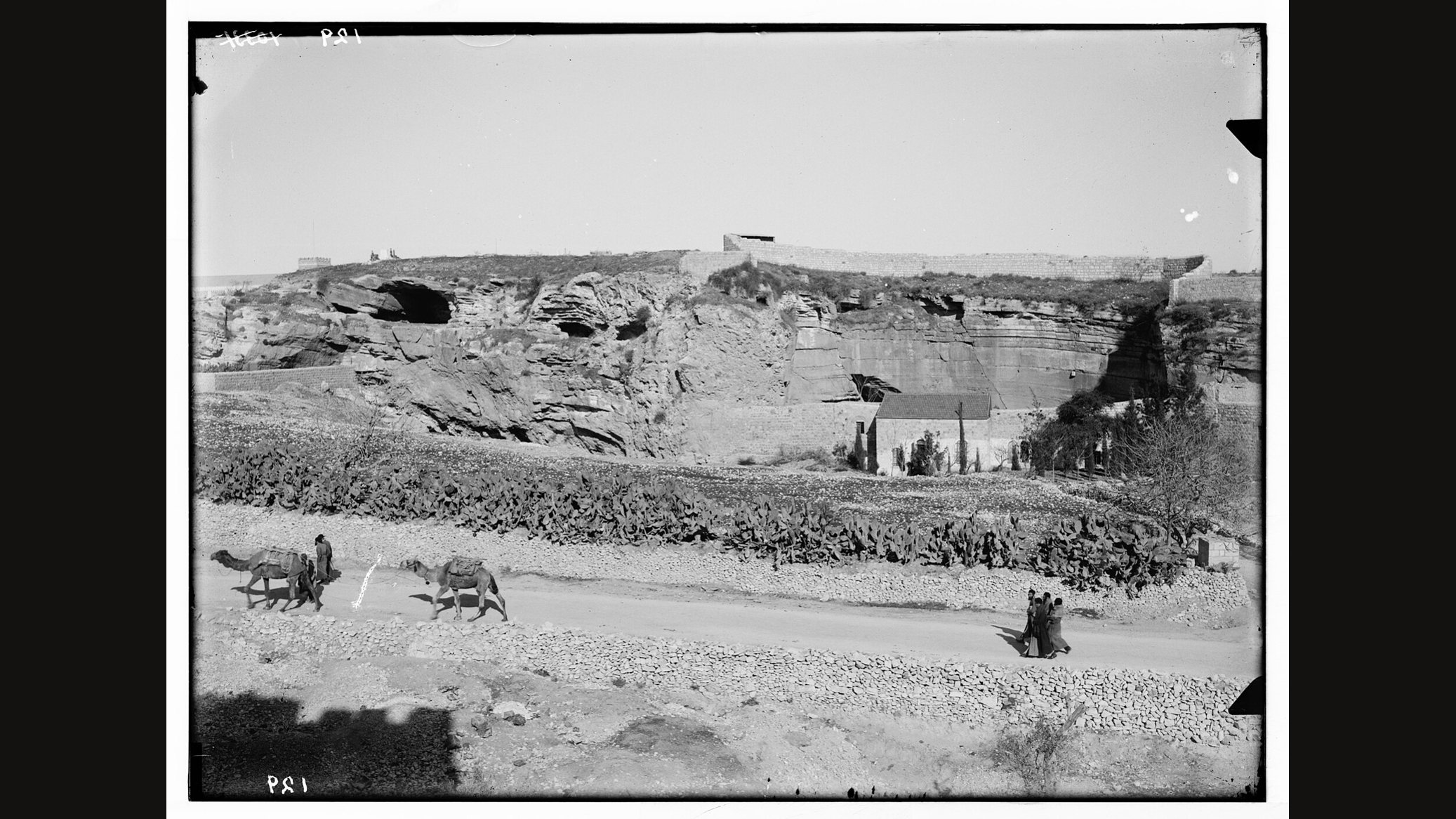
The second site people ask about is the Garden Tomb, north of the Old City. It is a nineteenth-century Protestant proposal, set beside a rocky escarpment often called Skull Hill, and that escarpment became tied to alternative proposals for Golgotha between the 1840s and the 1860s.
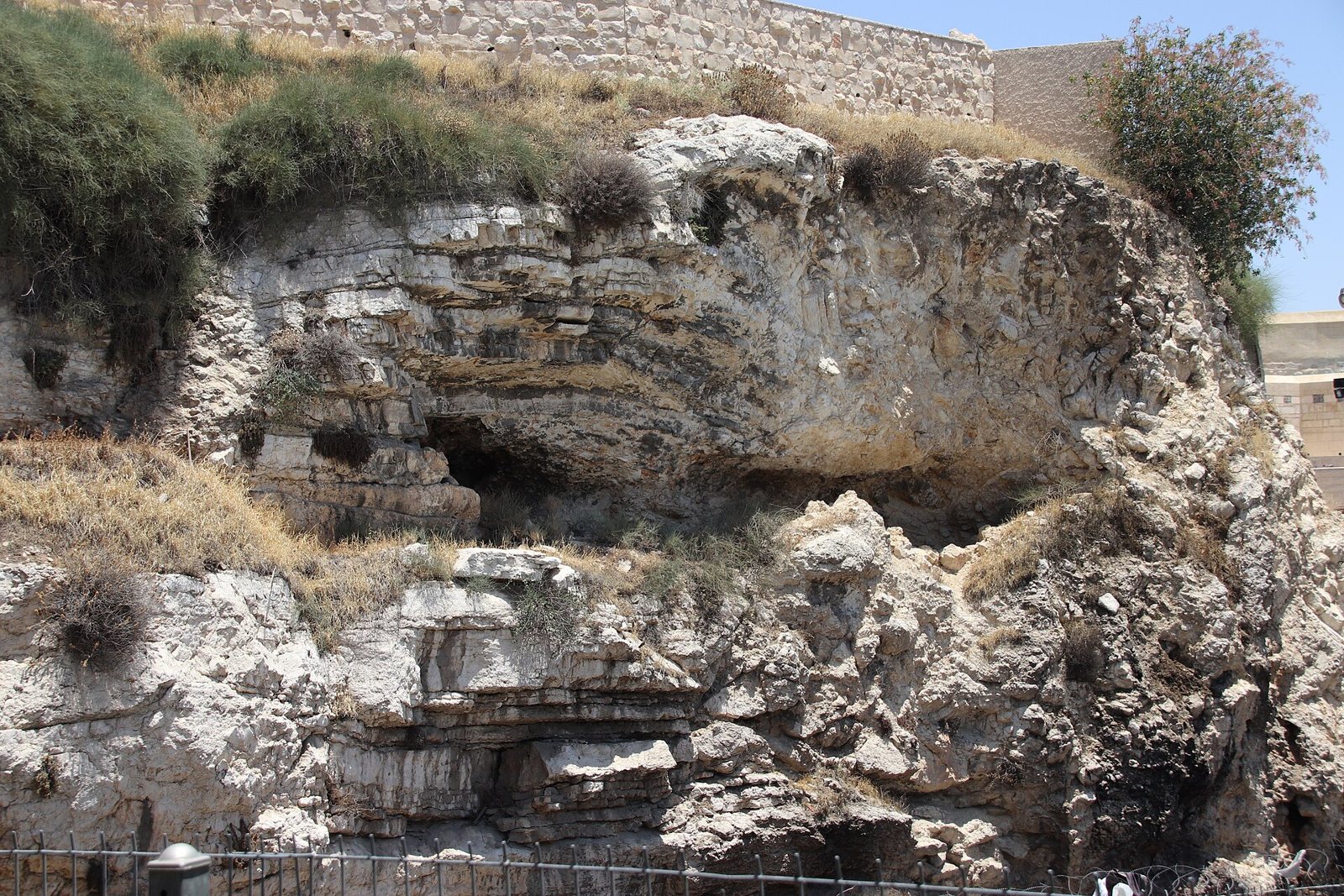
The Garden Tomb Association, which runs the site, points to several features in its favour: a location near a city gate, the escarpment's apparent resemblance to a skull, an ancient tomb nearby, and evidence of an ancient garden (The Garden Tomb). The Association itself presents the site as a possible location for Golgotha and the tomb rather than a proven one, and many Christians continue to worship there.
The Israeli archaeologist Gabriel Barkay dated the tomb itself to the Iron Age, about the eighth or seventh century BCE (Gabriel Barkay, The Garden Tomb, Was Jesus Buried Here?). That would make it centuries older than the first-century tomb described in the Gospels.
So, which site is the real Golgotha? The traditional answer is the Church of the Holy Sepulchre; the Garden Tomb is a later proposal where many Christians worship; and the exact first-century location is still debated.
Tap or hover a row to highlight it.
| Detail | Church of the Holy Sepulchre | The Garden Tomb |
|---|---|---|
| DetailWhere | Church of the Holy SepulchreInside Jerusalem's Old City | The Garden TombNorth of the Old City, beside Skull Hill |
| DetailWhen identified | Church of the Holy SepulchreA church was established at the traditional site in the fourth century CE | The Garden TombA nineteenth-century Protestant proposal; the escarpment linked with Golgotha in the 1840s to 1860s |
| DetailWhat its keepers point to | Church of the Holy SepulchreCalvary rock beneath the altar, where the cross is held to have stood; the Chapel of Adam | The Garden TombA nearby city gate, the skull-like escarpment, an ancient tomb and an ancient garden |
| DetailWhat archaeologists say | Church of the Holy SepulchreA first-century quarry outside the city walls; excavated by Virgilio Corbo, 1960 to 1973 | The Garden TombGabriel Barkay dated the tomb to the Iron Age, about the eighth or seventh century BCE |
The skull at the foot of the cross
If you have looked closely at a painting of the Crucifixion and noticed a skull at the base of the cross, you have met the Adam tradition in art. That skull usually stands for Adam's skull, not for some unknown victim of a Roman execution. The symbolism ties Adam, traditionally the first human to die, to Christ as the "second Adam", and Christ's blood falling toward the skull stands for redemption overcoming sin and death (Fitzwilliam Museum).
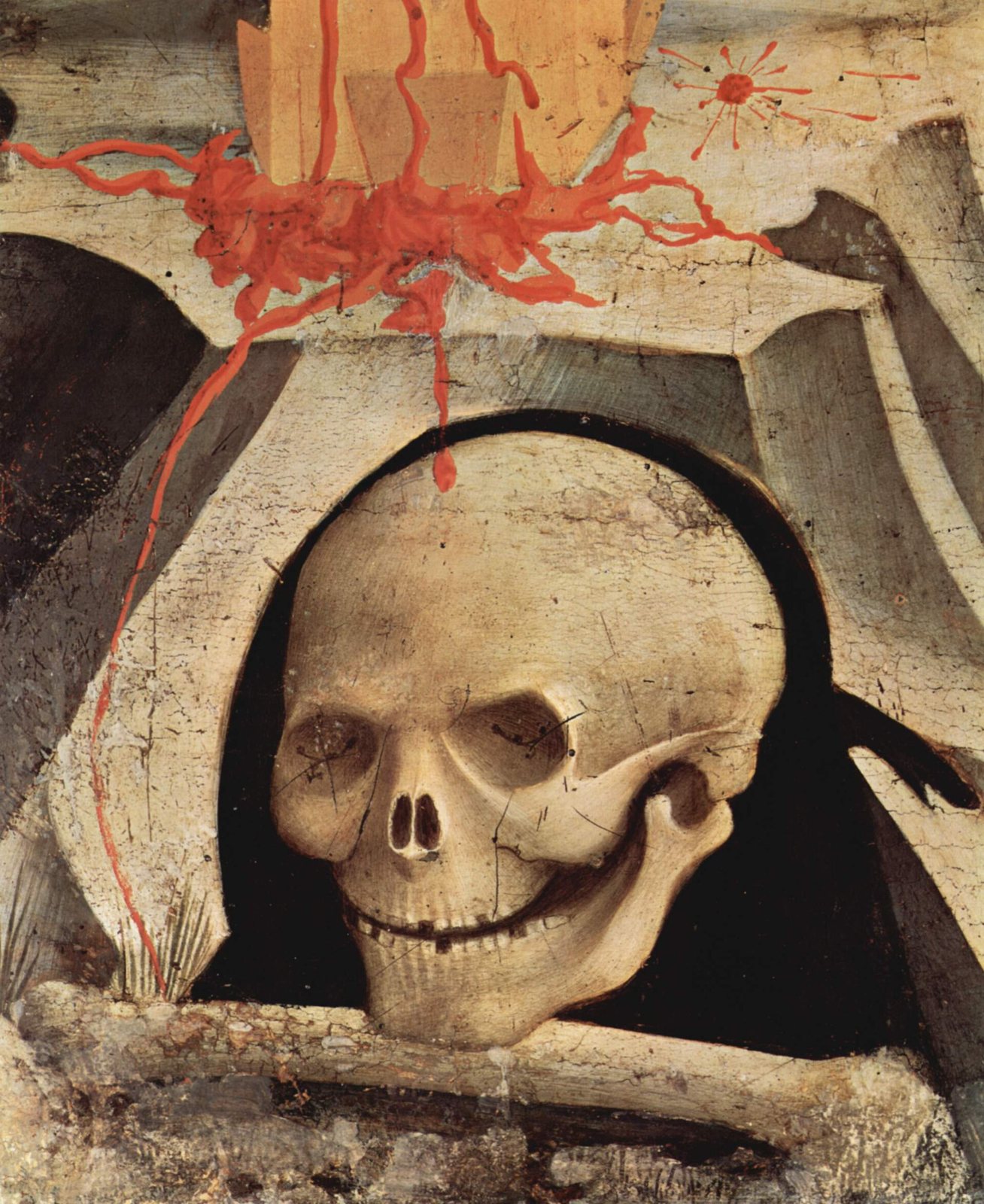
The Fitzwilliam Museum in Cambridge notes that Adam's skull became a recurring feature of Crucifixion scenes, and that it can be seen in Albrecht Dürer's 1511 print. In Byzantine art the skull has a name of its own. The American Historical Association's discussion of a Crucifixion icon at the Getty Villa, citing the scholar Susan Ashbrook Harvey, explains that the skull is called the Skull of Golgotha and represents Adam (American Historical Association). The Rijksmuseum in Amsterdam holds a fifteenth-century Crucifixion with Adam's skull at the foot of the cross (Rijksmuseum), and Fra Angelico painted the same skull beneath the cross.
The skull here is a word, a rock and a symbol, not a relic anyone has identified. The Chapel of Adam keeps the tradition alive in stone, and the painters kept it alive in paint. For more on how skulls appear across Christian art and devotion, see our story on skulls in Christianity, and for Dürer and other artists, famous skull art.
Golgotha through the centuries
Tap or hover a step to follow the order.
First century CE
The Gospels place Jesus's crucifixion at Golgotha, outside Jerusalem and near a road.
Third century CE
Origen is associated with an early Christian tradition linking Adam's skull with Golgotha.
Fourth century CE
A church is established at the traditional site, today's Church of the Holy Sepulchre.
Late fourth and early fifth centuries
Jerome links Calvary with places outside Jerusalem where the condemned were executed.
1511
Albrecht Dürer's print shows Adam's skull at the foot of the cross.
1840s to 1860s
The rocky escarpment near the Garden Tomb becomes linked with alternative proposals for Golgotha.
1960 to 1973
Virgilio Corbo excavates and documents the Church of the Holy Sepulchre.
What Golgotha means for Christians
For Christians, Golgotha is the place of the crucifixion, and with it the meeting point of death, sin and redemption. The skull of Adam beneath the cross carries that idea in a single image: Christ, the "new Adam", overcomes the death that came with the first Adam (American Historical Association). In that sense the "place of the skull" is not a grim name at all. It names the spot where, in Christian belief, death was answered.
That is also why the skull sits so comfortably in Christian art. Like the skull in a memento mori, it asks the viewer to think about death, but at Golgotha it points past death to hope. Relics and skulls tied to other saints raise their own questions of faith and history, as in the stories of Mary Magdalene's skull and the relics of John the Baptist's head.
Questions people ask about Golgotha
These are the questions readers most often bring to the word, in English and in Spanish, answered briefly.
What does Golgotha mean?
Golgotha is an Aramaic place name meaning "skull" or "place of the skull". In the Gospels it is the place near Jerusalem where Jesus was crucified, and Calvary is the Latin-derived name for the same place.
Is Golgotha the same as Calvary?
Yes, Golgotha and Calvary are two names for the same place. Golgotha comes through Aramaic and Greek, while Calvary comes from Jerome's Latin calvaria, both meaning "skull".
Why was Golgotha called the place of the skull?
The Bible translates the name but does not explain why the place had it. Later explanations connect it with a skull-shaped rock, a place of executions, or the Christian tradition that Adam's skull was buried there, and each remains an interpretation or a tradition.
Where is Golgotha today?
The traditional site of Golgotha is inside the Church of the Holy Sepulchre in Jerusalem's Old City. The Garden Tomb, north of the Old City beside Skull Hill, is a later Protestant proposal, and the exact first-century location is still debated.
What is the skull under the cross? (Was Adam buried at Golgotha?)
The skull at the foot of the cross in Christian art usually stands for Adam. It comes from an ancient tradition, linked with Origen in the third century, that Adam's skull was buried at Golgotha; the Bible does not state it, and the tradition is honoured in the Chapel of Adam beneath Calvary.
What does Golgotha mean spiritually?
Spiritually, Golgotha stands for the crucifixion of Jesus and the link between death, sin and redemption. In Christian art, Adam's skull beneath the cross expresses the belief that Christ, the "new Adam", overcomes the death that came through the first Adam.
How well do you know Golgotha?
Answer every question to check.
A place named for a skull
Golgotha is a place named for a skull, and the name has outlived every certainty about why it was given. The Gospels translate it, Jerome and Origen explain it in different ways, two sites in Jerusalem are honoured as the place, and painters from Byzantium to Dürer set Adam's skull at the foot of the cross. Whatever drew you to the word, a verse, a painting or a visit, the skull at its heart has always meant more than bone.
Terms in this story
Tap a term to see what it means.
Golgotha. The Greek form of an Aramaic name meaning "skull" or "place of the skull", the place near Jerusalem where the Gospels say Jesus was crucified.
---