

No. 113
The Xoloitzcuintle: The Dog That Guides Souls in Día de Muertos
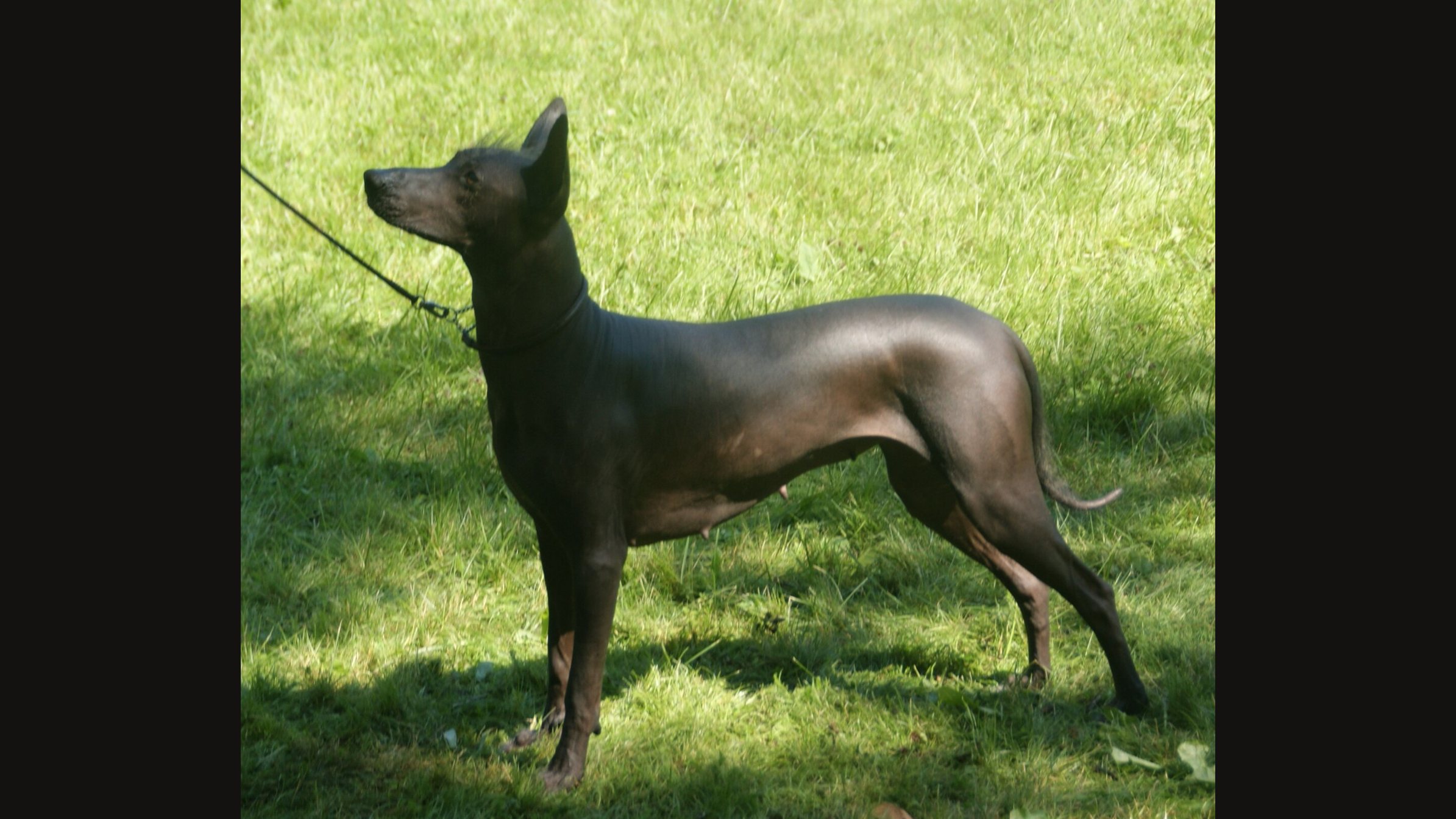
The hairless dog you saw in *Coco* or on a Día de Muertos altar is the Xoloitzcuintle, usually called the Xolo, and it belongs with the dead because of a very old belief. In Mexica accounts recorded after the Spanish conquest, a dog helped the souls of the dead cross a river at the start of their road to Mictlán, the land of the dead (Digital Florentine Codex, Book 3). The name *xoloitzcuintli* for a hairless dog is written down in the Florentine Codex, completed in 1577 (Digital Florentine Codex, Book 11, folio 17r), and it ties the animal to Xólotl, a dog god linked with darkness, death and the underworld. Mexican museums, cultural agencies and families still use the Xolo as an image of companionship between the living and the dead, which is why it keeps turning up on ofrendas and in a Pixar film.
That is the short answer. The longer one runs from shaft tombs in Colima built some 1,600 to 1,800 years ago, through a breed that almost slipped away, to a dog that Mexico City now calls one of its own symbols.
A god called Xólotl and a dog with no hair
Start with the name. In Nahua religious accounts, Xólotl was a deity associated with dogs, with darkness and death, with the underworld, and with being the twin of Quetzalcóatl, the feathered serpent (Secretaría de Cultura, "El dios perro Xólotl"; INAH, Manifestaciones míticas nahuas). The Xoloitzcuintle shares the first part of its name with Xólotl.
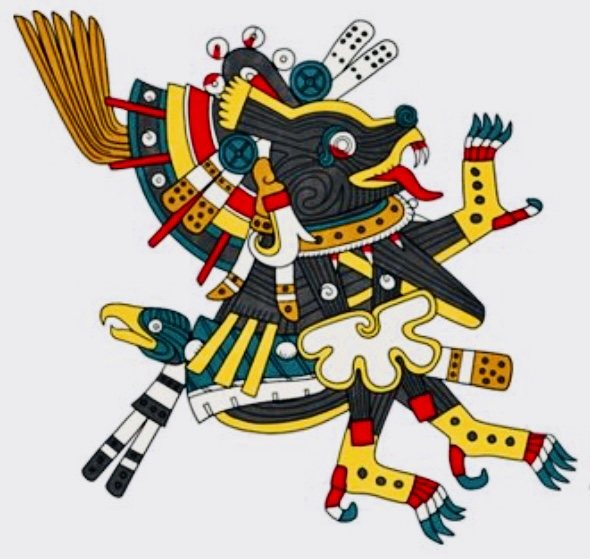
Most of what we know about these beliefs comes from one extraordinary book. The Florentine Codex was completed in 1577 at the Imperial Colegio de la Santa Cruz in Tlatelolco, the result of years of work between the Franciscan friar Bernardino de Sahagún and Nahua elders who described their own world in their own language (Digital Florentine Codex). In Book 11, which covers animals, the codex records the name *xoloitzcuintli* for a dog with no hair (Digital Florentine Codex, Book 11, folio 17r). The Getty's Digital Florentine Codex lets anyone read that page online.
Keep in mind what kind of evidence this is. The codex was written down after the conquest, by Nahua scholars working with a Spanish friar. It is the best record we have of Mexica belief, and it is still a record of a particular time and place, not a snapshot of every community in ancient Mexico.
The dog at the river
The part of the story that brings people to this page is the crossing. In the Mexica belief recorded by Sahagún, the dead set out for Mictlán and soon came to a river. A dog helped them cross it at the very beginning of that long passage (Digital Florentine Codex, Book 3). INAH, Mexico's national institute of anthropology and history, describes the dog in the same role, helping the dead across the water at the start of their way to Mictlán (INAH, Tumbas de tiro).
So, which dog guides souls to the afterlife? In modern retellings, the guide is almost always the Xoloitzcuintle. That is a fair reading of the name and the god, but the archaeology is broader: ancient Mexico had other dogs too, and burials and figures from different regions involve more than one kind (UNAM Global, "La antigua leyenda del xoloitzcuintle"). The safest way to say it is the way INAH and the codex do: a dog helped the dead cross, and the Xolo is the dog most people now imagine in that role. If you would like to know more about the lord of that underworld, our story on Mictlantecuhtli picks up where the river ends, and gods of death sets him beside other cultures' rulers of the dead.
Dogs in the shaft tombs of Colima
Long before the Mexica, people in western Mexico were burying dogs with their dead. In Colima, shaft tombs from the Ortices, Comala and Colima phases held human burials accompanied by dog remains and ceramic dog figures. INAH dates the Comala phase to roughly 200 to 400 CE and describes these dogs as companions in life and guides in death (INAH, Tumbas de tiro; INAH, Valle de Colima).
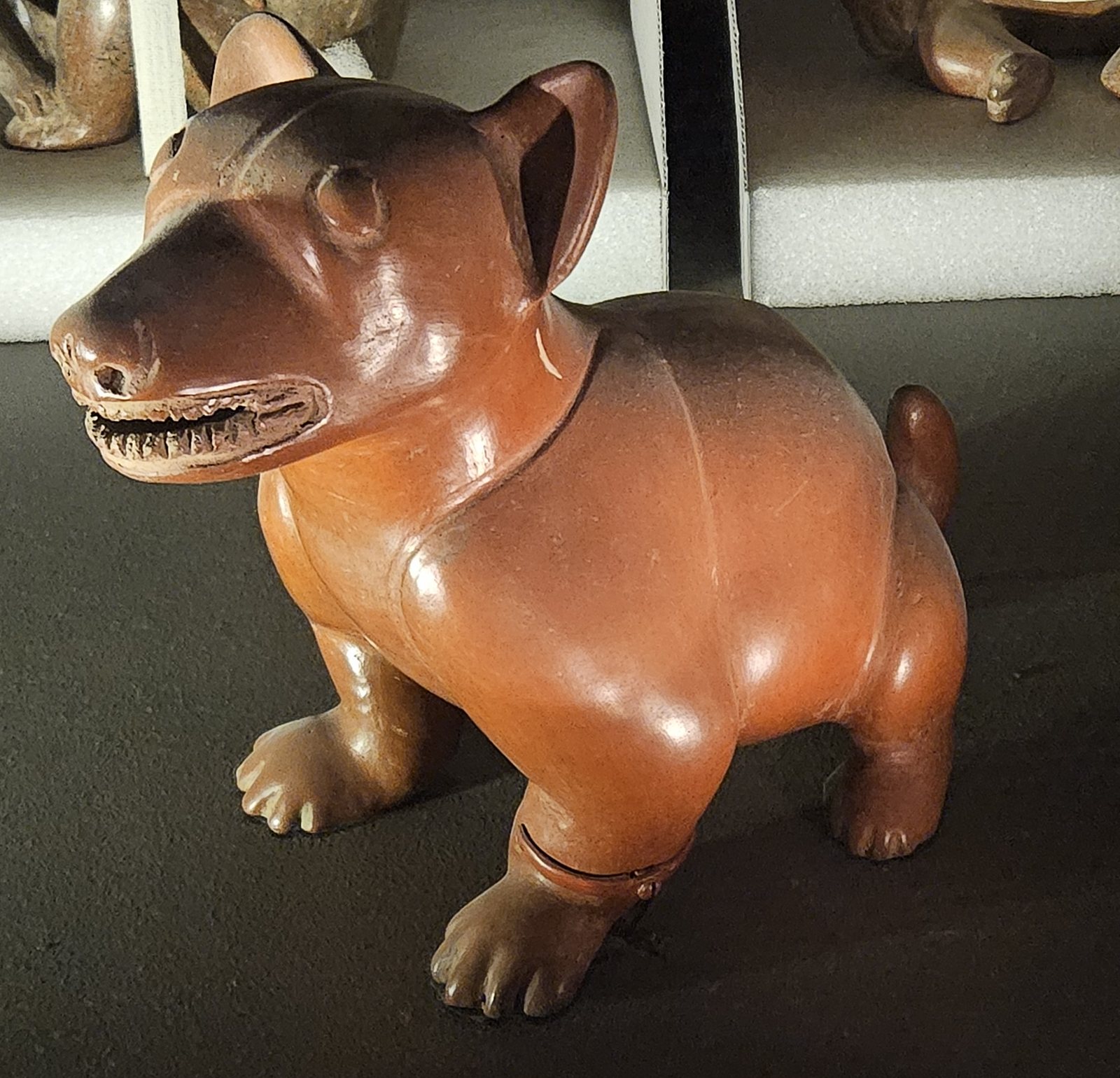
These are the famous Colima dogs, clay figures now held in museum collections far from western Mexico. The Brooklyn Museum holds one dated between 200 BCE and 300 CE (Brooklyn Museum, Colima Dog Figure), and the Walters Art Museum holds a dog effigy vessel from the same tradition (Wikimedia Commons, Walters Colima vessel).
What the tombs show clearly is a funerary bond between people and dogs. What each figure meant to the family that placed it is less certain, and archaeologists treat the meaning of individual pieces as a matter of interpretation rather than one fixed answer. Raúl Valadez Azúa, of the Instituto de Investigaciones Antropológicas at UNAM, has spent much of his career on the Xolo, ancient dogs and death, and his work sits behind much of what Mexican institutions say about the subject today (Gaceta UNAM, "Xoloitzcuintle, compañero de vida y muerte"; UNAM IIA).
The Xolo from Colima's tombs to Coco
Tap or hover a step to follow the order.
c. 200 to 400 CE
Comala-phase shaft tombs in Colima include dogs and ceramic dog figures.
1577
The Florentine Codex is completed at the Imperial Colegio de la Santa Cruz in Tlatelolco and records the name xoloitzcuintli.
1950s
The Federación Canófila Mexicana and other dog authorities organize the breed's recovery and registration.
1 May 1956
The commonly cited date for Mexican recognition and registration of the breed.
August 2016
Mexico City publicly designates the Xoloitzcuintle cultural heritage and a symbol of the city.
2017
Dante, a Xolo, appears in Pixar's Coco.
2026
The Museo Dolores Olmedo reopens in La Noria, Xochimilco, with Xoloitzcuintles in its gardens.
A breed that nearly disappeared
For centuries after the conquest, the Xolo faded from view. It survived in scattered populations across Mexico, competing with European dogs introduced after the conquest (Federación Canófila Mexicana, Xoloitzcuintle).
The recovery came in the 1950s. The Federación Canófila Mexicana, working with other Mexican and international dog organizations, began systematic work to find, register and standardize the breed (Federación Canófila Mexicana, history). The date usually given for Mexican recognition is 1 May 1956, though breed histories also mention registration work in 1955 (Xoloitzcuintli Club of America). The international breed standard of the FCI describes the Xoloitzcuintle as an indigenous Mexican dog rescued by the Federación Canófila Mexicana (FCI breed standard).
If you have wondered how common Xolos are in Mexico, that history is the place to start: it is a breed brought back from scattered survivors, not one you will meet on every street, which is part of why seeing one feels special.
A symbol of Mexico City
In August 2016, Mexico City's government publicly declared the Xoloitzcuintle part of the city's cultural heritage and a symbol of the city (Chamber of Deputies document). The Associated Press reported on Xolo owners in the capital who speak about the dogs' loyalty and their sacred underworld history in the same breath (Associated Press).
The declaration is a public cultural statement by one city. It shows how much the dog means to many people in the capital, but it is not a law that turns the Xolo into a single national custom. Mexico's traditions vary from region to region, and our guide to Day of the Dead by region shows how different the celebrations can be.
What a Xolo means on an ofrenda
On an altar, a Xolo figure can stand for the dog that accompanies or guides the souls, and for the affection and companionship that carry on after death. Mexico's CONAMED, which set up Día de Muertos ofrendas in its own offices, explains the Xolo in just that way (CONAMED). The exact meaning, though, belongs to the family, community and place where the ofrenda stands, and one household's reason for including a Xolo may not be another's.
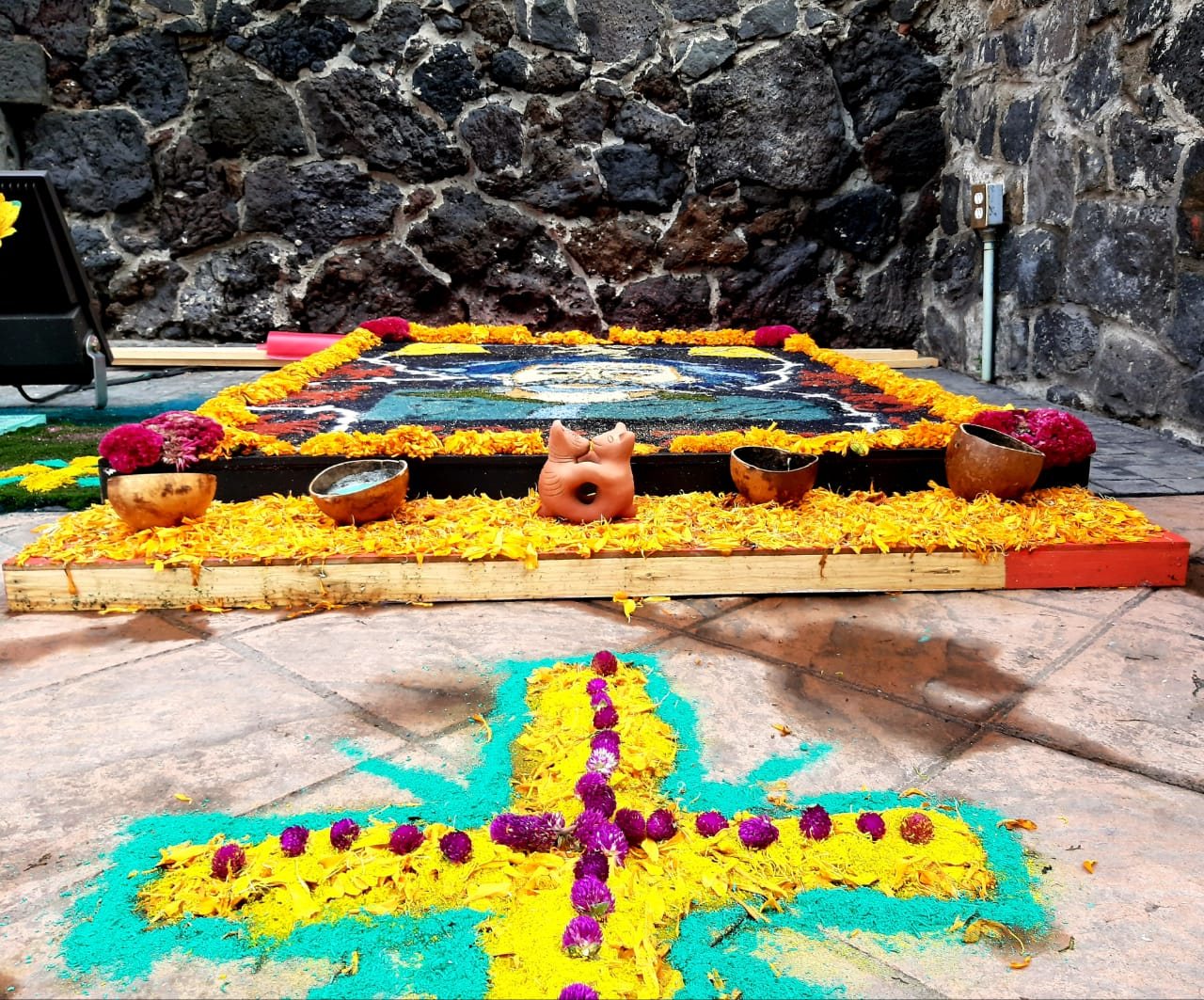
INAH's feature of 11 November 2025 describes the dog's continuing place in rituals, art and community life, including a Día de Muertos parade organized by the Museo Regional de Colima (INAH). The dog has also become part of a newer, tender practice: remembering pets. Mexico's official tourism portal lists 27 October as a day for welcoming deceased pets (Secretaría de Turismo, Día de Muertos), and in 2026 the Secretaría de Cultura's community program in Pátzcuaro, Michoacán invited families to build an ofrenda for the animals they had lost (Secretaría de Cultura, "Ofrenda a nuestras mascotas"). Events like these change from year to year, so check this year's dates with the organizer.
What a Xolo on an ofrenda can mean
Tap a card to bring it forward.
- A guide: The dog that, in Mexica belief recorded in the Florentine Codex, helped the dead cross the river toward Mictlán.
- A companion: The bond between people and dogs that INAH traces back to the shaft tombs of Colima.
- Continuing affection: The care and company that carry on after death, as CONAMED explains its altars.
- A beloved pet: On pet ofrendas, such as the one the Secretaría de Cultura invited families to build in Pátzcuaro, the dog being remembered.
- A family's own reason: The exact meaning depends on the family, community and place.
If you are setting up an altar of your own, our guide on how to make an ofrenda has the steps, and the cempasúchil marigold story explains the orange flowers that so often surround a Xolo figure. For the holiday as a whole, start with our Día de Muertos guide.
Dante, the Xolo in Coco
Yes, Dante is a Xolo. Miguel's hairless companion in Pixar's 2017 film *Coco* is a Xoloitzcuintle, and Disney's own behind-the-scenes material presents him that way (Disney España, "Dentro de Pixar: Dante, el perro Xolo").
*Coco* did more than anything else to make the Xolo famous outside Mexico. AP's reporting describes owners in Mexico City meeting curious strangers whose first question is often "Can I touch him?" (Associated Press). The film is a modern interpretation of the symbol, made by storytellers, and it is best enjoyed that way rather than taken as a guide to how every family builds its altar. Our story on the skeletons in Coco covers the rest of the film's dead, and calacas covers the cheerful skeleton figures you will see beside Dante on many altars.
Where to see Xolos and Colima dogs
The most famous place to meet living Xolos is the Museo Dolores Olmedo in La Noria, Xochimilco, Mexico City. The museum opened in 1994 and keeps collections tied to Dolores Olmedo, Diego Rivera, Frida Kahlo and pre-Hispanic art. It describes its gardens as home to Xoloitzcuintles (Museo Dolores Olmedo), and El País reports that it reopened on 30 May 2026 (El País).
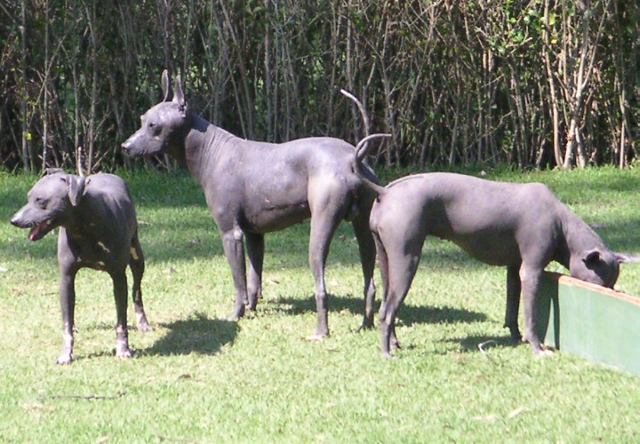
For the ancient dogs, the Museo Regional de Historia de Colima has a permanent, full-scale reproduction of a shaft tomb, with human remains, a dog skeleton and ceramic dog figures (INAH, Tumbas de tiro). The temporary exhibition *Xolos, compañeros de viaje* was shown at the Museo de las Culturas de Oaxaca from July 2022 to April 2023 (Museo Nacional de Antropología) and later at the Museo Regional de Historia de Colima in 2025 (Secretaría de Cultura).
Before you go, confirm current exhibitions, opening hours, access conditions and whether the dogs are out in the gardens with each museum directly.
How well do you know the Xolo?
Answer every question to check.
Questions people ask about the Xolo and Día de Muertos
Why is the Xolo associated with the Day of the Dead?
The Xolo is linked to Día de Muertos because Mexica belief, as recorded in the Florentine Codex and described by INAH, tells of a dog that helped the dead cross a river on the way to Mictlán. Mexican cultural institutions still use the dog as an image of companionship between the living and the dead (Digital Florentine Codex, Book 3).
What does the Xoloitzcuintle represent?
Depending on the historical record and the community, the Xoloitzcuintle represents companionship, protection, passage through the underworld and the continuing bond between people and their dead. Those meanings come from particular historical records and particular modern communities rather than one timeless Mexican reading (Gaceta UNAM).
What dog guides souls to the afterlife?
In Mexica belief, a dog guides the dead across the river at the start of their way to Mictlán, and modern retellings identify that dog as the Xoloitzcuintle. Ancient burials in places like Colima also show that dogs in general kept company with the dead (INAH, Tumbas de tiro).
Why is the Xoloitzcuintle the Day of the Dead dog?
It is the Day of the Dead dog because Nahua accounts written down after the conquest describe the dog as the companion of souls on their way to Mictlán. Today, institutions and communities use it as an image of memory, company and the passage between life and death (Secretaría de Cultura).
What does the Xolo mean on an ofrenda?
On an ofrenda, the Xolo can stand for the dog that accompanies or guides the souls, and for the love and company that continue after death. The exact meaning depends on the family, community and place where the altar stands (CONAMED).
Is Dante from Coco a Xolo?
Yes, Dante is a Xoloitzcuintle. Pixar made him Miguel's companion in the 2017 film, a modern nod to the old belief in a dog that guides souls (Disney España).
How common are Xolos in Mexico?
Xolos are a recovered breed rather than an everyday street dog: the Federación Canófila Mexicana rebuilt the breed from scattered populations in the 1950s. Mexico City named it a city symbol in 2016, and the Museo Dolores Olmedo is one of the best-known places to see them (Federación Canófila Mexicana).
A very old dog for a living holiday
The Xolo on an altar carries a long line behind it: dogs buried beside people in Colima some 1,600 to 1,800 years ago, a dog that ferried the Mexica dead across a river, a name preserved in a book finished in 1577, and a breed coaxed back from near disappearance in the 1950s. Families today give it their own meanings, from a guide for a grandparent's soul to a portrait of the dog who slept at the foot of the bed. However it arrives on your ofrenda, it comes as a companion, which is exactly what it has always been.
Terms in this story
Tap a term to see what it means.
Xoloitzcuintle. A hairless Mexican dog, often shortened to Xolo. Its Nahuatl name, xoloitzcuintli, is recorded in the Florentine Codex of 1577.
---