

No. 023
Gods of Death Around the World: Rulers of the Dead From Hades to Mictlantecuhtli
Almost every ancient culture gave the dead a ruler, a judge or a guide, and each of those figures belongs to its own people and period rather than being one god under different names. Greece had Hades and Persephone. Egypt had Osiris, ruler of the dead, and Anubis, the god of embalming who protected and guided them. Mesopotamia had Ereshkigal, Vedic and Hindu tradition has Yama, Norse texts have Hel, and Japanese mythology has Izanami. Among the Mexica of central Mexico, Mictlantecuhtli and Mictecacíhuatl ruled the land of the dead, and the Classic Maya had their own Death God. Only some of them were ever shown as skeletons, which is part of what makes the tour interesting.
Below, the gods and goddesses are grouped by region, each with the culture, the dates and the role the evidence supports, followed by the ones still honored in living religions today and a few names that often get swapped.
Greece and Egypt: kings, queens, embalmers and a winged visitor
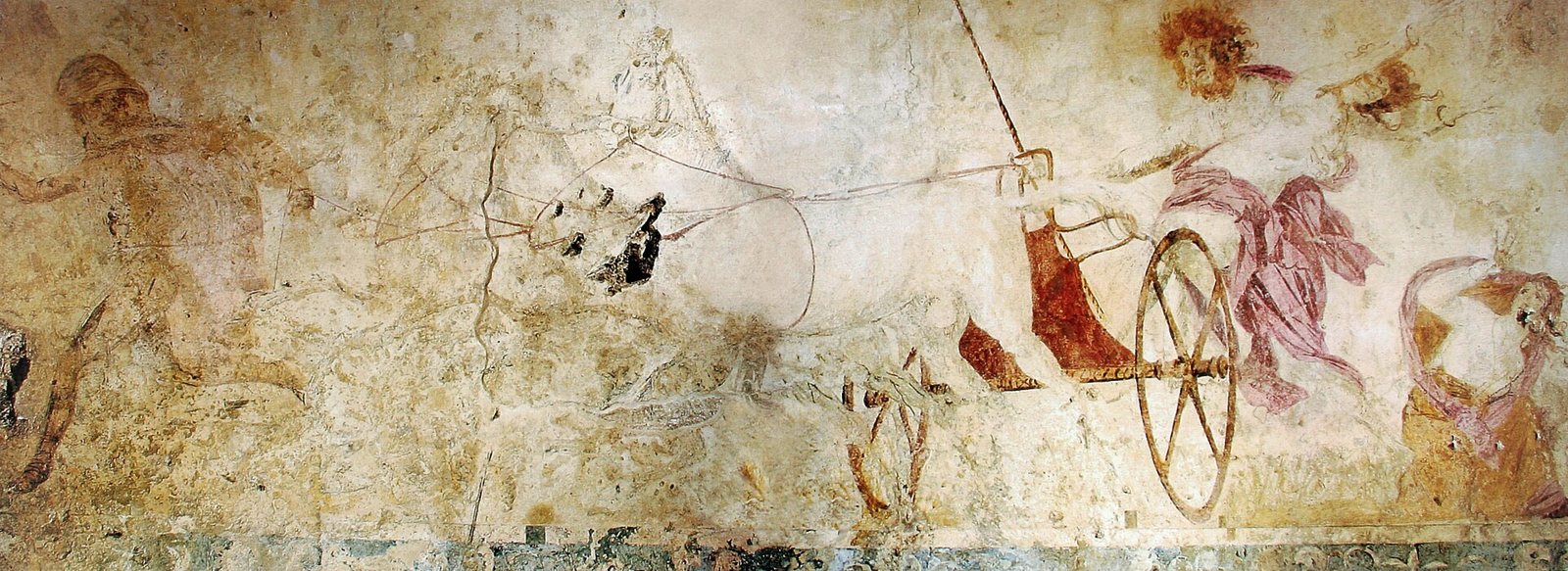
Hades is the best-known ruler of the dead in Western mythology. In Greek tradition, especially from the eighth to the fourth centuries BCE, he was king of the underworld and ruler of the dead, and he was also linked with funeral rites, mourning and the wealth that lies under the earth, as Theoi sets out from Greek texts. His underworld was not the Christian Hell, and Hades was no Greek devil; he ruled a place where the dead went.
Persephone ruled beside him as queen of the underworld. Her seasonal return to the world above was connected with vegetation and renewal, so the queen of the dead was also a figure of growing things. Then there is Thanatos, who is often mistaken for Hades. Thanatos was the personification of nonviolent death rather than the ruler of the underworld, and Greek art usually showed him as a winged human figure. Neither Hades nor Thanatos was a skeleton; Greek vase painting and sculpture gave them human bodies.
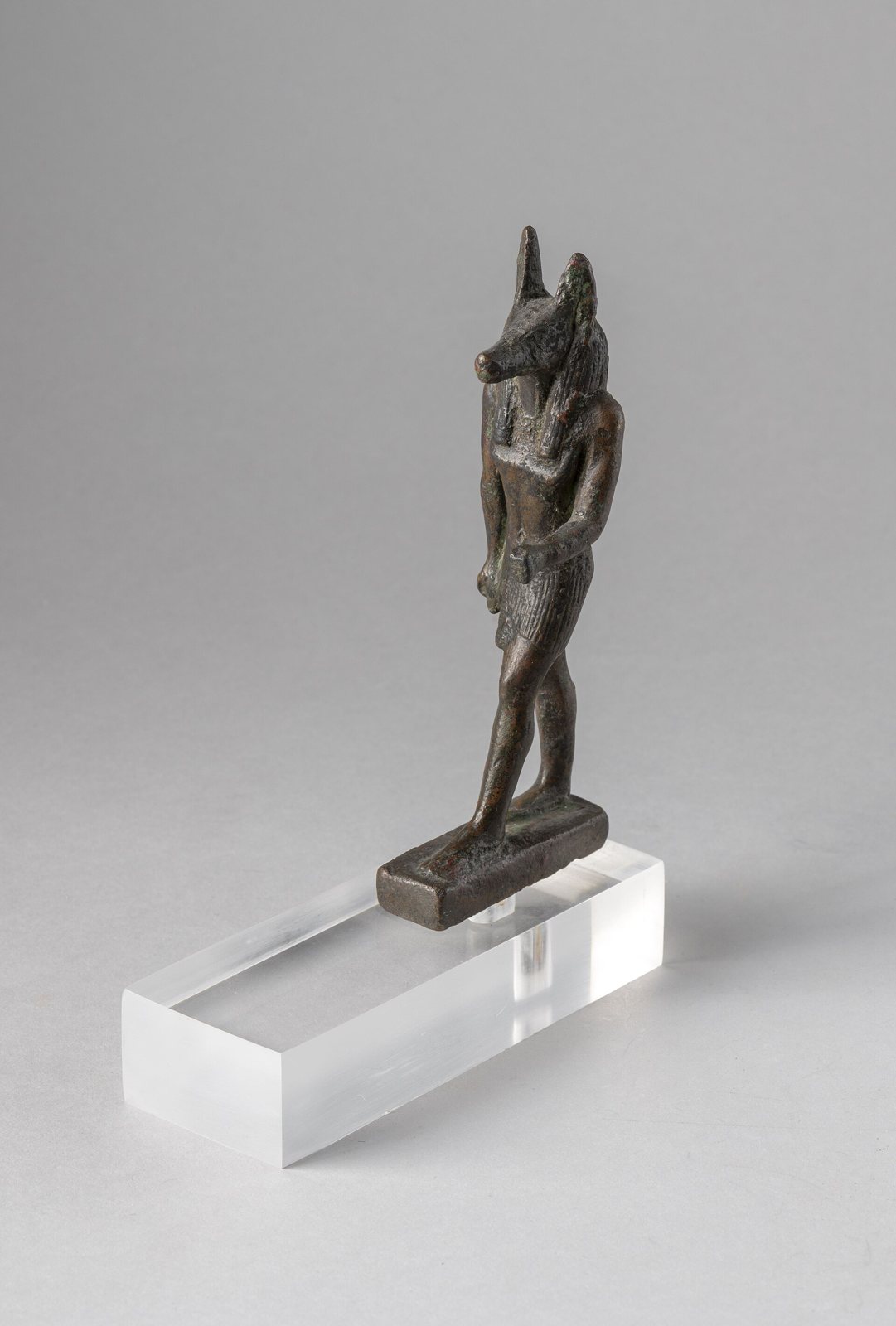
Egypt divided the work differently. Osiris, attested by the Old Kingdom and prominent by the Middle Kingdom, was ruler of the dead and god of resurrection, and a person who died could be identified with Osiris. He is usually shown wrapped like a mummy. Anubis, attested from the Old Kingdom onward (about 2686 to 2181 BCE), was the god of embalming and cemeteries who protected and guided the dead. The British Museum describes him as the god of mummification and the afterlife, often shown with a jackal head or as a jackal. So, is Anubis the god of death or of the afterlife? He is closest to the second: the specialist who prepared and watched over the dead, while Osiris ruled them.
Mesopotamia: Ereshkigal, queen of the dead
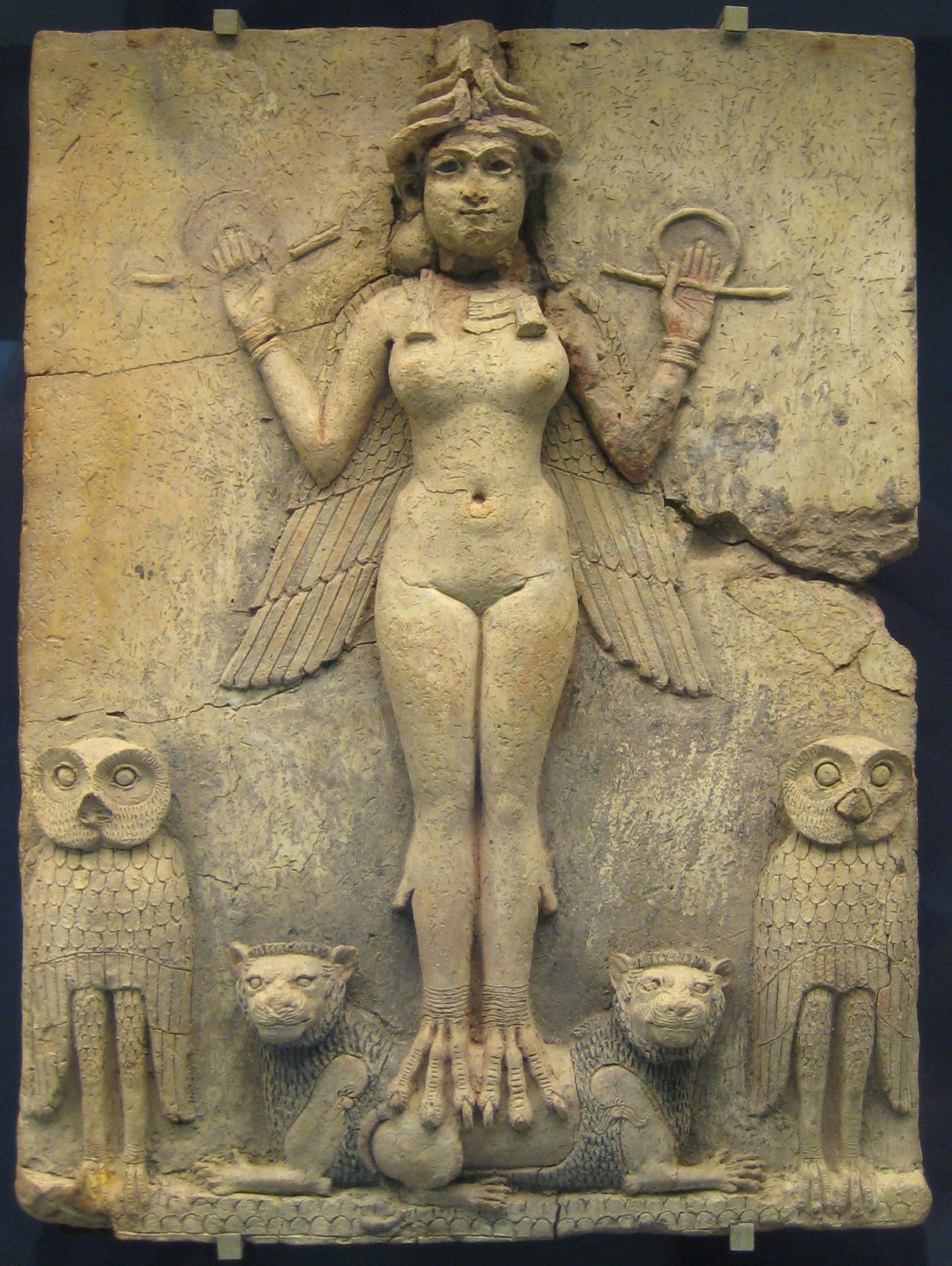
Ereshkigal is one of the oldest named rulers of the dead anywhere. She was the Sumerian and Akkadian queen of the dead and ruler of the underworld, and the names Irkalla and Allatu are often attached to her. The World History Encyclopedia dates her appearance in texts to the reign of Shulgi of Ur, about 2094 to 2046 BCE, which makes her one of the earliest documented female sovereigns of an underworld. Skeletons are not a defining feature of her imagery.
South and East Asia: Yama and Izanami
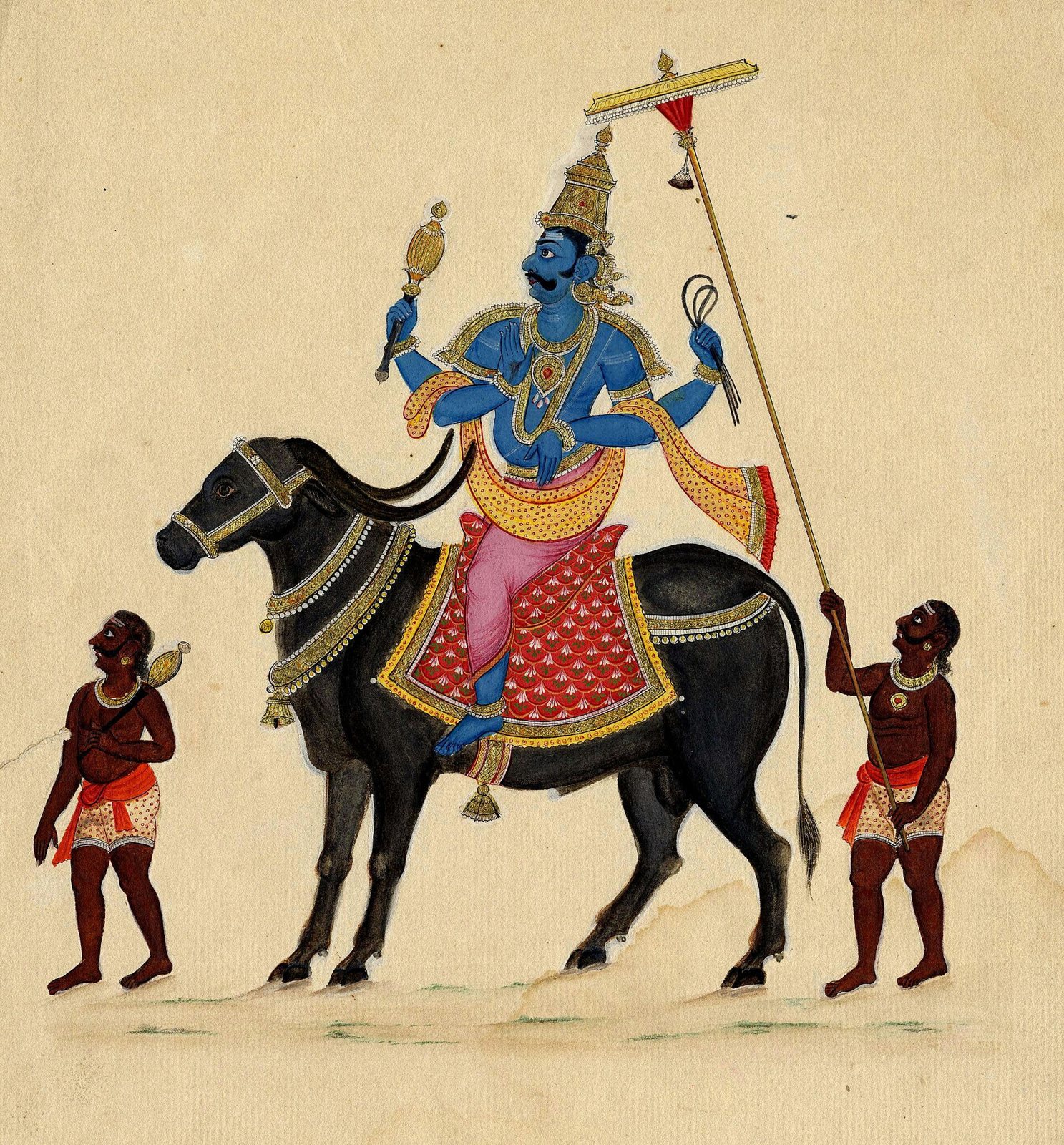
Yama appears in Vedic tradition from the Rigveda onward, in the second or first millennium BCE, and he continues in later Hindu traditions. Britannica describes him as the first human to die, which made him ruler of the dead, guardian of the south and, later, judge of the deceased. He is generally shown as a human or buffalo-headed judge riding a buffalo and carrying a noose and a mace. Some later images add a skull ornament, but skeleton imagery is not what identifies him.
Hindu iconography also includes goddesses tied to death without being goddesses of death in a simple sense. The British Museum holds an image of Chinnamastā, whose decapitated form links life, death, sexuality and sacrifice in Tantric iconography. For another goddess whose imagery is full of skulls, read about Kali's garland of heads.
In Japan, Izanami-no-Mikoto is a creator deity who becomes ruler of Yomi, the land of the dead, after dying in childbirth. Her story is recorded in the *Kojiki* of 712 CE and the *Nihon Shoki* of 720 CE. She began as a maker of the world before she ruled its dead.
Northern Europe: Hel
Hel is the female ruler of the place also called Hel, which received many of the dead in Norse belief. What we know of her comes mainly from medieval Icelandic texts, especially the thirteenth-century *Prose Edda*. Norse literature describes her as a woman with a divided or corpse-like appearance. Surviving medieval manuscripts do not give her a fixed skeletal image, so a skull-faced Hel is a modern artist's choice.
Mesoamerica: where the gods wear skulls
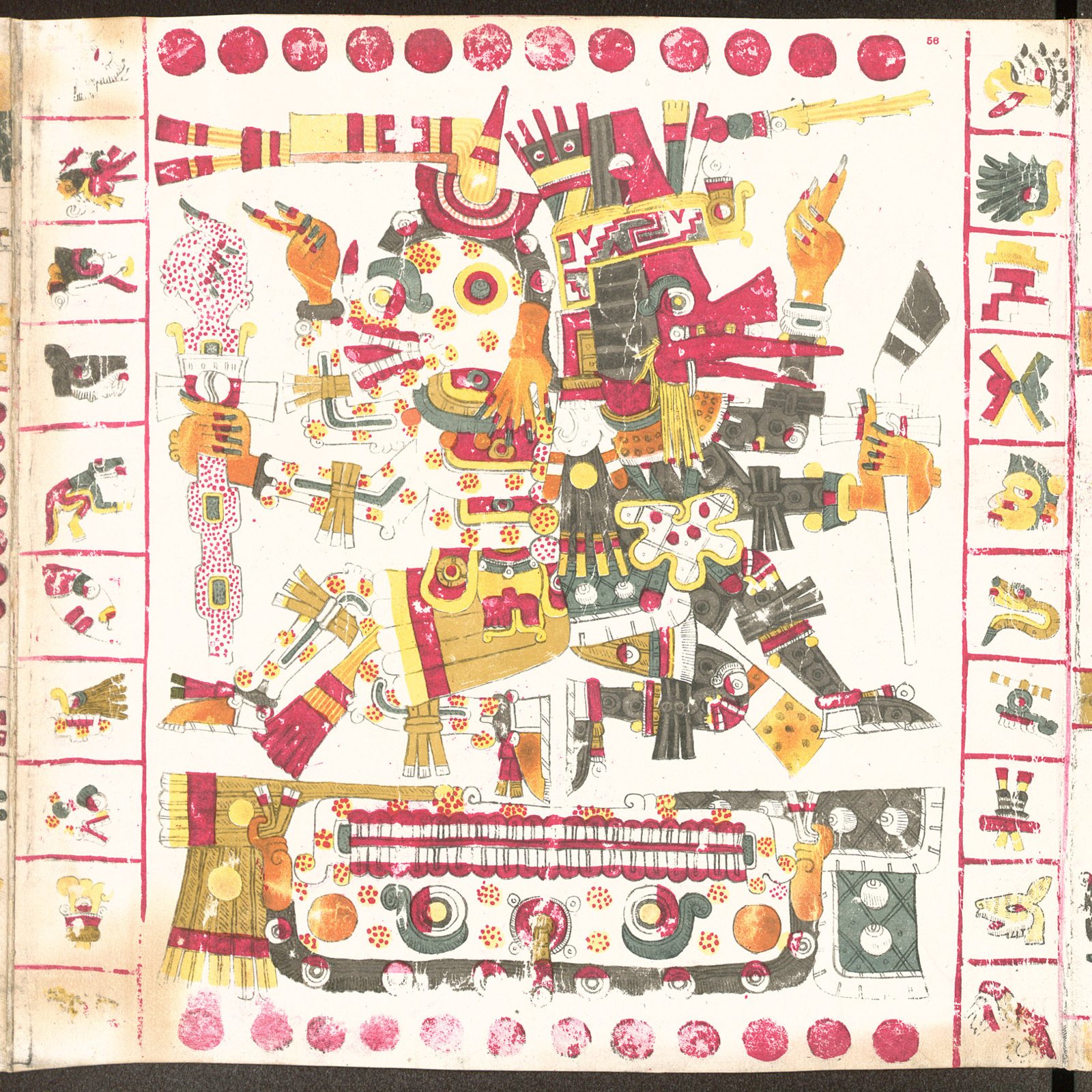
If you came here looking for death gods with skulls, this is the region. Mictlantecuhtli and Mictecacíhuatl were the lord and lady of Mictlán, the Mexica land of the dead, in Late Postclassic central Mexico (1300 to 1521 CE). INAH, Mexico's national institute of anthropology and history, places their domain at the ninth level of the underworld. A Mexica sculpture of Mictlantecuhtli from the Templo Mayor in Mexico City shows a cadaverous, flayed or skeletal body with claws and exposed organs. Mictecacíhuatl appears in an INAH museum record wearing a skull on her head and skull ornaments in her necklace and chest ornament. For the full story of the Mexica lord of the dead and the road his subjects walked, read our story on Mictlantecuhtli.
The Classic Maya, especially between 250 and 900 CE, had their own death deity, known in older scholarship as God A. The British Museum identifies him on a Late Classic Maya altar, shown as a skeleton or a decaying corpse, often with black spots representing rotting flesh. A Metropolitan Museum study describes a Maya death god with a skeletal head, protruding eyeballs, a swollen, corpse-like belly and insect-like features. You may also see the name "Ah Puch" applied to him, but Maya texts show several death-related figures whose names and identities vary by period, language and object, so no single name covers them all.
In this region a skull does not mean what it means in a European painting. In Mexica art it can be tied to Mictlán and its rulers, and in Classic Maya art skeletal imagery can stand for decay and regeneration together. The wider story of skulls on display in the Mexica capital continues in the tzompantli, and the general meanings of the motif are gathered in skull symbolism.
The Andes, West Africa and Haiti
Supay belongs to Andean and Quechua traditions. He is a spirit or ruler tied to the underworld and the dead, with precolonial roots and later colonial and modern reinterpretations, so the meaning of the name changes by region and period.
Oya is an orisha of Yoruba religion, practiced historically and today in West Africa and across the African diaspora. She is associated with storms, change, the marketplace and the boundary of the cemetery. That cemetery boundary is why she appears in lists of death deities, but practitioners do not reduce her to a goddess of death, and her roles vary from community to community.
In Haitian Vodou, the Ghede or Guédé are a family of lwa, or spirits, associated with death, cemeteries, ancestors, sexuality and the boundary between life and death. They are documented from the eighteenth century onward and are honored today with ceremonies and songs. For a related figure of Haitian Vodou, read about Baron Samedi.
Death deities in living religions today
Several of these figures are not museum pieces. They belong to religions people practice now, and they deserve to be described the way their communities describe them.
Yama remains part of living Hindu religious culture. His name and role appear in funeral theology, in ancestor observances and in festivals such as Yama Dvitiya, also known as Bhai Dooj. That does not mean every Hindu honors him in the same way or that temples dedicated only to him are common. Izanami remains part of Shinto mythology and shrine traditions, connected with places such as Taga Taisha, and Shinto practice varies by shrine and community. Oya is honored in Yoruba religious traditions and their diaspora forms, including Candomblé. The Ghede are part of Haitian Vodou practice, where their ceremonies and cemetery associations are religious life, not horror imagery.
Santa Muerte is a different case. She is a contemporary Mexican folk-saint devotion centered on a female skeletal figure, practiced in Mexico and in Mexican diaspora communities, and the Library of Congress holds a 2012 presentation on her by the scholar R. Andrew Chesnut. Scholars describe devotees using rosaries, candles, prayers, home altars and petitions. She is a modern devotion and not an ancient Aztec goddess. Her history and meaning are in our story on Santa Muerte.
Names that often get swapped
A few pairs cause most of the mix-ups, and keeping them straight makes every museum label easier to read.
Hades and Thanatos are both connected with death, but Hades ruled the dead and the underworld, while Thanatos personified nonviolent death. Anubis and Osiris are another pair: Anubis embalmed and guarded the dead, and Osiris ruled them and stood for resurrection, so calling Anubis simply "the Egyptian god of death" misses how Egyptian belief split the work between the two. Santa Muerte and Mictecacíhuatl are both female figures linked with death in Mexico, and scholars discuss Indigenous, Catholic and European influences on Santa Muerte's imagery, but she is not the Mexica goddess under a new name.
The Grim Reaper is a Western personification of death from late medieval Europe, not a god of any ancient pantheon; PBS dates his English name to 1847. His long history is told in our story on the Grim Reaper's origin. Finally, Día de Muertos is a broad Mexican tradition of honoring deceased relatives, with regional Indigenous, Catholic and local histories. It is not a festival dedicated to Santa Muerte, whose devotion is a separate practice.
Tap or hover a row to highlight it.
| Deity | Culture | Period | Main role | Skeleton imagery? |
|---|---|---|---|---|
| DeityMictlantecuhtli | CultureMexica | Period1300 to 1521 CE | Main roleLord of Mictlán and the dead | Skeleton imagery?Yes |
| DeityEreshkigal | CultureMesopotamian | PeriodFrom at least the 21st century BCE | Main roleQueen of the dead | Skeleton imagery?Not a defining feature |
| DeityHades | CultureGreek | PeriodFrom at least the 8th century BCE | Main roleKing of the underworld and the dead | Skeleton imagery?No |
| DeityAnubis | CultureEgyptian | PeriodFrom the Old Kingdom onward | Main roleEmbalming and protection of the dead | Skeleton imagery?No, jackal-headed |
| DeityYama | CultureVedic and Hindu | PeriodFrom the Rigveda onward | Main roleRuler and judge of the dead | Skeleton imagery?No, usually human or buffalo-associated |
| DeityMaya Death God | CultureClassic Maya | Period250 to 900 CE | Main roleUnderworld death deity | Skeleton imagery?Yes |
| DeityThanatos | CultureGreek | PeriodFrom at least the 8th century BCE | Main rolePersonification of nonviolent death | Skeleton imagery?No, usually a winged human |
| DeityHel | CultureNorse | PeriodMedieval texts | Main roleFemale ruler of Hel | Skeleton imagery?Corpse-like description, no fixed skeletal art |
Rulers of the dead through time
Tap or hover a step to follow the order.
About 2686 to 2181 BCE
Anubis is attested in the Old Kingdom as a god of embalming and protector of the dead.
About 2094 to 2046 BCE
Ereshkigal appears in texts from the reign of Shulgi of Ur.
About 250 to 900 CE
Classic Maya artists show skeletal and decaying death deities.
712 CE
The Kojiki records Izanami's death and her rule over Yomi.
720 CE
The Nihon Shoki gives another early account of Izanami.
1300 to 1521 CE
Mictlantecuhtli and Mictecacíhuatl rule Mictlán in Mexica belief.
1847
The English name "Grim Reaper" appears in print, per PBS.
Gods of death quiz
Answer every question to check.
Quick answers about gods of death
People tend to ask the same four questions about death gods, and each has a short answer.
Who is the most famous god of death?
There is no single worldwide answer, but Hades is probably the most internationally recognized ruler of the dead. Anubis, Yama, Mictlantecuhtli and Hel are also widely known. Hades is the Greek king of the underworld, not a god of death for every culture.
Is there a female god of death?
Yes, several. Ereshkigal ruled the Mesopotamian dead, Mictecacíhuatl was lady of the Mexica dead, Hel ruled the Norse land of the dead, and Izanami rules Yomi in Japanese mythology. Their roles and traditions are not interchangeable.
Which god is the god of death?
It depends on the mythology you mean. Yama is the Hindu god of the dead, Hades the Greek ruler of the dead, Mictlantecuhtli the Mexica lord of Mictlán, and Anubis the Egyptian god of embalming and protector of the dead; no one deity governs every tradition.
Who is the demon of death?
There is no single cross-cultural demon of death. Traditions describe death as a god, a ruler, a spirit, a judge or a personification: Thanatos personifies nonviolent death in Greek myth, and Ereshkigal rules the Mesopotamian dead without being classed as a demon. The Grim Reaper is a later Western personification, not a demon either.
Where to go next
If the skull-wearing rulers of Mictlán are the ones that caught your eye, continue with Mictlantecuhtli and the remembrance traditions of Día de Muertos. For the hooded figure of European art, read the Grim Reaper's origin, and for the living Mexican devotion, Santa Muerte.