

No. 002
What Is a Kapala? The Skull Cup in Tibetan Buddhism and Hindu Tantra
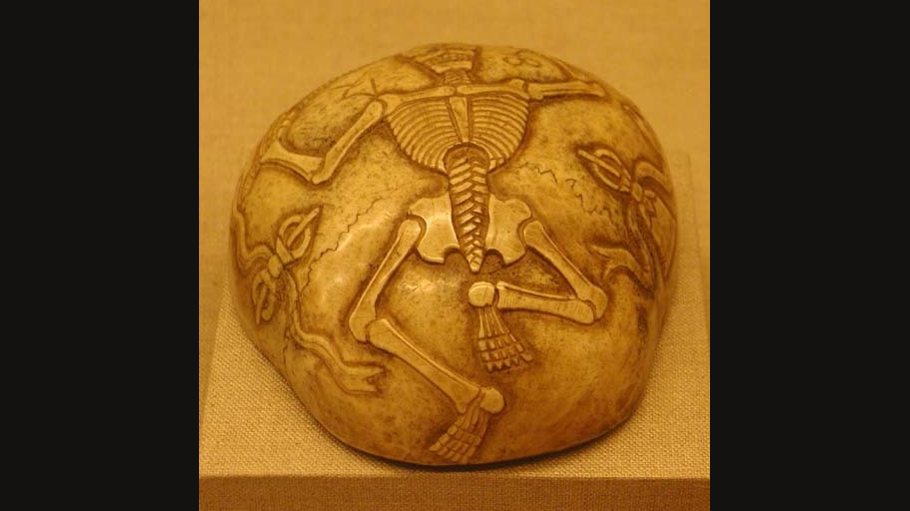
A kapala is a ritual cup made from the upper part of a human cranium, or a vessel modeled on one. The word is Sanskrit for "skull," and the object is documented in Tibetan Vajrayana Buddhism and in Hindu tantric traditions. In both, it holds ritual substances and serves as a reminder that life is impermanent. If you have met one behind museum glass, or in the left hand of a fierce-looking deity in a painting, this page walks through what it is, how practitioners use it, what it means and where it comes from, using the words of the museums and scholars who study it.
What the word covers
"Kapala" and "skull cup" name the same kind of object, and the first is simply the Sanskrit original. The Palace Museum describes it as a human-cranium ritual implement and groups kapala bowls with drums and rosaries as Vajrayana ritual implements. The Nelson-Atkins Museum places it across "various Hindu and Buddhist Tantra traditions." Those traditions include Shaiva ascetics such as the Kāpālikas in the Hindu world, and Tibetan Vajrayana practitioners in the Buddhist one. These are separate religious communities with their own teachings, so it helps to name each when you describe how a kapala is used.
In Tibetan Buddhism, a kapala may be an actual skull vessel or a ritual object modeled on a skull. That difference matters when you see one online, because a metal or resin object that looks like a skull cup is a different thing from a historic cup that contains human bone.
How a kapala is used in ritual
In Vajrayana practice, a kapala serves as a libation vessel, a container for consecrated substances. Museum records mention holy water, beer, wine, cakes and other ritual items. The Los Angeles County Museum of Art (LACMA) describes its use in Chakrasamvara meditation, where the practitioner visualizes a mandala of "the five nectars and the five meats" inside the cup. The Walters Art Museum describes a Tibetan skull cup used to prepare a sacred liquid that is visualized as the nectar of enlightened bliss.
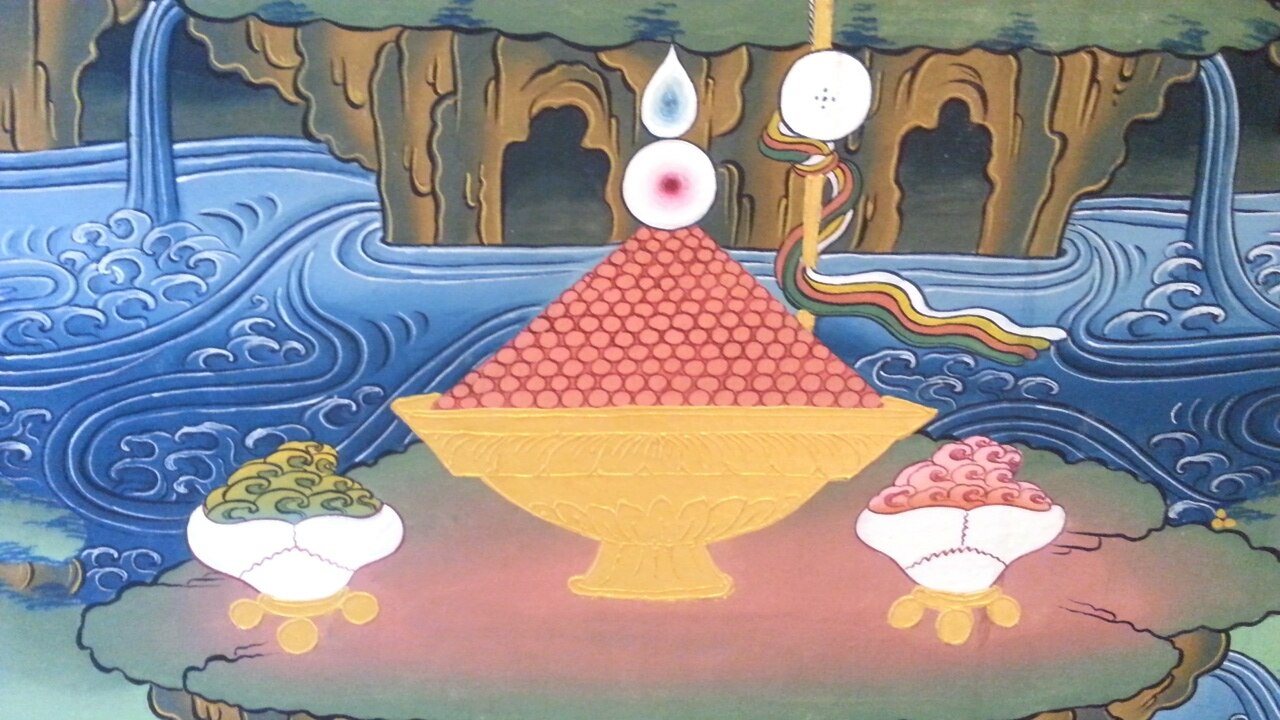
So, what is inside a kapala? In Tibetan tantric practice, the contents can be tea, herbs, wine, grains or other ritual substances, and in the visualizations the substances are symbolic. They are not meant as literal flesh or blood. The cup is both a physical container and a support for meditation.
Where you meet it in art
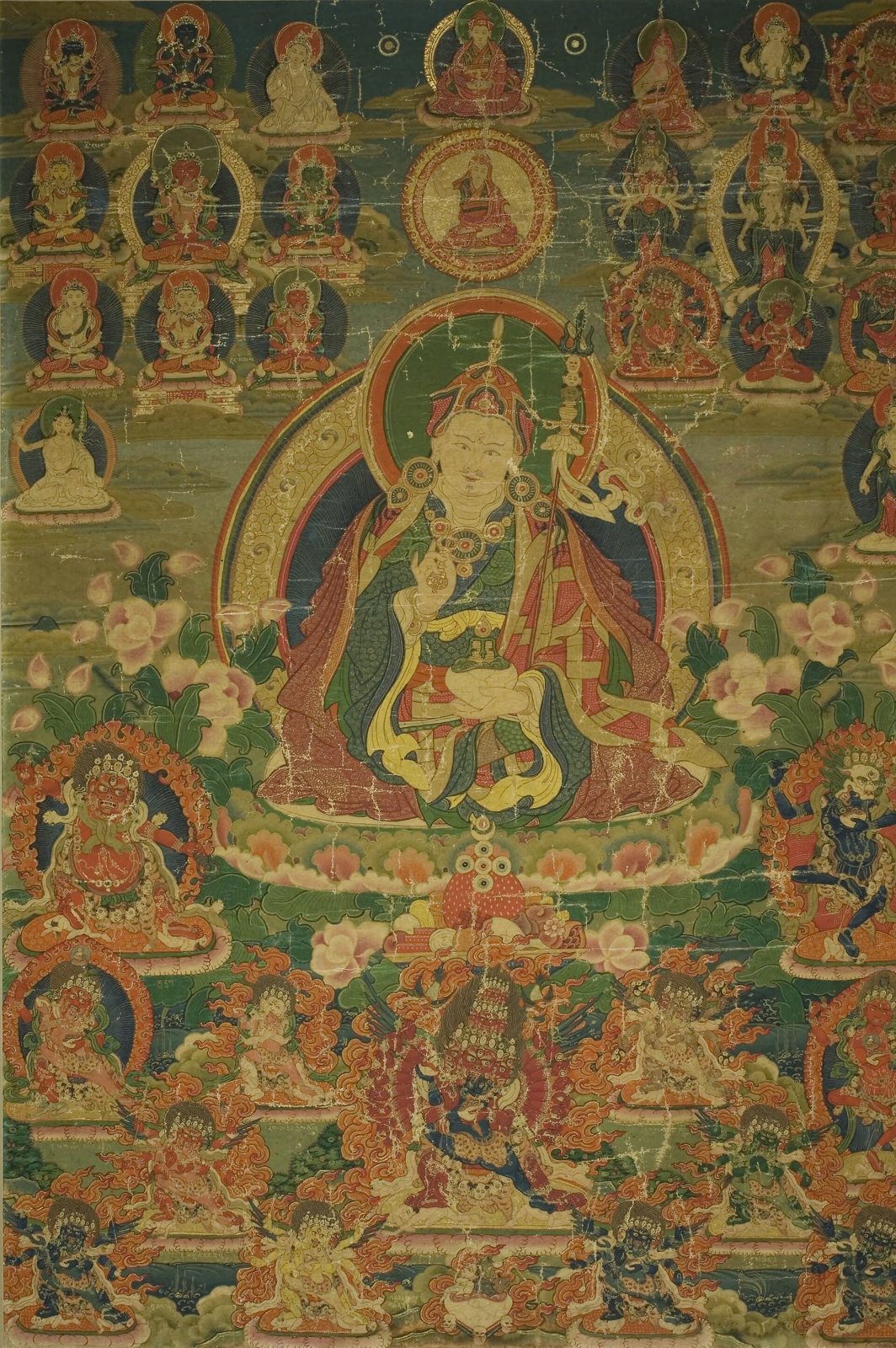
Look at the hands of a wrathful deity and you will often find one. Fierce guardian figures in Tibetan art commonly hold the kapala in the left hand, frequently paired with a curved flaying knife. Elena Pakhoutova, a curator at the Rubin Museum of Art, identifies the skull cup in the hands of Vajrabhairava, and the Rubin's Mongolian Vajrabhairava with his consort Vajravetali, from the 18th to 19th century, holds both the cup and the curved knife. The cup also appears with deities and teachers such as Vajrayogini, Mahākāla, Milarepa and Padmasambhava.
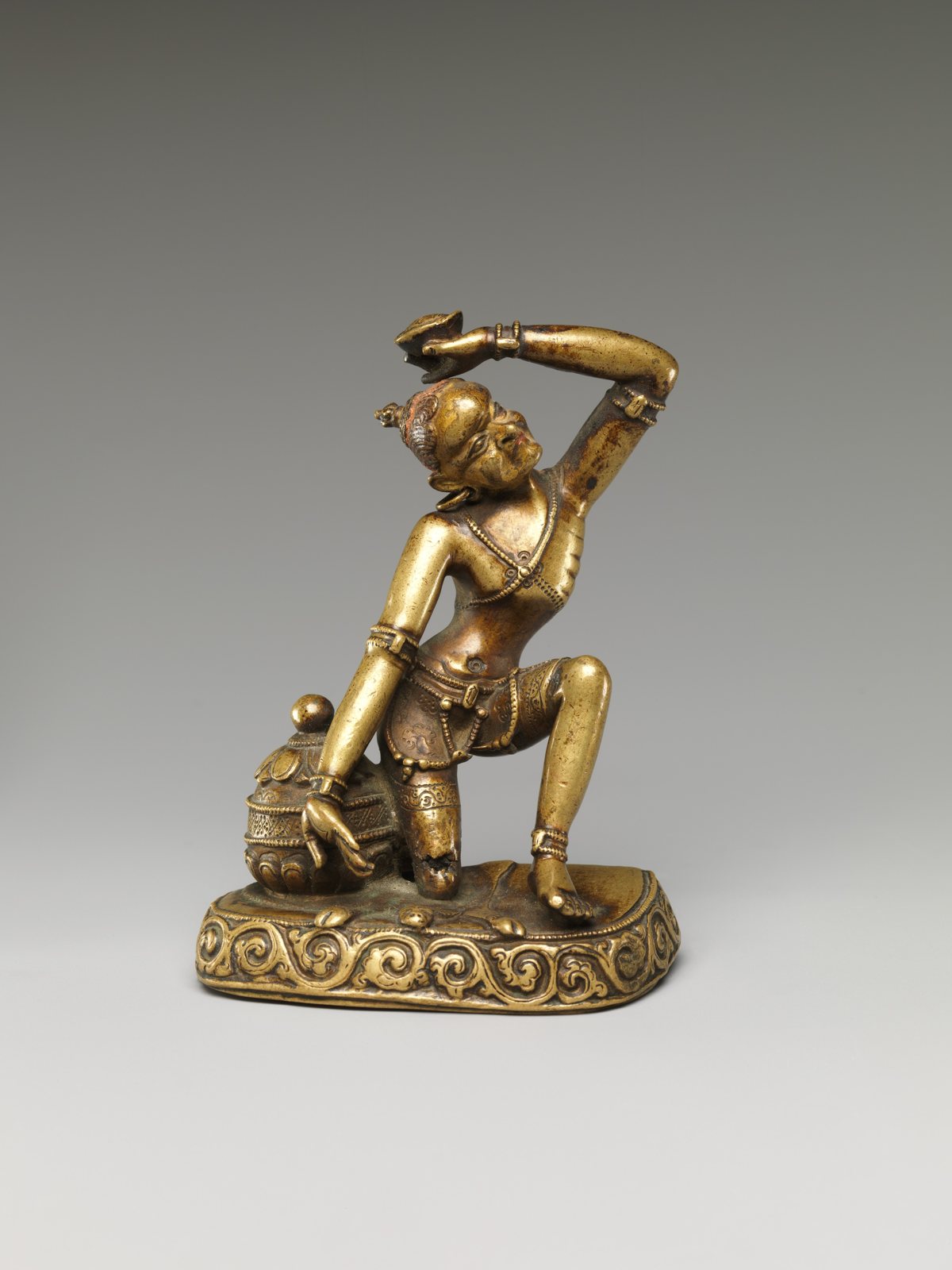
Hindu tantric art uses the object too. In Shaiva traditions the skull cup is associated with ascetic practice and with deities such as Bhairava and Śiva in forms linked to cremation-ground imagery. A 17th-century Tibetan brass sculpture at The Metropolitan Museum of Art shows a tantric ascetic holding a skull cup. It probably represents Kapalapa, whose name means "Skull-cup Bearer."
What the skull means
Museum and scholarly descriptions agree on the main ideas: impermanence, emptiness, wisdom and the change of ordinary experience into insight. Pakhoutova writes that Vajrabhairava's skull cup is "a reminder of impermanence symbolizing wisdom." A Stanford study describes the cup as "a constant reminder of death and impermanence." The Philadelphia Museum of Art explains that blood in a wrathful deity's cup stands for "transcendent knowledge," and that it is turned into an elixir of immortality.
So, what does the skull symbolize in Tibetan Buddhism? The Rubin Museum says it directs practitioners toward the impermanent, illusory and empty nature of the self and of outside things. The Walters adds wisdom and emptiness as central meanings. Death is not treated as an endpoint here. In Vajrayana explanations, the skull and what it holds can stand for the way attachment, ignorance and mortality are turned into wisdom and liberation.
That also answers a common worry. A skull in a kapala should not be called evil, cursed or occult. Fearsome imagery in Vajrayana belongs to a disciplined religious system that uses it to face attachment, aversion and mistaken ideas about the body and the self.
Where the tradition comes from
The kapala has roots in Indian tantric religious culture and later became an important ritual and visual object in Tibetan Vajrayana Buddhism. A 2011 Tufts University thesis by Ayesha Fuentes places early tantric uses in northern India, in the early centuries of the Common Era, and traces how the skull cup was adapted and refined within Tibetan religious art and institutions. She follows its path from an early tantric object linked to pollution and marginal places to a ritual object valued within Tibetan Buddhist institutions. Tibetan art reflects that history. By the 17th century, The Met's sculpture of Kapalapa shows the skull cup already established in Tibetan imagery.
The kapala through museum records
Tap or hover a step to follow the order.
Early centuries CE
Skull cups develop in tantric settings in northern India (Fuentes, Tufts, 2011)
17th century
The Met's Tibetan brass of a tantric ascetic, probably Kapalapa
18th to 19th century
The Rubin Museum's Mongolian Vajrabhairava with consort Vajravetali
About 1850
The Asian Art Museum's Dolonnor kapala of human skull and copper
About 1900 to 1950
LACMA's cup from Eastern Tibet, probably Derge
2020 to 2021
The British Museum shows a kapala in "Tantra: enlightenment to revolution"
Real skulls, and how they are made
Are Tibetan skull cups real human skulls? Documented historic examples are, and museums say so in their records. They use the upper dome of a human cranium, which is cleaned, cut and shaped into a bowl and often fitted with copper or silver linings, lids and stands. LACMA states that the skulls were gathered from charnel fields or reportedly bequeathed by monks, and not obtained by killing people for their skulls.
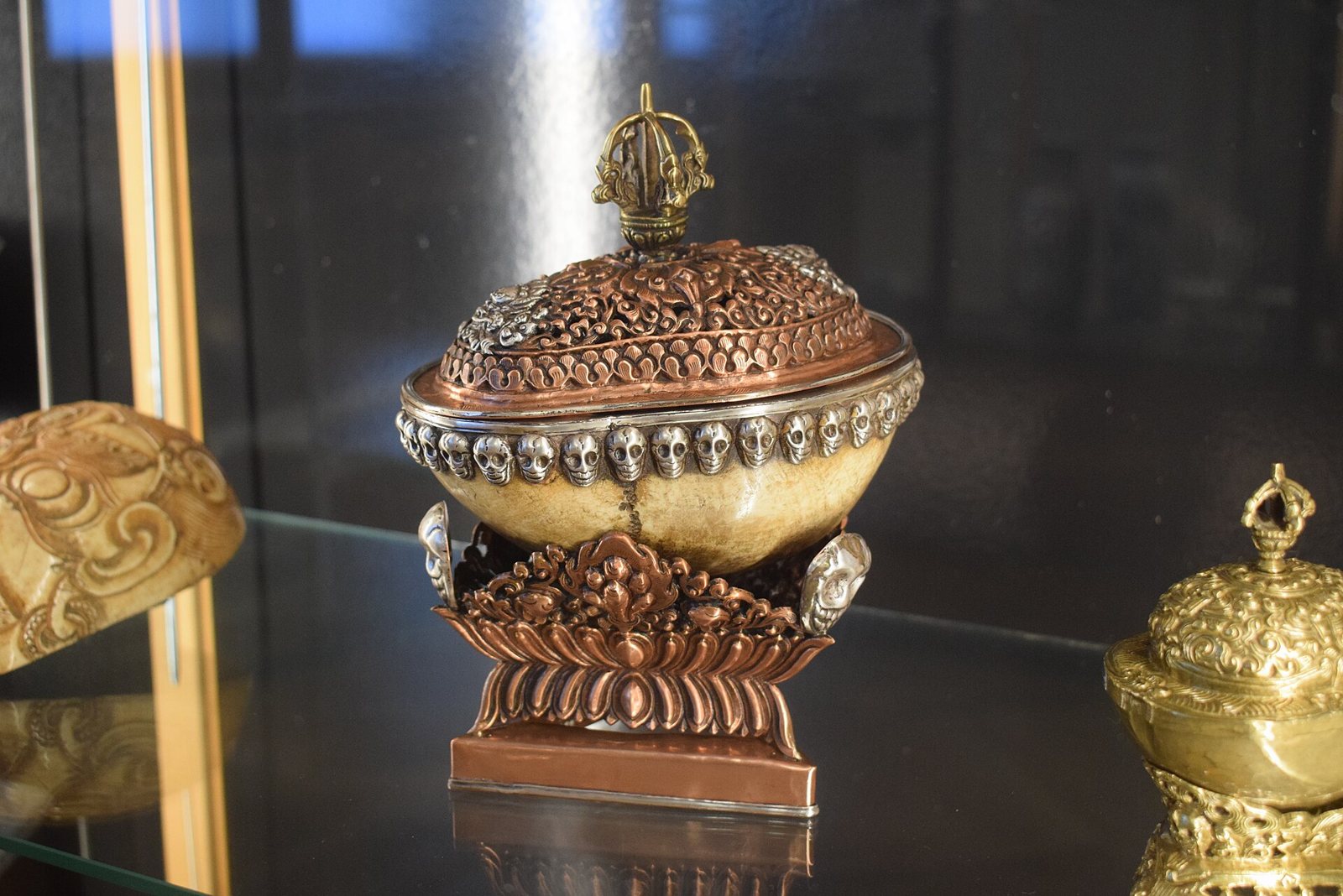
Two museum records show how much decoration can be added. The Asian Art Museum in San Francisco holds a kapala from Dolonnor, Inner Mongolia, dated to about 1850, made of human skull and copper. The National Palace Museum in Taipei holds a Qing-period example with a copper rim and lining, turquoise around the rim, a copper lid and a triangular stand. Its copper interior is engraved with Sanskrit vowels in Tibetan script, and the stand carries three skull ornaments. The museum also notes that raised bone growths on a skull are read, in Tibetan Buddhist tradition, as signs of the deceased's spiritual accomplishment. That is a belief attached to that object's tradition, and it is not a general way to identify any kapala.
Where to see one
Several museums describe kapalas in their online records, and the records are a good place to start if you want the details. Each museum decides what is on view, so check its own page before you plan a visit.
- Asian Art Museum, San Francisco: a skull cup from Dolonnor, Inner Mongolia, about 1850, Qing dynasty.
- The Metropolitan Museum of Art, New York: the 17th-century Tibetan brass of a tantric ascetic holding a skull cup.
- Rubin Museum of Art, New York: Vajrabhairava with consort Vajravetali, Mongolia, 18th to 19th century.
- Los Angeles County Museum of Art: a ritual skull cup with lid and stand, about 1900 to 1950.
- Philadelphia Museum of Art: a skull cup and lid from Tibet, about the 19th century.
- Walters Art Museum, Baltimore: a Tibetan skull cup used in tantric visualization and consecration.
- National Palace Museum, Taipei: a Qing-period kapala with copper fittings, turquoise, lid and stand.
- British Museum, London: a kapala shown in the 2020 to 2021 exhibition "Tantra: enlightenment to revolution."
Kapala quiz
Answer every question to check.
Human remains, museums and buying
A historic kapala contains human remains, and the institutions that keep them treat that seriously. The Met says it acquires works containing human remains only rarely, requires rigorous provenance work and compliance with applicable law, and may consult descendant communities. It also says display decisions should respect the deceased and relevant communities. The UK government's guidance for museums says institutions should establish provenance, make sure possession is lawful and avoid acquisitions where illicit trade is suspected. UNESCO's 1970 Convention addresses the illicit import, export and transfer of cultural property.
If you are wondering whether you can buy an authentic kapala, rules depend on the country, the object's age and provenance, and whether it counts as cultural property, human tissue or both. Ask for full provenance, export documentation and evidence of lawful ownership, and confirm the rules with the relevant national authority or a museum. A decorative replica made from metal, resin or another material that is not human is legally and ethically a different thing from an object containing human bone.
Quick answers about the kapala
What is a kapala?
A kapala is a ritual cup made from the upper part of a human cranium, or modeled on one, documented in Tibetan Vajrayana Buddhism and in Hindu tantric traditions. The Sanskrit word means "skull," and "skull cup" is its English name.
How is a kapala used?
It is a libation vessel that holds consecrated substances such as holy water, wine, tea or grains, and it supports meditation in which those substances are visualized as sacred nectar. The Walters Art Museum and LACMA both describe this use.
What is the significance of a skull cup in Tibetan Buddhism?
It brings death, impermanence and emptiness into the practitioner's attention while pointing toward wisdom. In tantric practice, ordinary or difficult experience is turned into insight, and the cup is the physical support for that idea.
What is the origin of the kapala?
It has roots in Indian tantric religious culture, with early use traced to northern India, and it was later refined in Tibetan Buddhism. The Metropolitan Museum's 17th-century sculpture of Kapalapa shows it was well established in Tibetan imagery by then.
Is a kapala used in Hinduism?
Yes. In Shaiva traditions the skull cup is associated with ascetics such as the Kāpālikas and with deities such as Bhairava and Śiva. Its meaning in those traditions is its own, separate from its Tibetan Buddhist use.
Where to go next
The kapala is one way a religious tradition puts the skull to work, and there are many others. For the wider view, start with skull symbolism. The European tradition of keeping death in mind is covered in what memento mori means, and a very different Mesoamerican use of skulls is in the story of the tzompantli. If you want to see how communities keep and display human remains, read about ossuaries around the world.