

No. 011
Who Is Baron Samedi? The Lord of the Cemetery in Haitian Vodou
Baron Samedi, also written Bawon Samdi or Baron Samdi, is a lwa, a spirit, of Haitian Vodou. He stands at the head of the Gede, the family of spirits connected with the dead, and he is associated with death, cemeteries, ancestors, fertility and the boundary between life and death. In Haitian art and ritual he is often shown dressed in black, with dark glasses, a cigar and a cane. The grinning villain in the James Bond film *Live and Let Die*, the game characters and the Halloween costumes all came later. They are portrayals that borrowed his name, and the Baron his devotees serve is a different figure.
If you met him first on a screen, here is who he is to the people who know him in Haiti.
Baron Samedi in Haitian Vodou
In Haitian Vodou, the lwa are spirits who take part in the lives of the people who serve them. Baron Samedi belongs to the Gede, and Duke University's catalog Sacred Arts of the Black Atlantic identifies Bawon Samdi as one form of Bawon and as the head of the Gede spirits. His domain is the place where the living meet the dead: the graveyard, the grave and the ancestors who rest there.
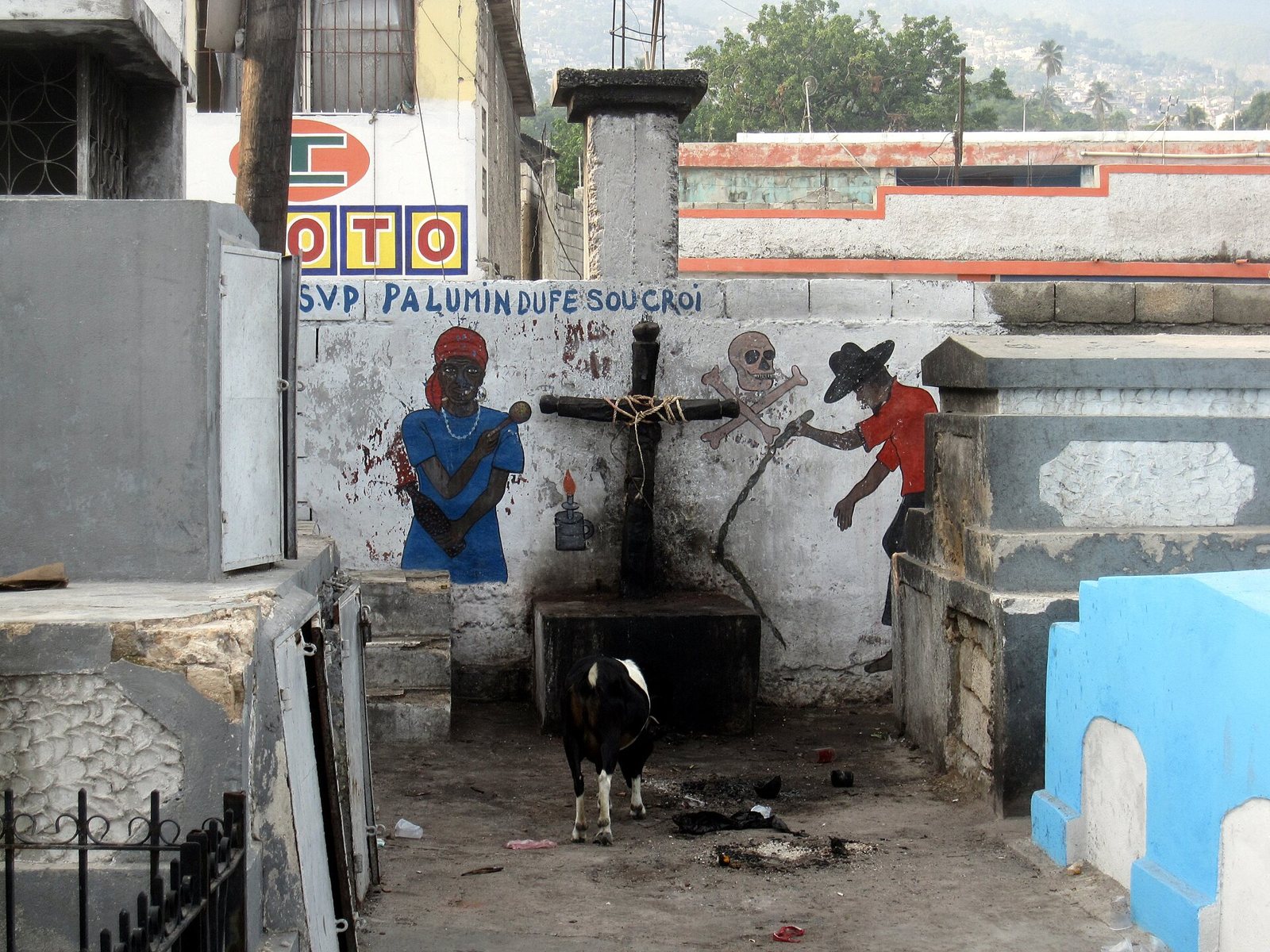
The Gede as a family are famous for their humor. Karen McCarthy Brown's ethnography *Mama Lola* presents Gede as a spirit of death, sexuality and humor. Baron, though, sits a little apart from his playful relatives. Duke's catalog describes the Bawon spirits as more regal and serious than the other Gede, which suits the one who presides over the cemetery itself.
How Baron Samedi is shown
The black clothes, pale or skull-like face, dark glasses, cigar and cane that most people know are well documented in Haitian art and in the scholarship on Vodou. At the Birmingham Museum of Art, a Haitian Vodou flag by the artist Silva Joseph shows Baron with a black hat and a cane, surrounded by skull and cemetery imagery.
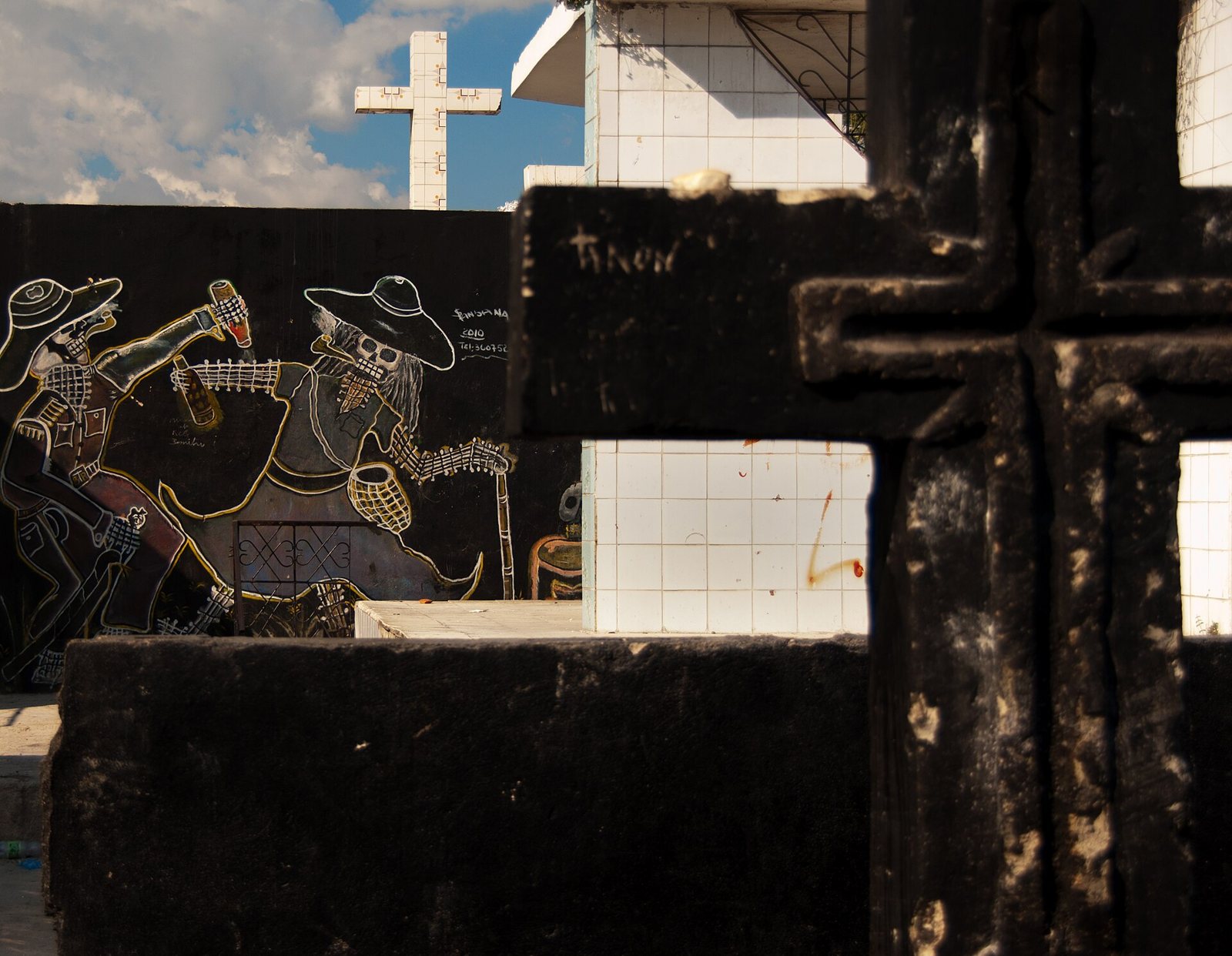
Smithsonian Folkways, in the notes to one of its recordings, describes Guédé Nibo, identified there with Baron Samedi, as dressed in black, smoking a cigar and wearing dark glasses.
The tall top hat is now the most familiar part of the popular image, but it is not a uniform. Representations vary from one Vodou house to another, from one artist to another and from one occasion to the next. When you see a particular image of Baron, the person or house that made it is the best guide to what it shows.
The Gede family and their humor
The Gede, also written Guédé or Ghede, are a family, sometimes called a nation, of lwa associated with the dead, with cemeteries, with sexuality and fertility, and with the continuing relationship between the living and those who have died. Duke's catalog calls Gede a particular nation of spirits within Vodou.
Their humor is part of how they work. The Gede use jokes, sexual humor and theatrical behavior to confront death and to poke at social authority. Duke's catalog puts it warmly: the Gede remind worshipers to live with exuberance. For a family of spirits who keep company with the dead, that is a striking message.
Maman Brigitte, his partner
Baron is rarely alone. Maman Brigitte, also written Manman Brijit or Gran'n Brigitte, is the principal feminine figure paired with Baron Samedi in many Haitian Vodou accounts, and together they belong to the Gede family.
The Haitian painter Gérard Valcin showed the two of them together in his 1985 painting *Gran'n Brigitte and Baron Samedi*, now in the collection of Dartmouth's Hood Museum. Like every detail of Vodou practice, the way the pair is understood can differ among houses and regions, so a particular temple's own teaching is the best guide to its version of their story.
Lord of the cemetery and the cross of Baron
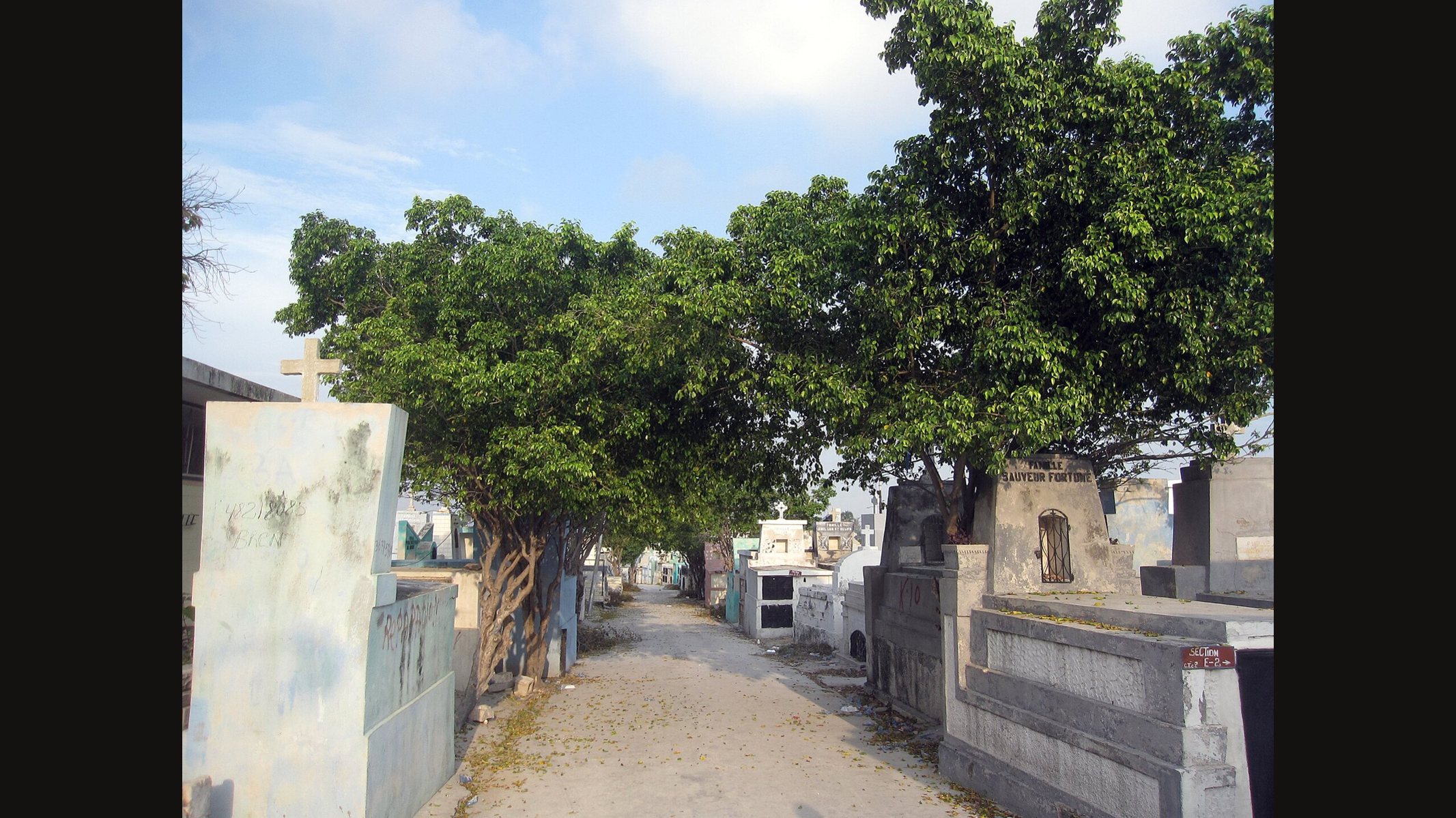
Baron's title as lord of the cemetery has a concrete meaning in Haiti. According to Duke's catalog, in a Haitian graveyard the graves of the first people buried there may be treated as altars to the Bawon spirits. The same catalog associates Bawon Samdi with the cross found on tombstones.
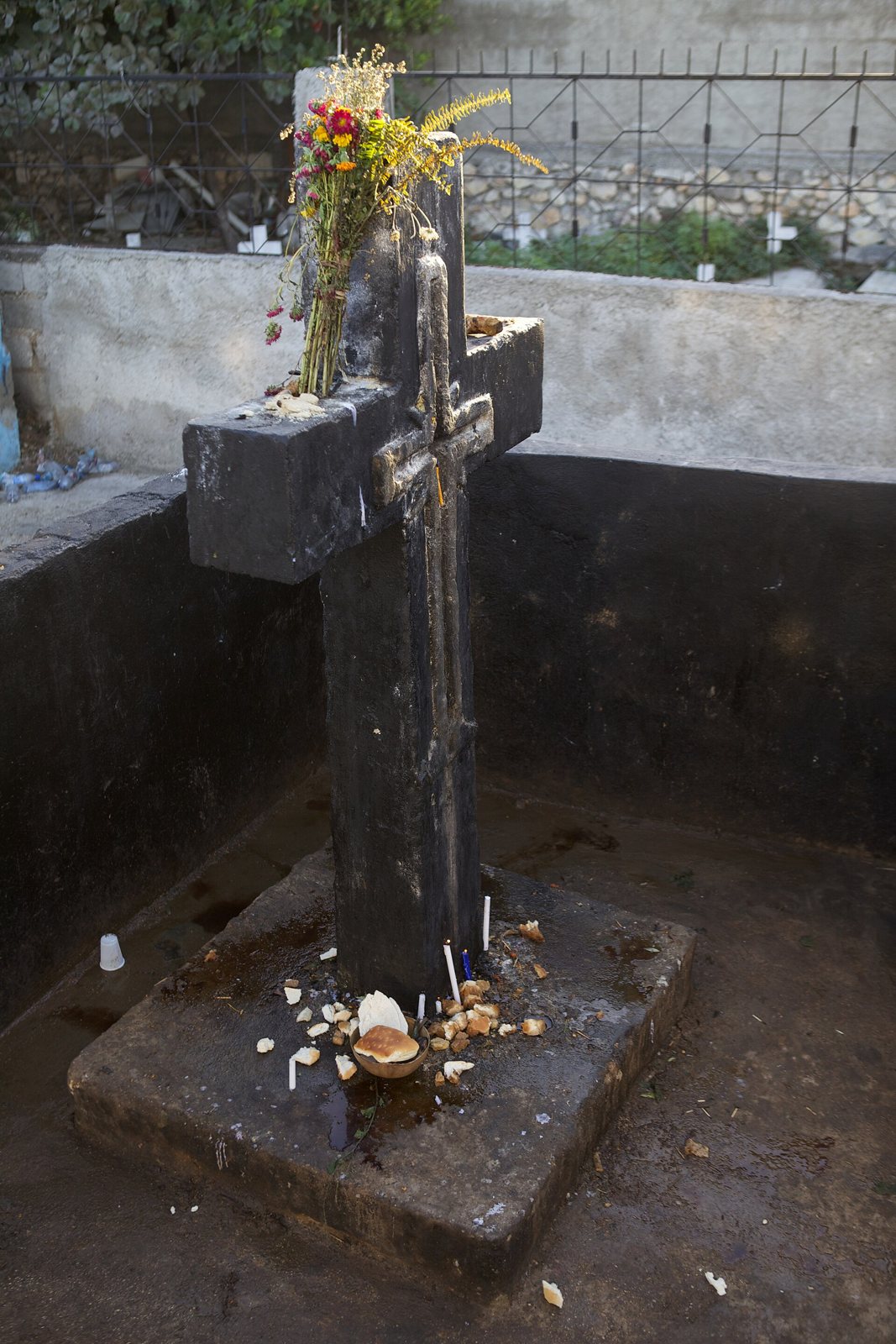
That cross is one of the clearest signs of Baron in Haitian religious life. Penn State's digital collection records a Cross for Baron Samedi set in the Petwo altar of Ednaire Pierre in Port-au-Prince, and a Yale University Art Gallery publication discusses the black wooden cross of Baron Samedi and the cemetery. The cross is not a decoration or a skull motif to be borrowed. Its meaning is religious and funerary, tied to a particular cemetery or altar, and its appearance and ritual use can vary from place to place.
Baron also has a vèvè, a ritual design associated with him. A version of Baron Samedi's vèvè is held on Wikimedia Commons, marked as public domain there.
Fèt Gede in early November
Each year around November 1 and 2, Haitians mark Fèt Gede, the festival of the dead and the Gede spirits. The dates overlap with the Roman Catholic feasts of All Saints' Day and All Souls' Day, but the Vodou observance carries its own religious meanings and practices.
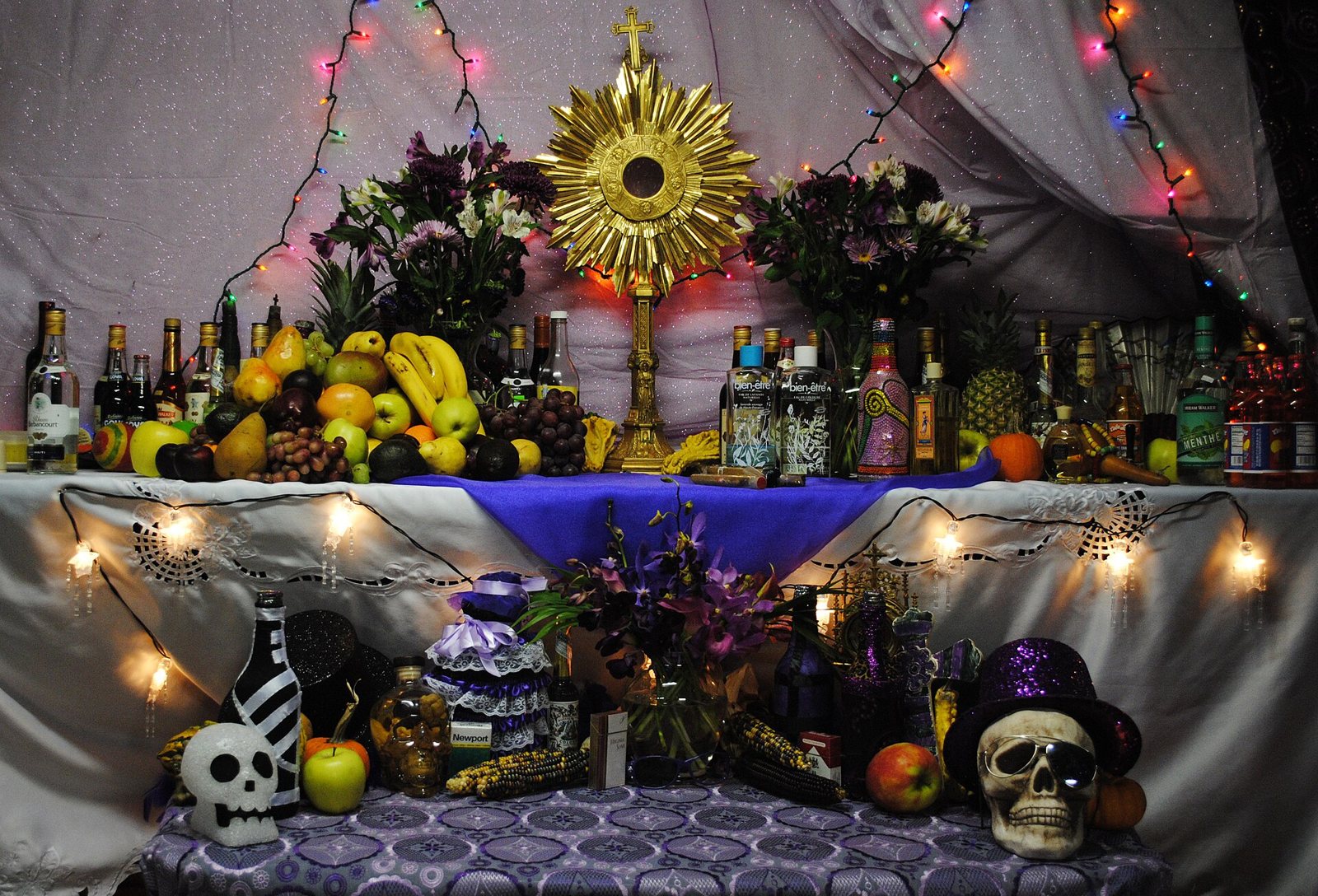
The Associated Press photographed Fèt Gede at Cité Soleil Cemetery in Port-au-Prince on November 1, 2018. Participants dressed in black, white and purple and gathered around Baron Samedi's tomb. In November 2023, Haiti's newspaper *Le Nouvelliste* reported hundreds of Vodou practitioners, devotees, celebrants and curious visitors at Port-au-Prince's main cemetery for the traditional observance on November 1 and 2.
Fèt Gede can include processions, visits to graves, drumming, dancing, prayers, gifts for the dead and ceremonies in their honor. The details differ from one community and sosyete, a Vodou religious society, to the next. The same season is kept very differently in Mexico, where families welcome their dead home for Día de Muertos; it is a separate tradition with its own customs.
Baron Samedi in art, film and festival
Tap or hover a step to follow the order.
1973
Geoffrey Holder is credited as Baron Samedi in the James Bond film Live and Let Die
1985
Haitian artist Gérard Valcin paints Gran'n Brigitte and Baron Samedi, now at Dartmouth's Hood Museum
November 1, 2018
The Associated Press photographs Fèt Gede at Cité Soleil Cemetery in Port-au-Prince
November 1 and 2, 2023
Le Nouvelliste reports hundreds at Port-au-Prince's main cemetery for Fèt Gede
From Vodou to the screen
The Baron most people meet first comes from *Live and Let Die*, the James Bond film released in 1973. The AFI Catalog credits Geoffrey Holder, a Trinidadian actor, dancer and choreographer, as Baron Samedi, and lists the film's settings as New York City, New Orleans, Jamaica and Pinewood Studios. The film makes him a theatrical villain and henchman in a fictional Caribbean setting full of cemetery scenes and supernatural violence. The British Film Institute describes Holder's role as Bond's "voodoo-practising nemesis."
Games have borrowed the name too. SMU Guildhall's student game *Voodudes* casts Baron Samedi as an antagonist who traps spirits and seeks power over the living and the dead. That is a game's story, not a description of the lwa.
Scholars and practitioners draw a clear line between these portrayals and the religion. Adam Michael McGee's Harvard dissertation separates Haitian Vodou from what he calls "imagined voodoo" in American popular culture, and argues that films and popular entertainment have often tied Vodou to fear, danger, racial stereotypes and hypersexuality. Mambo Chita Tann, a Haitian Vodou practitioner, stressed in an interview that Vodou is community-oriented, rooted in Haitian history and culture, and not properly understood outside them.
So, the film Baron is best read as a character that took a name from a living religion, and the Baron of Haitian Vodou as a lwa with his own family, partner, cemetery and festival.
Questions people ask about Baron Samedi
These answers pick up where the sections above leave off.
What is Baron Samedi known for?
Baron Samedi is known in Haitian Vodou as the head of the Gede, a lwa associated with death, cemeteries, ancestors and the boundary between life and death. He is often shown in black, with dark glasses, a cigar and a cane, and in Haitian graveyards he is linked with the cross found on tombstones.
Is Baron Samedi good or evil?
Haitian Vodou does not reduce Baron Samedi to the horror-fiction category of evil. Duke's catalog connects him and the Gede with death, fertility, healing, humor and care for the dead, while films often recast him as a villain or a demonic threat. Views and ritual relationships with him differ among practitioners and houses.
Is Baron Samedi the same as Papa Legba?
No, Papa Legba and Baron Samedi are different lwa with different roles. Smithsonian Folkways describes Legba as the lwa who opens the barrier between the material and spiritual worlds and identifies him with the crossroads, while Baron belongs to the graveyard and the Gede family. Popular culture sometimes blends their images, but Haitian Vodou keeps them distinct.
Who is Maman Brigitte?
Maman Brigitte, also written Manman Brijit or Gran'n Brigitte, is the principal feminine figure paired with Baron Samedi in many Haitian Vodou accounts. Gérard Valcin painted the two together in 1985, in a work now at Dartmouth's Hood Museum.
Is a Baron Samedi costume offensive?
Opinions differ, and it is a question of respect rather than rules. What helps is knowing that Baron Samedi is a lwa honored in a living religion, with his own cemetery cross and festival, and that his best-known screen version is a 1973 film character, not an account of Haitian practice.
Baron Samedi and the Gede
Answer every question to check.
Where to go next
Baron Samedi is one of many figures around the world who keep watch over the dead. Our guide to gods of death sets him beside others from different cultures, and the story of the Grim Reaper's origin follows Europe's best-known personification of death. For the many things a skull can stand for, from mourning to rebellion, read our guide to skull symbolism.