
No. 003
What Is Skull and Bones? Yale's Secret Society, Its Tomb and Its Members
Skull and Bones is a senior society at Yale University in New Haven, Connecticut. It was founded in 1832 by two Yale students, William Huntington Russell and Alphonso Taft. Each year it chooses a small group of juniors, about fifteen, who become members for their senior year and stay members for life. The society meets privately in a building on High Street known as the Tomb, under a skull-and-crossbones badge marked with the number 322. Three U.S. presidents belonged: William Howard Taft, George H. W. Bush and George W. Bush. Because its meetings are private, a lot of what you hear about it is rumor, and the documented part is worth separating out.
Founded at Yale in 1832
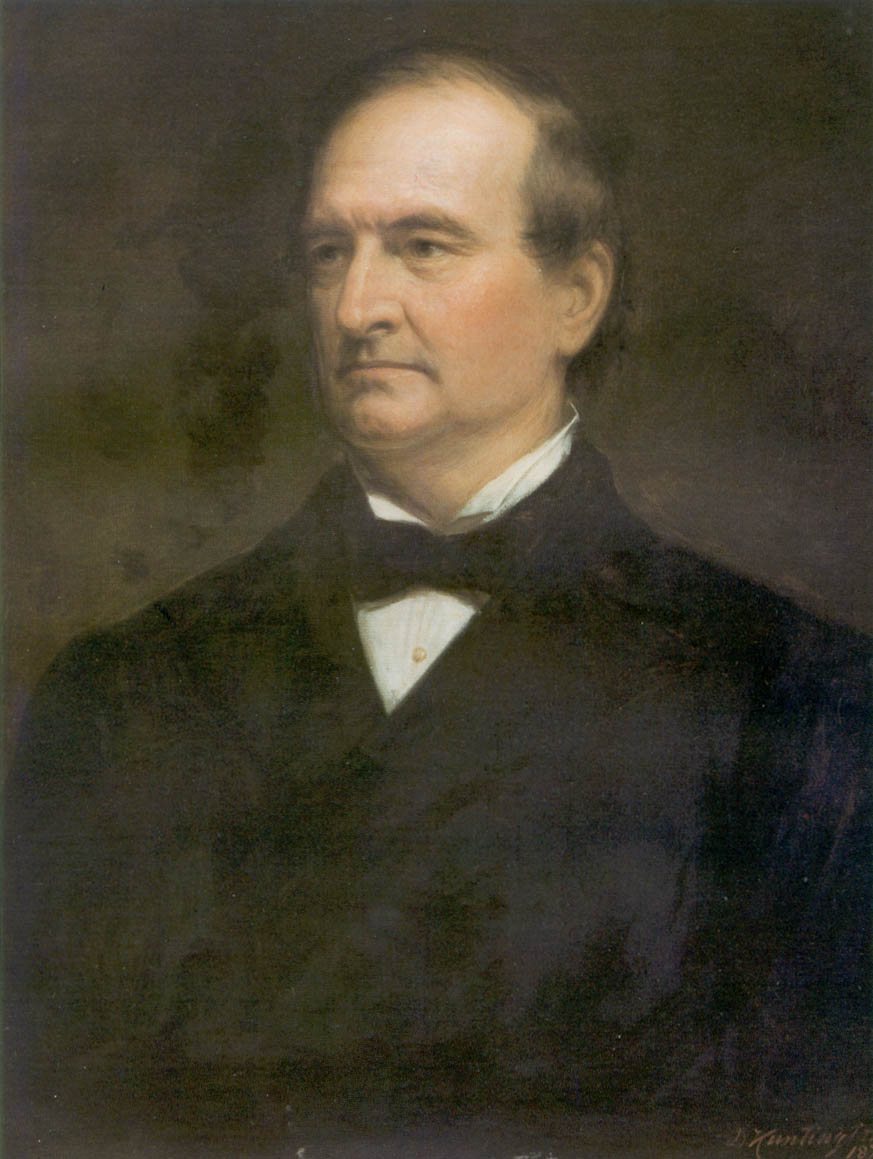
The society began with two classmates. William Huntington Russell, of the Yale Class of 1833, and Alphonso Taft founded it in 1832. Judith Ann Schiff, writing as archivist for Yale Alumni Magazine, names both founders and dates the founding to that year. Alphonso Taft went on to become the father of a president, William Howard Taft, who joined the same society decades later.
Skull and Bones is one of Yale's senior societies, clubs that pick students at the end of their junior year for membership in their final year. Most of what makes it famous comes from three things: its skull emblem, its building and the list of people who have belonged.
Skull and Bones, 1832 to 2004
Tap or hover a step to follow the order.
1832
William Huntington Russell and Alphonso Taft found Skull and Bones at Yale
1856
The society moves into its Tomb on High Street
1871
Lyman Bagg publishes an early account of the society in Four Years at Yale
1876
Students calling themselves the Order of the File and Claw get into the Tomb and publish a pamphlet
1965
John Kerry is selected
1967
George W. Bush is selected
1991
Skull and Bones votes to admit women
2004
Bush and Kerry face each other as presidential nominees
The skull, the Tomb and the number 322
The skull and crossbones started as an attention-grabber. According to Yale Alumni Magazine's history of the Tomb, it began in 1832 as a quick drawing on a meeting notice posted on a Yale chapel door, meant to make people look. It worked well enough that the society adopted it as its badge. The image itself is much older than the club; its long history on flags, graves and poison bottles is told in skull and crossbones.
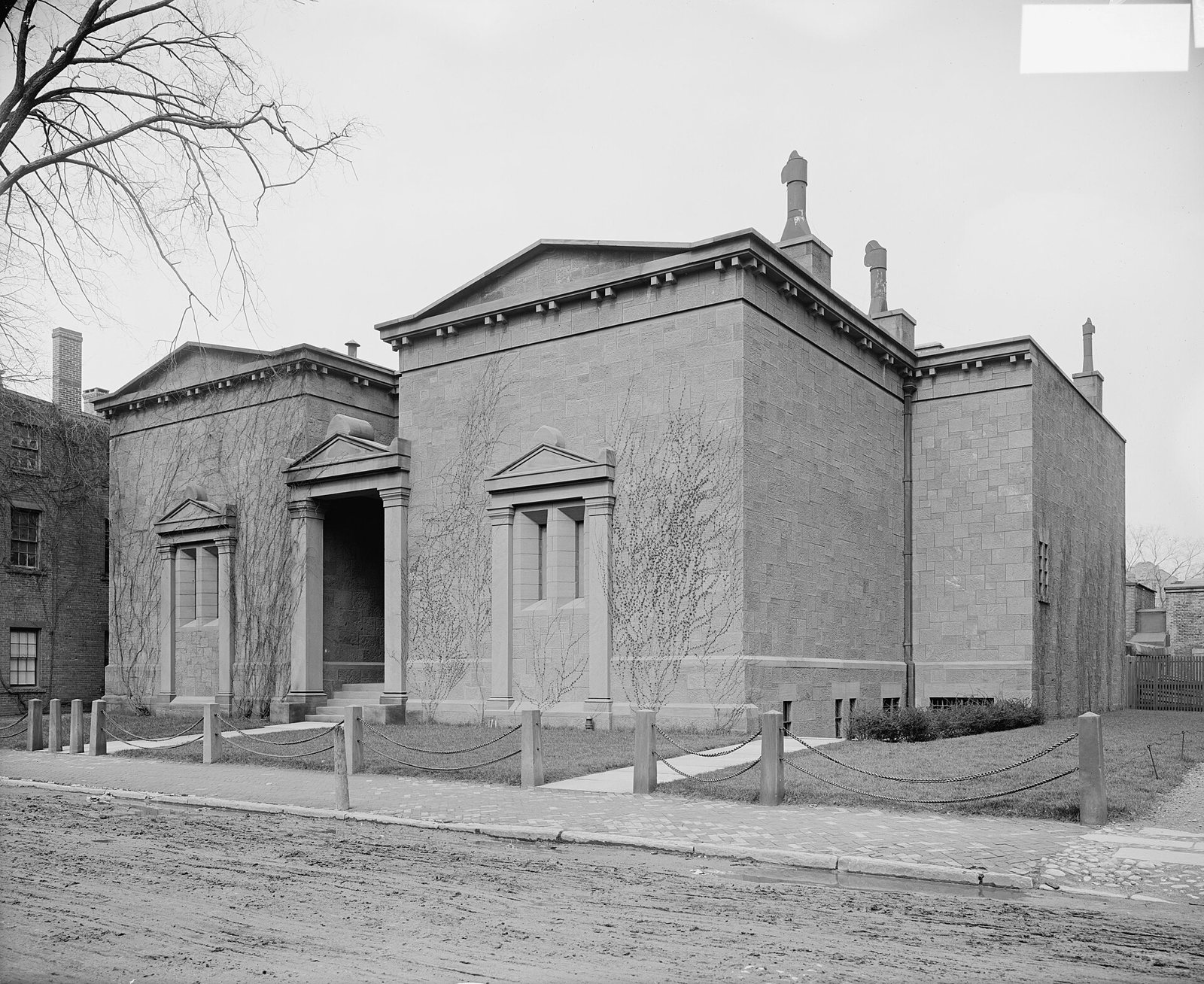
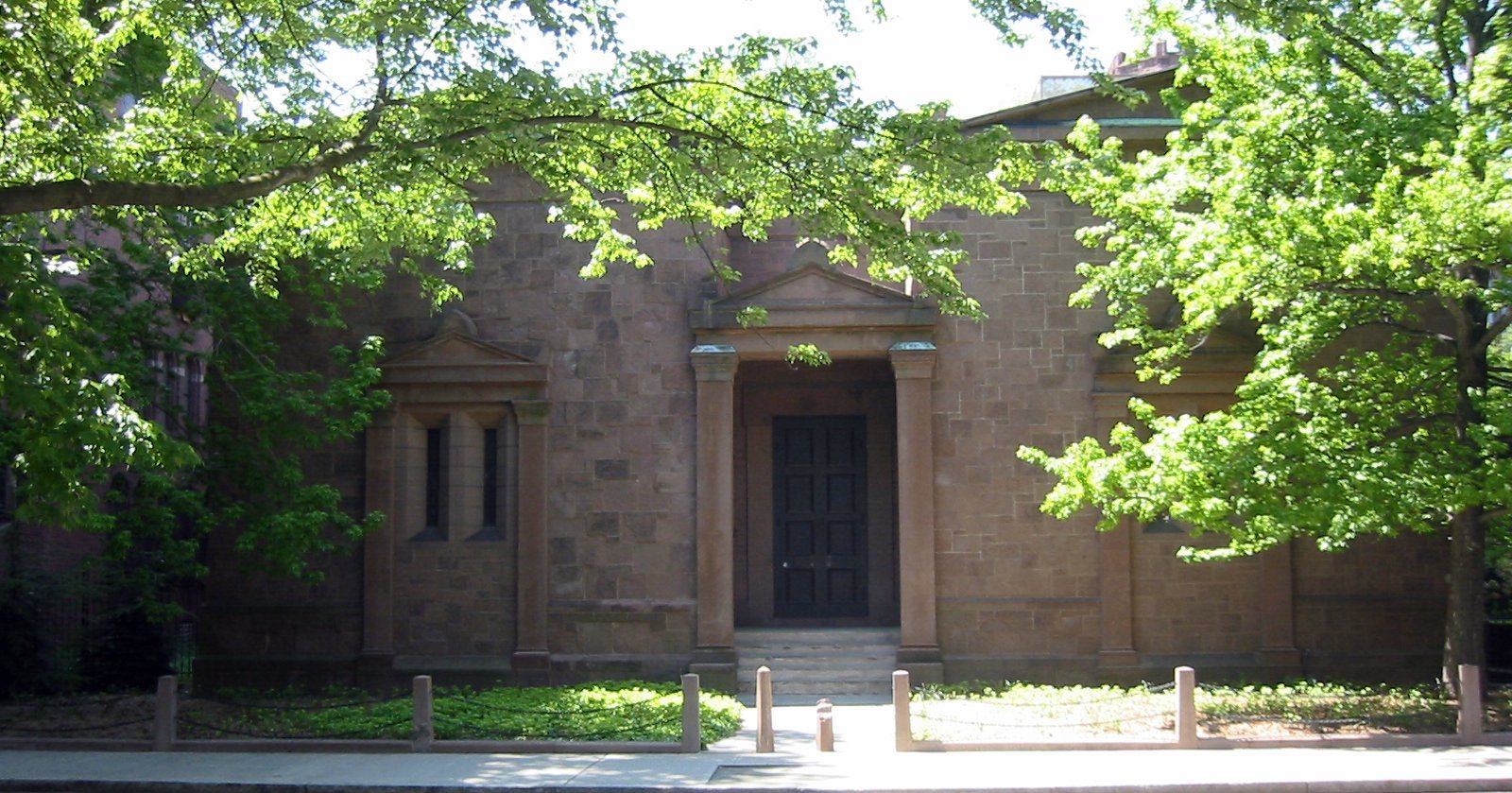
For its first years the society met in rented rooms. On March 13, 1856, members moved into a purpose-built hall on High Street designed by Alexander Jackson Davis. It was enlarged in 1883 and again in 1903. Everyone calls it the Tomb, which is fitting for a building whose members wear a skull.
The badge also carries the number 322, and the number turns up inside the Tomb as well. Yale Alumni Magazine says several explanations exist. The one cited most often links it to the year 322 BCE and the death of Demosthenes, or of Alexander the Great. An 1871 account by Lyman Bagg, in his book *Four Years at Yale*, already tied the society's number to either Alexander or Demosthenes. That makes the Demosthenes story an old tradition, but the society has never published an official explanation, so 322 stays an interpretation rather than a settled fact.
What members actually do
The documented routine is simpler than the legends. Each year the society selects about fifteen Yale juniors for membership in their senior year, according to historian and physician Michael Bliss, and membership continues for life after graduation. Members meet privately in the Tomb. The society has its own vocabulary, with terms such as "knights," "patriarchs," "temple" and "barbarians."
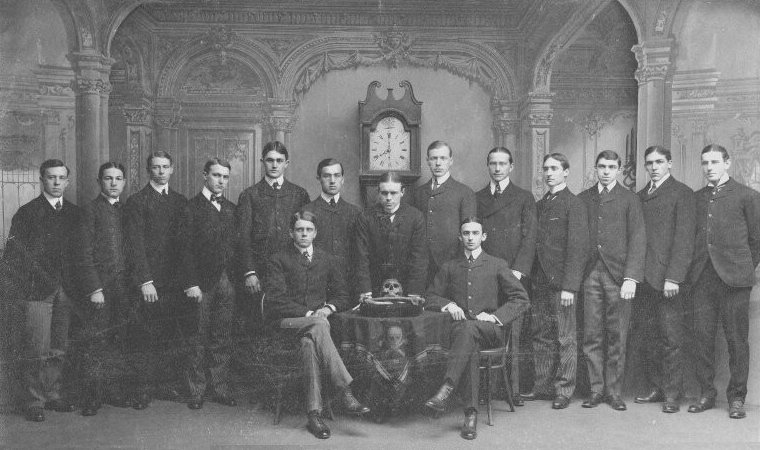
The best early look inside came from people who were not invited. In 1876 a group of students calling themselves the Order of the File and Claw got into the Tomb and published a pamphlet about what they saw. They described a room numbered 322, a skull in a cellar toilet, group photographs, books of memorabilia and a fireplace bearing an image of the society's badge. It is a strange list, and the skull in the cellar toilet is the detail nobody forgets, but it is a description of a clubhouse rather than evidence of a plot.
The members you have heard of
The names are the main reason people ask about Skull and Bones. William Howard Taft, Yale Class of 1878, became the 27th president of the United States and later chief justice. George H. W. Bush, Class of 1948, was president from 1989 to 1993. His son George W. Bush, Class of 1968, was president from 2001 to 2009.
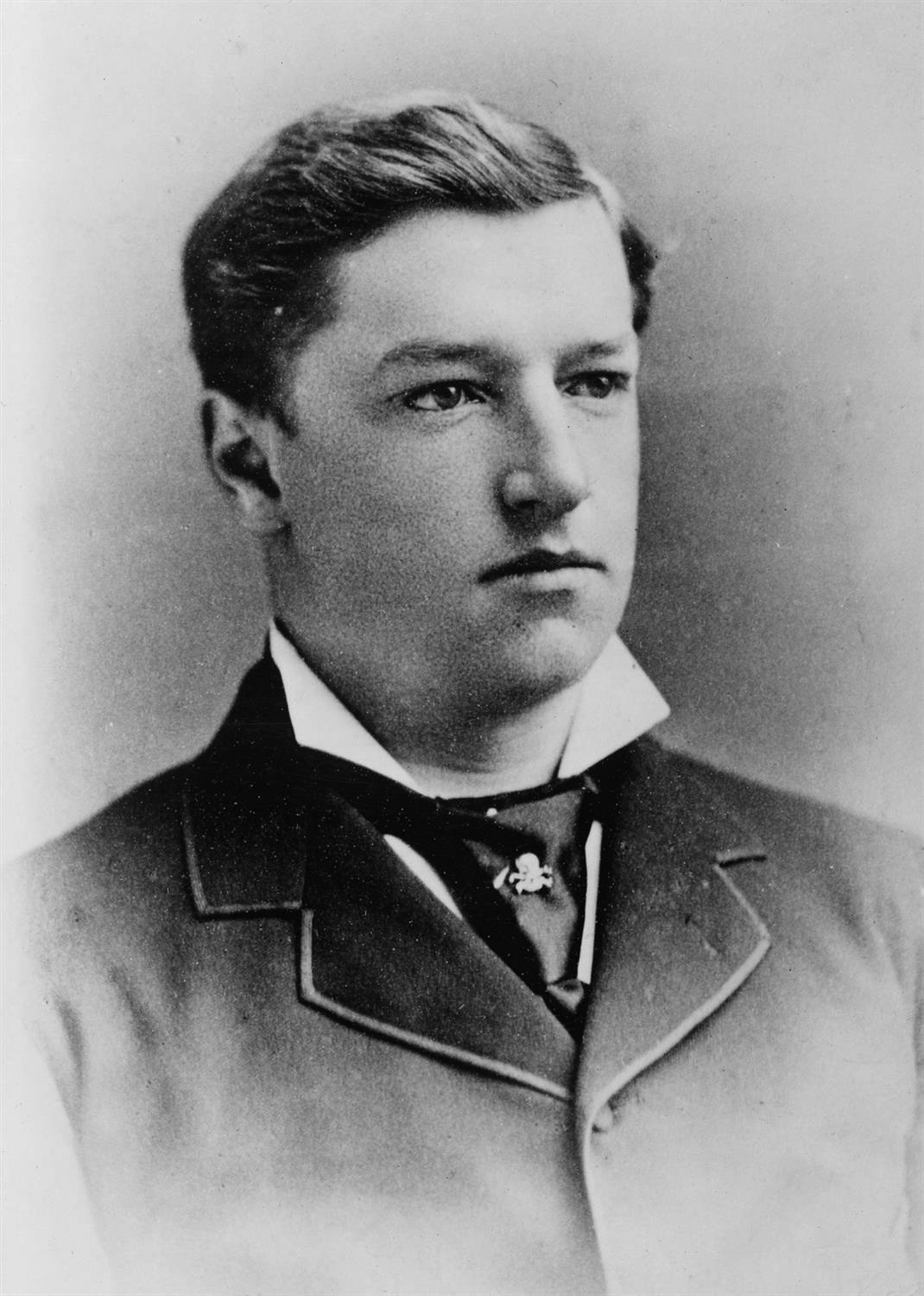
John Kerry, Class of 1966, became the Democratic nominee for president in 2004 and later secretary of state. That made the 2004 election an odd one for the society. As CBS News noted at the time, both major-party nominees, Bush and Kerry, had belonged to Skull and Bones at Yale.
Michael Bliss lists other members who became well known in writing, publishing, public life and medicine: David McCullough, William F. Buckley, John Hersey, Archibald MacLeish, Henry Luce, Averell Harriman, Prescott Bush, Daniel Coit Gilman and William Stewart Halsted.
You may wonder how anyone knows these names if the society is secret. For most of its history the names were not secret at all. Yale Alumni Magazine reports that keeping members' names private was an innovation of the 1970s; earlier lists were public, while meetings and practices stayed private.
Women in the Tomb
Yale began admitting undergraduate women in 1969, but Skull and Bones stayed all male for more than two decades after that. The change came with a fight. In April 1991, the society's members selected a class that included women, against the wishes of the alumni leadership. As The Washington Post reported, the alumni board responded by changing the locks on the Tomb and suspending the next class.
The standoff did not last. In July 1991, the organization narrowly voted to admit women, a change recorded in Yale's own timeline of women at Yale.
What is documented and what is rumor
Some things about Skull and Bones are well established: its founding in 1832, the Tomb on High Street, the badge and the number 322, the yearly selection of about fifteen juniors, lifetime membership and the names reported by journalists and historians.
Other stories are reports. Accounts of initiation rituals involving coffins, confessions, nudity or staged death ceremonies come from journalists, authors, former members and anonymous sources. They may be partly true, partly embellished or entirely invented, and they are best read as reported or alleged rather than as confirmed facts about the society.
Then come the large claims: that Skull and Bones controls the CIA, presidential elections, the media or some kind of global plan. Those are speculation. It is true that many members went on to positions in politics, business and government, and that they know each other. That shows a network of alumni from one university club. It does not, on its own, show coordinated control of anything.
How much do you know about Skull and Bones?
Answer every question to check.
Quick answers about Skull and Bones
These are the questions people ask most.
What does the Skull and Bones society do?
Skull and Bones selects a small group of Yale juniors each year, about fifteen, for membership in their senior year and for life afterward. Members meet privately in the Tomb, and what happens inside is not made public. The membership itself has often been reported by journalists and historians.
Is Skull and Bones Masonic?
No, Skull and Bones is a Yale senior society, not a Masonic lodge. Its skull emblem and private meetings invite comparisons with fraternal orders, but it is a student society founded at Yale in 1832. The skull has its own separate history in Masonic symbolism, covered in the skull in Freemasonry.
What does 322 mean?
The most cited explanation links 322 to 322 BCE, the year associated with the death of Demosthenes or Alexander the Great. That reading goes back at least to Lyman Bagg's 1871 account, but the society has never published an official meaning, so it remains an interpretation.
What presidents were members of the Skull and Bones society?
Three presidents were members: William Howard Taft, George H. W. Bush and George W. Bush. John Kerry, the 2004 Democratic nominee, was also a member, which meant both major candidates that year were Bonesmen.
Are the members' names secret?
Not historically. Yale Alumni Magazine reports that keeping the names private only began in the 1970s; before that, membership was publicly known, even though the meetings were not.
Where to go next
Skull and Bones borrowed one of the oldest images there is. For the skull and crossbones on flags, graves and warning labels, read skull and crossbones, and for the way skulls have carried meaning across cultures, start with skull symbolism. If the comparison with Freemasons is what brought you here, the skull in Freemasonry covers the Masonic side.