

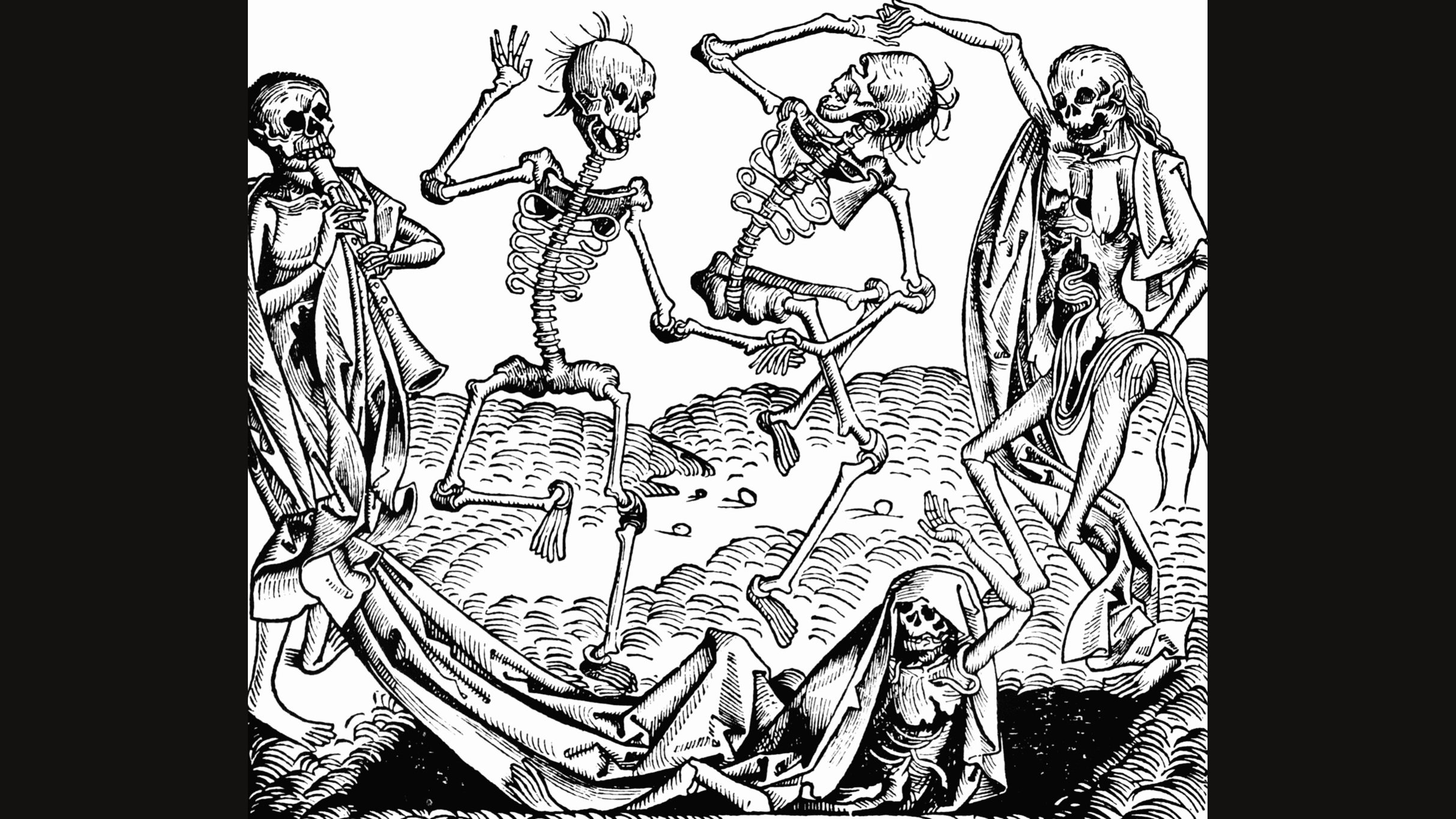
No. 002
The Grateful Dead Skull: Steal Your Face, Skull and Roses and the Dancing Skeletons
The Grateful Dead's best-known symbol is the Steal Your Face skull, the white skull split by a lightning bolt that fans call the Stealie. Owsley "Bear" Stanley came up with a circle and lightning bolt around 1969 as a marker for the band's equipment, and artist Bob Thomas turned it into the skull. The skull and roses is older: poster artists Alton Kelley and Stanley Mouse adapted it in 1966 from Edmund J. Sullivan's illustration for the *Rubáiyát of Omar Khayyám*. And the line of dancing skeletons is documented inside the 1977 compilation *What a Long Strange Trip It's Been*, in artwork associated with Rick Griffin. Each one puts death next to music, joy and a crowd of people who came to dance.
The Stealie, from road case to icon
The lightning-bolt skull started out as a practical answer to a backstage problem. At the big multiband festivals of the late 1960s, equipment from several groups ended up crowded together, and the Dead needed to pick out their own road cases fast. According to the band's official history, "Bear's Choice 50", Bear wanted an image anyone could recognize even when only part of a case was showing.
Starfinder Stanley recalled that his father proposed a simple circle split by a lightning bolt, then asked Bob Thomas to develop the lettering and the skull form. Early drafts appeared on Dead equipment around 1969. By early summer 1971, the finished skull design was on the gear. The official account names Thomas as the artist who completed the image that fans know today: a white skull divided by a bolt over a red and blue circle.
The skull reached record covers in 1973 on *History of the Grateful Dead, Volume One: Bear's Choice*, and it became tied for good to the 1976 album *Steal Your Face*. That album gave the skull the name most people use. The phrase comes from a line in the Dead song "He's Gone," "steal your face right off your head." Bear himself reportedly called it the skull-and-lightning-bolt and did not much care for "Steal Your Face." Fans went their own way anyway, and today the image answers to Stealie, Steal Your Face, the Steal Your Face skull or simply SYF.
How the Grateful Dead's skulls and skeletons arrived
Tap or hover a step to follow the order.
1913
Methuen in London publishes Edmund J. Sullivan's illustrated edition of FitzGerald's Rubáiyát of Omar Khayyám
September 16 and 17, 1966
Kelley and Mouse use Sullivan's skeleton and roses on a poster for Grateful Dead shows at the Avalon Ballroom in San Francisco
Around 1969
Bear develops a circle and lightning bolt marker for the band's equipment
Early summer 1971
The finished skull and lightning bolt design appears on Dead gear
1973
Bob Thomas's marching bears appear on Bear's Choice
1976
The skull and lightning bolt appears prominently on Steal Your Face
1977
The documented dancing skeletons appear inside What a Long Strange Trip It's Been
Skull and roses, from a 1913 book to a 1966 poster
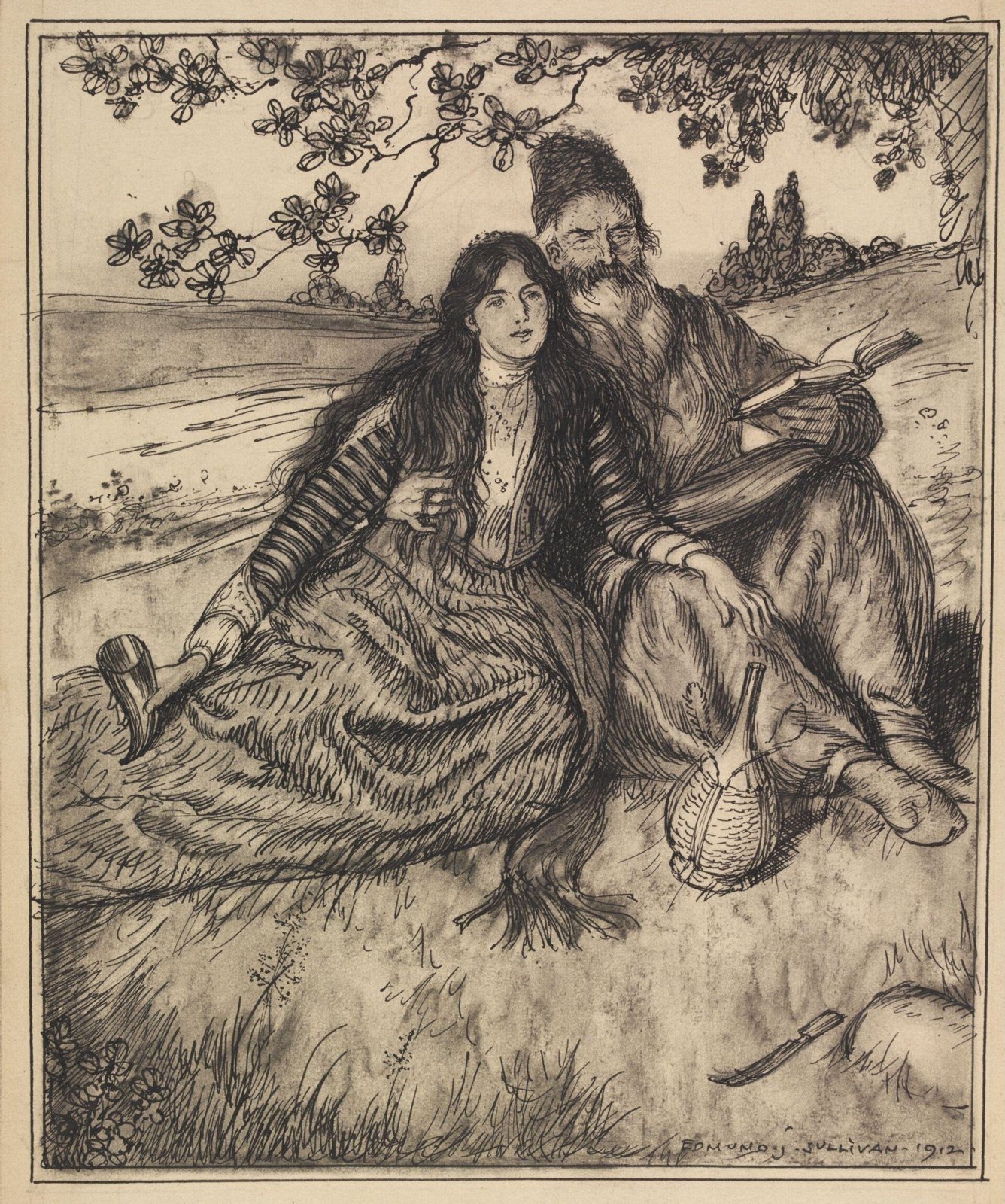
The skeleton crowned with roses was not drawn for the Grateful Dead at all. It began in London in 1913, when the publisher Methuen issued an edition of Edward FitzGerald's English translation of the *Rubáiyát*, the verses attributed to the Persian poet Omar Khayyám, with illustrations by Edmund J. Sullivan. The Morgan Library holds related original artwork by Sullivan from that year. The skeleton image accompanies quatrain XXVI, a poem that sets the short flowering of life against death.
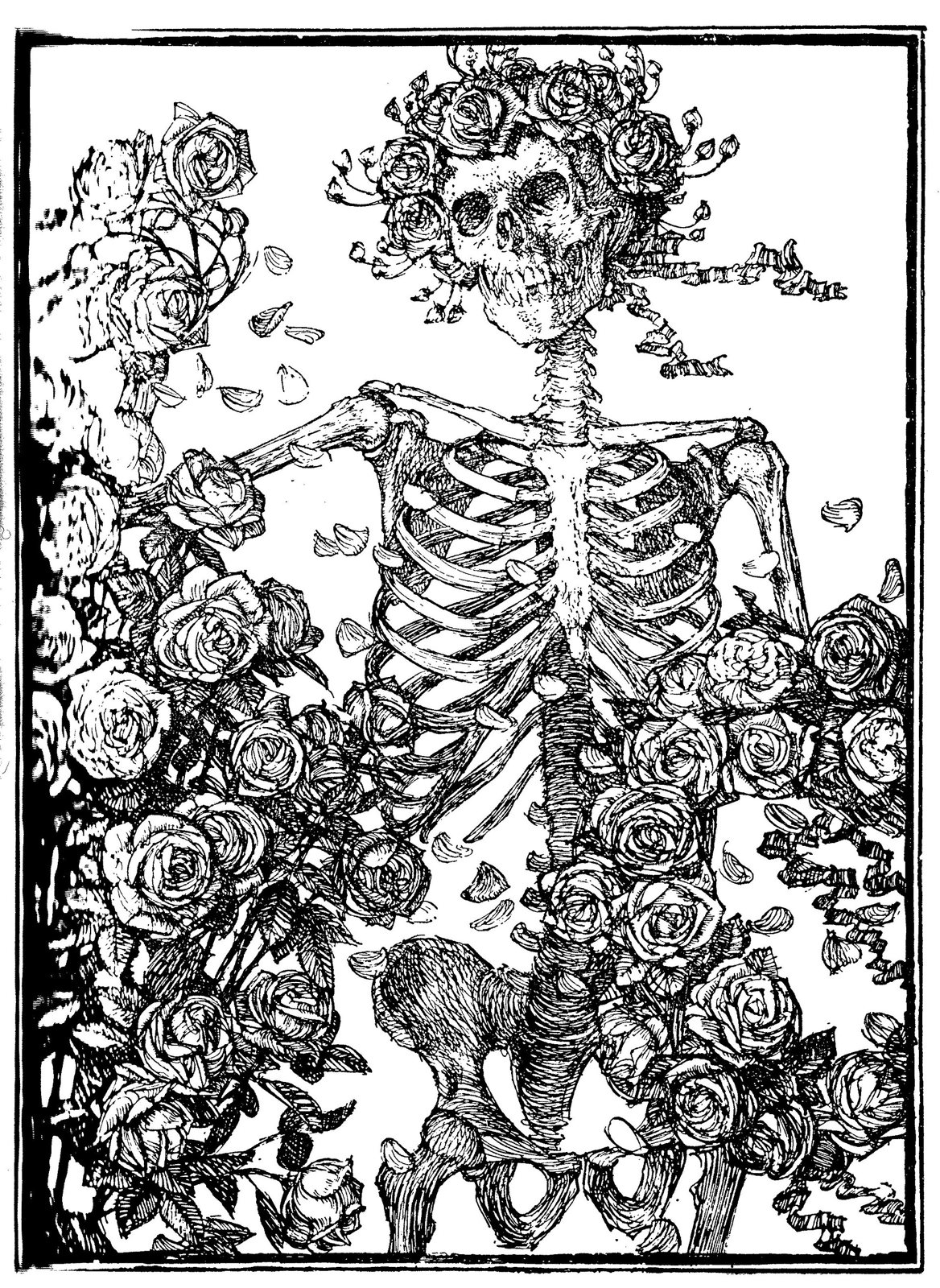
Half a century later in San Francisco, Alton Kelley was paging through a copy. "I was just looking through a book one day and there it was. It was so perfect I couldn't believe my eyes," he recalled, in an interview reproduced in the study *Of Corpse*, hosted by the Library of Congress. Kelley and his partner Stanley Mouse took Sullivan's black and white drawing and added color, lettering and a new poster design around it.
Their version first appeared on a poster for Grateful Dead shows at the Avalon Ballroom on September 16 and 17, 1966. Five years later, a cropped skull and roses went onto the cover of the band's 1971 self-titled live album, which nearly everyone calls *Skull and Roses*. So, the skeleton belongs to Sullivan, and the color, lettering and composition that made it a Dead image belong to Kelley and Mouse. The pairing itself is far older than the band; the wider meaning of skulls with flowers is told in skull and roses meaning.
The bears that only march
Before the skeletons, a word about the bears, because the two get mixed up all the time. The colorful bears in a row were drawn by Bob Thomas for the 1973 album *Bear's Choice*. People call them the dancing bears. Bear Stanley did not. According to the official piece "What's With the Bear(s)?", he said they are marching in a high step, not dancing. Generations of fans have nodded politely and kept calling them dancing bears.
The bears and the skeletons share a cheerful forward motion, which is part of why they blur together in memory. They come from different artists and different years.
Where the dancing skeletons come from
The line of skeletons kicking up their heels is often linked to Grateful Dead art of the late 1970s and early 1980s, and the chronology is worth getting right. The earliest documented appearance is the inside gatefold of the 1977 compilation *What a Long Strange Trip It's Been*. According to the Music Mascots Archive, that artwork is associated with the artist Rick Griffin. It is not a Bob Thomas design. From there the dancing skeletons spread through posters, shirts, stickers and fan-made art in the 1980s, until they were almost as familiar as the Stealie.
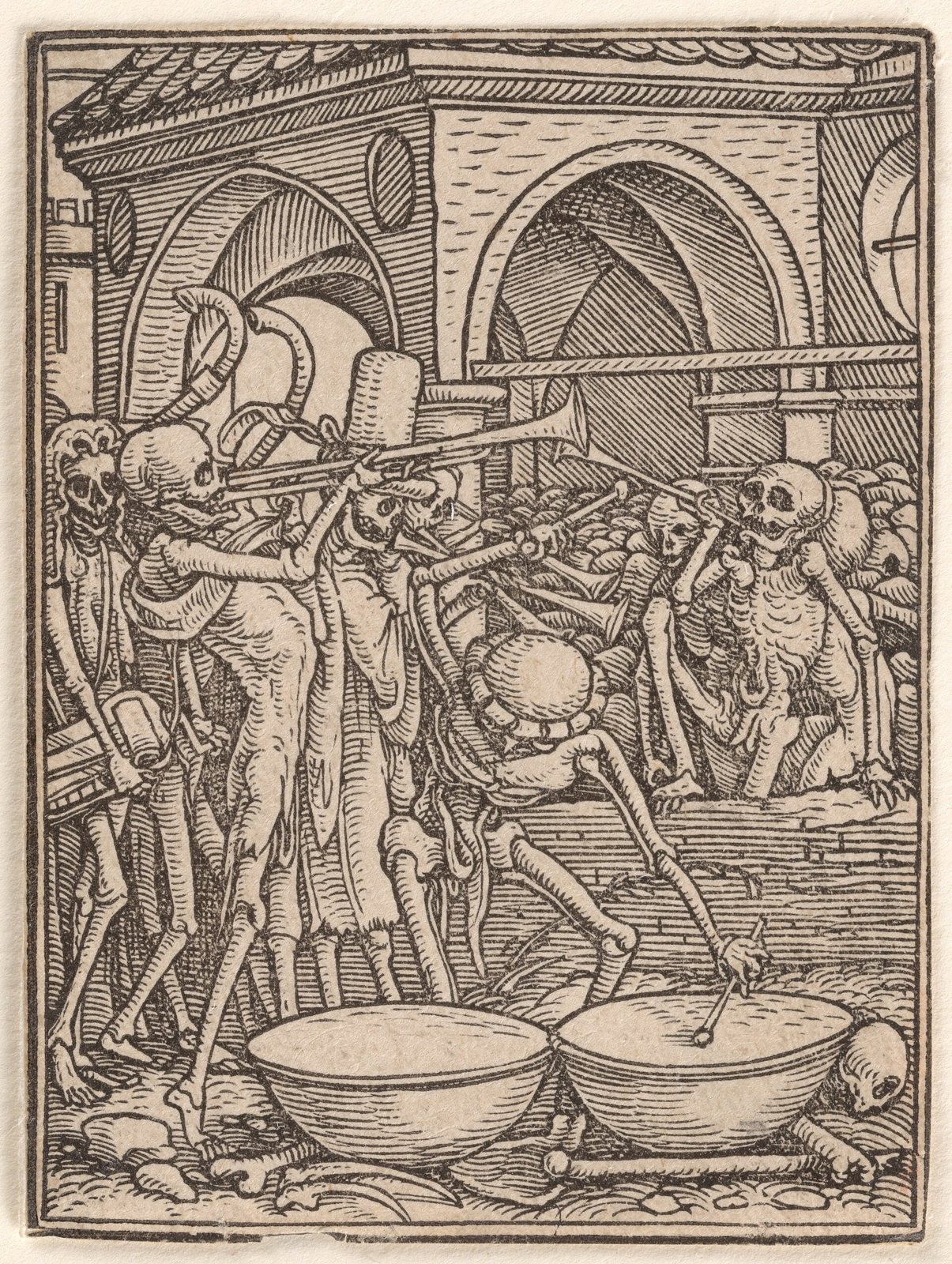
Dancing skeletons have a long ancestry in Europe. In the late Middle Ages, the danse macabre, or Dance of Death, showed skeletons dancing with people of every social rank, a way of saying that death comes for everyone. Time traces how that imagery still shapes the skeletons people put up every autumn. The Dead's skeletons clearly echo that tradition, but the resemblance is not proof that Griffin copied any one medieval work. The full story of the medieval dance is in danse macabre.
What do they mean? Griffin left no statement about the design that settles it, so the meaning is an interpretation. The most natural reading puts mortality and joy side by side. The skeleton recalls death and the band's own name; the dance suggests music, play and people moving together. A scholarly study titled "Dancing Skeletons: The Subversion of Death Among Deadheads" places the image in a wider Deadhead habit of making death playful and communal.
What the skulls and skeletons meant to the band and its fans
The first meaning of the Stealie was simple: this case belongs to the Grateful Dead. Over time the skull became shorthand for the band's name, for the electricity of its live shows and for its habit of setting death imagery inside joyful, psychedelic, crowded rooms.
The skull and roses carries its own pairing. Its source poem is about how short life is, and Kelley and Mouse's bright colors made the skeleton something inviting rather than only a warning. The dancing skeletons pushed that idea further, turning death into movement and celebration.
Fans used the images to find each other. Mickey Hart described an early skeleton image as a code that "let you see in the windows of people in San Francisco who were Deadheads before there were Deadheads," as quoted in *Of Corpse*. John Perry Barlow once called Deadhead culture "a religion without beliefs," in a Time retrospective on Jerry Garcia. That phrase fits the art well. The skulls work as signs of a shared community more than as a creed. These readings come from different people, and the band never published one official explanation that covers every skull and skeleton it used.
Who owns the images today
The Grateful Dead's images are trademarks and artworks with owners. The band's website is run by Rhino Entertainment on behalf of Grateful Dead Productions. Its terms of use state that Grateful Dead Productions, Rhino, Warner Music Group and their licensors own or control the trade names, trademarks and logos, and they prohibit using the marks with an unrelated product or service without express prior written consent.

The band's archive tells a related story. The Grateful Dead Archive Online says the physical materials are held by the University of California, Santa Cruz, while the intellectual property stays with Grateful Dead Productions and the trademarks are managed by Rhino. Owning a poster in a library does not move the rights.
Sullivan's 1913 illustration is a different case. The Wikimedia Commons record lists it as public domain, and you can look at the original skeleton there. That status covers Sullivan's drawing only. It does not extend to the Dead's adaptation, its lettering and color, or any of the band's logos.
How well do you know the Grateful Dead's skulls?
Answer every question to check.
Quick answers about the Grateful Dead skull
These are the questions people ask most often.
What is the symbol of the Grateful Dead?
The Steal Your Face skull is the band's most recognizable symbol: a white skull split by a lightning bolt over a red and blue circle. It sits alongside a family of other images, including the skull and roses, the marching bears, the dancing skeletons, the terrapins and the skeleton jester. Any of them will tell another fan exactly who you listen to.
What is the Grateful Dead head called?
The lightning-bolt skull is called the Stealie, Steal Your Face, the Steal Your Face skull or SYF. Its designer, Bear Stanley, called it the skull-and-lightning-bolt. The popular name comes from the song "He's Gone" and stuck after the 1976 album of the same name.
What does the Grateful Dead's dancing skeleton symbolize?
The dancing skeleton is usually read as mortality and joy in the same figure: a reminder of death that is busy having a good time. It also belongs to a European tradition of dancing-death imagery that goes back to the Middle Ages. No single official statement fixes its meaning, so fans read it through the music and the community around it.
Is the skull and roses image older than the band?
Yes. The skeleton was drawn by Edmund J. Sullivan for a 1913 London edition of the *Rubáiyát*. Kelley and Mouse adapted it in 1966, and the band used it on the 1971 live album most people call *Skull and Roses*.
Where to go next
The Dead borrowed from a long line of skulls in art, from medieval dances to Victorian book illustration. The wider history of skulls with flowers is in skull and roses meaning, and the dance that the skeletons echo is in danse macabre. For other well-known skulls in painting and print, see famous skull art, and for what skulls have meant across cultures, start with skull symbolism. Skeletons that dance and celebrate also have a home in Mexico, in the calacas of Día de Muertos.