

No. 032
How to Pose Halloween Skeletons: Funny Yard and Porch Ideas That Stay Put
The best way to pose a Halloween skeleton is to give it a job people can read from the sidewalk. Sit it in a rocker, send it up a tree or a porch railing, hand it a rake, or clip a leash to a skeleton dog. Let the chair, the tool or the leash explain what is going on, because the skeleton's joints cannot hold much on their own. Then hold the whole thing up from behind: a garden stake, a length of rebar or a fence post against the spine, with zip ties, wire or fishing line keeping the arms and legs where you want them. That combination, a clear scene plus hidden support, is what makes a display funny on the first night and still standing on the last.
How a plastic skeleton's joints work
Most inexpensive Halloween skeletons are plastic bones joined by screws or simple hinge-like joints. That design keeps them cheap and light, and it also explains why they flop. Arms and legs usually swing forward and backward but do not rotate sideways, so a skeleton will happily march in place and stubbornly refuse to wave across its own chest.
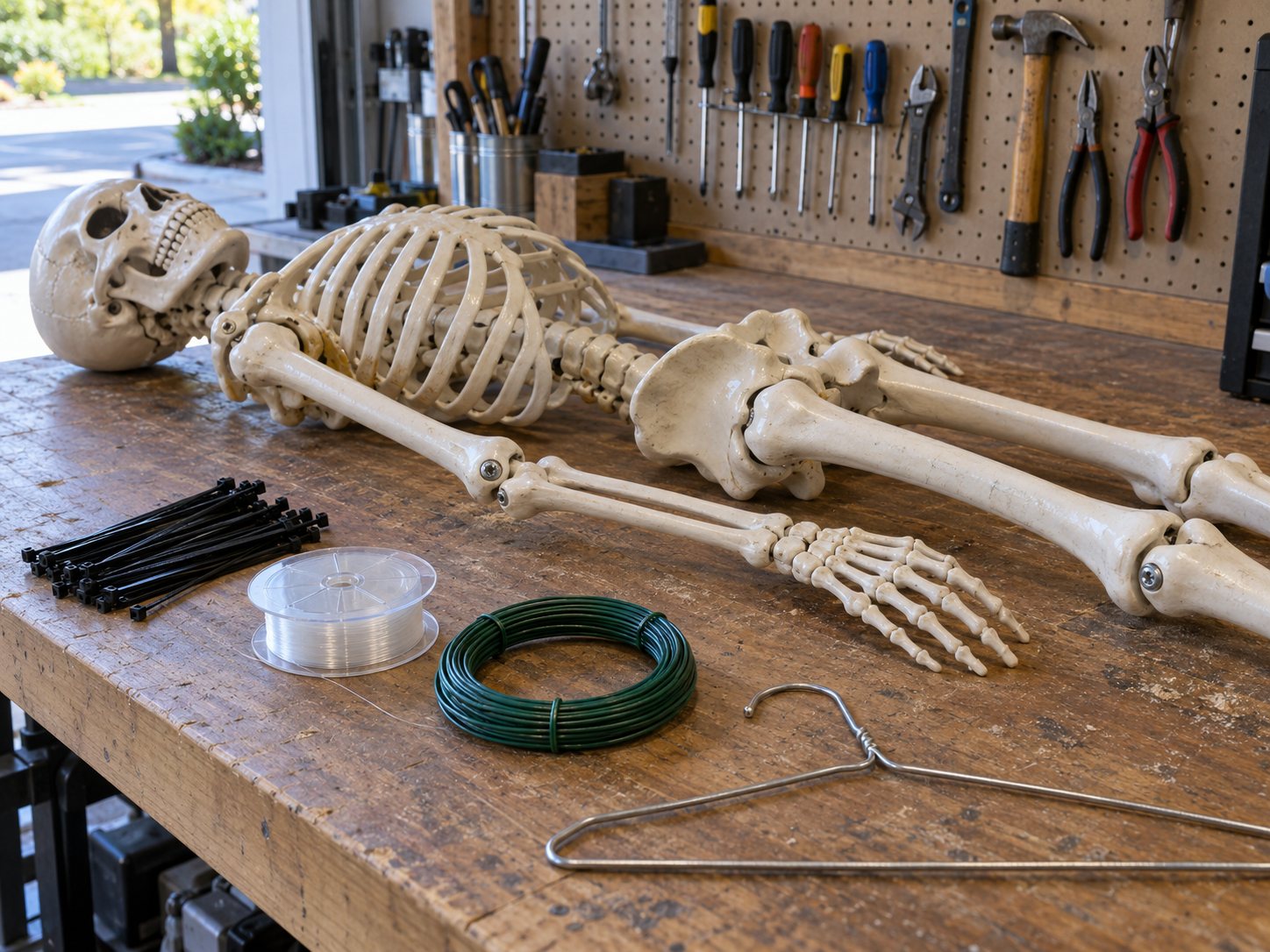
The fix is to stop asking the joints to do the holding. Southern Home & Hospitality describes the approach that works for cheap skeletons: a stake beneath the spine for the body, zip ties or fishing line for the limbs, and wire or a bent metal coat hanger to reinforce a joint that keeps sagging.
Before you commit to a pose, move each arm and leg gently through its range so you know what the figure can and cannot do. Forcing a hinge past its stop is the quickest way to end up with a one-armed skeleton. Sitting poses are the easiest place to start, because the chair carries the weight and you only need to steady the arms and head.
Pose ideas that read from the street
The poses that work best are everyday activities with one ridiculous detail: the person doing them has no skin. Home and garden writers have documented plenty of them.
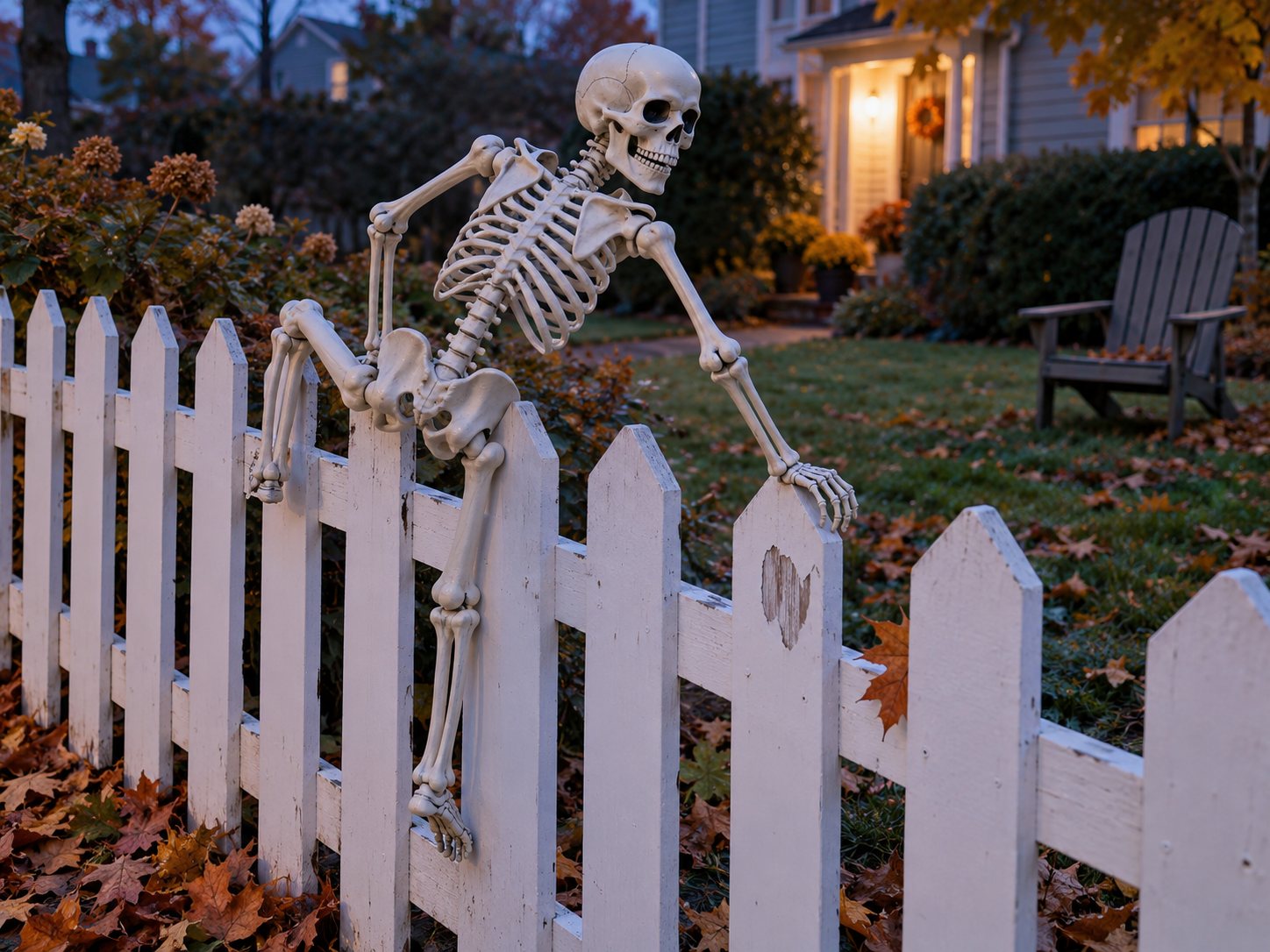
Charleston Crafted put together a 2023 guide that shows skeletons climbing trees, sitting in chairs, hanging from porch railings, running, golfing and clawing their way out of graves. Southern Home & Hospitality shows a skeleton walking a skeleton dog, tree climbers, porch rockers, grave escapes and a crew doing yard work. One of the most complete home displays comes from Marsha Lynn Smith, who wrote up her 2020 Halloween yard on Making Make Believe: skeletons playing golf, hanging from the roofline, climbing trees, riding a tree swing, walking dogs and lining up as trick-or-treaters.
If you want a starting list, these scenes come up again and again:
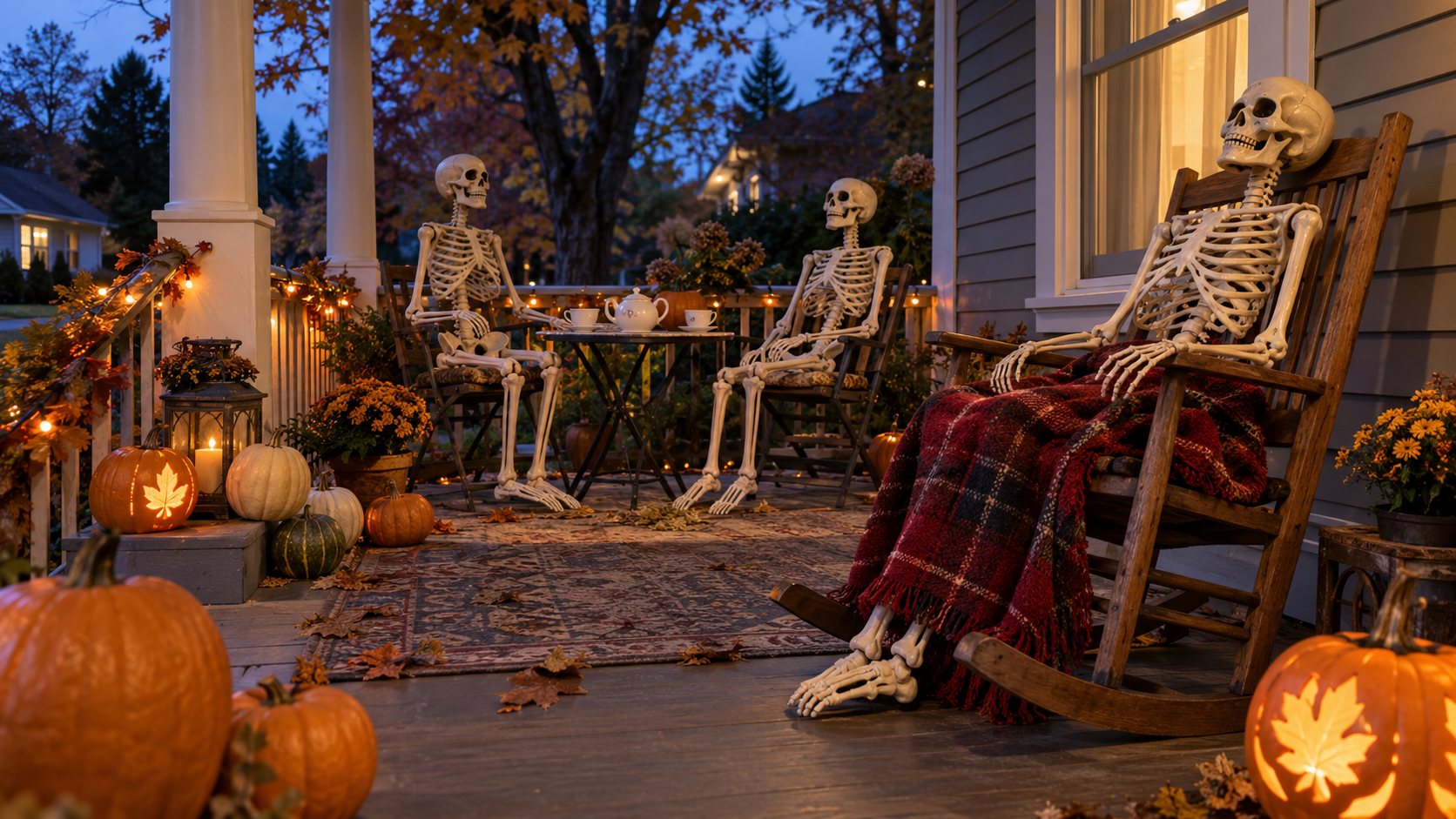
- Porch sitters. A skeleton in a rocker, on a swing or on a porch bench, maybe with a blanket over its knees.
- Climbers. A figure halfway up a tree trunk, a railing or a balcony, as if it is trying to get into the house.
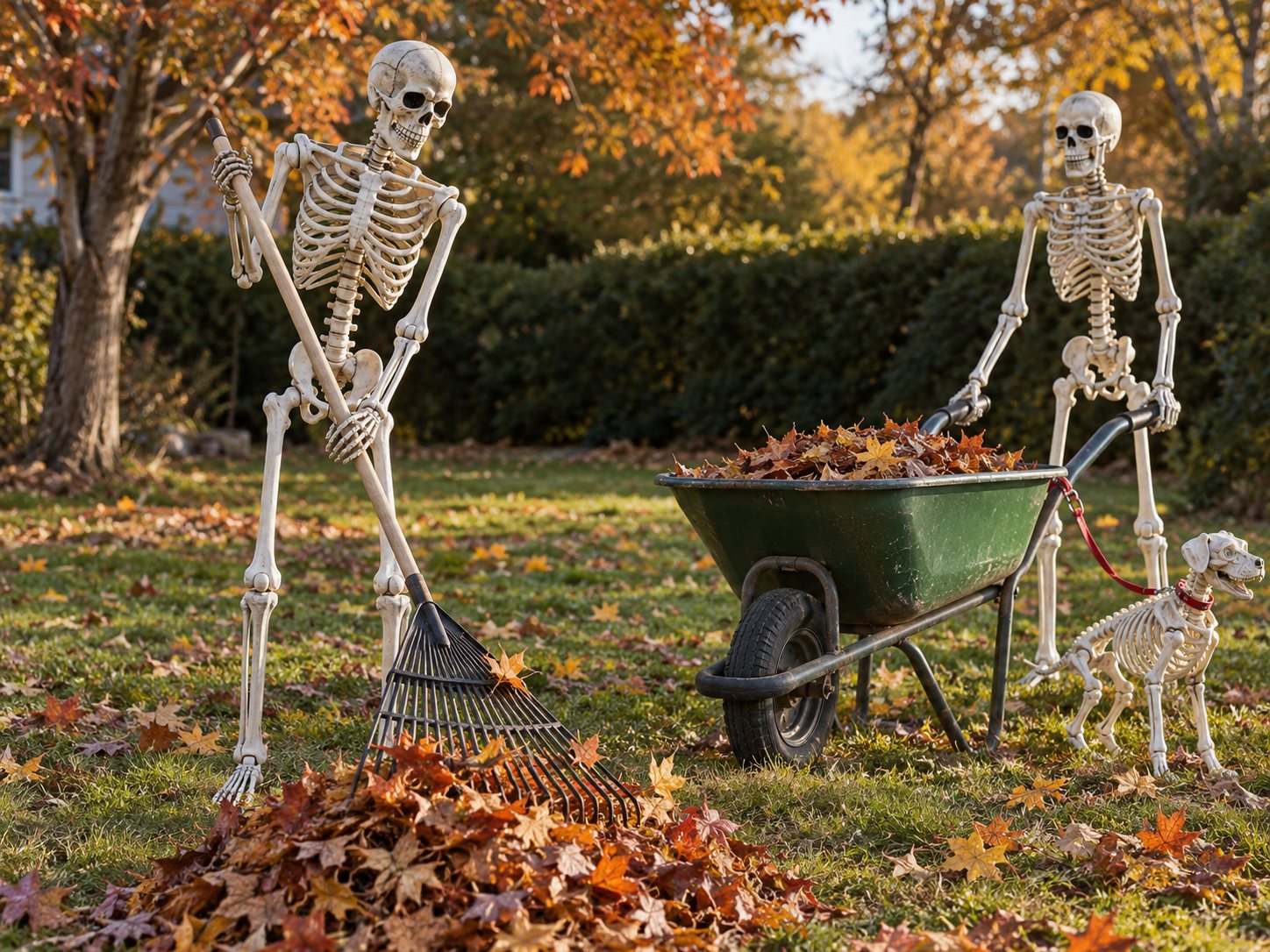
- Yard crew. A skeleton raking leaves, pushing a wheelbarrow or tending the garden bed.
- Dog walkers. A skeleton with a leash and a skeleton dog on the other end.
- Athletes. A golfer mid-swing, or a runner frozen in stride.
- Grave escapes. A skull and arms pushing up out of the lawn.
- Trick-or-treaters. Small skeletons with buckets, lined up at the door with the real kids.
Groups are funnier than singles. Two skeletons on a porch swing look like an old couple waiting for the mail; three in the yard with rakes look like a crew on the clock. If you collect skeletons the way some people collect garden gnomes, a scene gives each one a reason to be there.
Making a skeleton look like it is doing something
People ask how to make a skeleton look realistic, and the answer is less about the skeleton and more about the action. Pick a recognizable activity, keep the elbows and knees bending in directions a real body would bend, and let props do the explaining. A leash, a garden tool, a hat, a coat or a piece of furniture tells the viewer what is happening faster than any amount of careful arm positioning.
A seated skeleton should rest on its chair, not balance on the edge of it. Sit it back so the spine touches the chair back and the pelvis sits flat on the seat, then tie it in if needed. A skeleton that looks relaxed reads as a character; one that looks like it is about to slide off reads as an accident waiting for the first breeze.
Heads matter too. A skull turned toward the street, toward the front door or down at a dog changes the whole scene, so try a few angles before you fix it in place. If you are curious how far the real thing differs from the plastic version, our piece on how many bones are in the human body counts them all.
Keeping skeletons standing through wind and weather
The question people ask most often is how to keep a skeleton from falling over. For a yard skeleton, drive a garden stake, rebar or a fence post into the ground, set the spine or rib cage against it, and attach the skeleton with zip ties or wire. Southern Home & Hospitality describes a five-foot skeleton held up by a four-foot garden rod run through the rib cage, with extra ties added when wind is in the forecast. That is also the answer to making a skeleton stand up on its own: it does not, but a stake behind it makes it look as if it does.
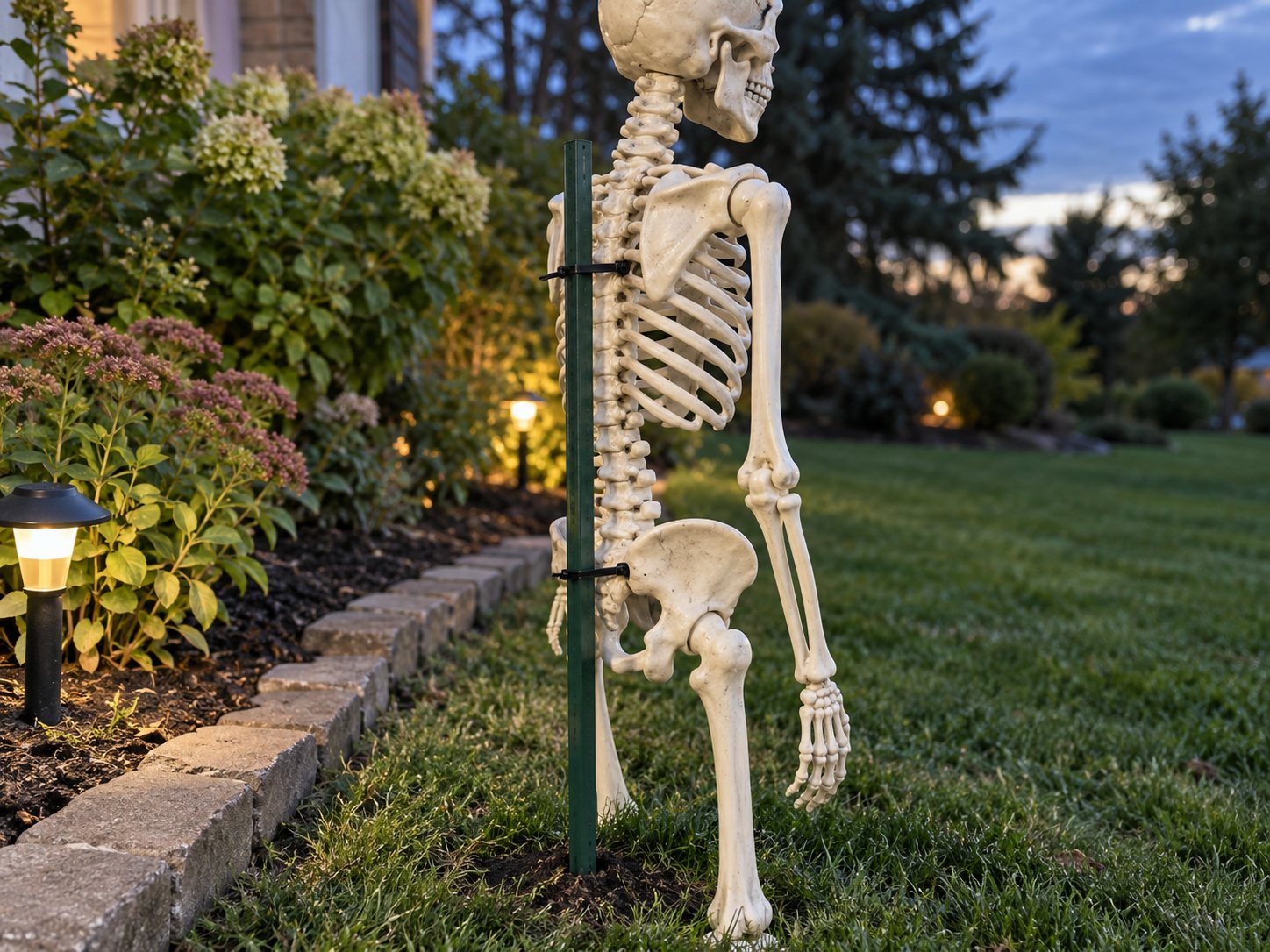
On a porch, tie the figure to something that will not move: a railing, a column, a post or a sturdy piece of furniture. Charleston Crafted recommends weather-resistant wire for climbing figures and securing seated skeletons to their chairs when needed, because a plastic skeleton on a rocker is light enough for a gust to tip.
Wherever you put the supports, keep them and their ties out of walking paths. Trick-or-treaters move fast in the dark, and a stake or wire at shin height is a hazard. When stronger weather is coming, add stronger stakes and extra ties, follow the instructions that came with your skeleton, and keep an eye on your local forecast.
Pose and secure a yard skeleton, step by step
Tap a card to bring it forward.
- Choose a scene: Use a chair, rocker, tree, railing, garden tool, leash or porch furniture to explain the action.
- Test the joints: Move arms and legs gently within the skeleton's range before fixing a pose.
- Support standing figures: Put a garden stake, rebar or fence post beneath or behind the spine.
- Hold limbs in place: Use wire, fishing line or zip ties.
- Secure porch figures: Attach them to a railing, post, column or sturdy furniture.
- Prepare for wind: Use stronger stakes and extra ties, or guy wires for a giant skeleton.
- Light the scene: Use outdoor-rated lights, spotlights, path lights or projectors.
- Protect visitors: Keep cords and supports out of walking paths.
- Store after Halloween: Clean, dry, disassemble, label and pack the parts.
The 12-foot skeleton needs its own plan
The giant skeleton is a category of its own. The 12-foot Skelly sold by Home Depot went viral in 2020, and Google's Frightgeist report in October 2025 said the 12-foot skeleton was still a top Halloween decor search years later. If you have one, or are thinking about one, our story on the 12-foot skeleton covers how it became a yard phenomenon.
Something that tall catches a lot of wind. Home Depot's assembly guide walks through the base, the support pins and the assembly order, and notes that newer models can light up their eyes and chest cavity. The Twelve Foot Skeleton & Friends guide adds a practical warning: the metal base is meant for level ground, not for strong winds. Its recommendation is four guy wires attached above the hips and run out at roughly 45-degree angles to heavy stakes in the ground, so the figure is braced from opposing sides.
Use the stakes and instructions that come with the skeleton first, then add guy wires if your yard is exposed. Ordinary posing tricks like a single garden rod are made for a five-foot figure, not a twelve-foot one.
Lighting and staging the scene
A display reads better with a clear focal point. Pick one star, usually your biggest or funniest skeleton, and build around it with smaller figures, pumpkins, lights and signs. Lowe's suggests spotlights, path lights, projectors and orange or purple string lights to give the yard depth and make it visible after dark. For a porch, its ideas put a life-size skeleton among furniture, rugs, pillows, wreaths or seasonal plants, so the skeleton looks like it lives there.
Lights bring their own safety checklist. The U.S. Consumer Product Safety Commission recommends flameless battery-operated lights anywhere children can reach the decorations, using tested light strands, throwing out any set with frayed wires, broken sockets or loose connections, and not overloading extension cords. The National Fire Protection Association advises outdoor-rated cords, GFCI protection, weather-resistant electrical equipment and cords routed so nobody trips on them. A skeleton that tripped a visitor is a much less funny story.
Packing the crew away after Halloween
When the season ends, take the skeletons apart following their instructions, clean off the outdoor dirt, and let every piece dry before it goes into storage.
Home Depot's Skelly guide has a neat packing trick for the giant: remove the feet, set the base in the container, fill the rib cage with the leg and arm bones, and then add the pelvis and the head. The same idea works for smaller skeletons, since a rib cage makes a handy storage bin for its own limbs. Keep everything in a box, storage bag or other container in a dry garage, basement or similar spot, and label the box so the hardware does not go missing. On lighted models, protect the cord ends from moisture and debris while you clean and pack.
Skeleton posing quick check
Answer every question to check.
Frequently asked questions
How do you make a skeleton look realistic?
Give it a recognizable activity and let props explain it. Keep elbows and knees bending in believable directions, and use furniture, tools, clothing or a leash to show what the skeleton is doing. A seated skeleton should sit back in its chair rather than balance on the edge.
What do you do with a skeleton for Halloween?
Build it a small scene. Sit it in a rocker or on a porch bench, have it climb a tree or railing, pose it doing yard work, or connect it by leash to a skeleton dog, all poses documented in home displays by Charleston Crafted, Southern Home & Hospitality and Making Make Believe.
How do you keep a skeleton from falling over?
Support the spine or rib cage with a garden stake, rebar or fence post and attach it with wire or zip ties. On a porch, tie it to a railing, column or sturdy furniture. For a giant skeleton, use the manufacturer's stakes and add guy wires.
How can I pose a skeleton with non-rotating joints?
Work with the forward-and-back swing the joints already have, and use outside support for everything else. Zip ties or fishing line hold an arm in place, and wire or a bent coat hanger reinforces a joint that keeps drooping. Seated and climbing poses suit these skeletons well because the chair or the tree takes most of the weight.
How do I make a skeleton stand up on its own?
A plastic skeleton will not stand on its own, so hide the support behind it. A garden rod or rebar through or behind the rib cage, tied in place, gives the look of a skeleton standing unaided. Southern Home & Hospitality used a four-foot rod for a five-foot skeleton.
Ready for the yard
Once you have the poses worked out, the only question left is who is doing the yard work. A skeleton with a rake beside a skeleton with a leash makes a neighborhood laugh, and a few stakes and zip ties keep the joke standing until November. For more on how skeletons became a Halloween fixture, read about skeletons and Halloween, and for indoor ideas that last past October, see our skull home decor story. If your favorite pose is the skeleton with the garden trowel, our Garden Crew skull tee was made for that crowd.
Terms in this story
Tap a term to see what it means.
Guy wire. A taut wire run from a tall object to a stake in the ground to brace it against wind. The Twelve Foot Skeleton & Friends guide recommends four for a giant skeleton.