No. 017
How Many Bones Are in the Human Body? 206 for Adults, and the Facts People Ask Next
An adult skeleton is counted as 206 bones. A newborn has roughly 270 to 300, because many of those bones fuse together as a child grows. You will sometimes see 213 in print, and that is not a rival answer: Cleveland Clinic gives the adult range as 206 to 213 because people differ in their ribs, their vertebrae and a handful of small accessory bones. So 206 is the standard count, and the extra few are individual variation. The rest of this page covers where that number comes from and the questions that tend to come next, from the baby count to why a skull seems to be missing its nose.
What the 206 count includes
The 206 figure follows a standard anatomical inventory with a few conventions built in. Fused structures count as single bones, so the sacrum at the base of the spine and the tiny coccyx below it each count once. The inventory also includes the two kneecaps (the patellae), the six small bones of the middle ears, and the hyoid, a bone in the neck. The NCBI Bookshelf's musculoskeletal chapter states the same 206 for adults.
Where does 213 come from? Some people have an extra rib or a slightly different spine. Others have more sesamoid bones, which are small bones that develop inside tendons. The kneecap is the largest and most familiar sesamoid, and it is already in the 206. Count a few more of these accessory bones in a particular person and the total creeps upward. That is why the upper number reflects counting conventions and individual differences rather than a second official tally.
What the 206 bones are made of
Anatomists sort the adult skeleton into two big groups. The axial skeleton, the central line of skull, spine and ribs, has 80 bones. The appendicular skeleton, the limbs plus the girdles that attach them, has 126, according to the NCBI Bookshelf. Most people have 12 pairs of ribs, or 24 in all. The skull protects the brain, and the rib cage protects the heart and lungs. Inside many bones, marrow makes red blood cells, white blood cells and platelets.
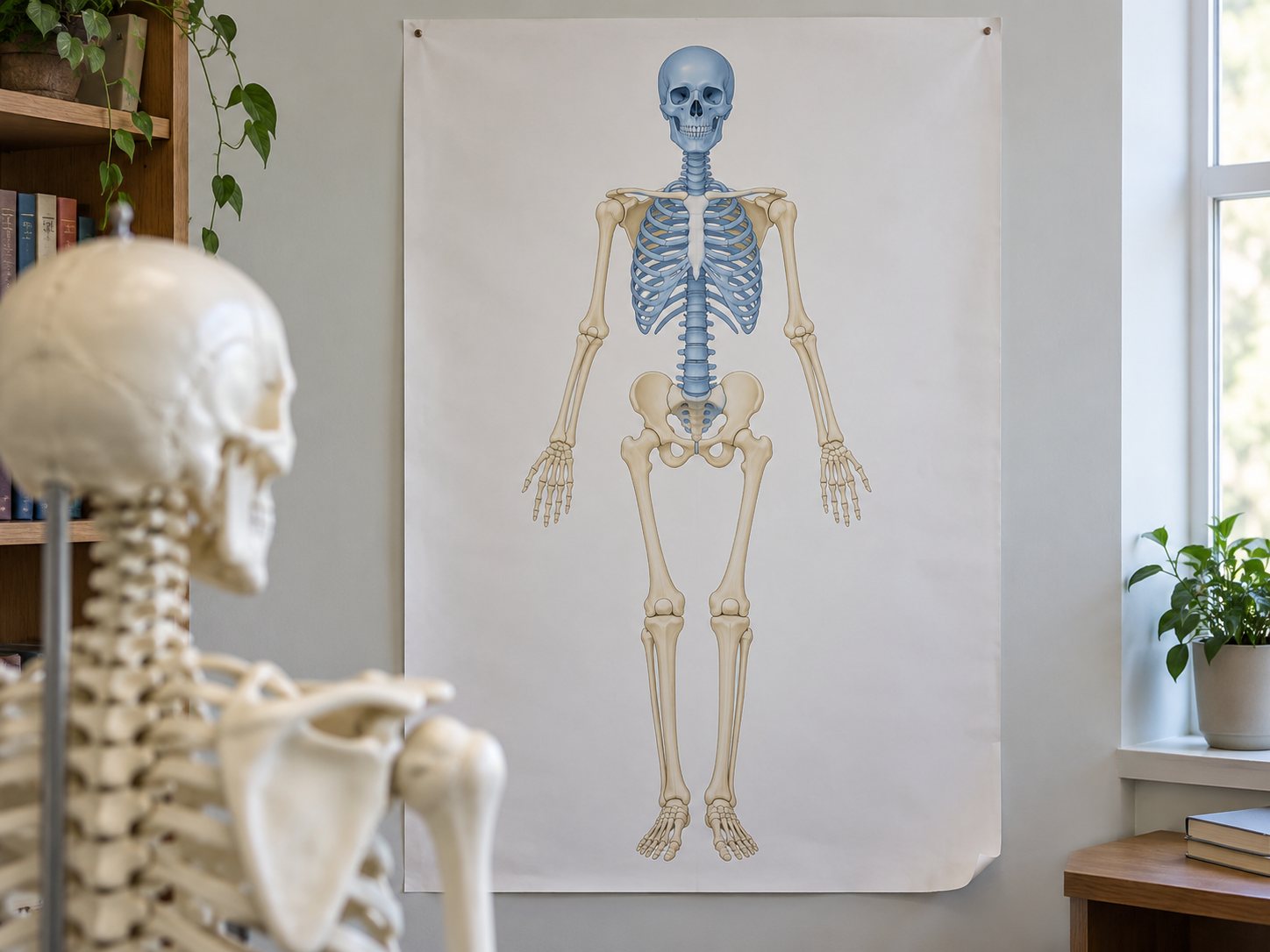
Here is the standard adult count by region, in one place.
Tap or hover a row to highlight it.
| Region | Bones |
|---|---|
| RegionCranial bones | Bones8 |
| RegionFacial bones | Bones14 |
| RegionSkull total | Bones22 |
| RegionMiddle-ear ossicles | Bones6 |
| RegionHyoid | Bones1 |
| RegionVertebral column | Bones26 |
| RegionRibs | Bones24 |
| RegionEach hand, including wrist | Bones27 |
| RegionEach foot | Bones26 |
| RegionAdult skeleton, standard count | Bones206 |
Tap or hover a row to highlight it.
| Fact | Answer |
|---|---|
| FactStandard adult count | Answer206 |
| FactAdult range including variation | Answer206 to 213 |
| FactApproximate newborn count | Answer270 to 300 |
| FactAxial skeleton | Answer80 |
| FactAppendicular skeleton | Answer126 |
| FactLongest and strongest bone | AnswerThe femur |
Why babies have more bones
Newborn counts vary with who is doing the counting and how the bones are counted. Cleveland Clinic's overview for parents gives about 275 to 300, and another Cleveland Clinic overview uses about 270. Nobody has a single fixed number at birth, so treat these as ballpark figures.
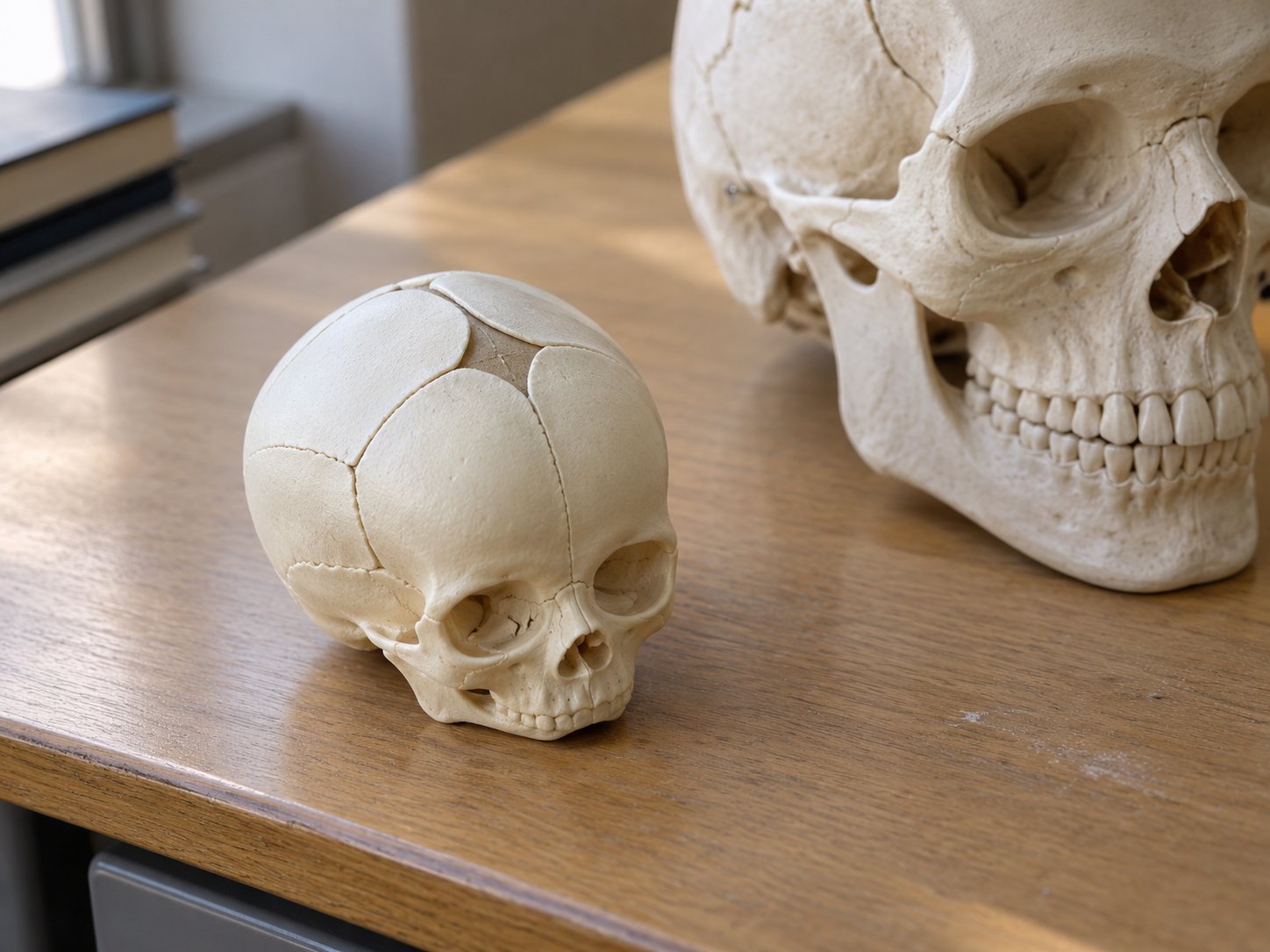
The count falls because bones join together as a child grows. Fusion begins before birth and continues through childhood and puberty, sometimes a little beyond. The skull shows it best. A baby's skull bones are separated by flexible seams called sutures and by soft gaps called fontanelles. That arrangement lets the skull mold slightly during birth and then expand as the brain grows. At birth, the five major skull bones are two frontal bones, two parietal bones and one occipital bone.
Growth has two timelines, too. According to OpenStax, bones stop lengthening around ages 16 to 18, while bone density can keep rising into the late twenties.
From birth to adulthood
Tap or hover a step to follow the order.
Birth
Approximately 270 to 300 bones, depending on the count
Infancy
Skull bones remain separated by sutures and fontanelles
Childhood
Multiple skeletal elements begin fusing
Puberty and shortly afterward
Many fusions continue
Adulthood
The standard count is 206, with individual variation commonly described as 206 to 213
The bones of the skull
Counting a skull sounds simple until you ask which bones to include. The standard skull count is 22: eight cranial bones that surround the brain and 14 facial bones. Add the six tiny bones of the middle ears (a malleus, an incus and a stapes in each ear) and the total becomes 28. Add the hyoid, the horseshoe-shaped bone in the neck, and you reach 29. The hyoid is unusual because muscles and ligaments hold it in place rather than a joint with another bone, and it helps with breathing, speaking and swallowing.
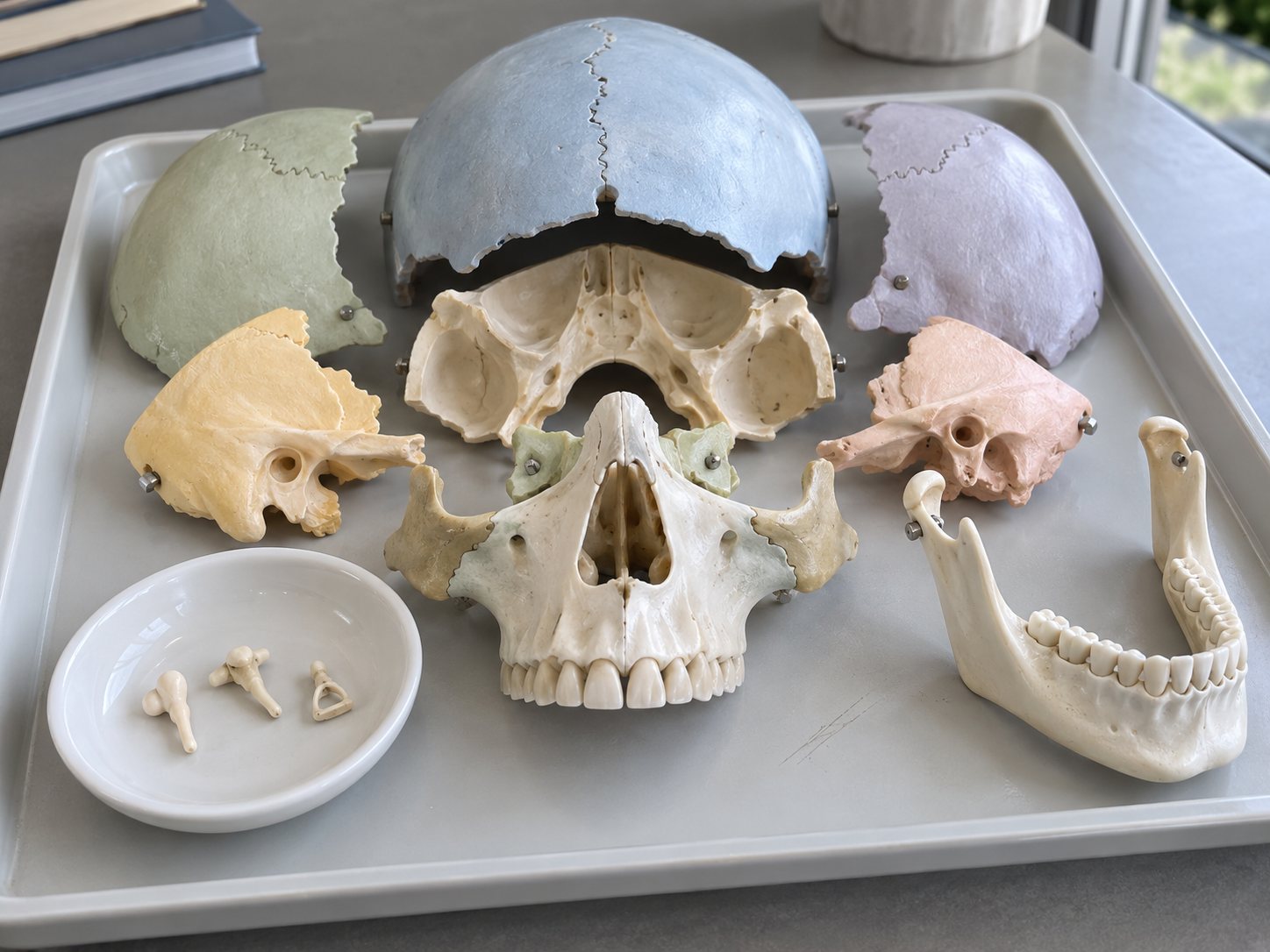
Of all those bones, only the lower jaw moves. The mandible is the one movable bone of the skull, and the rest are joined mainly by the immovable joints called sutures.
Hands, feet and spine
Hands and feet hold more of the skeleton than most people guess. Each hand has 27 bones, counting the wrist, which Cleveland Clinic describes as 19 hand bones plus eight wrist bones. That makes 54 bones in the two hands. Each foot has 26 bones, so 52 in the pair. Together, hands and feet account for 106 of the 206, more than half the skeleton.
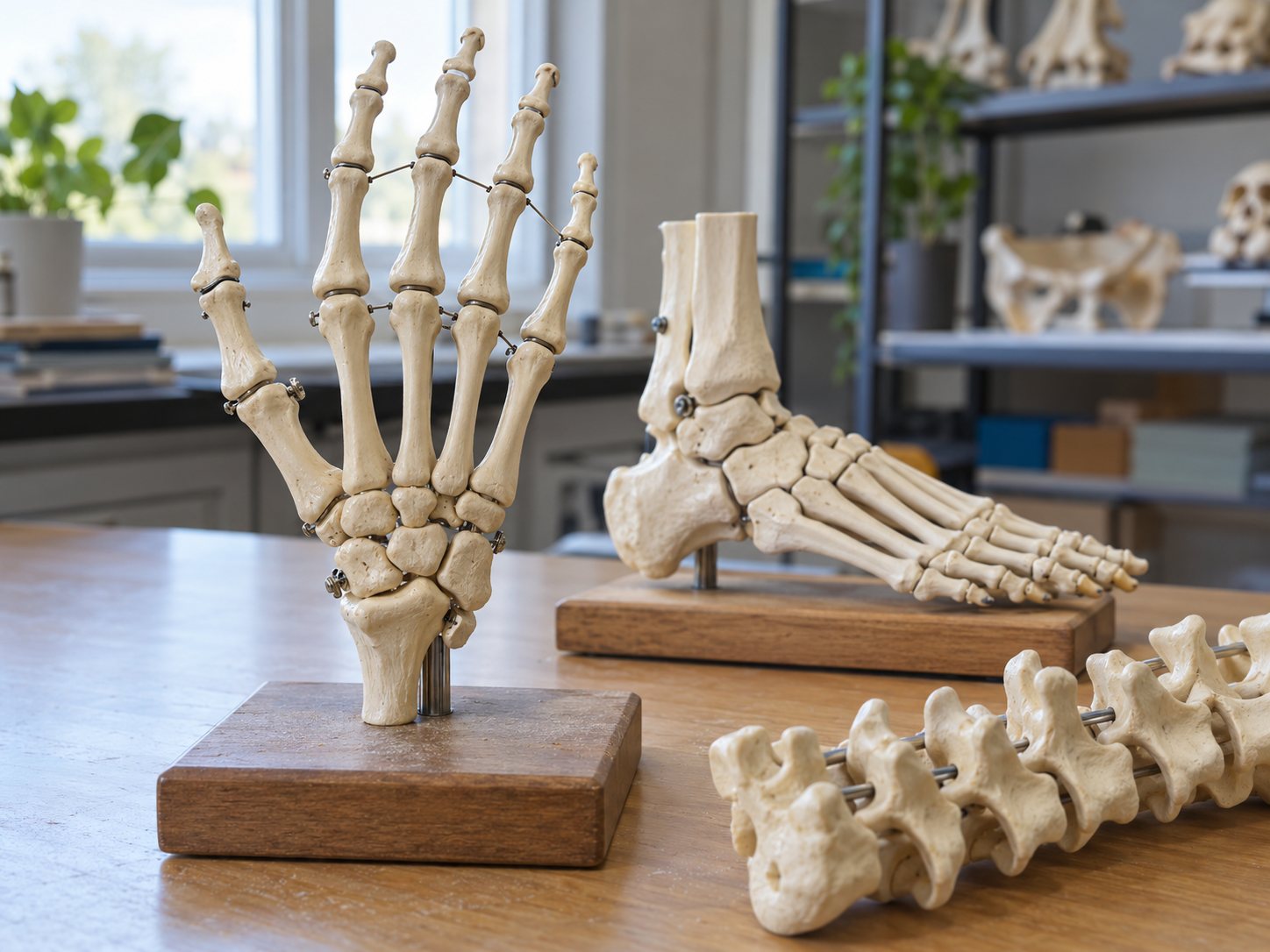
The vertebral column is counted as 26: 24 separate vertebrae, plus the fused sacrum and coccyx. If the fused pieces are counted by the parts they grew from, some references describe the spine as having 32 to 34 vertebral elements. Both descriptions are accurate. They just count differently.
Why a skull seems to have no nose
A skull does have nose bones. The two nasal bones form the bridge, and the maxilla, ethmoid and vomer help shape the nasal structure and the septum, the wall between the nostrils. What disappears is the rest. The visible lower and front parts of a nose are mostly cartilage, fatty tissue and skin, and the NCBI Bookshelf notes that this soft tissue usually does not survive once a body has decomposed. That leaves the open gap in the middle of the face that makes a skull so recognizable.
Teeth raise the next question. They look like bones, but they are not. Teeth have enamel, dentin, cementum and pulp, with no marrow, and they cannot repair themselves the way bone can. Enamel is the hardest substance in the human body. Teeth tend to stay in a skull because their roots sit in sockets in the jawbone, held by periodontal ligaments. They can loosen or fall out once those ligaments and the surrounding bone decay, or when a skull is handled roughly.
People also ask about the weakest part of the skull. Anatomy texts traditionally name the pterion, a spot at the side of the head where the frontal, parietal, temporal and sphenoid bones meet, close to an important artery called the middle meningeal artery. Treat that as a traditional description and not a ranking. "Weakest skull bone" is not a standardized medical classification, and the skull has other thin areas, openings and seams.
The strongest, longest and smallest bones
The femur, the thigh bone, is the longest, heaviest and strongest bone in the body, according to the NCBI Bookshelf. It runs from hip to knee and carries much of the upper body's weight down into the leg. OpenStax adds that it makes up about a quarter of a person's height.
At the other end of the scale is the stapes, one of the three bones in each middle ear. It is about 3 millimeters long, the smallest bone in the body. Together with the malleus and incus, it passes the vibrations of the eardrum toward the inner ear, which is how a sound becomes something you hear. The NIH curriculum supplement on hearing covers the ear's small bones in detail.
Men, women and the skeleton
Men and women have the same standard count of 206 bones. Sex does not create a separate inventory. What differs is the average size, shape and sturdiness of some of them, mostly after puberty.
The pelvis shows the clearest pattern. In forensic anthropology it is the most useful region for estimating biological sex. On average, female pelvic bones are wider and shallower with a larger, rounder outlet, while male pelvic bones tend to be thicker and heavier with a narrower outlet. Skulls differ less reliably. Male skulls can run larger and thicker on average, but individual and population variation is large. A 2011 study by Spradley and Jantz found that measurements of the rest of the skeleton often do better than the skull at estimating sex when the pelvis is missing. These are population patterns used for estimation, and they do not describe any one person.
Human skeleton quiz
Answer every question to check.
Quick answers about the skeleton
These are the questions people ask most.
Are there 206 or 213 bones in the human body?
The standard adult count is 206. A person can have up to about 213 when extra ribs, vertebral differences or additional sesamoid bones are counted, which is why Cleveland Clinic gives a range. A baby starts with roughly 270 to 300 because some bones fuse during growth.
What is the strongest bone in the body?
The femur, or thigh bone, is described in anatomy textbooks as the longest and strongest bone in the body. It supports heavy loads through the hip and knee.
How many bones does a female body have?
A female adult has the same standard count as a male adult, 206 bones. Individual variation, such as an extra sesamoid bone, can shift a person's own total, but it is not tied to sex. Sex differences affect the average shape and proportions of some bones, such as the pelvis.
Why do skulls have no nose, and why do teeth stay in?
A skull has the bones of the upper nose, but the rest of the nose is soft tissue and cartilage that decays. Teeth usually stay put because their roots are anchored in jawbone sockets by ligaments. When those ligaments and the surrounding bone break down, teeth loosen.
What is the weakest part of the skull?
The pterion, where four skull bones meet near the temple, is traditionally described as the weakest part. Even so, "weakest" is a teaching shorthand and not a formal medical ranking.
Where to go next
If a skeleton decoration sent you here, the guide to skeletons and Halloween looks at skeletons as seasonal decoration, and the page on the 12-foot skeleton covers the oversized version. For what a skull stands for in art and ritual, start with skull symbolism. And if you came across an actual skull outdoors, read about what to do when you find an animal skull.
Our Night Shift Nurse skull tee is a shirt for anyone who works the overnight ward and likes their anatomy with a little attitude.
This page is general anatomy for curious readers and is not medical advice.