

No. 228
Baby Soft Spot: Why Babies Have Fontanelles and When They Close
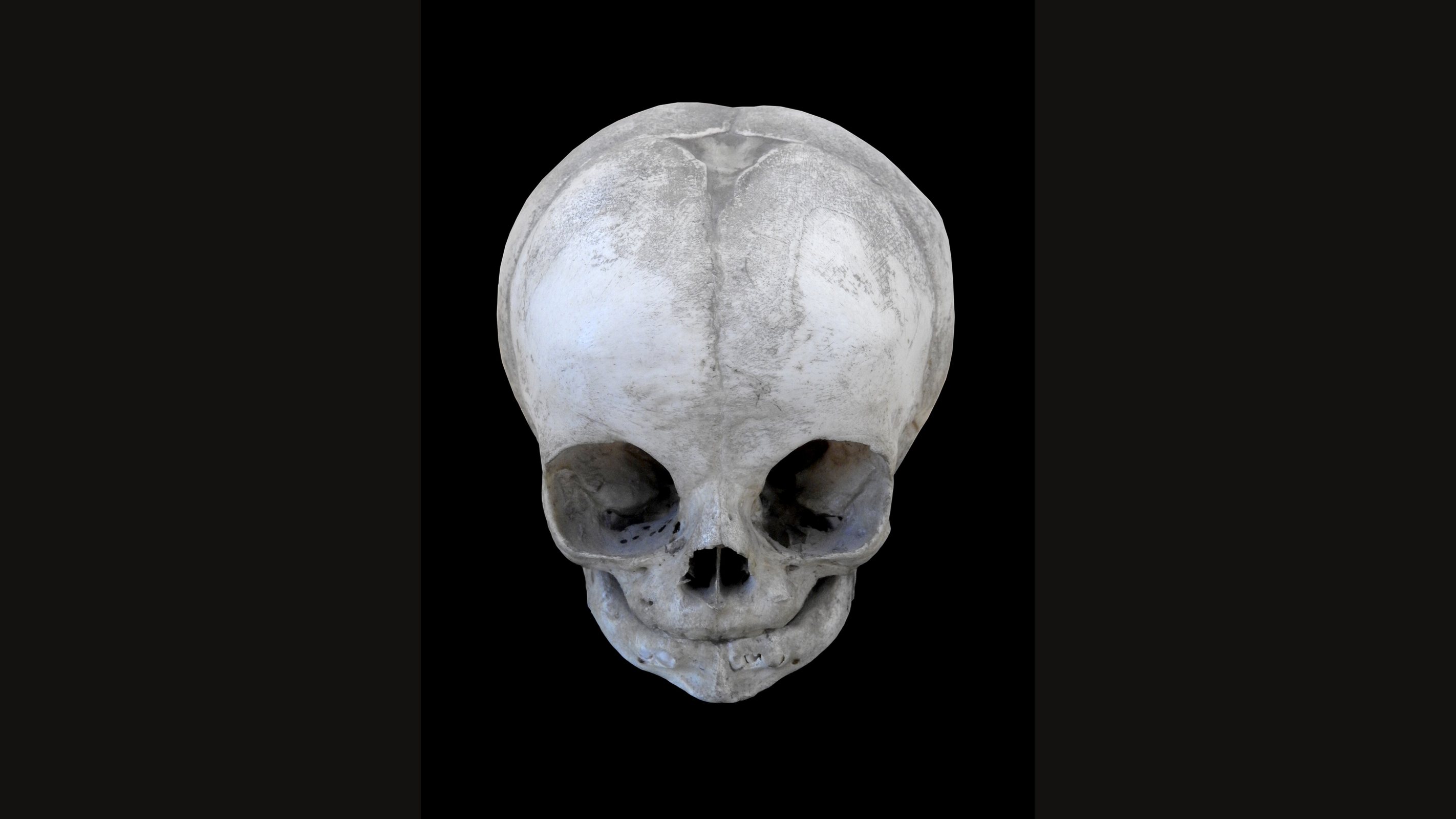
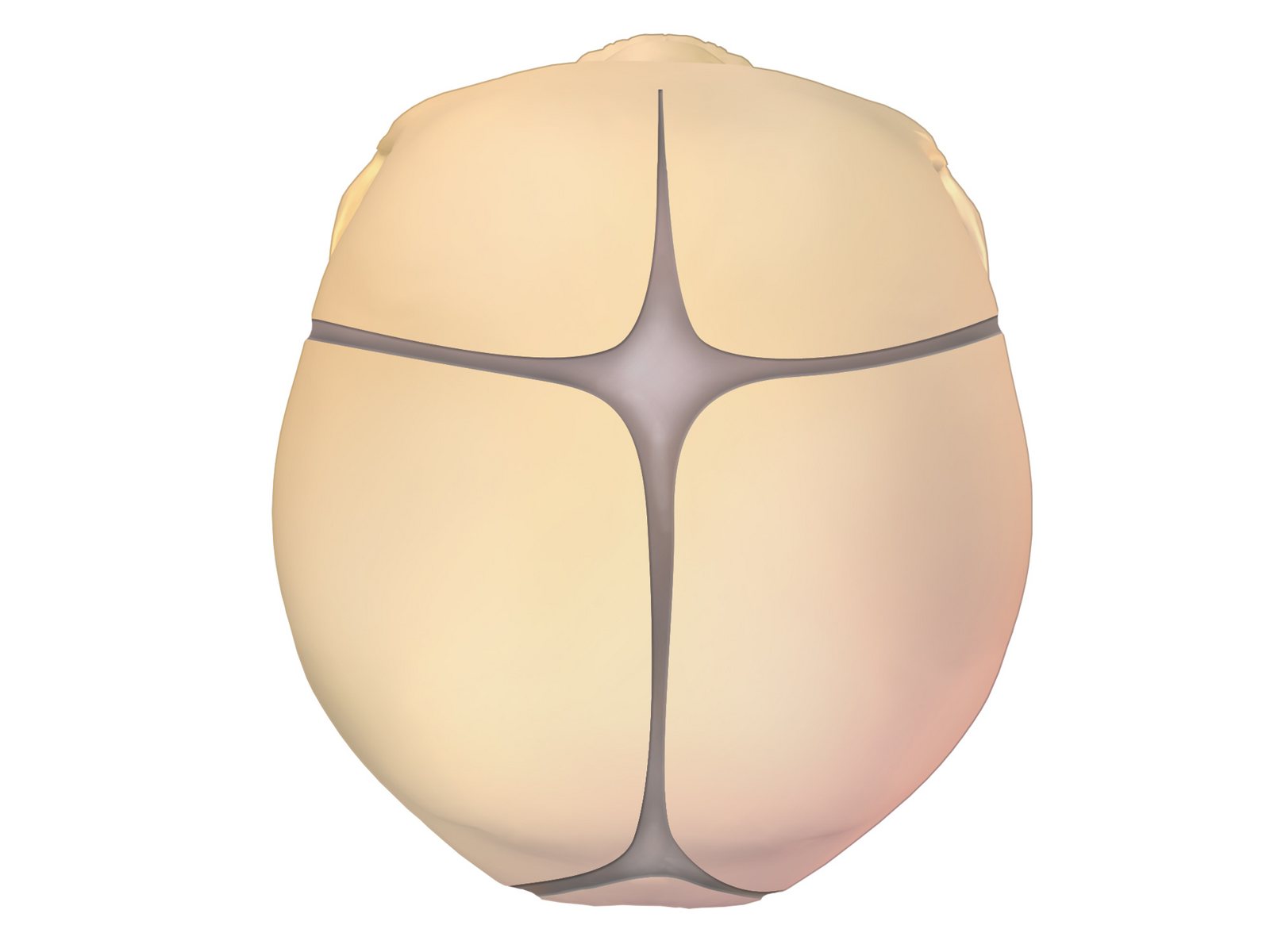
A baby's soft spots, called fontanelles, are gaps between the bones of the skull that are covered by a strong, tough membrane. The two main ones are a larger, diamond-shaped soft spot on top of the head toward the front, and a smaller one at the back.
They let the skull shift a little during birth and leave room for the brain to grow quickly afterwards. The back soft spot usually closes by about 1 to 3 months, and the front one usually closes during the second year, with plenty of normal variation.
Gentle everyday touching, while you hold, wash or brush your baby's head, is generally safe. If something about the way a soft spot looks or feels worries you, call your child's doctor, and if your baby seems ill, get urgent care.
The front and back soft spots, and the seams between them
A newborn's skull is not one solid bowl. It is made of separate bone plates joined by flexible, fibrous seams called sutures. Where those seams meet, wider spaces covered by membrane remain, and those are the fontanelles, or soft spots.
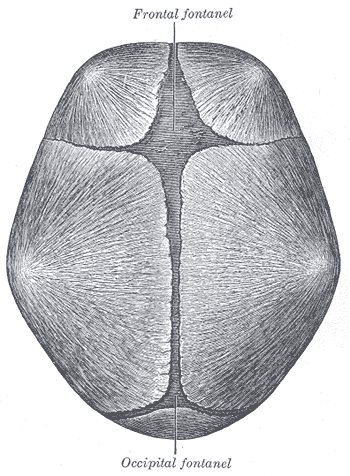
The anterior fontanelle is the one most parents notice. It is the larger, diamond-shaped soft spot at the top front of the head, where the frontal bone (the forehead) meets the two parietal bones (the sides and top of the skull). The posterior fontanelle is smaller and triangular, and sits at the back of the head, where the parietal bones meet the occipital bone at the base of the skull, according to Stanford Medicine Children's Health. Smaller fontanelles can also occur at the sides of the skull. Many families call the front soft spot "la mollera."
Your baby's doctor or nurse looks at the fontanelles and sutures during routine checkups. Their shape, firmness and closure help track how the skull and brain are growing, as MedlinePlus explains.
Tap or hover a row to highlight it.
| Topic | What to know |
|---|---|
| TopicMain front soft spot | What to knowAnterior fontanelle, where the frontal and parietal bones meet |
| TopicMain back soft spot | What to knowPosterior fontanelle, where the parietal and occipital bones meet |
| TopicBack soft spot closes | What to knowCommonly about 1 to 3 months (MedlinePlus) |
| TopicFront soft spot closes | What to knowCommonly about 7 to 19 months (MedlinePlus); other medical guidance gives wider normal ranges |
| TopicNormal appearance | What to knowFlat or slightly curved inward, firm, sometimes pulsing gently |
| TopicSunken appearance | What to knowCan be associated with dehydration |
| TopicBulging appearance | What to knowCan indicate increased pressure inside the skull and needs medical evaluation |
Why babies are born with soft spots
Soft spots do two jobs, one at birth and one for many months afterwards.
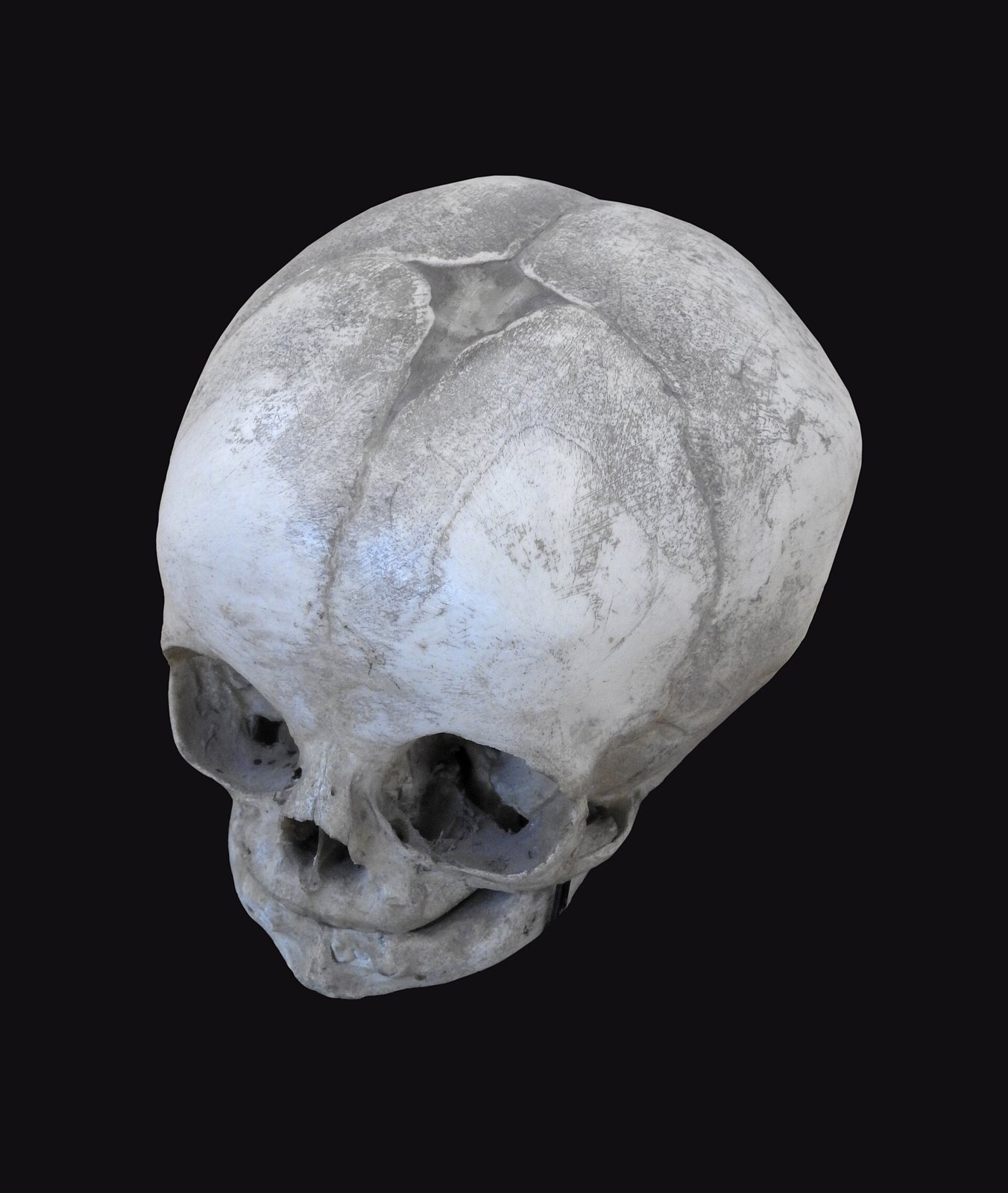
During birth, the skull bones can shift and overlap slightly, which lets the baby's head pass through the birth canal. After birth, the open spaces and flexible sutures let the skull expand as the brain grows rapidly through infancy.
The fontanelles are not open holes into the brain. The Mayo Clinic and Stanford Medicine Children's Health both describe them as covered by a strong, fibrous membrane. For a skull lover, it is a neat piece of design: a head built to be flexible first and solid later.
When the soft spots close
The two main soft spots do not close at the same time.
The posterior fontanelle, at the back, usually closes first. MedlinePlus gives a typical range of about 1 to 3 months, and in some babies it is already closed at birth. The anterior fontanelle, at the front, closes later. Medical guides give several commonly cited ranges: about 7 to 19 months on MedlinePlus, 9 to 18 months from Nationwide Children's Hospital, and 12 to 24 months in other guidance. The Mayo Clinic describes closure by about age two.
Those ranges overlap but do not match, and that is the point: individual variation is normal. A child's doctor does not judge the soft spot by the calendar alone. They look at it together with head growth, the shape of the skull and the child's overall development.
Even after the front soft spot closes, the skull keeps growing. The sutures remain visible and continue to change through childhood, so there is no single day when a baby's head becomes "fully hard."
How a baby's skull changes
Tap or hover a step to follow the order.
Birth
Separate skull plates and flexible sutures help the head mold during delivery.
First months
The posterior (back) fontanelle commonly closes.
First year
Sutures and fontanelles make room for rapid brain and skull growth.
About 7 to 24 months
The anterior (front) fontanelle commonly closes, with normal variation.
Childhood
The skull sutures keep working as growth joints after the main soft spot closes.
What a normal soft spot looks and feels like, and touching it
A relaxed, healthy fontanelle is generally flat or slightly curved inward. It can feel soft or fairly firm. You may also see it move gently in time with your baby's heartbeat, which the American Academy of Pediatrics' HealthyChildren.org describes as commonly normal.
If your fingers brushed the soft spot during a bath, that is a very common question. Gentle, routine touching while holding your baby, washing their hair or examining their head is generally safe, because the strong membrane covers the space, according to the Mayo Clinic and HealthyChildren.org.
A real knock or fall is a different matter. If your baby has a significant bump to the head, or afterwards develops a bulging soft spot, vomiting, unusual sleepiness, a change in behavior or any other symptom that worries you, call your child's doctor or seek urgent care.
Sunken, bulging or closing early: when to call the doctor
Most of the time, a soft spot is just a soft spot. A few changes, though, are worth a call.
A sunken soft spot. A mildly indented fontanelle can be normal. A noticeably sunken one can go with dehydration, especially alongside poor feeding, a dry mouth, fewer wet diapers, unusual sleepiness or fussiness, according to MedlinePlus. Call your child's doctor.
A bulging soft spot. A fontanelle that stays bulging or swollen, especially while the baby is calm and not crying, can be a sign of increased pressure inside the skull or another serious problem, as MedlinePlus and the Cleveland Clinic explain. Call promptly. If the bulge comes with vomiting, unusual sleepiness, a change in behavior, fever or a head injury, get urgent medical care.
A head shape that looks unusual. When one or more sutures close too early, the condition is called craniosynostosis. Signs can include an unusual head shape, a hard ridge along one of the seams, or changes in the symmetry of the forehead, ears or eyes, according to the Mayo Clinic. A soft spot that is hard to feel does not, on its own, mean a baby has craniosynostosis, which is why a doctor needs to assess it.
The simple rule from these children's health sites: if a change in your baby's soft spot or head shape concerns you, call the doctor, and if your baby seems ill, get urgent care.
When to call the doctor about a soft spot
Tap a card to bring it forward.
- Markedly sunken soft spot: Call the doctor, especially with poor feeding, a dry mouth or fewer wet diapers, which can point to dehydration.
- Soft spot stays bulging while the baby is calm: Call the doctor promptly; it can signal increased pressure inside the skull.
- Bulging with vomiting, unusual sleepiness, behavior change or fever: Get urgent medical care.
- After a significant knock or fall: Call the doctor or seek urgent care, especially if new symptoms follow.
- Unusual head shape or a hard ridge along a seam: Ask the doctor to check for early suture closure.
- Any change that worries you: Call the child's doctor, and get urgent care if your baby seems ill.
How a baby's skull differs from an adult's
An adult skull is conventionally counted as 22 bones, 8 cranial bones around the brain and 14 facial bones, according to OpenStax anatomy. A newborn's skull is not simply a smaller version of that. Its main plates are still separate and joined by sutures, with fontanelles at several junctions, and they have not yet grown together into the more continuous adult structure.
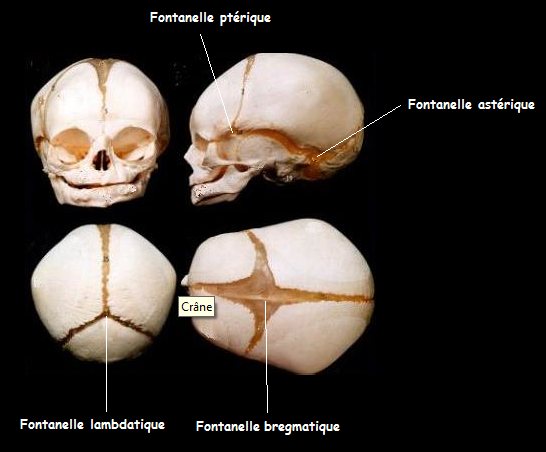
The whole skeleton tells a similar story. OpenStax states that babies have about 270 to 300 bones at birth, while adults conventionally have 206, because some of a baby's bones later fuse. That whole-body count is separate from the 22-bone count for the adult skull. If you want the full count bone by bone, our story on how many bones are in the human body has it, and human skull facts covers the adult skull in more detail.
How well do you know baby soft spots?
Answer every question to check.
Questions parents ask about soft spots
A few more questions come up often.
How many soft spots does a baby have?
Babies have two main soft spots: the larger anterior fontanelle on top toward the front and the smaller posterior fontanelle at the back. Smaller side fontanelles are also part of newborn skull anatomy, so "two" refers to the main soft spots a doctor checks.
When can you stop worrying about a baby's soft spot?
There is no single age when every concern ends, because the soft spots close at different times in different children. Doctors check them alongside head size, skull shape and development at routine visits, so keep those appointments and call sooner if you notice a persistent bulge, marked sinking, an unusual head shape or a change after an injury.
When does a baby's head fully harden?
A baby's head does not harden on one particular date. The front soft spot usually closes with bone within the first two years, but the skull sutures stay visible and keep changing through childhood.
How can I tell if my baby's soft spot is closing?
The soft spot gets gradually smaller, and your baby's doctor checks it at well-baby visits. Because the age of closure varies, there is no need to measure it repeatedly at home or to read meaning into a single feel; call the doctor if the head shape looks unusual or you notice a persistent bulge or marked sinking.
What is craniosynostosis?
Craniosynostosis is the early closure of one or more of the sutures in a baby's skull. It can show up as an unusual head shape or a hard ridge along a seam, and only a doctor can assess it.
A skull built to grow
A baby's soft spots are one of the quietly clever features of the human skull: flexible for birth, open for growth, and closed in their own time. Knowing what is normal makes it easier to stay calm, and knowing the few signs that matter makes it easy to know when to call. If you are curious about the skull your baby is growing into, how strong a human skull is and how much a human skull weighs pick up the story from there.
Terms in this story
Tap a term to see what it means.
Fontanelle. A soft spot on a baby's head, a space between the skull bones covered by a strong membrane.
---