No. 074
How Strong Is a Human Skull? Thickness, Force and the Science
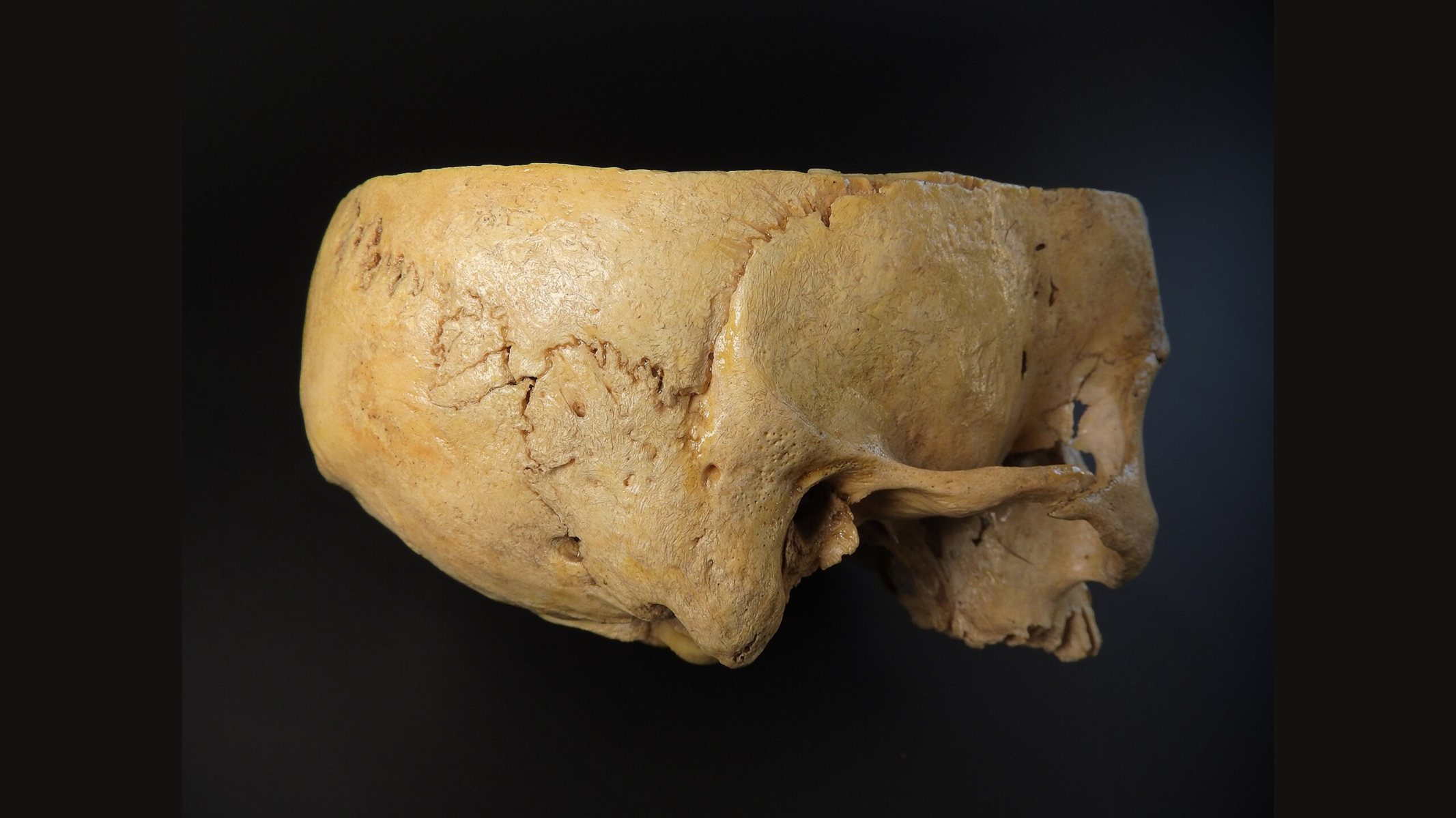
The human skull is strong for its weight, and much of that comes from its layers. The vault, the dome over the brain, is built like a sandwich: a compact outer table, a spongy middle layer called the diploë and a compact inner table. In the thicker parts of the vault those three layers add up to about 7 mm, according to a 1985 study by Garfin and colleagues. When Yoganandan and colleagues tested 12 unembalmed cadaver heads in 1995, the skulls failed at loads from 4.5 to 14.1 kilonewtons, depending on where and how the force was applied. So, there is no single number for how much a skull can take.
These are controlled laboratory figures, not a safe limit for real life. Anyone with a head injury should get emergency care.
Three layers, and why the thickness varies
The best way to understand a skull's strength is to look at a cross-section. In the 1985 study by Garfin, Botte, Centeno and Nickel, the researchers measured 27 cadaver skulls and 20 CT scans. Across the front and back of the sides of the vault, the calvaria, the outer table averaged about 2 mm, the diploë about 3 mm and the inner table about 2 mm, for a total of roughly 7 mm.
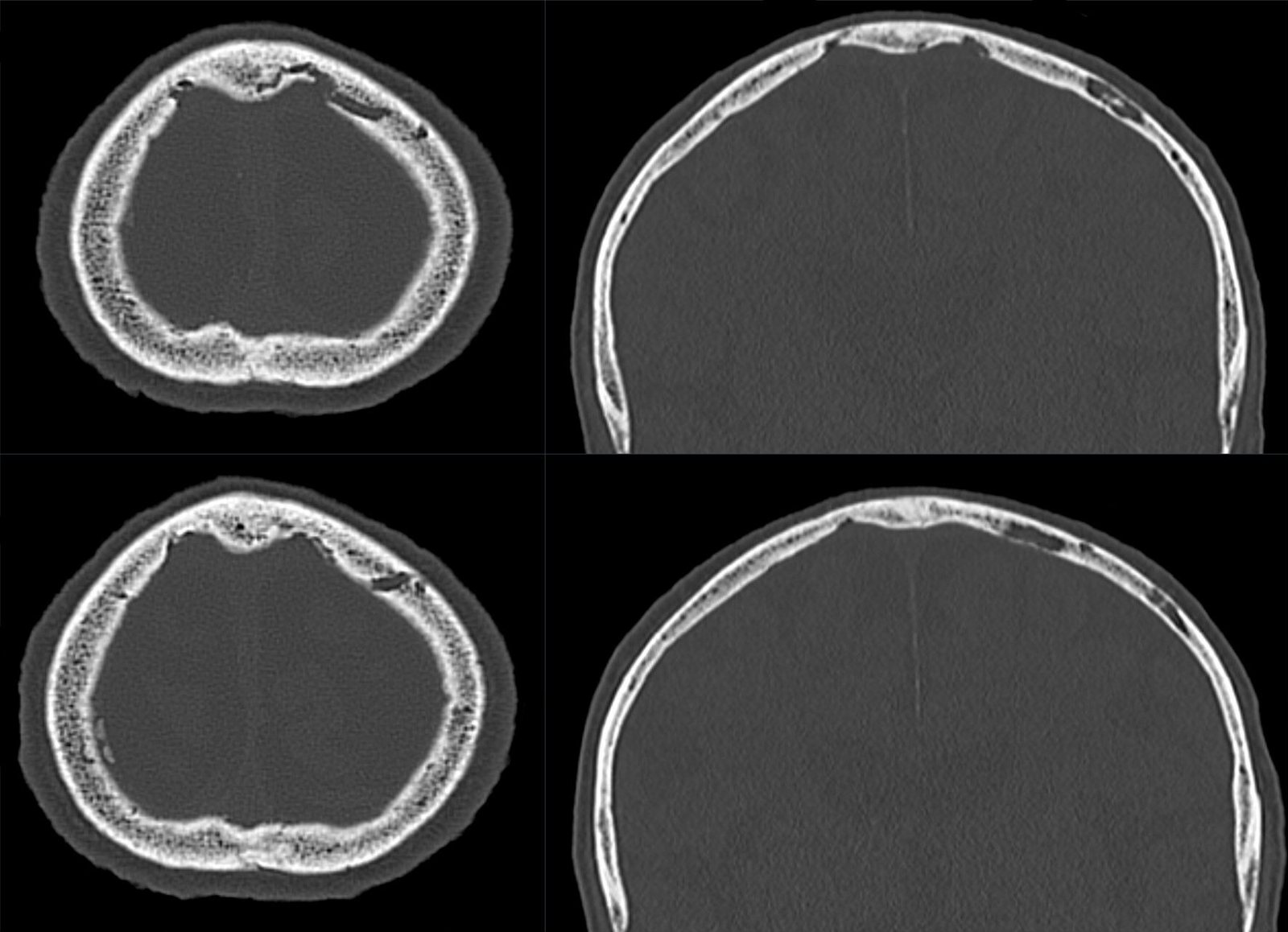
The skull is not that thick everywhere. In the temporal fossa, the shallow area at the side of the head, the same study found averages of 1.7 mm for the outer layer, 2.0 mm for the diploë and 1.6 mm for the inner table, about 5.3 mm in all.
The design makes sense once you see what each layer does. The spongy diploë keeps the skull lighter, while the two compact tables give it stiff outer and inner surfaces. Thickness also changes with location, age, sex and the individual, so two skulls, or two spots on the same skull, can measure differently. For the 22 bones that fit together to make the whole skull, see our human skull facts.
The three layers of the skull vault
Tap a card to bring it forward.
- Outer table: Compact bone, about 2 mm thick in the thicker parts of the vault, forming a stiff outer surface.
- Diploë: Spongy middle bone, about 3 mm thick there, which keeps the skull lighter.
- Inner table: Compact bone, about 2 mm thick there, forming a stiff inner surface.
- At the side of the head: In the temporal fossa the layers averaged 1.7, 2.0 and 1.6 mm, about 5.3 mm in total.
What laboratory tests measured
Scientists test skull strength in two main ways. Quasi-static loading is a slow, steady press, the kind of test that pushes on bone gradually until it gives way. Dynamic loading is a fast impact at a set speed.
In 2003, Van Lierde and colleagues tested four human skulls with slow loading on the frontal bone, the bone of the forehead. The mean peak force at fracture was 1,975 plus or minus 703 newtons. Before breaking, the bone deformed by an average of 4.17 mm and absorbed about 3.95 joules of energy.
The larger study came earlier. In 1995, Yoganandan and colleagues tested 12 unembalmed cadaver heads, both slowly and with impacts at speeds of 7.1 to 8.0 metres per second, at the vertex (the top of the head) and at parietal, temporal, frontal and occipital sites. Failure loads ranged from 4.5 to 14.1 kilonewtons, deflections from 3.4 to 16.6 mm, and absorbed energies from 14.1 to 68.5 joules. The mean failure load was 6.4 plus or minus 1.1 kN under slow loading and 11.9 plus or minus 0.9 kN under impact.
Tap or hover a row to highlight it.
| Topic | Figure or finding | Conditions | Study |
|---|---|---|---|
| TopicFrontal bone fracture peak | Figure or finding1,975 plus or minus 703 N | ConditionsFour human skulls, slow loading | StudyVan Lierde and colleagues, 2003 |
| TopicCadaver-head failure loads | Figure or finding4.5 to 14.1 kN | ConditionsTwelve unembalmed heads, several regions and loading conditions | StudyYoganandan and colleagues, 1995 |
| TopicVault layer thickness | Figure or findingAbout 2 mm outer table, 3 mm diploë, 2 mm inner table | ConditionsFront and back of the sides of the vault | StudyGarfin and colleagues, 1985 |
| TopicThinnest squamous temporal bone | Figure or findingAbout 1 mm | ConditionsAdult skull study | StudyMa, Baillie and Stringer, 2012 |
| TopicPterion overlap with the middle meningeal artery | Figure or finding68 percent | Conditions76 adult skulls | StudyMa, Baillie and Stringer, 2012 |
| TopicMotorcycle helmet effect | Figure or finding22 to 42 percent fewer rider deaths; 41 to 69 percent fewer brain injuries | ConditionsNHTSA evidence summary | StudyNHTSA |
Why do the numbers spread so widely? Results depend on where the force lands, how fast it is applied, how large the contact area is, the direction, the age of the specimen, and whether the test used an isolated piece of bone or an intact head. Each number belongs to its own test, and none of them is a safe limit. Anyone with a head injury should get emergency care.
Where the skull is thinner: the temple and the pterion
The temporal region at the side of the head is thinner than much of the vault. In 2012, Siyan Ma, Louisa J. M. Baillie and Mark D. Stringer at the University of Otago studied the pterion in 76 adult skulls and 50 cranial CT scans. The pterion is the point where four bones meet: the frontal, the parietal, the sphenoid and the squamous part of the temporal bone. The team found a mean skull thickness of 4.4 mm at the pterion, and the thinnest point they measured in the squamous temporal bone was about 1 mm. The junction was most often sphenoparietal, meaning the sphenoid and parietal bones met directly.
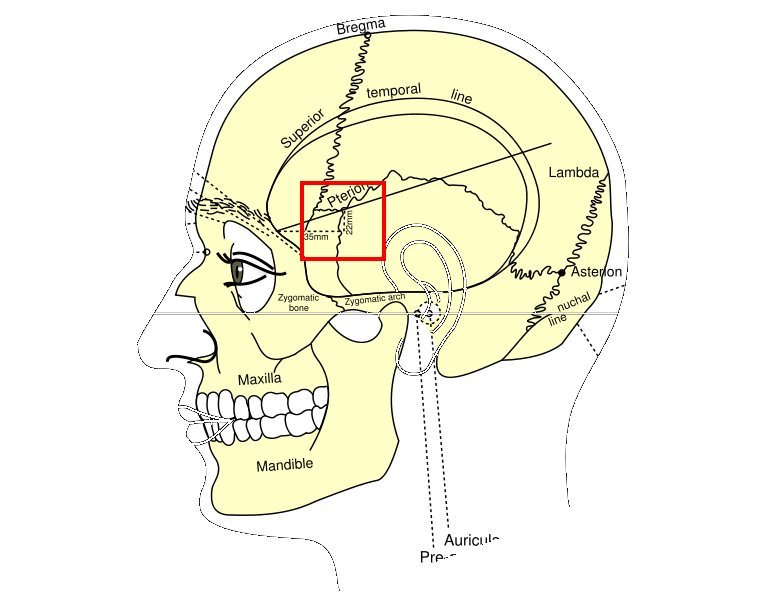
The same study looked at what lies underneath. A 1 cm circle centred on the pterion overlapped the anterior branch of the middle meningeal artery in 68 percent of the skulls. That is why the area matters in medicine: a fracture there can damage that artery and cause bleeding inside the skull, called an epidural hematoma. Anyone with a head injury should get emergency care.
"Temple" and "pterion" are not quite the same thing. The temple is a general surface term for the side of the head, while the pterion names one specific junction of bones. Neither marks a guaranteed fracture point, because skull shape, the direction and force of an impact, and each person's anatomy all vary. Our human skull facts story explains how the pterion fits into the rest of the skull; the Otago measurements add the numbers.
Woodpeckers: a different way to protect a brain
A woodpecker hammers its head against wood for a living, so it is natural to wonder how its brain copes. Its skull is built differently from ours, and it does not work alone.
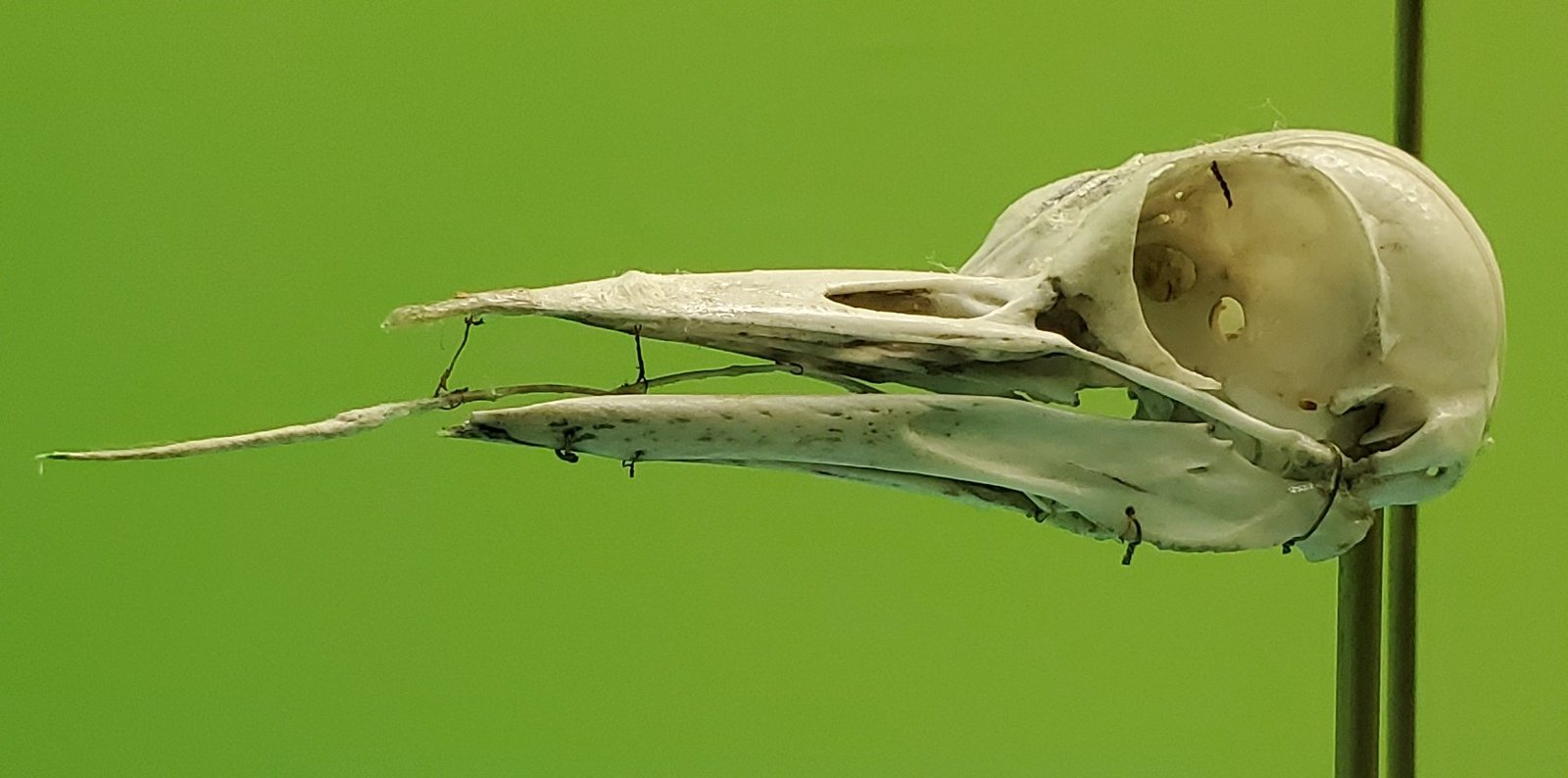
A 2018 study, *A comparative analysis of the avian skull*, compared an acorn woodpecker with a domestic chicken using micro-CT scans, microscopy, chemical analysis and nanoindentation, a way of measuring stiffness at a tiny scale. The woodpecker's skull had more uniform closed porosity, greater mineralization and a higher ratio of compact bone to total bone. Its bone was slightly stiffer, and its frontal bone had a significantly higher Young's modulus, a measure of stiffness, than its parietal bone. Just as important, the woodpecker relies on its beak, tongue, hyoid bone, head and brain working together, not on the skull by itself.
Computer models add a comparison with us. A 2020 study, *Biomechanical Analysis of Woodpecker Response During Pecking*, modelled woodpecker and human heads and reported simulated brain stresses and strains in the woodpecker lower by factors of up to six during the pecking cycle. The authors cautioned that direct one-to-one comparisons between the two remain limited.
Dogs: built for a different job
Are dog skulls stronger than ours? The studies point to a different design rather than a simple winner. In 1979, Roberts described the domestic dog skull as a rigid, trestle-like framework with a relatively flexible snout, or rostrum, that may help absorb shock during feeding and biting.
When the bone itself is tested, the gap narrows. A 2024 comparative study of cranial bone found broadly similar compression properties in adult human, dog and macaque skull bone, with the measured values varying by type of test and region of the skull. That does not support the idea that dog skulls are simply stronger than human ones. If you are curious about dog skulls for their own sake, our story on how to identify a dog skull covers them in detail.
What helmets do
A helmet is designed to reduce the force and energy that reach the head in particular kinds of impact. The CDC says there is no concussion-proof helmet, but a properly fitted, well-maintained, age-appropriate and certified helmet can help protect against serious brain or head injury.
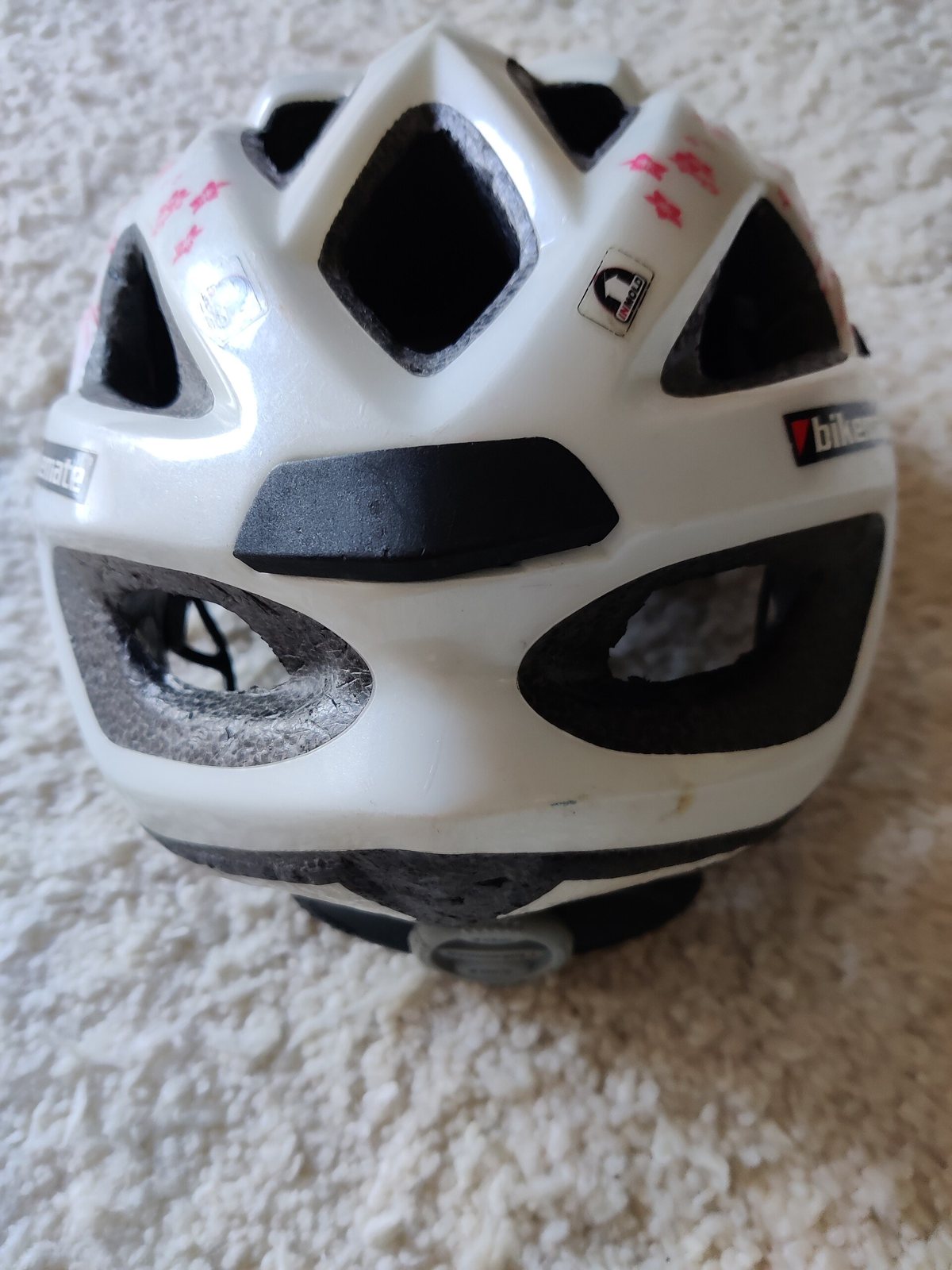
The Public Health Agency of Canada says helmets may reduce the severity of a concussion and can prevent other serious injuries, including skull fractures. For motorcycles, NHTSA estimates that helmets reduce rider deaths by 22 to 42 percent and brain injuries by 41 to 69 percent.
The protection depends on the details: a helmet designed and certified for the activity, fitted correctly and worn every time. Even then, a helmet does not make a head impact safe. Anyone with a head injury should get emergency care.
How the skull's strength was measured
Tap or hover a step to follow the order.
1979
Roberts describes the dog skull as a rigid, trestle-like framework with a partly flexible snout.
1985
Garfin and colleagues measure the three layers of the vault in cadaver skulls and CT scans.
1995
Yoganandan and colleagues report force, deformation and energy from 12 unembalmed cadaver heads.
2003
Van Lierde and colleagues measure frontal bone fracture force and energy in four human skulls.
2012
Ma, Baillie and Stringer study the pterion and the middle meningeal artery.
2018
A comparative study documents differences between acorn woodpecker and chicken skulls.
2020
A computer study compares modelled woodpecker and human heads during pecking.
2025
The CDC updates its helmet guidance, stressing that no helmet is concussion-proof.
How strong is a human skull?
Answer every question to check.
Questions about skull strength
A few questions come up again and again once the numbers are on the table.
Is the human skull stronger than concrete?
The two cannot be ranked on one scale. Concrete and skull bone are tested as different materials and structures under different loading conditions, and skull studies report force, deformation and energy for specific impacts rather than a single strength rating that could be set beside concrete's.
Can a human skull withstand a punch?
Laboratory studies cannot answer that, because they test controlled loads on cadaver heads and skulls, not blows between people. A blow to the head can cause a serious injury even when there is no visible fracture, and an injury to the brain is not the same thing as a broken skull. Anyone hurt in the head should get emergency care.
What is the diploë?
The diploë is the spongy layer of bone sandwiched between the skull's compact outer and inner tables. In the thicker parts of the vault it measured about 3 mm in the Garfin study, and it helps keep the skull light.
Where to go next
The skull's 22 bones are only part of a much larger frame; our guide to how many bones are in the human body counts the rest. For what specialists read from bones, see what bones tell archaeologists, and for the ancient practice of surgery through the skull, read about trepanation. To see how an early human skull compares with ours, read our story on the Homo erectus skull.
Terms in this story
Tap a term to see what it means.
Vault. The dome of the skull over the brain, also called the calvaria.
---