No. 029
Pan de Muerto Meaning: What the Bread of the Dead's Shape Represents and Where It Comes From
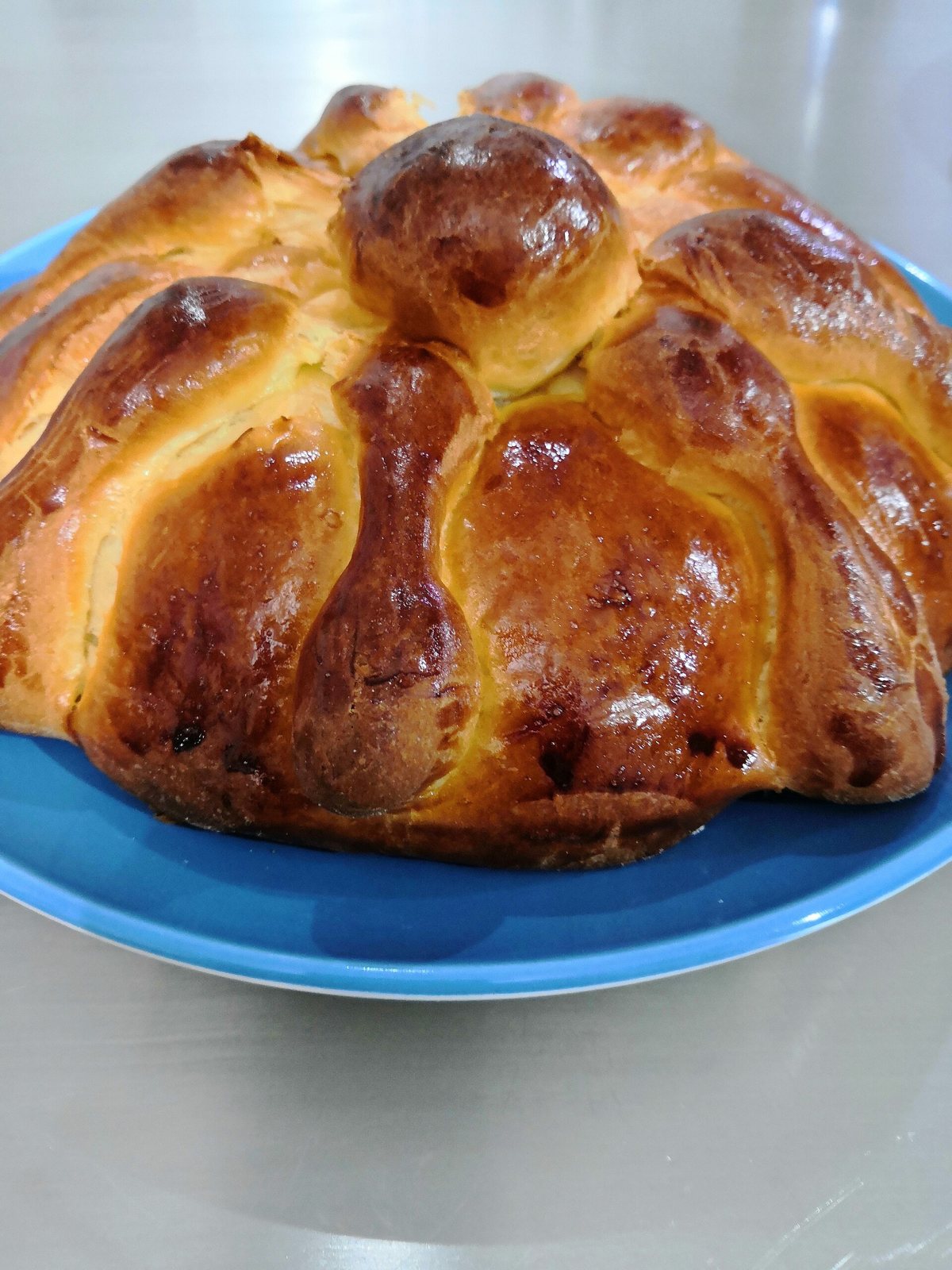
In the classic round pan de muerto of central Mexico, the circle of the loaf is commonly read as the cycle of life and death, the raised strips across the top as bones or as tears of mourning, and the little ball in the middle as a skull. Those readings come from María Angélica Galicia Gordillo of UNAM, Mexico's national university, and other scholars offer their own. Elsewhere in Mexico the bread takes other forms entirely, shaped as people, animals, angels or faces, each with a local meaning. Wherever it is baked, it goes on the ofrenda as food for the dead, and afterwards the living share it.
That is the short answer. The longer one involves amaranth figures described by sixteenth-century friars, wheat brought from Spain, a 1938 cookbook, a painting from 1951 and a long list of regional breads, some with faces.
Reading the round loaf, piece by piece
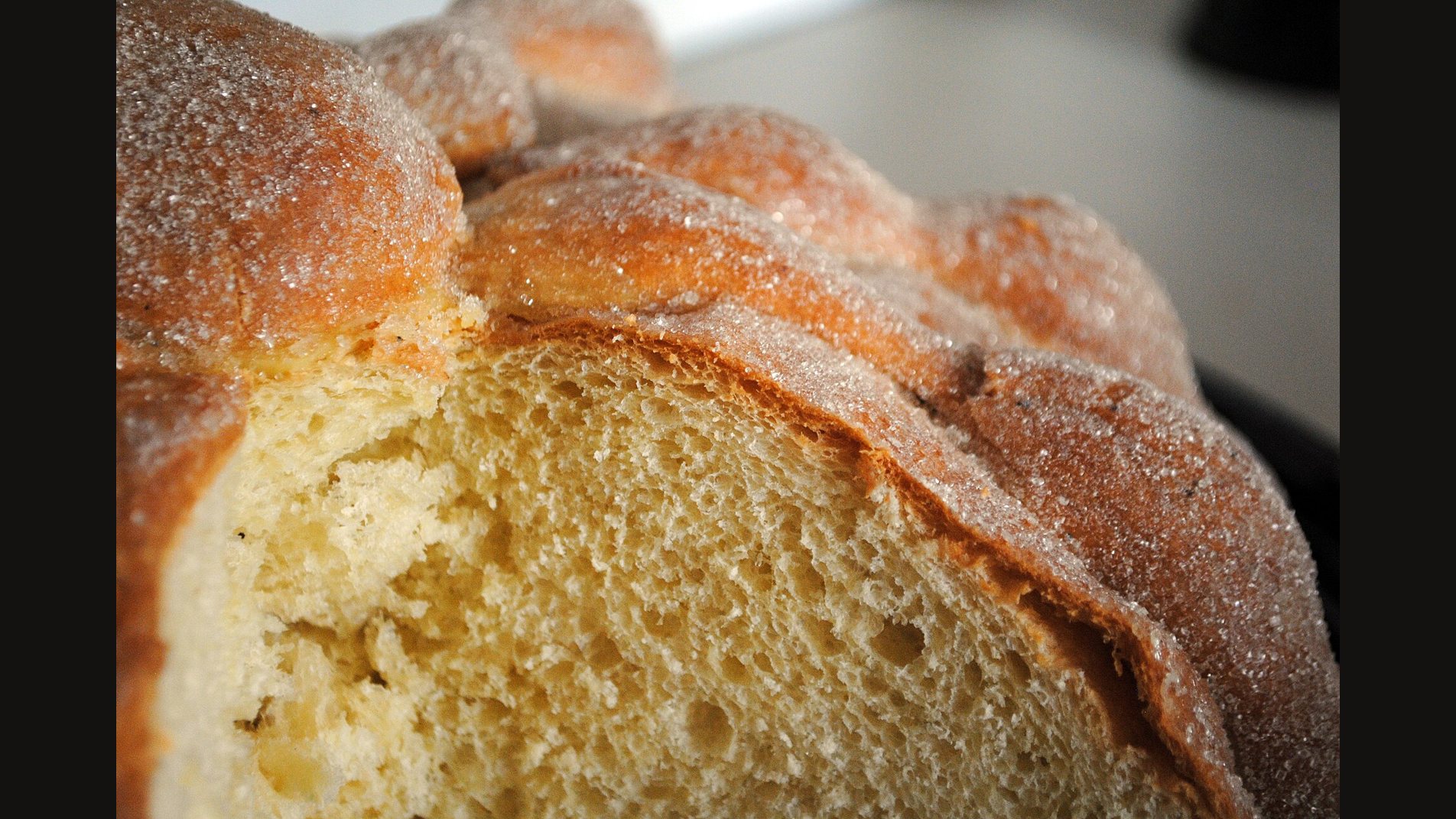
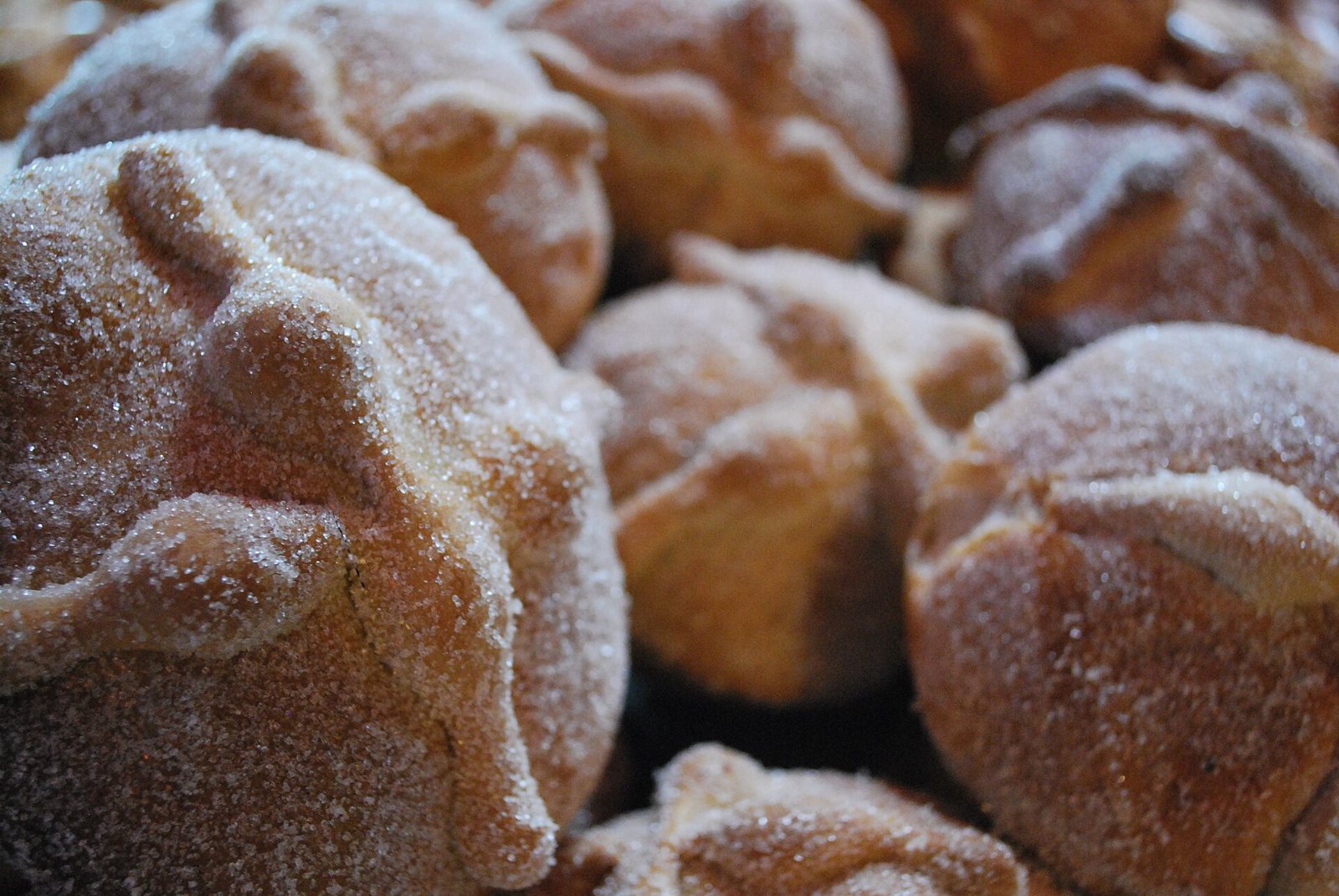
Start with the loaf you are most likely to see in a bakery case in October: round, dusted with sugar, crossed by ridged strips with a knob on top. According to Galicia Gordillo, writing for UNAM Global, the round shape is commonly interpreted as the cycle of life and death. The raised strips, called *canillas*, stand for the bones of the dead or, in some explanations, for tears. The central ball is the skull. She is careful to tie these meanings to the classic loaf rather than to every bread made for the season.
Andrés Medina, also of UNAM, offers a different angle. Speaking to the Associated Press in 2024, he connected the bone-like decoration to Mesoamerican ideas of bones as seeds of life, so the bread carries fertility and renewal as well as mourning. You may also hear that the four strips form a cross or point to the four cardinal directions. That reading turns up in some places, but it is not consistent from one region to the next.
So, what does the shape mean? It depends on who is explaining it and where the bread was baked, and for the round loaf the bones-skull-circle reading is the most common one. It also makes pan de muerto one of the few breads you can describe, accurately, as decorated with bones. For more on how skulls carry meaning across cultures, see skull symbolism.
Where pan de muerto comes from
Nobody can point to the day pan de muerto was invented. Medina told the AP that the date of origin cannot be specified, and he described the bread as a fusion of Mesoamerican and Spanish traditions. Anthropologist Erika María Méndez Martínez of UNAM, in a piece for Ciencia UNAM, traces at least two strands that come together in it.
The first strand is pre-Hispanic. Long before wheat arrived, food for ritual use was made from amaranth (*amaranto*), maize and maguey honey. One example is *papalotlaxcalli*, a food marked with a butterfly and associated with the Cihuapipiltin, the women who died in childbirth. Two Spanish friars of the sixteenth century, Fray Diego de Durán and Fray Bernardino de Sahagún, described ritual foods of amaranth and honey shaped into images of deities and bones. Those were not wheat bread, and they do not prove that today's loaf descends from them, but they show that shaped food for sacred occasions already existed.
The second strand is colonial. Wheat, sugar, the techniques of enriched bread and the Catholic observances of All Saints' Day and All Souls' Day all arrived in New Spain during the sixteenth century. INAH, Mexico's national institute of anthropology and history, describes November 1 and 2 as European Catholic observances that met existing Indigenous celebrations in Mexico. Somewhere in that meeting, pan de muerto took shape. The exact path from there to the loaf in your bakery remains uncertain.
The sacrifice story, and the convents
One explanation gets repeated a lot: that Spanish colonizers replaced human sacrifice with a sweet bread. Some government cultural pages have carried versions of it. It is a later explanation for the bread, not something documented in the historical record, and the scholars quoted above describe a slower blending of two traditions instead.
Convents are a better-documented part of the story, though not as inventors. Colonial convents were real centers of baking and religious food. In Puebla, from 1604 onward, Carmelite nuns made special *panecitos de Santa Teresa*, as the UNAM Instituto de Investigaciones Históricas describes in its account of the miraculous panecitos. They show how much convent baking mattered in New Spain. They were not pan de muerto, and no convent has been shown to have invented the loaf.
When the loaf we know shows up on paper
For the round loaf itself, two dates are firm. In 1938, the cookbook author Josefina Velázquez de León published a recognizable pan de muerto recipe in her book *Repostería Selecta*, a documented milestone in Mexico's printed culinary history. And in 1951, the painter Gustavo Montoya completed *Bodegón con panes mexicanos*, a still life of Mexican breads that Ciencia UNAM identifies as an early visual record of a form like today's familiar loaf, complete with small bones and a cross-like decoration in the center.
How pan de muerto took shape
Tap or hover a step to follow the order.
Pre-Hispanic Mexico
Ritual foods of amaranth, maize and honey, including papalotlaxcalli, are later described by colonial chroniclers.
Sixteenth century
Wheat, sugar and the Catholic All Saints' and All Souls' observances reach New Spain and meet Indigenous practice.
1604 onward
Carmelite nuns in Puebla make panecitos de Santa Teresa, a convent bread that is not pan de muerto.
1938
Josefina Velázquez de León prints a recognizable pan de muerto recipe in Repostería Selecta.
1951
Gustavo Montoya paints Bodegón con panes mexicanos, showing a form like today's loaf.
October to mid-November
Bakeries make and sell pan de muerto each year, with the peak around November 1 and 2.
Not one bread but many: regional pan de muerto
If you grew up outside central Mexico, your family's pan de muerto may look nothing like the round loaf. The Secretaría de Cultura, UNAM and Mexico's public education ministry all describe a long list of regional breads, each tied to a place and often to a community.
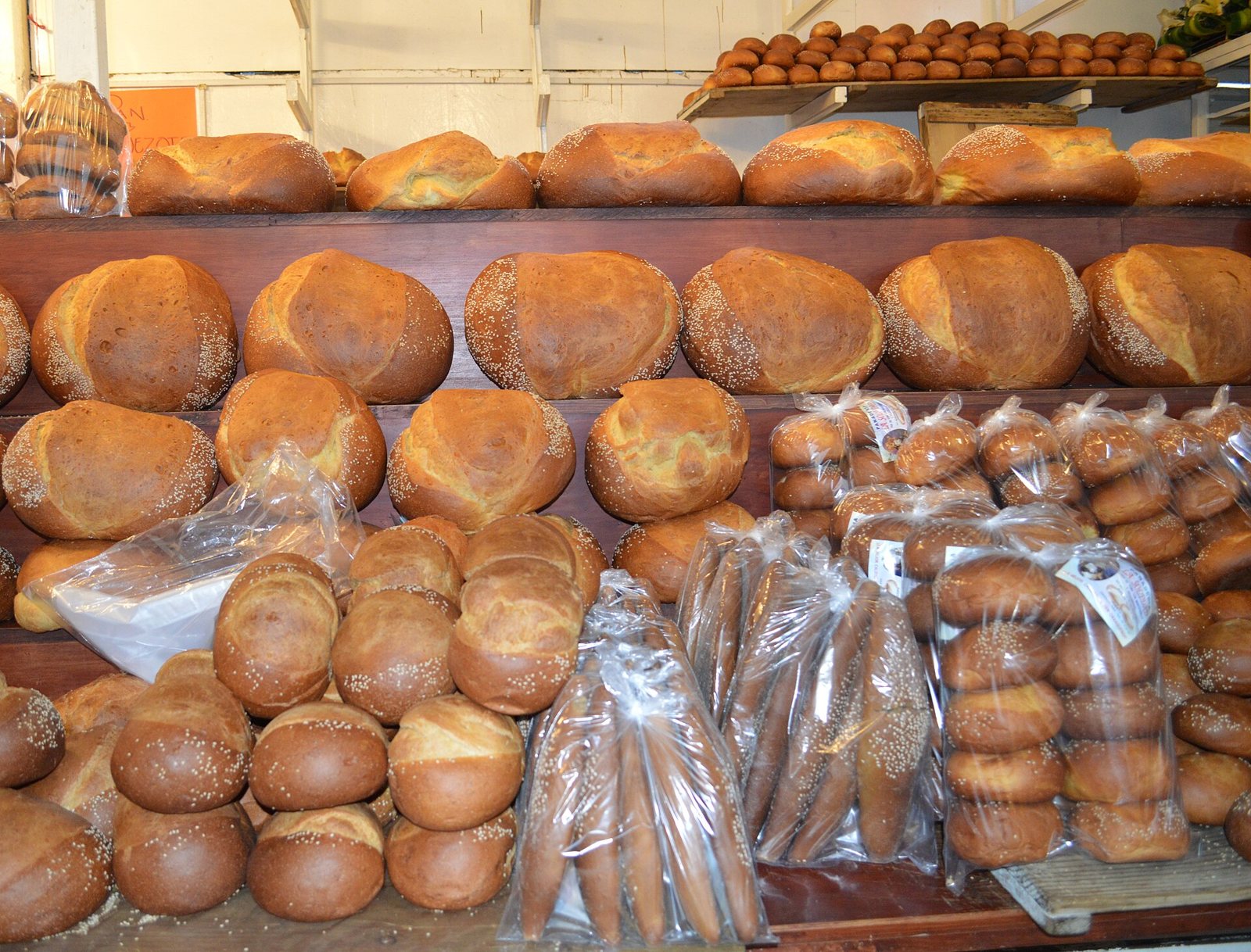
In Oaxaca, *pan de yema* is an enriched egg-yolk bread often finished with sesame. Oaxaca also has decorated breads that sometimes carry a small face made of alfeñique, a sugar paste, representing the person being honored, as the Secretaría de Cultura describes. In the Isthmus of Tehuantepec, Zapotec communities make *regañadas*, which represent the souls of people or animals who have died. Among Chinantec communities in Oaxaca, a mermaid-shaped bread may be set out for beings associated with water and fishing.
In Michoacán, *pan de ofrenda* comes in many forms and colors: virgins, rabbits, donkeys, campesinos, flowers, skulls bearing the names of the dead, and breads carrying sayings. In Puebla and the Mixteca Poblana, bakers make human-shaped breads from a bolillo-like dough, covered in white sugar for children and red sugar for adults, and Puebla also has *golletes*. In Guerrero, breads in Tixtla may take the shape of angels, animals and dolls, and in Alcozauca some represent a person who died violently and may be decorated in red. In Morelos, Tepoztlán makes breads representing women who died in childbirth, sometimes shown holding a baby. In the Estado de México, *muertes* or *ánimas* can be person-shaped, with the hands crossed over the chest.
The Bajío, the region that takes in Guanajuato, Querétaro, San Luis Potosí and parts of Michoacán, has its own town traditions, such as those of Acámbaro and Zitácuaro, rather than a single regional design. If someone tells you about Bajío pan de muerto, ask which town. The public education ministry's overview of regional varieties adds examples from Hidalgo, Veracruz and Tabasco.
Tap or hover a row to highlight it.
| Place | Bread | Form or meaning |
|---|---|---|
| PlaceOaxaca | BreadPan de yema | Form or meaningEgg-yolk bread, often with sesame; some carry a small alfeñique face for the person honored |
| PlaceIsthmus of Tehuantepec, Oaxaca (Zapotec) | BreadRegañadas | Form or meaningRepresent the souls of people or animals who have died |
| PlaceChinantec communities, Oaxaca | BreadMermaid-shaped bread | Form or meaningSet out for beings associated with water and fishing |
| PlaceMichoacán | BreadPan de ofrenda | Form or meaningVirgins, rabbits, donkeys, campesinos, flowers, skulls with names, sayings |
| PlacePuebla and the Mixteca Poblana | BreadHuman-shaped bread | Form or meaningWhite sugar for children, red sugar for adults |
| PlaceTixtla and Alcozauca, Guerrero | BreadFigures | Form or meaningAngels, animals and dolls; red-decorated bread for a violent death |
| PlaceTepoztlán, Morelos | BreadFigures | Form or meaningWomen who died in childbirth, sometimes with a baby |
| PlaceEstado de México | BreadMuertes or ánimas | Form or meaningPerson-shaped, hands crossed over the chest |
For more on how customs change from place to place, see Day of the Dead by region, and for the Maya days of the dead in Yucatán, read about Hanal Pixán.
On the ofrenda, and then on the kitchen table
Pan de muerto goes on the ofrenda as food for the relatives being remembered. The Mexic-Arte Museum's Day of the Dead guide associates November 1 with children who have died, often called Día de los Angelitos, and November 2 with adults, and it stresses that Mexican and Mexican American practice varies by place.
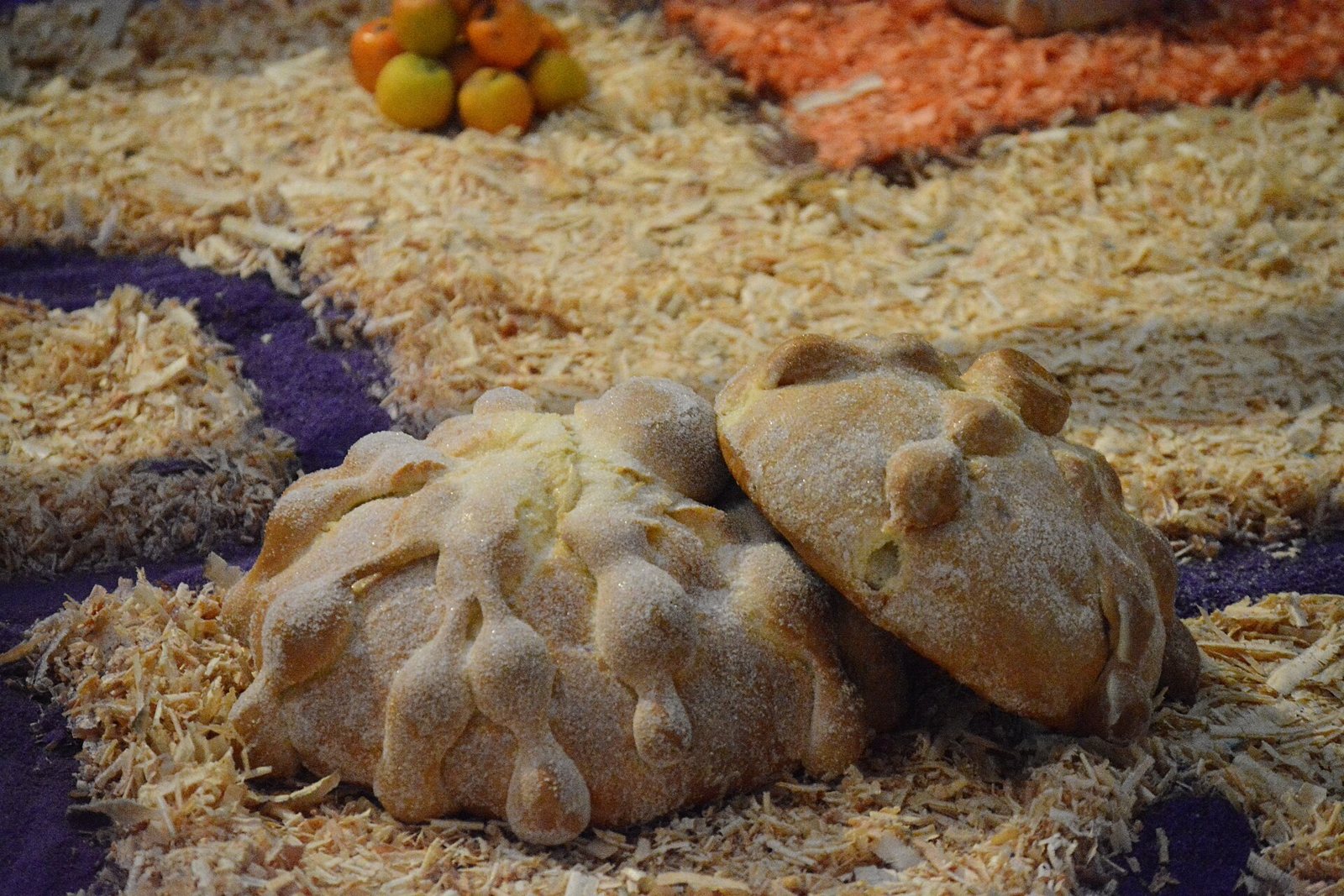
One community's custom shows how the bread moves from altar to table. In La Candelaria, Coyoacán, in Mexico City, anthropologist Isabel Lagarriga Attias documented an altar where bread sat among fruit, candles, food and copal. El País reports the local practice that on November 3, after the dead are believed to have left, relatives and neighbors share the food. That timing belongs to La Candelaria, but the idea is familiar in many families: the bread is set out for the dead first and eaten by the living afterward, as part of remembering together. If you are setting up an altar at home, the guide to making an ofrenda covers where bread fits among the other elements, and the sugar skulls that often sit beside it have their own story.
A basic recipe, and when bakeries sell it
A basic central-Mexico-style pan de muerto uses wheat flour, sugar, butter or margarine, eggs, yeast, milk or water, and flavorings such as orange zest, orange juice, anise or orange-blossom water. The Mexic-Arte Museum's education recipe works like this: mix the dough and let it rise until doubled; shape a round loaf, saving some dough for the central knob and the bones; let it rise a second time; and bake at 350°F (175°C) for about 35 to 45 minutes. Brush the warm bread with a glaze of sugar, orange juice and orange zest, then coat it in white sugar.
That is one museum's teaching recipe, not every region's. Bakeries take their own approach. A Mexico City bakery that the AP visited in 2024 used orange blossom, tangerine zest, anise and butter, took three days to make each batch and relied on a sourdough starter kept going for 20 years.
As for when to find it, bakeries commonly sell pan de muerto from early October through mid-November, and many start production in September. The tradition centers on November 1 and 2, though commercial bakeries may stretch the season. If you love it in March, nothing stops you from baking a loaf at home.
How well do you know pan de muerto?
Answer every question to check.
Common questions about pan de muerto
What does pan de muerto symbolize?
In the classic round loaf of central Mexico, pan de muerto commonly symbolizes the cycle of life and death, with the strips standing for bones or tears and the central ball for a skull. In other regions the bread may represent a particular person who has died, an animal, an angel, a deity or a local idea about death and renewal.
Is it disrespectful to eat pan de muerto?
No, eating pan de muerto is not disrespectful in itself. In many households it is placed on the ofrenda first and later shared by relatives and neighbors as part of remembrance. If you are a guest, follow the family's or community's custom for when the bread on the altar is eaten.
What does the shape of pan de muerto mean? (¿Qué significa la forma del pan de muerto?)
The shape of the round central-Mexico loaf is usually read as a circle for the cycle of life and death, strips of dough for bones or tears, and a small ball for the skull. Those readings do not describe every pan de muerto, because shapes and meanings change by state, town and family.
Where to go next
Pan de muerto is one of the most welcoming ways into Día de Muertos: you can buy it, bake it, set it out and share it. For the holiday as a whole, start with the guide to Día de Muertos, and when the bread is ready, the ofrenda guide shows where it goes.