
No. 075
St Catherine's Monastery Skulls: Why the Monks of Sinai Keep Them
The skulls in that photograph belong to the monks of St Catherine's Monastery themselves. At this monastery in Egypt's Sinai, a monk who dies is buried in the small cemetery outside. Later, when a grave is needed again, the bones that have lain there longest are lifted out and laid in order in the monastery's charnel house, or ossuary, among the brothers who went before.
The monks keep the skulls as part of their own community. The monastery describes them as the bones of monks awaiting the Resurrection, and memorial services for the departed are held in the charnel house. The historian Athanasios Paliouras adds that the room also invites meditation on mortality.
Seated at the entrance is a named figure, the Righteous Stephanus, a monk of Sinai the monastery remembers by name. Visitors can come to the monastery on most mornings, though it keeps a religious schedule, and access to the charnel house itself is a question to put to the monks before you travel.
Why the monks' bones are moved to the charnel house
The reason is practical first. The monastery sits in rocky ground in the mountains of Sinai, and there is little space for a cemetery. Paliouras, in his description of the monastery's buildings and grounds, explains how the monks answer that: graves are reused. When a monk dies and a grave is needed, the bones from the oldest burial are exhumed and carried to the ossuary, where they are arranged in order with the remains of earlier monks.
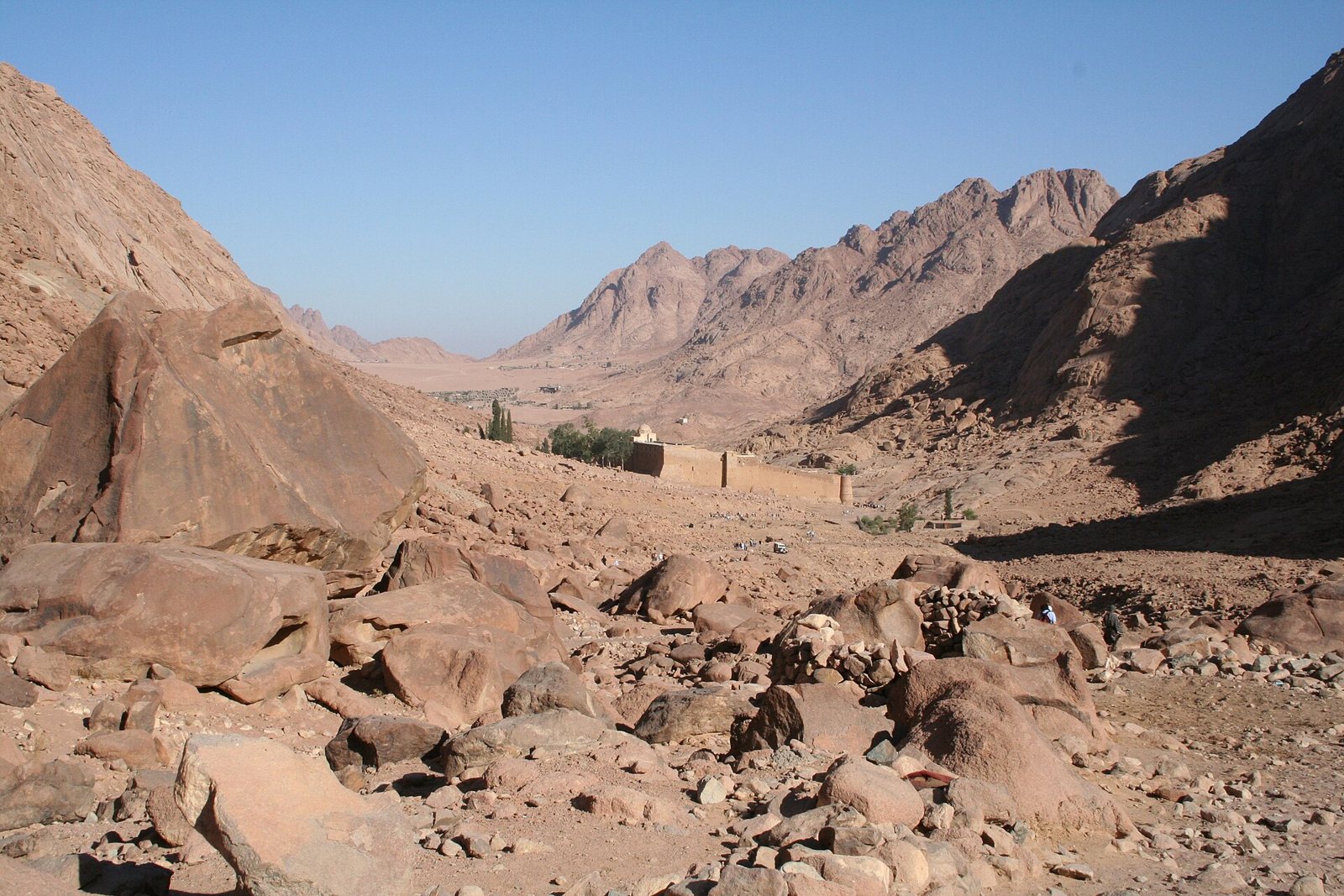
That is why the skulls in photographs sit in such neat rows and stacks. They were placed there in order, grave by grave, in the brotherhood's shared resting place. The Egyptian Ministry of Tourism and Antiquities lists ossuaries among the monastery's structures, alongside its church and other buildings.
Seen this way, the charnel house is simply the second stage of a monk's burial. He rests first in the earth outside, and then with his brothers.
What the charnel house means to the monks
The monks themselves speak of the charnel house in the language of faith. The monastery describes the bones as those of monks awaiting the Resurrection, and says memorial services are held there for the monks who have died. In other words, the room is a place of prayer for the dead, kept by the living members of the same community.
Historians add a second reading, and it belongs alongside the monks' own words rather than in place of them. Athanasios Paliouras writes that, beyond answering the shortage of burial space, the charnel house encourages meditation on mortality. That is his reading as a historian, set beside the monks' own account of prayer and the Resurrection.
The idea of keeping death in view is the thread behind what memento mori means. For the wider meaning of skulls in Christian tradition, read about skulls in Christianity.
The Righteous Stephanus at the door
The seated figure many visitors remember is the Righteous Stephanus, whose name is also searched as Stephen or Stephanos. The monastery says his body has not decomposed, and he sits inside a wooden case near the entrance of the charnel house.
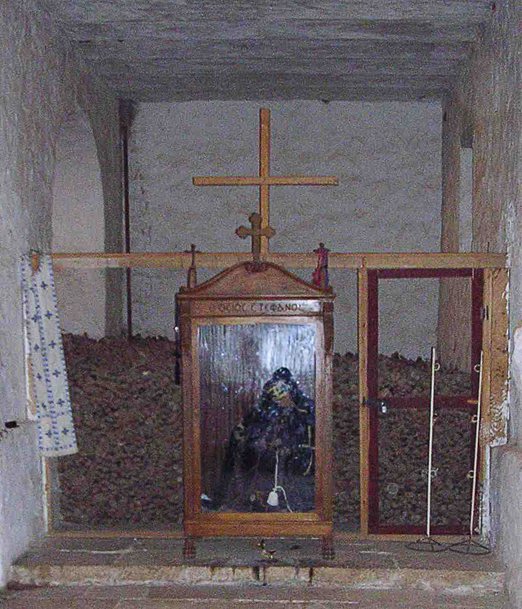
According to the monastery, Stephanus once lived at the gate below the way up to the summit of Mount Sinai. Pilgrims climbing the mountain passed him there, and he heard the confessions of people preparing for the ascent.
He is different from the brothers behind him. The skulls in the ossuary belong to monks gathered together as one community, without names on display. Stephanus is a single ascetic, remembered by name. For the remains of other named holy people kept in churches, read our story on saints' relic skulls.
A monastery that has kept its life since the sixth century
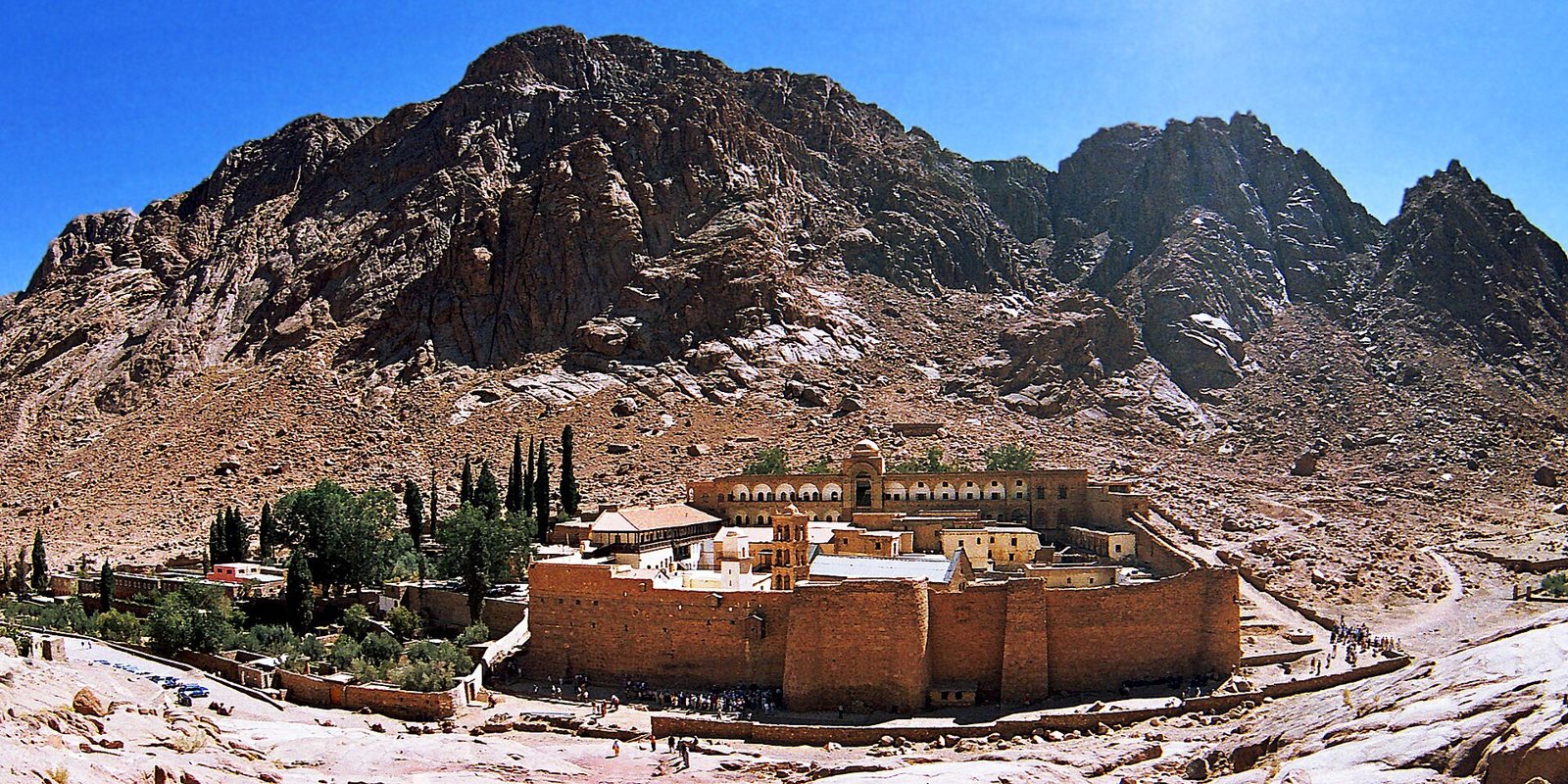
The charnel house is old because the community is old. UNESCO describes Saint Catherine's as one of the earliest surviving Christian monasteries in the Eastern tradition, and notes that it has kept its monastic life without interruption since it was founded in the sixth century. It stands at the foot of Mount Horeb, also called Jebel Musa, in an area that UNESCO describes as sacred to Christianity, Islam and Judaism.
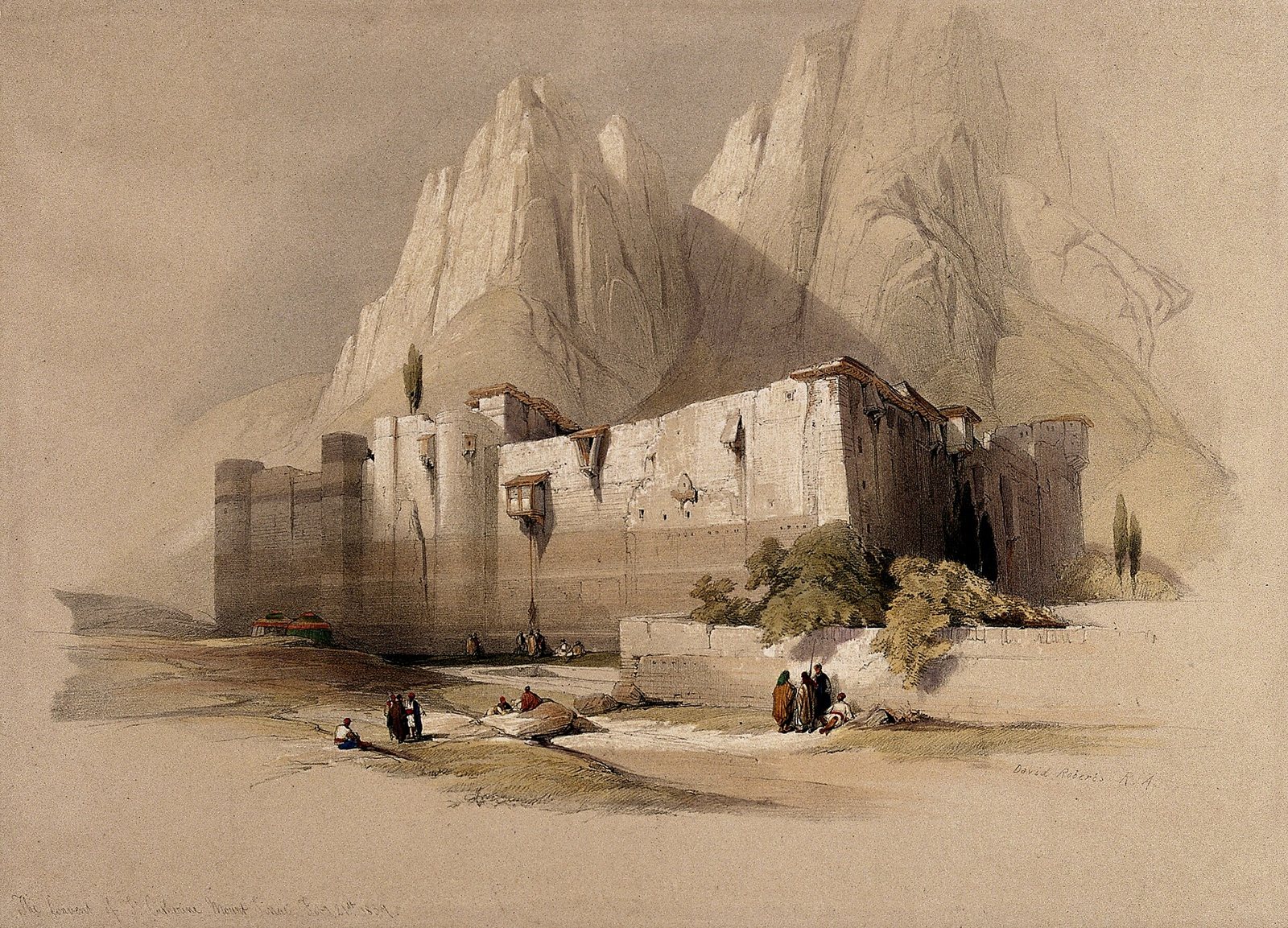
Monks were living in Sinai before the walls went up. The Egyptian Ministry of Tourism and Antiquities records monks there in the 4th century, and dates the main monastery to 548 to 565 CE, when it was built under the Byzantine emperor Justinian I, who reigned from 527 to 565 CE. In 2002 the Saint Catherine Area was added to the UNESCO World Heritage List.
Since the sixth century, monks have prayed in the same place, and the bones in the charnel house belong to that line.
St Catherine's Monastery from the 4th century to today
Tap or hover a step to follow the order.
4th century CE
Monks are already living in the Sinai Peninsula.
527 to 565 CE
Reign of the Byzantine emperor Justinian I.
548 to 565 CE
The main monastery is built under Justinian I.
Sixth century to today
The monastery keeps its monastic life without interruption.
March 1961
Charles W. Thayer photographs the skulls in the charnel house.
2002
The Saint Catherine Area enters the UNESCO World Heritage List.
The 1961 photograph of the skulls
Many people meet the charnel house through photographs, and one of them sits in an American archive. In March 1961, the diplomat and author Charles W. Thayer photographed the skulls of deceased monks in the monastery's charnel house. His print is held by the Harry S. Truman Library and Museum, which identifies it as public domain.
The archive describes it as a record of the piled skulls of the monastery's deceased monks. Looked at with the monastery's own words in mind, it is a photograph of one brotherhood, its members gathered in order in the room where they await the Resurrection.
The same practice on Mount Athos
St Catherine's is not alone. Orthodox monasteries on Mount Athos, in Greece, follow a closely related custom, though each community keeps its own rules.
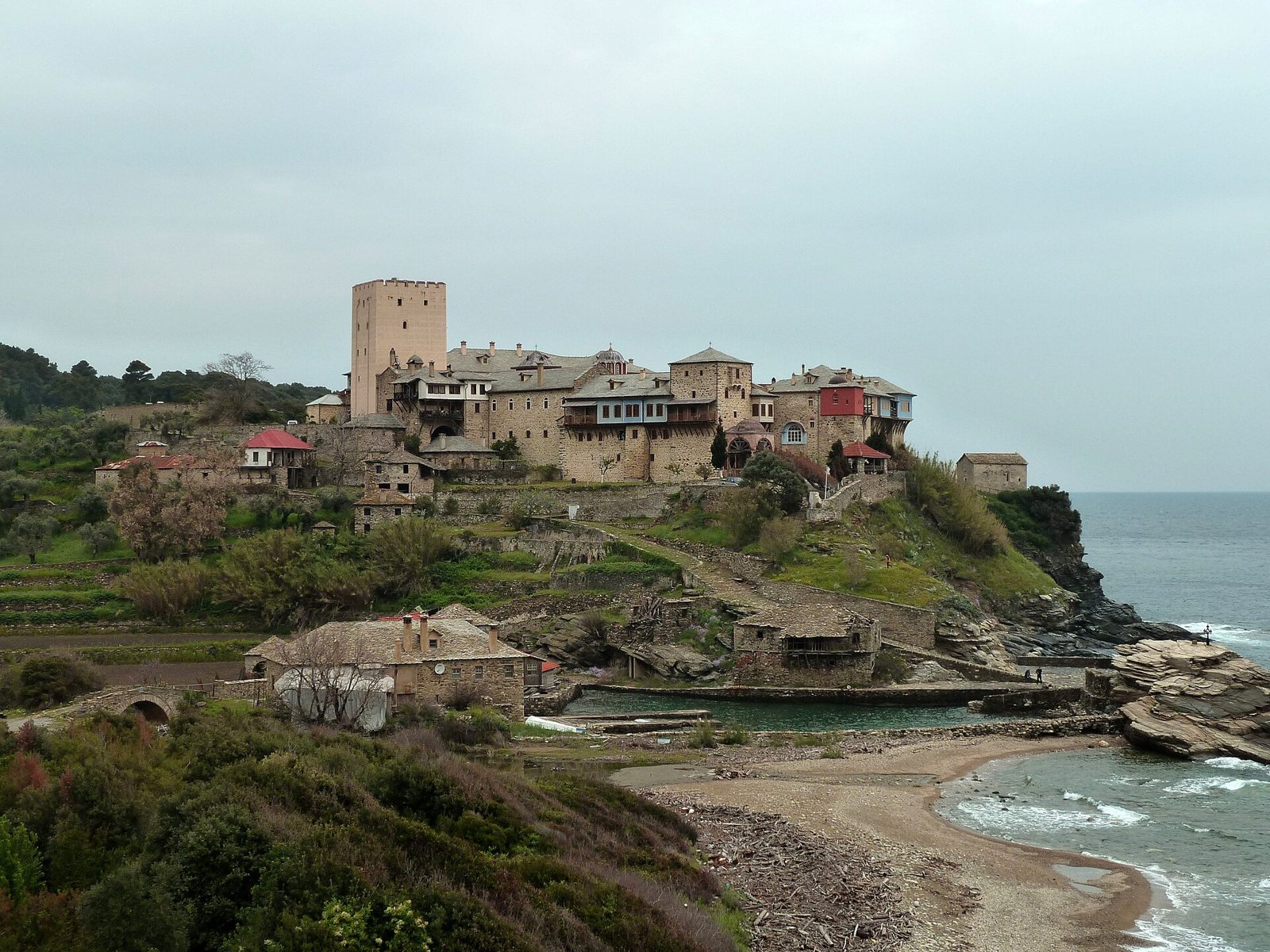
The Holy Monastery of Pantokrator on Athos says that after exhumation, monks' bones are moved to the monastery ossuary and kept with the remains of earlier members of the brotherhood, and that the departed are remembered regularly in memorial services. A digital exhibition from the University of Virginia's Holy Mountain project describes the practice at the Prodromos Skete, a monastic settlement on Athos: after burial, the bones are moved to the charnel house and preserved there in anticipation of resurrection. The scholar James S. Cutsinger describes Athonite burial and exhumation in his account of a pilgrimage to Mount Athos.
These are Greek Athonite customs, and they should not be read as Sinai's own rules. Still, they show the same belief at work in more than one place: the dead brothers stay with the community while they await the resurrection. For bone houses in other faiths and countries, see ossuaries around the world.
Visiting St Catherine's Monastery
St Catherine's is a working monastery first. Its official pilgrimage information page says it is a religious house, not an organized tourist site. Visitors are received as pilgrims and are asked to respect the monastery and its prayer schedule.
As published on 25 October 2026, the monastery's page says it is normally closed on Fridays, Sundays and important Greek Orthodox feast days. On other days, its visiting hours are 9:00 to 11:30 a.m. Visitors may enter the church and the areas immediately around it, following a set route: the gate, the courtyard, Moses' well, the catholicon (the main church), the Burning Bush and the sacristy. Organized guided tours and recordings are not permitted.
The Egyptian Ministry of Tourism and Antiquities publishes a different schedule, also as shown on 25 October 2026.
Tap or hover a row to highlight it.
| Day | Monastery's pilgrimage page | Egyptian Ministry of Tourism and Antiquities |
|---|---|---|
| DayOrdinary days | Monastery's pilgrimage page9:00 to 11:30 a.m. | Egyptian Ministry of Tourism and Antiquities8:45 a.m. to 12:45 p.m. |
| DayFriday | Monastery's pilgrimage pageNormally closed | Egyptian Ministry of Tourism and Antiquities10:30 to 11:30 a.m. |
| DaySunday | Monastery's pilgrimage pageNormally closed | Egyptian Ministry of Tourism and AntiquitiesClosed |
| DayImportant Greek Orthodox feast days | Monastery's pilgrimage pageNormally closed | Egyptian Ministry of Tourism and AntiquitiesConfirm with the monastery |
Because the two schedules differ, confirm the day and hours with the monastery before you travel, along with the route you plan to take to reach it. If seeing the charnel house is the reason for your trip, ask the monastery directly whether it is open to visitors, and do not plan around it until they say so.
Before you visit St Catherine's Monastery
Tap a card to bring it forward.
- A monastery first: Visitors are received as pilgrims at a working religious house.
- Closed days: Normally closed on Fridays, Sundays and important Greek Orthodox feast days, per the monastery.
- Hours: 9:00 to 11:30 a.m. on other days, per the monastery's page as of 25 October 2026.
- Route: Gate, courtyard, Moses' well, catholicon, Burning Bush and sacristy.
- No tours or recordings: Organized guided tours and recordings are not permitted.
- Charnel house: Confirm access with the monastery before you travel.
How well do you know the skulls of St Catherine's?
Answer every question to check.
Questions about St Catherine's Monastery
A few practical answers for anyone hoping to see the monastery in person.
Can visitors see the charnel house itself?
Ask the monastery directly before you plan around it. Its official visitor route covers the church and the areas immediately around it, and the monastery is the only one who can tell you whether the charnel house is open on the day you come.
Can you take photographs inside the monastery?
Ask the monastery about photography before your visit. Its official page says recordings and organized guided tours are not permitted, so check what is allowed before you raise a camera near the icons or the church.
Can you stay overnight at St Catherine's Monastery?
Ask the monastery directly. It receives visitors as pilgrims, and any question about staying longer than a morning visit is one for the monks themselves.
Why is St Catherine's Monastery closed on some days?
Because it is a working religious house that follows its prayer schedule. The monastery is normally closed on Fridays, Sundays and important Greek Orthodox feast days, when the community's worship comes first.
More places where the dead stay with their community
St Catherine's belongs to a family of places where bones are kept close rather than out of sight. In Austria there is the Hallstatt bone house, and in Rome the Capuchin Crypt, where the bones of Capuchin friars are kept in its chapels. In the Czech Republic, read about the Sedlec Ossuary.
Two other stories in this series follow the same thread. In Sicily, the Palermo catacombs keep Capuchin friars and the city's families side by side. And if the monks' prayers for their departed brothers interest you, read about All Souls' Day, the Christian day of prayer for the dead, and the meaning of the skull rosary.
Terms in this story
Tap a term to see what it means.
Charnel house. A building or room where the bones of the dead are kept after burial. At St Catherine's it holds the bones of the monastery's own monks.
---