No. 156
Skull Rosary Meaning: The Story of Memento Mori Prayer Beads
On a Christian rosary, a skull is a memento mori, the Latin idea of remembering death and the limits of earthly life. It is an old idea in prayer beads. The Oxford Museum of the History of Science dates skull beads and death's-head rosary decorations to the fourteenth century, and the Metropolitan Museum of Art holds German ivory rosary beads from about 1500 to 1525 that show the living on one side and the dead on the other.
A skull rosary you see today may mean something different to the person wearing it. It can be a sign of devotion, a way of remembering someone, part of a Gothic style or a private choice. The meaning depends on the object and on the person, and so does the question of whether wearing one is respectful.
Beads that showed the living and the dead
Memento mori beads are prayer beads, pendants or ornaments carved with skulls, skeletons, decaying faces or paired images of life and death, made so that a person praying would keep mortality in mind. Museums document them in European rosaries from the late medieval and Renaissance periods.
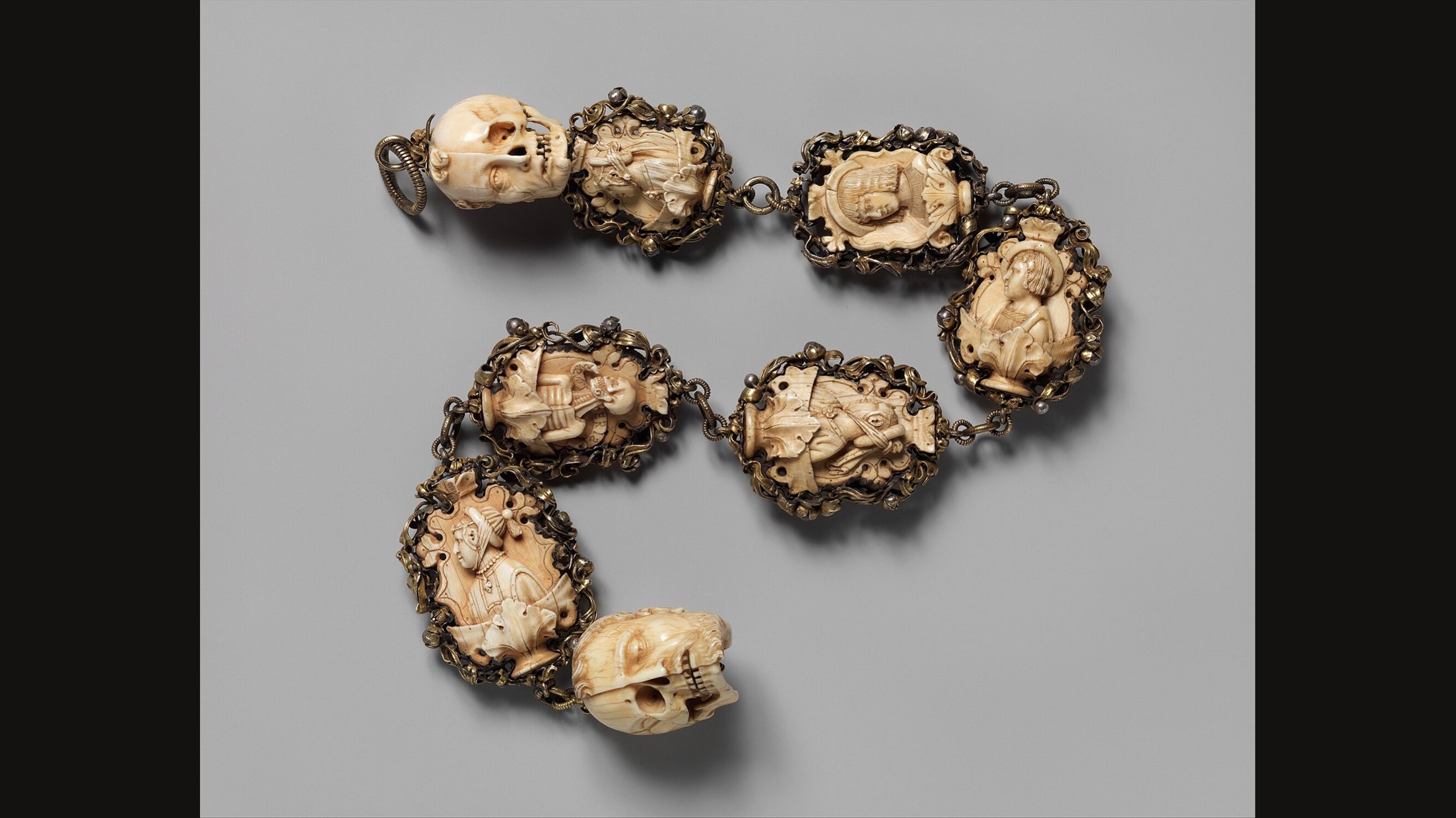
The most striking may be the German ivory rosary at the Metropolitan Museum of Art, dated about 1500 to 1525. Its beads show prosperous living figures on one side and skeletal or partly decomposed figures on the other. Life on one face, death on the next: as the beads passed through the fingers, the act of praying became a meditation on mortality.
The Met also holds an ivory terminal bead, the bead at the end of the cord, made in northern France or the southern Netherlands at about the same time. It joins a pair of lovers with a death's head. Boxwood microcarvings, tiny and very detailed, came out of northern European workshops, especially in the Low Countries, from around 1500 into the early sixteenth century.
According to the Oxford Museum of the History of Science, skull beads and death's-head decorations on rosaries go back to the fourteenth century and were especially popular in Italy and Germany from the sixteenth through the eighteenth centuries.
The same pairing turns up in humbler materials. A small bone rosary bead recovered from the Thames foreshore at Queenhithe in London shows a young woman's face on one side and a skull on the other. The British Museum dates it to between 1450 and 1550.
Skull beads through the centuries
Tap or hover a step to follow the order.
Fourteenth century
Skull decorations and beads begin to appear on rosaries in Europe.
1450 to 1550
A bone rosary bead with a young woman's face and a skull is made; it is later recovered from the Thames at Queenhithe, London.
About 1500 to 1525
German ivory rosary beads pair living figures with skeletal ones; it is now in the Met.
About 1500 to 1525
An ivory terminal bead from northern France or the southern Netherlands joins lovers with a death's head.
Seventeenth to nineteenth centuries
A Tibetan Buddhist rosary is made with beads of human skull and bone, now in the Science Museum Group collection.
1986
British designer Simon Costin makes his Memento Mori necklace.
2014
Javier Pérez's rosary of fifty-nine bronze skulls is shown at the Votivkirche in Vienna.
A skull beneath the cross
Some rosaries carry one skull rather than a whole string of them, placed on a pendant or at the end of the cord. The Met's sixteenth-century rosary pendant, accession number 17.190.323, shows a skull beneath a cross, worked in silver-gilt and rock crystal. Its collection record is reproduced by Northern Arizona University's Calaveras of Día de los Muertos project, which lists the image as public domain.
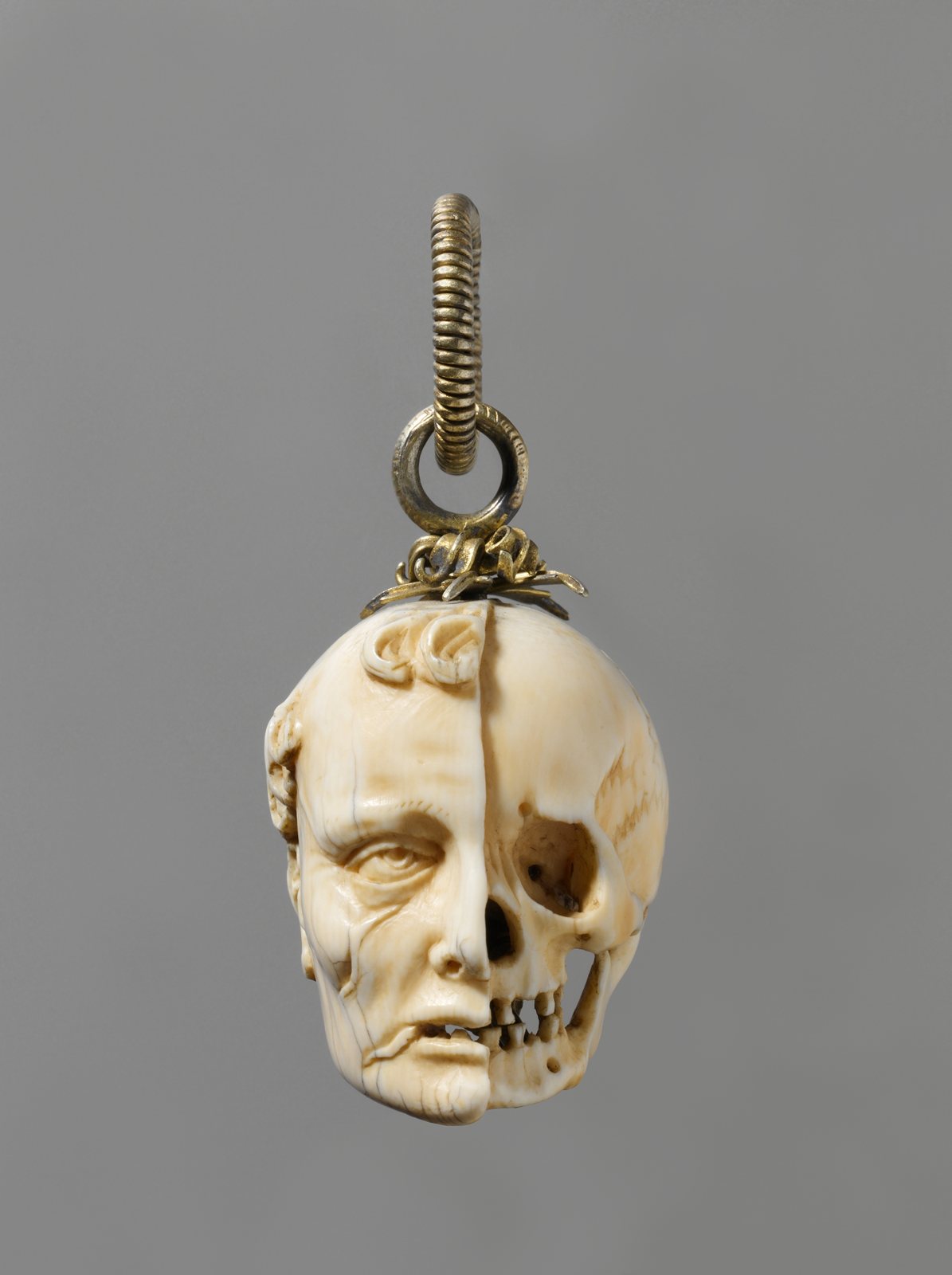
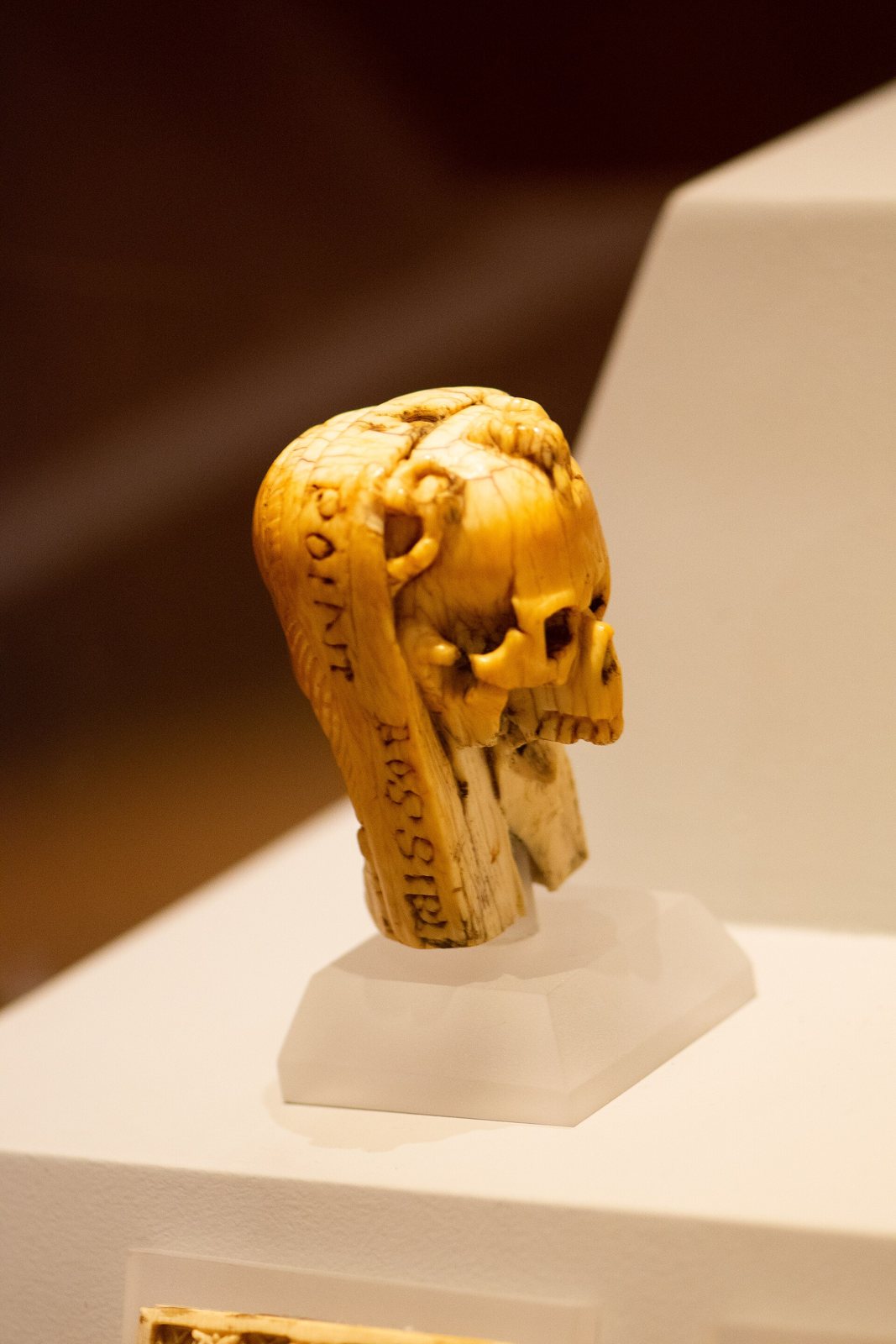
Placed at the end of the prayer cord or on a terminal bead, a skull like this worked as a memento mori, a small image of death waiting at the end of the prayers. The Hunt Museum holds an eighteenth-century ivory skull that may once have hung from a rosary in the same way.
These are individual objects, each with its own date and maker. If you own or are looking at a particular skull-and-cross rosary, its museum catalogue record, or the maker's own description, is the best guide to what it is and where it came from.
Tap or hover a row to highlight it.
| Object | Date | Material | Museum |
|---|---|---|---|
| ObjectGerman rosary with living and skeletal figures | DateAbout 1500 to 1525 | MaterialIvory | MuseumMetropolitan Museum of Art |
| ObjectTerminal bead with lovers and death's head, northern France or southern Netherlands | DateAbout 1500 to 1525 | MaterialIvory | MuseumMetropolitan Museum of Art |
| ObjectRosary bead with a woman's face and a skull, from the Thames at Queenhithe, London | Date1450 to 1550 | MaterialBone | MuseumDated by the British Museum |
| ObjectRosary pendant with a skull beneath a cross | DateSixteenth century | MaterialSilver-gilt and rock crystal | MuseumMetropolitan Museum of Art |
| ObjectMemento mori skull, possibly from a rosary | DateEighteenth century | MaterialIvory | MuseumHunt Museum |
| ObjectPrayer beads from Tibet | DateEighteenth or nineteenth century | MaterialHuman cranium | MuseumRubin Museum of Himalayan Art |
| ObjectTibetan Buddhist rosary of skull beads | DateSeventeenth to nineteenth centuries | MaterialHuman skull, bone, stone and silver | MuseumScience Museum Group |
What the Church teaches about the rosary
To understand why a skull rosary can matter to people, it helps to know what the rosary itself is in Catholic teaching. The Catechism of the Catholic Church describes the rosary as Marian prayer and an epitome of the Gospel. It is a way of praying centered on Christ, in which the person praying contemplates the Gospel and the mysteries of Christ. The Catechism's section on the way of prayer places the rosary within Christian meditation.
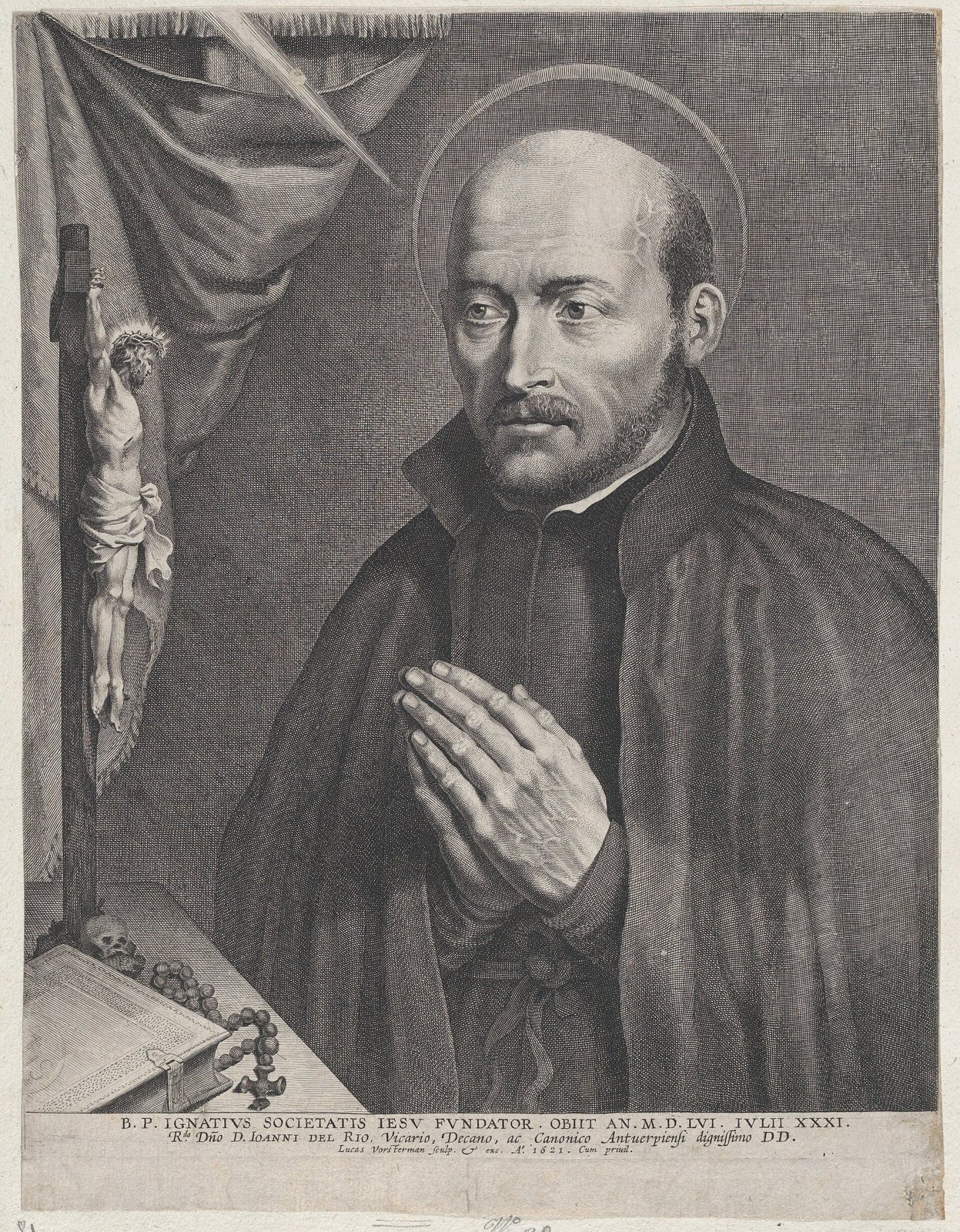
That is what the Church says the rosary is for. The skull beads are a separate matter, and the history of them comes from museums and historians rather than from Church teaching. Seen side by side, a skull on a rosary can be understood within the Christian memento mori tradition, especially when the beads are used to pray.
Is it disrespectful to wear a skull rosary?
It depends on the object, on what the wearer intends and on the community around them. There is no single answer for every rosary or every person.
Many Catholics regard a rosary as a sacred devotional object, made for prayer, and some of them find it disrespectful when one is worn purely as decoration. Others see a skull on a rosary in the long Christian tradition of memento mori, as a call to remember mortality, repentance and the shortness of earthly life, especially when the beads are actually used to pray. Catholics themselves differ about wearing a rosary as jewelry, and the same is true of questions like wearing one as a necklace or as part of a Gothic outfit.
So, the practical step is a simple one: treat a rosary as a religious object, and if you are unsure, ask the owner, a parish priest or the community it belongs to before wearing a particular one as an accessory. They can tell you how they see that rosary, and their answer is the one that counts for it.
Skull beads in Tibetan Buddhism
Skull beads have a very different history in Tibet, and they deserve to be understood on their own terms rather than as another kind of skull jewelry. In Tibetan Buddhism a mala is a string of prayer beads used to count mantras and other repetitions. The University of Virginia Library describes a Tibetan mala of 108 beads and notes that malas made of bone are associated with meditation on fierce deities.
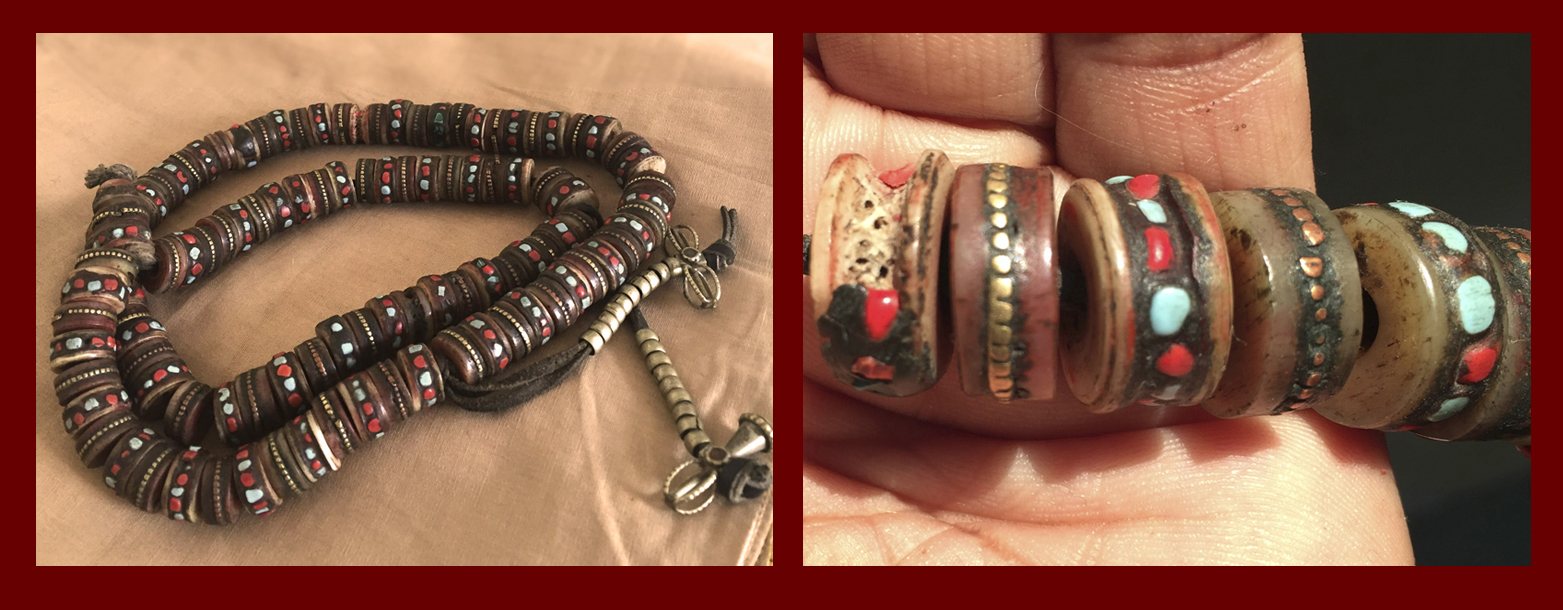
Some of these beads were made from human bone. The Rubin Museum of Himalayan Art holds prayer beads made from human cranium, from Tibet in the eighteenth or nineteenth century. Its record says they were associated with wrathful Tantric practices, were intended for initiated practitioners and were to be kept on elevated or consecrated ground when not in use. The Science Museum Group records a Tibetan Buddhist rosary made of human skull, bone, stone and silver, dated broadly to the seventeenth through nineteenth centuries.
Other malas carry the image of a skull carved in bone. Tibet House US holds an eighteenth-century Tibetan mala whose bone beads are carved as skulls, and connects its use with awareness of impermanence. These are ritual objects from a specific religious tradition, and some contain the remains of people, and the museums that keep them treat them with matching care. For the wider meaning of the skull in this tradition, read our story on skull symbolism in Buddhism, and for a related ritual object, the kapala skull cup.
Skull rosaries as art and jewelry today
Modern artists and makers use the shape of the rosary and the image of the skull for many purposes, including devotional art, mourning, Gothic fashion and reflection on mortality. Two pieces show the range.
In 1986 the British designer Simon Costin made a *Memento Mori* necklace, now in the Metropolitan Museum of Art, from skulls, Victorian jet, claws, bone and other materials. It was inspired by Joris-Karl Huysmans's novel *À Rebours*. For the Victorian side of skull and death jewelry, read our story on Victorian mourning jewelry. The V&A's Memento Mori feature places this kind of imagery in modern fashion.
In 2014 the artist Javier Pérez showed *Memento Mori (Rosario)* at the Votivkirche in Vienna: a rosary formed from fifty-nine life-size bronze skulls, with shackles where the crucifix would normally hang. Nobody is going to wear that one to church.
These are artists' reinterpretations. They show how strong the old pairing of prayer beads and skulls still is, but they do not give every skull rosary a single shared religious meaning. The meaning of the one in front of you belongs to its maker and its wearer.
How much do you know about skull rosaries?
Answer every question to check.
Quick answers about skull rosaries
A few more questions come up once the history is clear.
Why do some rosaries have a skull at the cross?
A skull placed beneath the cross or at the end of the cord served as a memento mori, a prompt to remember death at the close of prayer. The Met's sixteenth-century pendant, with a skull beneath a cross in silver-gilt and rock crystal, is one documented example.
Are Tibetan skull malas made from human bone?
Some are. The Rubin Museum and the Science Museum Group both hold Tibetan prayer beads made from human skull, while Tibet House US holds a mala whose bone beads are carved into the shape of skulls, so the material differs from one mala to the next.
Can I hang a rosary from my belt or bag?
Catholics hold different views on this, as they do on wearing a rosary as jewelry. Ask a parish priest, or the owner if the rosary belongs to someone else, how they would like it treated.
Where to go next
Skull rosaries sit inside a much larger tradition of keeping death in mind. Start with what memento mori means, then follow the skull through Christian art in skulls in Christianity and the still lifes in our story on vanitas paintings. For a pocket-sized cousin of the skull bead, read about the memento mori coin. The Catholic practice of praying for and remembering the dead has its own day in the calendar, told in our story on All Souls' Day, and another Christian tradition of keeping the dead in view is told in our story on the skulls of St. Catherine's Monastery.
Terms in this story
Tap a term to see what it means.
Rosary. A string of prayer beads used in Catholic devotion; the Catechism describes the rosary as Marian prayer centered on Christ.
---