

No. 011
Vanitas Paintings: Why Old Still Lifes Have Skulls and What the Objects Mean
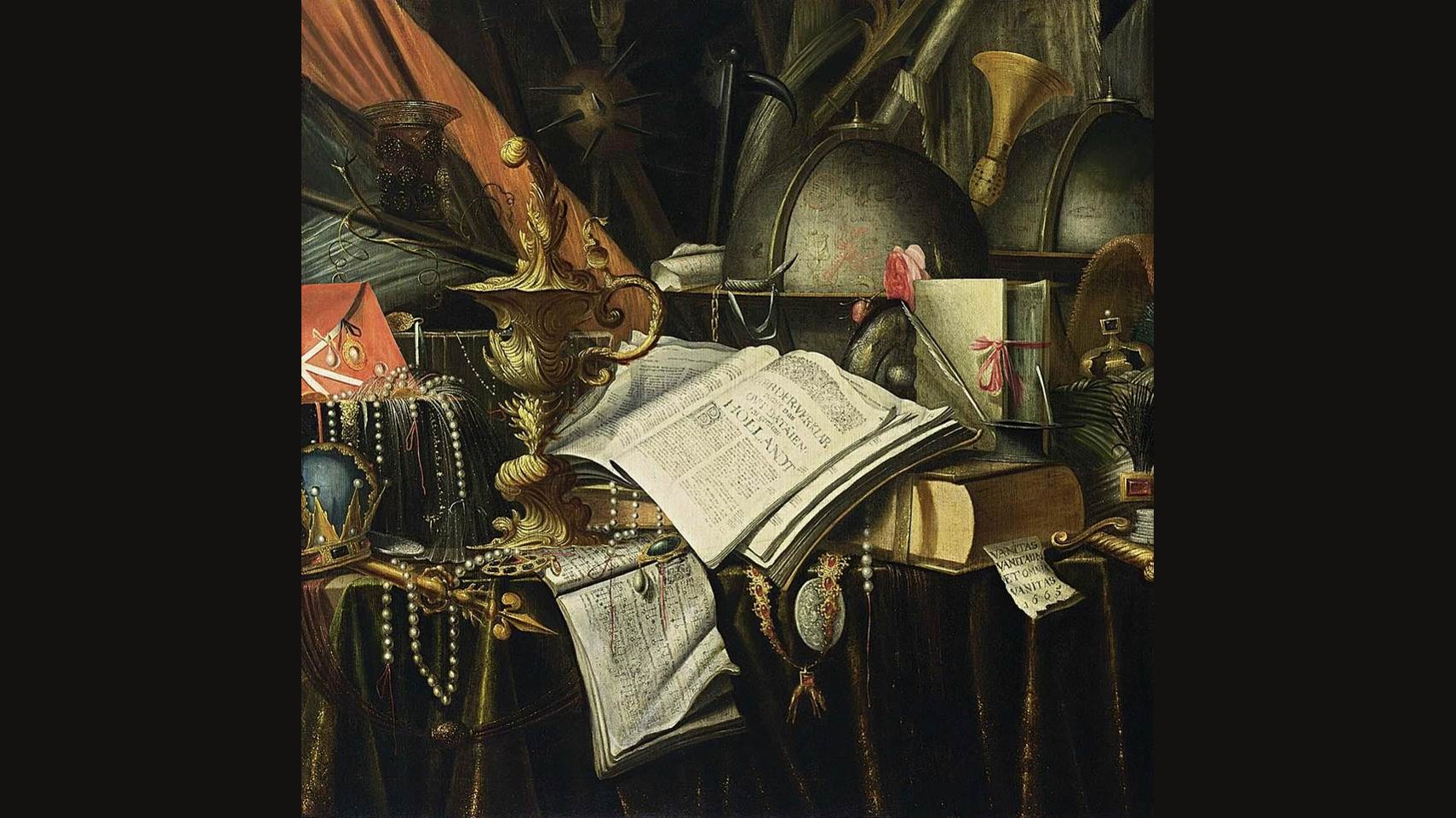
If you have stood in front of a dark old still life with a skull, a snuffed candle, a watch and a few flowers, you were looking at a vanitas. It is a still life whose objects stand for how short life is and how little worldly success lasts. The National Gallery in London defines it as "a particular type of still life painting in which objects symbolically refer to such a theme," and the word comes from Ecclesiastes: "Vanity of vanities, saith the preacher, vanity of vanities: all is vanity." The skull is the plainest sign of mortality, and everything else on the table is something death outlasts. Painters you will meet again and again include Harmen Steenwyck, Pieter Claesz and Jacques de Gheyn II.
How to read the table
A vanitas is not simply a painting about skulls. The skull is one object in a set of contrasts. Flowers bloom and fade, candles burn down, bubbles burst, and books stand for learning that death does not care about. The Rijksmuseum, the Uffizi and the National Gallery of Art in Washington all describe the genre this way: the brevity of life set against wealth, pleasure, knowledge and achievement.
The message was moral rather than just gloomy. If worldly life is temporary, then time and faith matter. That is why a vanitas can look beautiful and unsettling at once. The painter shows off skill with glass, metal, fruit and fabric, then reminds you that none of it comes with you.
One caution before the list of symbols below. Interpretations vary by painting and by object, and museums are careful to say so. Treat each symbol as a common reading, not a universal code.
What the objects usually mean
Museum labels agree on a core vocabulary, and you can use it as a field guide at the next painting you see.
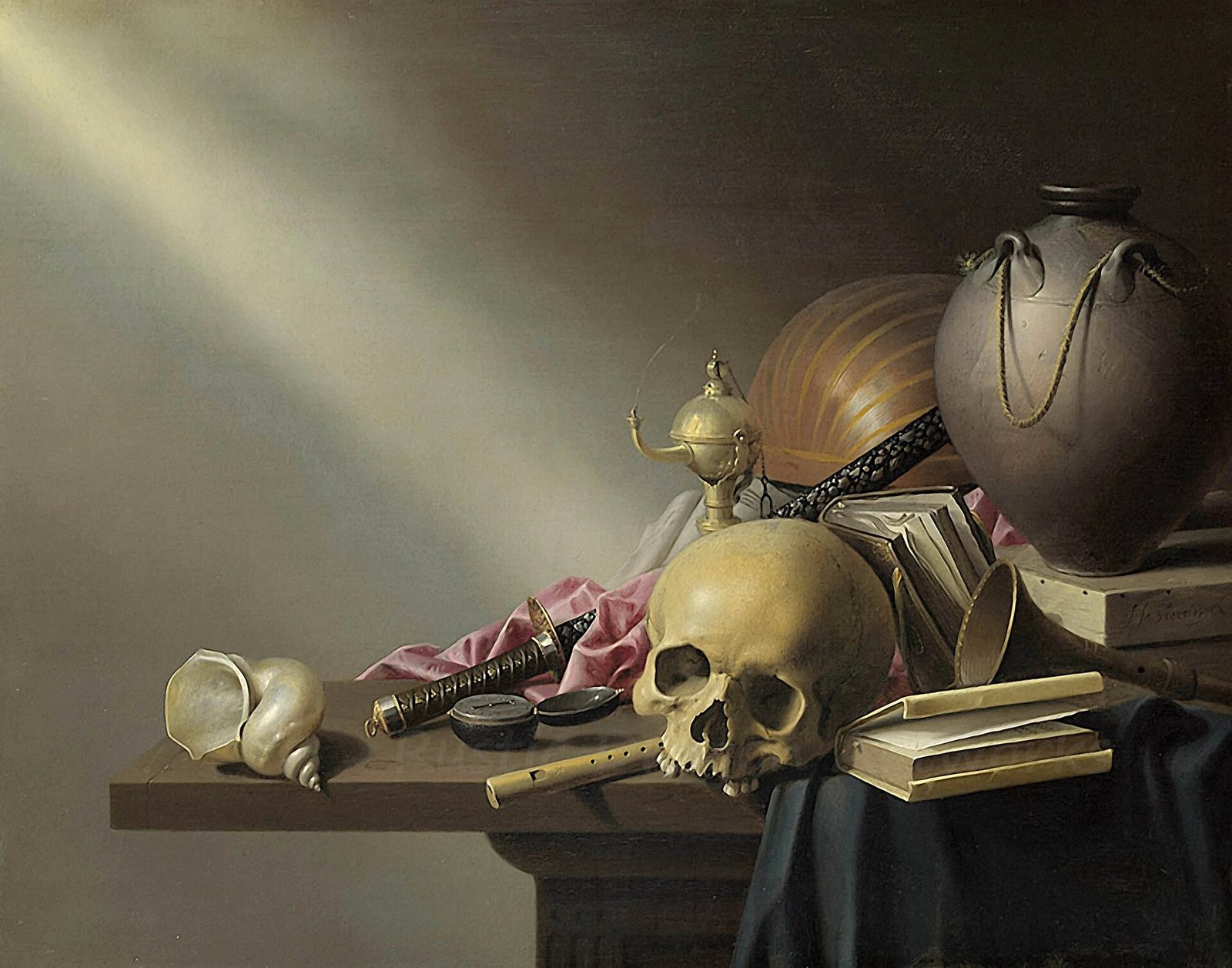
- Skull: mortality, the brevity of life and death's power over every person.
- Extinguished candle or smoking lamp: life going out and time already used up.
- Hourglass or watch: time passing, and the impossibility of stopping it.
- Bubbles: the fragility of life. The National Gallery calls them a well-known seventeenth-century symbol of life disappearing into thin air.
- Flowers: beauty, growth and prosperity that fade. In some works they can also suggest resurrection or spiritual hope, which is why a flower is not always a sad sign.
- Books and manuscripts: learning and scholarship, and also the vanity of knowledge when death arrives.
- Musical instruments: pleasure that is gone as soon as the sound stops.
- Shells: luxury and exotic collecting, joined to mortality. In Steenwyck's painting, the empty shell combines wealth with the thought of a life that has ended.
So, when a still life has flowers and a skull together, the likely question is not "which is the real message?" Both are. The flowers are the beauty and the skull is what happens to it.
Where and why: Leiden, Haarlem and the Dutch Republic
Vanitas still lifes flourished in the Dutch Republic in the seventeenth century, especially in Leiden and Haarlem. Leiden University was founded in 1575 and became a major European center of learning. Art historian Jiaqi Sun links Leiden's vanitas culture to the university's Calvinist and Neo-Stoic climate, both of which stressed the brevity of life. Leiden was also a center for anatomy demonstrations and curiosity cabinets. The Berlin State Museums describe layered books and papers as characteristic of the Leiden variant, in a city known for both science and vanitas painting.
Haarlem was another major still-life center. Pieter Claesz settled there around 1620, joined the Haarlem Guild of Saint Luke in 1634 and became known for restrained, nearly monochrome still lifes.
Calvinism is often given as the reason for all this, and it clearly mattered. It should not be treated as the only cause, though. Collecting, prosperity, trade and a market for privately owned still lifes all shaped what painters made and who bought it.
The vanitas paintings to know
These are the works that come up most, each with its holding museum.
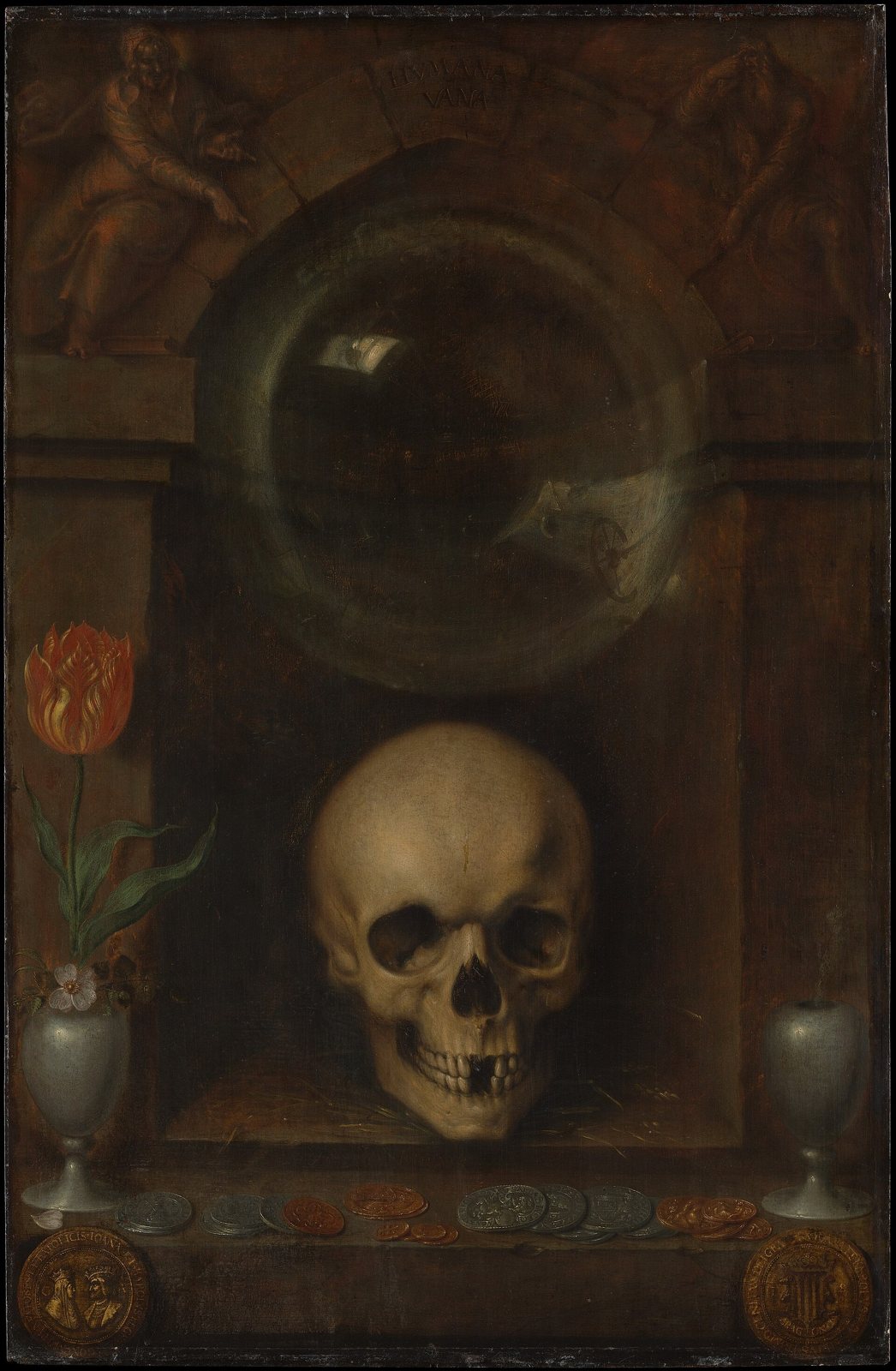
Jacques de Gheyn II, *Vanitas Still Life*, 1603, oil on wood, Metropolitan Museum of Art, New York. The Met says it is generally considered the earliest known independent still-life painting devoted to a vanitas subject. It has a skull, a giant bubble, cut flowers and a smoking urn.
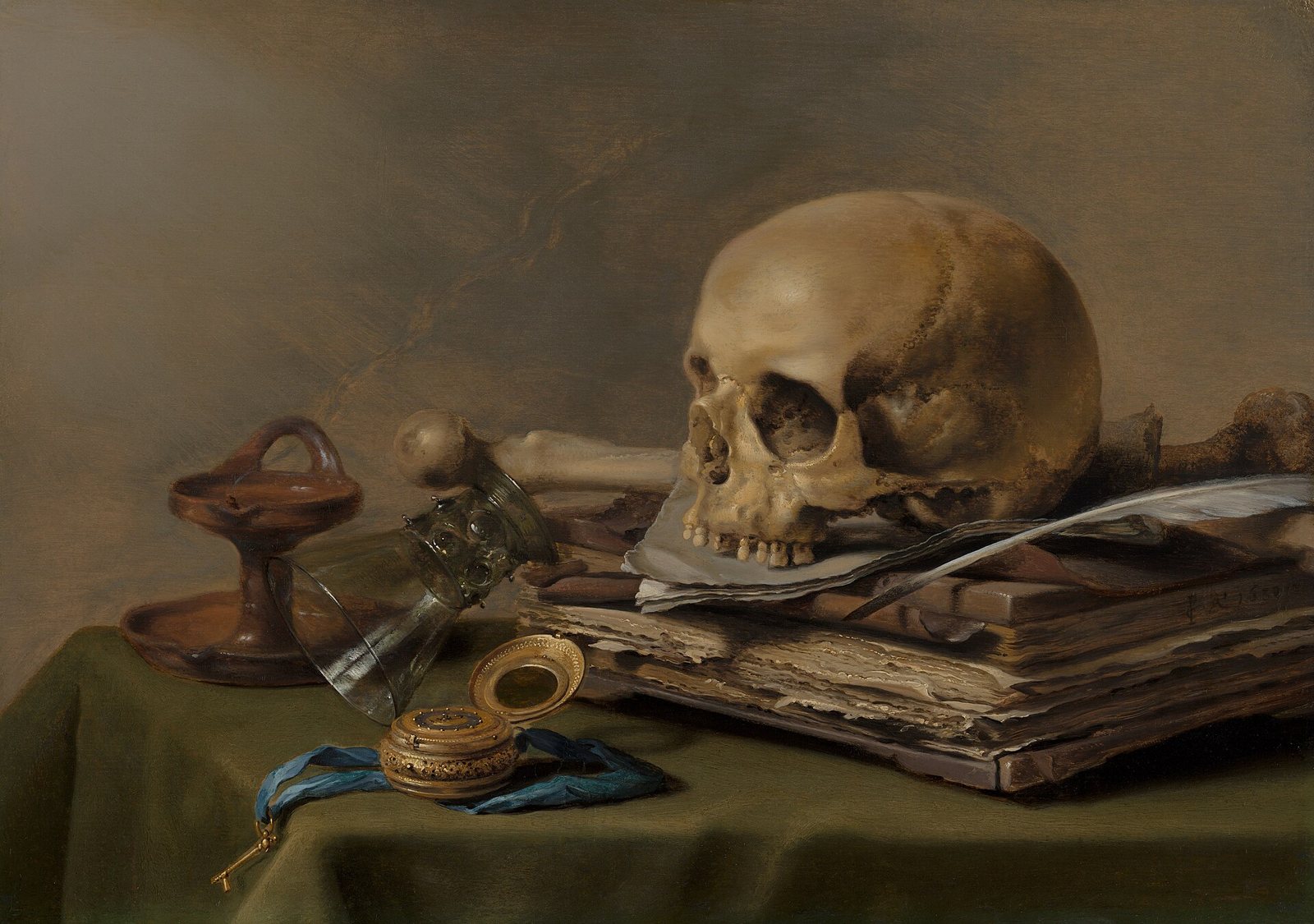
Pieter Claesz, *Still Life with a Skull and a Writing Quill*, 1628, Metropolitan Museum of Art. The Met reads the toppled glass, gap-toothed skull and dying lamp as symbols of life's brevity.
Pieter Claesz, *Vanitas Still Life with the Spinario*, 1628, Rijksmuseum, Amsterdam. The skull shares a table with books, drawing materials, armor, instruments, a painter's palette and a plaster cast of the ancient *Spinario* sculpture. The Rijksmuseum calls the message clear: the visible world is an illusion and everything is transient.
Pieter Claesz, *Vanitas Still Life*, 1630, oil on panel, Mauritshuis, The Hague. The museum points to the extinguished candle, empty glass, watch and skull. Only a little blue appears, in the watch ribbon, against browns and greens.
Harmen Steenwyck, *Still Life: An Allegory of the Vanities of Human Life*, about 1640, oil on panel, National Gallery, London. A skull, extinguished lamp, watch, books, instruments, wine flask, shell and a Japanese sword fill a small table. (Some museums spell his name Steenwijck.) It reads like an inventory of everything a person might boast about, laid out in front of death.
Jan Jansz. Treck, *Vanitas Still Life*, 1648, oil on wood, National Gallery, London. An overturned hourglass, a bubble-blowing shell, a pipe, books and instruments sit around the skull.
François van Daellen, *Vanitas Still Life*, about 1650, oil on paper laid down on panel, National Gallery of Art, Washington. A skull and femur lie among books, pamphlets and a smoking extinguished candle. NGA curator Alexandra Libby notes that books can suggest lasting intellectual achievement but can also signify the vanity of human accomplishment when faced with death.
Jan van Kessel the Elder, *Vanitas Still Life*, about 1665 to 1670, oil on copper, National Gallery of Art. A skull, flowers, an hourglass, soap bubbles, moths, a caterpillar and a beetle share the small copper panel.
Aelbert van der Schoor, *Vanitas Still Life*, Rijksmuseum. Six skulls are arranged to be seen from different angles. The museum calls it a virtuoso feat and says the combination has no known parallel in seventeenth-century Dutch painting.
Antonio de Pereda, *Vanitas*, about 1670, oil on canvas, Uffizi Galleries, Florence. Skulls, fading flowers, playing cards, luxury objects, weapons, a globe and an angel pointing at them. The Uffizi reads the arrangement as a reflection on precarious existence, passing time and the temporary nature of worldly goods.
Tap or hover a row to highlight it.
| Artwork | Artist | Date | Medium | Current collection |
|---|---|---|---|---|
| ArtworkVanitas Still Life | ArtistJacques de Gheyn II | Date1603 | MediumOil on wood | Current collectionMetropolitan Museum of Art |
| ArtworkStill Life with a Skull and a Writing Quill | ArtistPieter Claesz | Date1628 | MediumOil on wood | Current collectionMetropolitan Museum of Art |
| ArtworkVanitas Still Life with the Spinario | ArtistPieter Claesz | Date1628 | MediumOil on panel | Current collectionRijksmuseum |
| ArtworkVanitas Still Life | ArtistPieter Claesz | Date1630 | MediumOil on panel | Current collectionMauritshuis |
| ArtworkStill Life: An Allegory of the Vanities of Human Life | ArtistHarmen Steenwyck | DateAbout 1640 | MediumOil on panel | Current collectionNational Gallery, London |
| ArtworkVanitas Still Life | ArtistJan Jansz. Treck | Date1648 | MediumOil on wood | Current collectionNational Gallery, London |
| ArtworkVanitas Still Life | ArtistFrançois van Daellen | DateAbout 1650 | MediumOil on paper laid down on panel | Current collectionNational Gallery of Art, Washington |
| ArtworkVanitas Still Life | ArtistJan van Kessel the Elder | DateAbout 1665 to 1670 | MediumOil on copper | Current collectionNational Gallery of Art, Washington |
| ArtworkVanitas | ArtistAntonio de Pereda | DateAbout 1670 | MediumOil on canvas | Current collectionUffizi Galleries |
The sparest vanitas: a tulip, a skull and an hourglass
One small painting does it all with three objects. The Musée de Tessé in Le Mans, France, holds an oil-on-oak vanitas of about 28.4 by 37.4 centimeters that is recorded as attributed to Philippe de Champaigne. It is titled *Vanité*, and also known as *Allegory of Human Life* or *Still Life with a Skull*. The French Ministry of Culture's Joconde record lists it as "attributed to," so the attribution is not fully certain.
The Port-Royal site of the University of Rouen dates it to around 1671, with the dating still debated, and describes the composition as a reduction of the vanitas vocabulary to three signs. The tulip's beauty is temporary, the skull signifies death, and the hourglass makes passing time visible. Everything else has been removed, so the effect is closer to a single sentence than a paragraph.
Vanitas, memento mori and what came after
*Memento mori* is a call to remember death. It is the broad subject, running through portraits, religious scenes, prints and sculpture. Vanitas is the more specific form, usually a still life that sets death against possessions, pleasure, learning or power. The National Gallery describes skulls in sixteenth- and seventeenth-century Northern European portraits as obvious memento mori subjects, and vanitas paintings carry that thought into the still life. For a wider look at the idea, see what memento mori means.
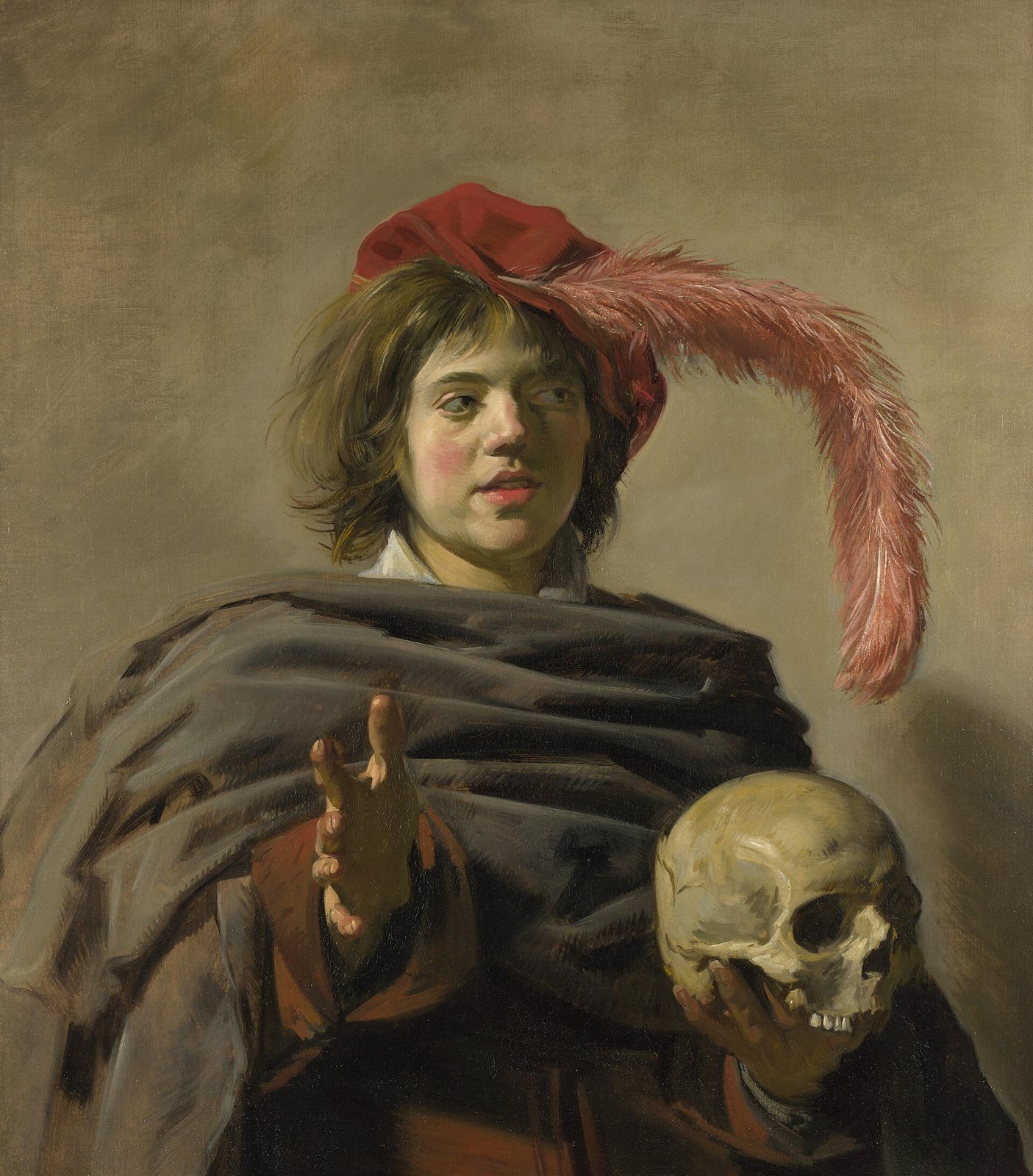
The National Gallery also holds Frans Hals's *Young Man holding a Skull*, painted in the 1620s. The museum says it is not a portrait and not Hamlet holding Yorick's skull. It belongs to a Netherlandish tradition of mortality images that reaches back to sixteenth-century engravings.
The theme did not stop with the Dutch Golden Age. Paul Cézanne painted skulls repeatedly between the 1890s and the early 1900s. His *The Three Skulls*, about 1898, now at the Detroit Institute of Arts, is catalogued with vanitas associations, though his attention shifts toward structure, color and the act of painting itself. The Art Institute of Chicago holds a different Cézanne, also called *The Three Skulls*, dated 1902 to 1906. For Cézanne alongside Holbein, Van Gogh and more, see famous skull art.
Who painted vanitas?
The artists most often named are Jacques de Gheyn II, Pieter Claesz, Harmen Steenwijck, Pieter Steenwijck, David Bailly, Jan Davidsz. de Heem, François van Daellen, Edwaert Collier, Antonio de Pereda and Maria van Oosterwijck. The strongest concentration was in the Dutch Republic, and the National Gallery of Art identifies Leiden painters including de Heem and Harmen Steenwijck as important models for combining books, skulls, bones, candles and hourglasses.
The subject was never one national school. Antonio de Pereda was a major Spanish still-life painter working in Madrid. Women painted vanitas too. Maria van Oosterwijck was a Dutch flower and still-life painter whose work included vanitas imagery.
Where to see vanitas paintings in the United States
- National Gallery of Art, Washington, DC: François van Daellen's *Vanitas Still Life*, listed as on view in the West Building, Gallery M50. The museum also holds a print by Jean Morin after Philippe de Champaigne, *Still Life with a Skull and a Vase of Roses*, 1645 to 1650. It is a print, not Champaigne's painting, and it is not currently on view.
- Metropolitan Museum of Art, New York: Jacques de Gheyn II's 1603 *Vanitas Still Life* and Claesz's *Still Life with a Skull and a Writing Quill*.
- Detroit Institute of Arts: Cézanne's *The Three Skulls*, about 1898.
- Art Institute of Chicago: Cézanne's *The Three Skulls*, 1902 to 1906.
Museums move works on and off display, so check each museum's current collection page before you plan a visit.
Vanitas through the centuries, 1575 to about 1898
Tap or hover a step to follow the order.
1575
Leiden University is founded.
1603
Jacques de Gheyn II paints Vanitas Still Life.
1628
Pieter Claesz paints Still Life with a Skull and a Writing Quill and Vanitas Still Life with the Spinario.
1630
Claesz paints Vanitas Still Life, now at the Mauritshuis.
About 1640
Harmen Steenwyck paints his Allegory of the Vanities of Human Life.
1648
Jan Jansz. Treck paints a vanitas with skull, hourglass and bubbles.
About 1650
François van Daellen's Vanitas Still Life.
About 1665 to 1670
Jan van Kessel the Elder's Vanitas Still Life.
About 1670
Antonio de Pereda's Vanitas.
About 1671
The Tessé work attributed to Philippe de Champaigne, with the dating debated.
About 1898
Cézanne's The Three Skulls.
Vanitas quiz
Answer every question to check.
Quick answers about vanitas paintings
What does a vanitas painting represent?
A vanitas painting represents the brevity of human life and the temporary nature of wealth, pleasure, beauty, knowledge and achievement. The skull is the memento mori, while hourglasses, extinguished candles, fading flowers, bubbles and books reinforce the same warning. Individual symbols can shift meaning from painting to painting.
What is the meaning of the still life with a skull attributed to Philippe de Champaigne?
It uses a tulip, a skull and an hourglass to express mortality, passing time and the fleeting nature of beauty. The work is at the Musée de Tessé in Le Mans, France, and is recorded as attributed to Champaigne. Its dating, around 1671, is still debated.
What are some famous vanitas paintings?
The best known include Jacques de Gheyn II's 1603 *Vanitas Still Life* at the Met, Pieter Claesz's 1628 works at the Met and the Rijksmuseum, Harmen Steenwyck's allegory at the National Gallery in London, Jan van Kessel the Elder's copper panel at the National Gallery of Art, and Antonio de Pereda's *Vanitas* at the Uffizi. Cézanne's late skull still lifes carry the theme into modern painting.
Who were the main vanitas artists?
The main names are Jacques de Gheyn II, Pieter Claesz, Harmen and Pieter Steenwijck, David Bailly, Jan Davidsz. de Heem, François van Daellen, Edwaert Collier, Antonio de Pereda and Maria van Oosterwijck. Most worked in the Dutch Republic in the seventeenth century, though Pereda worked in Spain.
What is the difference between vanitas and memento mori?
Memento mori is the wide subject of remembering death, in portraits, prints, sculpture and religious art. Vanitas is the still-life form that sets death against worldly possessions and ambitions. Every vanitas carries a memento mori message, but not every memento mori is a vanitas.
Where to go next
If the idea behind these paintings appeals to you, start with what memento mori means, then follow the skull through other art in famous skull art and the older procession of death in the danse macabre. For a broader look at what skulls stand for across cultures, read about skull symbolism. And if you like the memento mori idea on something you can wear, our Memento Mori skull tee is a shirt for you.