No. 110
The Palermo Catacombs: Who Rests With the Capuchins and How to Visit
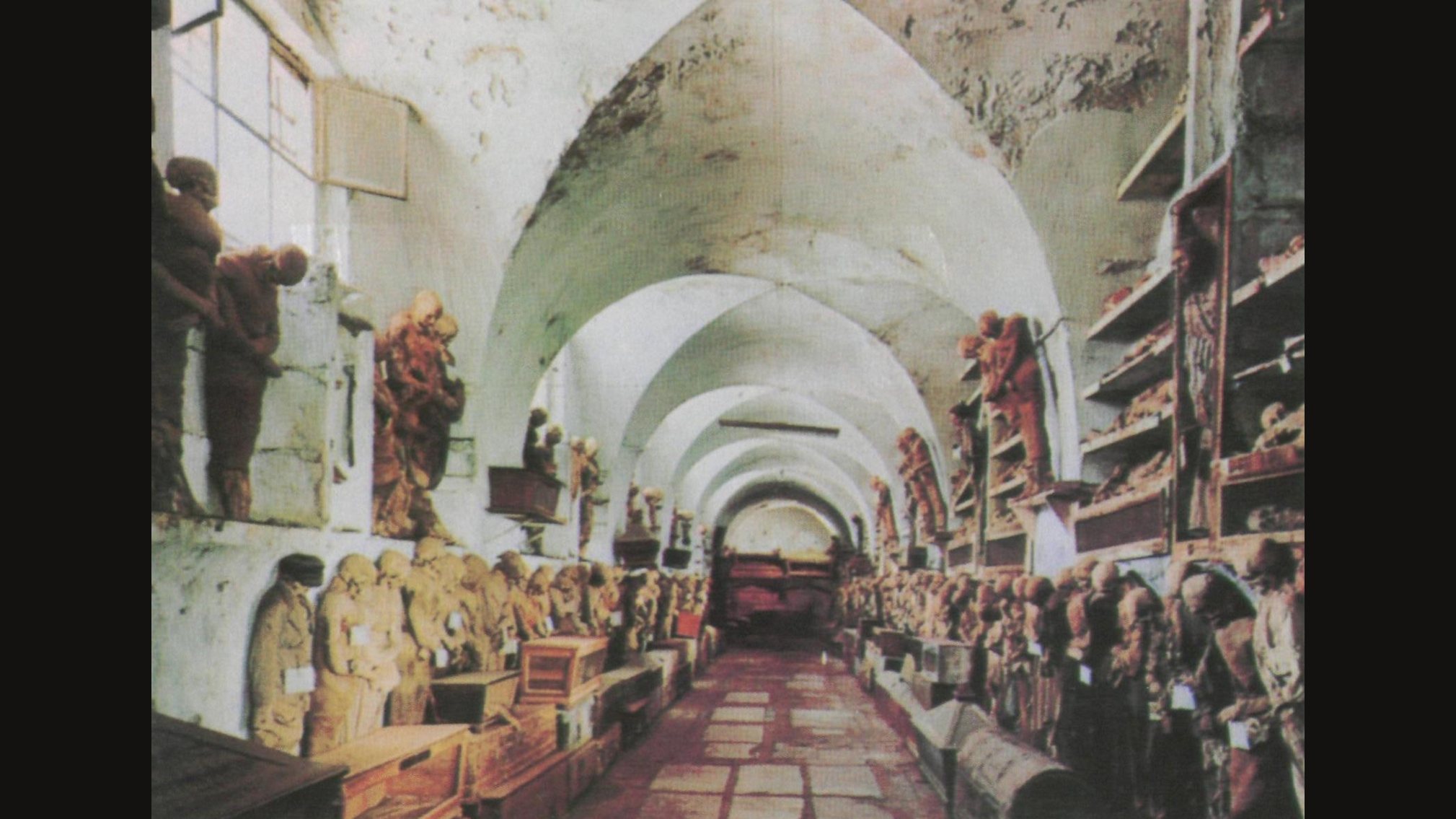
The Palermo catacombs, often called the Capuchin Catacombs, are the burial place of the Capuchin friars of Santa Maria della Pace in Palermo, Sicily. The friars began laying out their dead there in 1599, and from 1783 the people of Palermo could be buried beside them. Today friars, priests, women, children, whole families and professionals rest preserved and dressed in their own clothes, in corridors arranged by profession, sex and social status.
You can visit. According to the official timetable, as listed on 25 October 2026, the catacombs open every day in a morning period and an afternoon period. The official ticket page lists a full ticket at €5 and a reduced ticket at €3.
One rule matters before you go: photography, filming and touching the remains are not allowed. The people on the walls are someone's ancestors, and the place is still a cemetery.
How a friars' cemetery became the catacombs
The story starts with the friars themselves. According to the catacombs' official history of their origin, the Capuchins settled at Santa Maria della Pace in Palermo in 1534. By 1597 their cemetery had grown too small, so they dug a larger one behind the altar of the church.
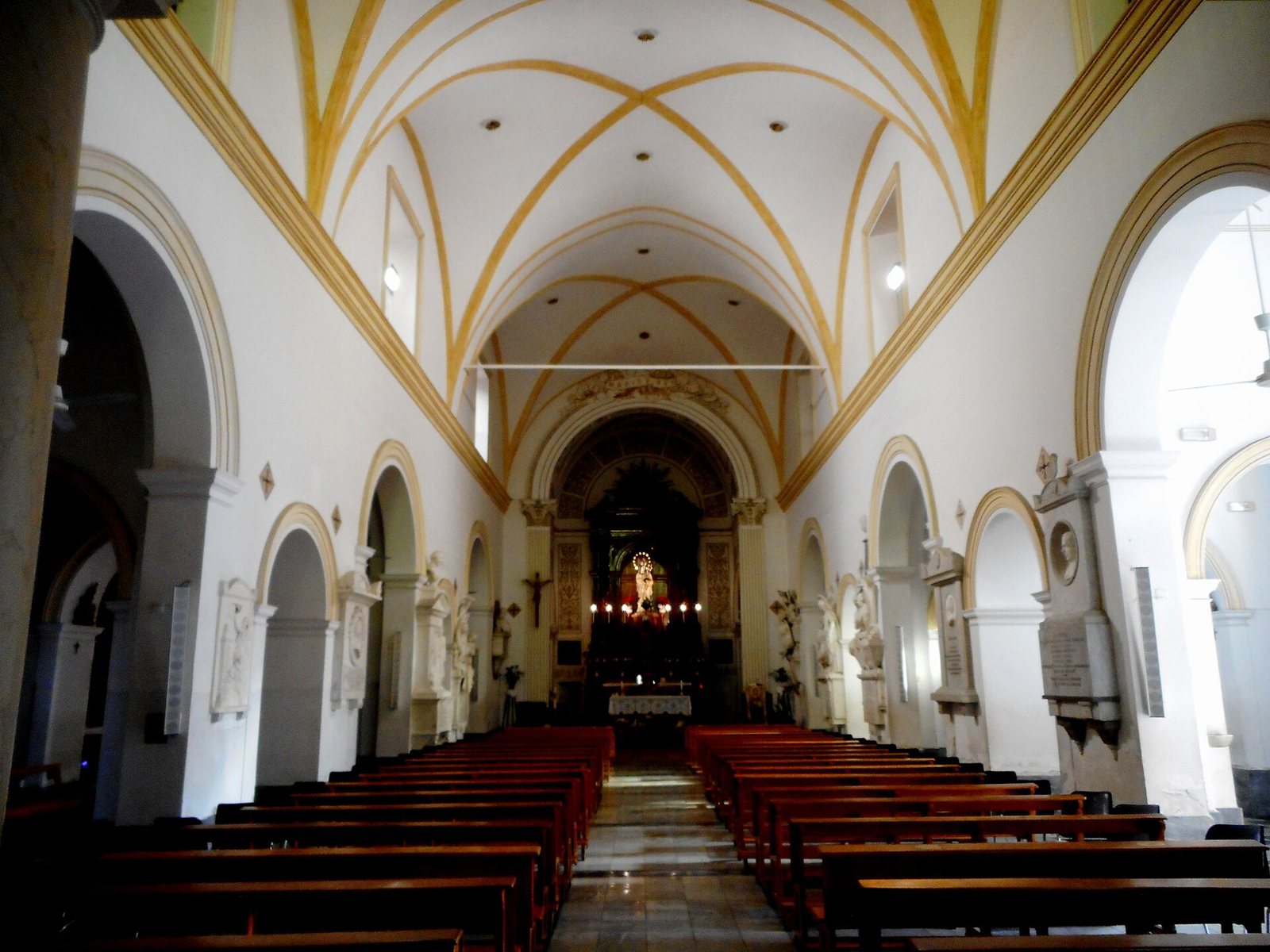
When the friars exhumed the old burials in 1599, they uncovered 45 bodies that had mummified naturally. The friars read that preservation as divine intervention, and they placed their brothers on display in the new cemetery. The first was Fra Silvestro da Gubbio, set in the catacomb on 16 October 1599.
Word spread through the city. People came to see the friars, and in time many of them wanted to rest in the same place.
When the people of Palermo joined the friars
What began as a friars' cemetery opened to the city in stages. The official history says that in 1783 the Capuchins formally allowed burial for anyone who asked for it. In practice, the process was expensive, so the people who ended up in the corridors were mostly wealthy citizens, clergy, professionals and members of prominent families.
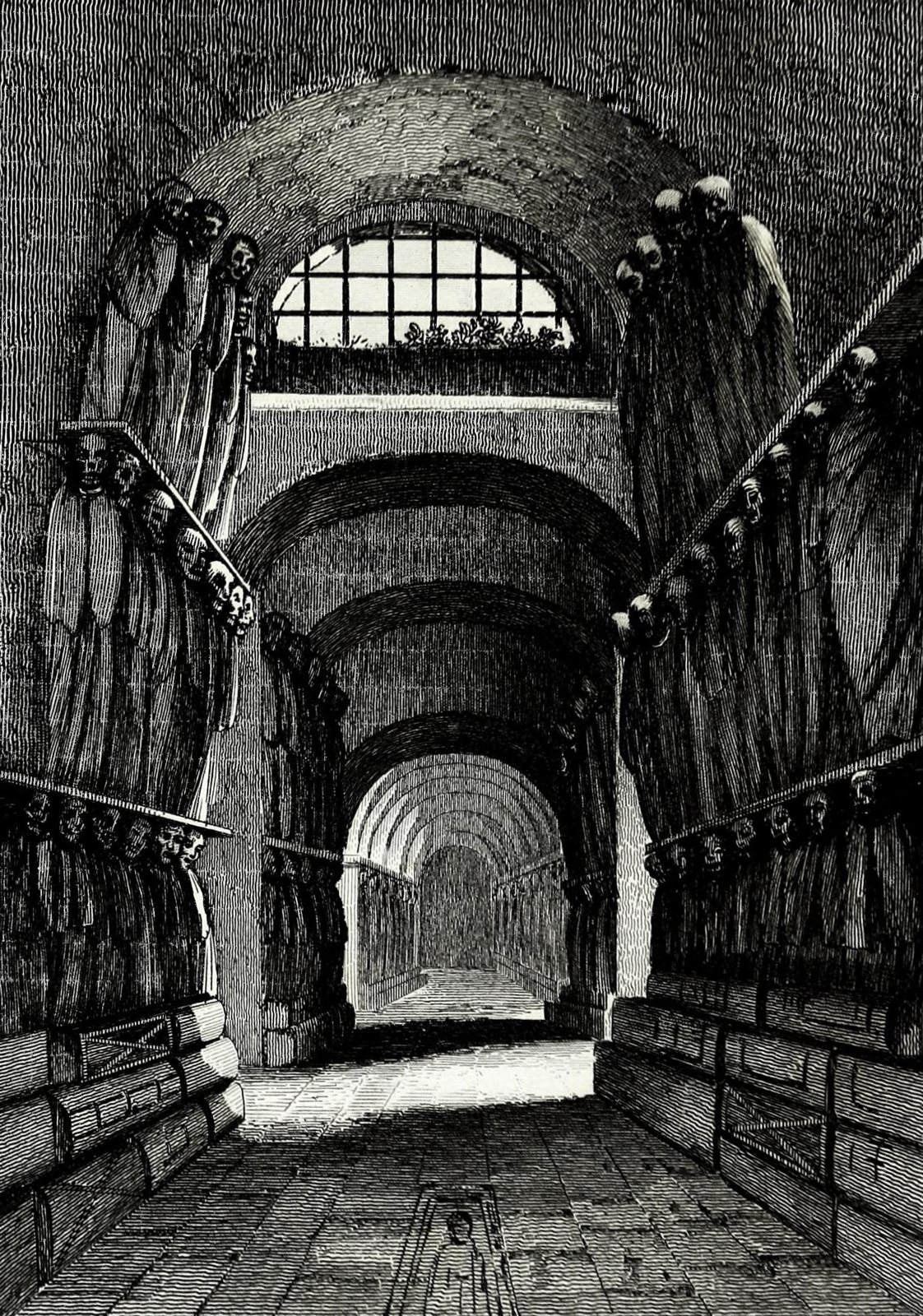
The cemetery was closed in 1880. A few exceptional burials followed: Giovanni Paterniti in 1911 and Rosalia Lombardo, a little girl, in 1920.
That long span is part of what makes the collection important to scientists. The bioanthropologists Dario Piombino-Mascali, Luca Sineo, Barbara Manachini, Giuseppe Carotenuto, Albert Zink and Franco Palla describe it, in their 2008 paper on the Palermo Capuchin Catacombs Project, as a modern collection of human mummies dating broadly from the 16th to the 20th centuries. Some three centuries of Palermo's dead rest in one place.
The Palermo catacombs from 1534 to 1920
Tap or hover a step to follow the order.
1534
The Capuchin friars settle at Santa Maria della Pace in Palermo.
1597
The friars begin digging a larger cemetery behind the church altar.
1599
Forty-five naturally mummified friars are uncovered and the new cemetery opens.
16 October 1599
Fra Silvestro da Gubbio is the first body placed in the new catacomb.
1783
Burial is opened to anyone who requests it.
1880
The cemetery is closed, apart from a few exceptional later burials.
1911
Giovanni Paterniti is interred.
1920
Rosalia Lombardo is interred.
How the bodies were preserved
Most of the people in the catacombs were preserved by drying. The catacombs' page on the mummification process describes how it worked. A body was first laid in a preparation room called a colatoio. The internal organs were removed and replaced with straw or bay leaves, and the body was set on a grid of terracotta tubes so that fluids could drain away.
The room was then kept closed for nearly a year, in dry conditions with little humidity. After that the remains were exposed to the air, washed with vinegar, dressed and placed in niches in the walls. The clothing you see today comes from that last step, the friars in their habits and the laypeople in the clothes they were dressed in.
Not every body went through the same treatment. The official site records arsenic baths during epidemics and occasional chemical embalming. Scientists have since looked closely at which methods were used on whom. In a 2010 study, Stephanie Panzer, Albert Zink and Dario Piombino-Mascali used radiology and CT scans to tell natural mummification from deliberate, human-made treatment. A CT study showed that preservation varies a great deal from one person to another, and even between different parts of the same body.
Piombino-Mascali has spent years with this collection. His ORCID profile identifies him as the scientific curator and head of the Sicily Mummy Project. If you want to know how bodies can dry rather than decay, the Guanajuato mummies in Mexico are another well-known case of natural preservation.
Walking the corridors
The catacombs are organized the way the city once organized itself. The official site says the bodies were arranged by profession, sex and social status, and each corridor or chapel has its own group.
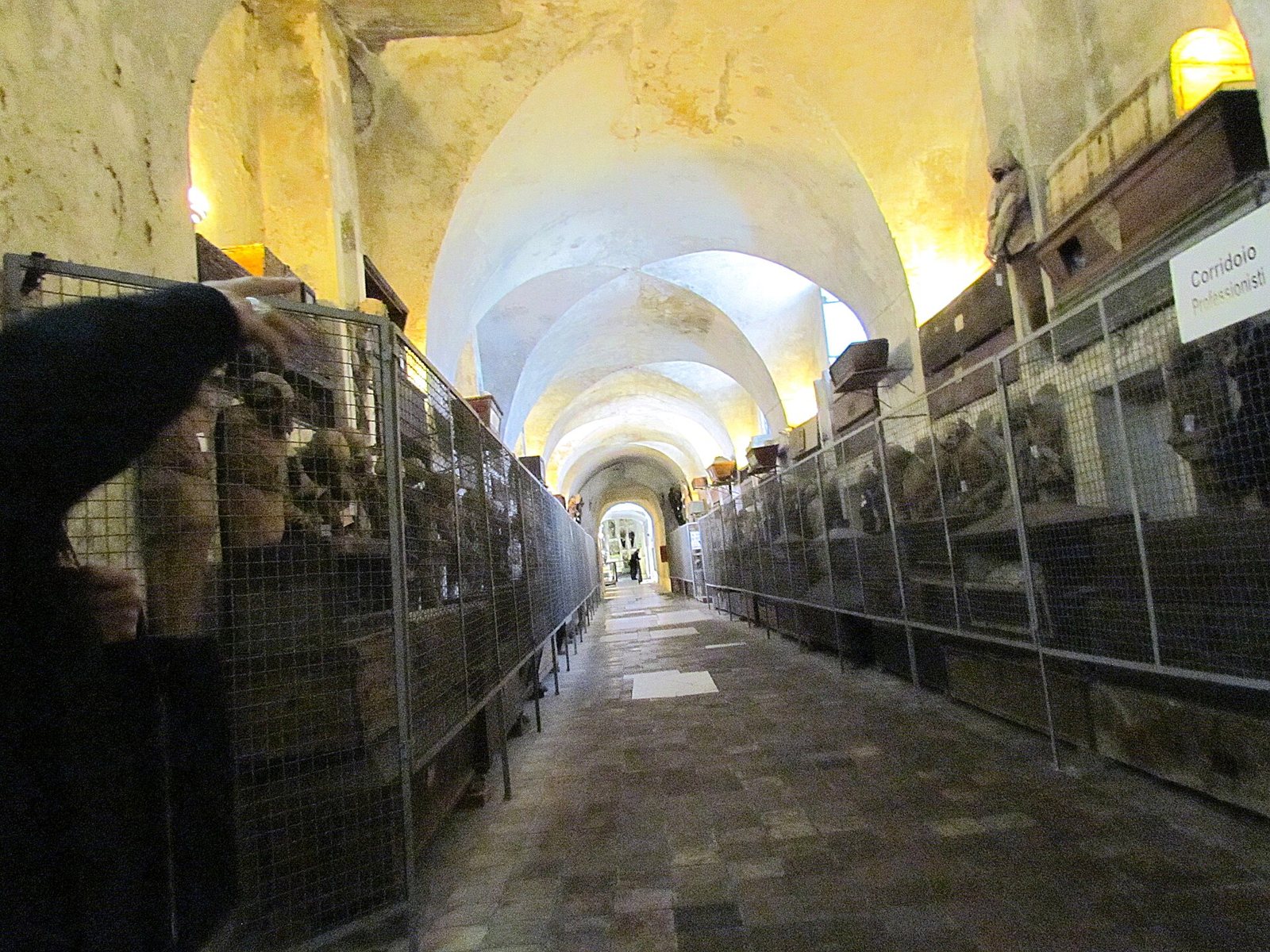
The corridor of the Capuchin friars is the oldest section, and the friars there wear their religious habits. Clergy in priestly regalia rest in a separate priests' hall. The women's corridor holds women in embroidered clothing and ornamental caps, and the men's corridor holds members of prominent Palermo families. There is a children's chapel for the young, and a family corridor where relatives rest together in groups.
The corridor of professionals gathers doctors, lawyers, painters, officers and soldiers. The official site names several of them: the painter Velasquez, the sculptors Filippo Pennino and Lorenzo Marabitti, and the surgeon Salvatore Manzella. A chapel known as the Crucifix holds young unmarried women, whom the site describes as virgins.
Tap or hover a row to highlight it.
| Corridor or chapel | Who rests there |
|---|---|
| Corridor or chapelCorridor of the Capuchin friars | Who rests thereFriars in their religious habits; the oldest section |
| Corridor or chapelPriests' hall | Who rests thereClergy in priestly regalia |
| Corridor or chapelWomen's corridor | Who rests thereWomen in embroidered clothing and ornamental caps |
| Corridor or chapelMen's corridor | Who rests thereMembers of prominent Palermo families |
| Corridor or chapelChildren's chapel | Who rests thereChildren |
| Corridor or chapelFamily corridor | Who rests thereGroups of related people |
| Corridor or chapelCorridor of professionals | Who rests thereDoctors, lawyers, painters, officers and soldiers |
| Corridor or chapelThe Crucifix chapel | Who rests thereYoung unmarried women, described by the site as virgins |
Walking through, you see a social history of Palermo, laid out corridor by corridor by the friars who kept it.
How many people rest in the catacombs
There is no single number, because different counts measure different things. The official site speaks of thousands of burials. Scientific papers count the preserved mummies: a microbial survey of the catacombs reports more than 1,200 of them, and a 2011 EURAC count is commonly cited as 1,252 mummies. An academic volume describes more than 1,200 mummies and 600 coffins. A larger figure of about 8,000 human remains appears in municipal and travel material.
Those figures are not interchangeable. A mummy count, a coffin count and a count of all remains, including skeletal ones, answer different questions. If you need an exact current figure, the catacombs' curators are the people to ask.
Tap or hover a row to highlight it.
| Figure | What it counts | Who gives it |
|---|---|---|
| FigureThousands | What it countsBurials | Who gives itThe catacombs' official site |
| FigureMore than 1,200 | What it countsPreserved mummies | Who gives itScientific literature |
| Figure1,252 | What it countsMummies, in a 2011 count | Who gives itEURAC count, as commonly cited |
| FigureAbout 600 | What it countsCoffins | Who gives itAcademic volume on the collection |
| FigureAbout 8,000 | What it countsAll human remains | Who gives itMunicipal and travel material |
Rosalia Lombardo, and how Palermo differs from Rome
The best-known person in the catacombs is a child. Rosalia Lombardo was a two-year-old Palermo child who died in 1920. She was embalmed by Alfredo Salafia and rests in a nitrogen-filled case in the catacombs. Her story, and the questions people ask about her, are told in full in our story on Rosalia Lombardo.
People also mix up Palermo with Rome, since both belong to the Capuchins. The Rome tourism authority describes the Capuchin Crypt beneath Santa Maria della Concezione on Via Veneto as a set of chapels where the bones of roughly 4,000 Capuchin friars are arranged as decoration. Palermo is different: a former cemetery where friars and laypeople rest as preserved, dressed bodies along corridors. For the Roman chapels, read our story on the Capuchin Crypt, and for the city's older underground burials, the catacombs of Rome.
Visiting the catacombs: hours, tickets and the rules inside
The official timetable, as listed on 25 October 2026, gives the same hours from Monday through Sunday:
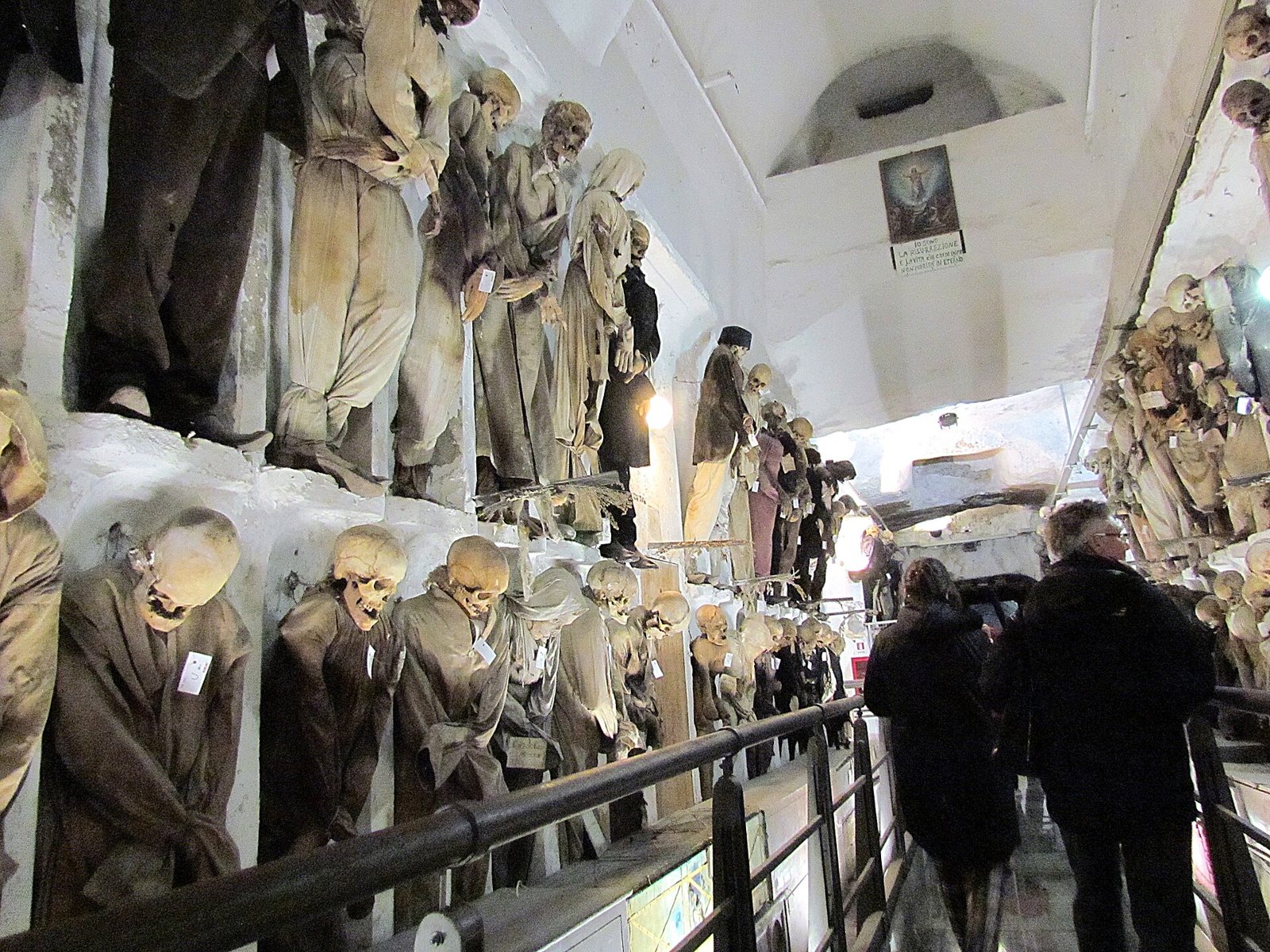
- Morning: 9:00 to 12:30, with last entry at 12:10.
- Afternoon: 15:00 to 17:30, with last entry at 17:10.
The official ticket page lists a full ticket at €5 and a reduced ticket at €3. Groups are asked to reserve by telephone at +39 091 6527389. Holidays can change the schedule, so confirm the hours on the official site before you travel on a holiday.
Inside, the admission rules prohibit photography, filming and touching the exhibits. The site gives two reasons, conservation and bioethics: the remains need protecting, and they are real people. It is the same courtesy you would show at any family grave.
Before you visit the Palermo catacombs
Tap a card to bring it forward.
- Hours: Check the official opening hours before travelling, especially on a holiday.
- Tickets: The official price is €5 full or €3 reduced.
- Last entry: Arrive before 12:10 in the morning or 17:10 in the afternoon.
- Photos: Do not photograph, film or touch the remains.
- Respect: Treat the site as a cemetery and a religious heritage site that holds real human remains.
- Groups: Reserve by telephone at +39 091 6527389.
How well do you know the Palermo catacombs?
Answer every question to check.
Questions about the Palermo catacombs
A few more answers for anyone planning a visit or still thinking about those photographs.
Are the bodies in the Palermo catacombs real?
Yes. They are the remains of real people who were buried in the Capuchin cemetery, and their preservation ranges from mummified soft tissue to bodies that are mostly skeleton. The 2008 Palermo Capuchin Catacombs Project treats them as a human collection spanning the 16th to the 20th centuries.
What is inside the Palermo catacombs?
Real human remains, both mummified and skeletal, of Capuchin friars, priests, women, children, families and professionals. They rest in separate corridors and chapels according to sex, profession and social status, many still in the clothing they were dressed in for burial.
Are the Palermo catacombs worth visiting?
That depends on whether you want to spend time in a historic religious burial place full of real human remains. Many visitors describe it as moving and memorable, and some find it emotionally difficult, so it helps to go knowing what you will see.
Why can't you take photos in the Palermo catacombs?
The catacombs give conservation and bioethical reasons for the rule, and filming and touching are prohibited for the same reasons. Groups who want to plan a visit can reserve by telephone at +39 091 6527389.
More places where the dead are kept in view
Palermo is one of many places where communities kept their dead close. Elsewhere in southern Italy, read about the Fontanelle Cemetery in Naples. Bone houses such as the Sedlec Ossuary and the many sites in ossuaries around the world show other ways of gathering remains together.
Two other stories in this series stay close to the same idea. At St Catherine's Monastery in Sinai, monks still move their brothers' bones into a charnel house, and at the Solferino ossuary in northern Italy, the soldiers of an 1859 battle rest together in a memorial chapel.
Terms in this story
Tap a term to see what it means.
Capuchins. The friars who settled at Santa Maria della Pace in Palermo in 1534 and created the catacombs, starting in 1599. The same order keeps the Capuchin Crypt in Rome.
---