


No. 083
Ram Skull Meaning: The Ram and Goat Skull in Faith, Art and Tattoos
A ram or goat skull has no single meaning; the setting and the person who chose it decide what it says. Depending on where it comes from, a horned skull can point back to the ram Abraham offered in place of Isaac and the shofar sounded at Rosh Hashanah, to Amun, the ram-formed god of ancient Thebes, or to the zodiac sign Aries. It can also call up Éliphas Lévi's goat-headed Baphomet of 1856, Georgia O'Keeffe's bleached desert bones, a metal band's stage art, or a tattoo with a very personal story behind it. This story takes each of those meanings in turn, so you can choose the one you actually want on your wall or your arm.
The short answer, setting by setting
Horned skulls travel well. The same curve of horn shows up in a Jewish ritual object, an Egyptian amulet, a medieval astrological vessel, a French occult drawing and a Santa Fe living room. The meanings do not travel with it automatically, so it helps to see them side by side.
Tap or hover a row to highlight it.
| Setting | Place or community | Meaning or use |
|---|---|---|
| SettingGenesis 22 | Place or communityAncient Israelite tradition | Meaning or useA ram offered instead of Isaac: substitution and sacrifice |
| SettingRosh Hashanah | Place or communityJewish communities | Meaning or useThe ram's horn shofar: remembrance of the binding of Isaac, kingship and repentance |
| SettingAmun of Thebes | Place or communityEgypt, New Kingdom onward | Meaning or useA major god associated with ram forms |
| SettingRam-head amulets | Place or communityEgypt and Kush, Twenty-fifth Dynasty | Meaning or useDevotion to Amun and royal religious culture |
| SettingAries | Place or communityKhurasan or Herat, around 1200 | Meaning or useZodiac and planetary symbolism |
| SettingBaphomet | Place or communityFrance and Western occultism, 1854 to 1856 | Meaning or useGoat-headed occult symbolism |
| SettingO'Keeffe's bones | Place or communityNew Mexico, 1929 onward | Meaning or useDesert, beauty and art |
| SettingSouthwest decor | Place or communitySanta Fe, 1988 | Meaning or useWestern and desert design, using cattle skulls |
So, a ram skull tattoo is never "just" one thing, which is part of its appeal. The sections below tell each story with its names and dates.
Abraham's ram and the ram's horn shofar
The oldest written ram in this story stands in a thicket. In Genesis 22:13, Abraham looks up and sees "a ram, caught in a thicket by its horns," in the wording of the New Revised Standard Version Updated Edition. He offers the ram in place of his son Isaac.
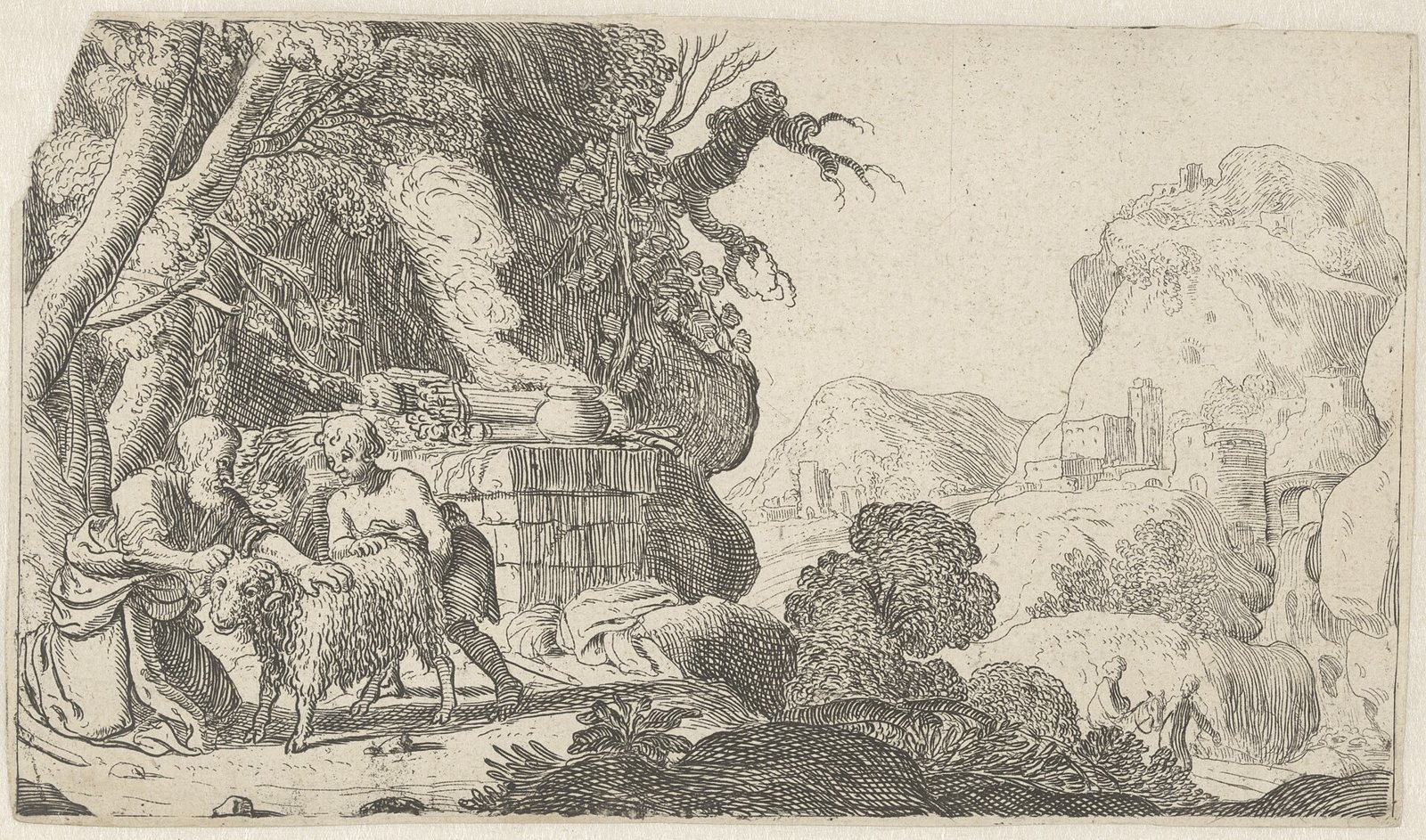
In Jewish tradition that ram is connected to the shofar, the ram's horn sounded at Rosh Hashanah. The Talmud, in Rosh Hashanah 16a, gives the reason in God's voice: "Sound before Me a ram's horn, so that I will remember for you the binding of Isaac, son of Abraham, in whose stead a ram was sacrificed." Chabad explains why shofars are made from rams' horns in light of that binding, known in Hebrew as the Akedah.
In Jewish interpretation, the ram and its horn stand for substitution, remembrance, divine mercy, repentance and the renewal of the covenant. These meanings belong to Jewish religious practice, and they live in the horn and the sound of it, not in a skull on a shelf. If the Genesis ram is the reason you are drawn to the image, that is a story worth knowing well before you wear it.
Amun, the ram god of Thebes
Long before most of the other meanings here, Egyptians linked the ram with Amun. The Metropolitan Museum of Art describes Amun as a major god whose cult began at Thebes and spread widely during the New Kingdom, when he became one of Egypt's most important deities.
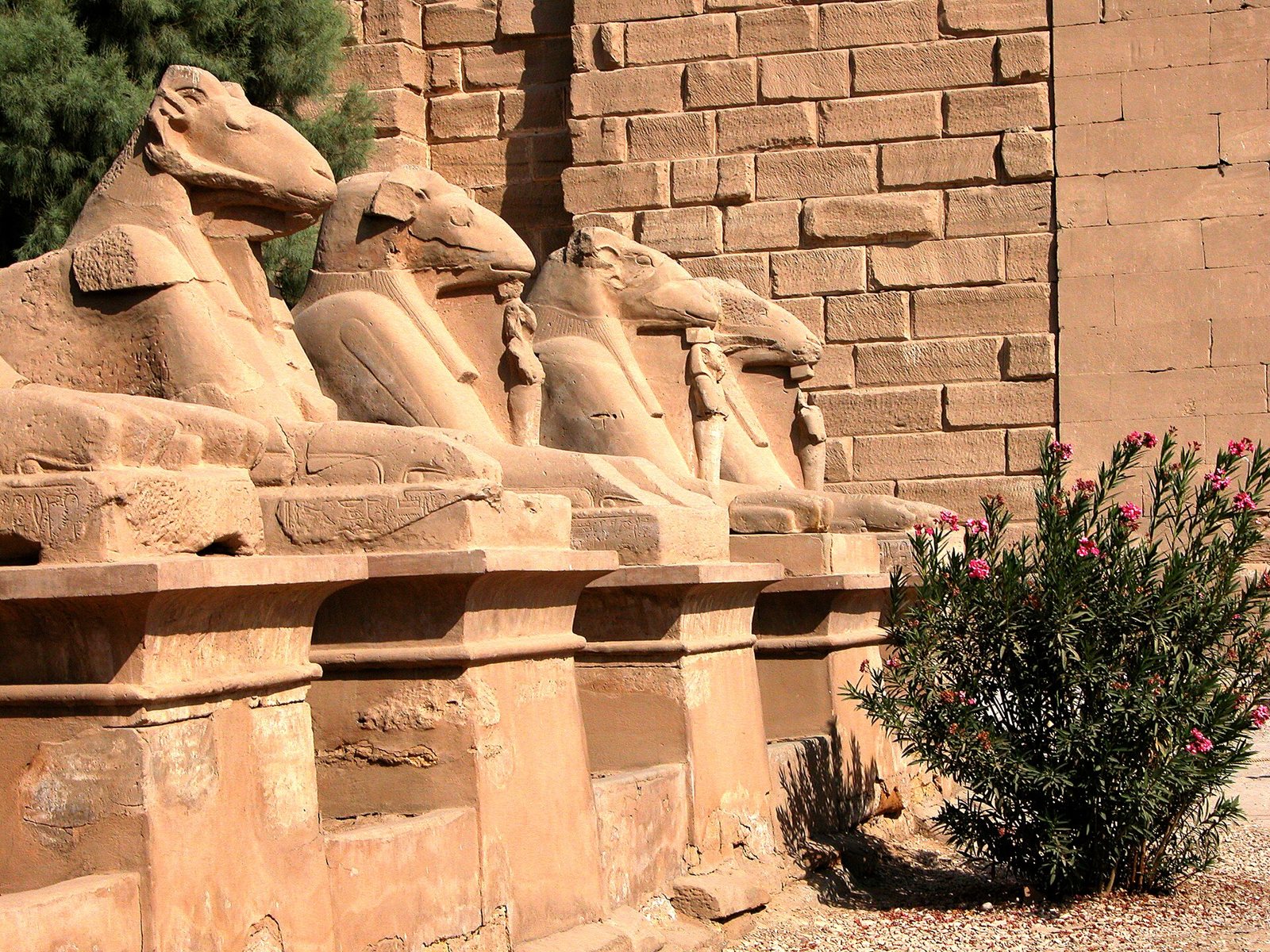
Small ram-head amulets carried that devotion close to the body. The Met's ram's-head amulet entry explains that such amulets, made in Egypt and Kush, called Amun to mind, because the god was believed to show himself in the form of a ram. The museum connects examples with Egypt's Twenty-fifth Dynasty, when Nubian rulers controlled Egypt and Amun was also worshipped in Kush, in present-day Sudan.
That is a specific, dated religious use. It tells you what a ram's head meant to people in Thebes and Kush, not what every ram skull means today.
Aries: the ram in the stars
The ram as a zodiac sign is a separate tradition again. At the British Museum, the Vaso Vescovali, a vessel made around 1200 in Khurasan or Herat, shows a figure riding a ram. The figure stands for Mars in his night house, Aries, a piece of medieval Islamic astrological imagery.
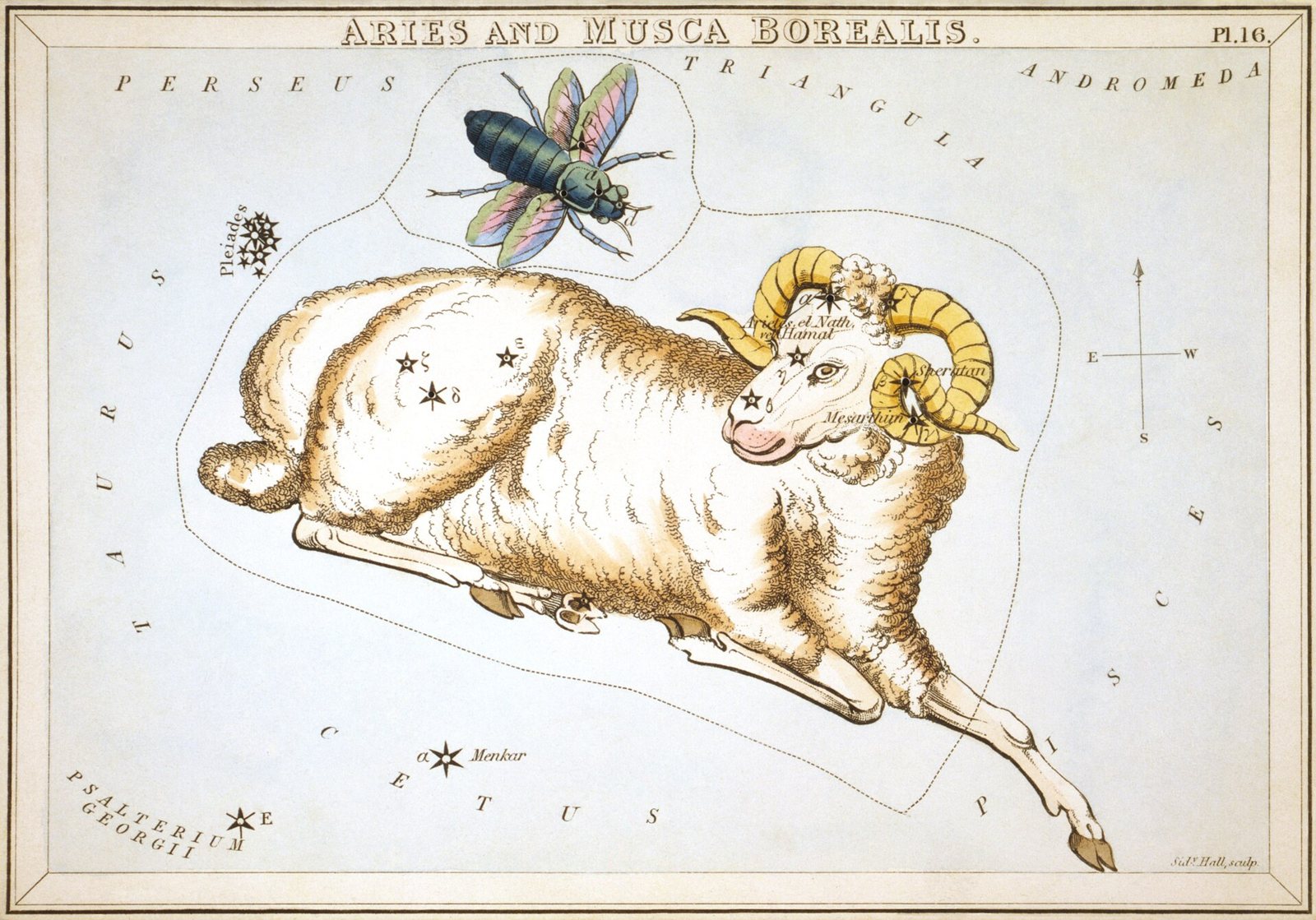
So, when someone says their ram skull tattoo is "for Aries," they are standing in a long line of people who tied the ram to the sky. In older objects the ram can mean the zodiac sign, astrology or planetary magic, depending on where and when it was made.
The goat, Baphomet and Éliphas Lévi
The goat's most famous symbolic outing is much younger than any of the above. The French occultist Éliphas Lévi published *Dogme et Rituel de la Haute Magie* in two volumes between 1854 and 1856, and in it he drew a winged, goat-headed figure he called Baphomet and "the Sabbatic Goat." The 1856 image, now in the public domain on Wikimedia Commons, combines a goat's head, wings, breasts, a torch, a pentagram and other symbols. Julian Strube's study "The 'Baphomet' of Eliphas Lévi" looks at the figure closely.
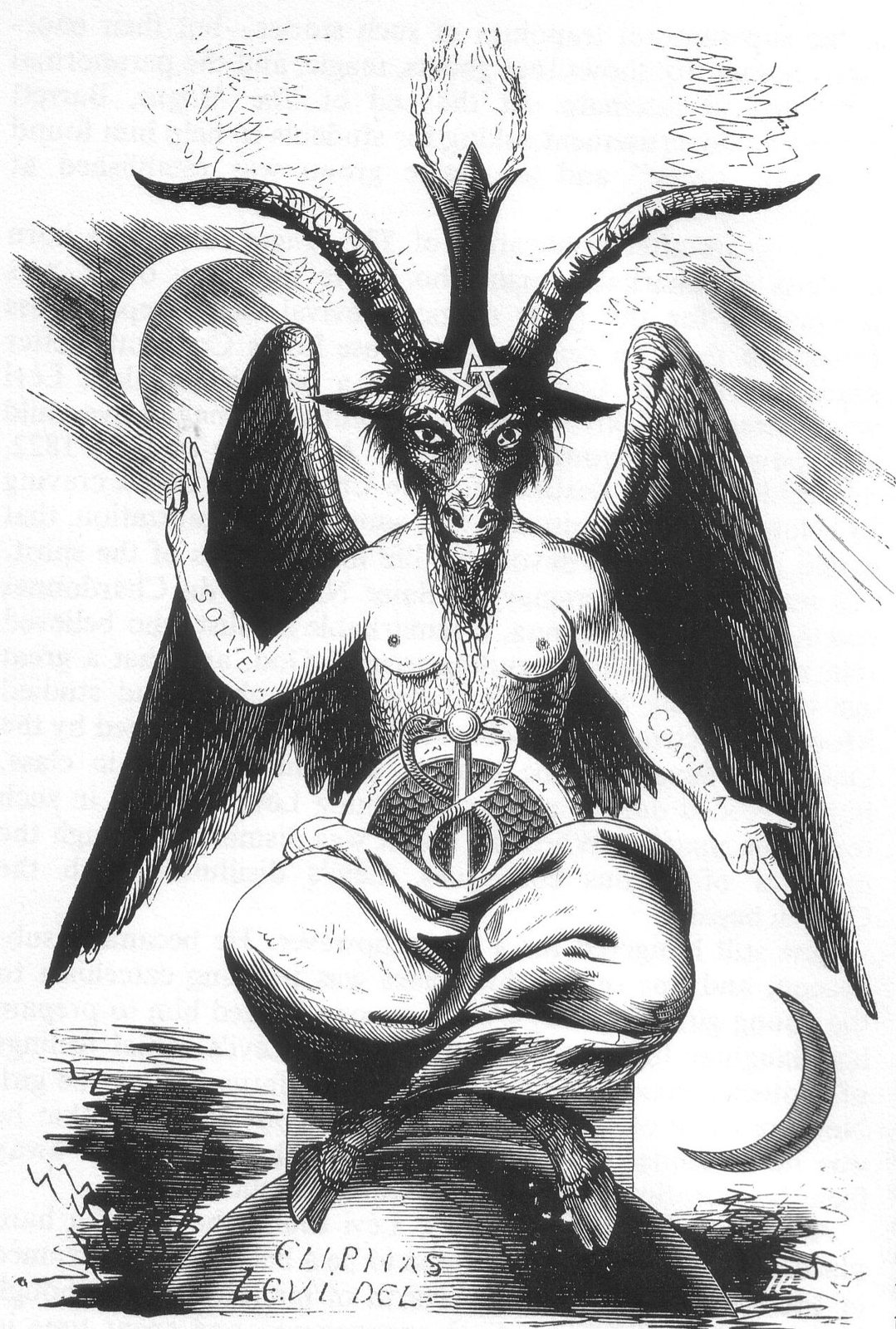
Later occult groups, Satanic organizations and popular culture adapted the image in different ways, and that is why a goat skull now reads to many viewers as occult, rebellious or transgressive. Those readings are later interpretations built on a nineteenth-century drawing. They do not make goats, or goat skulls, a universal sign of Satanism, and they are a different thing from Egyptian ram worship or a shofar. If the occult side of skull imagery interests you, our story on skulls in witchcraft covers more of that history.
Desert bones and Southwest decor
In the American Southwest, the bleached horned skull became a design object, and Georgia O'Keeffe is a big part of why. The Georgia O'Keeffe Museum records that she collected bones in the New Mexico desert and called bleached bones "symbols of the desert." Her 1938 painting *Ram's Head, Blue Morning Glory* was inspired by a skull the museum later identified as a Spanish goat skull, so one of the most famous "ram" skulls in American art turns out to be a goat. In her work the skull is about the desert, beauty, mortality and what an artist can make of bone. The Met holds another of her desert bone paintings, *From the Faraway, Nearby*.
By the late 1980s the look had moved indoors. A February 4, 1988, *Los Angeles Times* report, "Dead Right", described bleached steer skulls turning up in Santa Fe restaurants, showrooms and homes, and said some people saw them as a symbol of the vanishing American West. Those were cattle skulls, not rams, but the ram and goat skulls on Southwestern walls today share that same desert-ranch mood. Our cow skull meaning story follows the cattle side, and deer skull meaning follows the antlered one.
The ram and the goat through time
Tap or hover a step to follow the order.
Twenty-fifth Dynasty
Ram-head amulets in Egypt and Kush call Amun to mind.
Around 1200
A vessel made in Khurasan or Herat shows a figure riding a ram as Mars in Aries.
1854 to 1856
Éliphas Lévi publishes Dogme et Rituel de la Haute Magie, with his goat-headed Baphomet.
1929 onward
Georgia O'Keeffe collects desert bones in New Mexico for her art.
1938
O'Keeffe paints Ram's Head, Blue Morning Glory, inspired by a Spanish goat skull.
1988
The Los Angeles Times reports bleached steer skulls in Santa Fe restaurants, showrooms and homes.
Horns in metal
Metal art loves a horned skull. Bands use horned, goat-headed and skull imagery to suggest extremity, danger, death, occult themes or plain theatrical rebellion, and a ram skull fits that kit perfectly. One concrete example: the metal band Orphaned Land was presented with an award shaped like a ram's skull, which Louder Sound shows in an interview with the band.
Album covers and stage sets are choices made by particular bands and artists, so the best way to read a horned skull on a record sleeve is to ask what that band meant by it. There is no single metal-wide meaning. For more on how darker skull styles are read, see our gothic skull meaning story.
What a ram skull tattoo means
For most people asking, this is the real question, and the answer is personal. The meanings people commonly give for ram skull tattoos include their Aries sign, strength, determination and endurance, mortality, rugged Western imagery, and a love of dark or metal style. Some wear one in memory of someone: one person who shared a ram skull tattoo online described it as a memorial to a sister who died, while another said the ram simply stood for being an Aries, with the symbols around it carrying a personal lesson.
What a ram skull tattoo should not be is automatically labeled. It is not Satanic, pagan, occult or spiritually protective unless the person wearing it says so. The wearer's own meaning is the one that counts, which is also good news if you are designing one: talk it over with your artist and decide which of these stories you want it to carry. Our skull tattoo meaning story covers other skull designs, and the wider skull symbolism guide shows how many meanings a skull can hold.
How well do you know the ram skull?
Answer every question to check.
Questions people ask about ram and goat skulls
What does a ram skull symbolize?
A ram skull has no single universal symbolism; its meaning depends on the setting and on the person who chose it. It may point to the ram offered in place of Isaac and the shofar, to Amun of ancient Egypt, to Aries, to Southwestern desert style, to mortality, or to a purely personal design.
What does a goat skull mean spiritually?
A goat skull has no single spiritual meaning; in modern occult and metal settings it is often read through Éliphas Lévi's Baphomet, a specific image he drew in the 1850s. Outside those settings a goat skull may simply be animal bone, art, decor or a personal symbol.
Is a goat skull a Satanic symbol?
A goat skull is not automatically a Satanic symbol, even though later occult and Satanic groups adapted Lévi's goat-headed Baphomet. Whether it carries that meaning depends on who uses it and why.
What does a ram skull tattoo mean?
A ram skull tattoo most often stands for the wearer's Aries sign, strength, endurance, mortality, remembrance of a loved one, Western imagery or a dark, metal-inspired style. The wearer's own explanation is the best guide to what a particular tattoo means.
What does the ram mean in the Bible?
In the Bible the ram is the animal Abraham offered in place of Isaac in Genesis 22:13. In Jewish tradition it is tied to the shofar, which the Talmud connects with remembering the binding of Isaac, and to substitution, mercy, repentance and the renewal of the covenant.
Why is the ram linked to Aries?
The ram has stood for the zodiac sign Aries for centuries, as objects like the British Museum's Vaso Vescovali, made around 1200 in Khurasan or Herat, show with a figure riding a ram as Mars in Aries. Some people choose a ram skull tattoo for exactly that reason.
A horned skull with a long memory
From a thicket in Genesis to Thebes, Herat, Lévi's France, New Mexico walls and the tattoo chair, the horned skull has carried a lot of different meanings without ever settling on one. That leaves you free to choose. Pick the story that fits you, tell your artist about it, and the ram will carry it. If you are decorating with horns and bone, our skull home decor story has more ideas.
Terms in this story
Tap a term to see what it means.
Shofar. A ram's horn sounded at Rosh Hashanah. The Talmud links it to remembering the binding of Isaac.
---