

No. 022
Gothic Skull Meaning: Why Skulls Belong to Goth Fashion and Decor
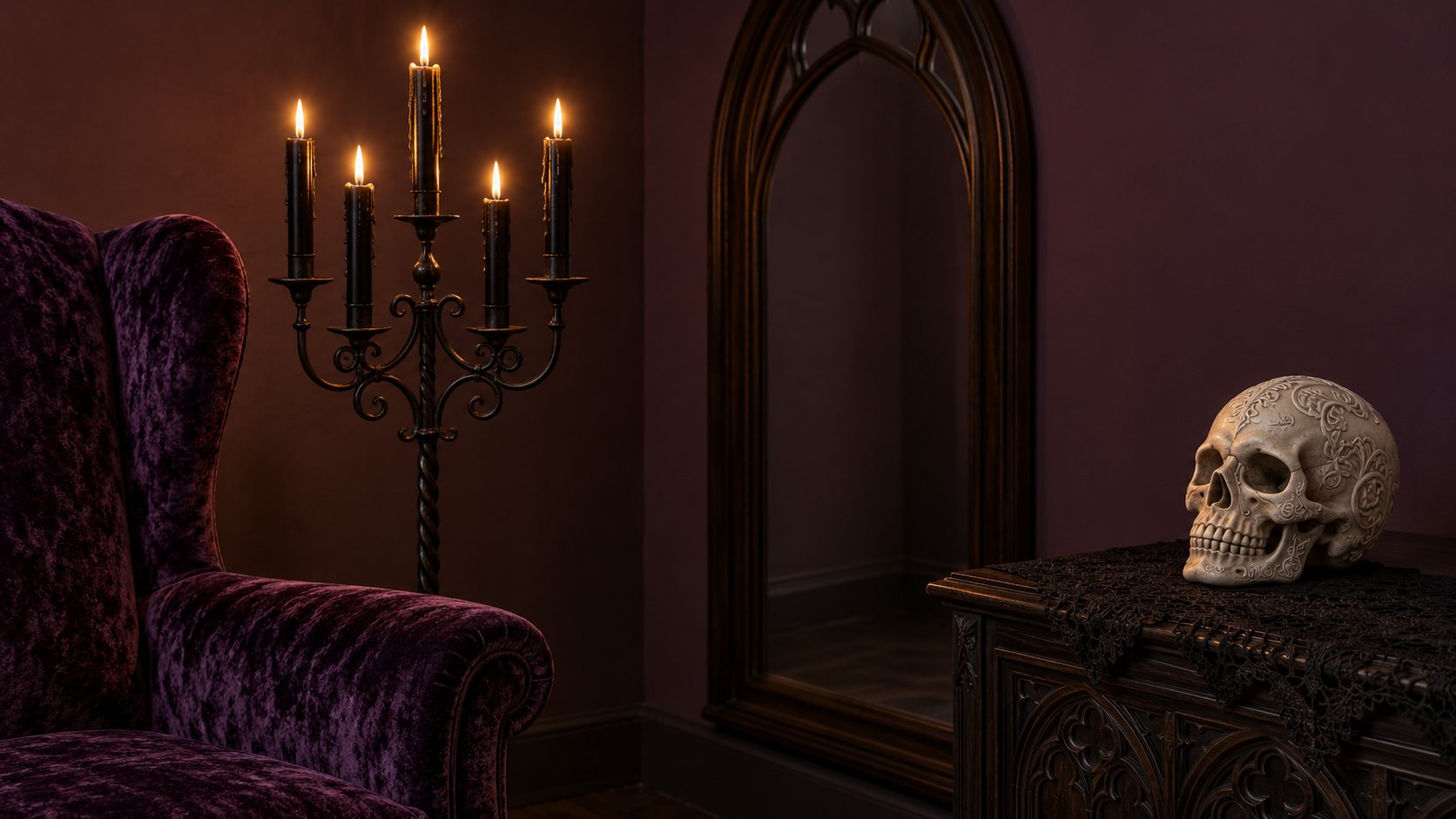
Skulls belong to gothic style because goth was built from older materials that already carried them: Gothic novels full of graves and decay, memento mori art that put a skull in front of the viewer, and mourning jewelry engraved with death's heads. In the goth subculture today, a skull can stand for mortality, remembrance, beauty, dark humor, theatricality, rebellion or simply a love of how it looks. There is no single official meaning. The skull means what it means to the person wearing it, and plenty of people who are not goths wear skulls too.
Where goth came from
Goth grew out of Britain's punk and post-punk scene in the late 1970s and became a recognisable music-and-style subculture in the early 1980s. The sociologist Paul Hodkinson, in his chapter on gothic music and subculture, describes it as a community centred on music, held together by bands, fashion, shared identity, clubs and social life. The scholarly collection Goth: Undead Subculture, edited by Lauren M. E. Goodlad and Michael Bibby, also places its beginnings in Britain's late-1970s punk scene.
Music scholars often point to one song as a launching point: Bauhaus's "Bela Lugosi's Dead," released in 1979. No single band invented goth, though. The scene came together from several groups and local communities, including Bauhaus, Siouxsie and the Banshees, Joy Division and The Cure, and from clubs such as London's Batcave. The Associated Press, interviewing Cure co-founder Lol Tolhurst, notes that the Batcave was also a haven for LGBTQ+ club-goers. Even the word "goth" has a contested history, because the scene formed through overlapping musicians, clubs, journalists and fans.
The skull was gothic long before goth
The subculture did not invent the skull. It inherited it, along with a whole kit of dark imagery, from more than two centuries of Gothic writing and European art.
The literary Gothic begins in England in 1764 with Horace Walpole's The Castle of Otranto. For its second edition in 1765, the title gained the words "A Gothic Story," and the British Library identifies it as the first Gothic novel. Its haunted buildings, medieval settings and supernatural threats set the pattern. Matthew Lewis's The Monk in 1796 and Bram Stoker's Dracula in 1897 kept returning to death, decay, bodies, graves and things that refuse to stay dead.
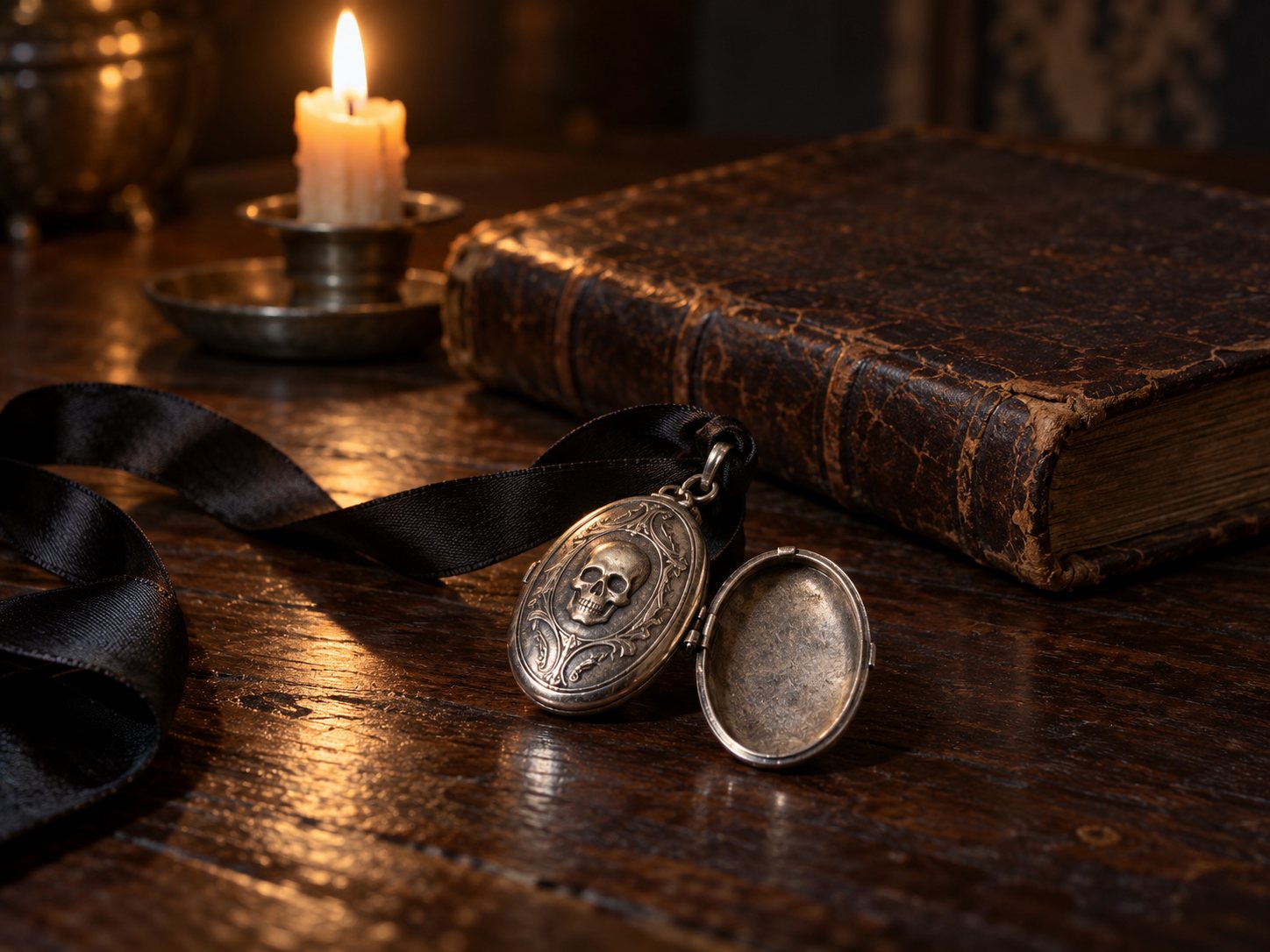
Art carried the skull even further back. In the memento mori and vanitas traditions, a skull reminded the viewer that life, beauty, wealth and status were all temporary; our stories on what memento mori means and vanitas paintings follow that thread. The Metropolitan Museum of Art identifies skulls, coffins and hourglasses as memento mori motifs on mourning rings that stayed popular through the mid-eighteenth century, including an American ring dated 1757 with a skeleton on it. The Met also holds a locket made in Boston in 1706 that combines a lock of the dead person's hair, a death date and an engraved skull.
Later Victorian mourning jewelry more often used hair, black enamel, pearls and memorial inscriptions than skulls, but the larger tradition tied death, remembrance and ornament together; Victorian mourning jewelry has the full story. It helps to keep these layers apart. A skull on an eighteenth-century mourning ring recorded a real death and a real grief. A skull on a modern goth jacket borrows that history and may mean something quite different.
The gothic skull, from mourning lockets to the Batcave
Tap or hover a step to follow the order.
1706
A locket made in Boston combines a lock of hair, a death date and an engraved skull.
1757
An American mourning ring carries a skeleton, a memento mori motif popular through the mid-eighteenth century.
1764
Horace Walpole publishes The Castle of Otranto in England.
1765
The second edition adds "A Gothic Story" to the title, giving the genre its name.
1796
Matthew Lewis publishes The Monk.
1897
Bram Stoker publishes Dracula.
1979
Bauhaus releases "Bela Lugosi's Dead."
Late 1970s to early 1980s
Goth takes shape from British punk and post-punk as a music-and-style subculture.
1986
British designer Simon Costin makes his Memento Mori necklace with Victorian jet, skulls, claws and bone.
Skulls in goth fashion and music
Goth style is a magpie. Hodkinson describes it drawing selectively on Gothic literature, art and film, religious imagery, romantic decadence, punk, New Romantic style and theatrical images of death, and developing through the look and sound of early-1980s performers. He also warns against assuming that every visual symbol in the style has one fixed meaning, which is worth remembering when someone tells you exactly what your skull ring "means."
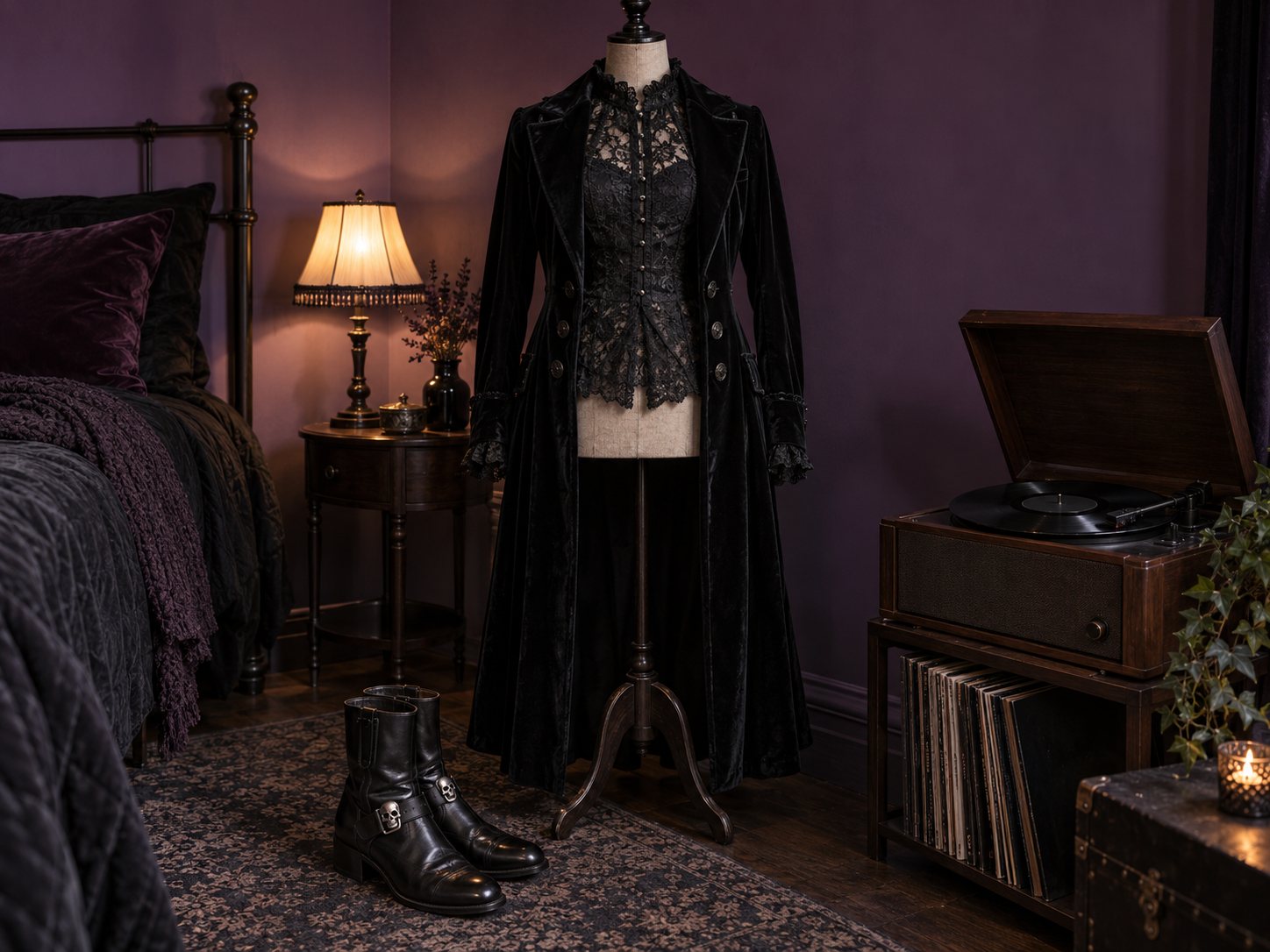
The bands set the tone. Bauhaus tied the scene to old horror cinema through "Bela Lugosi's Dead." Siouxsie Sioux brought theatrical makeup and clothing; The Cure brought a dark, romantic presentation; the Batcave gave people somewhere to wear it all. For Lol Tolhurst, goth was never only about clothes. He told the AP it is a philosophy, a way of approaching the world, and described its emotional territory as putting "love and death" together in the same song. A skull fits that pairing neatly: it is about death, and it is very often worn with love for the look.
Fashion beyond the subculture picked up the same thread. The Met's Costume Institute has treated skulls, skeletons and hair as fashion symbols tied to death, and the Victoria and Albert Museum, writing about Alexander McQueen, describes his use of skulls, animal parts and taxidermy as decorative devices that link glamour with mortality and the history of memento mori.
Skulls also turn up all over neighbouring scenes: heavy metal, punk, tattoo culture and plenty of commercial alternative fashion. That is why a skull on its own does not make a person, a band or a jacket goth. It is part of the goth wardrobe, not its membership card.
What skulls mean to the people who wear them
There is no single goth interpretation of the skull. Meanings vary by person, scene, country and decade, and goths themselves tend to say so.
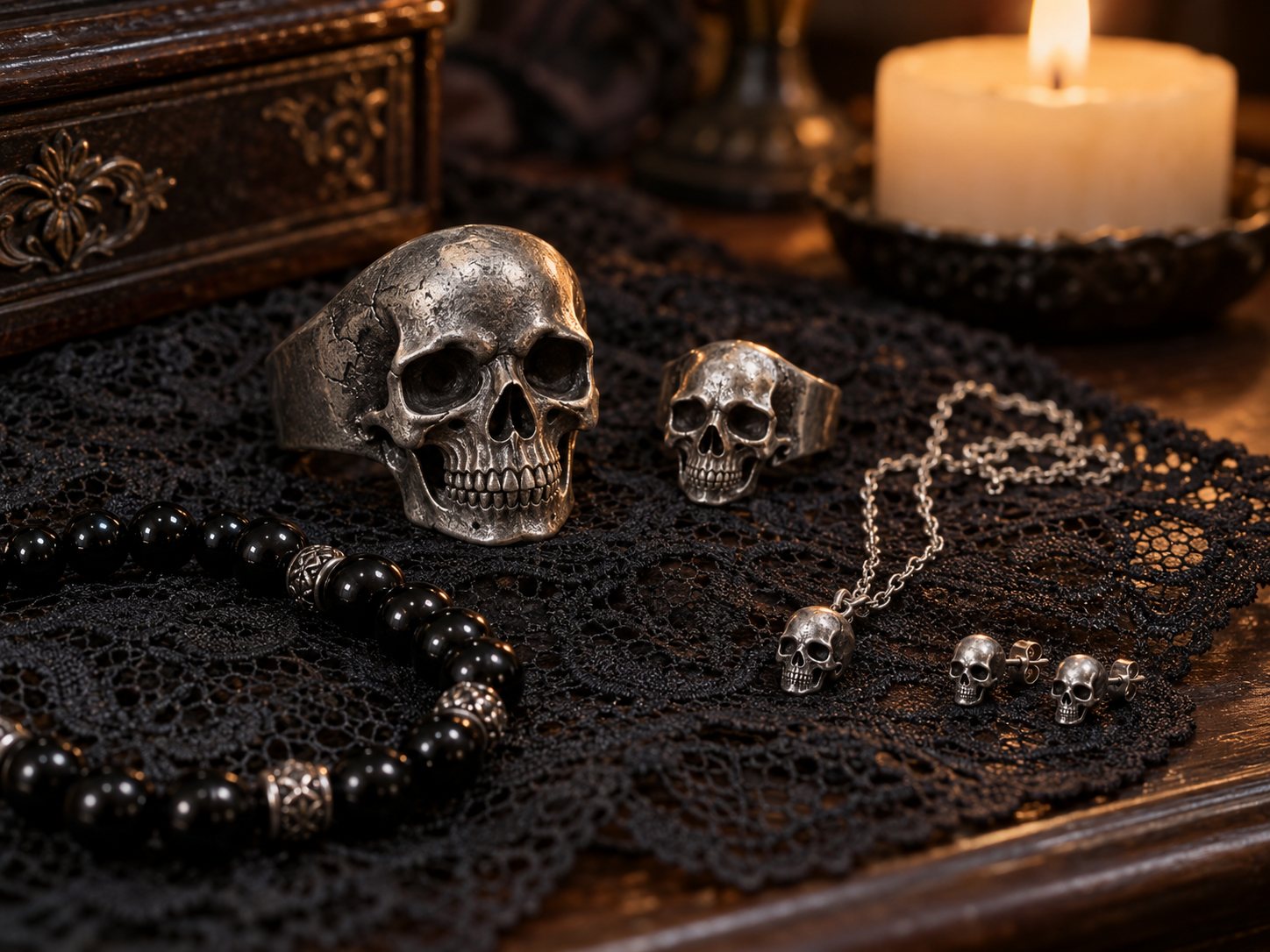
Tolhurst's own framing, love and death in the same song, along with attention to the inner, invisible side of experience, is one way into it. For some wearers the skull is about mortality and remembrance, much as it was on a mourning ring. For others it is beauty, dark humor, theatricality, rebellion, equality, protection, religious imagery, a personal memory or simply decoration.
A study from a neighbouring scene gives a sense of how people put this into words. Héctor Iván Orozco Hernández, a researcher at the Universidad Nacional Autónoma de México (UNAM), interviewed members of heavy-metal culture in Mexico, not goths, about death imagery. His participants described it as identity, difference, a way of facing a taboo, protection, equality and a push to make use of life. One, Omar, said wearing death imagery gave him an identity and helped him face disapproving looks. Another, Leonardo, said it reminded him that all people are equal, and that thinking about mortality can push someone to live fully. Those are metal fans speaking for themselves, but many people in dark music scenes will recognise the feeling.
Tap or hover a row to highlight it.
| Setting | Place and period | What the skull carried |
|---|---|---|
| SettingMemento mori and vanitas art | Place and periodEurope, early modern period | What the skull carriedLife, beauty, wealth and status are temporary |
| SettingMourning jewelry | Place and periodAmerica, 1700s | What the skull carriedRemembrance of a specific person who died |
| SettingGothic novels | Place and periodEngland, from 1764 | What the skull carriedDeath, decay, graves and the uncanny |
| SettingGoth subculture | Place and periodBritain, from the late 1970s | What the skull carriedVaries by wearer: mortality, love and death, theatricality, style |
| SettingHeavy-metal fans (UNAM study) | Place and periodMexico | What the skull carriedIdentity, facing a taboo, protection, equality, living fully |
Skulls in gothic home decor
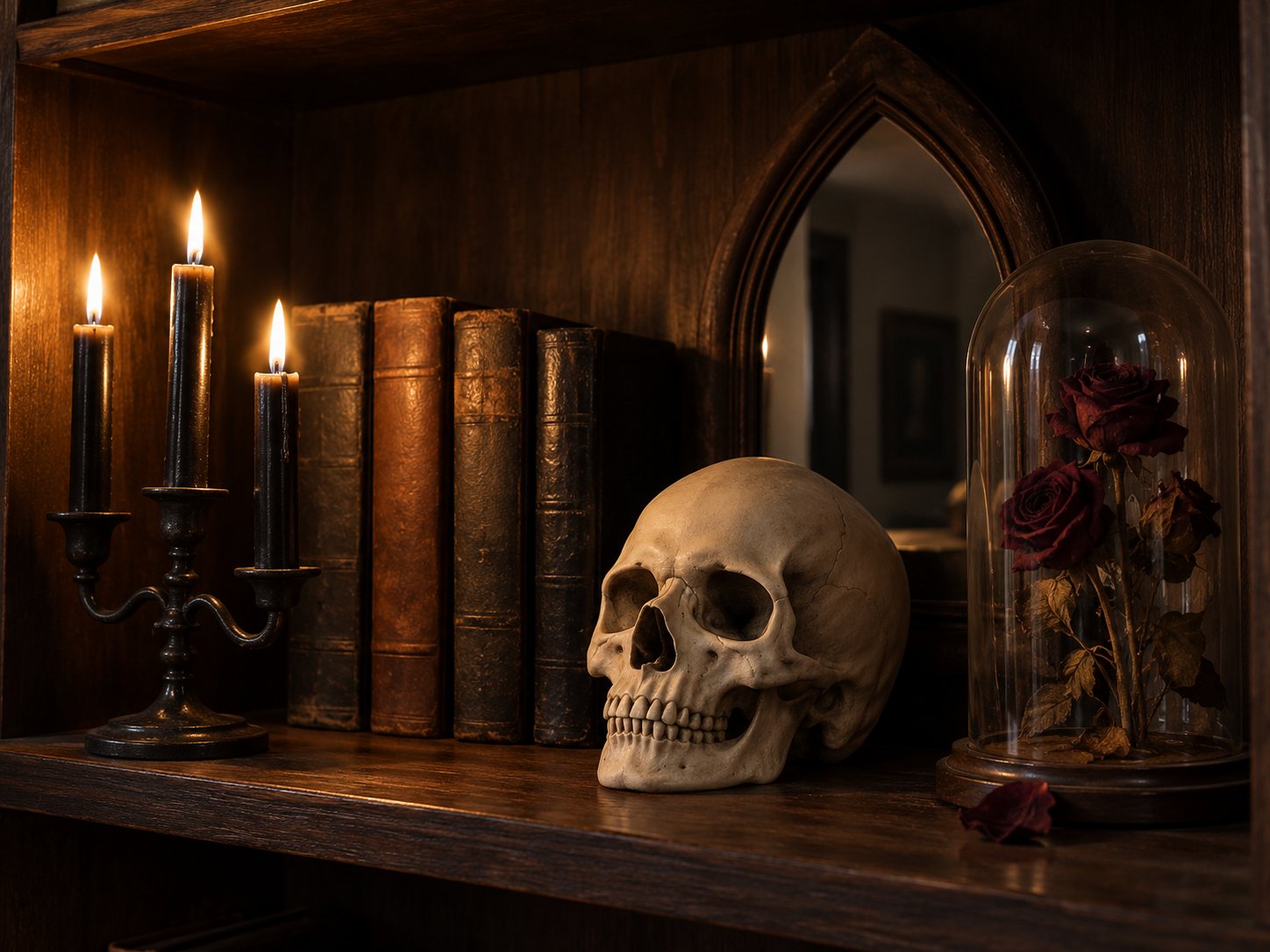
At home, skulls usually sit inside a wider dark decorating vocabulary rather than following any subcultural rule. That vocabulary includes memento mori pieces, black materials, religious and funerary references, taxidermy, bones, candles, antique shapes and a fair amount of theatre. The V&A explains that memento mori objects memorialise the dead while reminding the living of death, which is a good description of what a skull on a bookshelf quietly does all day.
One museum example shows how designers have used the look. The Met records a Memento Mori necklace made in 1986 by the British designer Simon Costin, combining skulls, Victorian jet, claws and bone. The museum describes his work as drawing on decadent literature and the Victorian culture of mourning. It is a documented piece of late-twentieth-century Gothic design. It is not evidence that every goth home has skulls, or that skull decor has one required meaning. For ideas on displaying them, see our guide to skull home decor.
What does wearing a skull say about you?
Wearing a skull can say a lot of different things: mortality, remembrance, equality in death, rebellion, danger, protection, dark humor, theatricality, personal identity or plain visual taste. In the early modern European memento mori tradition, it reminded the viewer of death and of how brief earthly life is. In a goth setting today, its meaning depends on the wearer and the occasion. A skull should not automatically be read as a sign of Satanism, nihilism, violence or a wish to die.
People also ask whether skull jewelry or a skull shirt makes someone goth, and what separates "goth" from "gothic." In discussions among goths online, the line usually drawn is this: goth is a music-based subculture with its own bands, clubs and history, while gothic fashion and dark aesthetics are broader and open to anyone. Dressing the part and belonging to the scene are not the same thing, and both are fine. For the skull's other lives in jewelry, see skull rings, and for the motorcycle side of the family, biker skulls.
Bringing skulls into your own style
If you want skulls in your wardrobe or your home with a little history behind them, borrow from the same places goth itself borrowed from. Mourning-ring motifs like skulls, coffins and hourglasses, vanitas still lifes and old Gothic novel covers all have centuries of meaning built in. Julie de Graag's 1916 woodcut of a human skull, held by the Rijksmuseum and released into the public domain, is a striking example, and the British Library shares public-domain images of early editions of The Castle of Otranto, The Monk and Dracula. A raven next to the skull adds another layer, covered in raven and skull meaning.
And if you want the oldest skull message on a shirt, our Memento Mori Skull Tee carries it for anyone who likes their skulls with a message.
How gothic is your skull knowledge?
Answer every question to check.
Gothic skull questions
These are the questions people ask most about skulls in goth style.
Are skulls considered gothic?
Yes, skulls are widely associated with gothic and goth style, drawing on Gothic novels, memento mori art and mourning jewelry. They are not exclusive to goth, though; skulls also appear in religious art, pirate imagery, military insignia, punk, heavy metal, tattoo culture, Halloween and mainstream fashion.
What does wearing skulls symbolize?
Wearing skulls can symbolize mortality, remembrance, equality in death, rebellion, protection, dark humor, theatricality or simply personal taste. The meaning depends on the wearer and the setting, and a skull should not be read automatically as Satanism, violence or a wish to die.
Is wearing skull jewelry goth?
Skull jewelry fits goth style, but wearing it does not on its own make someone goth. Goth is a music-based subculture that began in Britain in the late 1970s and early 1980s, while skull jewelry is worn across many scenes.
Do you have to dress goth to be goth?
Many goths say no: in their discussions online, goth is described first as a music-based subculture with its own bands, clubs and history, and dress is only one part of it. Lol Tolhurst of The Cure has called goth a philosophy, a way of approaching the world.
What does a skull mean in gothic decor?
In gothic decor, a skull usually belongs to a wider memento mori vocabulary along with candles, black materials, bones and antique forms. Like memento mori objects in museums, it can quietly honor the dead and remind the living of death, though no single meaning is required.
Where to go next
The gothic skull carries a long history, from mourning lockets and Gothic novels to the clubs where goth began, and its meaning on you is the one you give it. For the older tradition behind it, read what memento mori means and Victorian mourning jewelry. For the skull's meanings beyond goth, skull symbolism is the place to start.
Terms in this story
Tap a term to see what it means.
Goth. A music-and-style subculture that grew out of Britain's punk and post-punk scene in the late 1970s and became recognisable in the early 1980s.