

No. 105
Why Is It Called a Skeleton Key? The Name, the Lock and the Old Key in Your Drawer
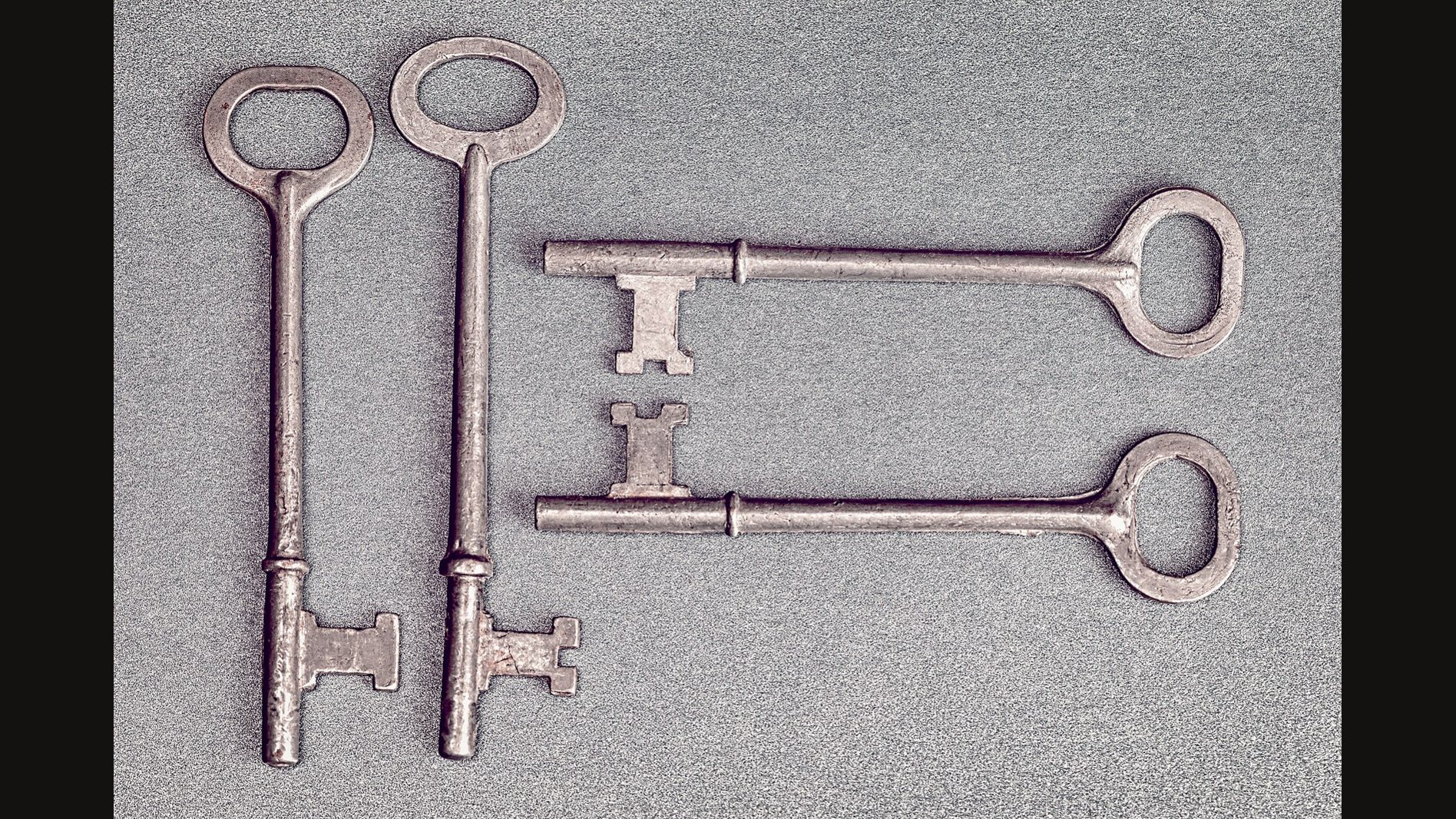
A skeleton key is called that because it has been stripped down to its bare bones. It is a key reduced to its essential working parts, with much of its bit (the flat part that goes into the lock) cut away so that it can slip past the wards inside several simple locks. Collins explains that the key was so named because it had been reduced to its essential parts, the way a skeleton is a body reduced to its frame (Collins Dictionary). It is also called a passkey (Oxford Learner's Dictionaries). No bones were involved, which is slightly disappointing for a site like ours, but the name is still a good one.
If you are holding an old key from a drawer, or you met the term in a game and wondered why a key would be named after a skeleton, the rest of the story is about one kind of lock, a word that is a little over two hundred years old, and why the key in your hand may or may not be the real thing.
What a skeleton key is
The dictionaries agree on the basics. A skeleton key is a key that can open several different locks, made by reducing a key to its essential working parts, usually by filing away much of the bit (Collins Dictionary; Oxford Learner's Dictionaries). Another name for it is a passkey.
The term belongs above all to one type of lock, the warded lock, which is explained further down. That matters, because a skeleton key is not a magic key for any door. It works on a particular, old and fairly simple design, and only when the dimensions line up.
Where the name comes from
"Skeleton" in this sense means a stripped-down structure, the bare frame that holds a thing together. A skeleton key is what is left of a key when everything except the working core has been taken off.
The dictionaries put the word's arrival around the turn of the nineteenth century, though they give slightly different dates. Collins gives the origin as 1800 to 1810 (Collins Dictionary). Etymonline dates the compound "skeleton key" to about 1796 (Etymonline). Both are approximate periods rather than one fixed first use, and if you need the exact earliest citation, the Oxford English Dictionary entry is the place to look it up.
So, the short answer to "why is it called a skeleton key?" is simple: because it is a key with most of its body gone, leaving only the skeleton.
Tap or hover a row to highlight it.
| Question | Answer |
|---|---|
| QuestionWhat does "skeleton" describe? | AnswerA key reduced to its essential working parts (Collins) |
| QuestionWhich lock type is most tied to skeleton keys? | AnswerWarded locks |
| QuestionWhat blocks the wrong key in a warded lock? | AnswerFixed ridges or obstructions called wards |
| QuestionDo skeleton keys open every door? | AnswerNo, only compatible lock designs and dimensions |
| QuestionWhen does Collins date the word? | Answer1800 to 1810 |
How a warded lock works
A warded lock is one of the oldest and simplest lock designs. Inside it are fixed ridges or obstructions called wards. A correctly shaped key has cuts or openings in its bit that clear those wards, so the key can turn and move the bolt. A key with the wrong shape hits a ward and stops (University of Illinois Extension, Introduction to Keys and Locks; U.S. Department of Justice, Keyed Mechanical Operation).
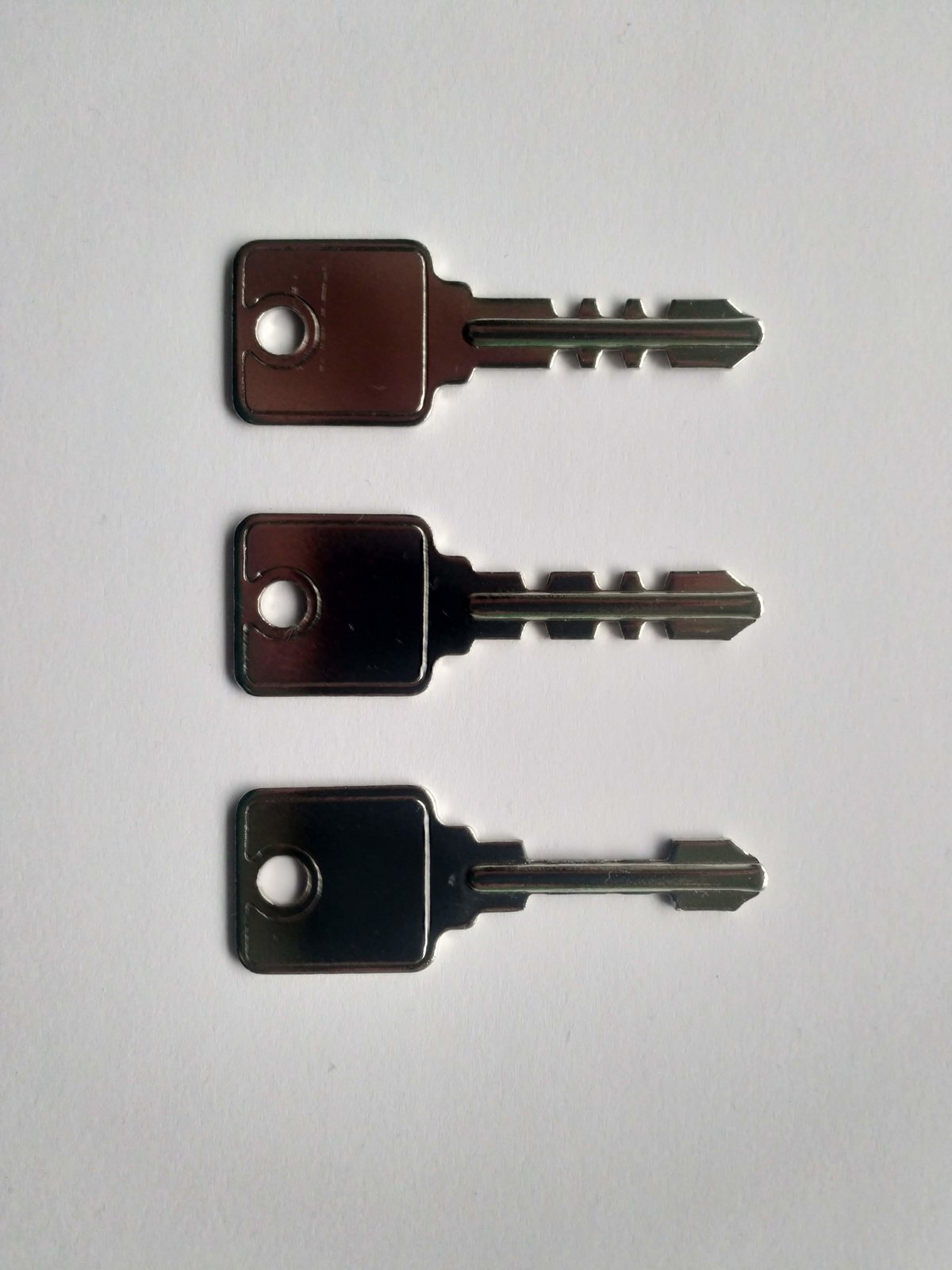
A skeleton key gets around the wards by having almost nothing for them to catch. Most of the bit is removed, leaving just enough metal to reach the bolt and turn it while missing many of the obstructions along the way. A 1904 hardware reference from the Towne company describes skeleton keys bypassing wards in exactly this way (Ernest R. Butler, The Mechanics of Hardware). That is why one skeleton key could open several locks that shared similar ward arrangements, and why it earned a reputation as a key that opens everything, a reputation that was always bigger than the key.
Why warded locks faded away
Because a stripped-down key could defeat them, warded locks offered only limited security. Over time they were largely replaced by lever-tumbler and pin-tumbler locks (University of Illinois Extension).
They have not vanished completely. Warded mortise locks may still turn up in very old hotels and homes, but security specialists say they put up little resistance to picking, and locksmith training material says they are not considered secure by modern standards (U.S. Department of Justice). A warded lock on a cupboard is charming; a warded lock as the only thing between the street and your living room is a different matter.
Is the key in your drawer a skeleton key?
Maybe, and maybe not. Not every old-looking key is a skeleton key. Many antique keys are ordinary bit keys or barrel keys, each made to fit one particular lock (Smithsonian Institution).
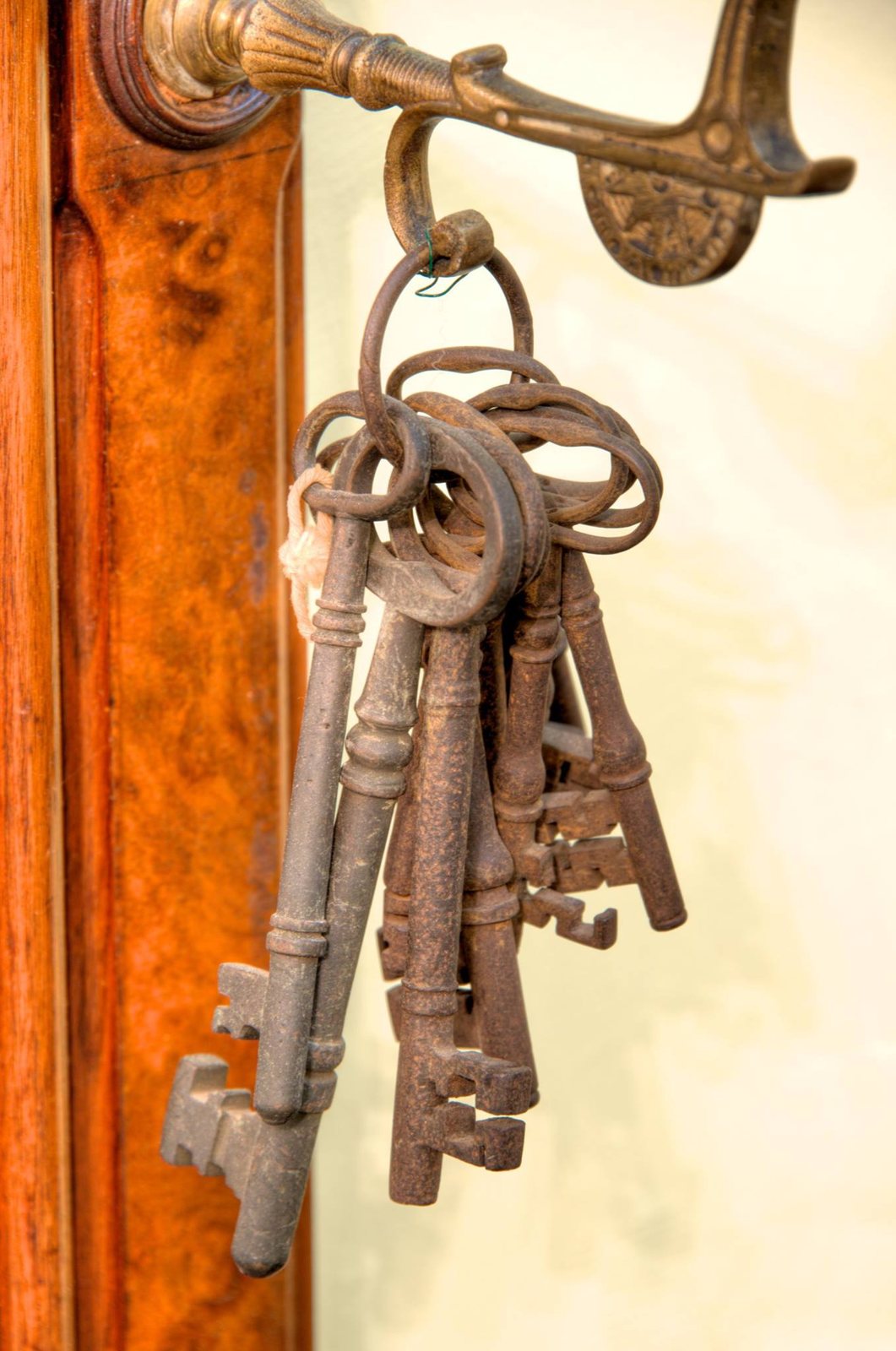
Even museums run into the naming problem. The Smithsonian's Anacostia Community Museum has a key in its collection that is popularly called a skeleton key, but the museum identifies it as a bit or barrel key designed for a single lock (Smithsonian Institution). Meanwhile, the Smithsonian's National Museum of African American History and Culture holds an iron lock and set of keys owned by members of the Ellis family, which includes a cast brass skeleton key; the museum classes the object under domestic life and Black interiors (Smithsonian Collections).
Skeleton keys came from more than one kind of maker, too. A British study of warded door locks records blacksmith-made skeleton keys from the late nineteenth century, and commercial skeleton keys sold in sets in the 1920s (Warded Door Locks in Britain). If you are trying to work out whether your own key is one, the plain test is the one the dictionaries give: a skeleton key has had much of its bit removed so that it clears the wards of more than one lock. A key with a full, carefully shaped bit is more likely a key made for one door.
The skeleton key through time
Tap or hover a step to follow the order.
About 1796
Etymonline dates the compound "skeleton key" to this period.
1800 to 1810
Collins gives this as the origin period of the word.
Late nineteenth century
British records document blacksmith-made skeleton keys.
1890
The Henry T. Moody House is built in Newburyport, Massachusetts, with Victorian door hardware later opened by a skeleton key.
1920s
British catalogues offer commercial skeleton keys in sets.
Do old skeleton keys still work?
Often they do, on the right door. In older homes, especially on interior mortise or rim locks, a skeleton key may still open a bedroom, pantry, cellar or cupboard door. Whether yours works depends on the lock's type, its ward pattern, its condition and how well the parts are aligned, so a key that works in one old door may do nothing in the next (University of Illinois Extension).
The Museum of Old Newbury, in Massachusetts, tells a nice small story about this. The 1890 Henry T. Moody House in Newburyport, a Victorian house, still had a working skeleton key and mortise lock, although the bolt later jammed (Museum of Old Newbury). More than a century of service and then a stuck bolt sums up old hardware rather well.
What decides whether an old key still works
Tap a card to bring it forward.
- Lock type: Skeleton keys belong with simple warded locks, often interior mortise or rim locks in older homes.
- Ward pattern: The key has to clear the wards inside that particular lock.
- Condition: Old locks wear, rust and jam, as the Moody House bolt eventually did.
- Alignment: The parts of the lock and door have to line up for the key to turn the bolt.
- One door at a time: A key that works in one old door may not work in another.
The skeleton key as a symbol
Skeleton keys have a second life as tattoos and pendants, and there is no single meaning for them. Modern tattoo writing commonly links a skeleton key with access, opportunity, secrets, freedom, or opening something that was closed (Body as Story). A University of Northampton study of tattoo narratives, *Tattooed Feminine Bodies* by Dann (2018), records one wearer who connected skeleton keys with "getting into anything," while stressing that what a tattoo means depends on the wearer's own story (University of Northampton).
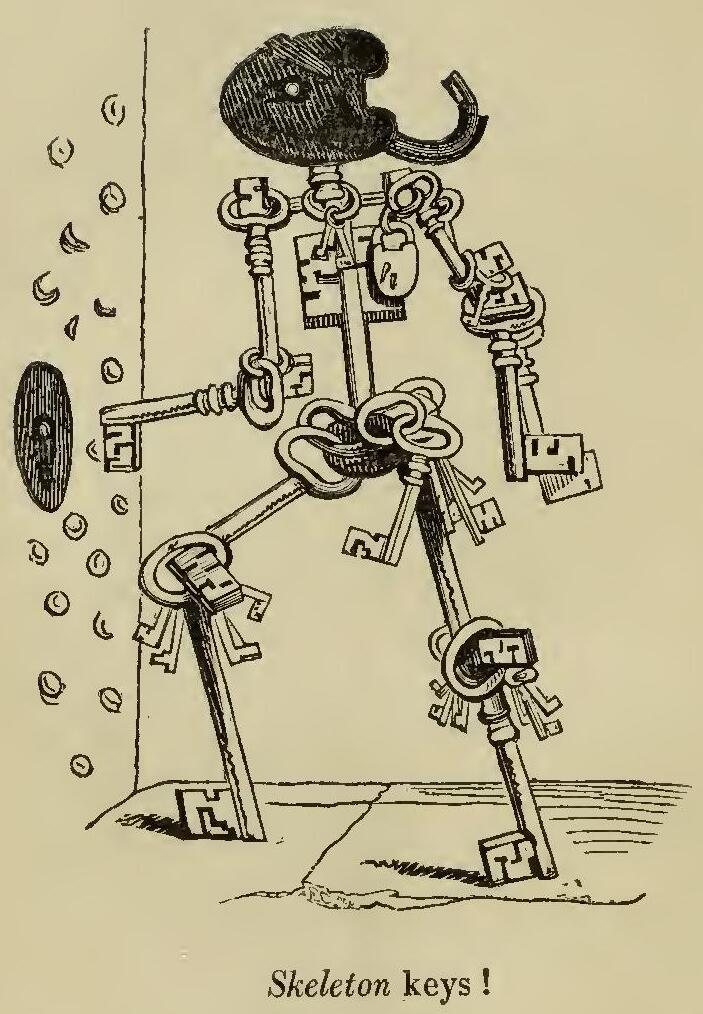
Jewelry adds an older layer. The Swiss National Museum describes how skeleton and skull imagery in European jewelry has often expressed mortality, remembrance, mourning and the cycle of life and death (Swiss National Museum). A skeleton key pendant does not automatically carry those meanings, but it sits comfortably beside them. Treat each of these as a reading someone has given the symbol, not a rule. If symbols like this interest you, our stories on skeleton tattoo meaning, Victorian mourning jewelry and what memento mori means follow the skull and skeleton through the same territory.
Skeleton keys in museums
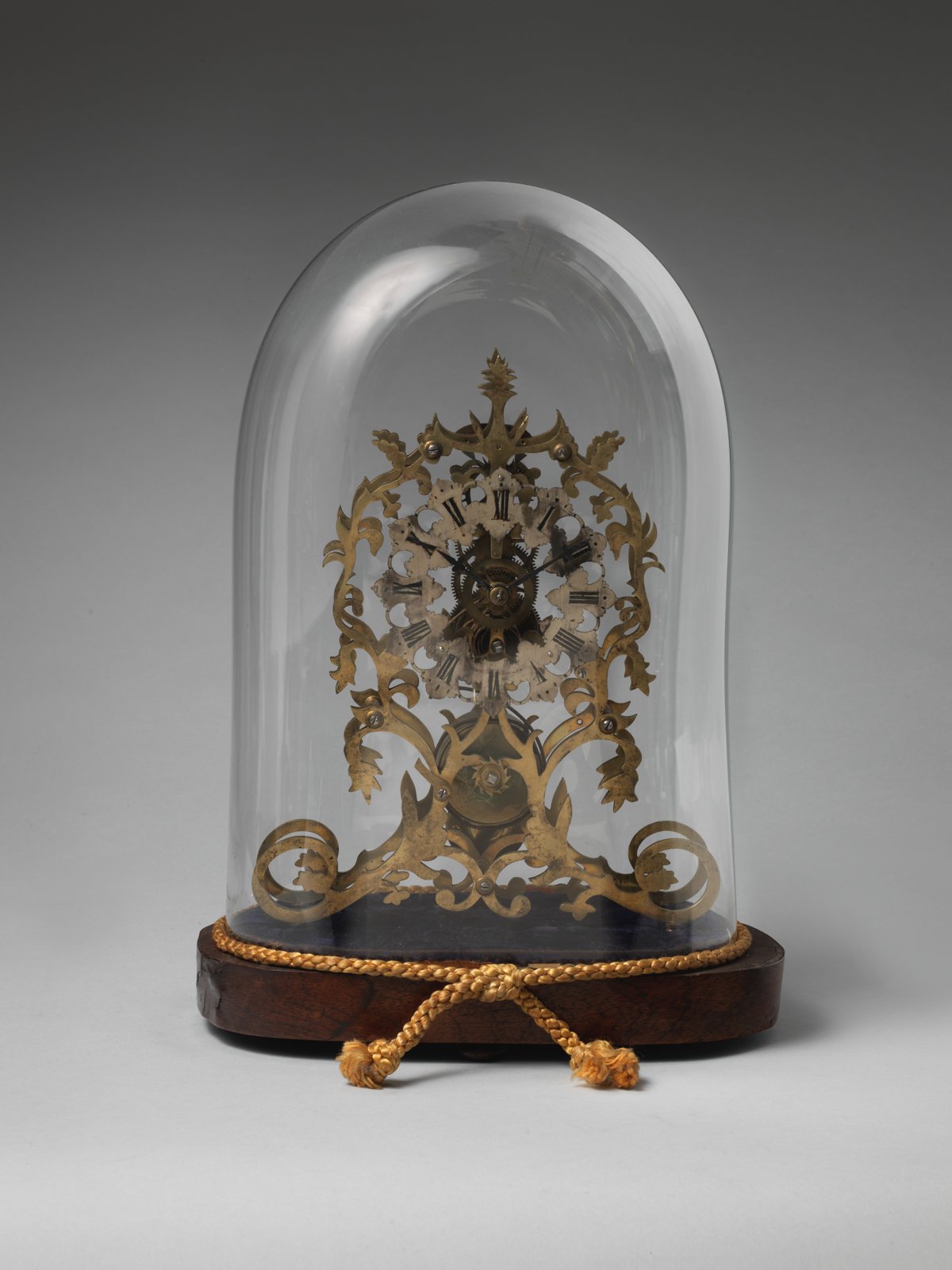
Museums hold some handsome examples that anyone can look at online. The Metropolitan Museum of Art has a British skeleton clock and key from about 1850 to 1865, with the image marked public domain (The Met). The National Gallery of Art has *Shop Sign Key* by Henry Tomaszewski, an image of a large skeleton key design made between 1935 and 1942 and also public domain (National Gallery of Art, Shop Sign Key). And the Ellis family lock and keys at the National Museum of African American History and Culture, with its cast brass skeleton key, shows that these were ordinary household objects in real people's homes.
How well do you know the skeleton key?
Answer every question to check.
Questions people ask about skeleton keys
Why is it called a skeleton key?
It is called a skeleton key because much of its bit has been removed, leaving a stripped-down skeleton of a key that can pass the wards of several simple locks. Collins dates the term to 1800 to 1810, and Etymonline to about 1796 (Etymonline).
What does a skeleton key open?
A skeleton key opens warded locks whose dimensions and ward arrangements are compatible with it. It does not automatically open modern pin-tumbler locks, electronic locks or every old lock (University of Illinois Extension).
Do skeleton keys open all doors?
No. They work only with certain lock designs, mainly simple warded locks, and even then the fit varies; modern locks generally need their own key profile (U.S. Department of Justice).
What is an antique "llave maestra"?
An antique llave maestra is an old key made or modified to open several compatible locks, especially old locks with wards. In English it is called a skeleton key or a passkey, and Spanish speakers also use the term llave esqueleto (Oxford Learner's Dictionaries; Reverso Context).
Will an old skeleton key still work in my house?
It may, if your house has old interior mortise or rim locks with a compatible ward pattern in good condition. A key that works in one old door may not work in another, and the Museum of Old Newbury's account of the 1890 Moody House in Newburyport shows a working key whose bolt later jammed (Museum of Old Newbury).
How can I tell whether my old key is really a skeleton key?
Look at the bit: a skeleton key has had much of it cut away so that it clears the wards of more than one lock. Many old keys with a full, shaped bit are ordinary bit or barrel keys made for one lock, as the Smithsonian notes of a key in its own collection (Smithsonian Institution).
A key with nothing to hide
The skeleton key got its name by losing almost everything a key usually has. What was left was a bare frame of metal that could slip past the wards of one simple lock after another, until better locks put it out of work. Today it opens pantry doors in old houses, turns up in drawers and games, and hangs on chains and in tattoos with whatever meaning its owner gives it. For a site that loves skeletons, it is the rare one made of iron or brass, and the only one you can carry in your pocket.
Terms in this story
Tap a term to see what it means.
Skeleton key. A key reduced to its essential working parts, with much of its bit removed so that it can pass the wards of several simple locks. Also called a passkey.
---