

No. 093
The Mütter Museum Skull Wall: The Story of the Hyrtl Skull Collection
The wall of skulls at Philadelphia's Mütter Museum is the Hyrtl Skull Collection: 139 real human skulls, gathered in Vienna in the 19th century by the anatomist Josef Hyrtl, mostly from people of Central and Eastern Europe. Hyrtl put the collection together to argue against phrenology, by showing how much skulls vary among Europeans. The College of Physicians of Philadelphia bought it in 1874 for its Mütter Museum, where it is on permanent display. Many of the skulls still carry records of the person's age, place of origin and cause of death, so each one stands for someone with a life story, at least in part.
Here is who Hyrtl was, who the 139 people were, how their skulls reached Philadelphia, and how the museum has rethought their care in recent years.
Josef Hyrtl and an argument made in bone
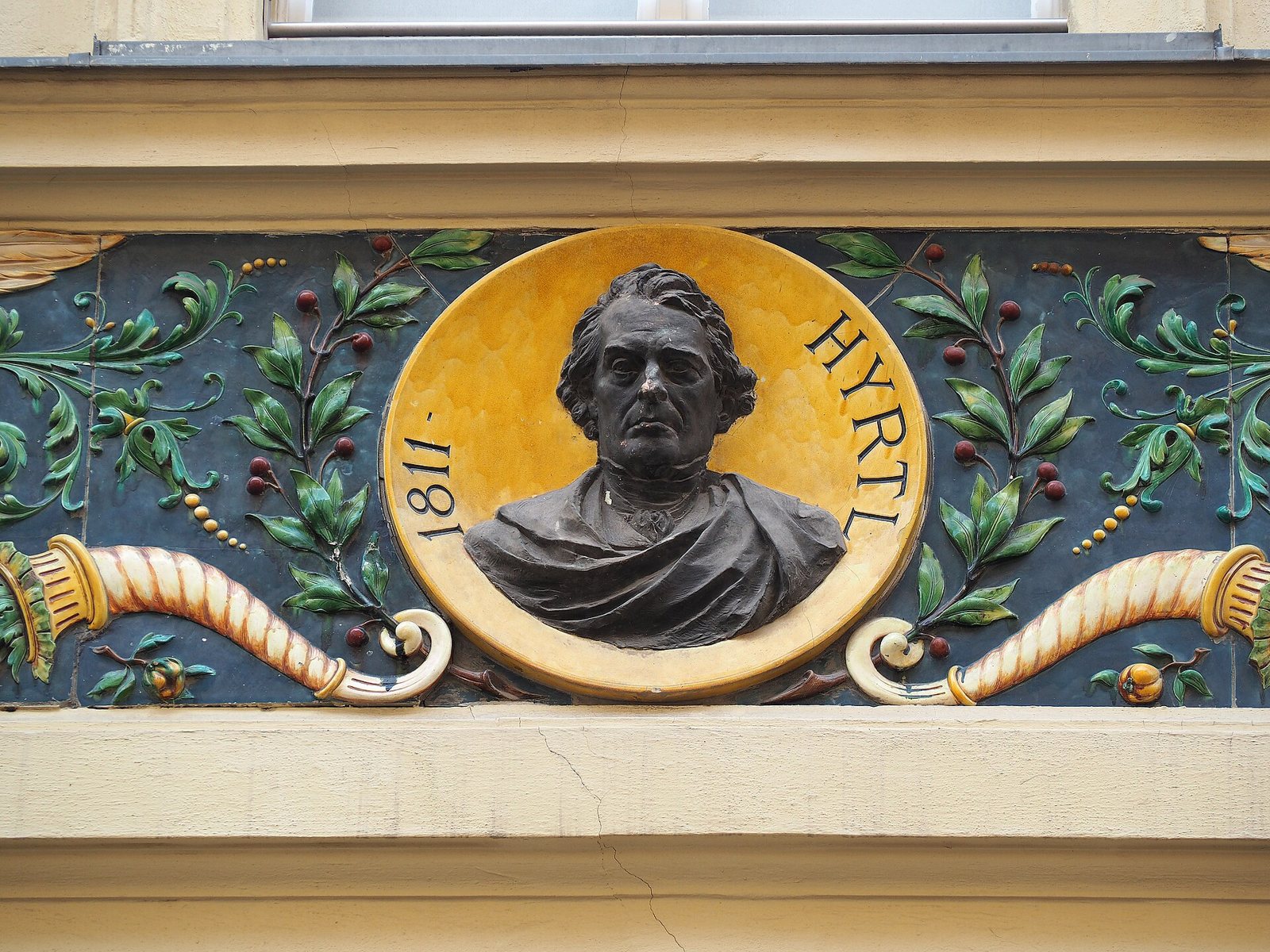
Josef Hyrtl, who lived from 1810 to 1894, was an anatomist in Vienna. In his time a theory called phrenology was popular. It held that the shape of a person's skull revealed their intelligence, their personality and even supposed differences between groups of people. Phrenology has long been discredited, and Hyrtl was one of the scientists who pushed back against it.
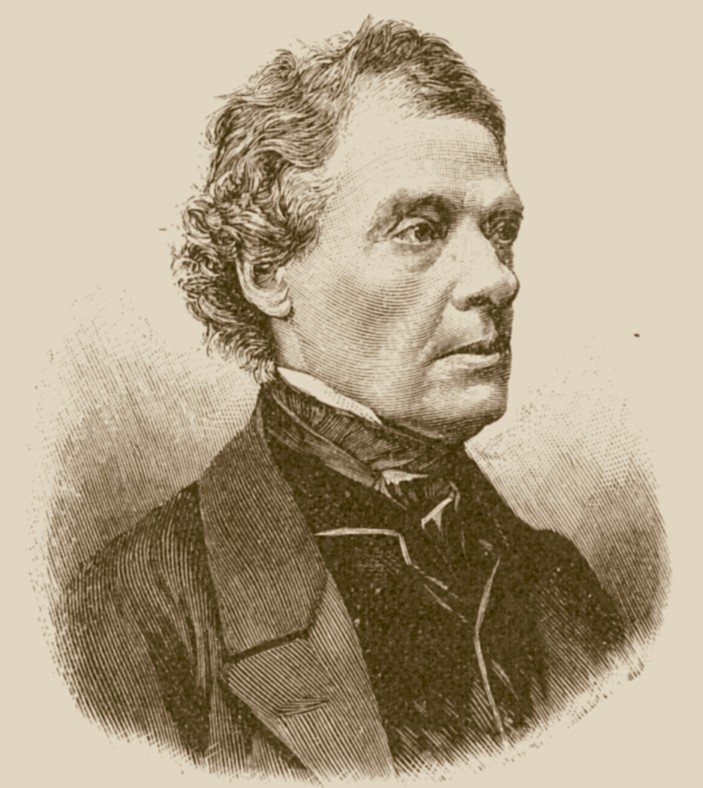
His method was simple and patient. He gathered skulls from people across Central and Eastern Europe, people who in the categories of that era were all classed together as "Caucasian." If skull shape really sorted people into types, those skulls should have looked alike. They did not. The collection shows a wide range of shapes and sizes within that one group, and Hyrtl used that variation to argue that the form of a skull could not support phrenology's claims. The Mütter Museum describes the collection today as an attempt to counter phrenology.
So, when people ask who collected the Mütter Museum skulls and why, the answer is a Viennese anatomist making a scientific case, one skull at a time. Our story on the phrenology skull covers the theory he was arguing against.
Who the 139 people were
The people represented on the wall came mainly from Central and Eastern Europe. The records use the political map of the 19th century, naming places in areas later associated with Austria, Hungary, Romania, Croatia, Serbia, Poland, Italy and their neighbors.
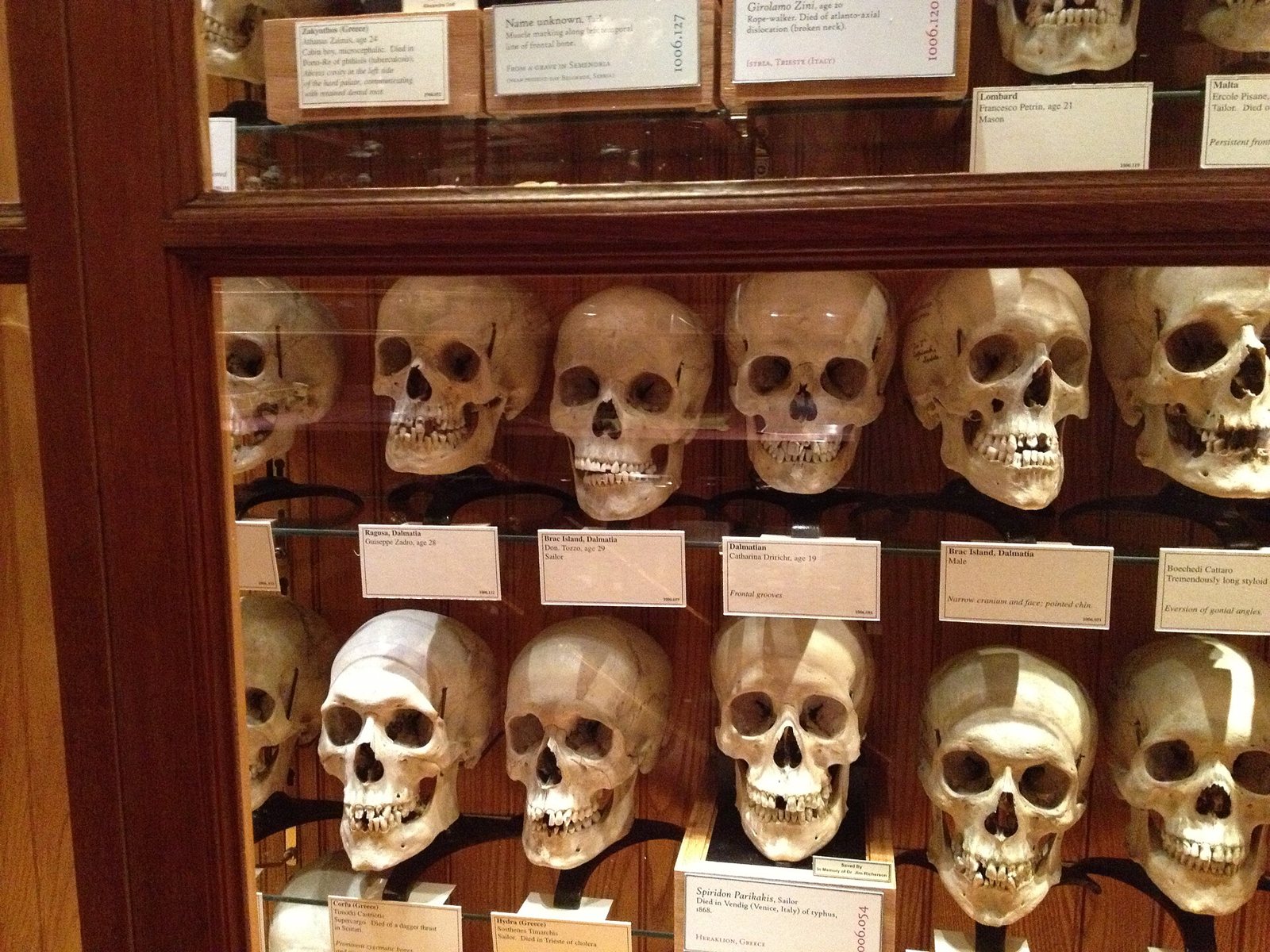
What makes the collection unusual is how much is known about many of the individuals. According to the College of Physicians of Philadelphia, many skulls carry or keep records of the person's name, age, place of birth or origin, religion, occupation and cause of death, and sometimes who donated the remains. The museum's own description highlights age, place of origin and cause of death. The details are uneven from skull to skull, but together they make the wall a gathering of individuals.
The College gives two examples. One was a tight-rope walker who died from a broken neck. Another was Francesca Seycora of Venice, who died of meningitis. The words written on the old labels come from the 19th century and reflect how people were described then, so they are best read as historical records of their lives.
If you have ever wondered how much a skull alone can tell about a person, our page of human skull facts is a good companion to this story.
From Vienna to Philadelphia in 1874
In 1874 the College of Physicians of Philadelphia completed negotiations with Professor Josef Hyrtl and bought the 139 skulls. A Philadelphia physician, Thomas Hewson Bache, traveled to Austria while the talks were underway. A contemporary account, cited in later medical-history writing, gives the price as 6,410 Prussian thalers, about $4,800 at the time.
The skulls were shipped from Vienna and joined the museum's growing 19th-century medical collections. The College's archival records describe the 1874 purchase as the end of those negotiations, and the skulls have been in Philadelphia ever since, about a century and a half.
Tap or hover a row to highlight it.
| Field | Detail |
|---|---|
| FieldNumber of skulls | Detail139 |
| FieldCollector | DetailJosef Hyrtl, Viennese anatomist, 1810 to 1894 |
| FieldPurpose | DetailTo challenge phrenology by showing variation among European skulls |
| FieldAcquired | Detail1874 |
| FieldAcquiring institution | DetailMütter Museum, College of Physicians of Philadelphia |
| FieldMain origins recorded | DetailCentral and Eastern Europe |
| FieldRecords on many skulls | DetailAge, place of origin, cause of death, and for many people more biographical detail |
| FieldStatus today | DetailPermanent exhibition, under the museum's updated human-remains policies |
Why a medical museum has so many skulls
The Mütter Museum grew out of a 19th-century medical teaching collection. Its purpose was to preserve real anatomical and pathological specimens, meaning examples of the body and of disease, so physicians and students could learn from them. The Hyrtl skulls came into that collection as a study of comparative anatomy, a way to see how human skulls differ from one another.
Today the museum presents them within the history of medicine and the care of human remains. The skulls once served an argument about science; now they also tell a story about how museums treat the people in their care. Another famous skull with a medical story behind it is told in our page on the Phineas Gage skull.
The museum's 2023 review and the public debate
In 2023 the Mütter Museum began asking hard questions about its own collection. New leadership started an ethical review after recognizing that the museum had no specific policy for human remains, and that the provenance and life history of many specimens were incomplete. Provenance means the record of where something came from and how it was acquired.
While the review was underway, the museum temporarily took down its online exhibits and hundreds of YouTube videos, looking again at acquisition history, accuracy, tone and display. The museum said its goal was to become a more ethical and respectful steward of the human remains in its care.
The review turned into a public conversation. On October 17, 2023, the museum held a town hall with community members, former staff, museum professionals, patients and supporters. According to the Philadelphia Inquirer, about 75 people attended the first town hall, and their views differed sharply. Some described the museum as a place where they could recognize their own medical conditions, and argued for keeping real remains on view with better context. Others raised consent, historical injustice and the dignity of the dead, and questioned displaying remains taken without clear consent.
That conversation became the Postmortem Project, which ran from October 17, 2023, through September 1, 2025, with a dedicated Postmortem exhibition that opened in May 2024. At its close, the museum said it will keep displaying human remains while adding context about their provenance and history. It announced updated policies on acquisitions, photography, research and exhibition, and said nearly 400 videos removed during the review would return once reviewed.
The same questions are being asked at museums across the United States and beyond, and our story on the repatriation of human remains follows how other institutions are answering them.
The Hyrtl skulls, from Vienna to today
Tap or hover a step to follow the order.
1810
Josef Hyrtl is born.
Nineteenth century
Hyrtl gathers and studies skulls in Vienna.
1874
The College of Physicians of Philadelphia buys 139 skulls from Hyrtl for the Mütter Museum.
2023
The museum begins an ethical review and a public conversation about human remains.
October 17, 2023
The Postmortem Project begins with a public town hall.
May 2024
A dedicated Postmortem exhibition opens.
September 1, 2025
The Postmortem Project ends.
2025
The museum announces updated human-remains policies.
Visiting the skull wall
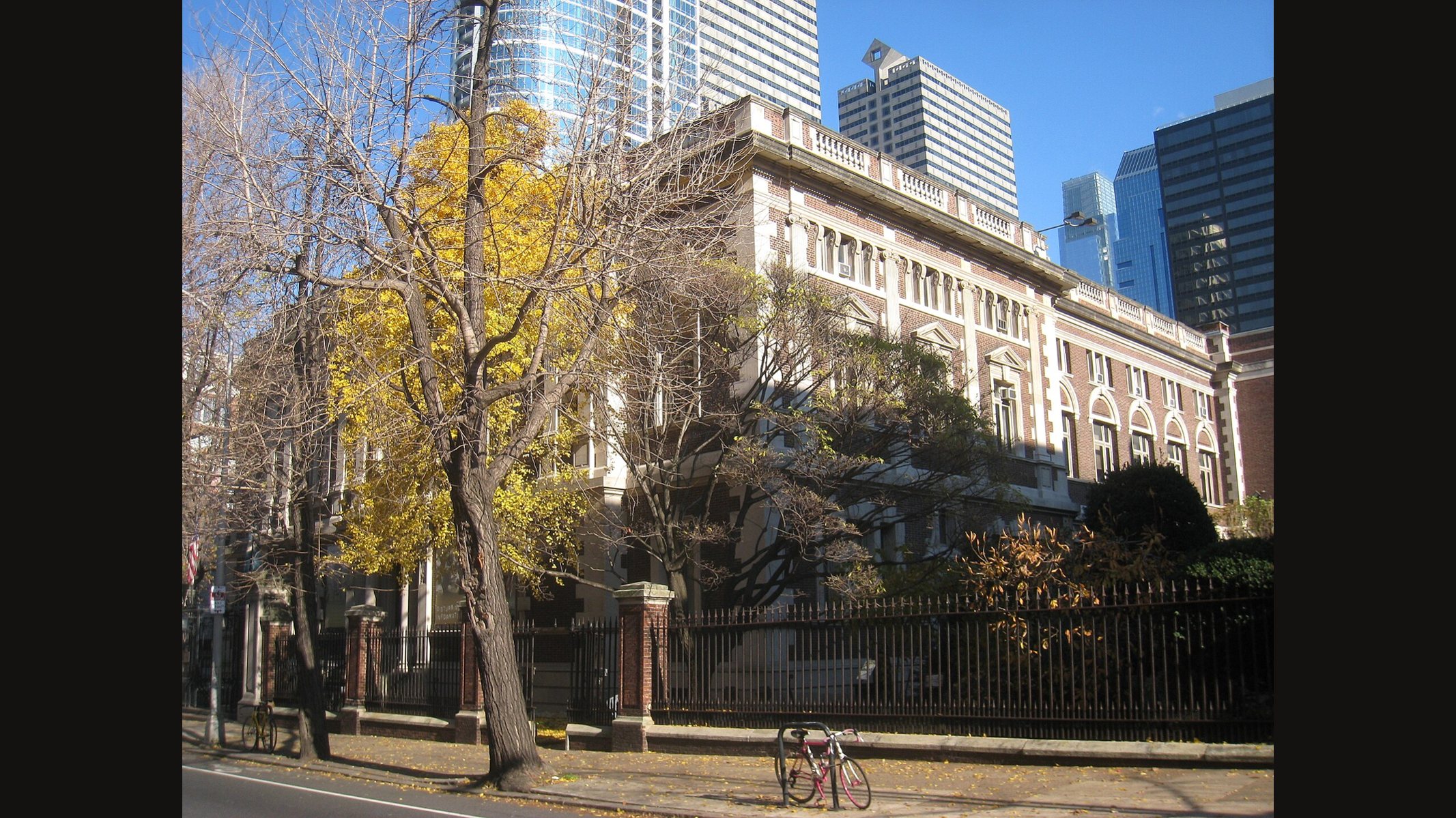
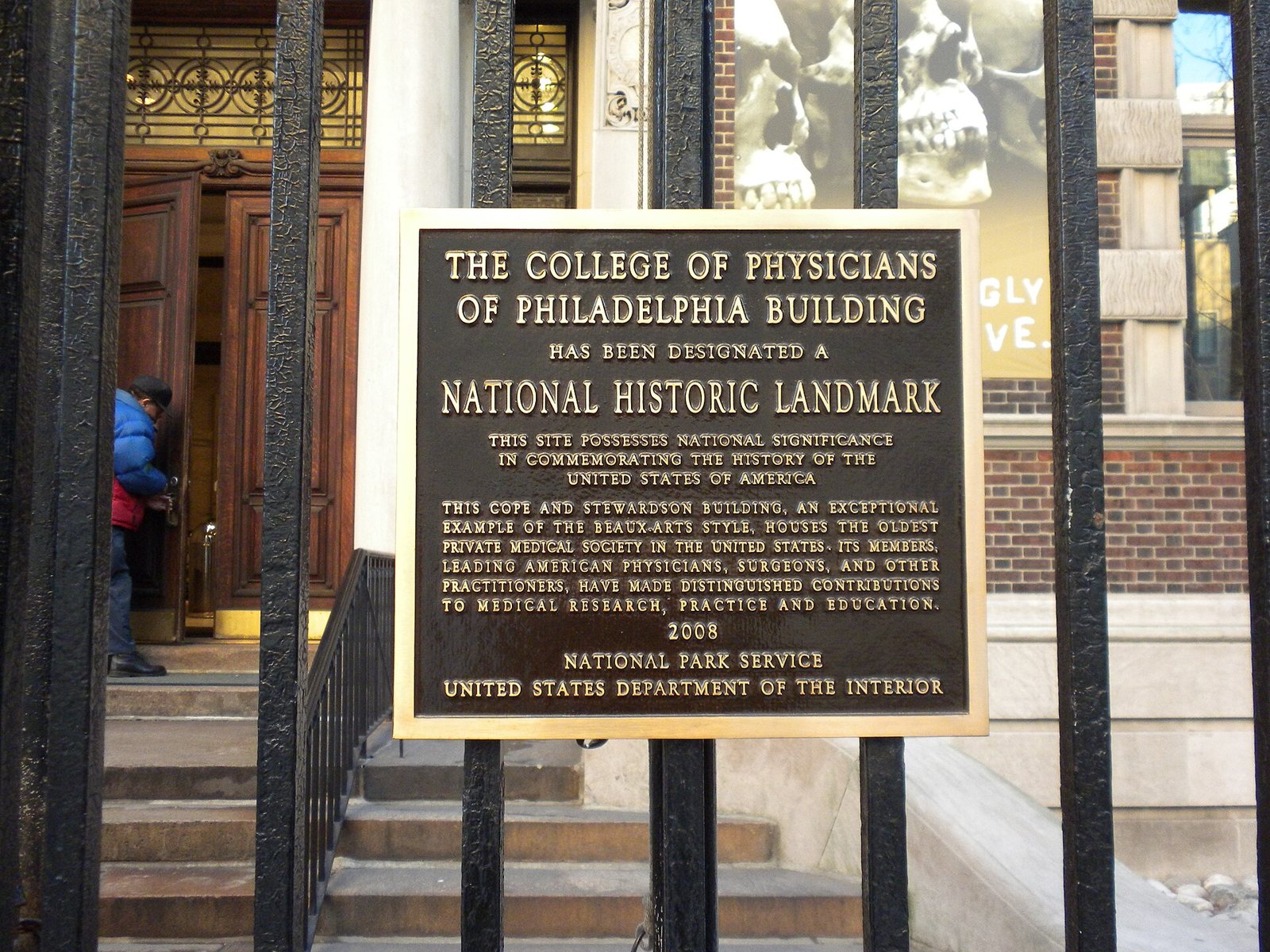
The Hyrtl Skull Collection is on permanent display at the Mütter Museum, 19 South 22nd Street, Philadelphia. These details are as listed on the museum's official visitor pages in October 2026; check the official hours and admission page before you go, because they can change.
- Hours: Wednesday through Monday, 10 a.m. to 5 p.m. The museum lists extra Tuesday hours, 3 p.m. to 8 p.m., from June 16 through October 27. It closes on Thanksgiving Day, Christmas Eve, Christmas Day and New Year's Day.
- Admission: $25 for adults; $23 for seniors, military visitors and students with valid ID; $20 for youth ages 6 to 17; free for children 5 and under.
- Tickets: Advance tickets are recommended, especially on weekends, and admission is limited to 50 guests per half hour.
- Age guidance: The museum recommends the visit for ages 10 and up, because some displays include human remains, traumatic injuries, genitalia and disfiguring conditions.
- Photos: Photography and video are not allowed in the galleries. The museum's visitor guidance explains this as respect for the real people in the collection.
- Bags and food: Large bags, luggage and strollers are not permitted, and food and drink are not allowed in the galleries.
How well do you know the Hyrtl skulls?
Answer every question to check.
Quick answers
What is the Hyrtl Skull Collection?
The Hyrtl Skull Collection is a group of 139 human skulls gathered by the Viennese anatomist Josef Hyrtl and bought by Philadelphia's Mütter Museum in 1874. Hyrtl assembled it to show the variation within European skulls and to challenge phrenology.
Are the Mütter Museum skulls real?
Yes. The skulls on the wall are the real skulls of 139 people, mostly from Central and Eastern Europe, and many still carry records of the person's age, place of origin and cause of death.
Why does the Mütter Museum have so many skulls?
The Mütter Museum grew from a 19th-century medical teaching collection that preserved real anatomical and pathological specimens for physicians and students. The Hyrtl skulls joined it as a comparative anatomy collection, and the museum now presents them within the history of medicine and the care of human remains.
Can you take photos at the Mütter Museum?
No. Photography and video are not allowed in the galleries, which the museum explains as respect for the real people in its collection.
Is the Mütter Museum worth visiting?
For people interested in anatomy, medical history, human variation and the history of museum collections, the Mütter offers real specimens with historical context. The museum recommends it for ages 10 and up, since some displays show human remains and serious medical conditions, so check the official age guidance, hours and tickets before you go.
Keep reading
The skull wall sits at the meeting point of medicine, science and memory. For the theory Hyrtl set out to disprove, read about the phrenology skull. For what careful study of a skeleton can tell about a life, see what bones tell archaeologists. And for places where skulls are kept as memorials, from chapels to charnel houses, try our story on ossuaries around the world.
Terms in this story
Tap a term to see what it means.
Hyrtl Skull Collection. The 139 human skulls gathered in Vienna by Josef Hyrtl and bought by the Mütter Museum in 1874.