

No. 013
Phrenology Heads and Skulls: What They Were For and What the Numbers Mean
A phrenology head, the white ceramic bust covered in lines, numbers and little labels, is a teaching model from phrenology, a nineteenth-century theory that the mind was made of separate faculties, each housed in its own "organ" of the brain. Phrenologists believed the size of each organ pushed the skull outward, so a trained hand could read character from the bumps and hollows of a person's head. The numbered zones mark where they believed faculties such as Benevolence, Combativeness and Secretiveness sat. Franz Joseph Gall started the theory in Vienna in the 1790s, and the Fowler brothers made it a booming business in the United States. Phrenology is not accepted science today, and historians classify it as pseudoscience.
What makes the heads worth keeping is the story they carry: lecture halls, two-cent readings, penholders, and a darker chapter in how skulls were used to rank people.
Gall's idea
Franz Joseph Gall developed the system in Vienna from the 1790s. He did not call it phrenology. His own names were "craneoscopy" and "organology," and the core claim, as the Whipple Library at the University of Cambridge describes it, was that mental faculties lived in separate parts of the brain whose size could be judged from the outside of the skull.
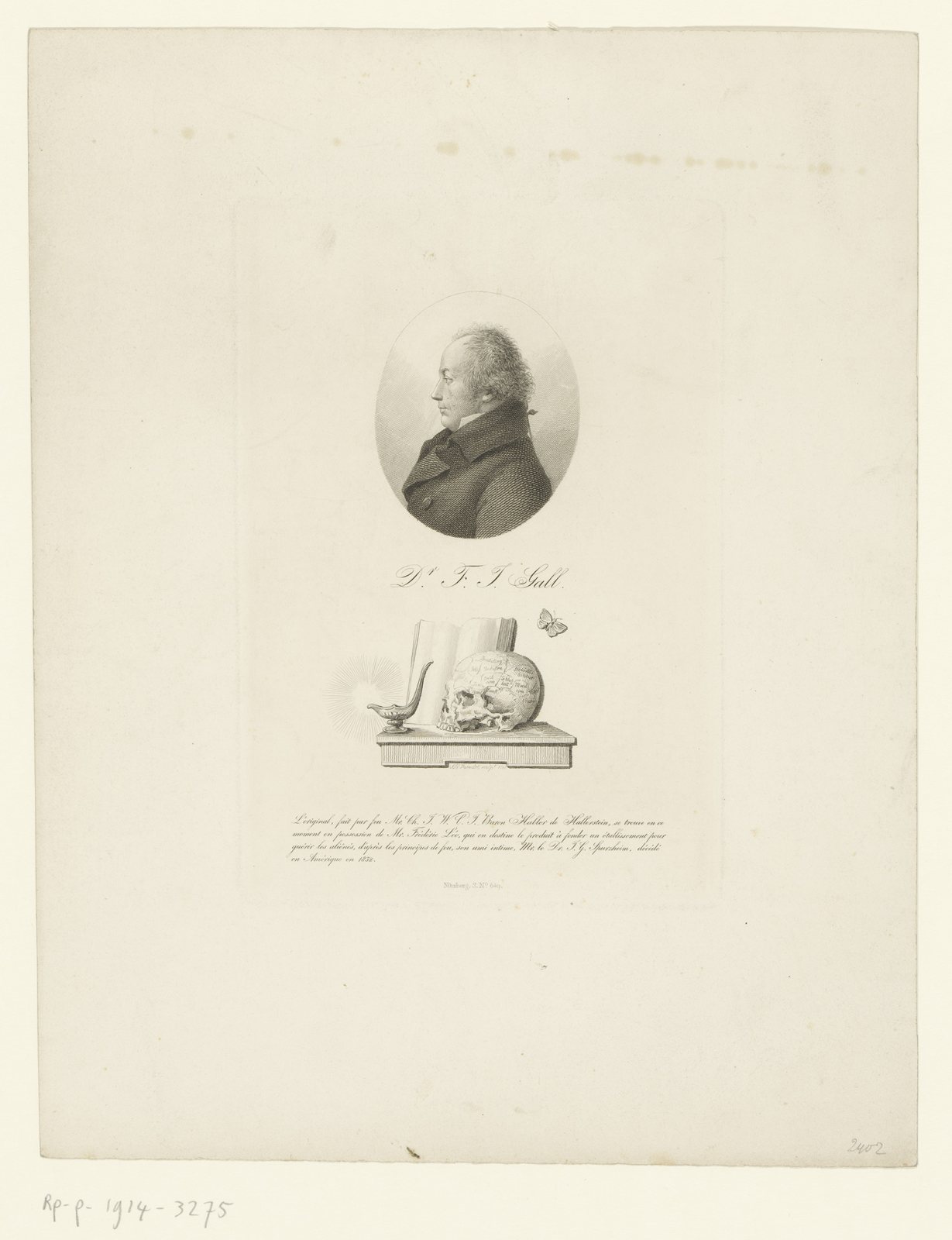
Vienna did not welcome it. According to Smithsonian Magazine, Austrian authorities prohibited Gall from promoting the theory in 1802, and in 1805 he left Austria with his former student Johann Kaspar Spurzheim. It was Spurzheim who expanded the system, popularized the name "phrenology" and carried it across Europe and to the United States. He arrived in America for a lecture tour in 1832 and died six months later.
The Fowlers make it a business
In the United States, two brothers turned phrenology into something close to a household product. Orson S. Fowler started small: as a student at Amherst College he gave phrenological readings for two cents. He then joined his brother, Lorenzo N. Fowler, and together they built a national business of lectures, head readings, books, charts, publishing and museums.
In 1836 the firm known as Fowler and Wells set up a phrenological practice, a publishing operation and a museum in Manhattan. By the 1840s their Phrenological Cabinet in New York displayed casts and portraits of famous people's heads and worked as a popular museum. Lorenzo is also associated with a London practice at Ludgate Circus, according to the Science Museum Group.
Phrenology, from Vienna to the encyclopedia
Tap or hover a step to follow the order.
1790s
Franz Joseph Gall develops the theory in Vienna.
1802
Austrian authorities prohibit Gall from promoting the theory.
1805
Gall leaves Austria with Johann Kaspar Spurzheim.
1832
Spurzheim arrives in the United States for a lecture tour and dies six months later.
1836
Fowler and Wells establish a phrenological practice, publishing operation and museum in Manhattan.
1839
Samuel George Morton publishes Crania Americana.
1861
Paul Broca publishes research on speech localization after studying a brain lesion.
1888
The Encyclopaedia Britannica publishes a detailed refutation of phrenology.
What the numbered head on your shelf is
Phrenology heads were made to teach. Their lines, numbers and labels showed students and audiences where phrenologists believed each faculty was located, and practitioners used them to explain a reading to a client. The faculties had names that still sound oddly charming, among them Benevolence, Combativeness, Secretiveness and Conjugality.
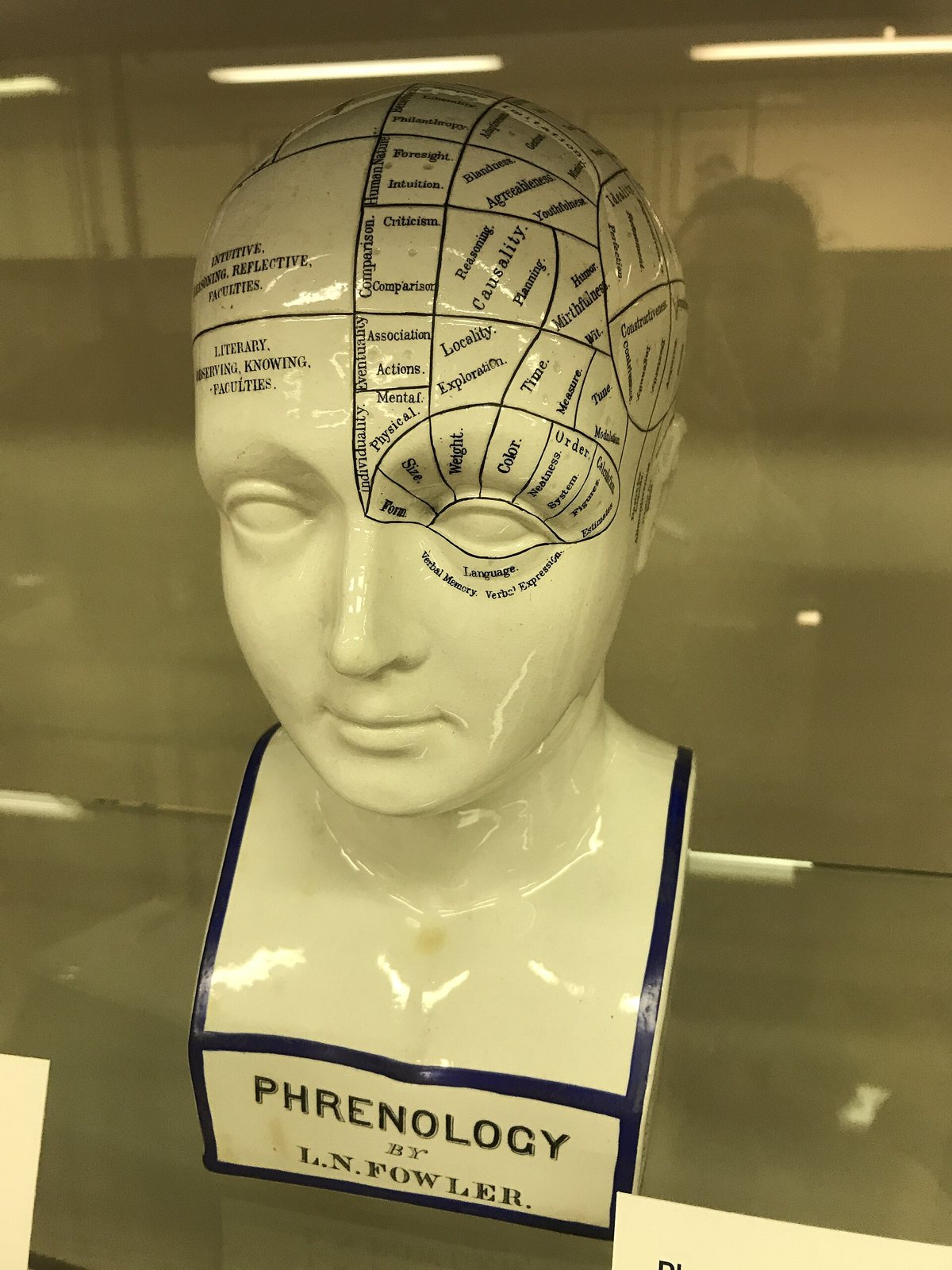
The Wellcome Collection catalogue records several makers. Early English heads were published by J. De Ville at 367 Strand, London, and dated 11 April 1821. Frederick Bridges made white earthenware heads that doubled as penholders, so a pen could rest among the faculties of the mind. Later heads are marked "PHRENOLOGY / BY / L. N. FOWLER," and Fowler's heads carried an inscription claiming that the shape of a healthy skull corresponded with a person's characteristics.
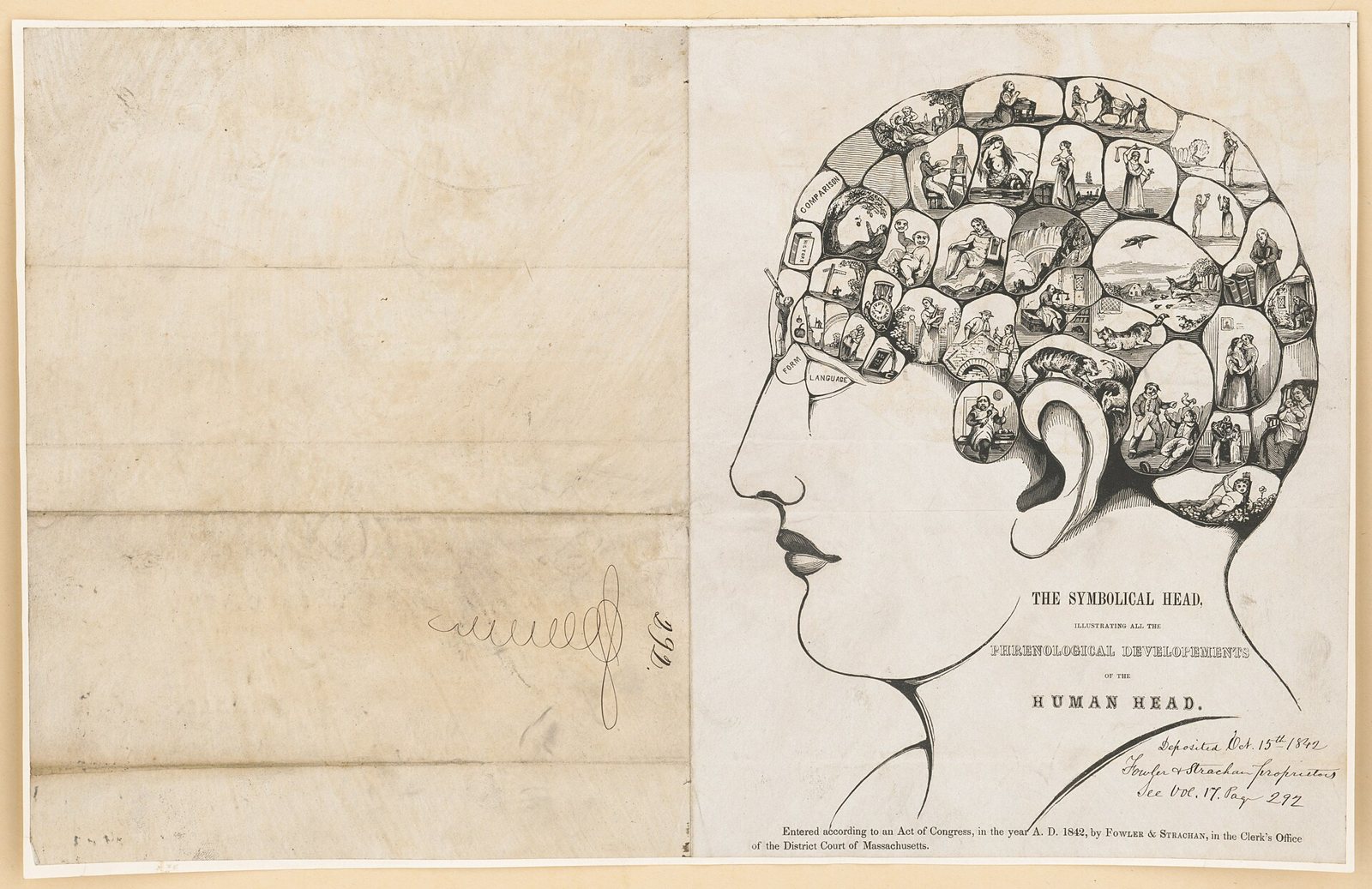
The numbers varied between systems. The Science Museum Group's Fowler head, made in England between 1879 and 1896, labels 42 supposed organs in seven groupings, including Conjugality and Sublimity. Charts could be even more theatrical: a Wellcome wood engraving from about 1845 illustrated Sublimity with Niagara Falls, Benevolence with the Good Samaritan and Destructiveness with a tiger, which is a lot of scenery for one head.
If you own a head and want to know what you have, the label is the place to start.
Reading the label on a phrenology head
Tap a card to bring it forward.
- Material: Note whether it is ceramic, earthenware, porcelain, plaster or an actual human skull.
- Maker's mark: Look for names such as L. N. Fowler, O. S. Fowler, J. De Ville or Frederick Bridges.
- Details: Record any address, date, accession number or museum collection mark.
- The numbers: Treat the numbered regions as historical phrenological labels, not medical or psychological measurements.
- Human remains: If the object is a real human skull, follow the holding institution's human-remains policy and its interpretive language.
Some heads on the market are modern. Museums Victoria in Australia records a reproduction Fowler head manufactured around 1990 to 2000, so a maker's mark alone does not date a piece.
Real skulls and lecture collections
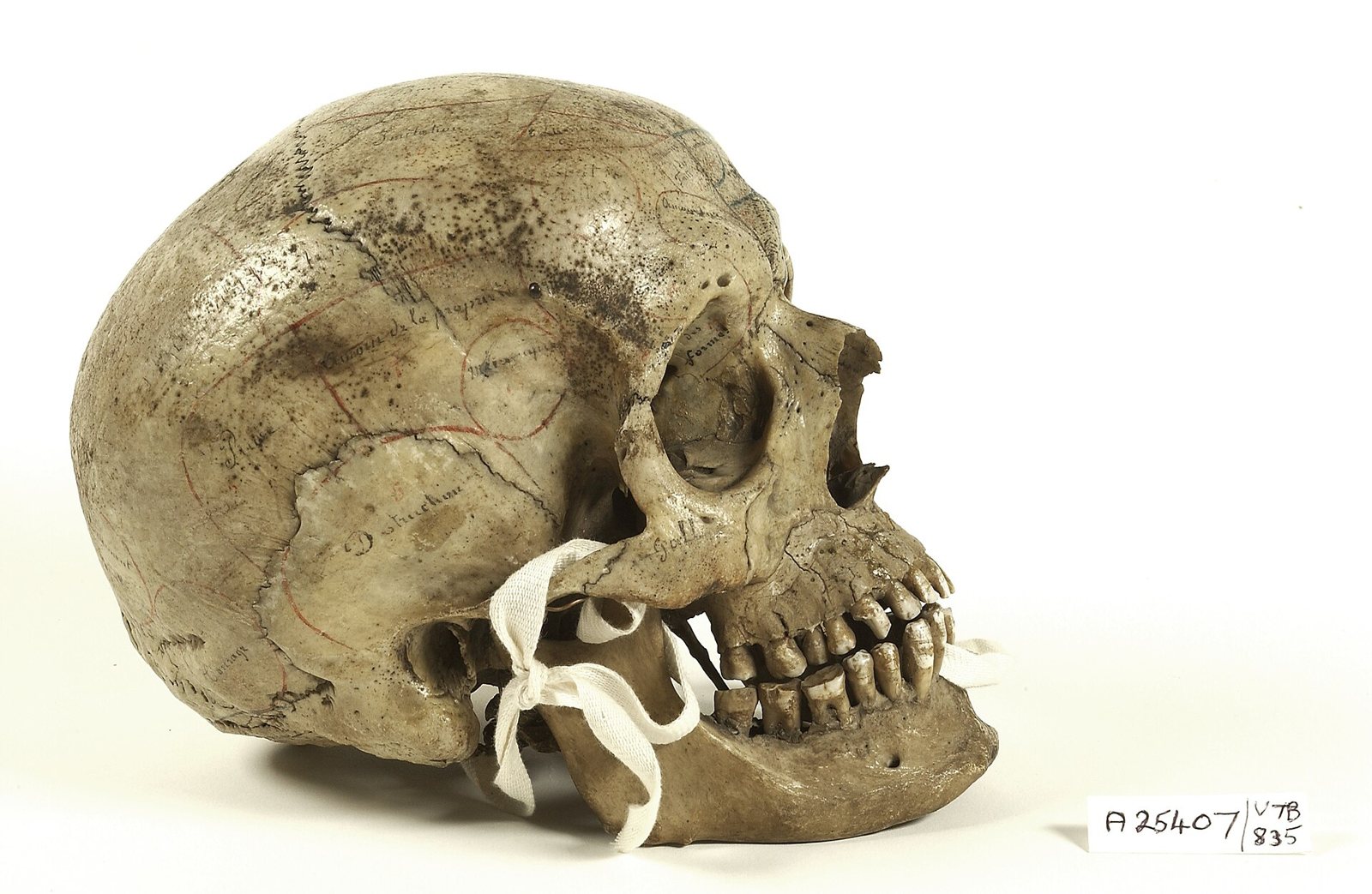
Not every phrenology object is ceramic. Real human skulls were collected, marked and displayed for lectures and comparison. The Science Museum in London records human skulls marked with phrenological divisions that came from the British Phrenological Society, and the Wellcome Collection holds an image of a human skull with phrenological markings.
The phrenologist George Combe toured the United States from 1838 to 1840, and, as the Yale School of Medicine and Slavery exhibit records, the tour ended with about 150 busts, casts and brain models deposited for public use near Yale in New Haven.
A marked skull is a person's remains, whatever the lines drawn on it. Each one has its own history of how it was obtained, and museums that hold them follow human-remains policies on how they are shown and reproduced.
What people used readings for
For a fee, a phrenologist would feel or measure your head and write out a character reading. In Britain and the United States during the nineteenth century, readings came with advice: which occupation to choose, how to educate children, even which marriage partner would suit you.
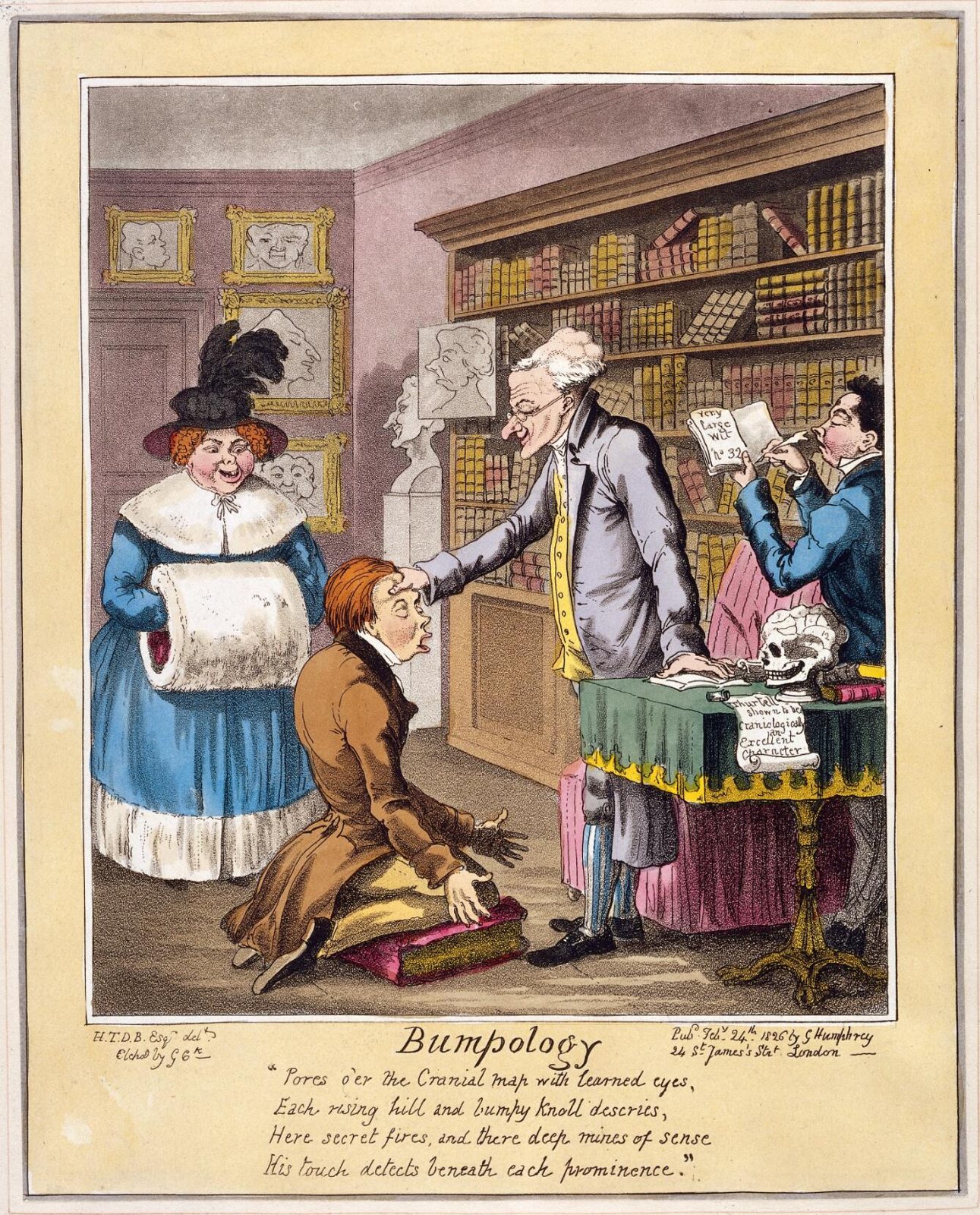
The historian Carla Bittel, studying antebellum American clients, shows that people used phrenology in different ways. Some consulted phrenologists to choose a career, pick a spouse or raise their children. Others treated an examination as a test of the practitioner, to see whether the reader could really tell them anything. Fowler readings also found their way into reform movements of the day, in education, temperance and prisons.
How phrenology was misused
The same logic that read character from a skull was turned against whole groups of people. Claims about skull shape and character were extended to racial hierarchy, criminality, gender roles and supposed inherited moral defects.
The Penn and Slavery Project at the University of Pennsylvania documents how Samuel George Morton, in his 1839 *Crania Americana*, divided humanity into five races ranked by supposed intellectual capacity, a scheme tied to his collection of 867 human crania. Yale's exhibit documents how George Combe displayed European and African skulls and expressed views that placed western Europeans above darker-skinned peoples.
These claims overlapped with craniometry, the measuring of skulls, and with the wider scientific racism of the period, which was used to support slavery, colonialism and white supremacy. Phrenology and craniometry are related but separate: one read faculties from bumps, the other compared skull measurements. Both were used to rank people.
Why phrenology was abandoned
Phrenology lost its scientific standing because its central claims could not be shown to be true. The outer shape of the skull does not reproduce a map of separate faculties in the brain beneath it, and no experiment confirmed that a trait like benevolence or combativeness sat in a single spot that could be read by touch.
The rejection came early among scientists, even as the public kept buying. The British Journal for the History of Science notes that scientific elites in Britain were already calling it quackery after it reached a wide public in the late 1810s, though it stayed popular. A historical review states that the Western scientific community had rejected organology and phrenology by 1843.
Later brain research did show that some functions are localized. In 1861 Paul Broca linked speech to a specific region after studying a brain lesion, a real finding about the brain that still did not rescue head reading, because nothing about it could be felt through the skull. The Encyclopaedia Britannica published a detailed refutation in 1888. By the twentieth century phrenology survived mainly as popular culture, historical material and decoration.
Phrenology heads today
The Smithsonian describes the nineteenth-century busts as having become "comic conversation pieces" in the twentieth century, and that is largely how they live now: as collectibles, museum pieces, educational replicas and shelf decor. Museums keep them because they document the history of popular science, medicine, psychology, publishing, race science and material culture all at once. The Science Museum Group displays a nineteenth-century Fowler bust in its medical history galleries.
A phrenology head can be enjoyed for its craft and its strange history without treating its numbered zones as a personality test. If anything, knowing the full story, two-cent readings and penholders alongside *Crania Americana*, makes it a better conversation piece.
How much do you know about phrenology?
Answer every question to check.
Questions people ask about phrenology
These are the questions people ask most often about phrenology and the numbered heads.
What is phrenology?
Phrenology was a nineteenth-century theory that separate mental faculties lived in separate "organs" of the brain and could be read from bumps on the skull. Franz Joseph Gall began it in Vienna in the 1790s, and Spurzheim and the Fowler brothers spread it through Europe and the United States.
What is a phrenology head used for?
A phrenology head was a teaching model that showed where phrenologists believed each faculty was located, and practitioners used it to explain head readings. Today such heads are used mainly for museum displays, history-of-science teaching, collecting and decor.
What do the numbers on a phrenology head mean?
Each number marks one supposed faculty in a phrenological system, such as Benevolence or Combativeness. Systems varied: the Science Museum Group's Fowler head shows 42 supposed organs in seven groupings.
Why is phrenology no longer accepted?
Phrenology is no longer accepted because investigation never showed that personality traits could be mapped to separate brain organs and read from bumps on the skull. The outside of the skull does not reliably map the brain underneath, and modern findings that some functions are localized do not validate head reading.
Does skull shape or size reveal personality or intelligence?
No, the shape of the skull does not reveal personality, and phrenology's claims to the contrary were rejected by scientists by the 1840s. Claims about skull size and intelligence were used in nineteenth-century race science, such as Samuel George Morton's rankings, and are part of the history of scientific racism.
How did phrenology become racist?
Its claims about skull shape and character were extended to rank races, and figures such as George Combe and, in the related field of craniometry, Samuel George Morton used skull collections to argue for racial hierarchy. Those ideas were used to support slavery, colonialism and white supremacy.
Where to go next
Phrenology tried to read the mind from the outside of the skull. For a real skull that changed how scientists think about the brain, read about Phineas Gage's skull, and for the bone itself, start with human skull facts. If your phrenology head is heading for a shelf, skull home decor has ideas for living with skulls around the house.
Terms in this story
Tap a term to see what it means.
Phrenology. A nineteenth-century theory that mental faculties lived in separate brain "organs" whose size could be read from the skull; today it is classed as pseudoscience.