

No. 015
Phineas Gage's Skull: The Man Who Survived an Iron Rod Through His Head
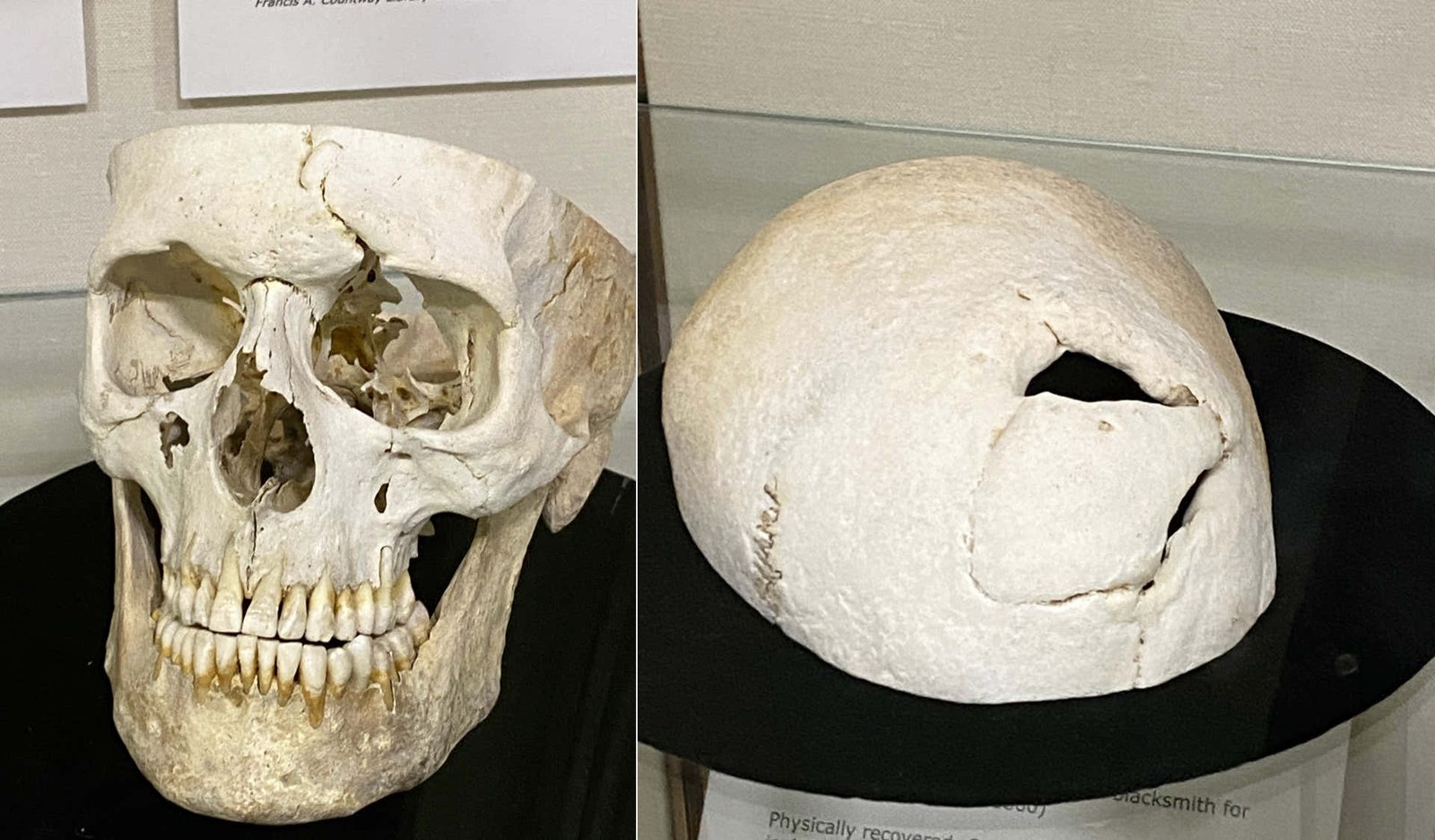
On September 13, 1848, near Cavendish, Vermont, an explosion drove a tamping iron 3 feet, 7 inches long that weighed 13.25 pounds through the head of a 25-year-old railroad foreman named Phineas Gage. The iron went in through his left cheek, passed through the front of his brain and came out through the top of his skull. He survived, stayed conscious enough to talk with the doctors, and lived for nearly twelve more years. Today his skull, a life cast of his face and the iron itself are held by the Warren Anatomical Museum at Harvard Medical School's Countway Library in Boston.
The skull is famous for what it shows. The man behind it deserves to be known for more than one bad day on a railroad line.
September 13, 1848
Gage was a construction foreman on the Rutland and Burlington Railroad, working near Cavendish. Part of the job was preparing explosive charges, and the powder was packed down with a tamping iron, an iron bar about 1.25 inches in diameter.
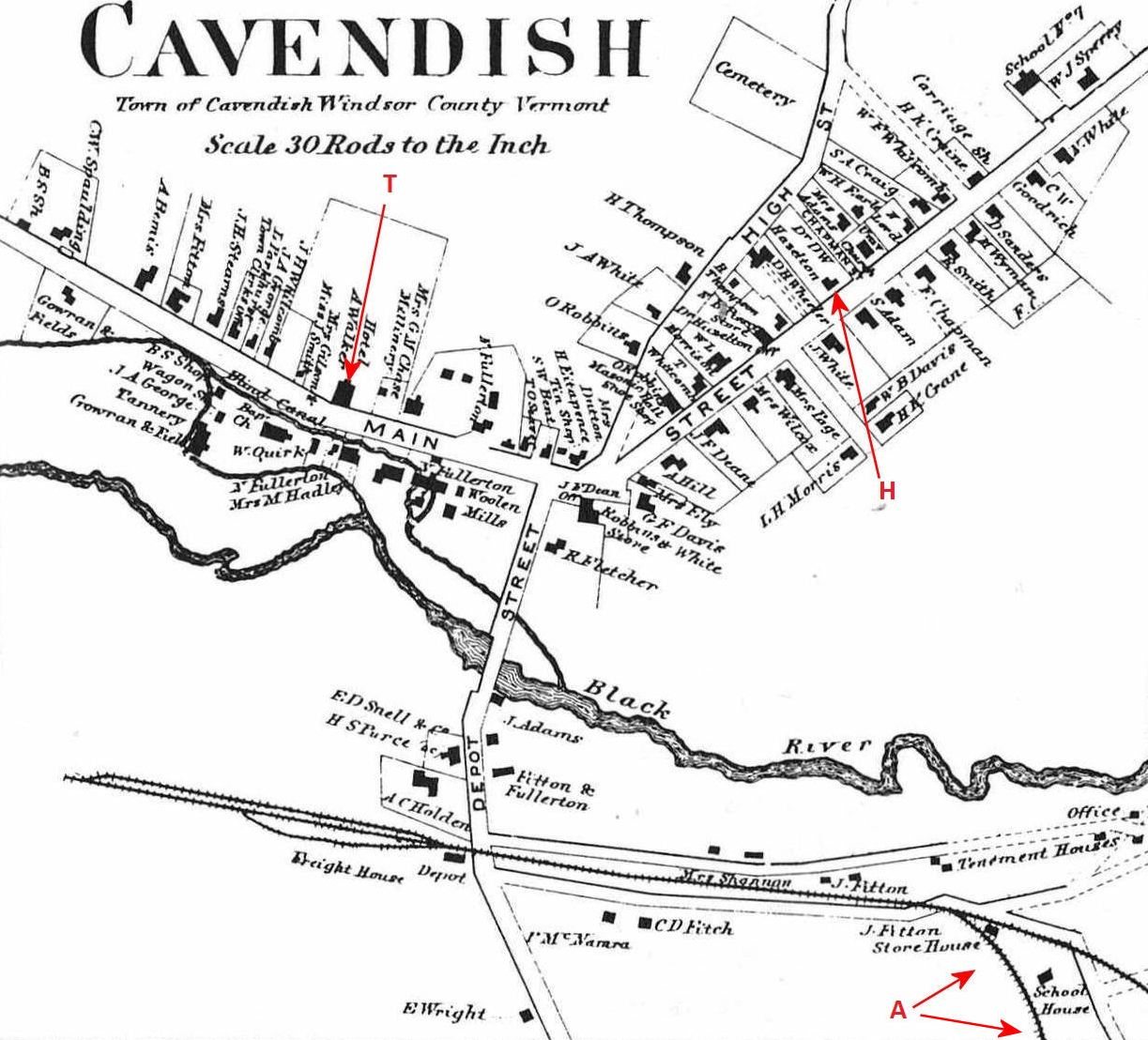
On September 13 the charge Gage was preparing went off too soon, and the blast propelled the tamping iron. According to Harvard Medical School, it went through his left cheek, passed through his skull and the frontal part of his brain, and exited through the top of his head.
Tap or hover a row to highlight it.
| Measurement | Value |
|---|---|
| MeasurementLength | Value3 feet, 7 inches |
| MeasurementWeight | Value13.25 pounds |
| MeasurementDiameter | ValueAbout 1.25 inches |
| MeasurementPath | ValueLeft cheek, skull and frontal brain, out through the top of the head |
What happened next is the part people find hardest to believe. Gage survived the initial injury and remained conscious enough to communicate with the physicians who treated him. He lost the sight of his left eye permanently. The doctor who cared for him, John Martyn Harlow, later published the principal medical account of the case, and almost everything known about Gage's recovery comes through him.
What changed after the accident
Harlow and people who knew Gage reported marked changes in how he behaved. Harlow wrote about profanity, poor planning and reduced respect for others, and friends and employers described him as less dependable and less socially restrained. His former employers did not give him back his old position as foreman.
These are historical reports, written by a small number of people, and they are the heart of why Gage became famous. They are also all we have. There was no psychological testing in 1848, and no one followed him with a notebook for the rest of his life. So, the most accurate way to read them is as what Harlow and Gage's acquaintances observed, not as a complete profile of the man.
The life he lived afterward
Gage did not disappear after the accident. He lived for nearly twelve more years. He worked in New Hampshire, then traveled to Chile, where he drove stagecoaches. Later he moved to California and lived with relatives in San Francisco. He died there in May 1860, at age 36, after suffering seizures.
The historian Malcolm Macmillan's work, summarized by Smithsonian Magazine and in an entry he wrote with Kihlstrom, makes a few points clear. The evidence is limited. Harlow's account is the main record. And popular retellings exaggerated the story into one of a man who became permanently violent, drunken or incapable. His years driving stagecoaches suggest a more complicated course than the legend allows, though the surviving evidence cannot tell us exactly how his personality changed over time.
Two photographs of Phineas Gage
For a long time no portrait of Gage was known. Then two were identified.
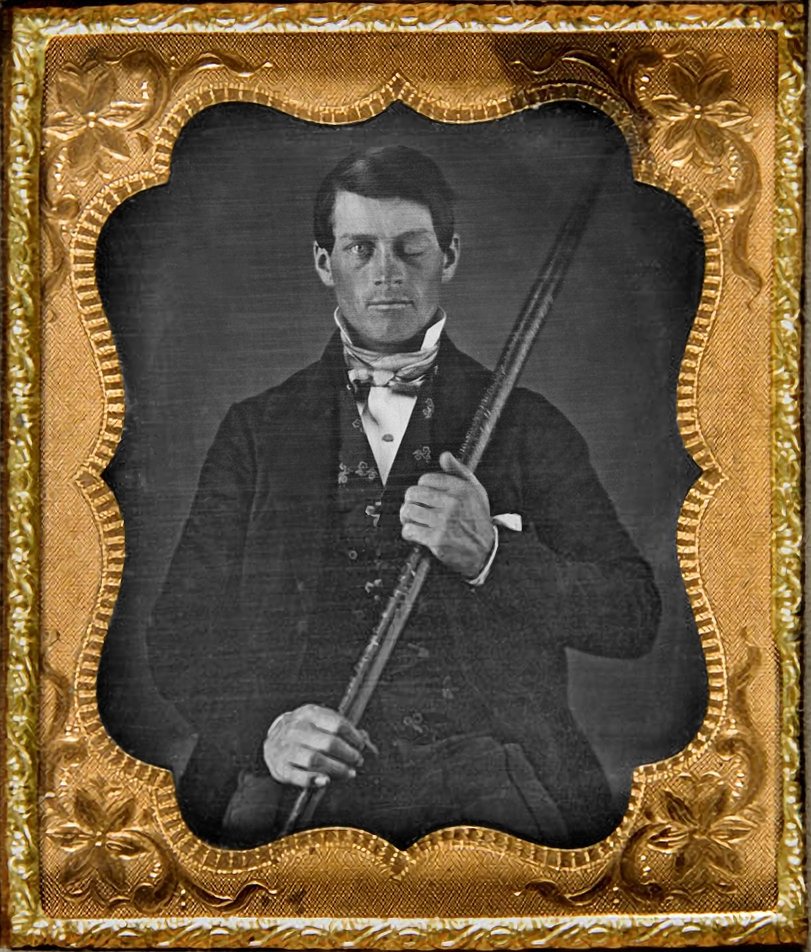
The first was a daguerreotype owned by the collectors Jack and Beverly Wilgus. It was first believed to show an injured whaler. In 2008, after a discussion on Flickr connected the object in his hands with the famous tamping iron, the image was compared with the skull, life cast and iron at the Warren Museum, and the man was identified as Gage. The identification was published in 2009 in the Journal of the History of the Neurosciences. A second portrait, kept by a family, was identified in 2010.
In both, Gage looks well dressed and composed, holding the rod that nearly killed him. The portraits do not settle what he was like to work with or live with. They do give good reason for caution about the old caricature of a broken man, and they put a face to the skull.
Phineas Gage, from the railroad to the scanner
Tap or hover a step to follow the order.
September 13, 1848
An explosion drives a tamping iron through Gage's head near Cavendish, Vermont.
1860
Gage dies in San Francisco at age 36, after seizures.
1867
His body is exhumed, and Dr. John Martyn Harlow obtains the skull and the tamping iron.
1868
Harlow donates the skull and the iron to Harvard's Warren Anatomical Museum.
1994
Hanna Damasio and colleagues publish a reconstruction of the injury in Science.
2004
Ratiu and colleagues publish thin-slice CT and 3D reconstructions of the skull.
2009
The identification of the Wilgus daguerreotype is published in the Journal of the History of the Neurosciences.
2010
A second family-held portrait is identified as Gage.
How the skull came to Harvard
In 1867, seven years after Gage's death, his body was exhumed, and Harlow obtained the skull and the tamping iron. In 1868 Harlow donated both to the Warren Anatomical Museum at Harvard Medical School.
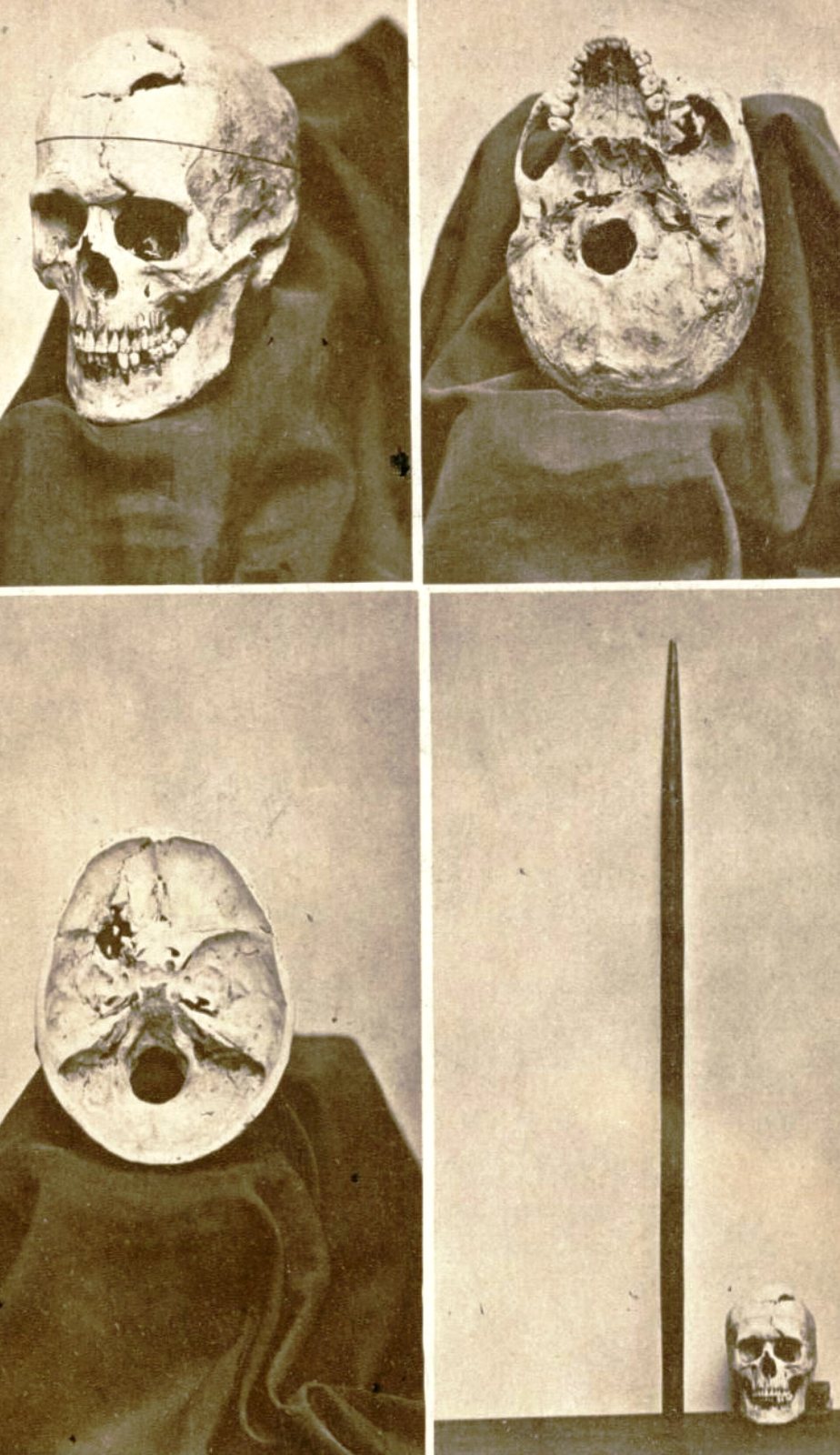
The museum is now part of the Francis A. Countway Library of Medicine's Center for the History of Medicine. Alongside the skull and the iron it holds a life cast of Gage's face. The skull still shows the substantial damage the iron did to the frontal bone. The museum identifies Gage as one of neurology's most famous cases.
Reading the skull with modern tools
There is no scan of Gage's brain, so modern researchers reconstruct his injury from the skull, the iron and the old measurements. Three studies stand out.
In 1994, Hanna Damasio, Thomas Grabowski, Ralph Frank, Albert Galaburda and Antonio Damasio published a study in Science that used measurements from the skull and modern neuroimaging methods to reconstruct the probable injury. They concluded that the damage involved prefrontal regions on both the left and right sides, not only a small area on the left.
In 2004, Ratiu and colleagues published "The Tale of Phineas Gage, Digitally Remastered" in the Journal of Neurotrauma. They used thin-slice computed tomography and computer-generated 3D reconstructions to model the skull and the path the rod took.
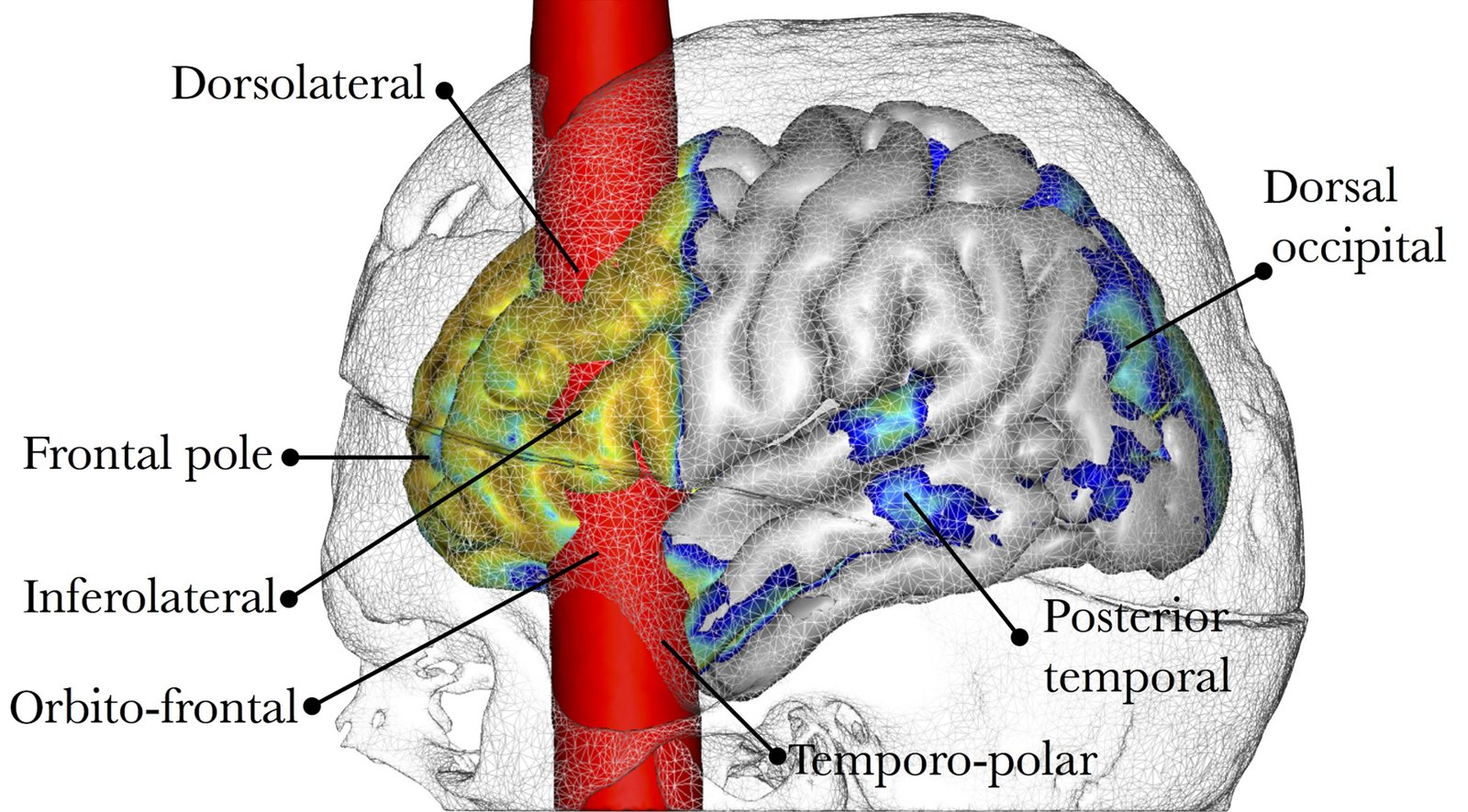
In 2015, Thiebaut de Schotten and colleagues revisited Gage alongside other famous neurological cases, modeling the path of the rod and the pattern of disconnection in the brain's white matter, the wiring that links one region to another. An openly licensed image of that path is on Wikimedia Commons.
All three are reconstructions built from the skull, historical records and anatomical modeling. None of them is a scan of Gage's living brain.
Why neuroscience still talks about him
Gage's case became influential because it connected damage to the front of the brain with changes in judgment, emotional control and social behavior. It challenged the idea that the brain worked as one undifferentiated whole, and it helped support later research into specialized brain systems. Researchers today still use the case to study white-matter connections and how people recover socially after injury.
The case has limits, and the scholars who study it are the first to name them. There was no modern neurological examination, no brain scan at the time and no complete record of his behavior over the years. Gage matters as a historical case and as a basis for anatomical reconstruction, but his story cannot by itself prove a simple one-to-one map between one patch of brain and a complex personality trait.
Seeing the skull in Boston
Gage's skull, life cast and tamping iron are held by the Warren Anatomical Museum in the Countway Library of Medicine at Harvard Medical School in Boston, Massachusetts. Access and display arrangements change, so confirm current access with the Countway Library before you plan a visit around seeing them.
How well do you know the Phineas Gage story?
Answer every question to check.
Questions people ask about Phineas Gage
These are the questions that come up most often about Gage and his skull.
Where is the Phineas Gage skull?
Phineas Gage's skull is held by the Warren Anatomical Museum at Harvard Medical School's Francis A. Countway Library of Medicine in Boston, Massachusetts. The collection also includes his life cast and the tamping iron, which his doctor, John Martyn Harlow, donated in 1868. This answers the Spanish question *dónde está el cráneo de Phineas Gage* as well.
Did Phineas Gage survive?
Yes, Gage survived the 1848 accident and lived for nearly twelve more years. He worked in New Hampshire, drove stagecoaches in Chile and later lived with relatives in San Francisco, where he died in May 1860 at age 36 after seizures.
What happened to Phineas Gage's personality?
His doctor and the people around him reported that he became less dependable and less socially restrained, with profanity, poor planning and less respect for others. Historians led by Malcolm Macmillan caution that the evidence is sparse and that later retellings exaggerated these changes; his years as a stagecoach driver suggest a more complicated course.
Did the iron rod really go through his head?
Yes, the iron went in through his left cheek and exited through the top of his skull, and the damage is still visible on the skull at Harvard. The bar was 3 feet, 7 inches long and about 1.25 inches across.
Was Phineas Gage conscious after the accident?
Yes, he remained conscious enough to communicate with the physicians who treated him. He did, however, permanently lose the sight of his left eye.
Where to go next
Gage's skull sits in a long line of skulls that taught people something, rightly or wrongly, about the head. For a much older story of opening the skull on purpose, read the history of trepanation. For the nineteenth-century idea that the bumps of the skull revealed character, see phrenology skulls and heads, and for the bone itself, start with human skull facts. And if you work night shifts in medicine yourself, you might like our Night Shift Nurse skull tee.
Terms in this story
Tap a term to see what it means.
Tamping iron. A long iron bar used to pack explosive powder into a drilled hole; one passed through Gage's head in 1848.