

No. 012
What Happened to Oliver Cromwell's Head? From a Spike to a Secret Grave
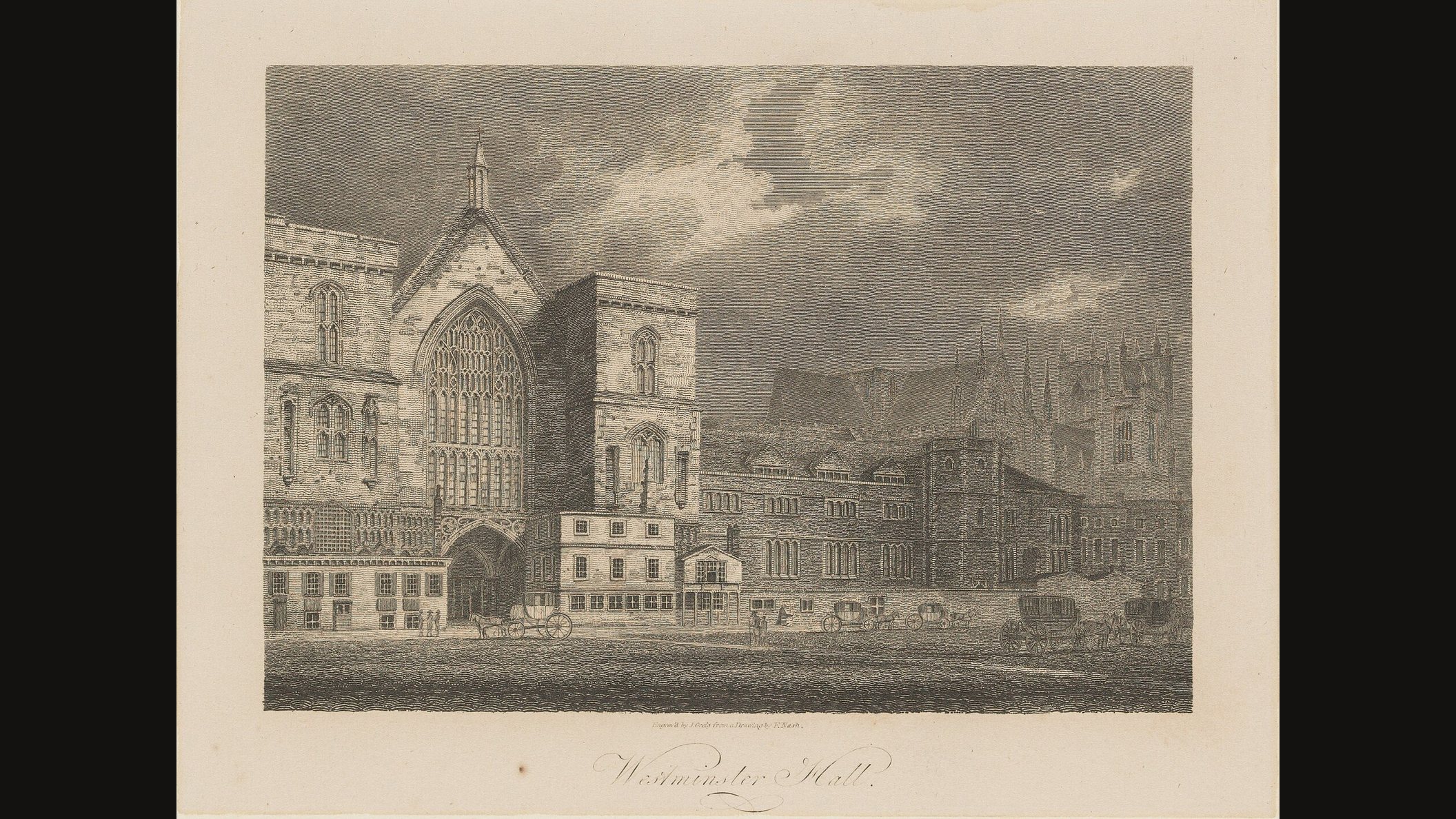
Oliver Cromwell died in 1658 and was buried in Westminster Abbey, but he did not stay there. After the monarchy returned, his body was dug up and given a posthumous execution at Tyburn on 30 January 1661, the anniversary of King Charles I's execution, and his head was set on a spike above Westminster Hall in London, where it stayed until about 1685. From there it slipped into private hands, was shown to paying visitors and was kept by one family for generations. Since 25 March 1960, the head identified as Cromwell's has been buried at Sidney Sussex College, Cambridge, in a spot the college keeps private.
A death, a burial and an execution three years later
Oliver Cromwell, who had ruled England after the execution of King Charles I, died on 3 September 1658. Historic Royal Palaces records that he was privately buried in Westminster Abbey on 10 November 1658.
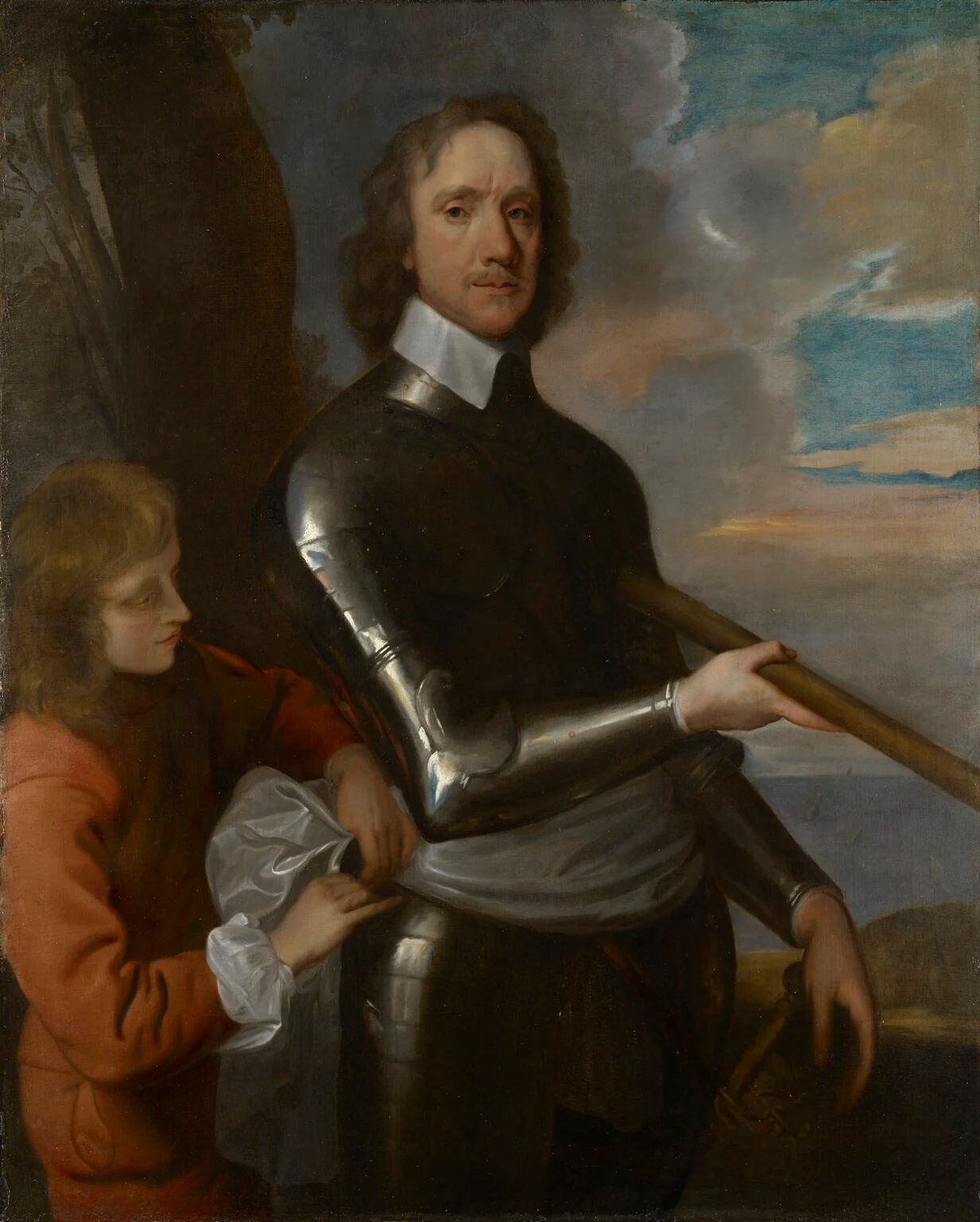
Politics did not leave him there. In 1660, Charles II returned to the throne in the settlement known as the Restoration, and the new government turned on the men it held responsible for the death of his father, Charles I, who had been tried and executed. The Cromwell Association describes what happened next. On 30 January 1661, the bodies of Cromwell and two other leading figures of the Commonwealth, John Bradshaw and Henry Ireton, were exhumed from the Abbey. They were taken to Tyburn, the old place of execution in London, hanged and then beheaded. Cromwell's body was reportedly buried in a pit at Tyburn, and his head went on public display.
The date was chosen with care. It was the anniversary of Charles I's execution, so the punishment of the dead men repeated, in reverse, the event they were blamed for.
Oliver Cromwell's head, 1658 to 1960
Tap or hover a step to follow the order.
3 September 1658
Oliver Cromwell dies
10 November 1658
Cromwell is privately buried in Westminster Abbey
30 January 1661
His body is exhumed, hanged at Tyburn and beheaded, and the head is set above Westminster Hall
About 1685
The head is no longer displayed above Westminster Hall
1787
James Cox buys the head for £118
1799
Cox sells it to the Hughes brothers for £230
1814 or 1815
Josiah Henry Wilkinson acquires the head
1934
Karl Pearson and Geoffrey Morant publish their identification study
25 March 1960
The head is buried at Sidney Sussex College, Cambridge
Why the head went on a spike above Westminster Hall
The spike was a message, and the choice of building made it louder. Westminster Hall was the place associated with the trial of Charles I. Putting the head of the man who had led the regicide, the killing of a king, above that hall turned the scene of the trial into a scene of royal retribution.
Historians read the punishment as part of a bigger story. Blair Worden, in his work on the Restoration, and John Morrill, among the historians the Cromwell Association lists for this period, place the return of the monarchy within the collapse of England's republican experiment. That collapse was shaped by political instability, quarrels over the power of the army and of Parliament, and competing ideas about authority and religion. The posthumous execution of Cromwell, Bradshaw and Ireton was a public act of retribution against the leading figures behind Charles I's trial. It also told everyone watching that the restored monarchy did not accept the Commonwealth as a legitimate government.
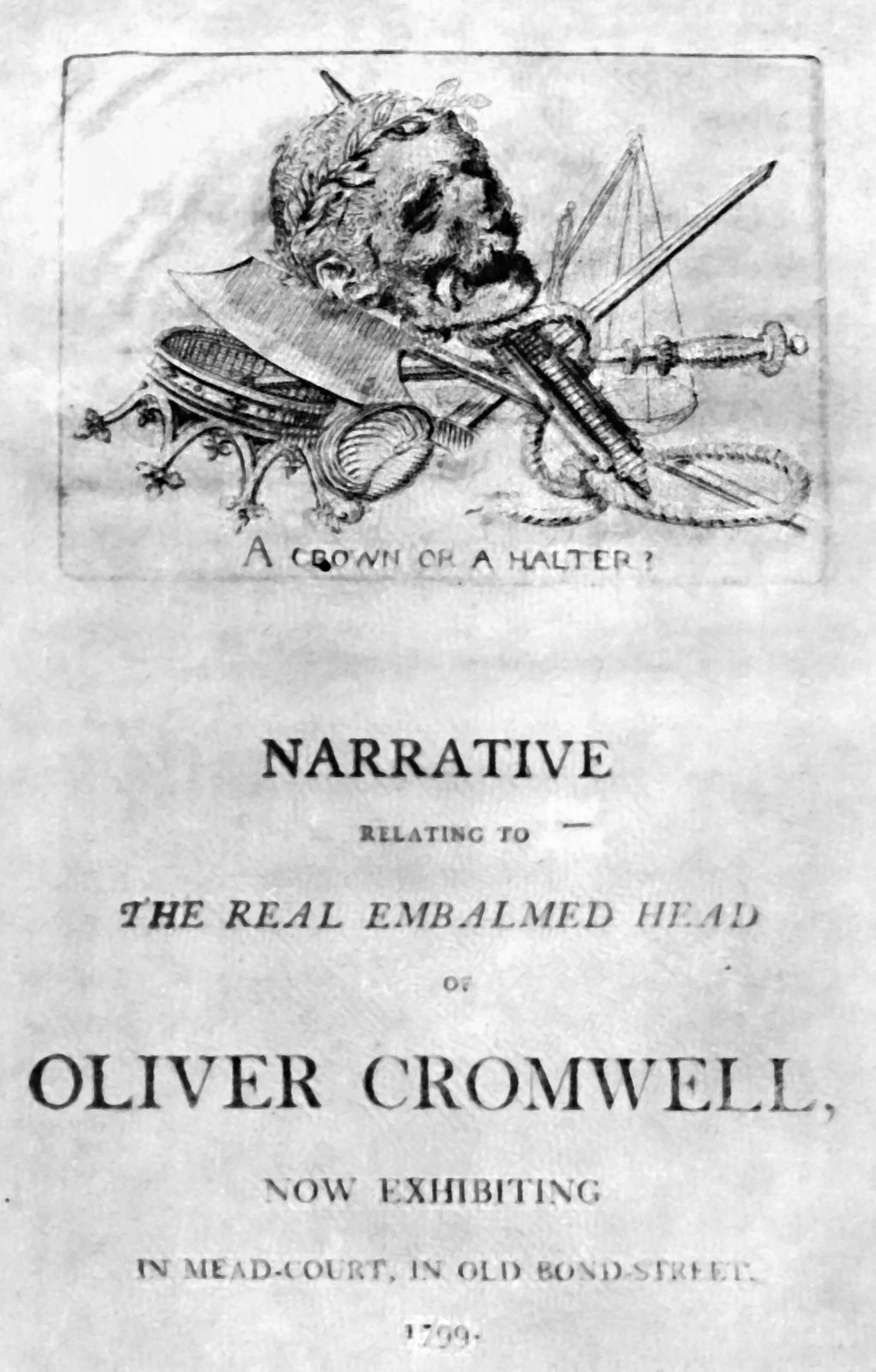
The image stuck. The London Museum holds an 1825 print by Robert Grave and James Caulfield showing the head on its spike above Westminster Hall, surrounded by an axe, a crown, a sword and the scales of justice. More than a century and a half after the event, the head on the hall still carried its political meaning.
From a spike to a private curiosity
The head came down from Westminster Hall around 1685, and here the record grows thin. The Cromwell Association account has gaps, especially between 1684 and 1710 and again between 1710 and 1775, so the story of those years is uncertain and any neat, unbroken chain of owners for that period should be treated with caution. What is clear is that the head had become a private curiosity, something people owned, sold and showed.
The trail picks up in the late eighteenth century. Around 1775, a man named Samuel Russell tried to sell it to William Elliston, Master of Sidney Sussex College in Cambridge, the college Cromwell had once attended. That sale did not go through, but the college would come back into the story nearly two centuries later.
According to a 1996 account in the Los Angeles Times, James Cox bought the head in 1787 for £118. In 1799 he sold it for £230 to the Hughes brothers, who put it on show at Mead Court in Old Bond Street, London, and charged visitors two shillings and sixpence to see it. For a few years, the head of a former ruler of England was an exhibit with an admission fee.
In 1814 or 1815, Josiah Henry Wilkinson bought it from the daughter of the last surviving Hughes brother. It stayed with the Wilkinson family for several generations. They kept it in a velvet-lined box and sometimes showed it to visitors. That is why historians still call it the Wilkinson head.
It is worth pausing on what this was. Behind the auctions and the shows was the head of a man who had been buried with honors, then exhumed and displayed as a punishment, and then sold like an antique. The later owners looked after it, but it was a person's remains the whole time.
Is it really Cromwell's head?
By the twentieth century, the obvious question was whether the Wilkinson head was genuine. Two scholars set out to test it. Karl Pearson and Geoffrey Morant published their study, "The Wilkinson Head of Oliver Cromwell and Its Relationship to Busts, Masks and Painted Portraits," in the journal Biometrika in 1934, according to the UCL Special Collections record. A book-length version followed from the Biometrika Office in 1935, which the Wellcome Collection catalogs.
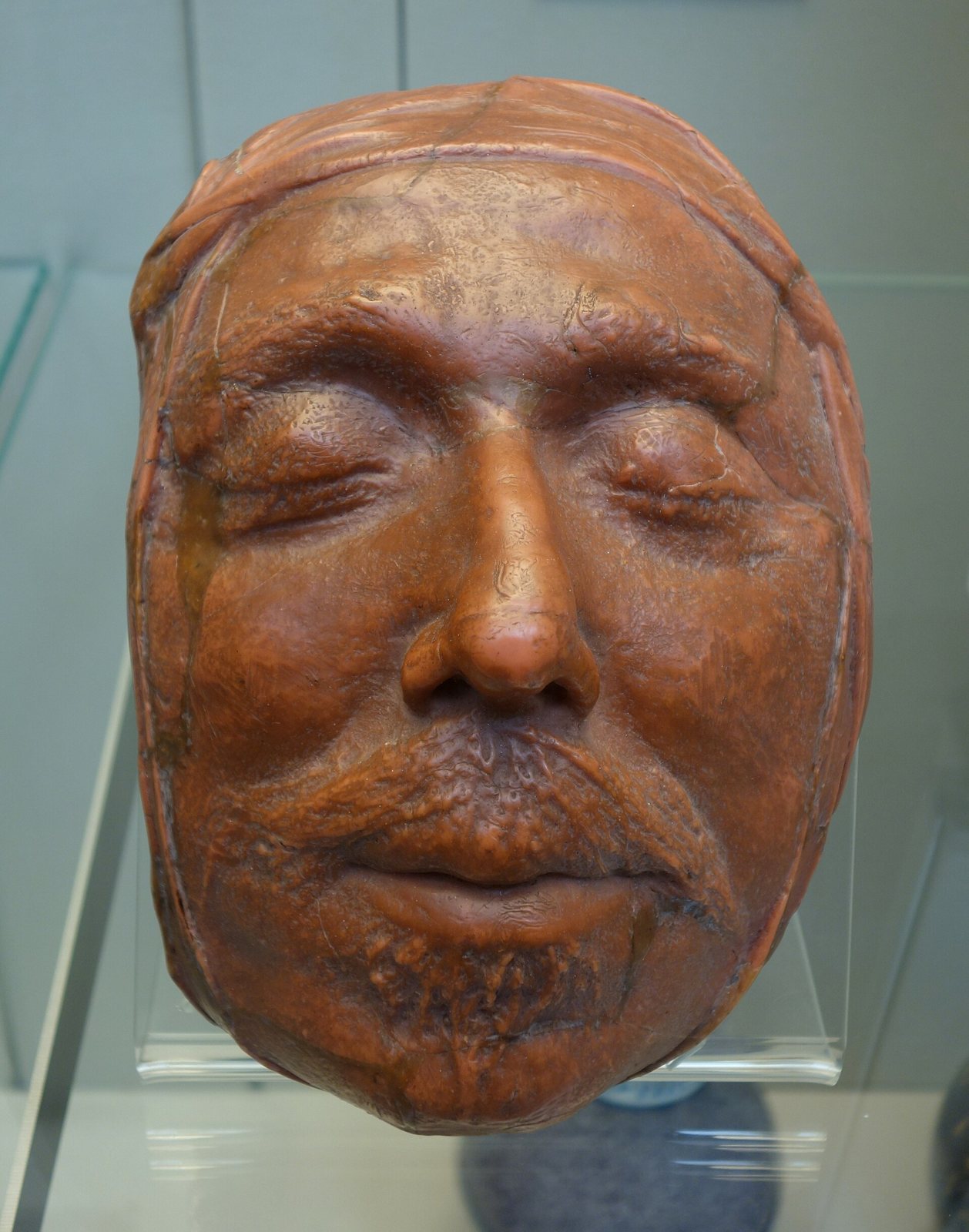
They compared the head with portraits, busts, masks and historical descriptions of Cromwell. Their examination pointed to an adult male of about Cromwell's age. They saw evidence consistent with embalming and with a beheading after death. The facial features matched likenesses made in his lifetime, including a depression associated with Cromwell's well-known wart. They concluded that the evidence gave a "moral certainty" that the Wilkinson head was Cromwell's.
That phrase is the right way to hold the answer. It was a historical and anatomical identification, not a modern DNA test. The case that the head is Cromwell's is strong, but it rests on circumstantial evidence rather than proof.
How well do you know the story of Cromwell's head?
Answer every question to check.
A quiet burial at Sidney Sussex College
The head's travels ended in Cambridge. Cromwell had studied at Sidney Sussex College in 1616 and 1617, and in 1960 Dr Horace N. S. Wilkinson transferred the head to the college. It was buried there on 25 March 1960.
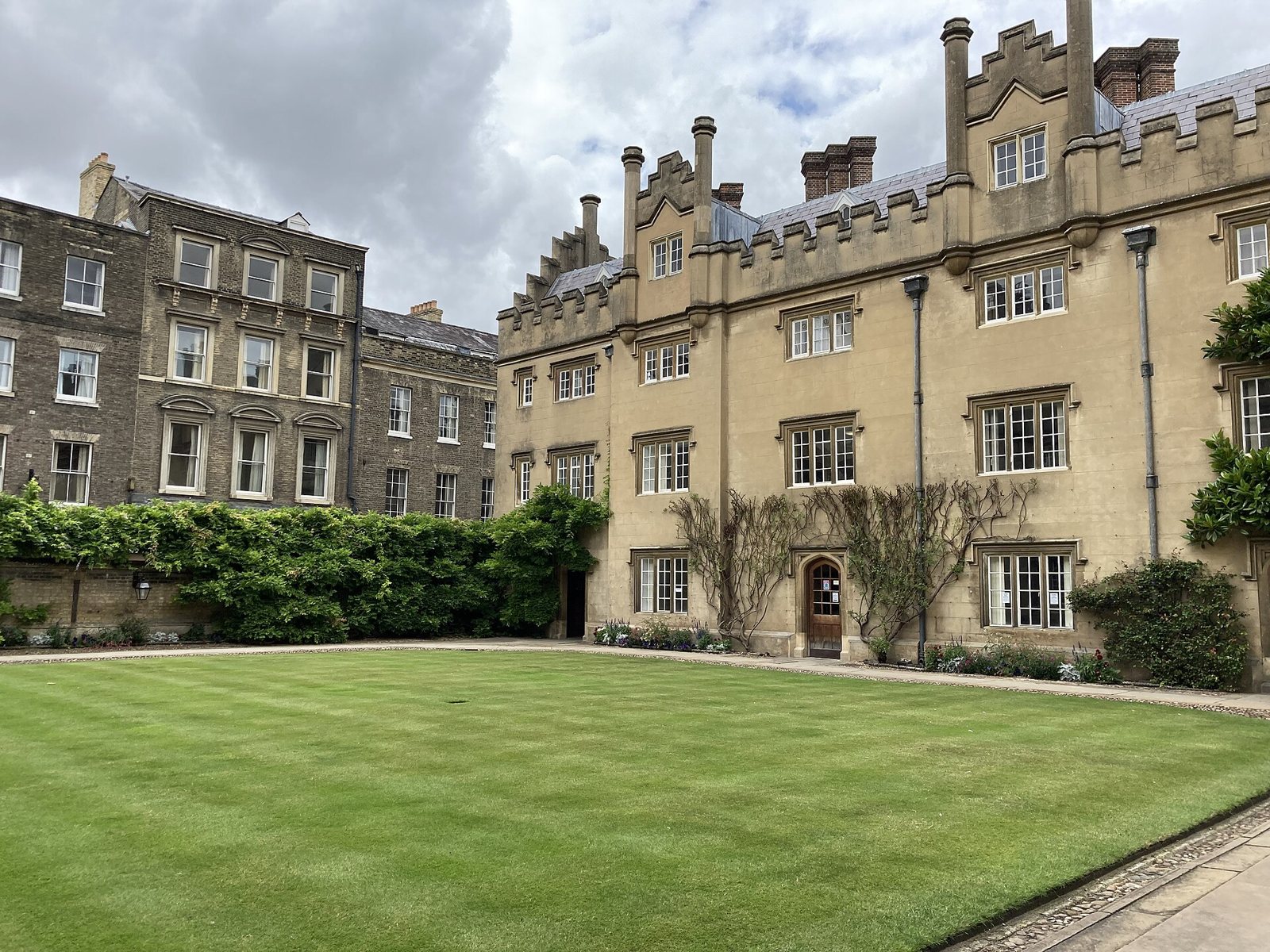
The ceremony was private. According to an account by Patrick Comerford, it was attended by the college chaplain, the Master, three fellows, Horace Wilkinson and his sister. The exact place was deliberately kept secret. A plaque in the antechapel records that the head was buried "near to this place," and it goes no further than that.
The college has kept to that decision. Its 2022 disclosure log states that it has no maps, charts or descriptions identifying the burial location, and confirms that a chapel plaque records that Oliver Cromwell's head is buried nearby. After three centuries of being displayed, sold and shown, the head was finally allowed to rest undisturbed. The kind thing for a curious visitor to do is the same as the college's choice: read the plaque, and leave the rest private. If you hope to visit the chapel, check access with Sidney Sussex College directly.
Questions people ask about Cromwell's head
These are the questions that come up most often.
Why was Cromwell's head put on a spike?
It was put on a spike as part of the Restoration government's posthumous punishment of the man who had led the trial and execution of Charles I. Displaying it above Westminster Hall, the site associated with that trial, made the act of royal retribution as public as possible.
Where is Oliver Cromwell's head now?
The head identified as Cromwell's is buried at Sidney Sussex College, Cambridge, where he studied in 1616 and 1617. It was buried on 25 March 1960, and the exact spot is kept private, marked only by a plaque saying it lies "near to this place."
Who owned Cromwell's head?
Its owners included James Cox, who bought it in 1787, the Hughes brothers, who showed it in London from 1799, and the Wilkinson family, who kept it from 1814 or 1815 until 1960. Parts of the record before 1775 are uncertain.
Was the Wilkinson head really Cromwell's?
Karl Pearson and Geoffrey Morant concluded in 1934 that the evidence gave a "moral certainty" that it was. Their identification rested on comparisons with portraits, busts and masks and on signs of embalming and beheading, not on DNA, so it is strong but circumstantial.
Why is the location of Cromwell's head secret?
Sidney Sussex College chose to keep the exact spot private when the head was buried in 1960. The college says it has no maps or descriptions of the location, which leaves the remains undisturbed.
Where to go next
Cromwell's head is one of several famous skulls whose travels say a lot about the people who handled them. For another famous skull with a disputed history, read about Mozart's skull. For the most famous fictional skull in English, see Alas, poor Yorick, and for the old idea of a skull as a prompt to think about death, read what memento mori means.
Terms in this story
Tap a term to see what it means.
Restoration. The return of the monarchy in England in 1660, when Charles II took the throne after the Commonwealth.