

No. 138
Haydn's Skull: Why the Composer Was Buried With Two Skulls
Joseph Haydn's tomb in Eisenstadt, Austria, holds two skulls because his own was stolen. A few days after the composer was buried in Vienna in 1809, two men fascinated by phrenology, Joseph Carl Rosenbaum and Johann Peter, had his grave opened and his head taken so they could study the skull. When Prince Nikolaus II Esterházy had Haydn's body moved to Eisenstadt in 1820, the skull was missing, and a substitute skull was buried with him instead. Haydn's real skull came back only in 1954, and the substitute was left where it was. Both now rest in his tomb in the Bergkirche (Eisenstadt parish history).
That is the whole story in one paragraph. The long version runs through a prison administrator's private collection, a prince's reburial that did not go to plan, a society of music lovers in Vienna and a procession through the village where Haydn was born, and it is one of the odder routes any composer's remains have taken. Here it is in order.
A composer's death in Vienna, 1809
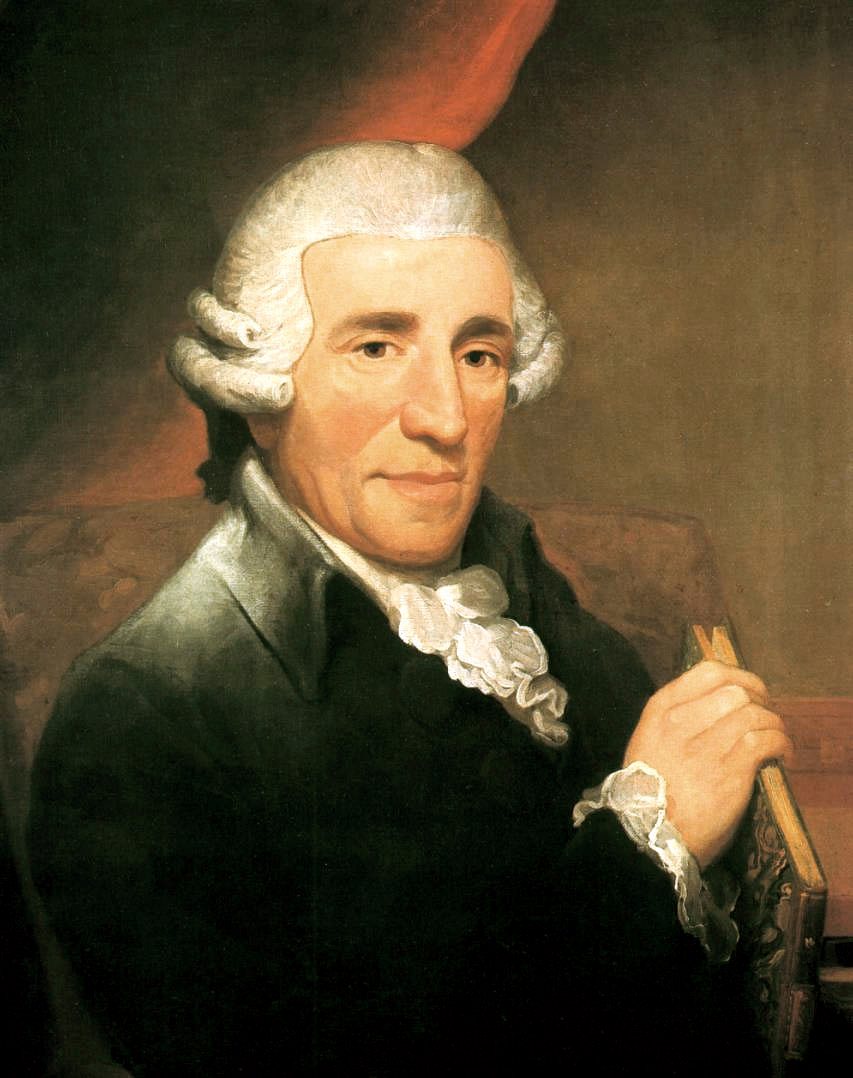
Joseph Haydn died in Vienna on 31 May 1809, at the age of 77, and was buried at the Hundsturm cemetery on 1 June (Eisenstadt parish history; Neugebauer).
Who stole Haydn's skull, and why
The grave did not stay closed for long. The Eisenstadt parish history dates the theft to 4 June 1809. Other accounts give slightly different timing, describing the theft as happening a few days after the burial or eleven days afterward, so the exact date depends on which account you follow (J. Cuthbert Hadden, *Haydn*).
The two men behind it were Johann Peter, an administrator of the Austrian provincial prisons, and Joseph Carl Rosenbaum, who had formerly been connected with the Esterházy household. With accomplices, they arranged for the grave to be opened and the head removed (Eisenstadt parish history).
Their reason was phrenology. This was the theory, associated with the physician Franz Joseph Gall and popular at the time, that a person's mental abilities and character could be read from the shape of the skull. Peter and Rosenbaum wanted to see whether Haydn's musical genius had left a mark on his cranium, a distinctive feature sometimes described as a "bump of music" (Neugebauer; ORF, "Haydns Kopf"). Phrenology has long since been discredited, but in 1809 it drew serious attention. Our story on the phrenology skull explains how the theory worked and why it fell apart.
The medical historian Wolfgang Neugebauer, writing about "the case of Joseph Haydn," and the biographer J. Cuthbert Hadden both tell the theft this way, as the project of phrenology enthusiasts.
1820: the reburial that found a missing head
The skull stayed hidden for eleven years. Then, in 1820, Prince Nikolaus II Esterházy ordered Haydn's remains moved from Vienna to Eisenstadt. When the coffin was opened, the skeleton was there, but the skull was not (Eisenstadt parish history). Mental Floss repeats a detail popular in later tellings: Haydn's wig was still in place, with no head beneath it (Mental Floss).
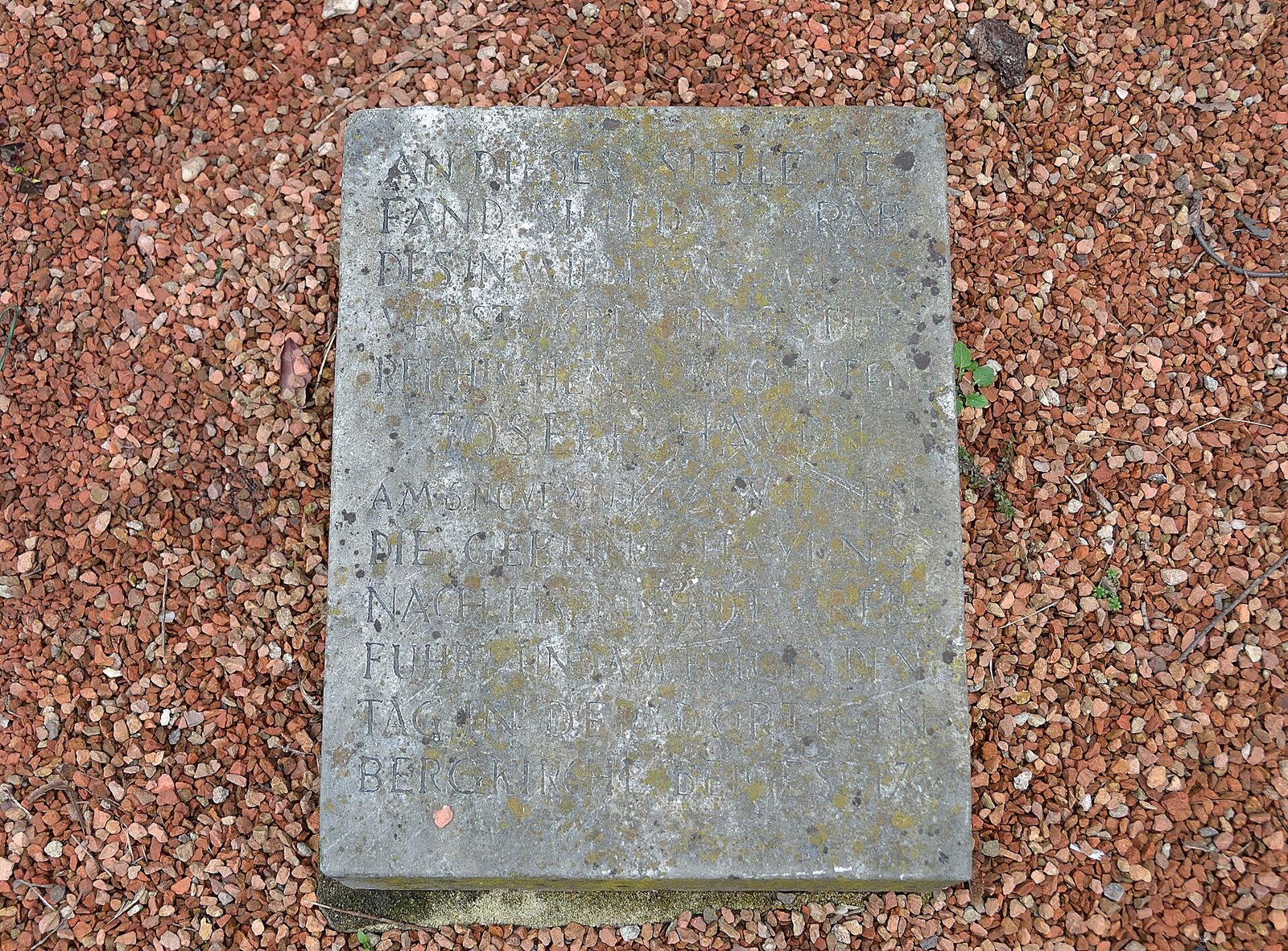
Suspicion fell on Rosenbaum and Peter. A skull was eventually handed over to the authorities, but later accounts identify it as a substitute rather than Haydn's own (Neugebauer). It was that substitute that went into the coffin. On 7 November 1820, Haydn's body was reburied in the crypt of the Bergkirche in Eisenstadt with the substitute skull, while the genuine skull stayed hidden, out of official hands.
Nobody knows whose skull the substitute is. It belonged to a real person whose identity is unknown, and that person has now shared the composer's tomb for more than two centuries.
The skull's long road through private hands
The real skull, meanwhile, had a life of its own. Johann Peter kept it in his collection, and it later passed to Rosenbaum (Hadden). After Rosenbaum's death in 1829, historians trace it through a series of private and anatomical collections, including those of the physician Karl Heller and the anatomist Carl von Rokitansky.
In 1895, the skull was given to Vienna's Gesellschaft der Musikfreunde, the Society of the Friends of Music, as James Fenton recounts in *The Guardian* (James Fenton, The Guardian). There is a certain logic to it: after nearly ninety years with phrenologists and anatomists, Haydn's skull ended up with musicians. It stayed with the society until the negotiations that finally sent it to Eisenstadt.
The writer Colin Dickey places Haydn's story within a wider history of grave robbing and phrenology in his book *Cranioklepty*, and Haydn was not alone (Colin Dickey, *Cranioklepty*). Our stories on the skulls of Mozart, Goya, Schiller and Descartes follow other famous heads that took unexpected routes after death.
1954: Haydn's skull comes home
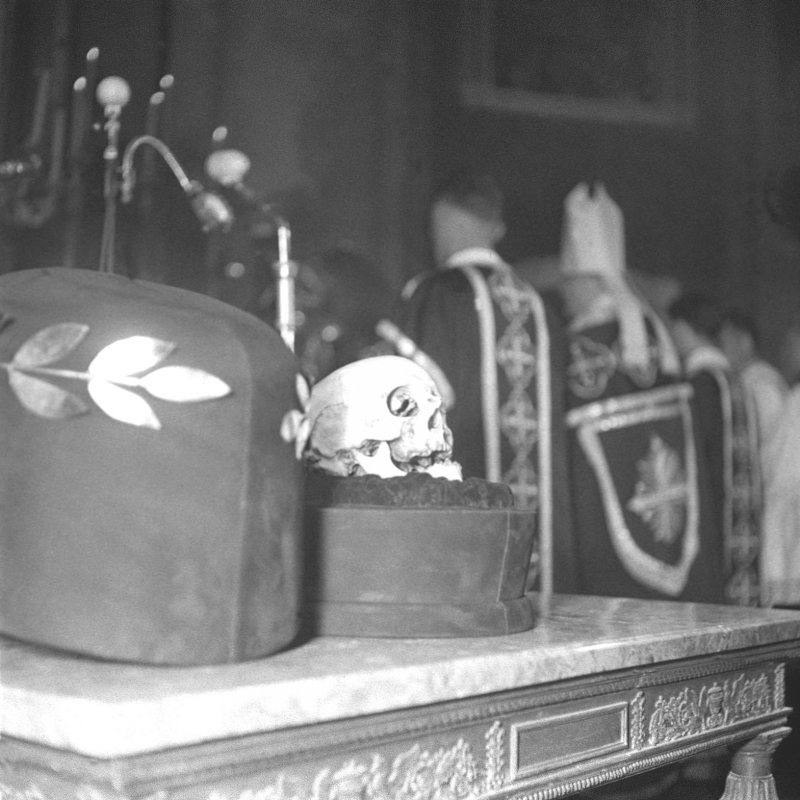
It took until 1954 for the skull and the skeleton to be reunited. On 5 June 1954, the skull was displayed at the Musikverein in Vienna, blessed by Cardinal Theodor Innitzer, and carried in procession through Rohrau, the village where Haydn was born, before continuing to the Bergkirche in Eisenstadt. There it was placed with the rest of his remains (Eisenstadt parish history; City of Eisenstadt). Haydn had died 145 years earlier.
Why the second skull stayed in the tomb
The obvious question is why nobody took the substitute out. Accounts attributed to Karl and Irene Geiringer give the reason: the substitute skull's identity was unknown, and it had been part of Haydn's burial for more than a century, so it was not removed (Mental Floss). The unknown person had, in effect, become part of the grave.
So, the tomb today holds Haydn's authentic skull and the unidentified substitute together. It is an unusual arrangement, but it is also a respectful one. Rather than disturb one set of remains to make the other's story tidier, the people who reunited Haydn left both at rest.
The travels of Haydn's skull
Tap or hover a step to follow the order.
31 May 1809
Joseph Haydn dies in Vienna, aged 77.
1 June 1809
He is buried at the Hundsturm cemetery in Vienna.
June 1809
The skull is removed by phrenology enthusiasts and their accomplices; the parish history dates it to 4 June.
1820
Prince Nikolaus II Esterházy orders the remains moved to Eisenstadt; the skull is found missing and a substitute is handed over.
7 November 1820
Haydn's body is reburied in the Bergkirche crypt in Eisenstadt with the substitute skull.
1829
Rosenbaum dies; the genuine skull continues through private and anatomical collections.
1895
The skull is given to the Gesellschaft der Musikfreunde in Vienna.
5 June 1954
The skull is blessed in Vienna, carried through Rohrau and reunited with Haydn's remains in the Bergkirche.
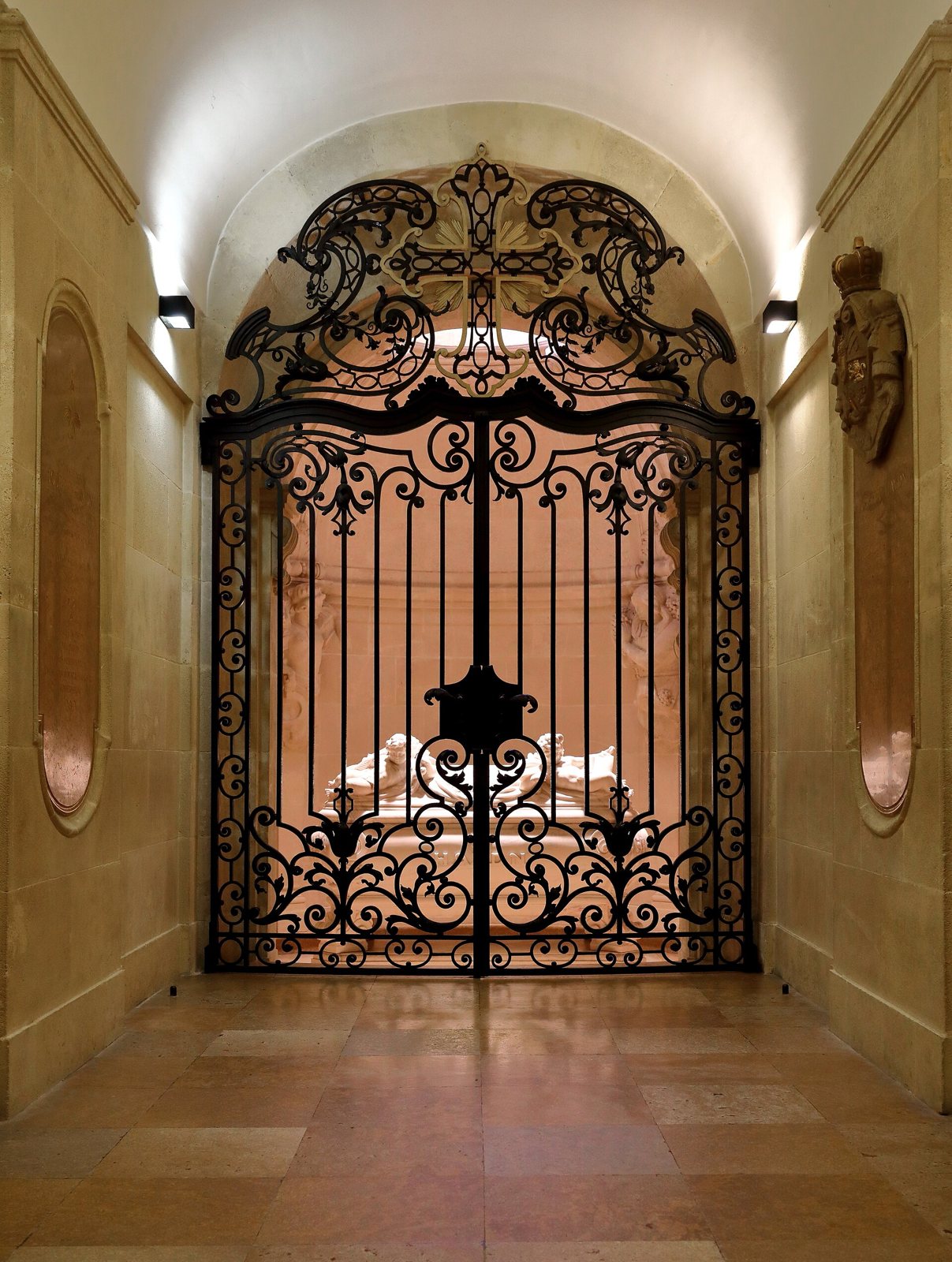
Visiting the Haydn Mausoleum in Eisenstadt
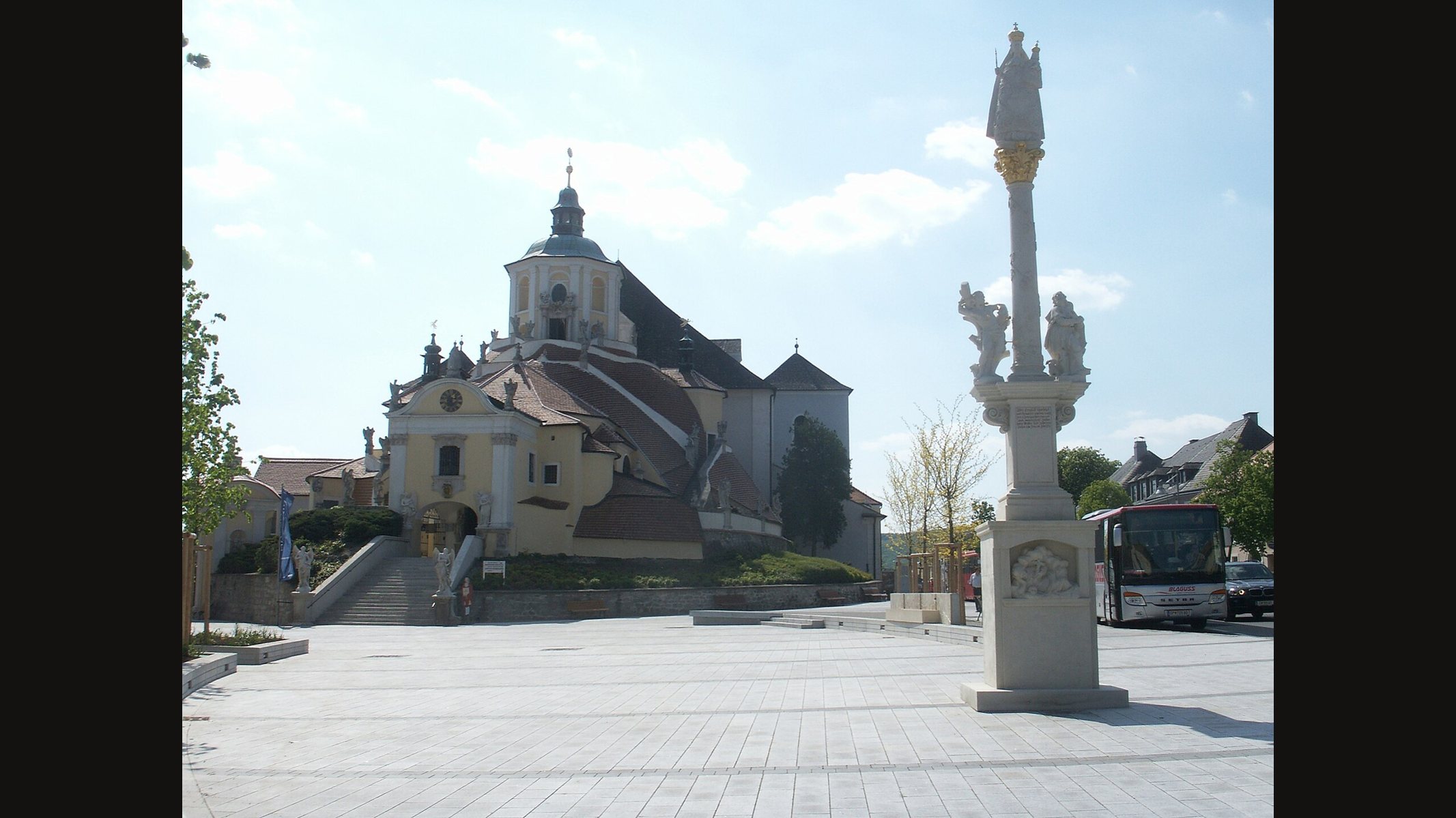
Haydn's tomb is the Haydn Mausoleum, beneath the north tower of the Bergkirche at Joseph-Haydn-Platz 1, 7000 Eisenstadt, Austria. The hours below are the official 2026 schedule published by Burgenland Tourism (Burgenland Tourism).
Tap or hover a row to highlight it.
| Period | Days | Hours |
|---|---|---|
| Period28 March to 31 October | DaysMonday to Saturday | Hours09:00 to 17:00 |
| Period28 March to 31 October | DaysSunday | Hours11:00 to 17:00 |
| Period1 November to 20 December | DaysSaturday | Hours09:00 to 16:00 |
| Period1 November to 20 December | DaysSundays and public holidays | Hours11:00 to 16:00 |
The church itself is listed as freely accessible every day from 08:00 to 17:00. Guided visits that take in the church, the Calvary, the mausoleum, the crypt and the treasury need advance registration with the parish office and last about an hour. The official contact details are +43 676 880 708 098 and pfarre@haydnkirche.at. Hours change with the season, so confirm current access before you travel. The mausoleum is a grave in a working church, and it asks the same quiet you would bring to any other.
Haydn skull FAQ
These are the questions people ask most often about Haydn's skull.
Why did Haydn have two skulls?
Haydn's tomb holds two skulls because his real skull was stolen in 1809 and a substitute was buried with his body in 1820. When the real skull was returned in 1954, the substitute was left in place, since its owner was unknown and it had been part of the burial for over a century.
Was Haydn's skull stolen?
Yes; it was taken from his grave in Vienna within days of his burial in June 1809. J. Cuthbert Hadden, the Eisenstadt parish history and the medical historian Wolfgang Neugebauer all describe the theft by people interested in phrenology.
Who stole Haydn's head?
The theft was arranged by Johann Peter, an administrator of the Austrian provincial prisons, and Joseph Carl Rosenbaum, formerly connected with the Esterházy household, with accomplices. Peter kept the skull first, and it later passed to Rosenbaum.
Why was Haydn's skull stolen?
It was stolen for phrenology, the theory linked with Franz Joseph Gall that the shape of the skull revealed mental abilities and character. Rosenbaum and Peter wanted to see whether Haydn's musical gift showed on his skull.
Where is Haydn's skull now?
It is in Haydn's tomb beneath the north tower of the Bergkirche in Eisenstadt, Austria, where it was reunited with the rest of his remains on 5 June 1954. The unidentified substitute skull from 1820 lies in the same tomb.
Test yourself on Haydn's skull
How well do you know the story of Haydn's skull?
Answer every question to check.
Two skulls, one resting place
Haydn's skull spent 145 years away from the rest of him, carried off for a theory that turned out to be wrong, hidden from a prince, passed between collectors and finally kept by a society of musicians before a cardinal blessed it and a procession brought it home. The stranger detail, the second skull, comes down to a decision to leave an unknown person in peace. If you visit the Bergkirche in Eisenstadt, you are standing at the grave of two people, one of them Joseph Haydn and the other a stranger whose name nobody knows, sharing a tomb because of a phrenologist's curiosity. For another famous head with a long afterlife, see our story on Oliver Cromwell's head.
Terms in this story
Tap a term to see what it means.
Phrenology. A theory, associated with Franz Joseph Gall and popular in the early 1800s, that mental abilities and character could be read from the shape of the skull. It has since been discredited.
---