


No. 112
Lucy: The 3.2-Million-Year-Old Skeleton and What She Tells Us
Lucy is a partial skeleton of a small, upright-walking early human relative, Australopithecus afarensis, found on 24 November 1974 at Hadar in Ethiopia's Afar region. She is about 3.2 million years old; the Smithsonian's dating puts her at about 3.18 million years. She died a young adult, likely somewhere around 12 to 16 years old by one museum estimate, because her species grew up faster than we do. Her nickname came from the Beatles song "Lucy in the Sky with Diamonds," which was playing at camp the night she was found. The original fossil belongs to the National Museum of Ethiopia in Addis Ababa, where she is also known by her Amharic name, Dinkinesh.
A knee, then a skeleton: the find at Hadar
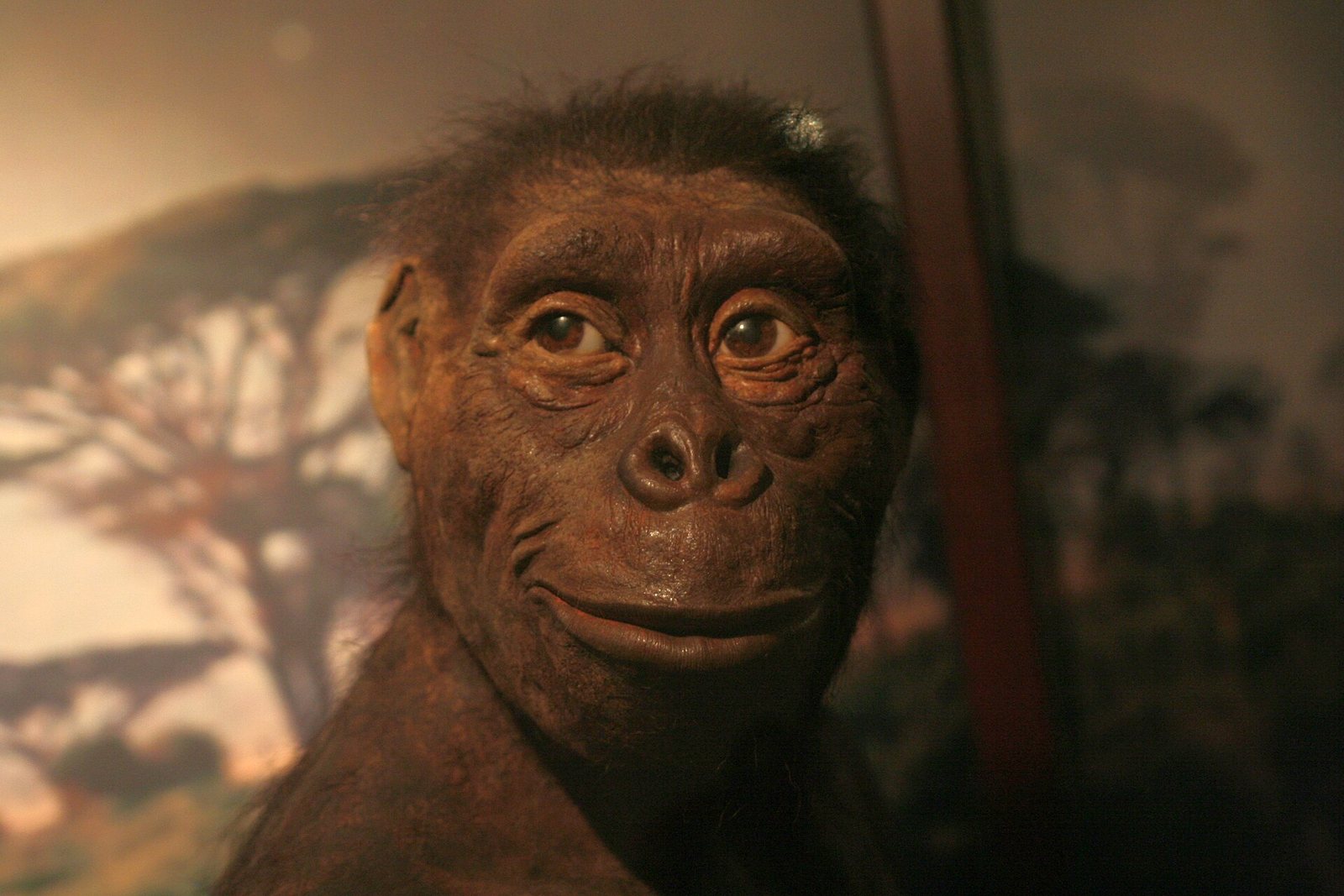
The story starts a year earlier. In 1973, a team led by Donald Johanson found an early knee joint at Hadar that suggested its owner had walked upright. Johanson came back, and on 24 November 1974 he and graduate student Tom Gray found Lucy at Hadar (Natural History Museum London).
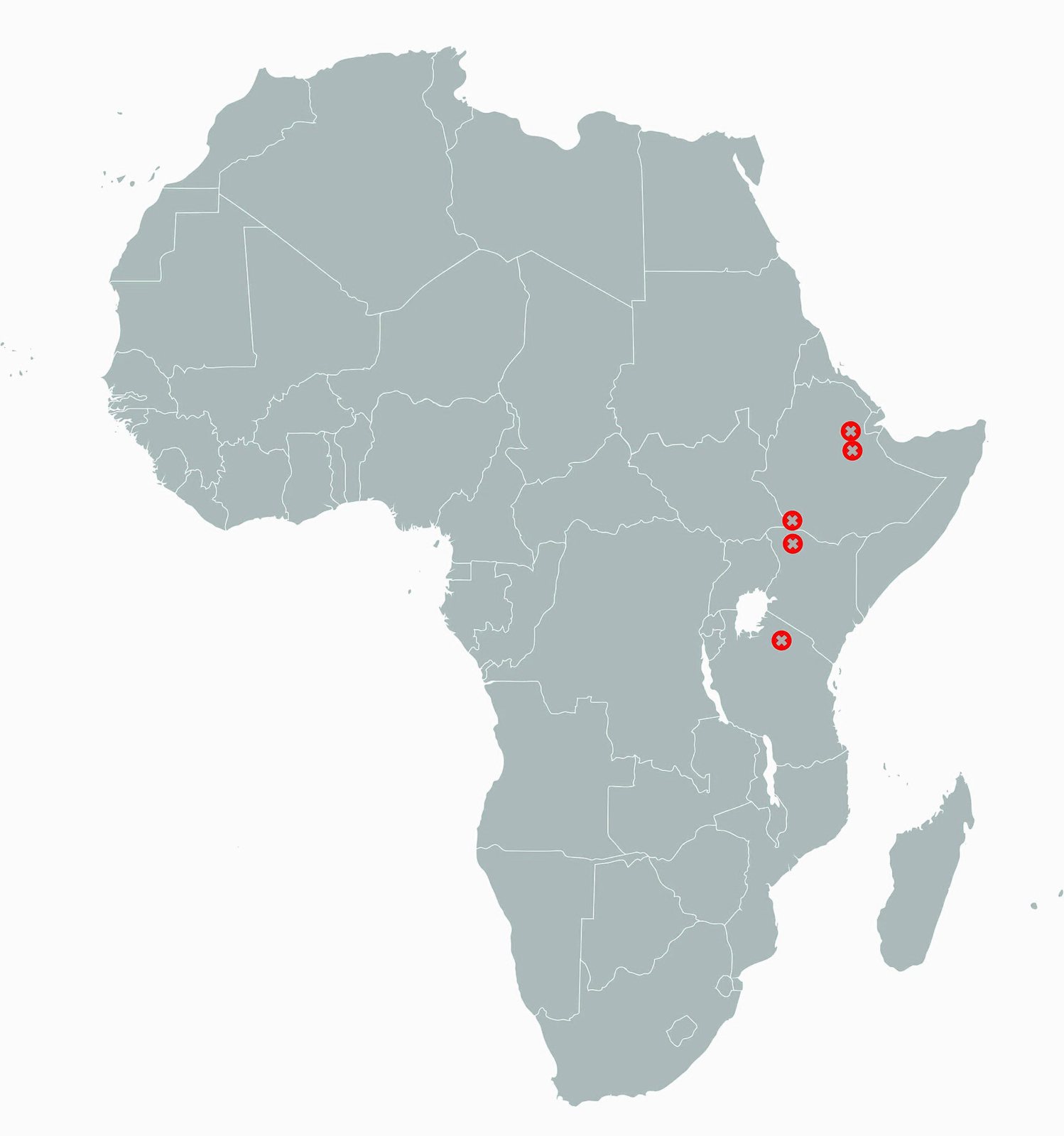
What they recovered was extraordinary for its age. About 40% of the skeleton survives, 47 bones in all, including parts of the pelvis, the arms and legs, the spine, ribs, the jaw and pieces of the skull. In the catalogue she is AL 288-1 (Smithsonian Human Origins Program). Forty percent may not sound like much, but for a skeleton more than three million years old it is rare. It was enough to rebuild her pelvis, legs and feet, which is exactly the part of the body that tells you how someone moved.
Lucy from Hadar to Prague
Tap or hover a step to follow the order.
1973
Donald Johanson's team finds an early knee joint at Hadar that points to upright walking.
24 November 1974
Johanson and Tom Gray find Lucy at Hadar, Ethiopia.
1978
Australopithecus afarensis, Lucy's species, is formally named.
2007 to 2013
The original fossil tours the United States.
2016
John Kappelman and colleagues publish the hypothesis that a fall from a tree killed her.
August to October 2025
Lucy is exhibited in Prague, then returns to Addis Ababa.
How she got her names
That first evening at camp, the Beatles song "Lucy in the Sky with Diamonds" was playing. The name stuck, and it is the one most of the world knows (Smithsonian Human Origins Program). It is a nice reminder that a scientific catalogue number and a camp nickname can belong to the same bones.
In Ethiopia she has another name. In Amharic she is Dinkinesh, commonly translated as "you are beautiful" or "you are marvelous" (National Museum of the Czech Republic). Both names are in use, and the second one says something about how she is regarded at home: as a treasure of Ethiopia's past.
What kind of creature was Lucy?
Lucy belonged to Australopithecus afarensis, a species formally named in 1978. She was small: about 1.05 to 1.1 metres tall and about 27 to 30 kilograms. She was also far from alone. The Smithsonian lists more than 300 individuals of her species, with fossils from Ethiopia, Kenya and Tanzania (Smithsonian Human Origins Program). Lucy is simply the most famous of them, because so much of one person survived in one place.
Tap or hover a row to highlight it.
| Fact | Detail |
|---|---|
| FactFossil name | DetailAL 288-1, nicknamed Lucy, called Dinkinesh in Amharic |
| FactSpecies | DetailAustralopithecus afarensis |
| FactFound | Detail24 November 1974 |
| FactPlace | DetailHadar, Afar region, Ethiopia |
| FactAge of the fossil | DetailAbout 3.18 million years |
| FactWhat survives | Detail47 bones, about 40% of the skeleton |
| FactHeight | DetailAbout 1.05 to 1.1 metres |
| FactWeight | DetailAbout 27 to 30 kilograms |
| FactHow she moved | DetailHabitual upright walking, with climbing ability kept |
| FactHeld by | DetailNational Museum of Ethiopia, Addis Ababa |
Walking upright, still able to climb
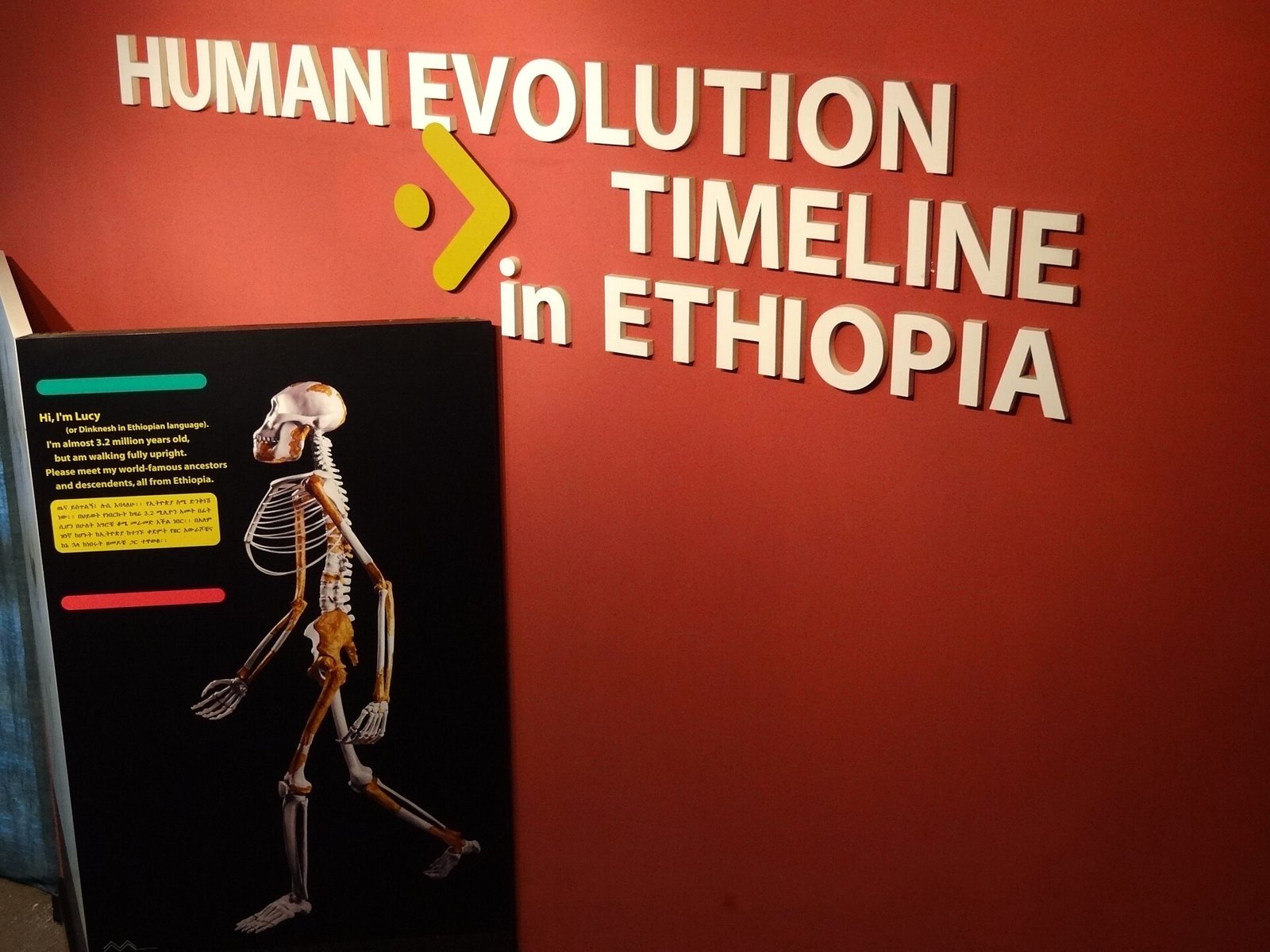
Lucy's body shows two ways of moving at once. Her pelvis, angled thigh bones, knees and compact feet show that she walked upright as a matter of habit. Her long arms, curved fingers and shoulder anatomy show that she kept the ability to climb trees (Smithsonian Human Origins Program).
That combination is what made her famous. Her brain was small, yet her body was already built for walking on two legs. As the Natural History Museum sums it up, her species walked upright before the large brains of later Homo species appeared (Natural History Museum London). Lucy answered an old question about which came first, and the answer was the legs. For the long story of the brain and the skull that came later, our oldest human skull story picks up the thread.
How old is she, and how do scientists know?
Lucy is about 3.18 million years old, usually rounded to 3.2 million. Her age was first narrowed down by biostratigraphy, which compares the animal fossils found in a layer with those from layers of known age. It was then refined with absolute dating, including potassium-argon and argon-argon methods applied to the volcanic layers around the fossils (Smithsonian dating overview). Our story on how old bones are dated covers these methods in more detail.
How old was Lucy when she died, and how did she die?
Lucy was a young adult when she died, but her exact age in years is unknown. Her wisdom tooth had come in and her bones had fused, signs that she had reached adult skeletal maturity. The Natural History Museum in London describes her as a young adult, while the National Museum of the Czech Republic gives an estimate of about 12 to 16 years. That number sounds startling until you remember that early Australopithecus matured faster than modern humans do, so a teenager in our years could be fully grown in theirs (Natural History Museum London; National Museum of the Czech Republic).
How she died is still argued over. In 2016, John Kappelman and colleagues studied high-resolution CT scans of the fossil and reported fractures that, in their reading, happened around the time of death, in her arms, shoulders, ribs, pelvis, knee and ankle. They argued that the pattern fits a fall of more than 12 metres from a tree, landing on her feet and then on outstretched arms (Kappelman et al. via PubMed).
Others were less sure. Donald Johanson, who found her, disputed the idea, pointing out that trampling by large animals, the pressure of sediment over millions of years or other kinds of damage could produce similar breaks. Rick Potts considered the fall a convincing explanation for her injuries, but cautioned against treating it as proof that her species spent most of its life in the trees (Scientific American). The cause of her death remains debated. Telling an injury from later damage is part of reading any old skeleton, as our story on what bones tell archaeologists explains.
Where is Lucy now?
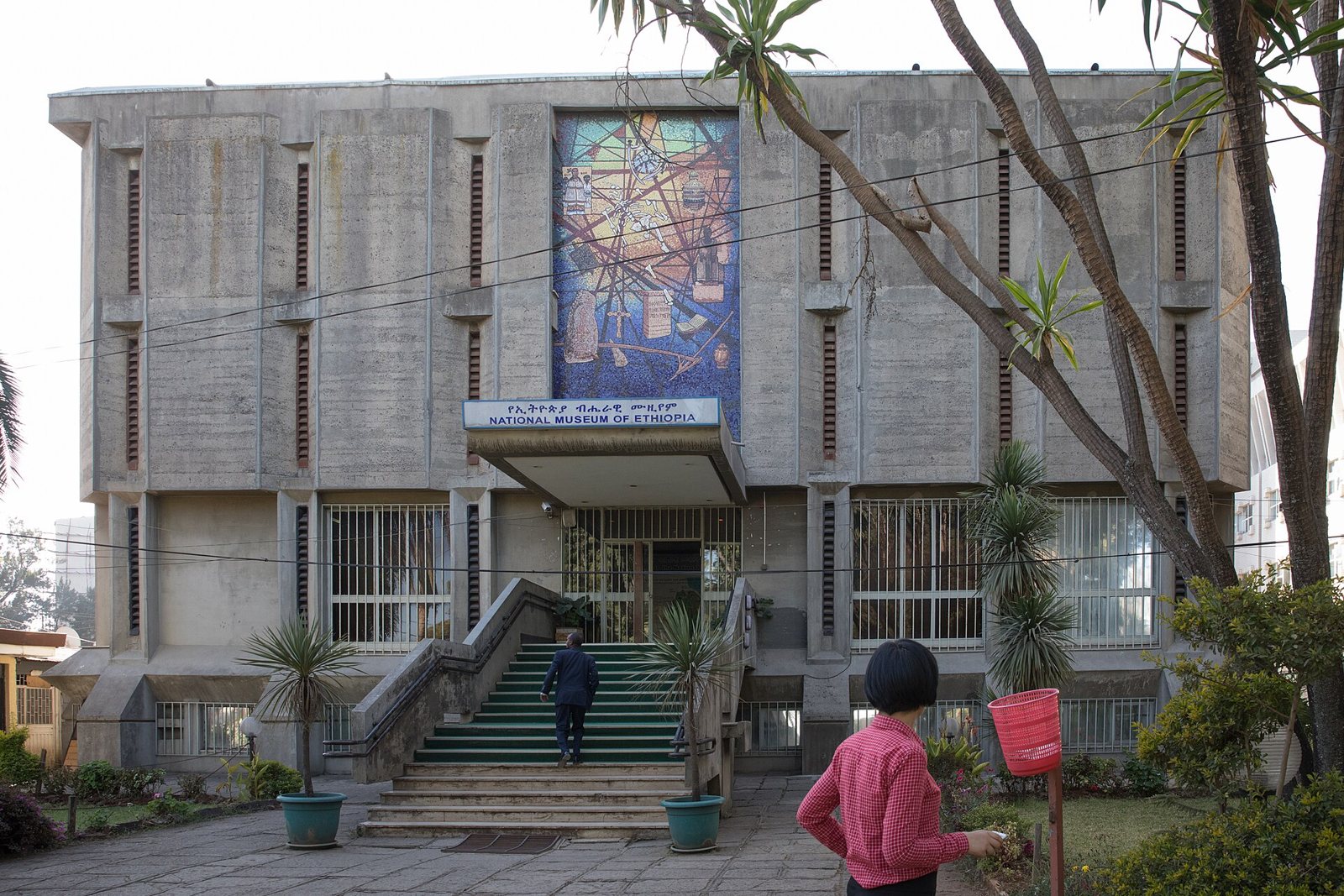
The original Lucy fossil is held by the National Museum of Ethiopia in Addis Ababa. The original is not on permanent display; it is normally kept under secure conservation conditions, and the replicas you may have seen elsewhere, such as the reconstruction at the Smithsonian, stand in for her (National Museum of the Czech Republic).
She has travelled twice. From 2007 to 2013 the original toured the United States in the exhibition Lucy's Legacy: The Hidden Treasures of Ethiopia, organized by the Houston Museum of Natural Science with Ethiopian authorities, and then returned home (Bowers Museum). The Czech National Museum states that this was the only earlier time the original had been shown outside Ethiopia. Then, from 25 August to 23 October 2025, she was shown for 60 days at the National Museum in Prague before returning to Addis Ababa (National Museum of the Czech Republic).
If you hope to see her in Addis Ababa, confirm the current display arrangements with the National Museum of Ethiopia before you plan the trip.
Lucy's place in the human family tree
Lucy lived before the genus Homo, the group that includes our own species. Her species was one branch of a bushy history that also included other australopiths, later Homo species and extinct relatives such as Paranthropus. The Smithsonian is clear that the direct ancestor of Homo sapiens remains uncertain (Smithsonian Human Origins Program: Homo sapiens).
So, are all humans descended from Lucy? Lucy may belong to the lineage that eventually led to Homo, but nobody has shown that she, one individual, was the direct ancestor of every person alive. Human evolution is understood as a branching process involving many populations and species (Smithsonian Human Origins Program: Australopithecus afarensis).
Her real importance is in her bones. Lucy showed that upright walking appeared in a small-brained hominin long before the big brains of later humans. Other finds have added to the story since: the Taung Child, another australopith, came out of South Africa decades before her, and Homo naledi shows that a body with australopith-like features could still be around hundreds of thousands of years ago.
Questions people ask about Lucy
These are the questions that come up most often, with short answers.
How old was Lucy when she died?
Lucy was a young adult, and her exact age is unknown. One published estimate puts her at about 12 to 16 years, with the qualification that her species matured faster than modern humans.
Where is Lucy's skeleton now?
The original is held by the National Museum of Ethiopia in Addis Ababa. It returned there after the 2007 to 2013 United States tour and after its 2025 exhibition in Prague, and replicas are shown in museums elsewhere.
Are all humans descended from Lucy?
No one has shown that. Lucy was one individual of Australopithecus afarensis, and while her species may sit on the line that led to Homo, human evolution was a branching process with many populations.
What species was Lucy?
Lucy was Australopithecus afarensis, a species named in 1978. More than 300 individuals of the species are known from Ethiopia, Kenya and Tanzania.
How did Lucy die? Did she fall from a tree?
Nobody knows for certain. Kappelman and colleagues argued in 2016 that a fall of more than 12 metres from a tree caused her fractures, while Donald Johanson pointed to trampling or sediment pressure as other possible causes.
Who found Lucy?
Donald Johanson and graduate student Tom Gray found Lucy at Hadar, Ethiopia, on 24 November 1974. Johanson's team had found an upright-walking knee at Hadar the year before.
How much of Lucy's skeleton was found?
About 40% of her skeleton survives, 47 bones in all. They include parts of the pelvis, limbs, spine, ribs, jaw and skull.
Why is she called Lucy, and what does Dinkinesh mean?
She is named after the Beatles song "Lucy in the Sky with Diamonds," which played at camp the evening she was found. Dinkinesh, her Amharic name, is commonly translated as "you are beautiful" or "you are marvelous."
How tall was Lucy?
Lucy stood about 1.05 to 1.1 metres tall. She weighed about 27 to 30 kilograms.
How well do you know Lucy?
Answer every question to check.
Where to go next
Lucy is part of a long line of famous bones. For the skull side of the human story, start with the oldest human skull and our collection of human skull facts. For the first australopith ever named, read about the Taung Child, and for a much later relative with a surprisingly old-fashioned body, see Homo naledi.
Terms in this story
Tap a term to see what it means.
Australopithecus afarensis. The extinct species Lucy belonged to, named in 1978 and known from more than 300 individuals in Ethiopia, Kenya and Tanzania.