

No. 101
The Sima de los Huesos at Atapuerca: The Pit of Bones in Spain
The Sima de los Huesos, Spanish for "Pit of Bones," is a small chamber at the bottom of a roughly 13-meter vertical shaft inside Cueva Mayor, a cave in the Sierra de Atapuerca near Burgos in northern Spain. It holds about 7,000 human fossils from at least 28 or 29 people, the world's largest collection of Middle Pleistocene human fossils, according to the Fundación Atapuerca. The fossils are commonly dated to about 430,000 years ago. Nuclear DNA published in 2016 places these people on the Neanderthal family line. Here is what the pit holds, how its age was worked out, and what the bones tell us about the people who ended up there.
A small chamber at the bottom of a shaft
Cueva Mayor is one of the caves of the Sierra de Atapuerca, near Burgos. Deep inside it, a vertical shaft of about 13 meters drops into a small chamber. That chamber is the Sima, and getting to it means climbing down.
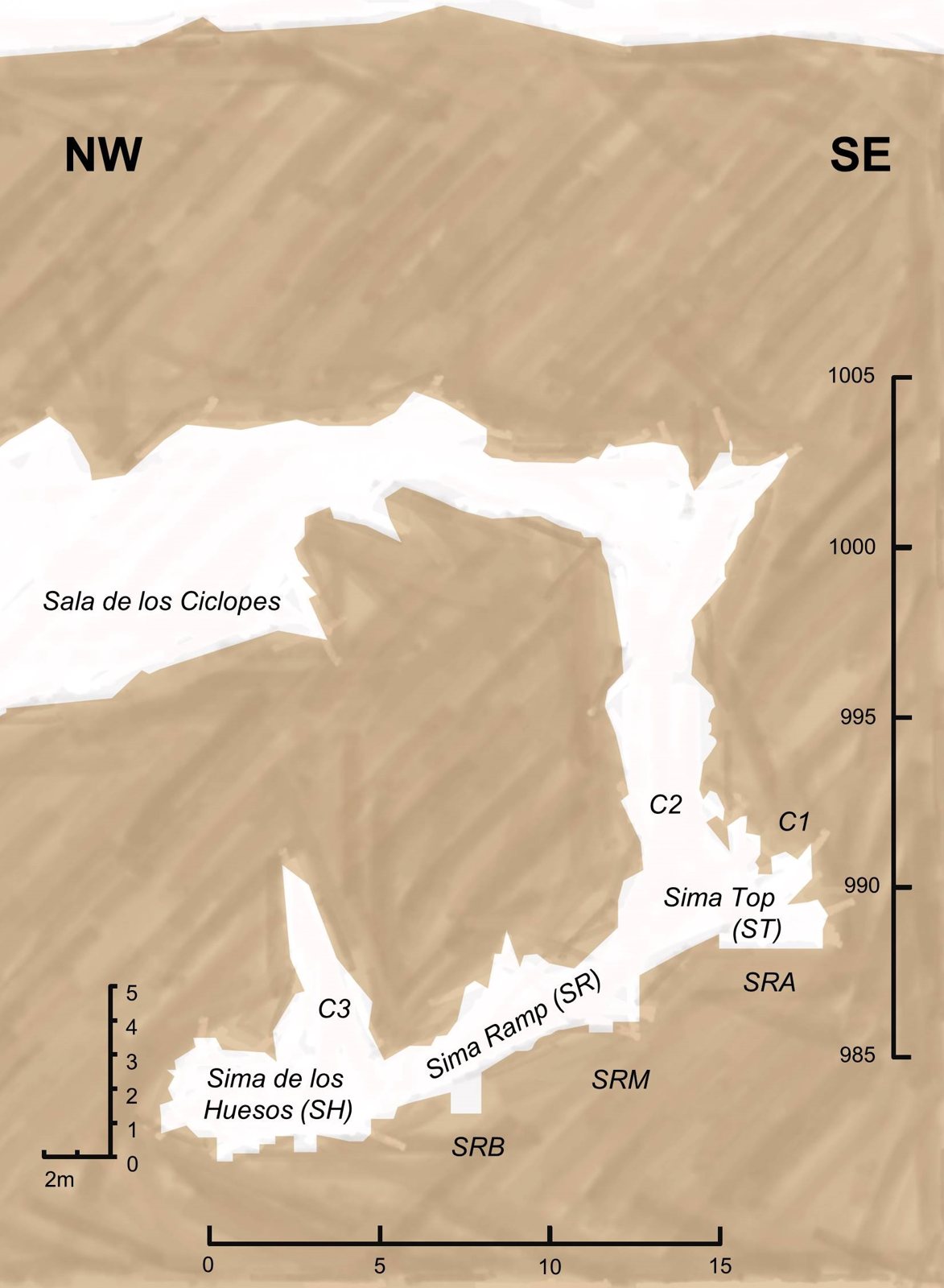
What lies there is unusual. Alongside about 7,000 human fossils, the excavators have recovered animal bones and a single stone tool. The animals are mostly carnivores. The Fundación Atapuerca lists thousands of bones of *Ursus deningeri*, an ancestor of the cave bear, along with foxes, wolves, lynxes, lions and panthers. There is no buildup of bones from grazing animals, a detail that matters later in the story.
How the pit was found and dug
The first human fossil from the Sima, a lower jaw, came out in 1976 during work associated with Trinidad de Torres. Systematic excavation began in 1984 under Emiliano Aguirre. The work later passed to the three scientists whose names are now tied to Atapuerca: Juan Luis Arsuaga, José María Bermúdez de Castro and Eudald Carbonell. Excavation has continued through successive field seasons for four decades and is still ongoing, as Arsuaga and colleagues describe in their 2024 review of the site.
Much of what comes out of the chamber is broken, and some of the best-known skulls had to be fitted back together afterward. Cranium 17, which comes up below, was reconstructed from many fragments.
How old are the Sima de los Huesos fossils?
The fossils are commonly described as about 430,000 years old. That figure comes from several dating methods used on the cave deposits over the years, including uranium-series dating, electron spin resonance, palaeomagnetism and luminescence dating.
The numbers have shifted as methods and readings of the cave's layers improved. A luminescence study by Arnold and colleagues, published with CENIEH, reported ages of about 455,000 ± 17,000 to 440,000 ± 15,000 years for the deposits that hold the human remains. The 2024 review by Arsuaga and colleagues gives a broader radiometric range of about 430,000 to 300,000 years. So, "about 430,000 years" is the short answer, and different studies place the fossils somewhat earlier or later.
If you are curious how scientists put an age on bone at all, our story on how old bones are dated covers the basics.
Tap or hover a row to highlight it.
| Measure | Figure | Published by |
|---|---|---|
| MeasureDepth of the shaft to the chamber | FigureAbout 13 meters | Published byFundación Atapuerca |
| MeasureHuman fossils recovered | FigureAbout 7,000 | Published byFundación Atapuerca |
| MeasureIndividuals | Figure28 (2016 DNA paper); a minimum of 29 (2024 review) | Published byMeyer et al.; Arsuaga et al. |
| MeasureCrania recovered | FigureAt least 17 | Published byFundación Atapuerca |
| MeasureCommon age | FigureAbout 430,000 years | Published byFundación Atapuerca |
| MeasureLuminescence ages | FigureAbout 455,000 to 440,000 years | Published byArnold et al. |
| MeasureRadiometric range in the 2024 review | FigureAbout 430,000 to 300,000 years | Published byArsuaga et al. |
| MeasureStone tools | Figure1, the biface called Excalibur | Published byArsuaga et al. |
Who were the people in the pit?
The 2016 DNA paper described an assemblage of 28 individuals. The Fundación Atapuerca now counts a minimum of about 29, based on the teeth, and the 2024 review gives a minimum of 29 as well. They include both men and women, and their ages run from preadolescents to older adults.
At least 17 crania, or skulls without the lower jaw, have been recovered. That alone would make the Sima famous. What makes it stranger, and more useful to science, is how much of each body is there. The excavators have recovered many finger and toe bones, the small, fragile phalanges that usually vanish first. Their presence helps show that whole bodies came to rest in the chamber, rather than a scatter of loose bones washed or carried in from somewhere else.
For anyone who wonders what a pile of ancient bones can actually tell scientists, our piece on what bones tell archaeologists covers age, sex and health, read from bone the same way it is done at Atapuerca.
Miguelón, Cranium 5
Of all the skulls from the pit, Cranium 5 is the one people know by name. It is called Miguelón, and the Fundación Atapuerca describes it as one of the most complete human fossils in the world.
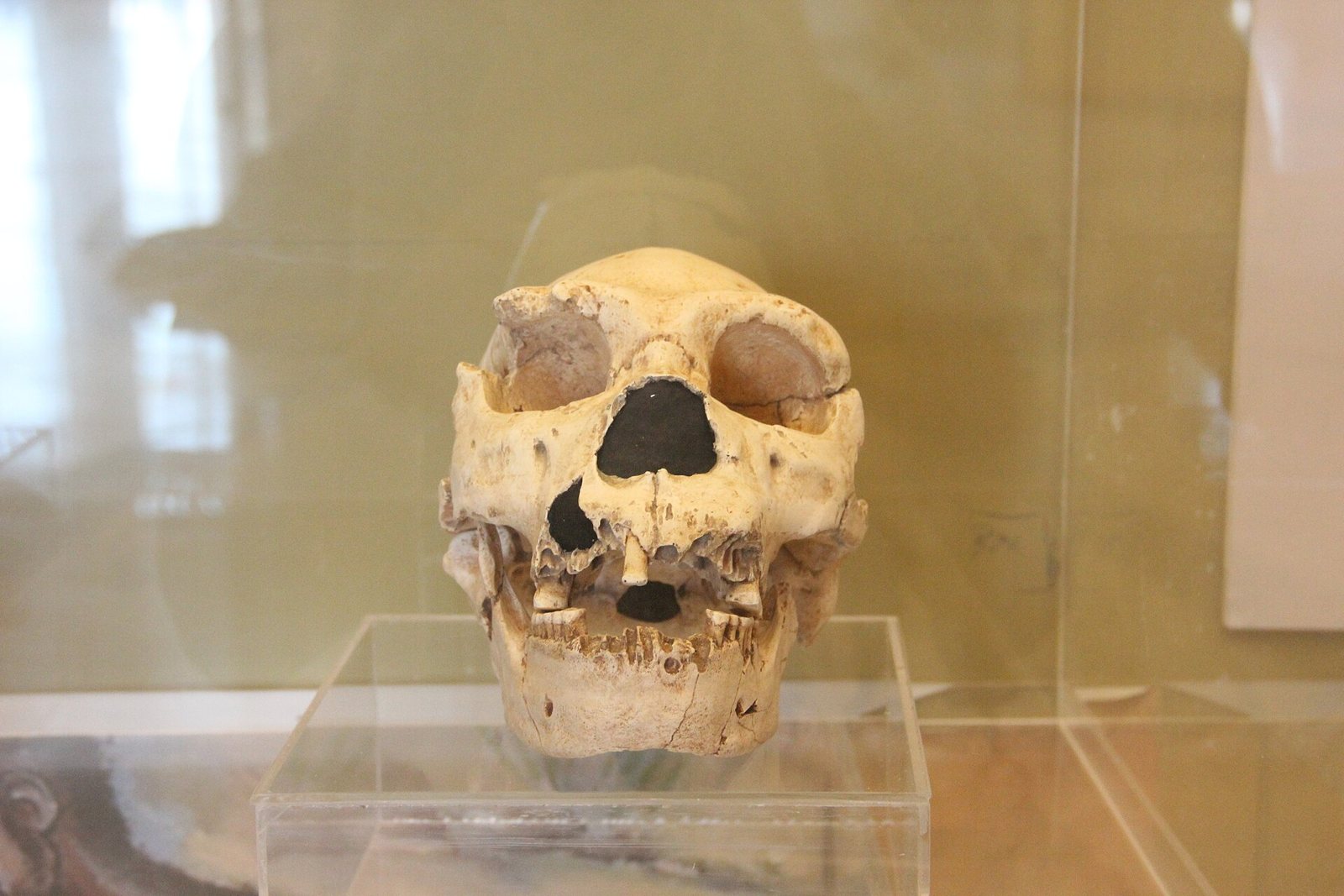
Its face is the interesting part. It shows a mix of older features and features that later became typical of Neanderthals, including a strongly projecting middle of the face. That blend fits the DNA results described below, which place these people on the Neanderthal line.
The Museo de la Evolución Humana in Burgos displays a reconstruction of Miguelón based on Cranium 5 and associated remains, and the museum holds the original Atapuerca fossils associated with him.
Cranium 17 and a death by violence
Cranium 17 is a nearly complete skull reconstructed from many fragments. On the frontal bone, the bone of the forehead, it carries two similar fractures made around the time of death. Nohemi Sala and colleagues, writing in PLOS ONE, interpreted the two injuries as lethal blows from another person.
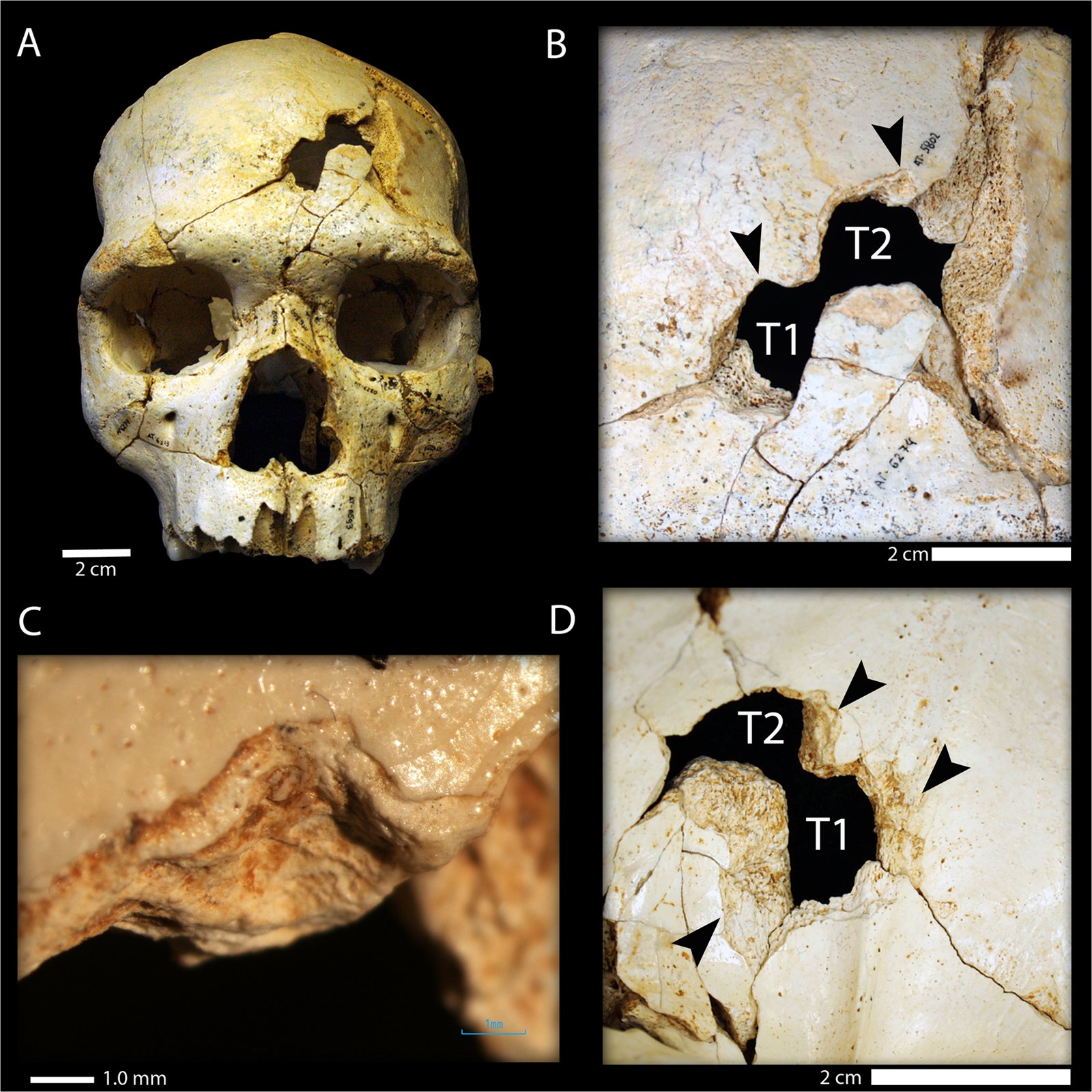
That reading is about one individual and how that person died. The wider behavior of the group is a separate question, and the two fractures speak only to this one life and its end.
What the DNA says about Neanderthals
The DNA results from the Sima arrived in two steps, and the second changed how the first was read.
In 2014, Meyer and colleagues reported mitochondrial DNA from one Sima specimen. It was closer to the mitochondrial DNA of Denisovans, an archaic group known from Siberia, than to the mitochondrial DNA of later Neanderthals.
Then in 2016, Matthias Meyer, Juan Luis Arsuaga, Svante Pääbo and colleagues recovered nuclear DNA from two specimens. The 2016 paper reported that those sequences shared more derived genetic variants with Neanderthals than with Denisovans. The authors concluded that the Sima population belonged to the Neanderthal line, either as early Neanderthals or as close relatives of Neanderthal ancestors. Their results also meant that the split between the Neanderthal and Denisovan populations happened before about 430,000 years ago.
Why did the two results differ? The researchers explained that mitochondrial DNA follows only the maternal line and may not reflect a population's full history. Nuclear DNA carries much more of the story, so it gives the stronger evidence. The Smithsonian Human Origins Program summarized the 2016 result in the same terms. Whether to call these people "Neanderthals" or "pre-Neanderthals" comes down to that same phrasing: early members of the line, or close relatives of its ancestors. The later chapters of that family are in our story on the Neanderthal skull, and a Denisovan face from China appears in the story of the Dragon Man skull.
The Sima de los Huesos, from first jaw to latest review
Tap or hover a step to follow the order.
1976
The first human fossil from the Sima, a lower jaw, is recovered
1984
Systematic excavation begins under Emiliano Aguirre
1998
The red quartzite biface later called Excalibur comes out of the human fossil level
2014
Mitochondrial DNA from a Sima fossil shows a Denisovan-related maternal signal
2016
Nuclear DNA links the Sima population to the Neanderthal line
2024
Arsuaga and colleagues report more than 7,000 human fossils and a minimum of 29 individuals
Excalibur and the question of a deliberate burial place
In 1998 the excavators lifted a hand axe, or biface, from the level that holds the human fossils. It is made of red quartzite and is the only stone tool ever recovered from the Sima. It is known as Excalibur. Its stone is unusual in the local Atapuerca record, and use-wear analysis has not established whether it was ever used.
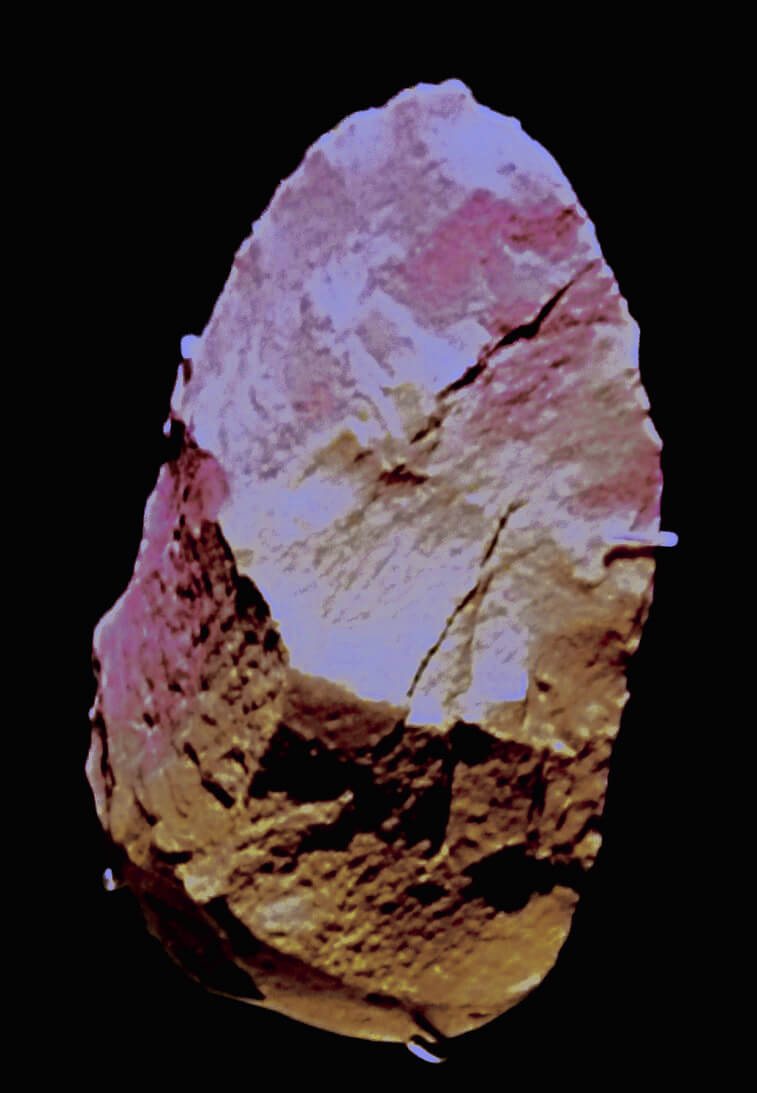
Many members of the excavation team have read Excalibur as a possible offering placed with the dead. Carbonell and Mosquera argued in 2006 that the Sima could preserve a very early case of symbolic behavior around death. That remains an interpretation. The biface could also have entered the chamber by accident, and its exact purpose cannot be shown.
The broader question, whether people deliberately placed their dead in the pit, rests on more than one tool. The 2024 review sets out the pattern: many complete skeletons, every major part of the body represented, no sign that anyone lived in the chamber, no buildup of grazing animals, and bodies concentrated in a hard-to-reach space. That whole pattern is the strongest case for bodies being placed there on purpose. Scientists still keep that supported pattern separate from the more speculative idea that Excalibur itself was a funeral gift. If you enjoy the long human habit of gathering the dead in special places, our story on ossuaries around the world picks up the theme hundreds of thousands of years later.
Where to see the fossils today
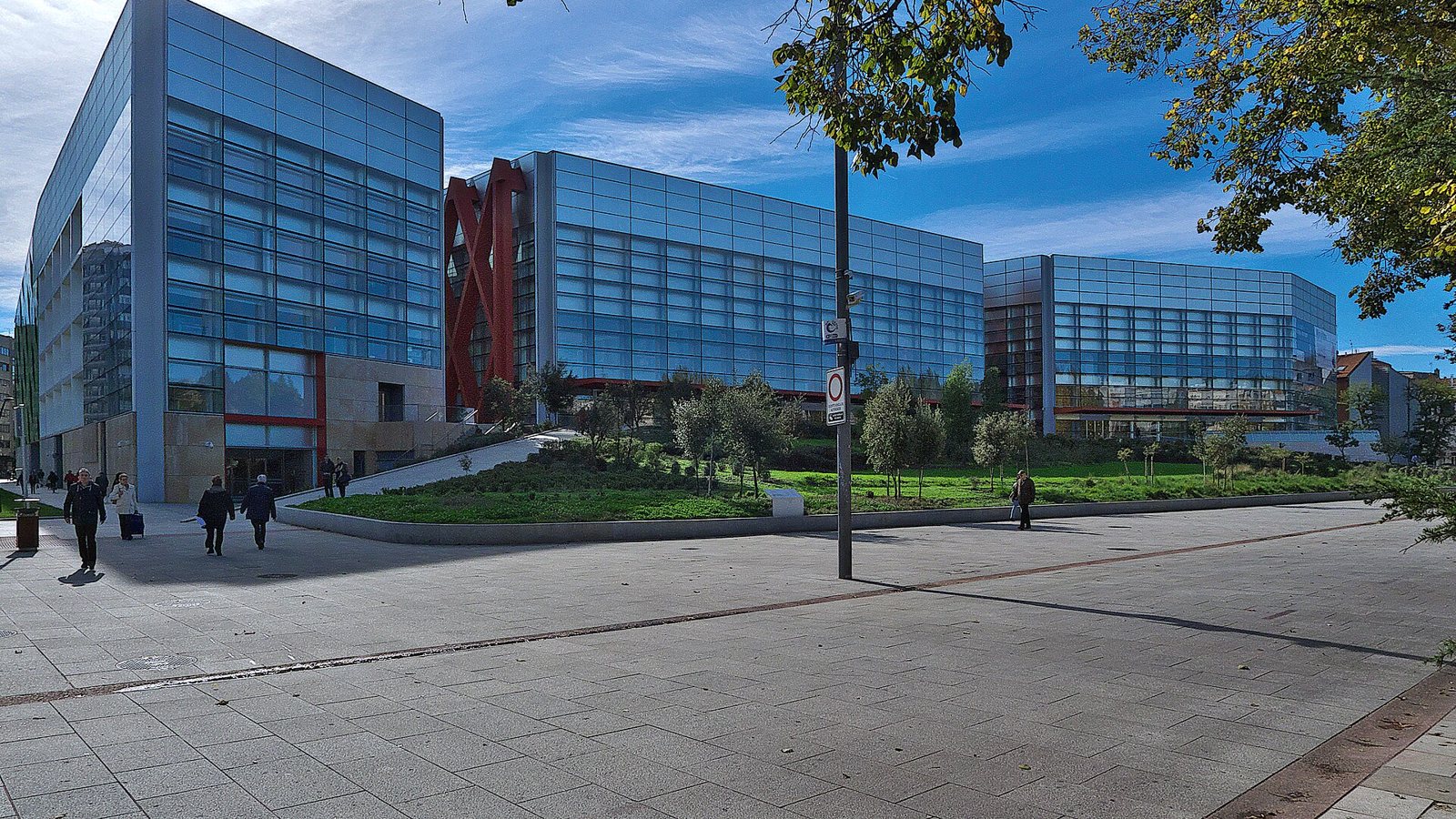
The Sima de los Huesos itself is an active excavation inside the cave system, so the place to see its fossils is the Museo de la Evolución Humana in central Burgos. The museum holds original Atapuerca fossils, including the remains associated with Miguelón.
For 2026, the museum's published prices are €6 general admission and generally €4 reduced, with free entry on Wednesdays and on Tuesdays and Thursdays from 19:00 until closing. The archaeological sites in the Sierra de Atapuerca are visited separately, on guided tours that leave by bus from the CAREX in Atapuerca or the CAYAC in Ibeas de Juarros. The Fundación Atapuerca schedule lists 2026 site admission at €8, or €7 reduced, and advance reservations are required. Times and prices change, so confirm them with the museum and the Fundación Atapuerca before you plan a day around them.
Questions people ask about the Sima de los Huesos
What is the Sima de los Huesos?
It is a fossil-bearing chamber inside Cueva Mayor in Spain's Sierra de Atapuerca, near Burgos. It holds thousands of Middle Pleistocene human fossils from at least 28 and probably about 29 people, along with animal bones and one hand axe called Excalibur.
How old are the Sima de los Huesos fossils?
They are commonly dated to about 430,000 years ago. A luminescence study gave about 455,000 to 440,000 years for the deposits with the human remains, and the excavators' 2024 review gives a broader range of about 430,000 to 300,000 years.
¿Qué es Excalibur en Atapuerca?
Excalibur is the nickname of a red quartzite hand axe found in 1998 in the human fossil level of the Sima de los Huesos. It is the only stone tool recovered there. Some members of the excavation team read it as a possible offering to the dead, but that purpose cannot be proven.
¿Quién es Miguelón de Atapuerca?
Miguelón is the nickname of Cranium 5 from the Sima de los Huesos, one of the most complete fossil human skulls in the world. The Museo de la Evolución Humana in Burgos displays a reconstruction based on that skull and associated remains.
Were the Sima de los Huesos people Neanderthals?
They belonged to the Neanderthal line, according to the nuclear DNA published in 2016. The authors described them as either early Neanderthals or close relatives of Neanderthal ancestors, which is why both "Neanderthal" and "pre-Neanderthal" turn up in discussions.
For more of the deep past, see the oldest human skulls ever found, the small-bodied people of Flores in our story on Homo floresiensis, and the fossils of Peking Man from China.
How well do you know the Pit of Bones?
Answer every question to check.
Terms in this story
Tap a term to see what it means.
Sima de los Huesos. Spanish for "Pit of Bones," a small chamber at the bottom of a shaft in Cueva Mayor, Sierra de Atapuerca, near Burgos.