

No. 121
What Is the Oldest Human Skull Ever Found?
It depends on what you mean by "human." If you mean our own species, Homo sapiens, the best-supported answer is the fossils from Jebel Irhoud in Morocco, which are about 300,000 years old. If you mean any early member of the human family, the Toumaï skull from Chad is far older, between 7 and 6 million years. The two answers describe different things, and most of the confusion online comes from mixing them up. Below is each one, who found it, how it was dated, where scientists disagree, and where you can see a skull or a cast for yourself.
The answer in three layers
Scientists keep three questions apart, and so will we.
Three different questions, three different skulls
Tap a card to bring it forward.
- Oldest Homo sapiens: Jebel Irhoud, Morocco, about 300,000 years old, dated by thermoluminescence of heated flint
- Oldest fossil of the genus Homo: The Ledi-Geraru jaw, Ethiopia, 2.75 to 2.80 million years old; a jaw, not a skull
- Oldest skull of the wider human family: Toumaï, Chad, between 7 and 6 million years old, classified as Sahelanthropus tchadensis
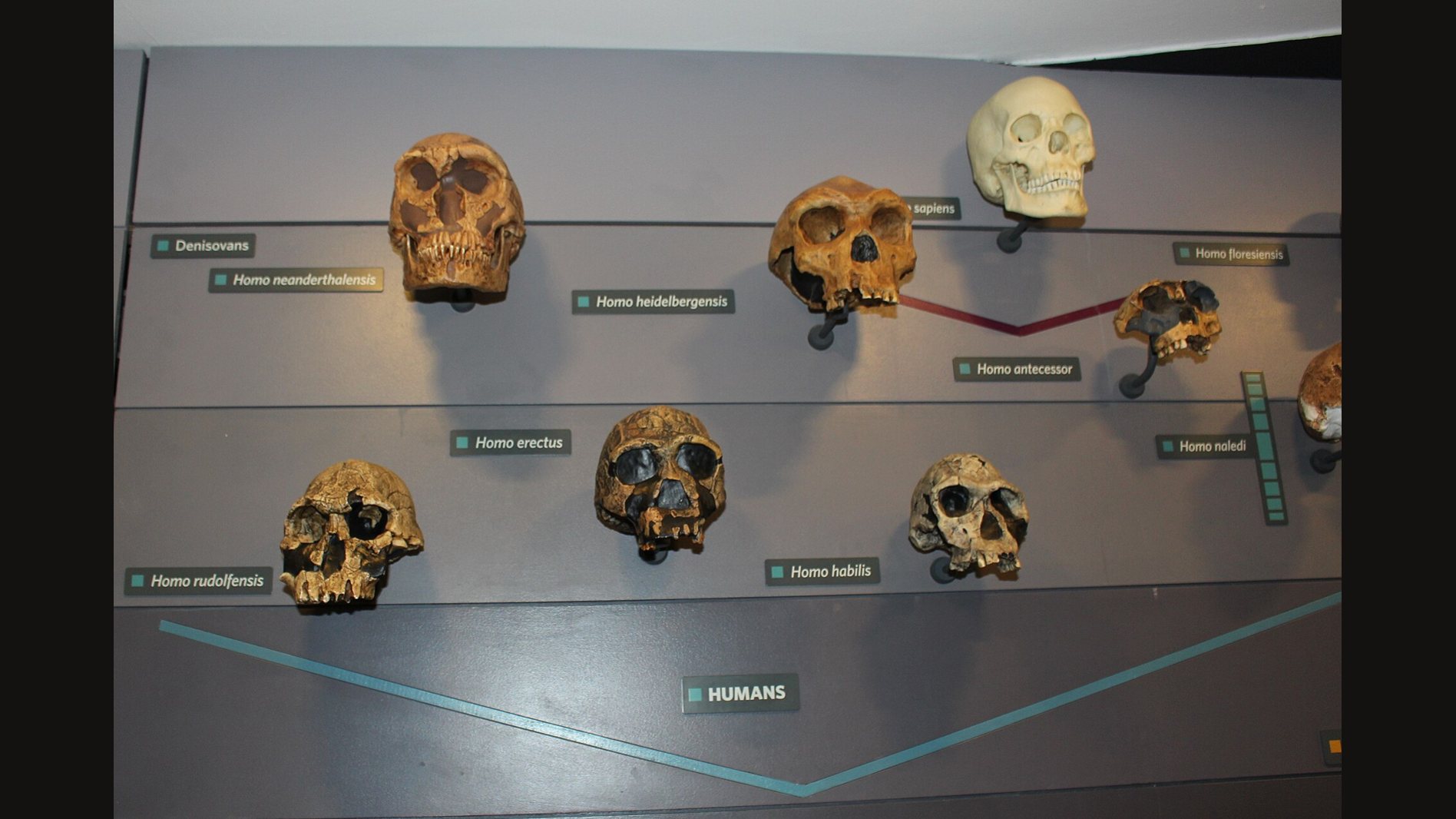
The first question is about our species. The second is about the genus Homo, which includes Homo sapiens and earlier species such as Homo habilis. The Smithsonian's Human Origins Program describes the Ledi jaw as the earliest fossil attributed to Homo. The earliest named Homo species is often given as Homo habilis, known from fossils dated roughly 2.4 to 1.4 million years ago, though the boundaries and ancestry of early Homo are still debated. The third question takes in relatives who were not Homo at all.
Jebel Irhoud, Morocco: our species at about 300,000 years
At Jebel Irhoud, in Morocco, excavators recovered skulls, teeth and long bones from at least five individuals, along with Middle Stone Age tools and animal remains. The team led by Hublin published the dating in Nature in 2017. Thermoluminescence dating, a method that measures when flint was last heated, was applied to burned flint from the same deposits and gave an age of about 300,000 years. That makes these fossils about 100,000 years older than the oldest securely dated Homo sapiens fossils accepted before them.
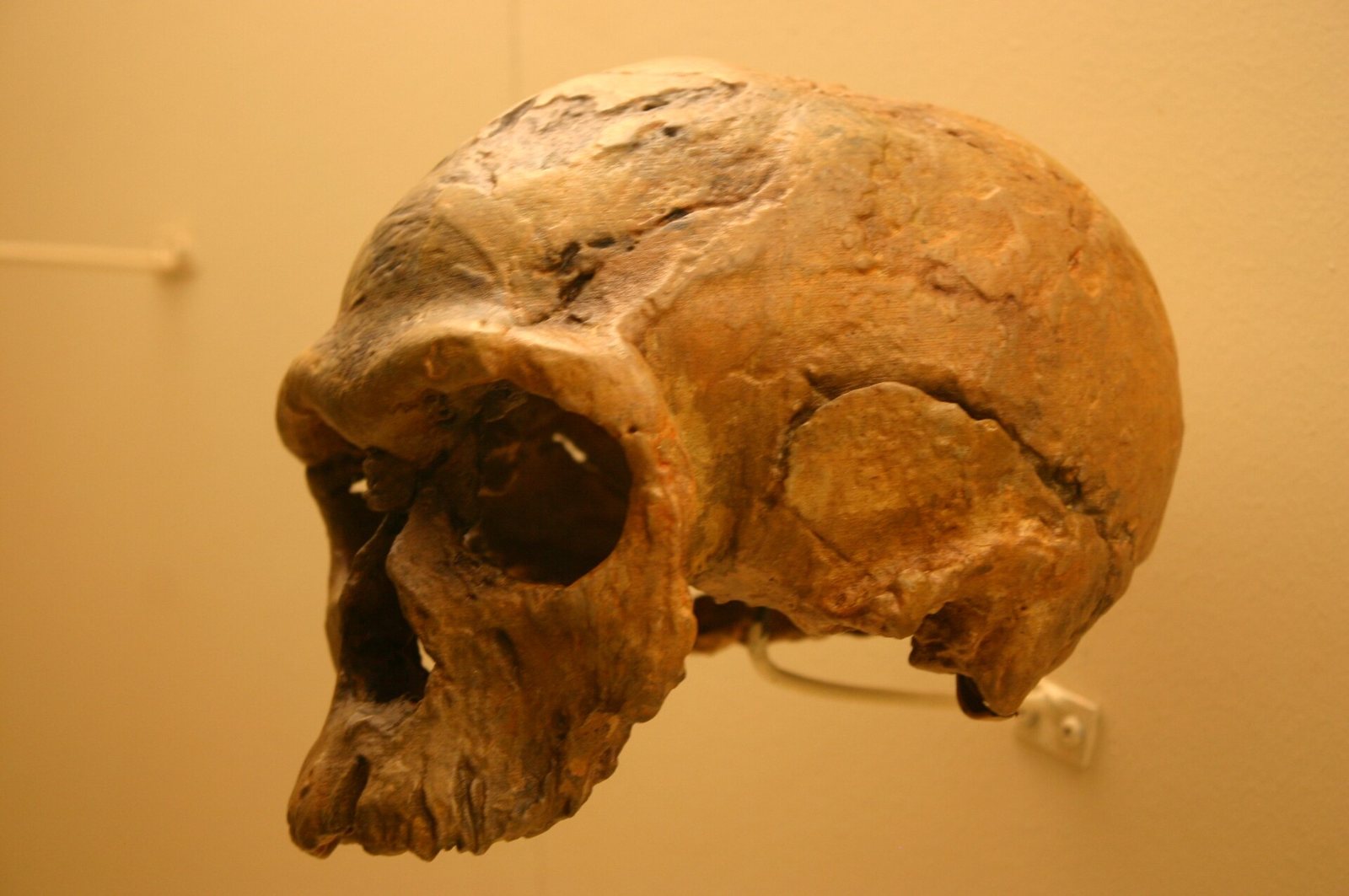
The skulls tell a particular story. The faces and teeth look modern, but the braincases are elongated and more archaic in shape. So, human features did not all arrive at once; they developed in stages. The Max Planck Society reads the site as evidence that Homo sapiens populations were spread across much of Africa by about 300,000 years ago, rather than coming from one isolated corner of East Africa. The Smithsonian Human Origins Program gives the same summary.
Other early Homo sapiens skulls, and where scientists disagree
Jebel Irhoud is not alone. Several other sites hold very early members of our species, and a few are still argued over.
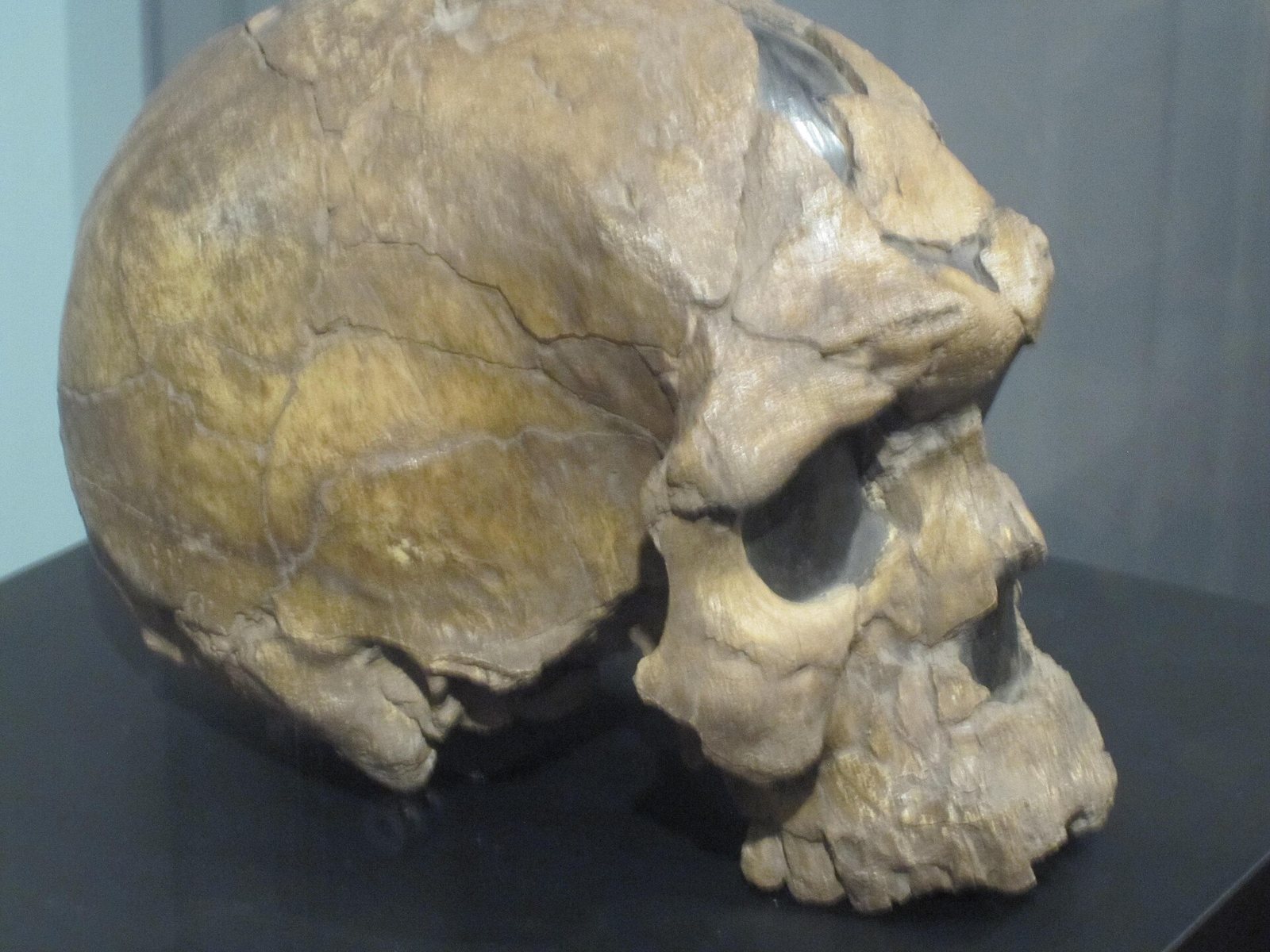
- Omo I, Ethiopia. The skull from the Kibish Formation was once thought to be about 130,000 years old. After the sediments were re-dated, it is placed at about 195,000 years (a Nature paper by McDougall, Brown and Fleagle; the Smithsonian record for Omo I).
- Herto, Ethiopia. Adult and child skulls are dated to about 160,000 to 154,000 years, by argon-argon dating and by matching volcanic layers (White and colleagues, Nature).
- Florisbad, South Africa. The Smithsonian gives about 259,000 years. The skull is fragmentary and mixed in its features, so it is sometimes called Homo heidelbergensis and sometimes early Homo sapiens (Smithsonian record).
- Misliya 1, Israel. This is a partial upper jaw, not a skull, dated to 177,000 to 194,000 years by several methods, and it is among the earliest Homo sapiens remains outside Africa (Tel Aviv University).
- Apidima, Greece. Apidima 1 was dated by uranium-series methods to more than 210,000 years, and Harvati and colleagues read it as early Homo sapiens (Nature, 2019). That reading is debated, because the cranium is incomplete and distorted and has no archaeological context. Apidima 2, from the same cave, is more than 170,000 years old and has Neanderthal-like features.
If you were wondering about the oldest human skull outside Africa, these two, Misliya and Apidima, are the ones to know, and Apidima 1 remains an open question.
The older relatives: Toumaï, the Taung Child, Lucy and Dmanisi
Go back further and you meet relatives who were not Homo sapiens, or even Homo.
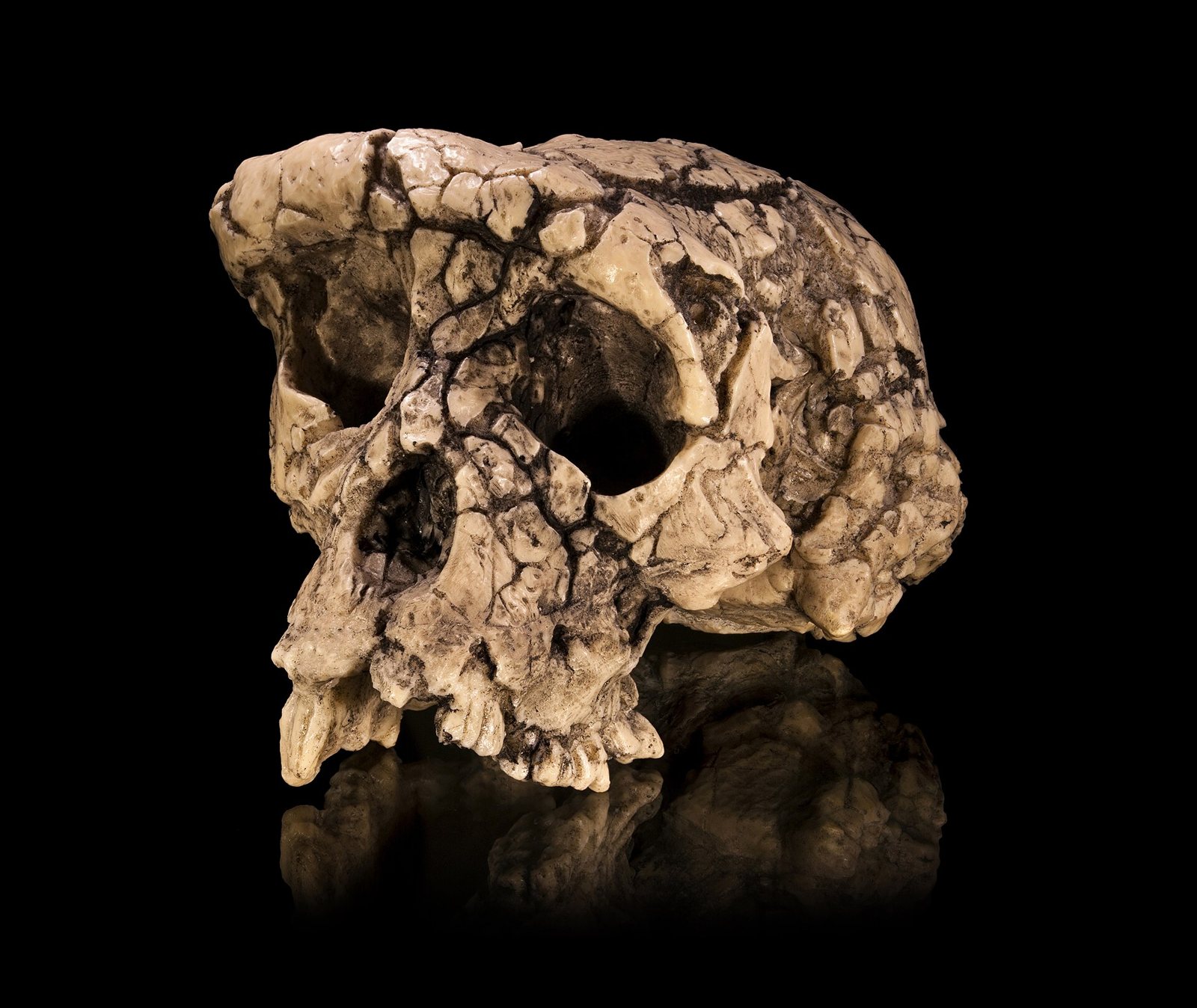
Toumaï. The cranium TM 266-01-060-1 comes from Toros-Menalla in Chad and is classified as *Sahelanthropus tchadensis*. The Smithsonian dates it to between 7 and 6 million years ago. Its name means "hope of life" in the local Dazaga language. It is an early hominin, a member of the human family tree, and its exact place on that tree is debated.
The Taung Child. This skull of *Australopithecus africanus* was found in South Africa and is about 2.8 million years old. From the development of its teeth, the child was about 3.3 years old when it died (Smithsonian).
Lucy. Specimen AL 288-1 was found at Hadar, Ethiopia, in 1974. She is an adult female *Australopithecus afarensis* and about 3.2 million years old (Smithsonian). People often ask how old Lucy was when she died. The evidence shows she was an adult, but it does not give a precise age in years.
Dmanisi. In Georgia, the site of Dmanisi produced *Homo erectus* skulls dated to roughly 1.85 to 1.75 million years ago, including specimen D2282 at about 1.77 million. Dmanisi is among the earliest evidence of Homo outside Africa (Smithsonian, D2282).
The oldest human remains in the Americas and in Mexico
Two skeletons often come up here. Naia was found in Hoyo Negro, a submerged cenote in the Sac Actun cave system near Tulum, Quintana Roo, Mexico. She was a teenage female Homo sapiens who lived about 12,000 to 13,000 years ago. Mexico's INAH, the National Institute of Anthropology and History, describes her as one of the oldest and most complete human skeletons recovered in the Americas, in its page on Hoyo Negro. You can read her story in full in our guide to Naia and Hoyo Negro.
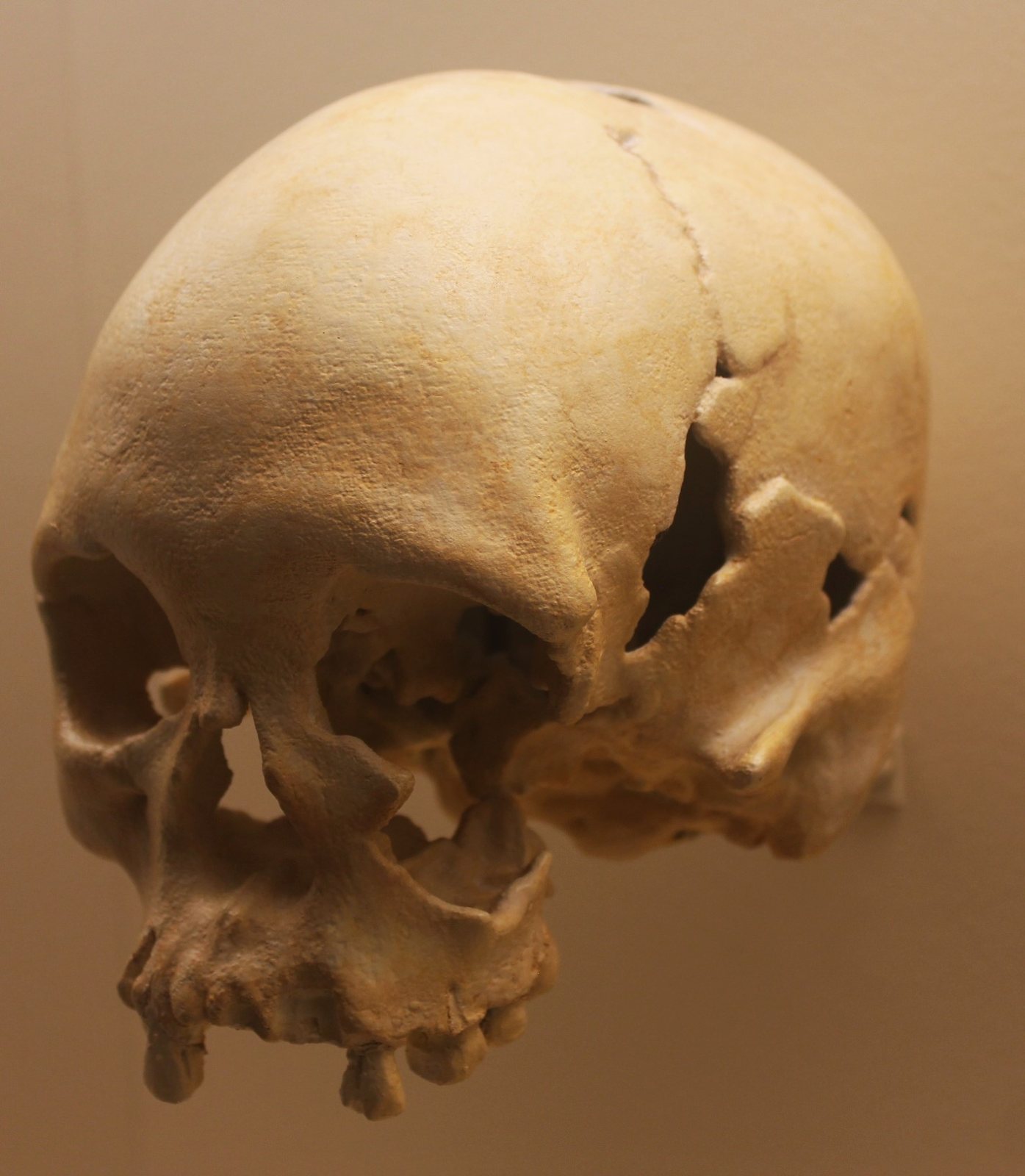
Luzia comes from Lapa Vermelha IV in Minas Gerais, Brazil. The skull and skeleton are dated to about 11,500 years ago (Smithsonian, Luzia).
Is either one "the oldest in the Americas"? That depends on what is being compared: a skull, a complete skeleton or any single fragment, and on the dating method. When you read a ranking, look for the type of specimen and how it was dated.
Biggest skull, first burial
Two other questions come up often. The first is the biggest human skull ever found. There is no accepted record, because "big" could mean physical size or cranial capacity. One famous example is KNM-ER 1470, generally classified as *Homo rudolfensis*, with a cranial capacity of about 775 cubic centimetres, larger than typical *Homo habilis* skulls (Smithsonian). That makes it a notable early skull rather than a world record.
The second is who was the first species to bury its dead. No species can be named with full certainty. Neanderthal burials such as those at Shanidar Cave in Iraq are among the strongest early evidence of intentional burial, and scientists still discuss how to read them, as the Shanidar Cave Project explains. For the people behind that evidence, see our guide to the Neanderthal skull.
Where to see these skulls, or casts of them
Several museums let you stand in front of exact replicas of these skulls. The Smithsonian National Museum of Natural History in Washington, D.C., shows more than 75 replicas of early human skulls in the David H. Koch Hall of Human Origins, including a Jebel Irhoud cast and reconstructions of Lucy. The Natural History Museum in London has a Human Evolution gallery with a Lucy cast, early Homo sapiens casts from Africa and Israel, Neanderthal material and Homo naledi casts. The American Museum of Natural History in New York has a Lucy cast in its Hall of Human Origins. The original Lucy fossil is held by the National Museum of Ethiopia in Addis Ababa. For Naia, INAH facilities and interpretive displays in Quintana Roo are the place to start.
Displays and opening arrangements change, so confirm current access, fees and display status with each museum before you travel.
Tap or hover a row to highlight it.
| Specimen or site | Location | Approximate age | Classification | Dating or basis |
|---|---|---|---|---|
| Specimen or siteToumaï, TM 266-01-060-1 | LocationToros-Menalla, Chad | Approximate age7 to 6 million years | ClassificationSahelanthropus tchadensis | Dating or basisSite and geological dating |
| Specimen or siteTaung Child | LocationTaung, South Africa | Approximate age2.8 million years | ClassificationAustralopithecus africanus | Dating or basisGeological context |
| Specimen or siteLucy, AL 288-1 | LocationHadar, Ethiopia | Approximate age3.2 million years | ClassificationAustralopithecus afarensis | Dating or basisGeological and radiometric dating of associated deposits |
| Specimen or siteDmanisi D2282 | LocationGeorgia | Approximate age1.77 million years | ClassificationHomo erectus | Dating or basisGeological dating of site deposits |
| Specimen or siteJebel Irhoud | LocationMorocco | Approximate ageAbout 300,000 years | ClassificationHomo sapiens | Dating or basisThermoluminescence dating of heated flint |
| Specimen or siteFlorisbad | LocationSouth Africa | Approximate ageAbout 259,000 years | ClassificationHomo heidelbergensis or early Homo sapiens | Dating or basisSite dating and morphological interpretation |
| Specimen or siteOmo I | LocationEthiopia | Approximate ageAbout 195,000 years | ClassificationHomo sapiens | Dating or basisRe-dated Kibish Formation sediments |
| Specimen or siteMisliya 1 | LocationIsrael | Approximate age177,000 to 194,000 years | ClassificationHomo sapiens | Dating or basisMultiple dating methods |
| Specimen or siteApidima 1 | LocationGreece | Approximate ageMore than 210,000 years | ClassificationEarly Homo sapiens, debated | Dating or basisUranium-series dating |
| Specimen or siteNaia | LocationQuintana Roo, Mexico | Approximate age12,000 to 13,000 years | ClassificationHomo sapiens | Dating or basisRadiometric dating and archaeological context |
| Specimen or siteLuzia | LocationMinas Gerais, Brazil | Approximate ageAbout 11,500 years | ClassificationHomo sapiens | Dating or basisRadiocarbon dating |
How old is that skull?
Answer every question to check.
Questions people ask about the oldest skull
What is the oldest skull ever found?
For Homo sapiens, the best-supported answer is Jebel Irhoud in Morocco, at about 300,000 years. If earlier members of the human family count, Toumaï from Chad is between 7 and 6 million years old, though it is classified as *Sahelanthropus tchadensis*.
What was the biggest human skull ever found?
There is no accepted record, because size can mean dimensions or brain capacity. KNM-ER 1470, generally *Homo rudolfensis*, has a capacity of about 775 cubic centimetres, but that does not make it the largest ever.
Who was the first human species to bury their dead?
No single species can be named with complete certainty. Neanderthal burials at Shanidar Cave in Iraq are among the strongest early evidence, and scientists still debate how to read them.
¿Cuál es el cráneo humano más antiguo del mundo?
For Homo sapiens, the fossils from Jebel Irhoud, Morocco, are the most widely accepted answer, at about 300,000 years, dated by thermoluminescence of heated flint. Including earlier relatives, the Toumaï cranium from Chad is between 7 and 6 million years old.
¿Cuál es el fósil más antiguo del ser humano, y cuál es el Homo más antiguo?
The oldest fossil attributed to the genus Homo is the Ledi-Geraru jaw from Ethiopia, at 2.75 to 2.80 million years. It is a jaw rather than a complete skull. The earliest named Homo species is often given as Homo habilis, roughly 2.4 to 1.4 million years old.
¿Qué edad tenía Lucy al morir?
Lucy was an adult *Australopithecus afarensis*, and the fossils do not give a precise age in years. Her skeleton is about 3.2 million years old.
If this made you curious about the body itself, see how many bones are in the human body and what bones can tell archaeologists about a person. For skulls kept by bogs instead of caves, read about bog bodies, and for more about the skull itself see our human skull facts.
Terms in this story
Tap a term to see what it means.
Homo sapiens. Our own species.