

No. 120
Ötzi the Iceman: What a 5,300-Year-Old Man Carried, Ate and Died Of
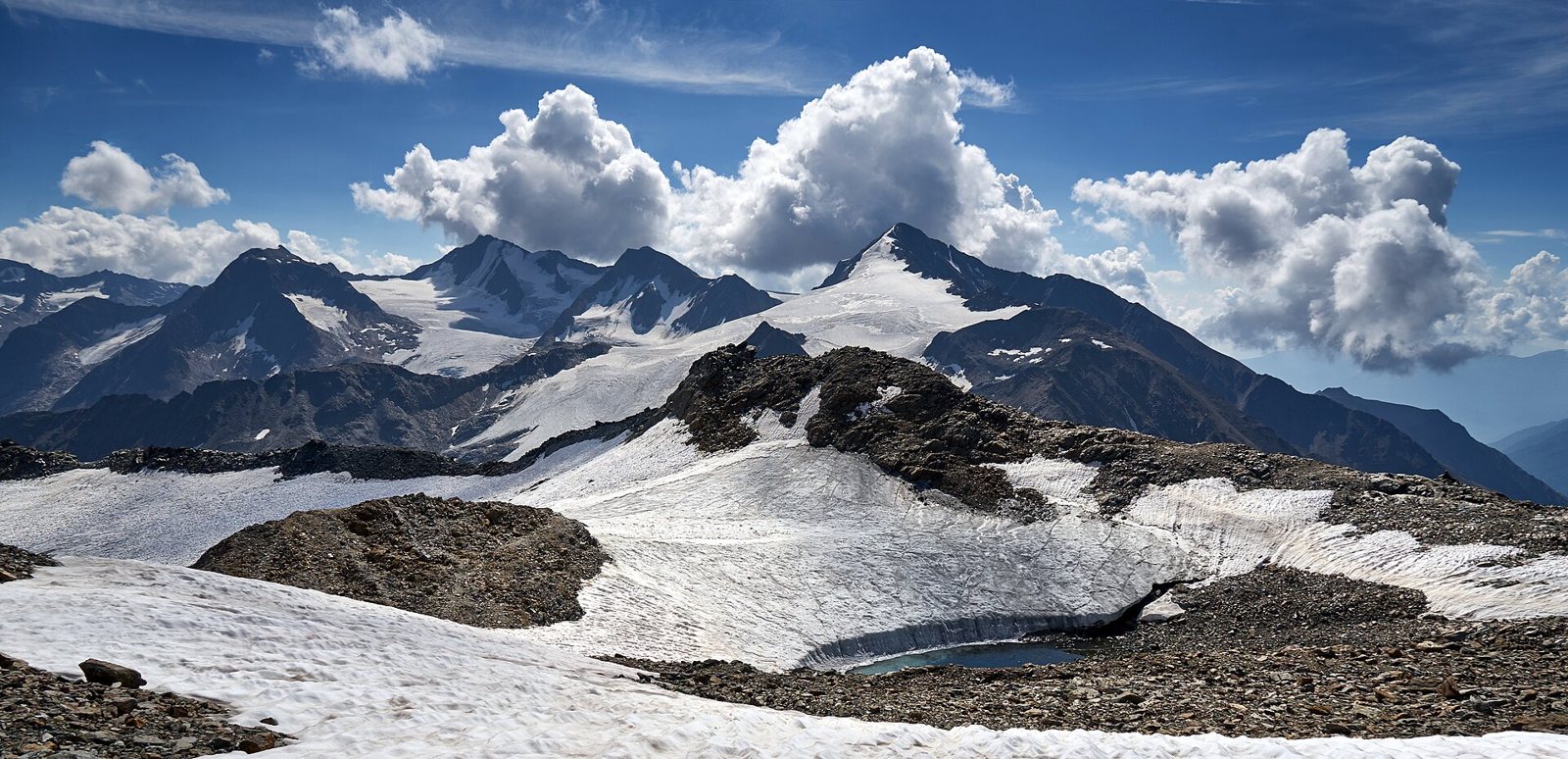
Ötzi the Iceman is a man who died high in the Alps about 5,300 years ago, during the Copper Age. Radiocarbon dating places him broadly between about 3350 and 3100 BCE. Two German hikers, Erika and Helmut Simon, came across his body on 19 September 1991, melting out of the ice at 3,210 metres on Tisenjoch in the Ötztal Alps, just on the Italian side of the border with Austria. He had been shot from behind with an arrow that lodged beneath his left shoulder, and the South Tyrol Museum of Archaeology presents that wound as the main cause of his death. He carried 61 tattoos of lines and crosses, and his last meal was ibex meat and fat, red deer, einkorn wheat and a little bracken fern. Today he rests in a cold cell at the museum in Bolzano, Italy.
Every one of those facts comes with a story attached, and with scientists still working on some of the details. Here is what is known about the man, his clothes, his gear and his last day.
Found in the ice in 1991
On 19 September 1991, Erika and Helmut Simon were walking near Tisenjoch, above the Schnalstal valley, which Italian speakers call Val Senales. They saw a human body sticking out of the melting ice. The museum's account of how he was found notes that the body was at first treated as the remains of a recent mountaineer, someone who had died on the mountain in modern times. It took a while for anyone to understand how old he really was.
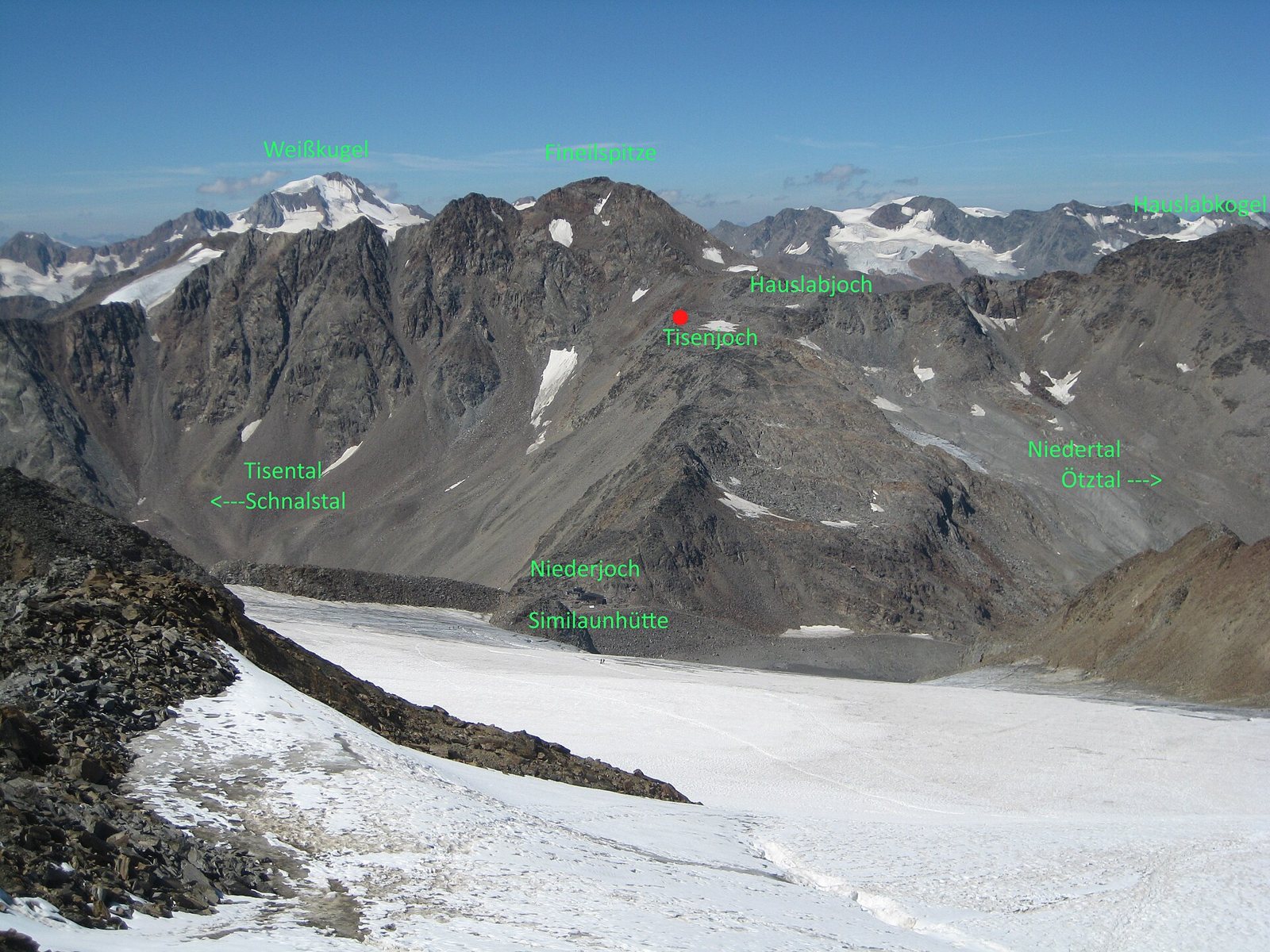
The spot where he lay matters for another reason. It is on the Italian side of the border between Italy and Austria, by just 92.56 metres. That is why Ötzi is cared for in South Tyrol, Italy.
How old is Ötzi?
The museum describes Ötzi as a Copper Age glacier mummy about 5,300 years old. A glacier mummy is a body preserved naturally by ice and cold, with no embalming. Scientists dated him with accelerator mass spectrometry radiocarbon dating, a method that counts the radioactive carbon left in once-living material. The results place his remains broadly between about 3350 and 3100 BCE, and later calibrations narrow that down within the same range.
Ötzi's own kit shows what the Copper Age means in practice: he carried a copper axe alongside a flint dagger and flint-tipped arrows. If you want to know more about how bones and bodies are dated, our story on how old bones are covers radiocarbon dating in plain terms.
How did Ötzi die?
Ötzi was shot in the back with a flint-tipped arrow. For years after he was found, nobody knew. Then, in 2001, an X-ray showed a flint arrowhead lodged beneath his left shoulder, with the entry wound in his back. Gostner and Egarter-Vigl described the arrow injury in a 2002 radiological report. In 2007, Pernter and colleagues used CT scans to show that the arrow had damaged the left subclavian artery, a large blood vessel below the collarbone, and concluded that he died of severe blood loss, which doctors call hemorrhagic shock.
The museum presents the arrow wound as the main cause of death. It also records a severe head injury, which may have come from a blow or from a fall.
On how quickly he died, scientists do not agree. Earlier interpretations treated the arrow wound as fatal within a short time. Ramm and colleagues reported evidence from blood clots suggesting that Ötzi may have survived the wound for a while. In 2025, a clinical reassessment by Weber, Wahl, Samadelli and Zink argued that heavy external bleeding was unlikely and that he may have lived for several hours. The same team questioned whether the head injury was an injury at all, because the features in the skull and brain could reflect changes from mummification rather than a blow.
So, everyone agrees he was shot from behind with an arrow and that it played a central part in his death. What is still argued over is how fast he died and whether the head injury was real.
What do Ötzi's tattoos mean?
Ötzi has 61 tattoos, and nobody knows for certain what they meant. They are simple marks, lines and small crosses, on his ribcage, lower back, wrist, knee, calves and ankles. According to the museum, they were made by cutting fine incisions into the skin and rubbing powdered charcoal into them. Many sit where clothing would have hidden them.
Their placement is the main clue. Many of the tattoos lie over joints and over parts of the body where Ötzi had wear and probably pain, such as his lower back and knees. That supports the idea that they had a therapeutic use, a kind of treatment for aches. The museum treats this as a hypothesis, a reasonable idea that has not been proven.
People often ask whether Ötzi's tattoos prove that acupuncture existed in Europe long before it was recorded in China. The tattoos' link to sore spots is suggestive, but the therapeutic reading is still a hypothesis, and nothing more than that is established. For anyone interested in the long history of marking the skin, they are a good place to start. Our pages on skeleton tattoo meaning and skull tattoo meaning pick up the story thousands of years later.
What Ötzi wore
Ötzi's clothes survived with him, which is rare for someone so old. The museum's clothing collection shows an outfit made from hide, leather and braided grass, sewn together with animal sinew, grass fibres and tree bast, the fibrous inner bark of trees.
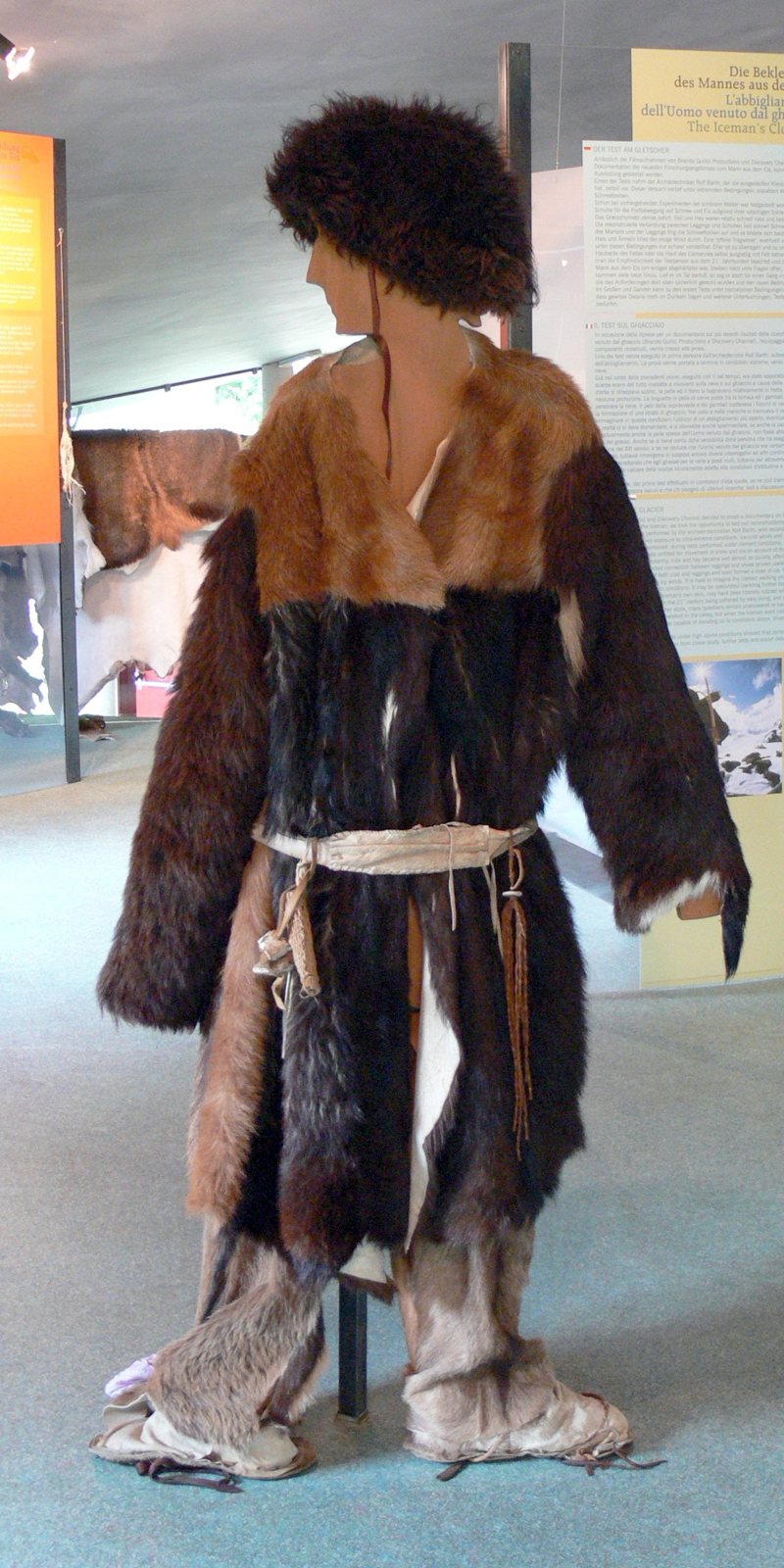
He wore a coat made from goatskin and sheepskin, leggings of goatskin and a sheepskin loincloth. A leather belt held a pouch. His shoes were insulated and padded with grass, and on his head he wore a bearskin cap. There was no woven wool or textile clothing among his things. A woven grass object that was once described as a cape is now read more cautiously as a rain mat or part of a backpack.
It is a full set of mountain clothing from more than 5,000 years ago, made from what the animals and plants of the Alps could supply.
What Ötzi carried
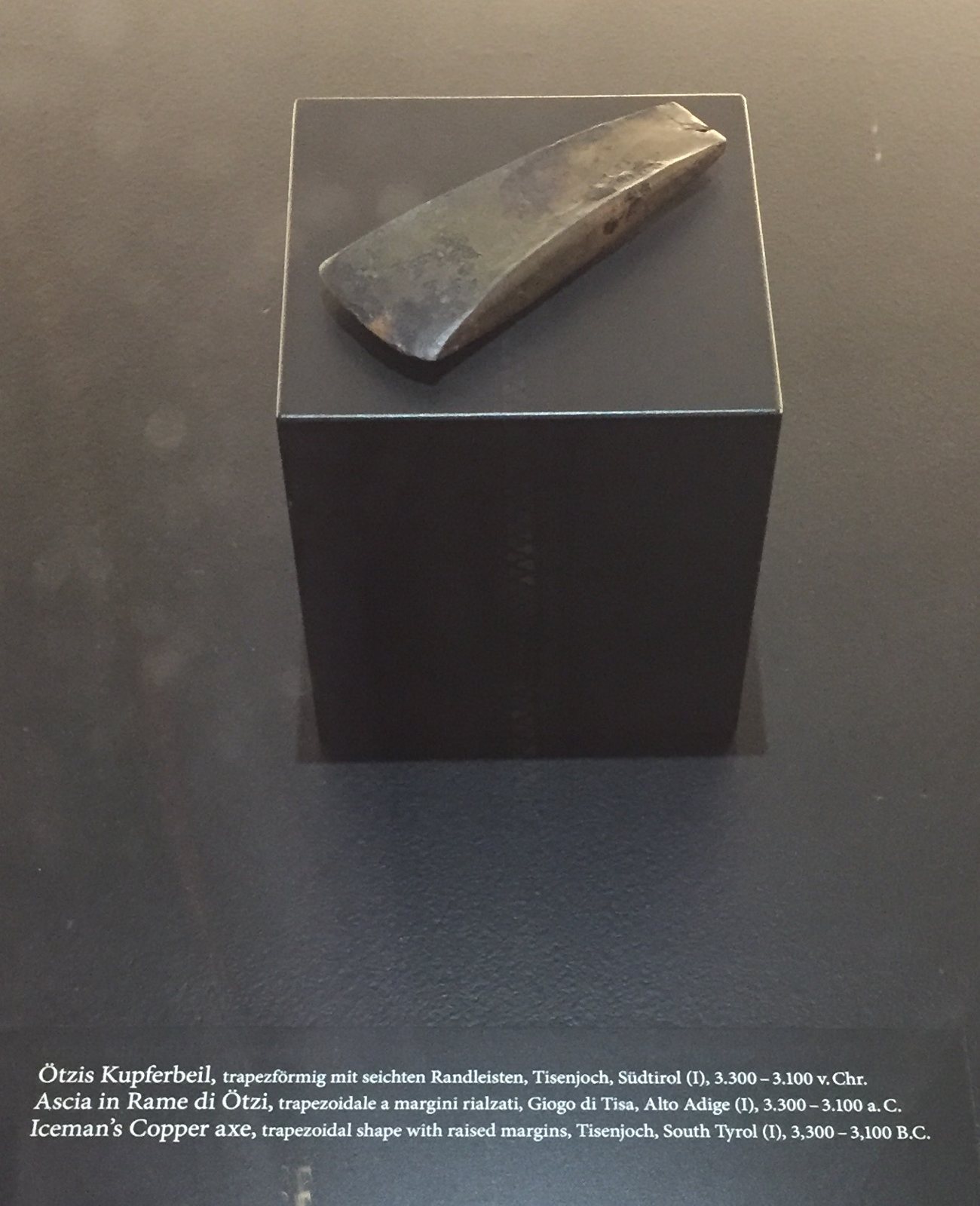
Ötzi's equipment is one of the reasons he is famous. The museum's equipment pages list a copper axe with a blade of 99.7 percent pure copper set in a handle, or haft, of yew wood. Analysis linked the copper to ore associated with southern Tuscany, far from the Alps where he died. People ask why he was carrying a copper axe. The axe does not answer that directly, but it does show that the copper in his hands had come a long way to reach him.
He also carried a flint dagger and an unfinished yew bow. He had a quiver made of deer hide, with arrows, and birch-bark containers. There was a retoucher, a tool for sharpening flint, a frame from a backpack and materials for making fire.
Put together, it is the kit of someone equipped to travel, hunt, mend his tools and keep warm in the mountains, which fits what scientists learned from his stomach.
Tap or hover a row to highlight it.
| Fact | Detail |
|---|---|
| FactFound | Detail19 September 1991, by Erika and Helmut Simon |
| FactPlace | DetailTisenjoch, 3,210 m, South Tyrol, Italy |
| FactAge | DetailAbout 5,300 years |
| FactRadiocarbon range | DetailAbout 3350 to 3100 BCE |
| FactTattoos | Detail61 lines and crosses |
| FactMain fatal injury | DetailFlint arrowhead wound beneath the left shoulder |
| FactLast meal | DetailIbex fat and meat, red deer, einkorn wheat, traces of bracken fern |
| FactWhere he is now | DetailSouth Tyrol Museum of Archaeology, Bolzano |
| FactKept at | DetailAbout -6 °C and 99 percent relative humidity |
What was Ötzi's last meal?
Ötzi's last meal was rich in fat: ibex meat and fat, red deer, einkorn wheat and traces of bracken fern. In 2018, Frank Maixner and colleagues at Eurac Research published a detailed study of his stomach contents. They combined microscopy, ancient DNA, proteins and lipids, the fats in the food. DNA helped identify the animals, and the other tests rebuilt what the meal was made of.
The lipids showed that ibex supplied both meat and a large amount of fat. The meal was unusually high in energy, which is consistent with someone making a hard trek at high altitude. People ask why Ötzi went so high into the mountains, and this is the closest the evidence comes to an answer: he had eaten like a person preparing for, or in the middle of, strenuous travel. The researchers also concluded that the meat was probably fresh or dried and had not been heated above about 60 °C.
An earlier study, published in 2002 by Rollo and colleagues, looked at food further along his intestines. It identified an earlier meal of ibex, plants and cereals, followed by a meal of red deer and possibly cereals. The two studies fit together. The 2002 work sampled food from earlier in his digestion, and the 2018 work looked at what was still in his stomach when he died.
Where is Ötzi now?
Ötzi is at the South Tyrol Museum of Archaeology in Bolzano, Italy, where he has been on display, together with his clothing and equipment, since 1998. The permanent exhibition fills three floors. It shows the mummy, his original equipment and clothing, the world of the Copper Age, the medical research on his body and a life-sized reconstruction of how he may have looked in life.
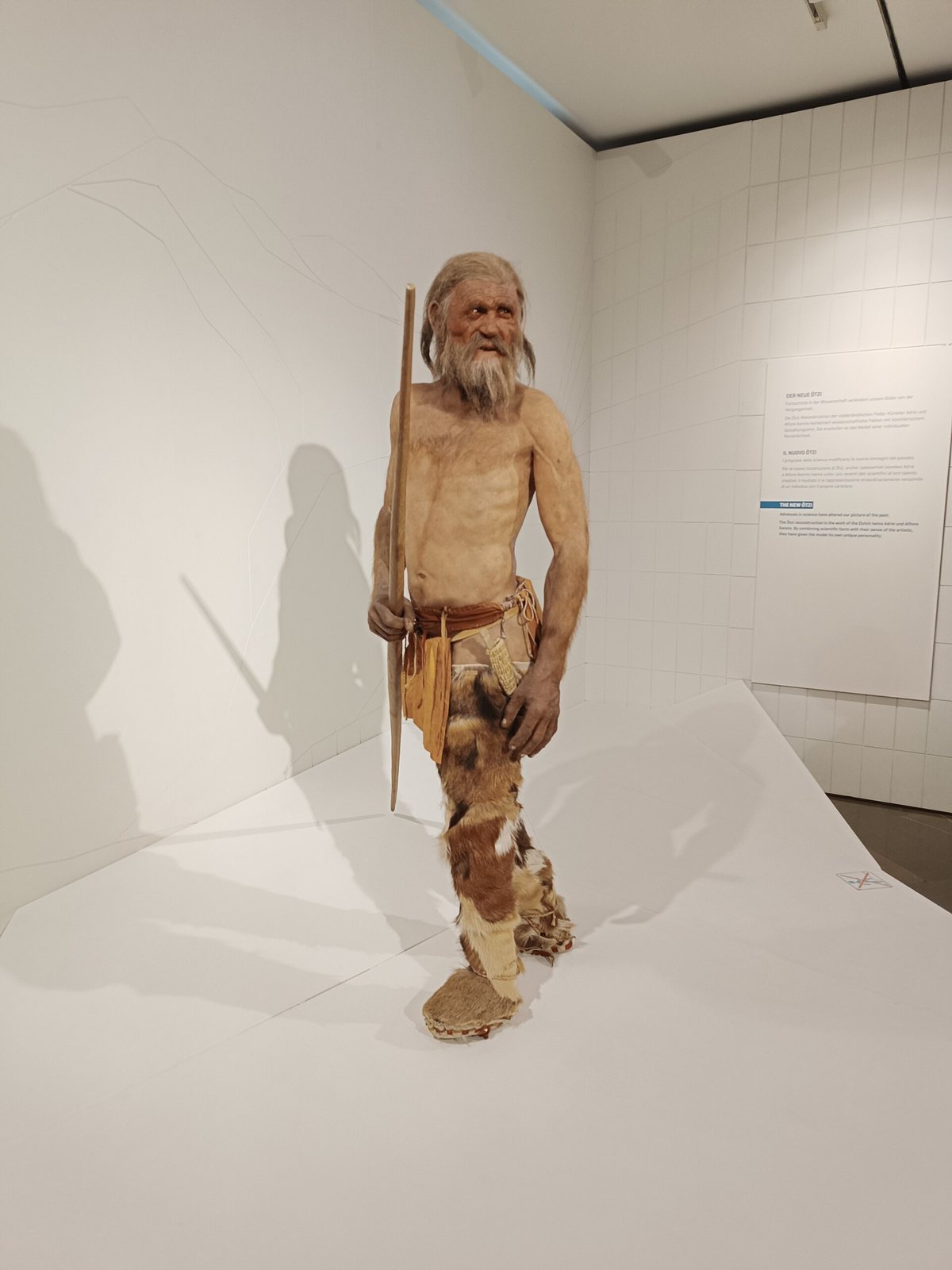
The museum keeps his body in conditions close to the glacier that preserved him. He lies in a specially designed refrigerated chamber at about -6 °C and 99 percent relative humidity, and the temperature, humidity and other conditions are monitored all the time. Visitors see him through a small window into the cold cell, and nobody walks into the chamber to view him. If you plan to visit, check opening hours and tickets on the museum's own site.
Ötzi, from the Copper Age to today
Tap or hover a step to follow the order.
About 3350 to 3100 BCE
Ötzi lives and dies in the Alps during the Copper Age.
19 September 1991
Erika and Helmut Simon come across his body at Tisenjoch.
1998
Ötzi goes on display at the South Tyrol Museum of Archaeology in Bolzano.
2001
An X-ray reveals a flint arrowhead beneath his left shoulder.
2007
CT research links the wound to damage near the left subclavian artery.
2018
Maixner and colleagues publish the study of his stomach contents.
2025
Weber and colleagues reassess how long he survived and the reported head injury.
Frequently asked questions
The questions people ask most about Ötzi, answered briefly.
How did Ötzi die?
He was shot from behind with a flint-tipped arrow that lodged beneath his left shoulder. A 2007 CT study linked the wound to fatal blood loss from the left subclavian artery, while a 2025 reassessment argues he may have lived for several hours afterward.
What was in Ötzi's stomach?
His stomach held ibex meat and fat, red deer, einkorn wheat and traces of bracken fern. Ancient DNA identified the animals, and the meal was so high in fat and energy that it fits strenuous travel in the mountains.
Where is Ötzi today?
He is at the South Tyrol Museum of Archaeology in Bolzano, Italy. He is kept in a cold cell at about -6 °C and seen through a small window.
How old is Ötzi?
He is about 5,300 years old. Radiocarbon dating places his remains broadly between about 3350 and 3100 BCE, in the Copper Age.
What tattoos did Ötzi have?
He had 61 tattoos, mostly lines and crosses, on his lower back, ribcage, wrist, knee, calves and ankles. They were made by rubbing charcoal into fine cuts, and their position over worn, painful joints suggests a possible therapeutic use.
Ötzi the Iceman quiz
Answer every question to check.
More people the ground and the ice kept
Ötzi belongs with the other people whose bodies were preserved by nature or by care. The bog bodies of northern Europe were kept by cold peat, the Chinchorro mummies of Chile and the mummies of Guanajuato in Mexico each have their own story, and the people of Pompeii and Herculaneum were buried by a volcano. To see how faces like Ötzi's reconstruction are rebuilt from a skull, read our story on facial reconstruction, and for what bones alone can reveal, see what bones tell archaeologists.
Terms in this story
Tap a term to see what it means.
Copper Age. The period in which Ötzi lived, when copper tools such as his axe were used alongside stone ones such as his flint dagger.