

No. 119
Neanderthal Skull vs Human Skull: How to Tell Them Apart
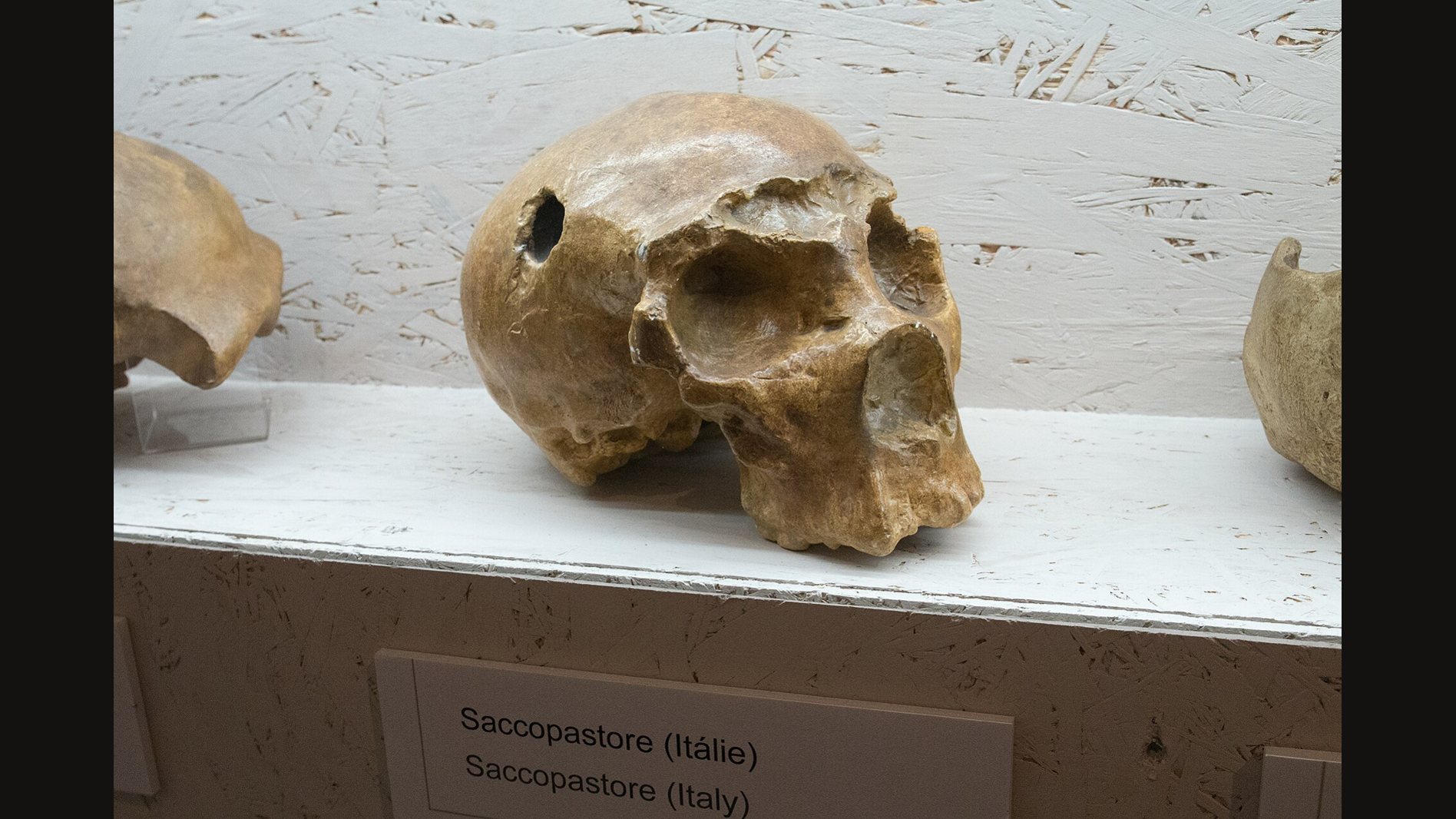
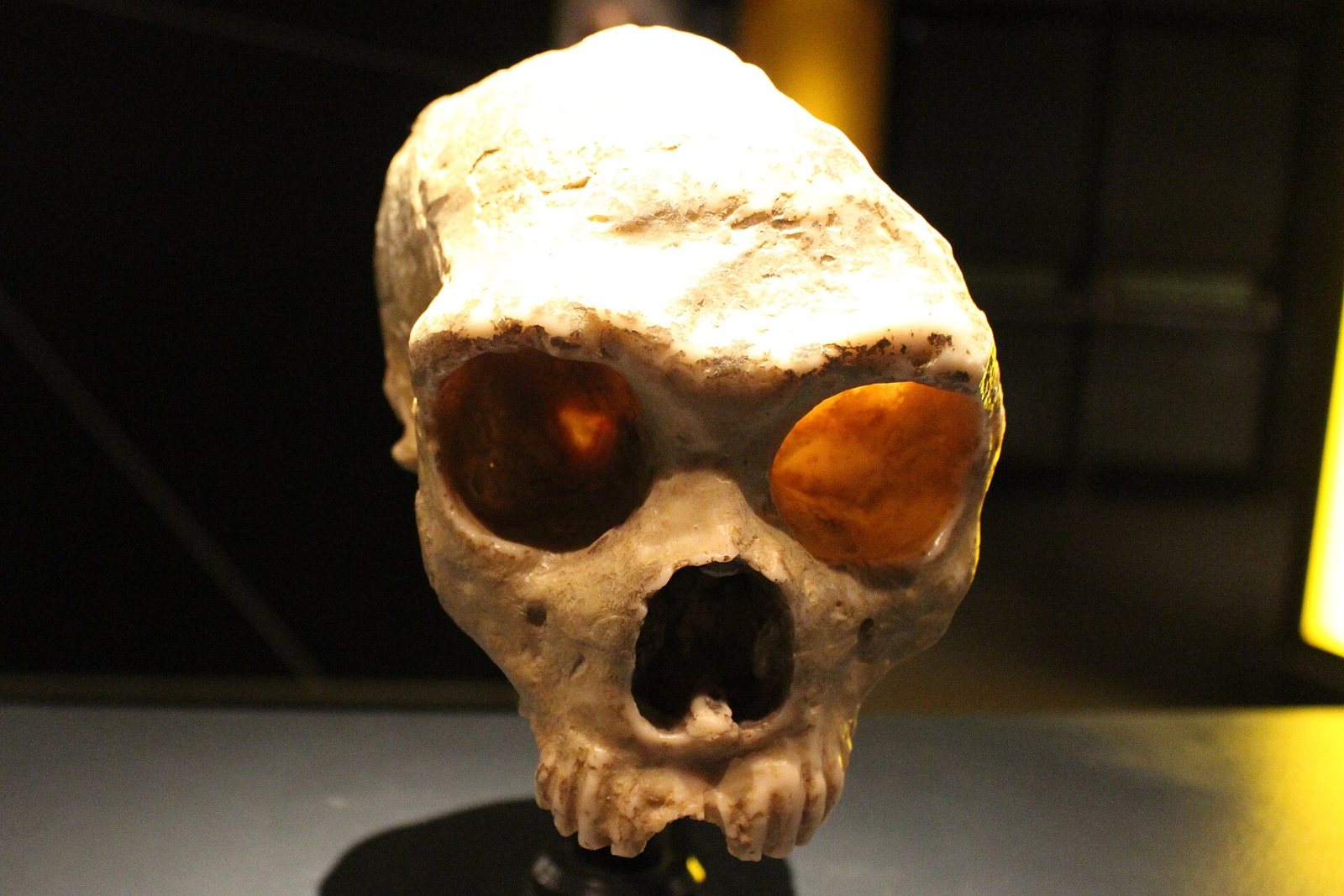
Put a Neanderthal skull next to a modern human one and the first things you notice are the brow, the forehead and the chin. A Neanderthal skull usually has a large, continuous brow ridge, a low and receding forehead, a long and low braincase, a face that projects forward in the middle, a very large nasal opening and no projecting chin. At the back, the braincase often forms a bulge called an occipital bun. A modern human skull is rounder, with a taller forehead, smaller brow ridges, a flatter face tucked under the forehead and a distinct chin. These are patterns across many skulls, not a test that sorts every single fossil. What the differences say about Neanderthals is more interesting than the shapes themselves, and it starts with the brain.
The differences, feature by feature
The Smithsonian Human Origins Program and the Natural History Museum in London describe the same set of features, and the table below lines them up. Read each row as a tendency, since individual skulls vary.
Tap or hover a row to highlight it.
| Feature | Neanderthal pattern | Modern human pattern |
|---|---|---|
| FeatureBrow ridge | Neanderthal patternLarge and often continuous | Modern human patternGenerally smaller |
| FeatureForehead | Neanderthal patternLow and receding | Modern human patternTaller and more vertical |
| FeatureBraincase | Neanderthal patternLong, low and often oval from above | Modern human patternMore globular |
| FeatureMidface | Neanderthal patternProjects forward | Modern human patternMore tucked beneath the forehead |
| FeatureNose | Neanderthal patternLarge nasal opening, with a broad external nose inferred from the skeleton | Modern human patternSmaller nasal opening on average |
| FeatureChin | Neanderthal patternUsually absent or weak | Modern human patternDistinct projecting chin |
| FeatureRear of skull | Neanderthal patternOccipital bun often present; suprainiac fossa common | Modern human patternOccipital bun generally absent |
| FeatureBrain volume | Neanderthal patternOften as large as or larger than modern human values, with overlapping ranges | Modern human patternOverlapping range, generally a different shape |
Two terms in that table deserve a closer look. The occipital bun is a rounded projection at the back of the skull. The suprainiac fossa is a small depression in the same area, linked to the attachment of neck muscles, and the Natural History Museum lists it among Neanderthal features. Seen from above, a Neanderthal braincase tends to look oval, and a modern human one more rounded.
Brain size and brain shape
Who has bigger brains, humans or Neanderthals? The numbers overlap. The Natural History Museum gives a Neanderthal range of at least about 1,200 to 1,750 cubic centimetres, and says their brains were as large as modern human brains but differently shaped. The museum's Swanscombe fossil, about 400,000 years old and generally regarded as an early Neanderthal, preserves impressions of brain folds and blood vessels. Its brain matched a modern human brain in size and differed in form. The museum's page on the first adult Neanderthal skull makes the same point.
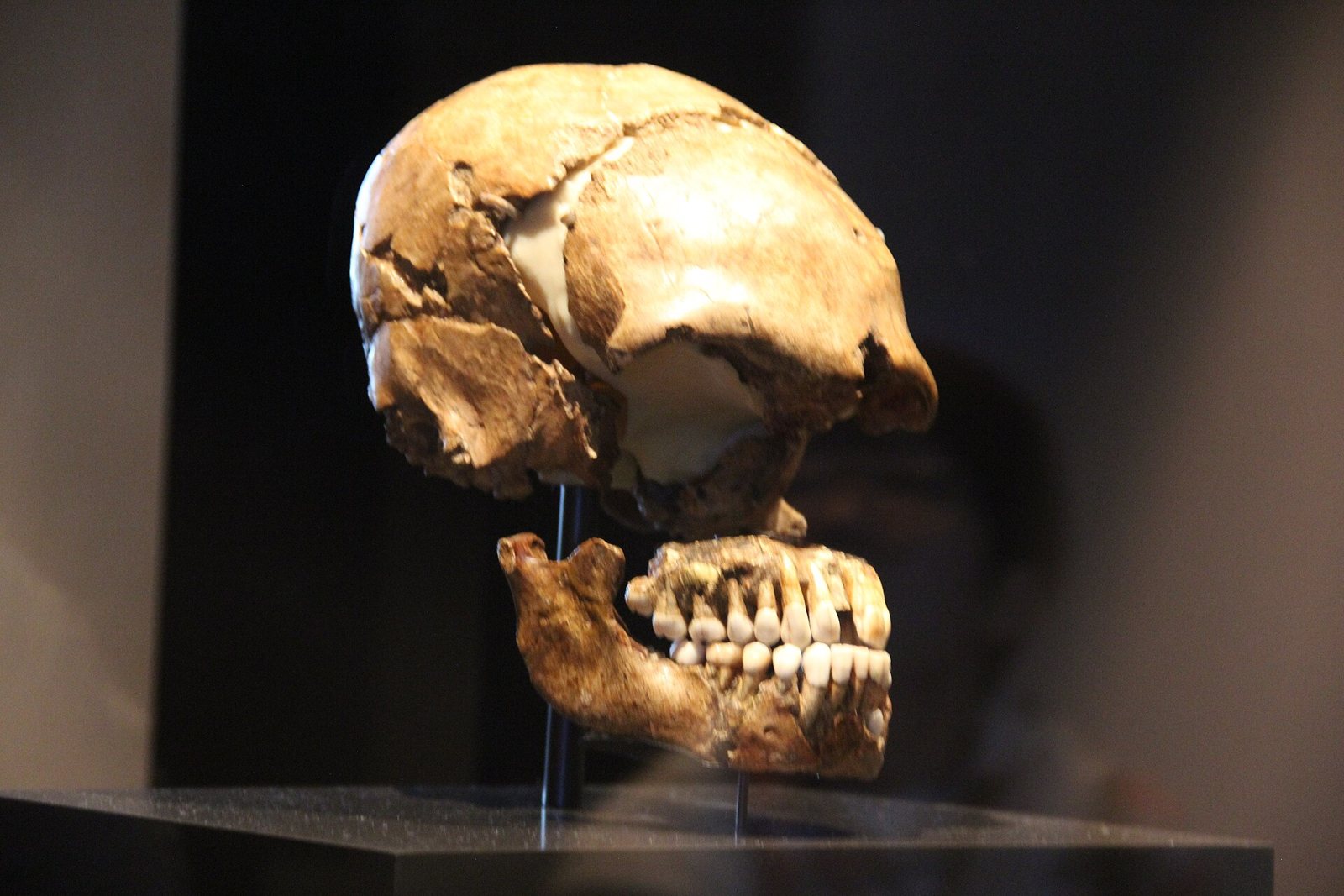
The rounder, more globular brain of modern humans developed over time. Philipp Gunz and colleagues used CT scans and geometric morphometrics on 20 *Homo sapiens* fossil endocasts, the internal casts of braincases. In The evolution of modern human brain shape, they report that brain size in early *Homo sapiens* 300,000 years ago was already in the modern range, while the globular shape developed gradually between about 100,000 and 35,000 years ago.
Does a bigger brain mean a smarter species? Volume and endocast shape do not directly measure intelligence, language or social ability, and scientists disagree about how particular brain-shape differences relate to thinking. The Natural History Museum notes Neanderthal skill at hunting and toolmaking, their use of fire, care for injured group members, burial practices and symbolic activity. So, who was smarter? There is no reliable scientific ranking between the two species, and brain size cannot give a simple score.
Four skulls worth knowing
Behind the textbook comparison are real finds with names, places and dates. Many replicas in shops and classrooms are casts of these.
Four Neanderthal skulls and where they are held
Tap a card to bring it forward.
- Feldhofer 1 (Neanderthal 1): Recovered in 1856 in the Feldhofer Cave, Neander Valley, near Düsseldorf, Germany. The original is associated with collections in Bonn, and casts are held by museums including the Neanderthal Museum and the Smithsonian.
- Gibraltar 1: Recovered in 1848 at Forbes' Quarry, Gibraltar. An adult female skull held by the Natural History Museum in London.
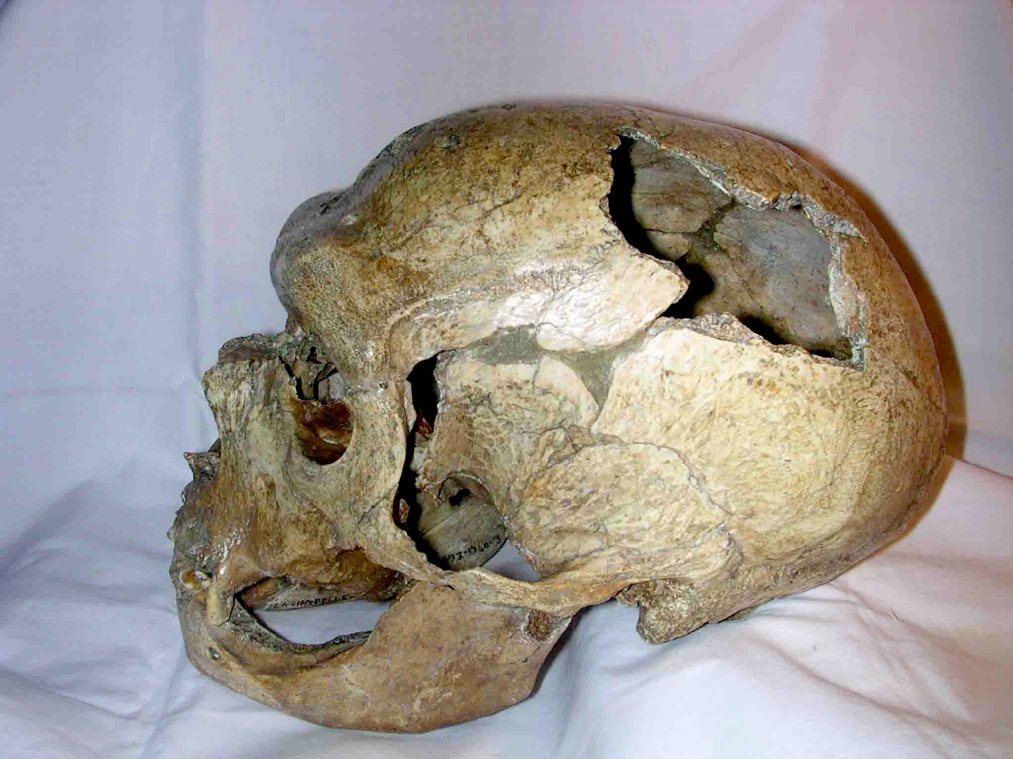
- La Chapelle-aux-Saints: Discovered in 1908 in Corrèze, France, by Amédée and Jean Bouyssonie and L. Bardon. About 60,000 years old and held in French museum collections, including the Muséum national d'Histoire naturelle.
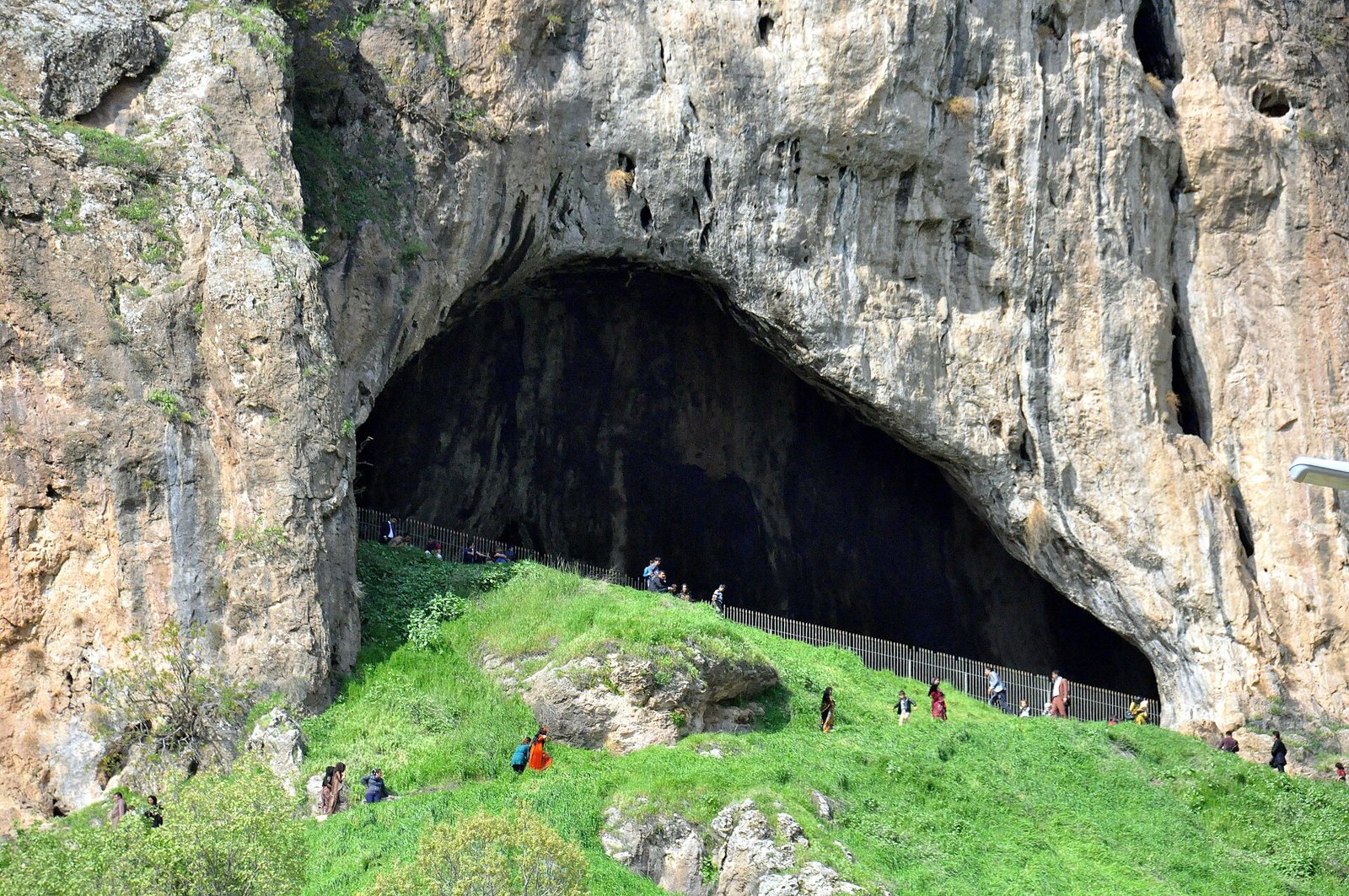
- Shanidar: From Shanidar Cave in Iraqi Kurdistan. Shanidar 3 is dated to 45,000 to 35,000 years ago, one of ten Neanderthal individuals from the cave.
Feldhofer 1 was the first Neanderthal fossil recognized as a distinct ancient human. It became the type specimen for *Homo neanderthalensis*, the species name given in 1864. Gibraltar 1 turned up eight years before Feldhofer, which makes it the first adult Neanderthal skull ever discovered, though its importance was only recognized after the German fossils had been identified. The "Old Man" of La Chapelle-aux-Saints, as the Smithsonian notes, was the first relatively complete Neanderthal skeleton to be discovered.
Shanidar adds a human story. The Smithsonian's page on Shanidar 3 places the individual between 45,000 and 35,000 years ago. Shanidar 1 suffered serious injuries, including damage to the left eye socket and to the brain area controlling the right side of the body, yet lived to an estimated 35 to 45 years.
What Neanderthal DNA means
What does it mean if you have a Neanderthal skull? It does not mean anything about your own head. A living person does not have a Neanderthal skull because a brow or face resembles a reconstruction. Modern people vary widely, and the shape of a skull cannot diagnose Neanderthal ancestry.
What can show a link is DNA. Svante Pääbo's genome research showed that Neanderthals interbred with the ancestors of modern humans. The Smithsonian reports that people with ancestry outside Africa generally carry about 1% to 4% Neanderthal-derived DNA, with the amount varying by population and region. Some Neanderthal gene variants therefore entered modern populations through ancient gene flow. That does not make a living person a Neanderthal, and it does not mean any inherited trait looks Neanderthal. Pääbo received the 2022 Nobel Prize in Physiology or Medicine for discoveries about extinct hominin genomes and human evolution, as the Nobel Prize committee explains.
Is there a child of a Neanderthal and a *Homo sapiens*? No individual is known by name as a confirmed first-generation child of those two groups, though genetic evidence shows they had children together and that some of their descendants contributed DNA to living populations. The famous first-generation case is a different pairing. The young person nicknamed Denny, formally Denisova 11, was found in Denisova Cave in Siberia and had a Neanderthal mother and a Denisovan father.
What Neanderthals looked like
Faces of Neanderthals come from reconstruction. Specialists work from skull anatomy, comparative fossils, estimates of muscle and tissue, and in some cases genetic evidence. Reconstructions usually show heavy brow ridges, a broad projecting nose, a large midface, a low forehead and a robust jaw. They are informed interpretations, not photographs. The Natural History Museum explains how it built its model in Bringing a Neanderthal to life, and the Smithsonian shows John Gurche's Shanidar 1 reconstruction among its reconstructed faces.
Colour is harder. In 2007 Carles Lalueza-Fox, Holger Römpler, Michael Hofreiter and colleagues identified a Neanderthal-specific MC1R variant in remains from El Sidrón, Spain, and Monti Lessini, Italy. Their experiments suggested the variant reduced MC1R activity and could have been linked to pale skin and red hair in some individuals, as they describe in A melanocortin 1 receptor allele suggests varying pigmentation among Neanderthals. That result applies to those individuals. It does not show that every Neanderthal had red hair or pale skin, and it does not establish eye colour for the species.
One reconstruction has a local twist. A skull fragment lifted from the North Sea floor off the Dutch coast, dated to about 50,000 to 70,000 years ago, became a Neanderthal the Kennis brothers rebuilt as a young man named Krijn, with a small tumour above his right eyebrow. The Rijksmuseum van Oudheden tells the story in The first Dutch Neanderthal now has a face.
When and for how long
Who existed first? Neanderthals and *Homo sapiens* grew from a shared ancestral population. The Neanderthal lineage was established in Europe by about 400,000 years ago, while *Homo sapiens* evolved in Africa by at least about 300,000 years ago. Whether "humans" came first depends on whether you mean *Homo sapiens* or the broader genus *Homo*.
Are there Neanderthals alive today? No living Neanderthal population is known. The fossil and archaeological record ends at about 40,000 years ago, although Neanderthal-derived DNA remains in many living human populations.
How long did a Neanderthal live? A single average is not secure, because fossil samples are incomplete and shaped by childhood deaths, accidents, disease and what survives in the ground. In one sample discussed by Trinkaus, about 80% of Neanderthal adults aged 20 or more died before 40, and some individuals reached their forties and beyond. Neanderthal Demographic Estimates by Bocquet-Appel and Degioanni takes up the evidence, and Shanidar 1 is a reminder that survival into the forties was possible.
Neanderthals in time
Tap or hover a step to follow the order.
About 400,000 years ago
The Neanderthal lineage is established in Europe
About 300,000 years ago
Early Homo sapiens brains already fall within the modern human size range
1848
Gibraltar 1 is discovered at Forbes' Quarry
1856
Neanderthal 1 is discovered in the Neander Valley
1864
Homo neanderthalensis is named as a species
1908
The La Chapelle-aux-Saints skeleton is discovered in France
1957
Shanidar 3 is discovered in Shanidar Cave, Iraq
1997
Neanderthal mitochondrial DNA is recovered from fossil remains
2010
Neanderthal genome research establishes substantial evidence of gene flow into modern human ancestors
2018
Denny is identified genetically as a Neanderthal and Denisovan first-generation child
2022
Svante Pääbo is awarded the Nobel Prize in Physiology or Medicine
Questions people ask
What are the differences between Neanderthal skulls and human skulls?
Neanderthal skulls commonly have heavier brow ridges, a lower forehead, a longer and lower braincase, a projecting midface, a larger nasal opening, an occipital bun and no strong chin. Modern human skulls are generally rounder, with a taller forehead, a flatter face and a chin. These are statistical patterns, not absolute rules.
What does it mean if I have a Neanderthal skull?
Nothing about your ancestry can be read from the shape of your head. A brow or face that resembles a reconstruction does not make a skull Neanderthal, and only DNA testing can show inherited Neanderthal-derived DNA, which most people with ancestry outside Africa carry in small amounts.
Who has bigger brains, humans or Neanderthals?
Average volumes overlap. Neanderthals often had brains as large as or larger than modern humans, but their braincases were longer and lower, while ours are rounder.
Who was smarter, *Homo sapiens* or the Neanderthals?
There is no reliable scientific ranking. Neanderthal brain volume overlapped with ours, and the archaeological record shows skilled hunting, toolmaking, fire use, care for the injured, burial and symbolic activity.
Who existed first, Neanderthals or humans?
It depends on the word "humans." The two lineages come from a shared ancestral population, the Neanderthal lineage was established in Europe by about 400,000 years ago, and *Homo sapiens* evolved in Africa by at least about 300,000 years ago.
Are there Neanderthals today?
No living Neanderthal population is known, and the fossil record ends about 40,000 years ago. Their DNA lives on in many people today through ancient interbreeding.
Who is the child of a Neanderthal and a *Homo sapiens*?
No individual is known by name as a confirmed first-generation child of that pairing. The well-known first-generation child, Denny, had a Neanderthal mother and a Denisovan father.
How long did Neanderthals live?
A single average is not secure. In one sample, about 80% of adults aged 20 or more died before 40, while Shanidar 1 is estimated to have reached about 35 to 45 years.
What did Neanderthals look like?
Reconstructions show heavy brow ridges, a broad nose and a robust jaw, and a genetic variant suggests some individuals may have had pale skin and red hair. Reconstructions are informed interpretations, not photographs.
Neanderthal skull check
Answer every question to check.
Where to go next
If you came for the skull itself, the story of human skull facts covers the modern side of this comparison, and how many bones are in the human body puts the skull in context. For the earliest human skulls, read about the oldest human skull, and for how specialists read age and origin from remains, see what bones tell archaeologists and how old these bones are. If you wonder whether skull shape ever revealed character, the story of the phrenology skull answers that.
Terms in this story
Tap a term to see what it means.
Brow ridge. The bony ridge above the eye sockets. In Neanderthals it is large and often continuous.