

No. 118
Kennewick Man, the Ancient One: Who He Was and Why He Was Reburied
Kennewick Man was a man who lived along the Columbia River in what is now Washington state roughly 8,400 to 8,690 years ago, according to radiocarbon dating. His nearly complete skeleton was found at Kennewick, Washington, in July 1996. The Columbia Plateau tribes call him the Ancient One and count him as their ancestor. For twenty years he was at the center of a fight between scientists who wanted to study him and five tribes who wanted to bury him. Scientists won the right to study him in court in 2004. A 2015 genome study then showed he was more closely related to living Native Americans than to any other population tested, a 2016 law ordered his return, and on February 18, 2017, the five tribes reburied him privately on the Columbia Plateau.
Here is how that happened, told from the riverbank to the reburial, with the scientists and the tribes each in their own words.
A skull in the shallows at Columbia Park
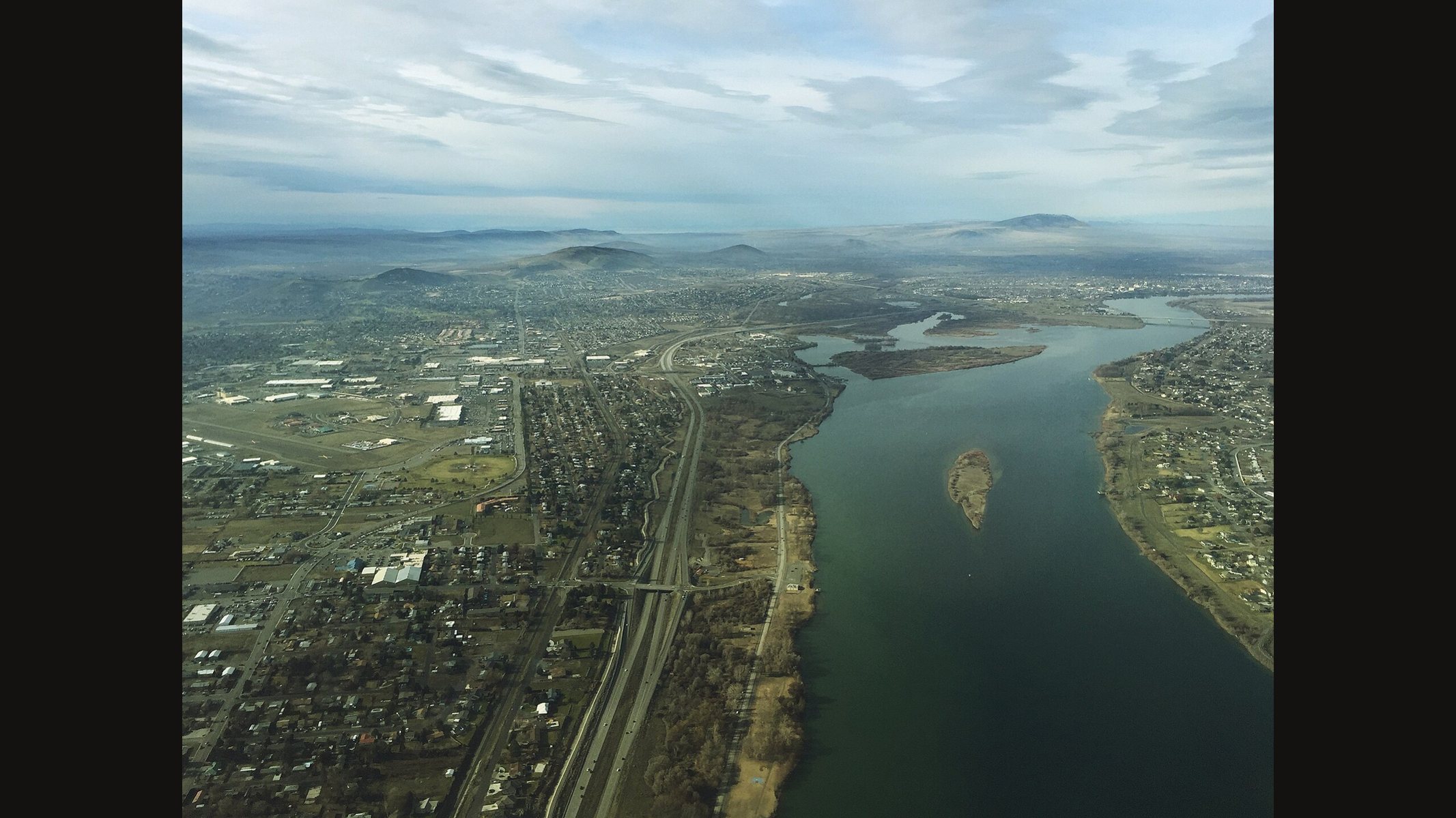
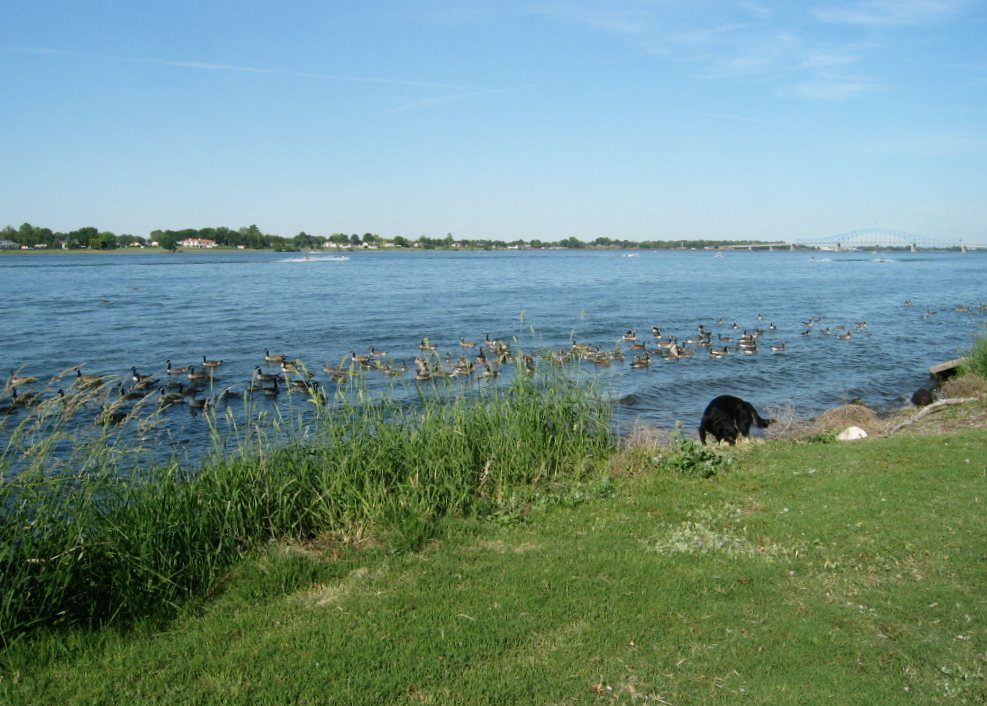
On July 28, 1996, two men attending a boat race at Columbia Park in Kennewick came across part of a human skull in shallow water near the Columbia River bank. Searches of the area recovered a nearly complete male skeleton. The ground belonged to the federal government and was managed by the U.S. Army Corps of Engineers, a detail that shaped everything that followed, because remains on federal land fall under federal law.
One detail stood out from the start. A stone projectile point was lodged in his right hip. Twenty years later, that point was named in the federal law that described his remains, as the Congressional Record shows.
James Chatters, who examined the skeleton early on, sent a piece of bone for radiocarbon dating, and the answer reached back thousands of years.
How old he is
The first radiocarbon result placed the remains at more than 9,000 years old, which made him one of the oldest and most complete skeletons ever recovered in North America. The Ninth Circuit Court of Appeals, in its later opinion, gave a radiocarbon range of 8,340 to 9,200 years before present. Later study narrowed the estimate to 8,400 to 8,690 years before present, the figure the Burke Museum gives today.
The two ranges overlap, and both put him on the Columbia Plateau close to nine thousand years ago. If you want to know how bones are dated in the first place, our story on how old these bones are walks through the methods.
Two names for one man
"Kennewick Man" is the common scientific name, taken from the town where he was found. The people whose homeland includes that stretch of river have their own name for him: the Ancient One.
Five tribes and bands came forward as claimants: the Confederated Tribes of the Umatilla Indian Reservation, the Confederated Tribes of the Colville Reservation, the Confederated Tribes and Bands of the Yakama Nation, the Nez Perce Tribe, and the Wanapum Band of Priest Rapids. They identified him as an ancestor, and their published statements spoke of the long spiritual, cultural and historical relationship between the Columbia Plateau peoples and that land.
Their words carry the heart of the story. Armand Minthorn, a Umatilla religious leader, said their oral histories placed their people in the region since the beginning of time, and he rejected the idea that their ancestors had recently migrated from another continent. Yakama representatives described the continued study of the remains as an interruption of a human being's passage, and said he needed to return to Mother Earth. Umatilla board member Aaron Ashley put it simply, as HistoryLink records: "We always knew the Ancient One to be Indian." He tied that knowledge to the tribes' oral histories.
What the tribes asked for was consistent across all twenty years. They wanted a respectful reburial and no more testing.
The five claimant peoples of the Ancient One
Tap a card to bring it forward.
- Umatilla: The Confederated Tribes of the Umatilla Indian Reservation, whose leaders Armand Minthorn and Aaron Ashley spoke for the Ancient One.
- Colville: The Confederated Tribes of the Colville Reservation, whose members took part in the 2015 genetic comparison.
- Yakama: The Confederated Tribes and Bands of the Yakama Nation, who said he needed to return to Mother Earth.
- Nez Perce: The Nez Perce Tribe, one of the five claimants named in the 2016 law.
- Wanapum: The Wanapum Band of Priest Rapids, one of the five claimants named in the 2016 law.
Eight scientists, a lawsuit and the 2004 ruling
The tribes made their claim under the Native American Graves Protection and Repatriation Act, known as NAGPRA, a 1990 federal law that provides for the return of Native American remains and cultural items to tribes and descendants. The federal government first agreed with them. It determined that the remains were Native American and should be returned.
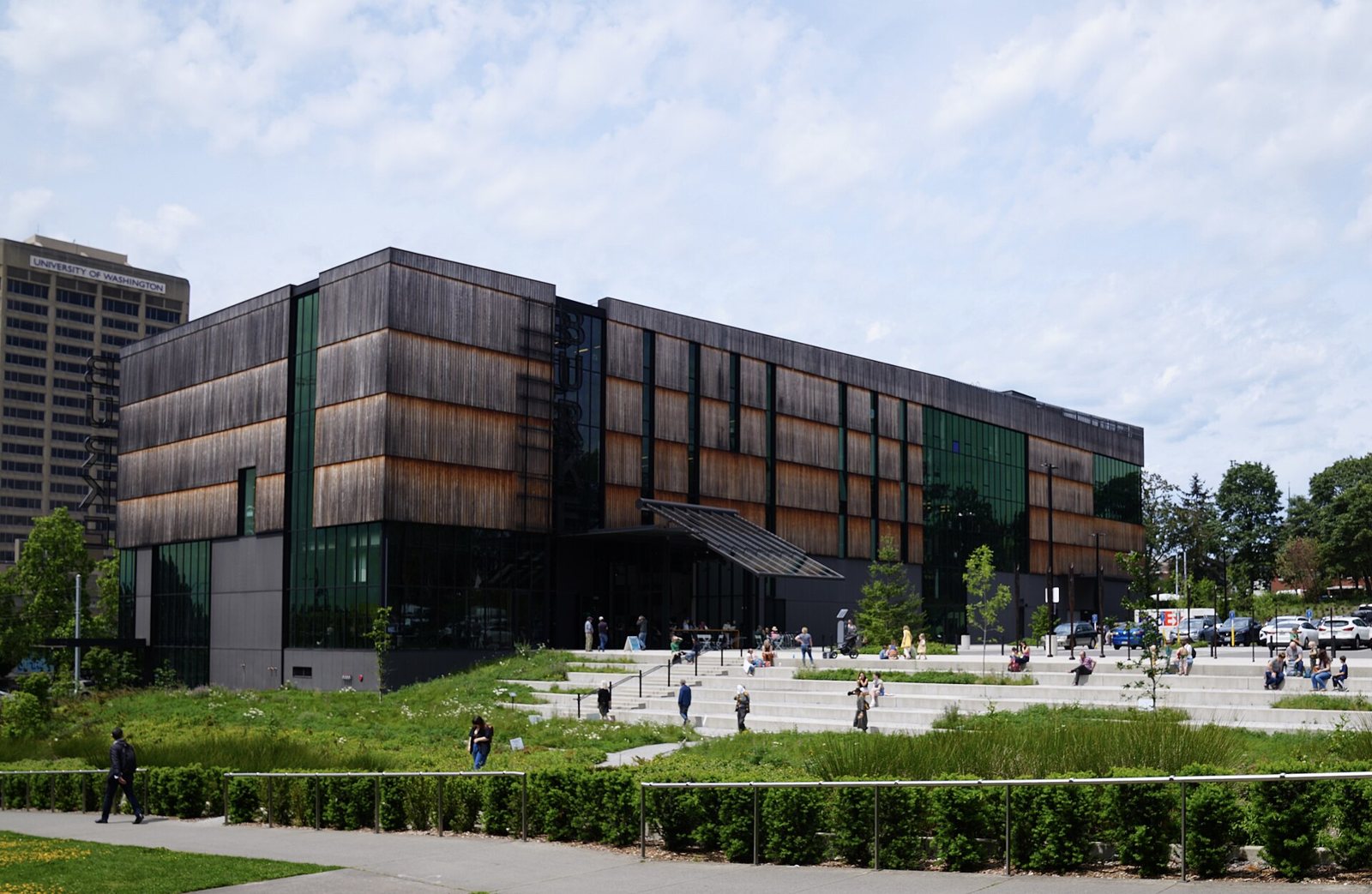
Eight scientists, led by Smithsonian physical anthropologist Douglas Owsley, sued to stop the transfer and to win access to study the skeleton. In 1998, while the case moved through the courts, the remains went to the Burke Museum for secure care under Army Corps custody, where they stayed until 2017.
In 2002 a federal district court ruled that NAGPRA did not apply, because the government had not established a cultural affiliation between the remains and a present-day tribe. On April 19, 2004, the Ninth Circuit upheld that decision in Bonnichsen v. United States. The ruling cleared the way for scientific study, and for the tribes it meant the Ancient One stayed out of the ground.
What the scientists studied
Owsley and his colleagues studied the remains at the Burke Museum from 2004 through 2006. Their work looked closely at the shape of the skull and skeleton. Based on that skeletal shape, they described affinities with Circum-Pacific populations, including Ainu and Polynesian groups, and reported no demonstrated relationship to modern Native Americans.
That reading came from comparing bone shapes, and it was contested. The question of who his relatives were had been argued from measurements of a skull. Within a decade, a different kind of evidence would answer it more directly. Our story on what bones tell archaeologists covers what skeletal study can and cannot show about a person's life.
What his DNA showed in 2015
In June 2015 Rasmussen and colleagues published the Ancient One's genome in *Nature*. They had extracted genome-wide DNA from a hand bone and compared it with genetic data from around the world.
The result was clear on the main question. He was more closely related to living Native Americans than to any other population tested, including Europeans, Ainu and Polynesians. Members of the Confederated Tribes of the Colville Reservation took part in the comparison.
The authors were also careful about what the result did not settle. Their comparison panel of modern Native American groups was too limited to identify one specific modern tribe as his descendants, or to prove that he was a direct ancestor of the Colville people. What it did support was a close relationship between the Ancient One and Native American populations, the same relationship the tribes had described all along.
So, when people ask what his DNA says, the answer has two parts: he belongs to the ancestry of Native Americans, and the genetic data available in 2015 could not tie him to a single named tribe.
The 2016 law and the return
The DNA result changed the government's position. After the 2015 study and an independent validation in 2016, the Army Corps of Engineers determined that the remains were Native American for NAGPRA purposes.
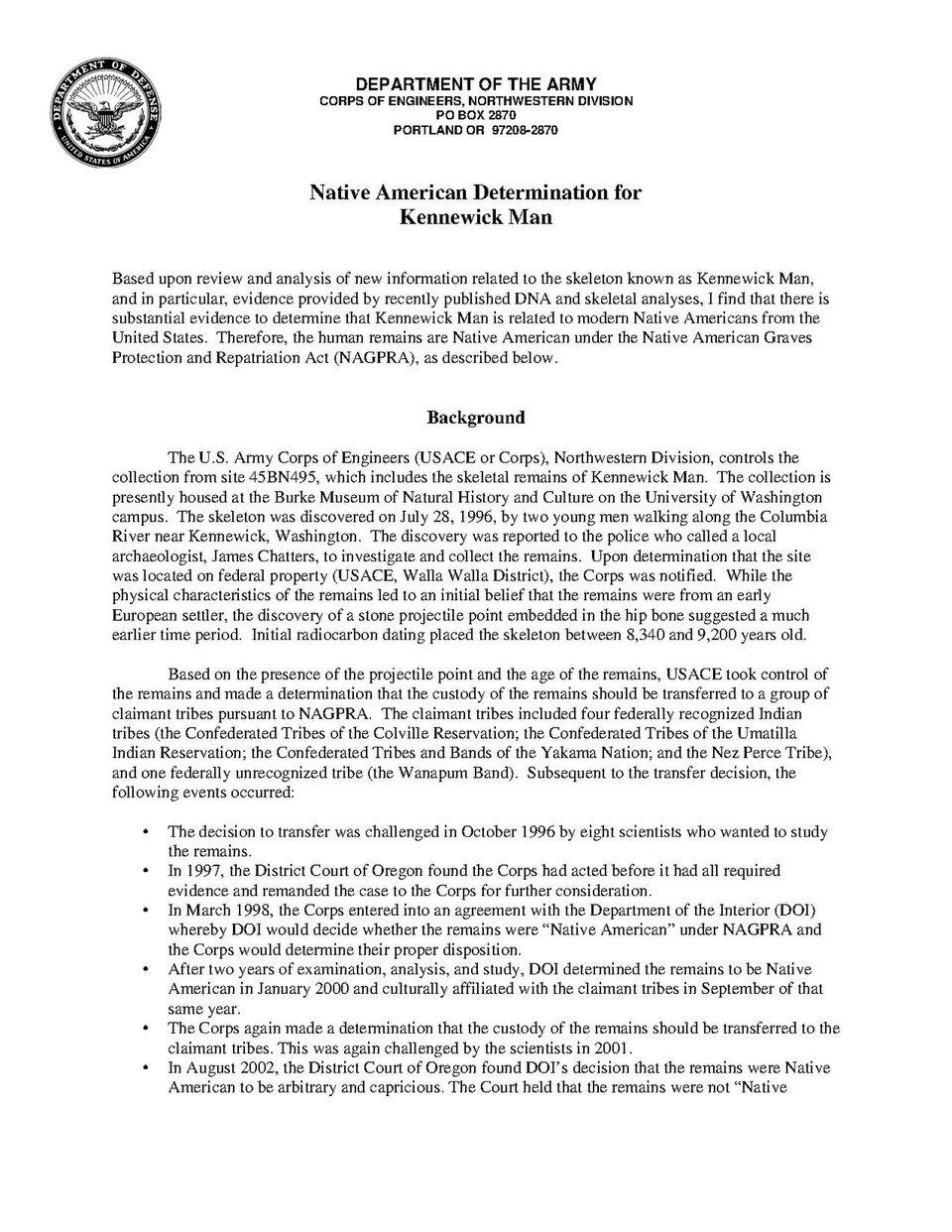
Congress then settled the matter in law. A Kennewick Man provision went into the Water Infrastructure Improvements for the Nation Act, which President Barack Obama signed on December 16, 2016. The provision named the remains as Kennewick Man or the Ancient One. It required the Corps to transfer them within 90 days to the Washington State Department of Archaeology and Historic Preservation, which would return them to the five claimant tribes, and it required the tribes to agree on a burial place in Washington.
Reburial on the Columbia Plateau
On February 17, 2017, the remains were transferred at the Burke Museum to the tribes' representatives. The next day, February 18, 2017, the five tribes laid the Ancient One to rest in a private ceremony at an undisclosed place on the Columbia Plateau, near the Columbia River.
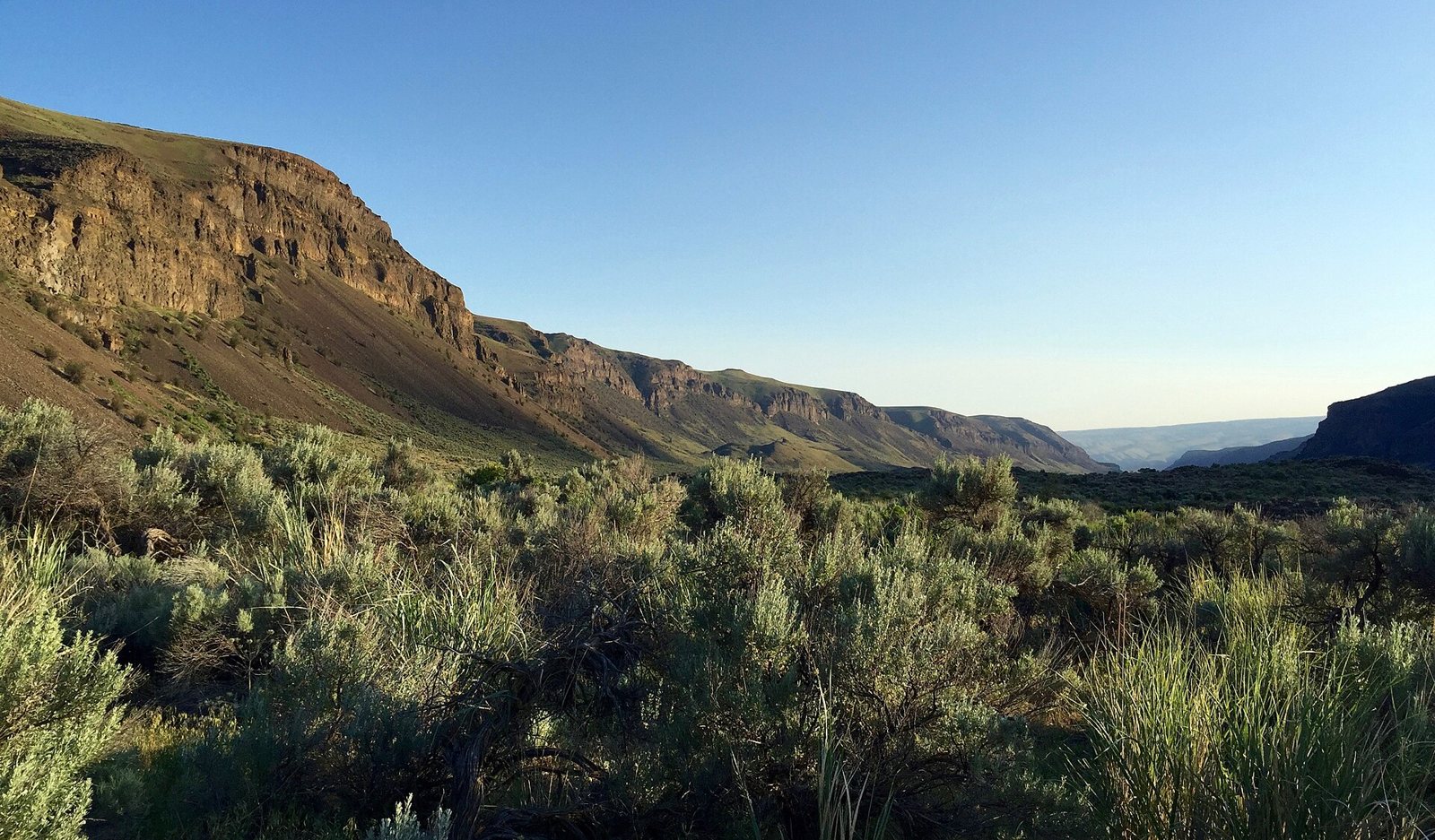
The location is private by the tribes' choice, and there is no grave or exhibit to visit. The skull photograph most often shared online, on Wikimedia Commons, shows a resin cast. The Ancient One himself rests in the land the tribes say their people have lived in since the beginning of time.
The Ancient One, 1996 to 2017
Tap or hover a step to follow the order.
July 28, 1996
Part of a skull and then a nearly complete skeleton are found near the Columbia River at Kennewick, Washington.
1996
The first radiocarbon result places the remains at more than 9,000 years old.
1998
The remains go to the Burke Museum for secure care under Army Corps custody.
April 19, 2004
The Ninth Circuit upholds scientific access and rejects the government's NAGPRA determination.
June 2015
A genome study finds his closest relationship among tested populations is to living Native Americans.
December 16, 2016
A federal law requires transfer of the remains for return to the five claimant tribes.
February 17, 2017
The remains are returned to tribal representatives at the Burke Museum.
February 18, 2017
The five tribes rebury the Ancient One privately on the Columbia Plateau.
How well do you know the Ancient One?
Answer every question to check.
Quick answers
Why is Kennewick Man so controversial?
Kennewick Man became controversial because scientists wanted to study one of North America's oldest and most complete skeletons, while the Columbia Plateau tribes said he was their ancestor and should be returned and buried. Early skeletal studies questioned his relationship to modern Native Americans, and a 2004 court ruling favored study. The 2015 DNA result supported his close relationship to Native Americans and led to his return.
What is Kennewick Man's DNA?
His genome is most closely related to living Native American populations among all the groups tested in the 2015 study. The study could not name one specific modern tribe as his descendants, because the comparison data was limited.
Could a living person claim to be related to him?
The 2015 study did not trace a direct parent-to-child line from the Ancient One to any particular living person or tribe. It showed a close relationship to Native American populations as a whole, and the five tribes who claimed him were recognized by the 2016 law.
Where are Kennewick Man's remains now?
His remains are buried at a private, undisclosed place on the Columbia Plateau near the Columbia River. The five claimant tribes received them on February 17, 2017, and reburied him the next day.
Which tribes claimed the Ancient One?
Five claimed him: the Confederated Tribes of the Umatilla Indian Reservation, the Confederated Tribes of the Colville Reservation, the Confederated Tribes and Bands of the Yakama Nation, the Nez Perce Tribe and the Wanapum Band of Priest Rapids.
Keep reading
The Ancient One's return is one of the best-known cases in a much wider movement, and our story on the repatriation of human remains follows how museums and communities handle these returns today. For another of the oldest people known in the Americas, read about Naia of Hoyo Negro, the teenage girl from a flooded cave in Mexico, and for the deepest roots of all, see the story of the oldest human skull.
Terms in this story
Tap a term to see what it means.
The Ancient One. The name the Columbia Plateau tribes use for the man known to scientists as Kennewick Man, whom they identify as an ancestor.