

No. 002
Naia of Hoyo Negro: The Teenage Girl From a Flooded Cave Near Tulum
Naia was a teenage girl, about 15 to 17 years old, who died roughly 12,000 to 13,000 years ago, near the end of the Ice Age. Her nearly complete skeleton lies in Hoyo Negro, a flooded cave chamber in the Sac Actun system near Tulum, Quintana Roo, in Mexico. Cave divers found it in 2007, and the scientists who study the site gave her the name Naia. Her conserved bones are held by the Museo Nacional de Antropología in Mexico City. She is one of the most complete early skeletons from the Americas, and she is someone's ancestor, so this story treats her the way the institutions caring for her do: as a person first.
Three divers and a chamber at the bottom of the dark
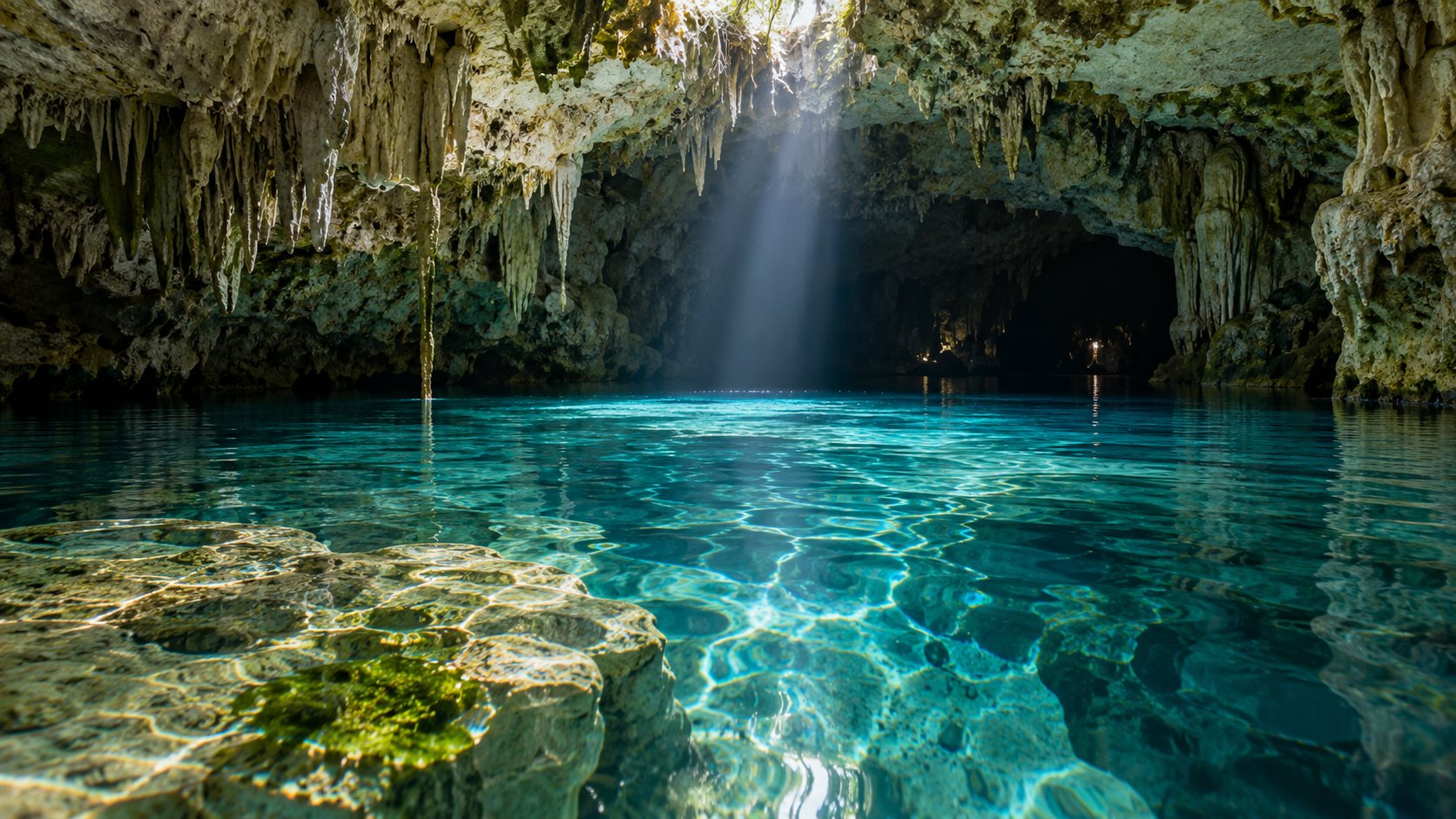
Hoyo Negro means "black hole" in Spanish, and the name suits it. INAH, Mexico's National Institute of Anthropology and History, describes the chamber as roughly 62 meters across and 55 meters deep, a huge collapsed room hidden inside the flooded passages of Sac Actun, near the Caribbean coast.
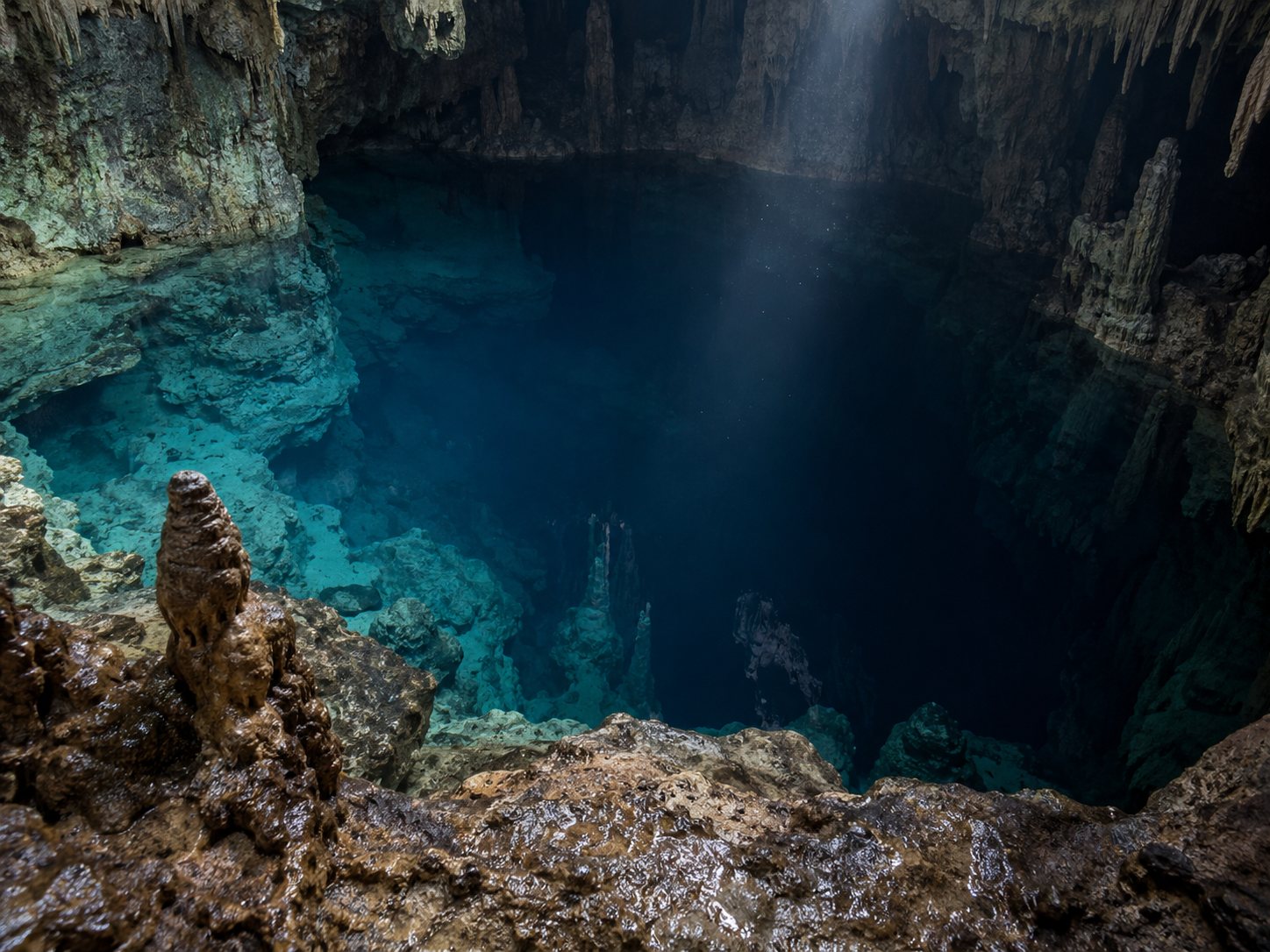
In 2007, cave divers Alejandro Álvarez, Alberto Nava Blank and Franco Attolini were exploring and mapping those passages when they reached the chamber. According to INAH, the first thing they met was animal bones. Then, on the chamber floor far below, they saw a human skeleton that was almost whole. UC San Diego's 2014 account describes the divers' find and the underwater documentation that followed.
A skeleton lying that undisturbed is rare. Most ancient human remains are broken up, scattered or washed away long before anyone looks. Naia's bones stayed where she came to rest, and that is why the work in Hoyo Negro has been done the way it has: slowly, with diving teams, mapping and careful records.
A dry cave that the sea slowly filled
Here is the odd part of the story. When Naia died, this cave was dry. Researchers writing in Quaternary Science Reviews reconstructed how the water in the Yucatán caves rose after the Ice Age, and what they describe fits what the divers saw: a deep, dry pit that was later drowned.

Naia most likely fell into the chamber. Nothing in the evidence tells us more than that, and it is best left there. What is clear is what happened next. As the ice sheets melted and sea level rose at the end of the Ice Age, seawater flooded the cave system, and the water covered her remains. Underwater, in the dark, the bones were protected from the weather, from scavengers and from people.
The same pit had trapped animals before her, which is why her skeleton shares the chamber with so many others. The deposits in Hoyo Negro combine a human skeleton with Ice Age animal remains in a natural trap, and that combination is part of what makes the site so important.
How old she was, and how anyone knows
The first number most people hear is "12,000 to 13,000 years ago." That range comes from the 2014 paper in the journal Science by James C. Chatters and colleagues, and it is the safe, round version.
Later work narrowed it. A 2019 study of Naia's teeth by Cucina and colleagues reported two radiocarbon dates taken from tooth enamel, which place her death between about 12,900 and 12,700 calibrated years before present. "Calibrated" means the raw radiocarbon numbers were adjusted against known variations in atmospheric carbon so they line up with calendar years. A second method, uranium-thorium dating of calcite that formed over her remains, gave a limit of about 12,000 years ago. In plain terms, the calcite crust could only start growing once she was already there, so her death cannot be later than that.
The age at death, 15 to 17 years, comes from her teeth and bones, which were still finishing their growth. She was a teenager, no more and no less.
What her bones say about her life
Bones keep a record of how someone lived, and Naia's record is not an easy one. Her leg bones point to a lot of walking over rough ground, while her arms show lighter loading. Her teeth show cavities, infection and wear. Some of her bone growth was interrupted in a pattern that fits periodic shortages of protein, which suggests there were hungry seasons in her short life.
She also carried a healed break in her left forearm. A healed fracture means the injury was survived, and that she lived long enough afterward for the bone to knit.
The researchers also noted changes in her pelvis that have been read as possible signs she had given birth. That is an interpretation, not a certainty, and the scientists treat it that way. Whatever the answer, the overall impression is of a young woman who had already been through a good deal.
The animals she lay among
Naia is not alone in Hoyo Negro. INAH reports remains of at least 49 animals in the chamber, some of them from species that no longer exist. The Ice Age animals most often named are sabertooth cats, gomphotheres, which were elephant-like relatives with long tusks, and giant ground sloths. INAH's list also includes short-faced bears, South American canids, pumas, tapirs, armadillos and several more sloth species, according to its published overview.
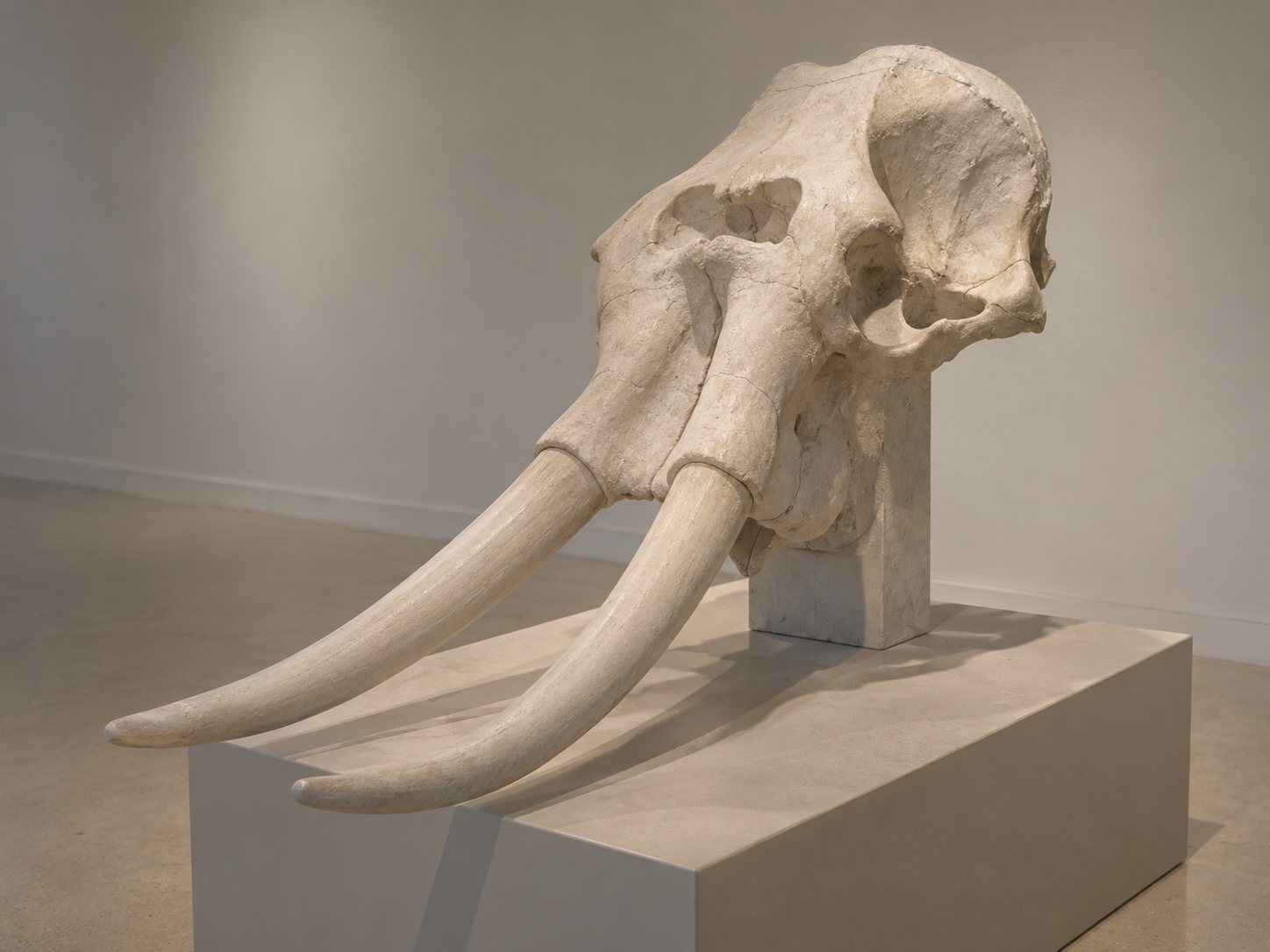
None of this means Naia met these animals alive, and it is worth keeping that straight. The bones came to rest in the same pit over a long span, and the pit worked as a trap. Still, finding a human skeleton and extinct Ice Age animals together in one cave is unusual. The animal bones help scientists rebuild what the late Ice Age Yucatán looked like, and they show that the chamber trapped animals long before it trapped a person.
What her DNA and her skull say about the first Americans
This is the question that made Naia famous beyond Mexico, so it helps to take it in two parts.
The first part is DNA. Scientists recovered mitochondrial DNA from one of her wisdom teeth. Mitochondrial DNA is passed from mother to child, so it traces a maternal line. Naia's belongs to haplogroup D1, a lineage found among Indigenous peoples of the Americas and linked to ancestry that developed in, or passed through, Beringia, the land bridge region between Siberia and Alaska. That answers a question people ask often: what did Naia's DNA show? It showed that she shared a maternal lineage with Native American peoples today.
The second part is her skull, which is narrow and relatively long compared with the average shape of many modern Native American skulls. For years, some scientists had suggested that early skulls with this kind of shape meant a separate, earlier population. The 2014 authors argued the opposite. In their reading, Naia's lineage and her skull together show that early Americans with distinctive skulls and modern Native Americans share ancestry, and that skull shapes changed after the ancestral population became separated.
Not everyone agrees on the skull. In 2015, Soledad de Azevedo and colleagues published a reassessment of the skull's shape. They found that Naia's skull sits within a range of variation shared by early American remains and some modern Native American samples, and that in their analysis it showed a closer affinity to a modern Native American sample. So, the scientists agree about her DNA, and they differ over how to read her skull.
One more limit is worth stating. Mitochondrial DNA covers one line of ancestry, her mother's line. It is not a complete read of her genome, and it cannot settle the whole story of how and when people first reached the Americas by itself.
Protecting the cave, and where her remains are now
Hoyo Negro is not a diving attraction. The work there is run through INAH's Subdirección de Arqueología Subacuática, with Mexican and international scientists including Helena Barba-Meinecke, James C. Chatters and Dominique Rissolo, along with trained scientific divers. The team documents remains where they lie, builds three-dimensional records of the chamber, and removes selected material for conservation, dating and study. INAH's systematic underwater project began in 2011.
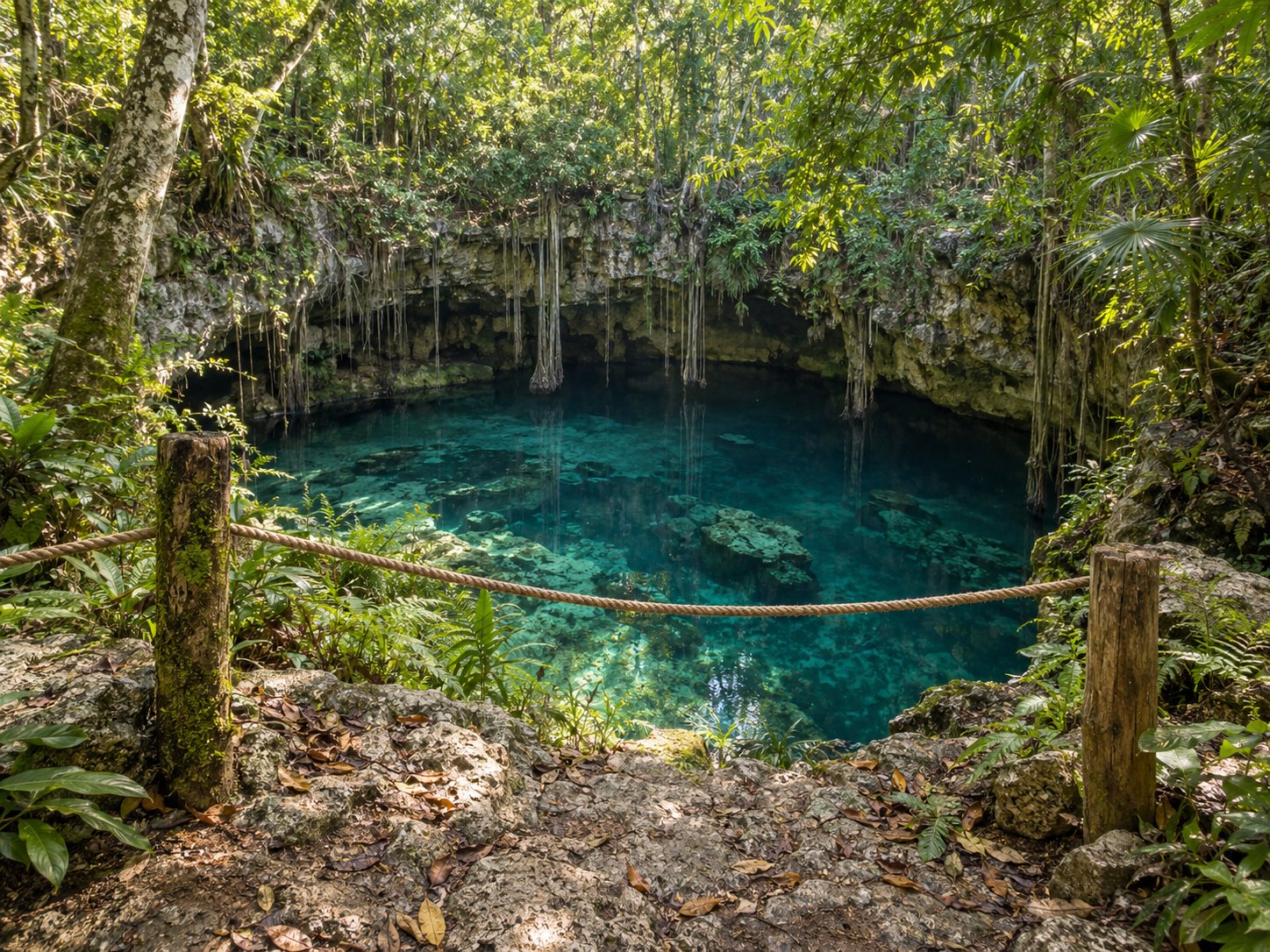
In 2014, National Geographic reported, quoting INAH underwater archaeology director Pilar Luna Erreguerena, that unauthorized divers had entered the chamber to take photographs and had moved and damaged some bones. That report is one reason the site is closely protected. If you want precise details about the incident, INAH's Subdirección de Arqueología Subacuática is the office to ask.
In 2023, UNESCO recognized the project as a best-practice example for underwater cultural heritage, with documentation in place and careful protection of the site. INAH has pointed the public toward virtual documentation and museum interpretation instead of cave visits.
As for where she is now, INAH materials say Naia's conserved bones and skull are held and conserved by the Museo Nacional de Antropología in Mexico City. Whether any part of her is on display at a given time is something to confirm with the museum before you plan a visit.
Naia and Hoyo Negro, 2007 to 2023
Tap or hover a step to follow the order.
2007
Cave divers find Hoyo Negro while exploring Sac Actun, near Tulum.
2011
INAH's underwater archaeological project begins systematic work.
2014
Chatters and colleagues publish the Science paper on Naia's skeleton and mitochondrial DNA.
2015
Researchers publish a reassessment of the shape of the Hoyo Negro skull.
2017
Researchers report more on Naia's health and life history.
2019
Dental research refines the dating and documents oral disease and tooth wear.
2023
UNESCO recognizes the Hoyo Negro project as a best-practice example for underwater cultural heritage.
Tap or hover a row to highlight it.
| Fact | Detail |
|---|---|
| FactSite | DetailHoyo Negro, within the Sac Actun cave system near Tulum, Quintana Roo |
| FactFound | Detail2007 |
| FactDivers named by INAH | DetailAlejandro Álvarez, Alberto Nava Blank and Franco Attolini |
| FactAge at death | DetailAbout 15 to 17 years |
| FactTime of death | DetailAbout 12,000 to 13,000 years ago |
| FactEnamel dates | DetailAbout 12,900 to 12,700 calibrated years before present |
| FactGenetic evidence | DetailMitochondrial haplogroup D1, a Native American maternal lineage |
| FactAnimals in the chamber | DetailSabertooth cats, gomphotheres, giant ground sloths, short-faced bears and tapirs, among others |
| FactWhere her remains are cared for | DetailMuseo Nacional de Antropología, Mexico City |
Test what you know about Naia
Answer every question to check.
Quick answers
Who was Naia? Naia was a teenage girl, about 15 to 17 years old, who lived roughly 12,000 to 13,000 years ago and whose nearly complete skeleton was found in 2007 in Hoyo Negro, near Tulum. Naia is the name the scientists gave her, and she is one of the most complete early American skeletons known.
When did Naia die? Naia died near the end of the Ice Age. Radiocarbon dates on her tooth enamel put her death at about 12,900 to 12,700 calibrated years before present, and the wider range given in the 2014 Science paper is 12,000 to 13,000 years ago.
How did Naia die? She most likely fell into the dry cave chamber, which later flooded as the sea rose. The remains do not give a more precise cause, and it is best to say no more than that.
Where is Naia's skeleton now? Naia's conserved bones and skull are held by the Museo Nacional de Antropología in Mexico City, according to INAH. Check the museum's official site for what is on view before you visit.
¿Cuáles son los restos humanos más antiguos de México? Naia is among the oldest securely dated and most complete human skeletons recovered in Mexico, at roughly 12,000 to 13,000 years old. Mexico has several very early human remains from submerged caves and other places, and dates and preservation differ from site to site, so a single "oldest" label would claim too much.
Does Naia prove there was only one migration into the Americas? No, her mitochondrial DNA can say only that she shared a maternal lineage with Native American peoples today. It supports continuity between early Americans and later Native American populations, and it cannot answer every question about migration by itself.
More stories about bones, dates and ancient lives
If you want to see how scientists read a skeleton, start with what bones tell archaeologists, then how old these bones are for the dating methods behind numbers like Naia's. For other very old remains, see our story on the oldest human skull. The Chinchorro mummies of northern Chile belong to a different people and a different coast, and the human skull facts page covers the basics of what a skull is made of.
Terms in this story
Tap a term to see what it means.
Hoyo Negro. A flooded collapse chamber in the Sac Actun cave system near Tulum, Quintana Roo. The name is Spanish for "black hole."