

No. 114
Homo naledi: The Rising Star Cave and the Question of Burial
Homo naledi is an extinct member of the human family, known from more than 1,550 fossil specimens belonging to at least 15 individuals, recovered from 2013 onward in the Rising Star cave system near Johannesburg, South Africa. Its fossils are dated to about 236,000 to 335,000 years ago. That much, the anatomy and the age, is well established. The part that made headlines in 2023, that Homo naledi buried its dead and engraved marks on the cave walls, is the interpretation of Lee Berger's research team, and several published critiques say the evidence does not yet support it. Here is what came out of the cave, how the dates were measured, and where scientists agree and disagree.
Two cavers, a narrow chute and six underground astronauts
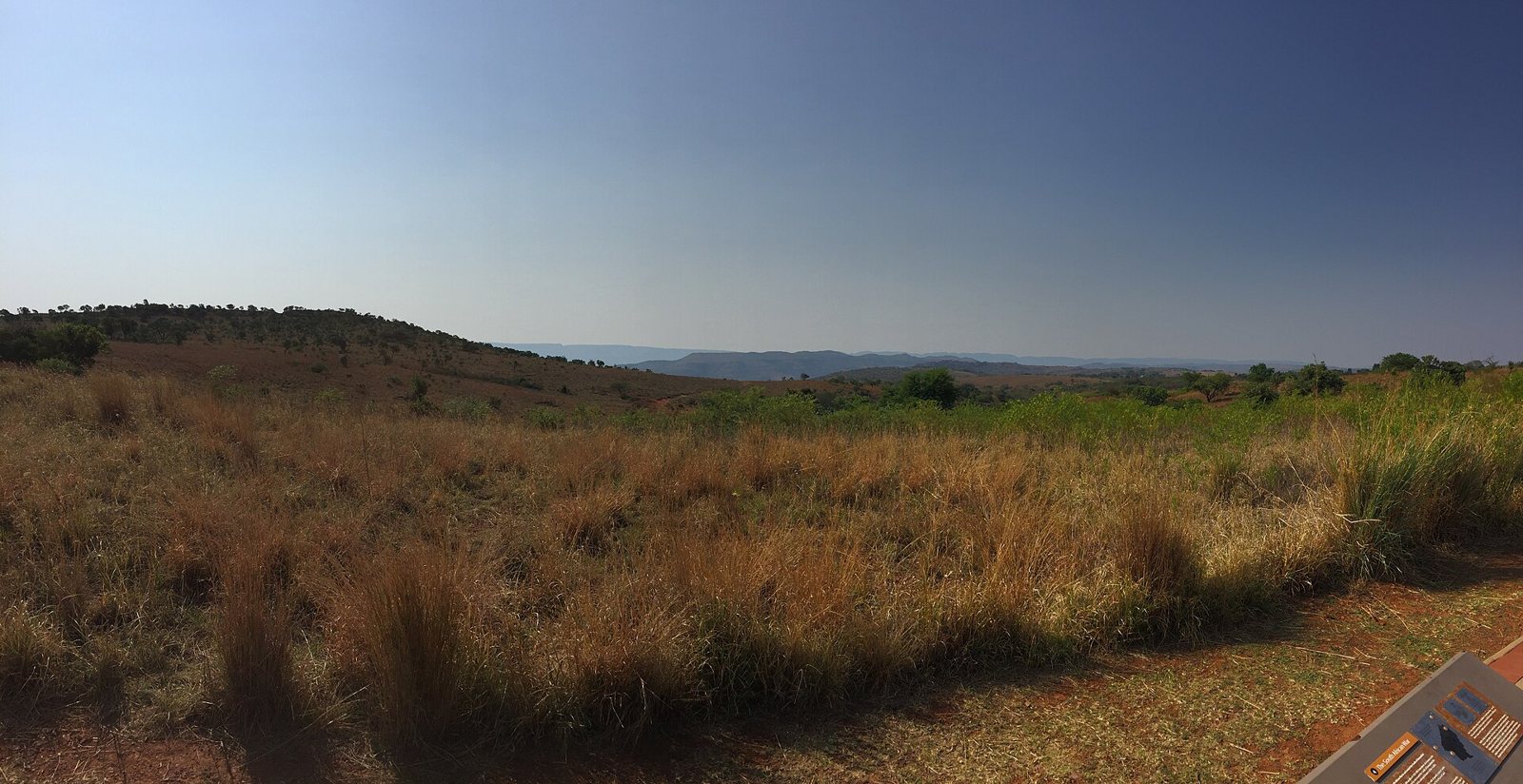
Rising Star sits in Gauteng Province, inside the Cradle of Humankind World Heritage Site, about 40 kilometres northwest of Johannesburg. In September 2013, cavers Steven Tucker and Rick Hunter entered an unexplored passage and alerted paleoanthropologist Lee Berger of the University of the Witwatersrand, usually called Wits. His team began excavating the chamber beyond it, the Dinaledi Chamber, in October 2013 (Wits University).
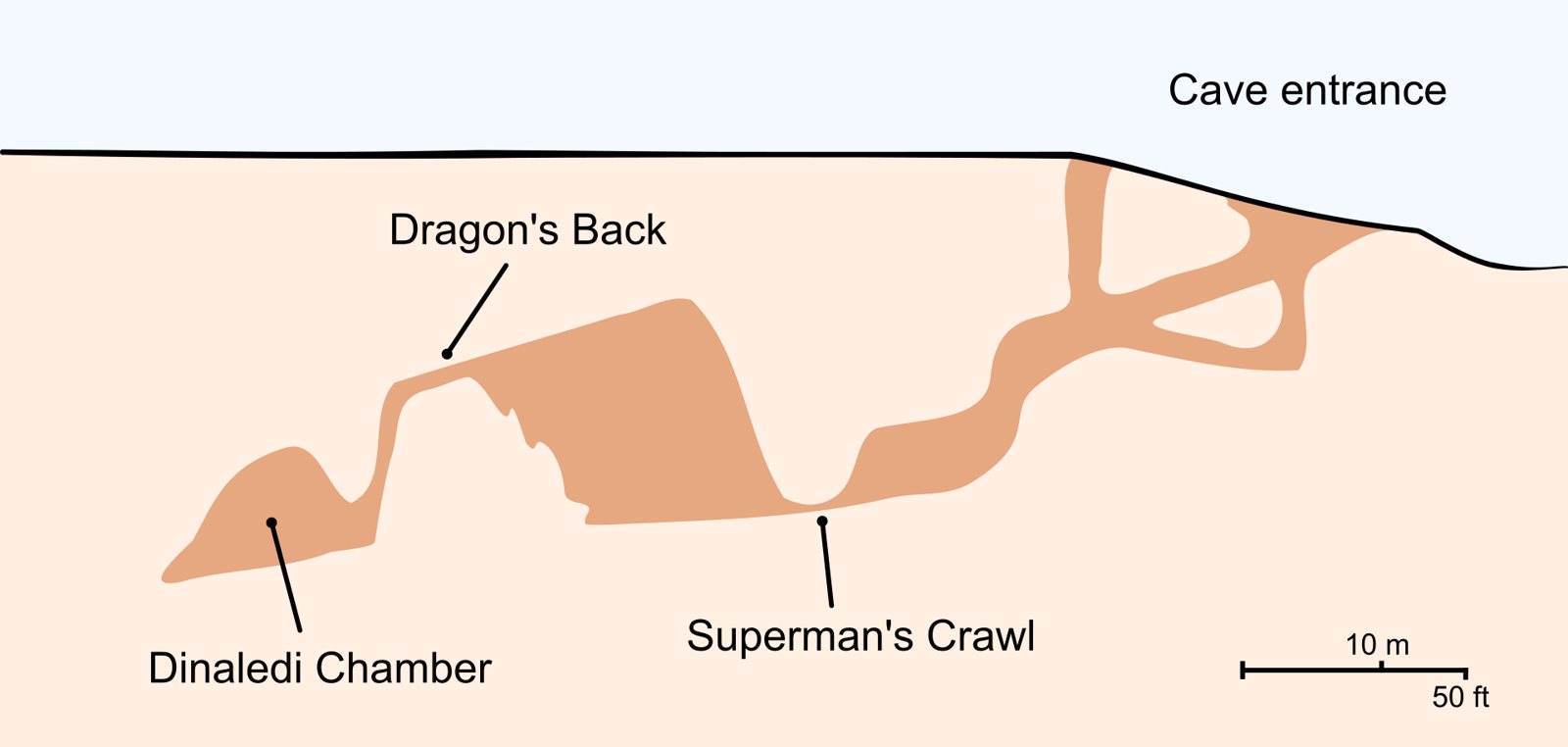
Getting there was the hard part. The route includes a 12-metre vertical chute and a squeeze roughly 18 centimetres wide, narrower than many paperback books are tall. Because of that squeeze, six women who could fit through it were selected to carry out the excavation, and they became known as the "underground astronauts." They recovered the remains during excavations in November 2013 and March 2014 (Smithsonian Human Origins Program; NC State University).
The total from the Dinaledi Chamber passed 1,550 hominin specimens representing at least 15 individuals. Later work in a second space, the Lesedi Chamber, produced more remains. Behind every catalogue number is one of those individuals, and the scientists who study them describe them that way, specimen by specimen and with careful counts.
Homo naledi, from the cave to the debate
Tap or hover a step to follow the order.
September 2013
Cavers Steven Tucker and Rick Hunter enter an unexplored passage in Rising Star and alert Lee Berger of Wits University.
November 2013 and March 2014
Excavations in the Dinaledi Chamber recover more than 1,550 specimens from at least 15 individuals.
September 10, 2015
Berger and colleagues formally describe Homo naledi as a new species.
2017
Dating studies place the fossils between about 236,000 and 335,000 years ago.
2023
Berger's team publishes claims of deliberate burial and cave engravings; published critiques dispute the strength of the evidence.
What Homo naledi looked like
On September 10, 2015, Berger and colleagues formally described the fossils as a new species. The name comes from a Sesotho word meaning "star," a nod to Rising Star itself (Smithsonian Human Origins Program).
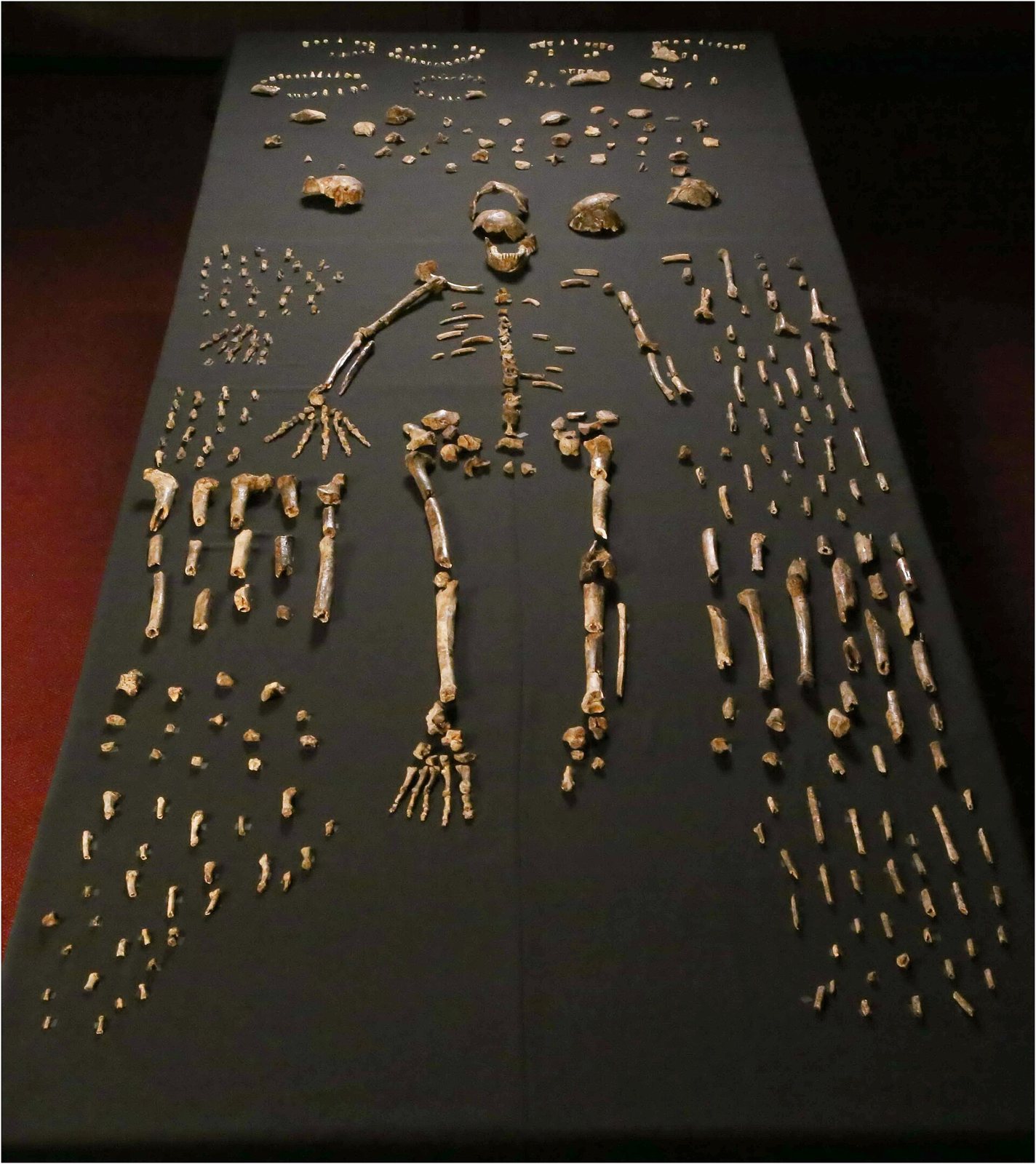
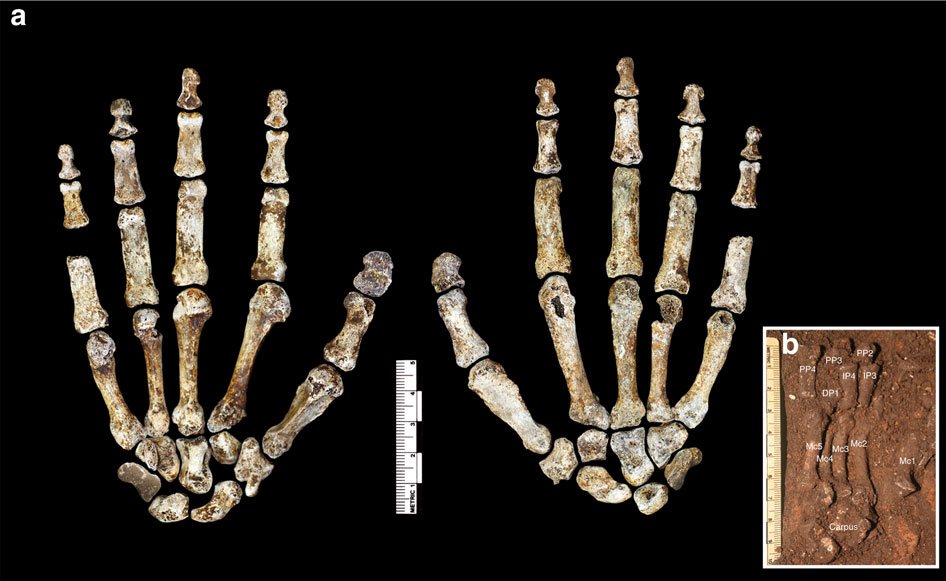
The body that emerged from all those fragments is a mix that surprised the people studying it. Homo naledi stood about 1.46 metres tall and weighed roughly 39 to 55 kilograms. Its brain was small, generally estimated at 460 to 610 cubic centimetres, against roughly 1,300 to 1,500 cubic centimetres in people today. Its hands and feet, though, were broadly human-like, while its shoulders, pelvis, ribcage and curved fingers looked more like those of the australopithecines, the older group that includes the famous Lucy (Natural History Museum London).
Tap or hover a row to highlight it.
| Feature | Homo naledi |
|---|---|
| FeatureBrain size | Homo nalediAbout 460 to 610 cubic centimetres (people today: about 1,300 to 1,500) |
| FeatureHeight | Homo nalediAbout 1.46 metres |
| FeatureWeight | Homo nalediAbout 39 to 55 kilograms |
| FeatureHands and feet | Homo nalediBroadly human-like |
| FeatureShoulders, pelvis, ribcage, fingers | Homo nalediCloser to australopithecines, with curved fingers |
| FeatureAge of the fossils | Homo nalediAbout 236,000 to 335,000 years |
So, was Homo naledi human? It belongs to our genus, Homo, which makes it a member of the human family and a relative of ours. It was a different species from Homo sapiens, the species everyone alive today belongs to, and where exactly it sits on the family tree is still an open question (Smithsonian Human Origins Program).
How old the fossils are, and how anyone knows
Homo naledi lived about 236,000 to 335,000 years ago. That range comes from a 2017 study by Dirks and colleagues, published in eLife, which dated the cave itself instead of guessing from the bones. The team used uranium-thorium dating on layers of flowstone, the mineral sheets that water lays down in caves, and uranium-series electron-spin-resonance dating on Homo naledi teeth (Dirks et al., eLife).

The result was younger than the anatomy had led some researchers to expect. A creature with a brain that small and shoulders that old-fashioned could easily have been placed a couple of million years back. Instead, it lived in the same broad stretch of time as early Homo sapiens elsewhere in Africa. That is a large part of why the species matters: it shows that a small-brained human relative with an unusual mix of features was still living when our own species was appearing (Smithsonian Human Origins Program). For how dates like these are worked out more generally, our story on how old bones are dated walks through the methods.
The 2023 claim: burial and engravings
In 2023, Lee Berger, John Hawks and colleagues argued in papers posted as reviewed preprints in eLife that Homo naledi deliberately buried bodies in shallow pits dug into the cave floor, in the Dinaledi Chamber and in an area called the Hill Antechamber. The same team interpreted crosshatched and geometric marks on the cave walls as engravings, probably made by Homo naledi and possibly with stone tools. They tied both the pits and the marks to the species' dated time in the cave, between about 236,000 and 335,000 years ago (Berger et al., eLife).
If the claim holds, it would mean a hominin with a brain about a third the size of ours was treating its dead with care. Intentional burial has otherwise been proposed for Homo sapiens and Neanderthals, which is why the story spread so far, so fast.
What the critics say
The burial and engraving claims are disputed, and the disagreement is out in the open. The public peer reviews published alongside the eLife preprints described the evidence as inadequate or incomplete (eLife peer reviews).
María Martinón-Torres, Diego Garate, Andy I. R. Herries and Michael D. Petraglia set out the main objections. In their view, the team had not ruled out other ways that bodies can end up together in a cave: natural death traps, water moving remains, carnivore activity and the slow shifting of sediment after burial. They also argued that the wall marks had not been securely shown to be made by people, or linked to Homo naledi in particular (UCL summary).
A later paper by Kimberly Foecke, Alain Queffelec and Robyn Pickering, in the journal PaleoAnthropology, looked at the sediment and geochemical evidence and argued that those methods did not support the burial interpretation (Foecke, Queffelec and Pickering, PaleoAnthropology).
The fair way to put it today: Berger's team claims deliberate burial and engraving, and several published critiques say the evidence is not yet enough to accept it. Neither side has been proved right, and the question is still being worked out in print.
Did Homo naledi use tools or fire?
No stone tools have been securely associated with the Homo naledi fossils in the Dinaledi or Lesedi chambers. Its human-like hands suggest it could handle objects and may have used tools, but a capable hand is evidence of what the body could do, and nobody has yet matched a made tool to the species in the cave (Smithsonian Human Origins Program).
Fire is a similar story. The Berger team has argued that ash, burned bones, charcoal and soot in parts of the cave show controlled fire, used for light, cooking or warmth. Critics of the burial claims say those traces have not been securely tied to Homo naledi, as opposed to later visitors or natural processes (UCL summary). In a cave with a 12-metre chute and no daylight, the question of how anyone saw their way in matters to both sides.
Unknown: Cave of Bones, the Netflix documentary
Many people first heard about Homo naledi from Unknown: Cave of Bones, which Netflix released in 2023. The film follows Lee Berger and members of the Rising Star team through the tight passages and into the chambers, showing the fossils, the possible burial pits, the wall markings, the fire traces and a stone the team describes as a possible tool. Netflix presents the finds as evidence that a small-brained human relative may have practised complex mortuary behaviour more than 240,000 years ago (Netflix; Netflix Tudum).
The documentary tells the story from inside the team, so it gives the team's interpretation. The published critiques described above came from other specialists, and the debate they started continues after the credits roll. If you watched the film and wondered how much of it is settled, the short version is this: the cave, the fossils and the dates are solid; the burials, engravings and fire are the team's claims, still under dispute.
DNA and diet: what we can and cannot know
There is no published Homo naledi genome. The fossils are roughly 236,000 to 335,000 years old, and DNA survives poorly in southern African cave conditions, so everything known about the species comes from its anatomy, the dating, the cave sediments and the material found with it (Smithsonian Human Origins Program). That makes it different from Neanderthals, whose DNA has been read and compared with ours, as our story on the Neanderthal skull explains.
What Homo naledi ate is unknown in detail. Its teeth show frequent chipping, the kind of wear that hard or gritty food leaves, and researchers have suggested nuts, roots or tubers as possibilities. The Natural History Museum in London describes a probable mixed diet of plants and animals, while noting that direct evidence of specific meals is limited (Natural History Museum London). Teeth often carry this kind of record, one of the many things bones tell archaeologists.
Questions people ask about Homo naledi
Most questions about Homo naledi come back to the same few points: what it is, where it was found and how far the burial claim can be trusted.
What is Homo naledi?
Homo naledi is an extinct species of the human family first recovered in 2013 in the Rising Star cave system in South Africa. It had a small brain, human-like hands and feet and several older body features, and its fossils date to about 236,000 to 335,000 years ago.
Where was Homo naledi found?
It was found in the Dinaledi and Lesedi chambers of the Rising Star cave system in Gauteng, South Africa. The site lies within the Cradle of Humankind World Heritage Site, about 40 kilometres northwest of Johannesburg.
Why is Homo naledi so important?
It combines a very small brain and several australopithecine-like features with human-like hands and feet, yet it lived as recently as 236,000 to 335,000 years ago. That overlaps with early Homo sapiens, which shows how varied the human family still was at that time.
Did Homo naledi bury its dead?
Berger's team argues that it did, placing bodies in shallow pits in Rising Star, but the claim is disputed. Published critiques by Martinón-Torres and colleagues and by Foecke, Queffelec and Pickering say natural processes such as water, sediment movement and death traps have not been ruled out.
Who was the first human species to bury their dead?
There is no single accepted answer. Intentional burial has been proposed for Homo sapiens and Neanderthals, and Berger's team proposes Homo naledi as far earlier, but that last claim remains disputed.
Are the Homo naledi engravings real?
The marks on the cave walls are real; whether they are deliberate engravings made by Homo naledi is the open question. Berger's team interprets them as engravings, while Martinón-Torres, Garate, Herries and Petraglia argue they have not been securely shown to be made by people or tied to the species.
What is the naledi controversy?
It is the disagreement over whether the Rising Star bodies were deliberately buried, whether the wall marks are engravings and whether the fire traces belong to Homo naledi. Critics also questioned presenting the claims to the public before other specialists were convinced.
Do we have Homo naledi DNA?
No, there is no published Homo naledi genome. Researchers rely on anatomy, dating and the cave sediments instead.
What did Homo naledi eat?
The exact diet is unknown. Chipped teeth suggest hard or gritty food, possibly nuts, roots or tubers, and the Natural History Museum describes a probable mixed diet of plants and animals.
Rising Star check
Answer every question to check.
Where to go next
Homo naledi is one chapter in a much longer story told by skulls and bones. For the deepest part of that story, read about the oldest human skull, and for another small-brained relative who lived surprisingly late, see Homo floresiensis. South Africa's fossil record also gave the world the Taung Child, and the debate over a big-skulled relative from China is in our story on the Dragon Man skull.
Terms in this story
Tap a term to see what it means.
Hominin. A member of the human family, including modern humans, extinct Homo species such as Homo naledi, and the australopithecines.