

No. 002
Sugar Skulls: What Calaveras de Azúcar Mean, How They Are Made and How to Make Your Own
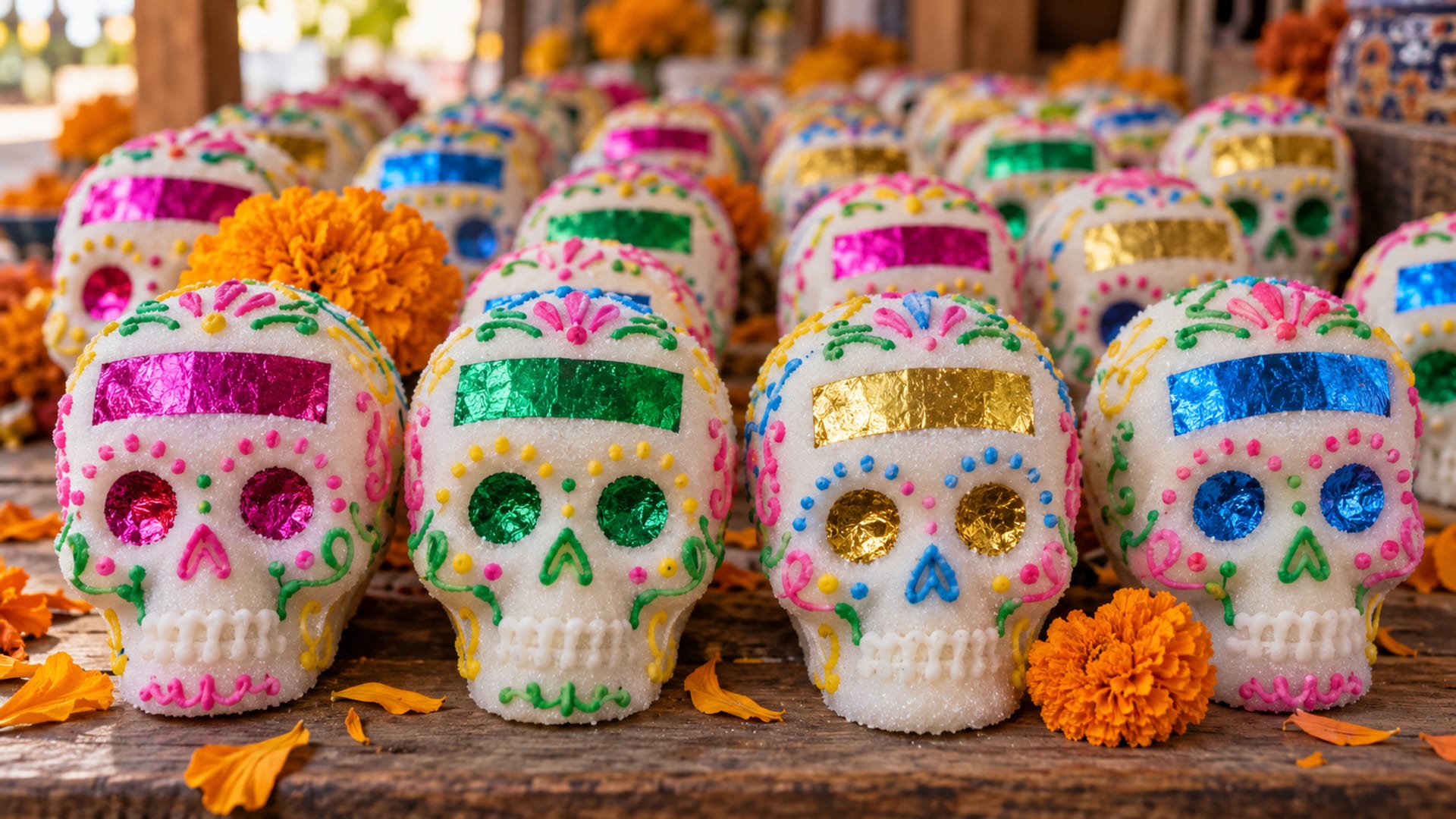
Calaveras de azúcar are molded sugar skulls made for Día de Muertos. Families set them on the ofrenda, the altar for the dead, or give them as gifts, and a name is often piped in icing across the forehead. On an altar that name may belong to a person who has died; given to a living friend, it can be a playful seasonal present. Practice varies by place and by family. If you love the look of these skulls on art, tattoos, shirts or face paint, here is the real object behind it, how it is made, and how you can make one at home with respect.
What a sugar skull is and how it is traditionally made
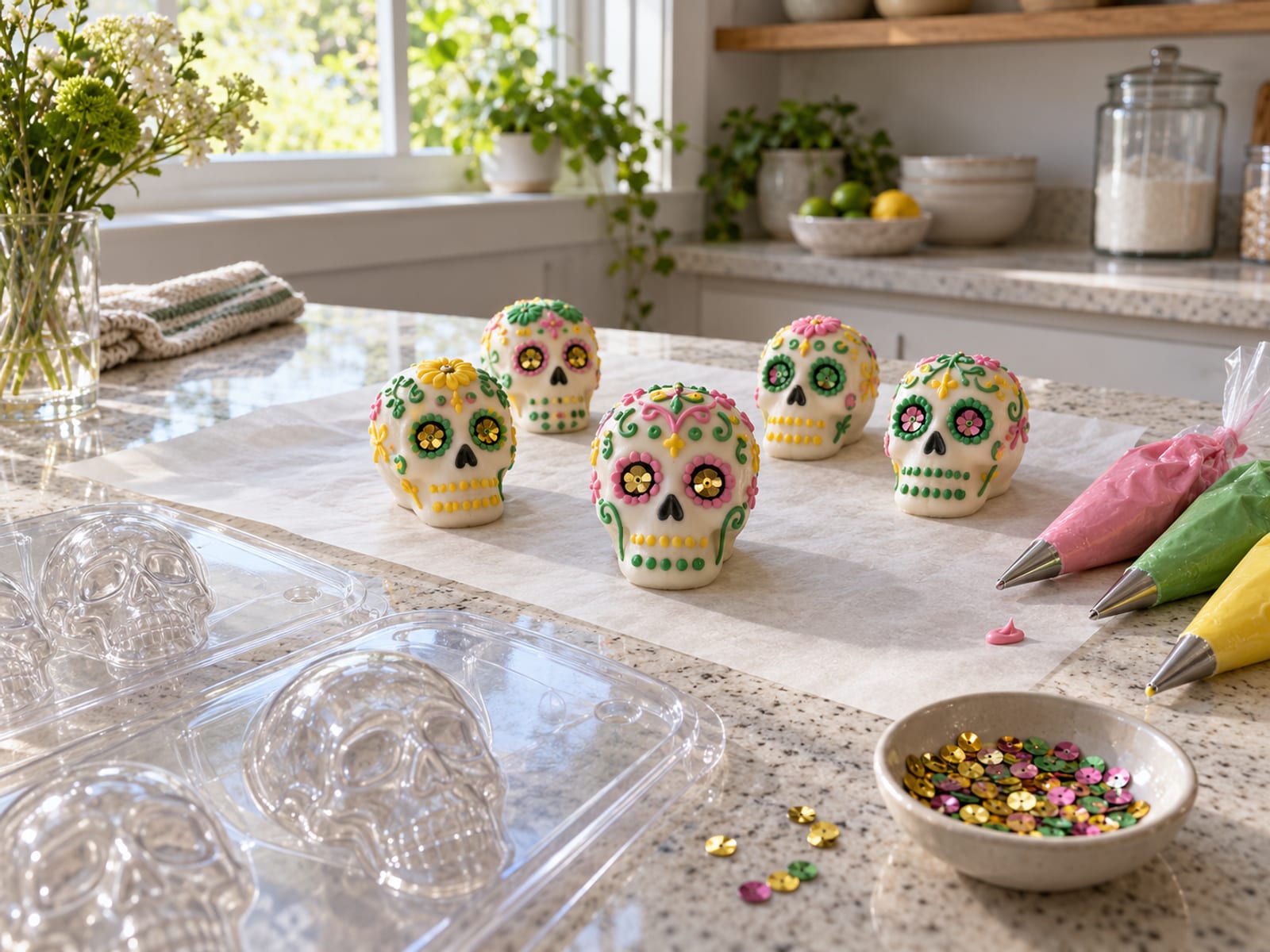
A traditional sugar skull starts with granulated sugar mixed with a little meringue powder and water until it feels like damp sand. The maker packs it firmly into a skull mold, flips the mold over onto a piece of cardboard, and lets the sugar air-dry. Larger skulls are often made in two halves that are joined with icing once they are hard. Then comes the decorating, with royal icing, food coloring, foil, colored sugar, beads and other small touches.
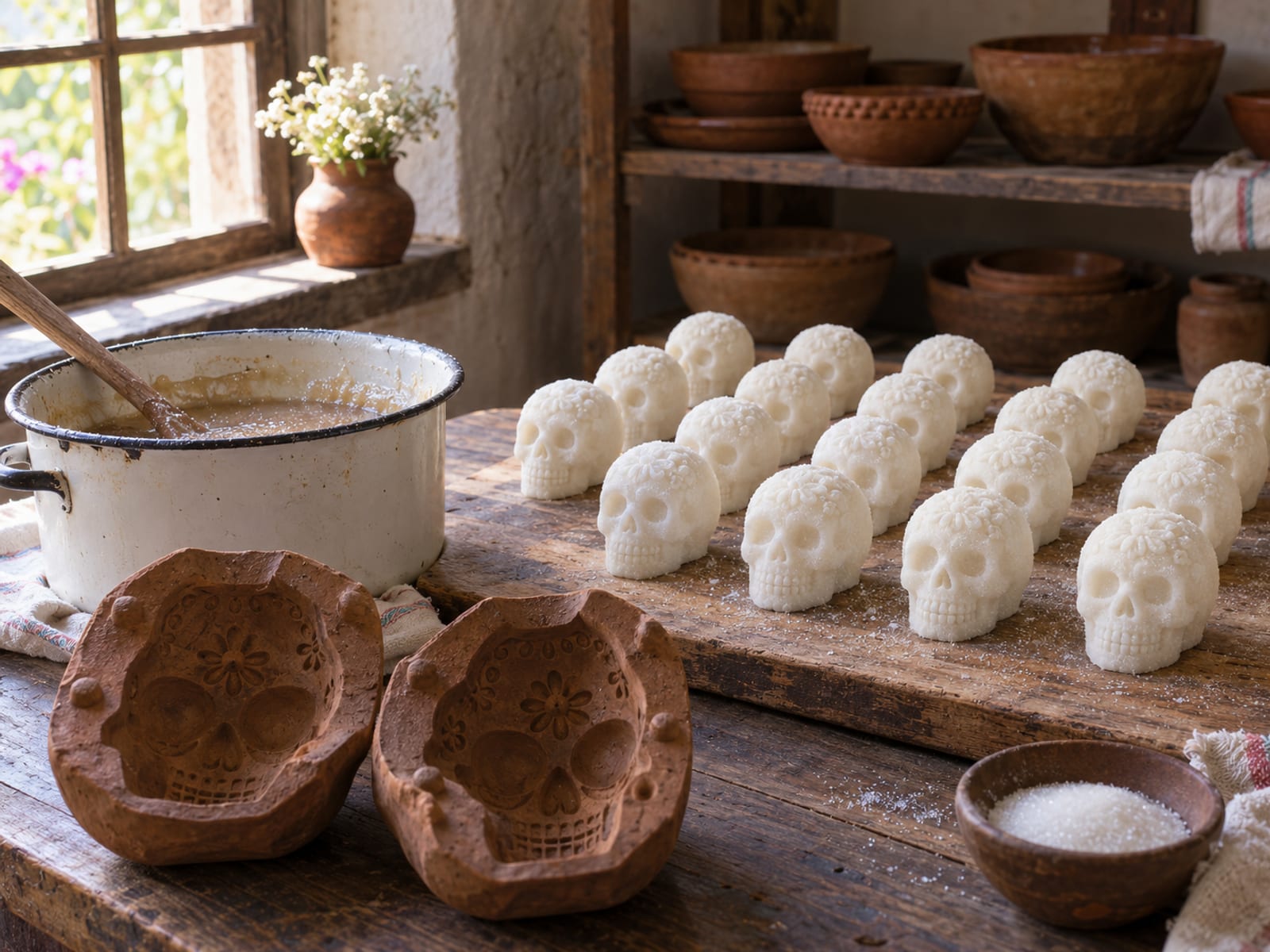
The decoration changes with the maker. The Ogden Museum of Southern Art describes calaveras from southern Mexico decorated with bright icing and shiny foil in its classroom lesson plan. In Cortazar, Guanajuato, a sugar calavera made in 2000 from sugar and vegetable colorants is catalogued by the Museo Nacional de Culturas Populares, which notes that it was modeled, molded and painted (Museo Nacional de Culturas Populares). That one is called an alfeñique calavera, and the word needs a little unpacking.
"Alfeñique" can refer broadly to molded sugar-paste candy. Toluca's municipal history describes two related but separate techniques: alfeñique paste figures, and "dulce vaciado," which means poured sugar, used for skulls (Ayuntamiento de Toluca, 2020). So, a skull from one workshop may be shaped from paste, while a skull from another is poured, and both sit comfortably under the name calavera de azúcar.
The role of sugar skulls on the ofrenda and as gifts
On an ofrenda, a sugar skull is one item among many. In many Mexican communities the altar also holds photographs, candles, flowers, water, favorite foods, personal objects and pan de muerto. UNESCO describes the Indigenous Día de Muertos practices of Mexico as welcoming deceased relatives back to Earth through paths, flowers, candles and gifts (UNESCO). What goes on the altar, and what it means, depends on the community, state, town and family.
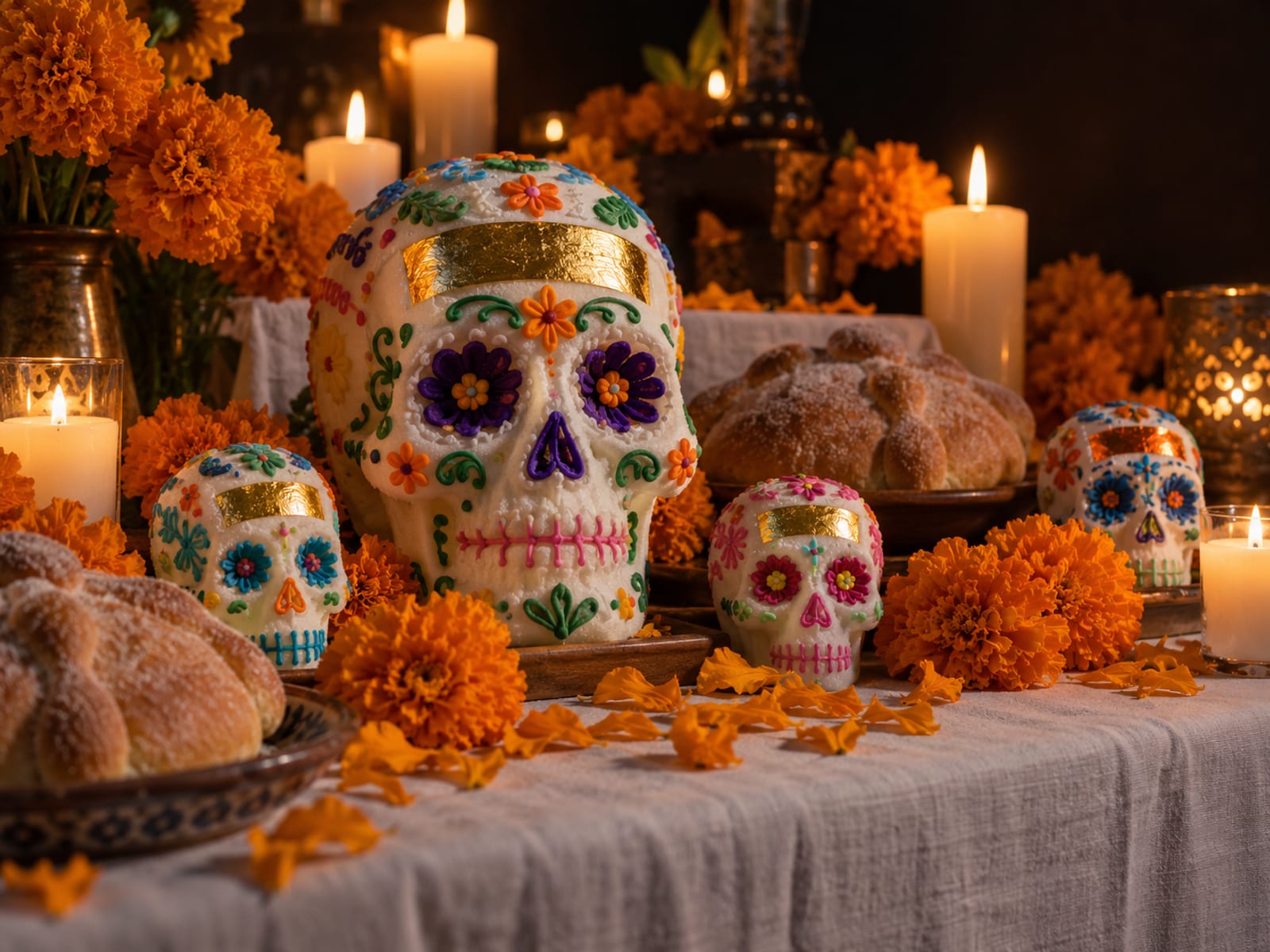
The name on the forehead is the most talked-about detail. A skull that carries the name of someone who has died can mark the person being remembered. A skull with a living person's name can be given as a lighthearted nod to how short life is, and as an affectionate gift for the season (Cocina Delirante). Neither custom is universal. Some families do one, some do both, and some skip names altogether, so it is worth asking a family or a maker what they do.
Do people eat them? The Mexic-Arte Museum in Austin, Texas, says in its teaching document that sugar skulls mainly adorn altars and tombs, and that they can also be edible treats (Mexic-Arte Museum). In practice, many skulls are displayed rather than eaten, especially when they wear foil, beads or other decorations that are not food.
What a sugar skull is made of
Tap a card to bring it forward.
- The body: Sugar mixed with meringue, packed into a mold.
- Two halves: Joined with royal icing.
- Foil: Often used for shiny eyes and trim.
- Colored sugar and icing: For flowers, swirls and patterns.
- A name on the forehead: Piped in icing for the person it honors or is given to.
What the history documents, and what stays uncertain
Sugar cane arrived in New Spain during Spanish colonial rule, and sugar work grew from there. The Mexic-Arte Museum's teaching document tells the story of alfeñique this way: molded sugar paste traveled from Italy to Spain and then to Mexico, where sugar became an ingredient in figures made for altars. The museum presents it as an educational account, and a fuller history is still being pieced together.
Two dated records help anchor the story. Toluca's municipal government reports that in 1630 an artisan named Francisco de la Rosa asked permission to make alfeñique in his workshop in Toluca. The same account says a recipe for alfeñique appeared in 1831 in the cookbook *El Cocinero Mexicano*, using sugar, egg white, gelatin and lemon juice (Ayuntamiento de Toluca, 2020). Together they show sugar-based death imagery and sugar candy work in colonial and nineteenth-century Mexico.
When the first skull-shaped sugar sweet appeared is uncertain, and so is the exact path from earlier gifts to the decorated skull we know now. What the record supports is a layered development: Indigenous and Catholic observances, colonial sugar production, European sugar confectionery and local Mexican craft traditions all played a part.
Sugar skulls in the record
Tap or hover a step to follow the order.
1630
Francisco de la Rosa requests permission in Toluca.
1831
El Cocinero Mexicano prints an alfeñique recipe.
1989
Toluca's Feria y Festival Cultural del Alfeñique begins.
2000
An alfeñique calavera from Cortazar, Guanajuato is catalogued by the Museo Nacional de Culturas Populares.
2018
Alfeñique skulls are photographed at the Juchitán market.
2023
Toluca reports more than 5 million visitors and over 630 activities at its Alfeñique festival.
Where sugar skulls are made and sold
Toluca, in the Estado de México, is the town most closely tied to alfeñique. Its Feria y Festival Cultural del Alfeñique has been held since 1989, generally from mid-October through November 2, at the Portales around the cathedral. The fair sells alfeñique skulls, coffins, bones, animals, fruit, angels and tiny foods, along with chocolate and amaranth skulls (Ayuntamiento de Toluca). Dates shift from year to year, so check this year's schedule with the city before you plan a trip.
The craft is rooted in particular neighborhoods too. Toluca's 2020 municipal account names El Cóporo, San Sebastián and Santa María de las Rosas as neighborhoods with alfeñique-making traditions. For Toluca's 2023 festival, the city reported more than 5 million visitors and over 630 activities (Ayuntamiento de Toluca, 2023).
Farther south, a photograph taken at a market in Juchitán de Zaragoza, Oaxaca, on October 29, 2018, shows alfeñique skulls for sale ahead of Día de Muertos (Wikimedia Commons.jpg)). It records what was sold in that town that year, and not a national rule. Other markets and fairs sell seasonal skull sweets too, and what you will find changes with the year and the place. Toluca's fair is one tradition among many, so if you want a skull for an altar, ask the maker where and how it was made.
Other skull sweets and seasonal treats
Sugar is only one material. Toluca's municipal description lists skulls made from sugar, chocolate and amaranth. It also lists a wider table of seasonal sweets: pepita candy, camote, candied pumpkin, crystallized fruit, turrón, charamusca, milk candy, jamoncillo, coconut, tamarind and piloncillo cookies (Ayuntamiento de Toluca).
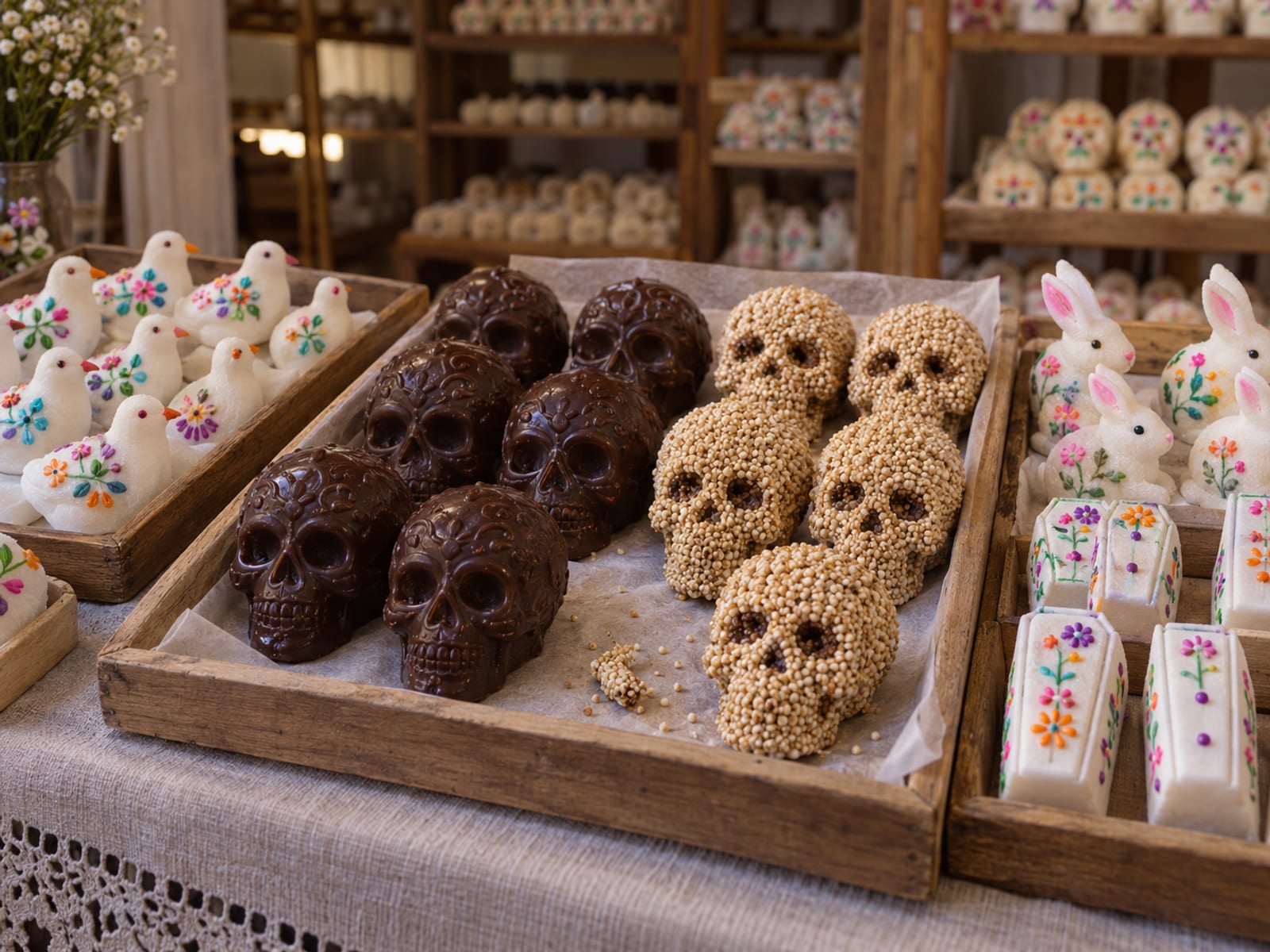
The Mexic-Arte Museum describes newer generations of artisans making skulls from sugar or from chocolate. It also points out that amaranth is an important pre-Hispanic grain, used in figurines and gifts to the dead, while noting that the modern sugar skull relies on later colonial materials and techniques.
Then there is pan de muerto, which changes from region to region. An INAH anthropology article describes the Mexico City style as a round sweet bread decorated with four bone-like shapes and sugar, while other communities bake human figures, animals, crosses or regional breads (INAH). So, a plate of Día de Muertos treats in one town can look quite different from a plate in the next.
How the sugar-skull look reached tattoos, makeup and fashion
The decorated skull in tattoos and face paint is related to the edible calavera, but it is not the same thing. José Guadalupe Posada's skeleton prints from the early twentieth century, especially the figure later known as La Calavera Catrina, helped establish skeletal imagery in Mexican popular art. Diego Rivera later named and popularized Catrina in a mural. Face painting, tattoos, clothing, film, commercial graphics and social media then carried related imagery around the world. If you want to meet her properly, there is a full guide to La Catrina.
Mexican and Mexican American voices describe the tradition in different ways, and no single verdict speaks for everyone. A University of Arizona interview with a Mexican American participant from a family connected to Tomatlán, Jalisco, stresses that traditions change over time and that sugar skulls were not necessarily part of the earliest forms of the celebration. The participant describes calacas as symbols of life, death, mortality and remembrance, and recommends learning through local community celebrations (University of Arizona News).
Vanessa Martinez, a Mexican American researcher quoted by California State University San Marcos in 2016, said, "Dia de los Muertos is a celebration of life through the stage of death." She also cautioned that commercial use can dismiss the meaning of the object: "This process contributes to the commodification of Dia de los Muertos objects, such as the sugar skull." (California State University San Marcos) A Mexican American respondent quoted anonymously by Women Write About Comics argued that wearing sugar-skull makeup as a generic costume can strip away its link to the ofrenda (Women Write About Comics). Other Mexican and Mexican American people draw the line in other places, between respectful participation, personal remembrance, commercial use and costume styling.
A few habits fit that range of views:
- Call it Día de Muertos when you use the imagery, and say which tradition it comes from.
- Learn what the skull means in the community that makes it, and what the name on the forehead is doing there.
- If you use sugar-skull art commercially, credit Mexican and Mexican American artists, or buy from them.
- Keep face paint and tattoos tied to remembrance and respect rather than treating the look as a generic costume.
How to make simple sugar skulls at home
You can make decorative sugar skulls with a recipe from Food Network Kitchen (Food Network Kitchen). You will need:
- 2 cups granulated sugar
- 2 teaspoons meringue powder
- About 2 teaspoons water
- A two-piece plastic skull mold
- Powdered sugar, meringue powder, water and food coloring for royal icing
Mix the dry ingredients, then add the water a little at a time. Stop when the mixture feels like moist sand and holds its shape when you squeeze it. Pack it firmly into the mold, scrape the back flat, and turn the mold out onto a piece of cardboard. Let the halves dry for 8 hours or overnight before joining them with icing. After decorating, give the skull another 3 to 4 hours to dry. The Ogden Museum lesson plan gives a similar formula and suggests 24 hours of drying before the icing goes on.
Safety is simple and worth following. Use food-safe molds and clean equipment. Keep the skulls away from moisture, and out of reach of pets and young children who might take a decorative skull for ordinary candy. Skip glitter, foil, beads, paint and other trimmings unless they are labeled food-safe. Because many skulls are made mainly for display, treat yours as decorative unless every part of it is edible.
If you are making one for an ofrenda, a name piped on the forehead is a nice touch when it fits your family's practice. A skull for a living friend can carry theirs.
Quick answers
These short answers cover what people most often ask about sugar skulls.
Can you eat sugar skulls?
Sometimes. A skull made only from sugar and food-safe icing is edible in principle, but many are made for display and carry foil, beads or other trimmings that are not food. Treat a skull as decorative unless the maker confirms that every part of it is safe to eat.
What does the name on the forehead mean?
On an altar, a name can identify the person being remembered. On a skull given to a living person, it can be a playful seasonal gift. Families and communities do this in different ways, and some leave the forehead plain.
Are sugar skulls only for Día de Muertos?
They are made and sold for Día de Muertos, and the season in Toluca runs from mid-October through November 2. Outside Mexico, the look has moved into tattoos, makeup, clothing and art, where it often has little to do with an altar. If you borrow it, name the tradition it comes from.
Sugar skull quiz
Answer every question to check.
Where to go next
To see where sugar skulls fit in the bigger tradition, start with the guide to Día de Muertos. If you want to set up an altar of your own, read how to make an ofrenda. And for the well-dressed skeleton who shows up everywhere each autumn, meet La Catrina.