

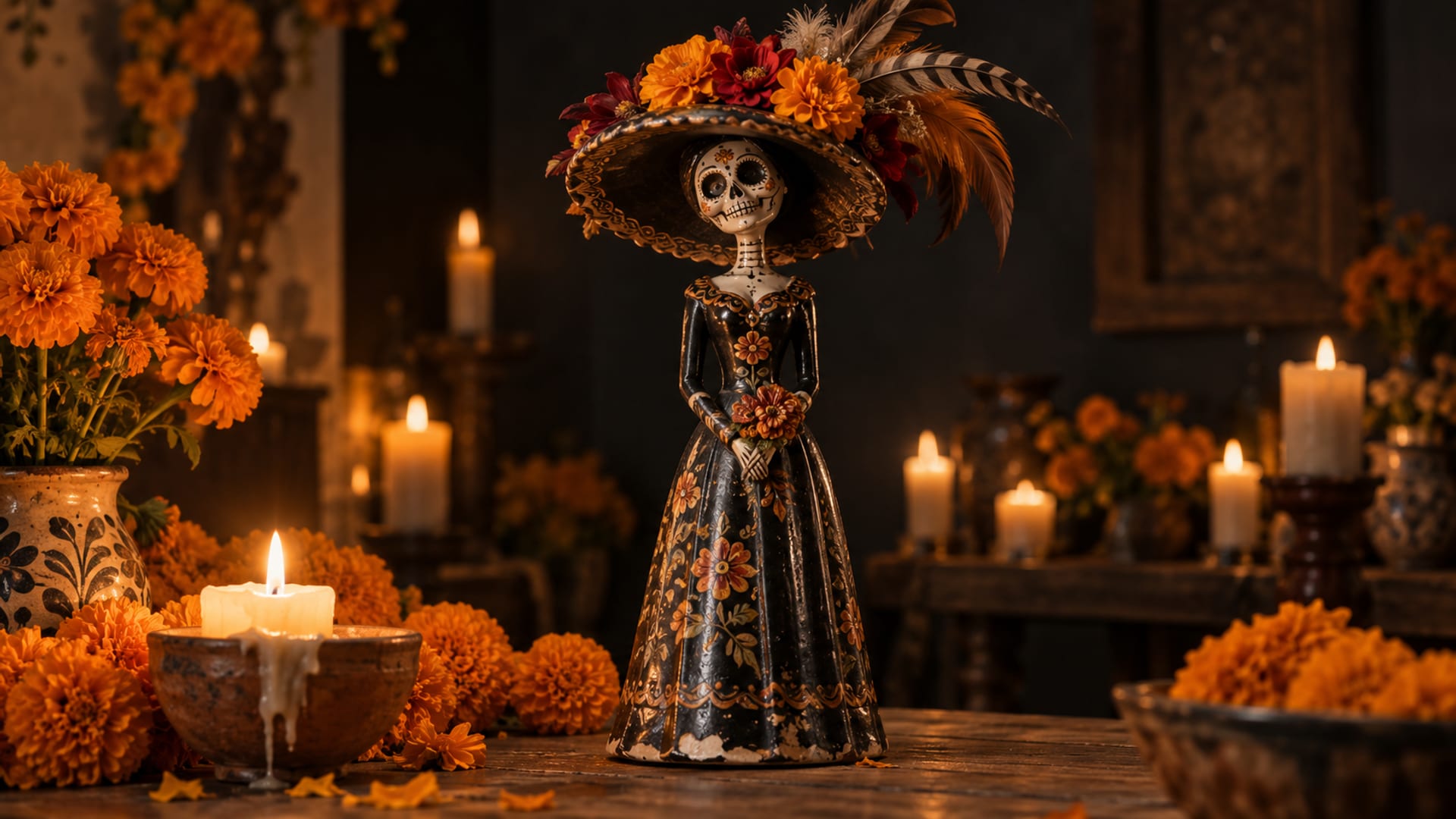
No. 003
La Catrina: The Story of the Skeleton Lady Behind Día de Muertos
She is the skeleton woman in the wide, feathered hat, and she turns up on posters, figurines, shirts and every costume rack in October. Her name is La Catrina, and she began as a satirical print by the Mexican printmaker José Guadalupe Posada. Diego Rivera gave her that name and a full gown in a 1947 mural, and over the decades she became one of the best-known symbols of Día de Muertos. The rest of the story has a few surprises: she did not start out with a dress, she was not named by her creator, and her first job was to poke fun at people with social ambitions.
Posada and his calaveras
José Guadalupe Posada lived from 1852 to 1913. He was born in Aguascalientes, later worked in León and Mexico City, and made zinc engravings, lithographs and illustrations for popular printed matter. Around 1888 to 1890 he began working with the Mexico City publisher Antonio Vanegas Arroyo, whose press turned out inexpensive broadsides, chapbooks, songbooks, religious material, news sheets and sensational stories. Those pages were made for a large public, and that public included many people who could not read. A bold image did a lot of the talking.
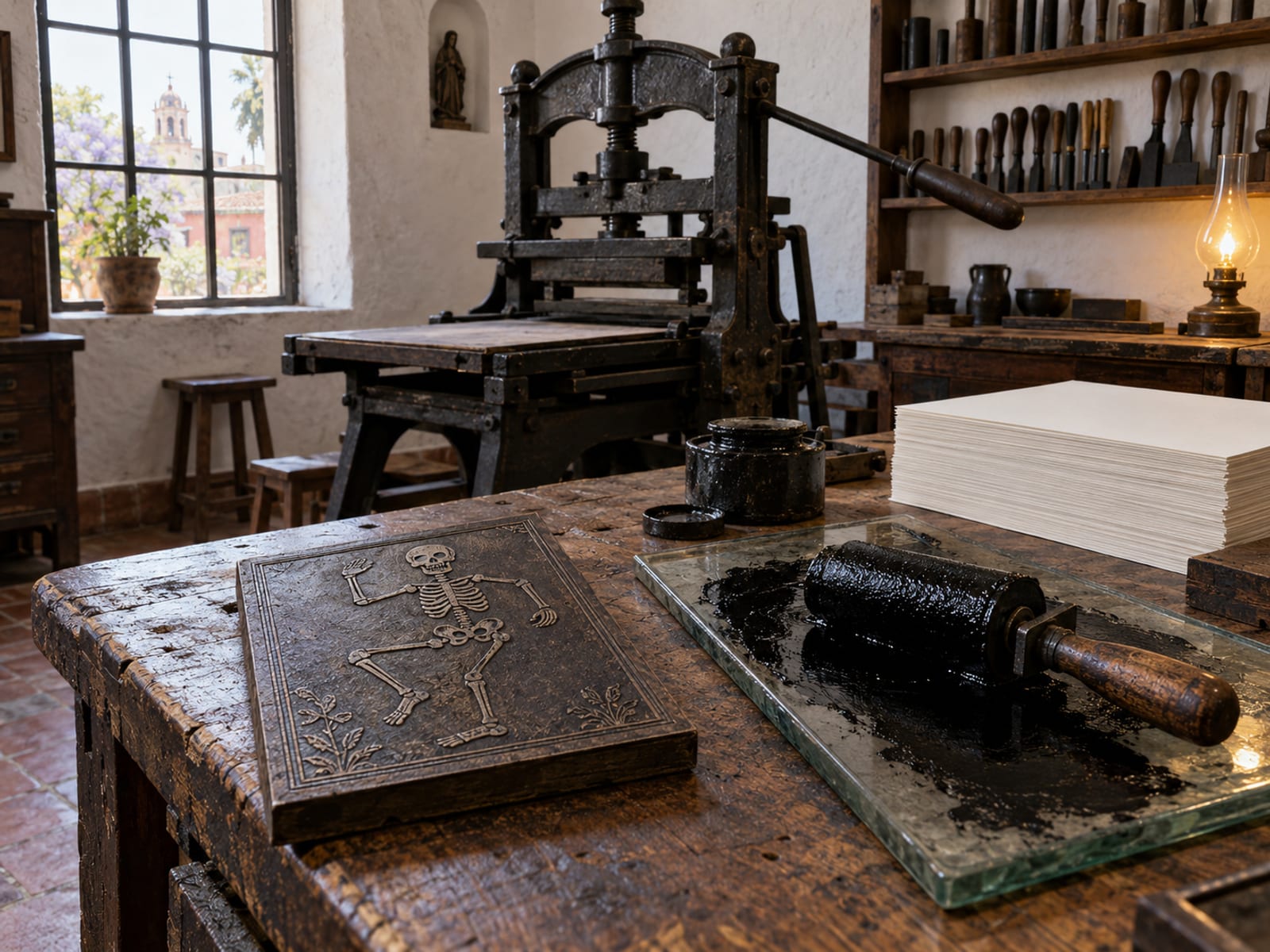
Among Posada's best-loved images were his calaveras, skeletons drawn as caricatures of politicians, celebrities, workers, ordinary people and social types. They ran beside verses, corridos and news. The sheets poked at political power, social privilege, the dictatorship of the Porfirio Díaz years, exploitation and plain everyday absurdity. They were commonly sold around Día de Muertos, in late October and early November, though their subjects reached far beyond the holiday. The Library of Congress compares the broadsides to inexpensive tabloids, with images and rhymes that made political and social commentary easy for a mass audience to grasp.
The original print was not called La Catrina
The image we now call La Catrina did not carry that name when it first appeared. The first known dated sheet that features it is a Vanegas Arroyo broadside with a long title: *Remate de calaveras alegres y sandungueras. Las que hoy son empolvadas garbanceras pararán en deformes calaveras.* In plain English, that is roughly "Auction of cheerful and lively calaveras. Those who today are powdered garbanceras will end as deformed skulls." It was printed in Mexico City in the last quarter of 1913.
That date raises an obvious puzzle, because Posada died on January 20, 1913. Some specialists conclude that the image itself dates from 1912 or earlier, with the sheet printed after his death. The Posada Art Foundation adds that an undated broadside, possibly *Calaveras de la Cucaracha*, may be older than the 1913 sheet.
The figure on the page is a zincographic engraving of a female skeleton in an elaborate hat. She has no gown at all. The target of the joke was the *garbancera*, a term used for people of Indigenous background who sold garbanzos (chickpeas) and, in the satire's telling, took on European clothing and manners while turning away from their Indigenous identity. The print also teased cosmetics, fashionable dress and the wish to look wealthier or more European. Posada's skeleton was a comment on class pretension and self-denial in Mexico City, and the sheet's text goes after named women and social types in harsh, insulting language.
One stanza from the broadside gives the flavor:
> Hay hermosas garbanceras, > De corsé y alto tacón; > Pero han de ser calaveras, > Calaveras del montón.
In plain English: there are lovely garbanceras, in corsets and high heels, but every one of them will end up a skull like all the rest of the crowd. The Museo José Guadalupe Posada lists the author of the broadside's verses as anonymous, and a 1913 UPAEP publication attributes a shorter accompanying calaverita to Posada, so who wrote which lines is not settled.
It helps to keep this original print apart from the festive figure on today's altars. The first was a sharp piece of social satire aimed at specific people and a social type. The second is a celebration of Día de Muertos. They share a face, and not much else.
La Catrina from Posada to today
Tap or hover a step to follow the order.
1852
José Guadalupe Posada is born in Aguascalientes.
1888 to 1890
Posada begins working with the publisher Antonio Vanegas Arroyo in Mexico City.
January 20, 1913
Posada dies.
1913
The first known dated broadside featuring the image is printed, after his death.
1947
Diego Rivera paints Sueño de una tarde dominical en la Alameda Central.
1985
The earthquake leads to the mural's move.
1988
The Museo Mural Diego Rivera opens.
2014
Mexico City's Catrina procession begins, as the AP reports.
2025
Michoacán reports the certification of 56 Capula artisans.
How Diego Rivera named her and gave her a gown
Diego Rivera painted *Sueño de una tarde dominical en la Alameda Central* ("Dream of a Sunday Afternoon in the Alameda Central") between July and September 1947, for the Hotel del Prado in Mexico City. The fresco is a compressed history of Mexico, with figures from the colonial period, Independence, the Reform, the Porfiriato, the Revolution and modern times strolling through one park.
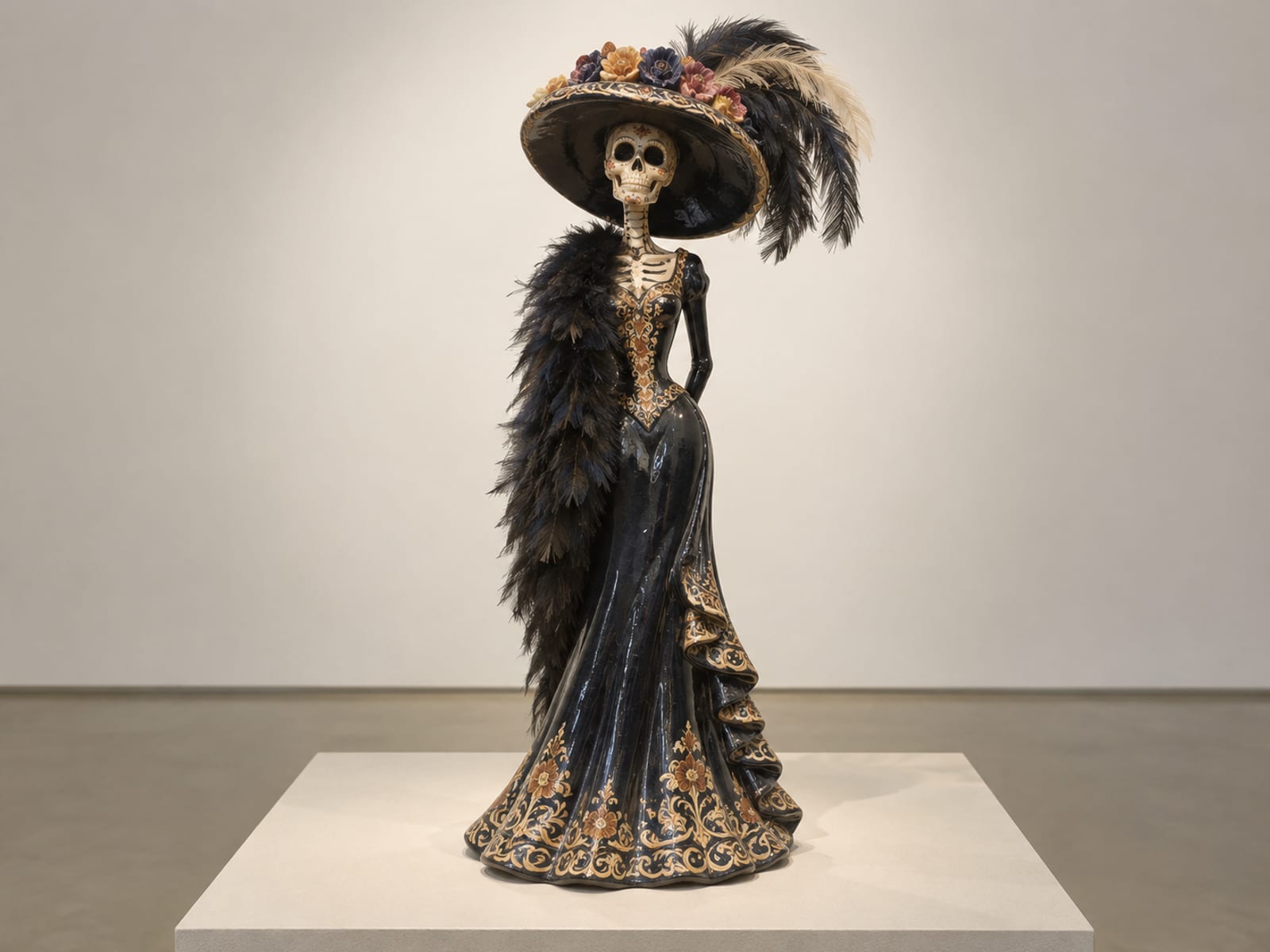
At the center, Rivera took Posada's skeleton and dressed her in a full outfit with a feathered stole. He placed her between José Guadalupe Posada and a child version of himself, and he put Frida Kahlo behind the boy. The Museo Mural Diego Rivera, run by Mexico's INBAL, calls the figure "La Calavera Catrina" and names Posada as the creator of the original calavera. The museum and INBAL identify Rivera as the artist who shaped her and gave her the name La Catrina in this mural.
The name comes from *catrín*, a word for a fashionable, well-dressed man of means, a dandy. A *catrina* is the female counterpart, and the label fits the skeleton in the stole rather well. Rivera's mural took a half-dressed satirical skull and turned her into the fully dressed lady recognized today.
The mural measures about 4.17 by 15.67 meters and weighs around 35 tons. After the 1985 earthquake it was moved, and it is now housed in the Museo Mural Diego Rivera, which opened in 1988.
How she became an emblem of Día de Muertos
La Catrina became tied to Día de Muertos through modern art and public culture, over roughly a century.
The path runs roughly like this. Posada's calaveras circulated widely on cheap sheets around November 2. After the Mexican Revolution, artists including Diego Rivera, Jean Charlot and Leopoldo Méndez helped bring Posada's work back into view as an important source for modern Mexican popular art and national identity. Rivera's 1947 mural then gave the figure her recognizable name, clothing and place next to Posada. From there she spread through reproductions, popular art, school activities, festivals, costumes and crafts.
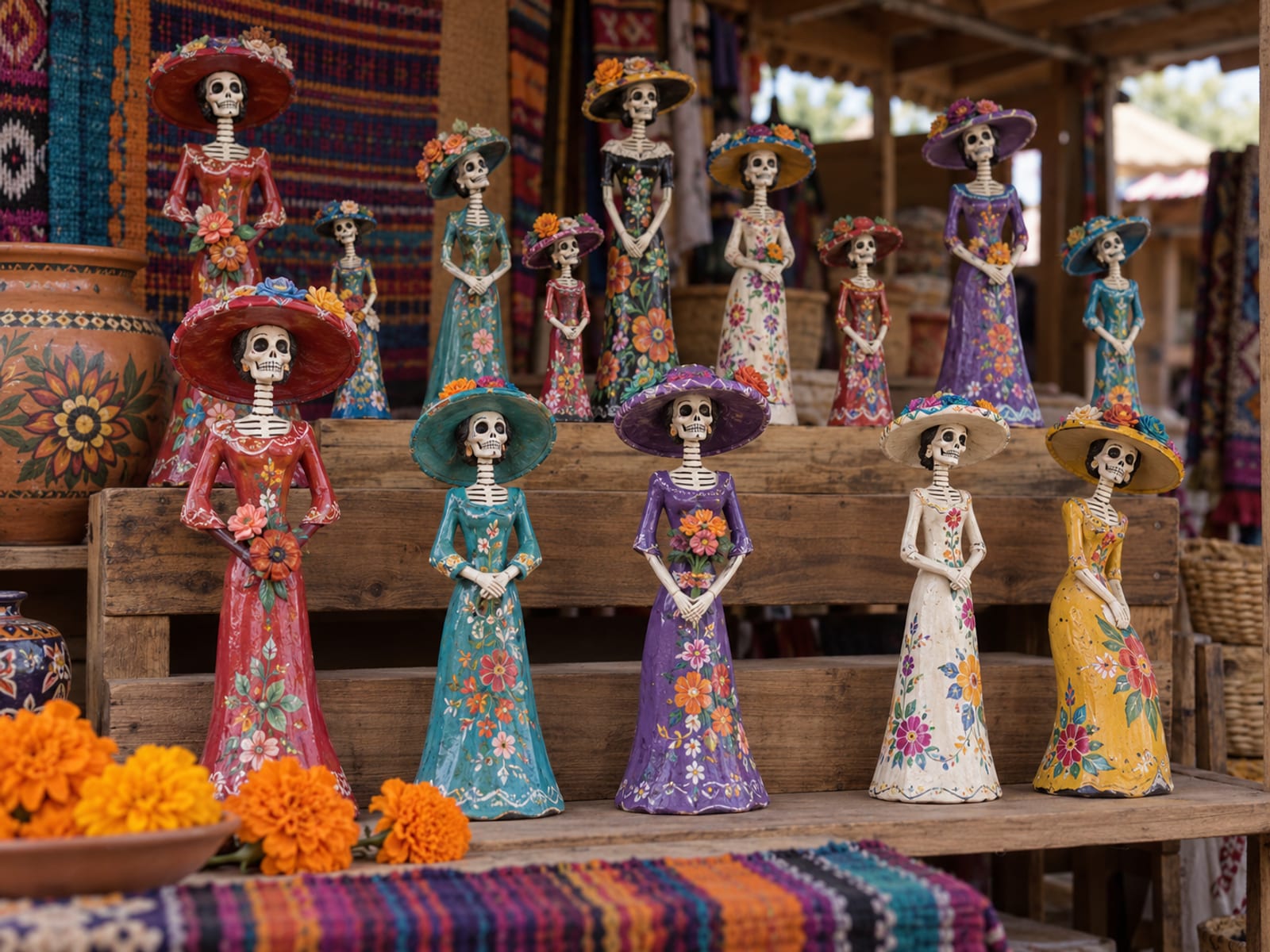
One place where you can see her as a living craft is Capula, in Michoacán, where artisans make large clay catrinas in traditional pottery workshops. In 2025, Michoacán's Casa de las Artesanías reported that 56 Capula artisans received certification and that the clay catrinas carry a Mexican geographical indication. That same agency described the 2025 Feria de la Catrina, where more than 60 clay catrinas were exhibited, some painted in polychrome and some left unpainted. The fair is an annual event, so check this year's dates before planning a trip.
In Mexico City, AP reports that a Catrina procession began in 2014 and has since grown into a large event with costume designers, makeup artists, drag performers and community groups. For 2025, AP reported thousands of participants and more than 40 groups, including LGBTQ+ artists, stylists and designers.
Catrinas and catrines today: costume and makeup
A catrina look usually pairs skull makeup with a theatrical outfit. Common pieces include a white-painted face, darkened eye sockets, decorative lines, flowers, feathers, lace, a large hat and formal clothing. The masculine counterpart is the catrín, often shown in a suit, charro clothing or other formal dress with skull makeup.
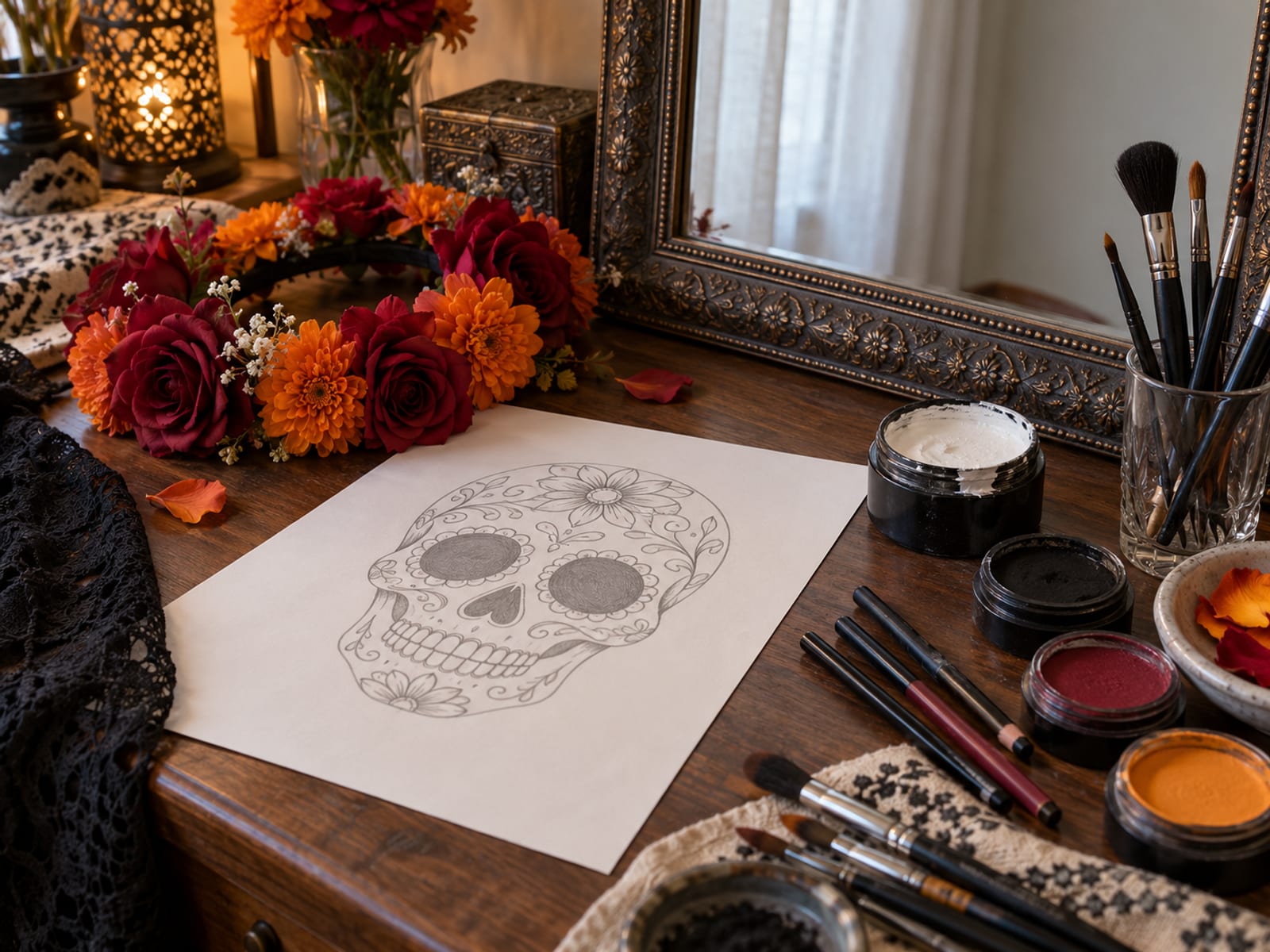
Mexican voices differ on wearing the look. A few of them:
- Andrea Romero Leyva and Brenda, Tlaquepaque, Jalisco. They have dressed as La Catrina and La Muerte for decades, and told Univision they do it to honor Día de Muertos and keep its traditions alive.
- Dayel Guzmán, makeup artist. In an interview with Conecta Arizona, she said, "El maquillaje me ha dado la oportunidad de enraizarme más con las tradiciones mexicanas, difundirlas y compartirlas." In English: makeup has given her the chance to root herself more deeply in Mexican traditions, and to spread and share them. She links the practice to accepting death and celebrating life.
- Judith Bautista, artist. She told MEXLocal that taking part is "not about being exclusive," and that people who want to join in should do so "with respect and knowledge."
- Regina Merson, Mexican-American beauty entrepreneur. She draws a line between respectful remembrance and treating the imagery as a generic Halloween costume.
- Yasmin Maya. She said the practice becomes troubling when people forget its meaning or use it mainly to make money.
If you plan to dress as La Catrina or a catrín, a few habits keep you on good footing:
- Learn the history first; you now have most of it.
- Keep the look tied to remembrance, ideally to someone you want to honor.
- Skip horror, gore and mockery.
- Credit Mexican artists and communities when you share your look.
- At a cemetery, vigil, altar or community event, follow what the hosts and local organizers expect.
Where to see La Catrina in person
If you would like to stand in front of the real thing, these places hold Posada's work, Rivera's mural or the craft tradition that grew around her:
- Museo Mural Diego Rivera, Mexico City. Home to Rivera's 1947 fresco, with La Catrina between Posada and the child Rivera. INBAL operates the museum.
- Library of Congress, Washington, D.C. The Prints and Photographs Division holds the Caroline and Erwin Swann collection, which includes Posada broadsides, zinc blocks and prints, among them *Calaveras del montón, número 1* and the zinc block for *La Calavera Oaxaqueña*. Access to fragile originals may require an appointment.
- The Metropolitan Museum of Art, New York. The Met holds Posada's 1902 zincograph *The skeleton of the people's editor (Antonio Vanegas Arroyo)*, marked Public Domain in its online record.
- Harry Ransom Center, University of Texas at Austin. The Edward Larocque Tinker Collection holds 132 broadsides and sheets of corridos and songs, including Posada material. Visits require advance notice.
- Museo José Guadalupe Posada, Aguascalientes. A major place to follow Posada's legacy, with material on his calaveras and graphic work.
- Capula, Michoacán. The Centro Cultural de Capula and the Feria de la Catrina show clay catrinas by local artisans. These are living craft traditions, not Posada originals.
Opening hours, access rules and collection appointments change, so check with each institution before you go.
La Catrina quiz
Answer every question to check.
Quick answers about La Catrina
These are the questions people ask most about her.
Who created La Catrina?
José Guadalupe Posada made the original skeleton engraving, which ran on a Vanegas Arroyo broadside printed in 1913, after his death. Diego Rivera later dressed her and named her in his 1947 mural, so two artists share the credit for the figure people recognize today.
Why is she called Catrina?
The word comes from *catrín*, a term for a fashionable, well-dressed man of means. Rivera applied the feminine form to the skeleton lady at the center of his mural, and the name stuck.
Is La Catrina an Aztec goddess?
No. She is a modern figure from printmaking and mural painting that became attached to Día de Muertos through art and public culture. Her earliest known form is a satirical print from the early twentieth century.
Can I dress as La Catrina?
Mexican voices disagree, and there is no single view. Those quoted above ask for respect and knowledge: know the history, tie the look to remembrance, avoid mockery and follow local expectations wherever you attend.
Where to go next
La Catrina makes the most sense when you know the holiday she now stands for. Start with the full guide to Día de Muertos, then read about the candy skulls on its altars in the story of sugar skulls. If you want to honor someone of your own, the guide to making an ofrenda walks through building a simple altar.