

No. 107
Frida Kahlo's Skulls: Death, the Judas Skeleton and What They Meant to Her
Skulls and skeletons in Frida Kahlo's paintings belong to a larger visual language of illness, mortality, Mexican popular art and her own life, and no single meaning covers all of them. Each one has to be read in its own painting.
The most famous is the skeleton lying on the canopy above her sleeping body in *The Dream (The Bed)*, 1940. Mexican art historian Helena Chávez Mac Gregor identifies it as a *Judas*, a handmade papier-mâché figure tied to Easter, as the Associated Press reported. Kahlo kept a cardboard skeleton like it above her real bed.
From there the story runs through a girl in a skull mask, a house full of Judas figures, a bus accident in 1925, a diary written in her last ten years, and a mural where she stands a few steps from La Catrina.
The Dream (The Bed), 1940
In *The Dream (The Bed)*, Kahlo lies asleep in a four-poster bed. Above her, on the canopy, rests a papier-mâché skeleton wrapped with explosive charges, flowers and foliage. The painting is oil on canvas, dated 1940 by Sotheby's, which records it in a private collection before its sale in New York on 20 November 2025. The painting is also titled *El sueño (La cama)*.
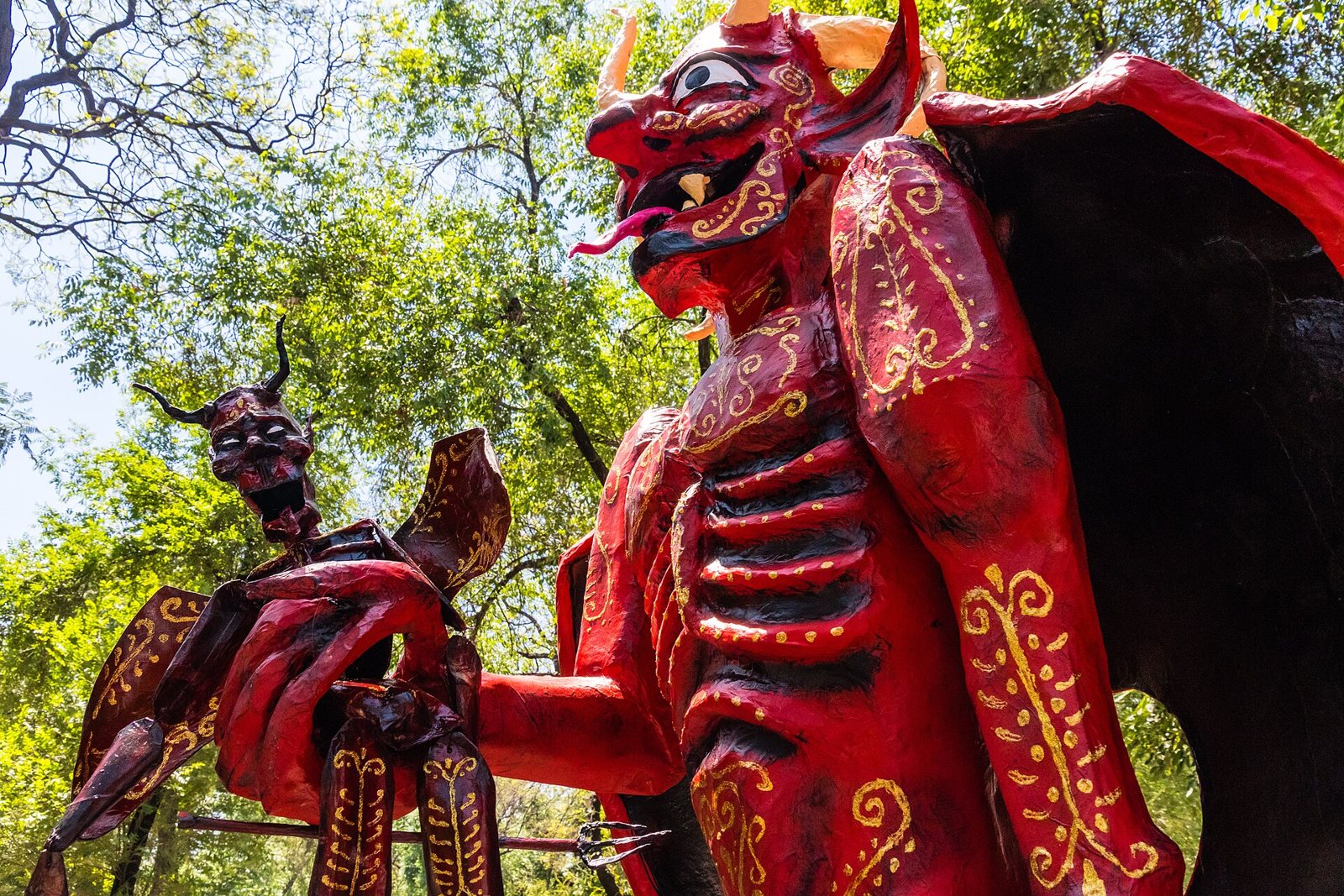
What makes the image so striking is that the skeleton was not imagined. Kahlo had a cardboard skeleton above her own bed, and the painting takes that ordinary object from her room and sets it hovering over her sleeping body. Helena Chávez Mac Gregor's identification of it as a Judas tells you what kind of object it was.
The meaning is layered rather than fixed. It draws on the Judas tradition, on the long periods of illness and bed rest in Kahlo's life, and on her awareness of death. It is a personal image of sleep, illness, mortality and a body that spent a great deal of time in bed, and that is how it is best read.
What a Judas is, and where Frida's came from
A Judas is traditionally an effigy of Judas Iscariot, made of cardboard or papier-mâché in the Mexican technique called cartonería. It belongs to Easter, not to the first days of November. In the Easter rituals it is made for, the figure may be burned or blown up, which is why the skeleton in *The Dream* is wrapped in explosive charges.
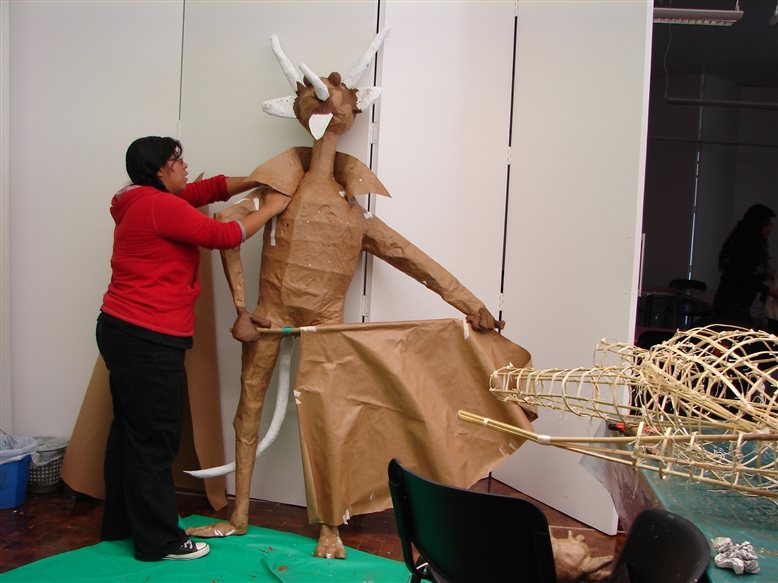
That makes it a different object from the skeletons of Día de Muertos, even when the two look alike. If you have seen the cheerful skeleton figures sold for the November holiday, the story of calacas explains where they fit. The skeleton in Kahlo's painting comes from the Easter side of Mexican popular art.
Kahlo and Diego Rivera did not own just one. The Museo Casa Estudio Diego Rivera y Frida Kahlo, part of Mexico's INBAL, reports that the couple collected about 500 Judas made in cartonería. The Museo Frida Kahlo presents the Casa Azul as a home filled with Mexican popular art, Judas figures among it, and says one Judas in its collection has the name "Frida" written on it. Five hundred figures of a kind made to go up in flames at Easter, and one of them carries her name.
The Judas in Frida Kahlo's world
Tap a card to bring it forward.
- What it is: Traditionally an effigy of Judas Iscariot
- What it is made of: Cardboard or papier-mâché, in the Mexican cartonería technique
- When it appears: Easter rituals, in which the figure may be burned or exploded
- In The Dream, 1940: The skeleton on the canopy above Kahlo's bed, identified as a Judas by Helena Chávez Mac Gregor
- In Kahlo and Rivera's collection: About 500 Judas, according to INBAL
- At the Casa Azul: One Judas has the name Frida written on it, according to the Museo Frida Kahlo
Girl with Death Mask, 1938
Two years before *The Dream*, Kahlo painted a solitary girl wearing a skull mask. *Girl with Death Mask*, 1938, also shows a yellow flower and a wooden tiger mask. She made two similar versions, and one is reported to be in the collection of the Nagoya City Art Museum, according to a catalogue page on the painting.
The George Eastman Museum holds a 1938 photograph of the painting by Nickolas Muray. The girl is sometimes read as Kahlo herself as a child. That is an interpretation, not something Kahlo is recorded as saying, and the painting leaves room for it without settling it. Skull masks have their own long history, told in our story on skull mask history.
The accident, the bed and the mirror
Death was close to Kahlo long before she painted it. At six she contracted polio, which left her right leg shorter and thinner. On 17 September 1925, when she was eighteen, the bus she was riding with Alejandro Gómez Arias was struck by a streetcar in Mexico City, and she was badly injured.
According to the Museo Frida Kahlo timeline, she spent a month in the Red Cross hospital and then months confined to bed. Her mother had a mirror placed above the bed, and Kahlo began painting there. Her first self-portrait followed in 1926, made while she was recovering at home.
Her biographer Hayden Herrera, in an interview with PBS, calls the accident decisive in her development as a painter. Herrera ties her many self-portraits to a need to make herself feel present and solid after a near-fatal encounter with death. Seen that way, the bed in *The Dream* is not a random setting. It is the place where she recovered, where she learned to paint, and where a skeleton later kept watch.
Death in the diary
In 1944 Kahlo began the diary that covers the last ten years of her life. It holds writings, poems, paintings and drawings about illness, pain, love and mortality. Death is a presence in its pages alongside everything else she cared about.
The final drawing in the diary is a black angel, and Herrera reads it as an image of death. That reading belongs to the biographer, not to a statement by Kahlo. If you visit the Casa Azul, diary material is part of what the museum shows, which is the closest you can get to these pages in person.
Frida beside La Catrina
If you have seen Frida Kahlo and La Catrina side by side, there is a real painting behind the pairing. The figure of La Catrina was not Kahlo's creation. José Guadalupe Posada made the earlier skeleton known as La Calavera Garbancera, and Diego Rivera named her and dressed her in his 1947 mural *Sueño de una tarde dominical en la Alameda Central*.
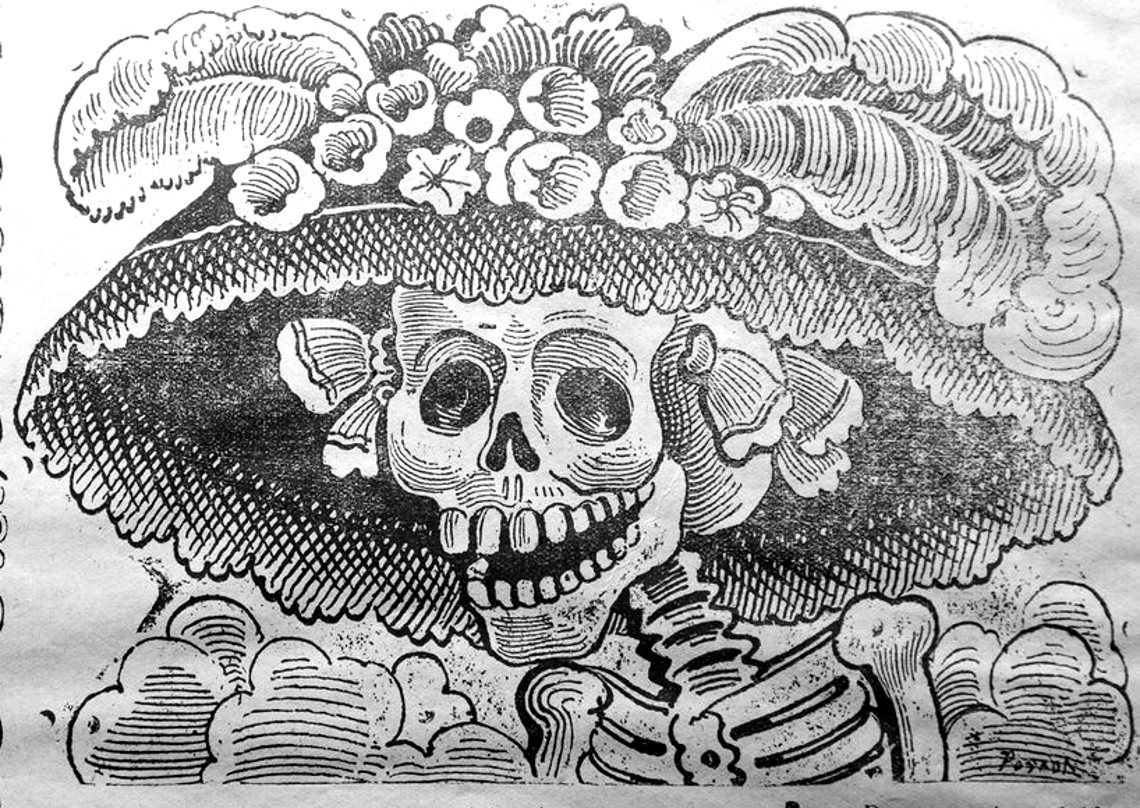
Kahlo is in that mural. The Museo Mural Diego Rivera describes the central group: La Catrina holds the hand of Rivera painted as a child, Posada stands on her other side, and Kahlo stands behind the boy, embracing him. The mural now hangs in that museum in Mexico City, which opened in 1988. The full story of the lady in the hat is told in La Catrina, and the printmaker behind her in José Guadalupe Posada.
The mural places Kahlo beside La Catrina. It does not turn every skull in Kahlo's own paintings into a Catrina or a Día de Muertos image. Her Judas belongs to Easter, her skull mask to a single girl, and her black angel to her diary.
Frida Kahlo and death, 1913 to 1958
Tap or hover a step to follow the order.
1913
Kahlo contracts polio at six, leaving her right leg shorter and thinner.
17 September 1925
A bus carrying Kahlo and Alejandro Gómez Arias is struck by a streetcar in Mexico City.
1926
Kahlo paints her first self-portrait while recovering in bed.
1938
She paints two similar versions of Girl with Death Mask.
1940
She paints The Dream (The Bed), with a skeleton above her sleeping body.
1944
She begins the diary that covers the last ten years of her life.
1947
Diego Rivera paints Sueño de una tarde dominical en la Alameda Central, with Kahlo near La Catrina.
1958
The Casa Azul opens as the Museo Frida Kahlo.
Seeing her world in Mexico City
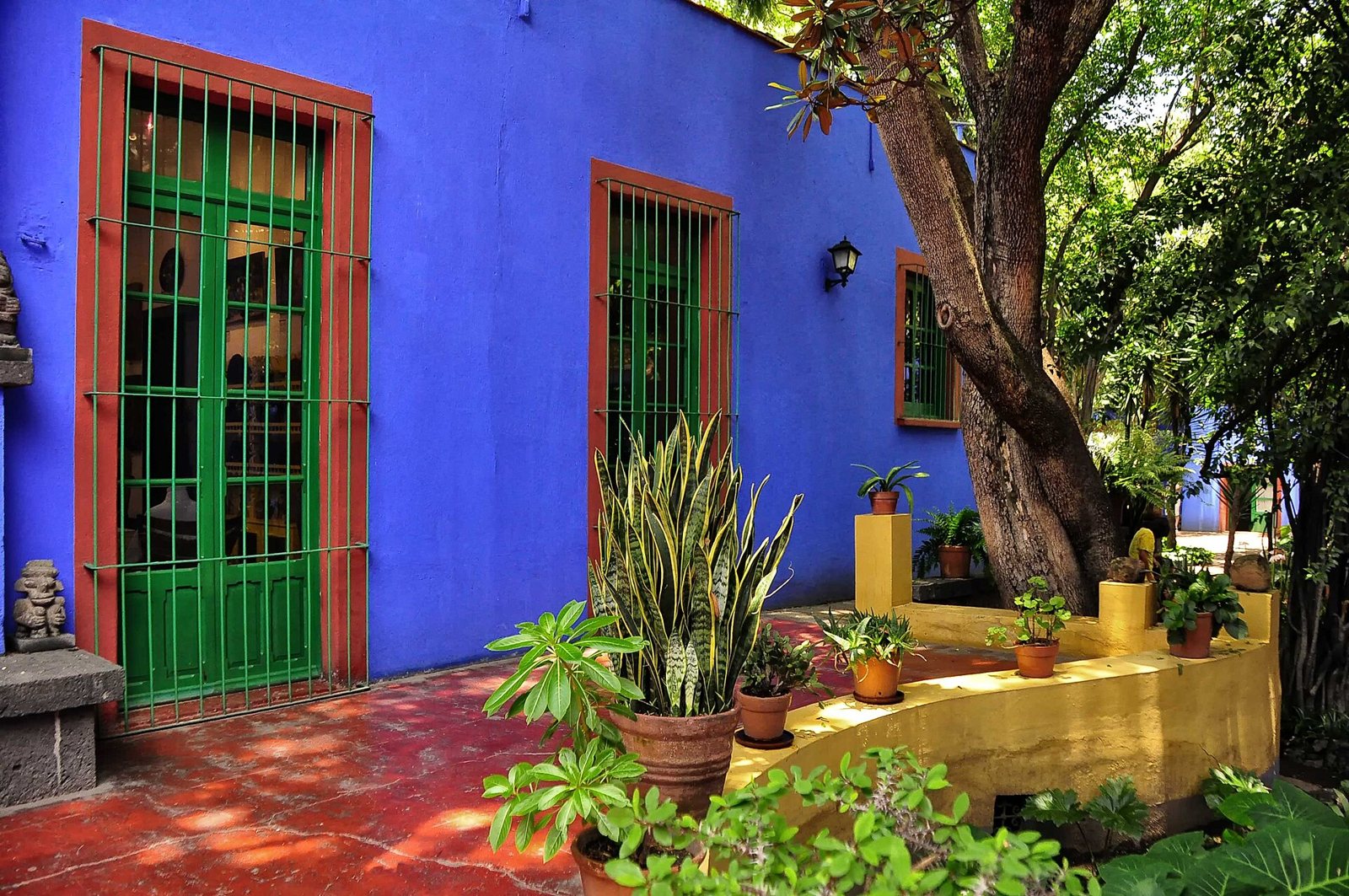
The Museo Frida Kahlo, known as the Casa Azul, is in Coyoacán, Mexico City. The house became a museum in 1958, four years after Kahlo's death. Its exhibition *Un lugar lleno de lugares: la Casa Azul* opened on 28 July 2023 and includes more than 200 works and personal objects. This is the place to see her domestic world: her personal objects, diary material and the couple's collection of Mexican popular art, Judas figures included.
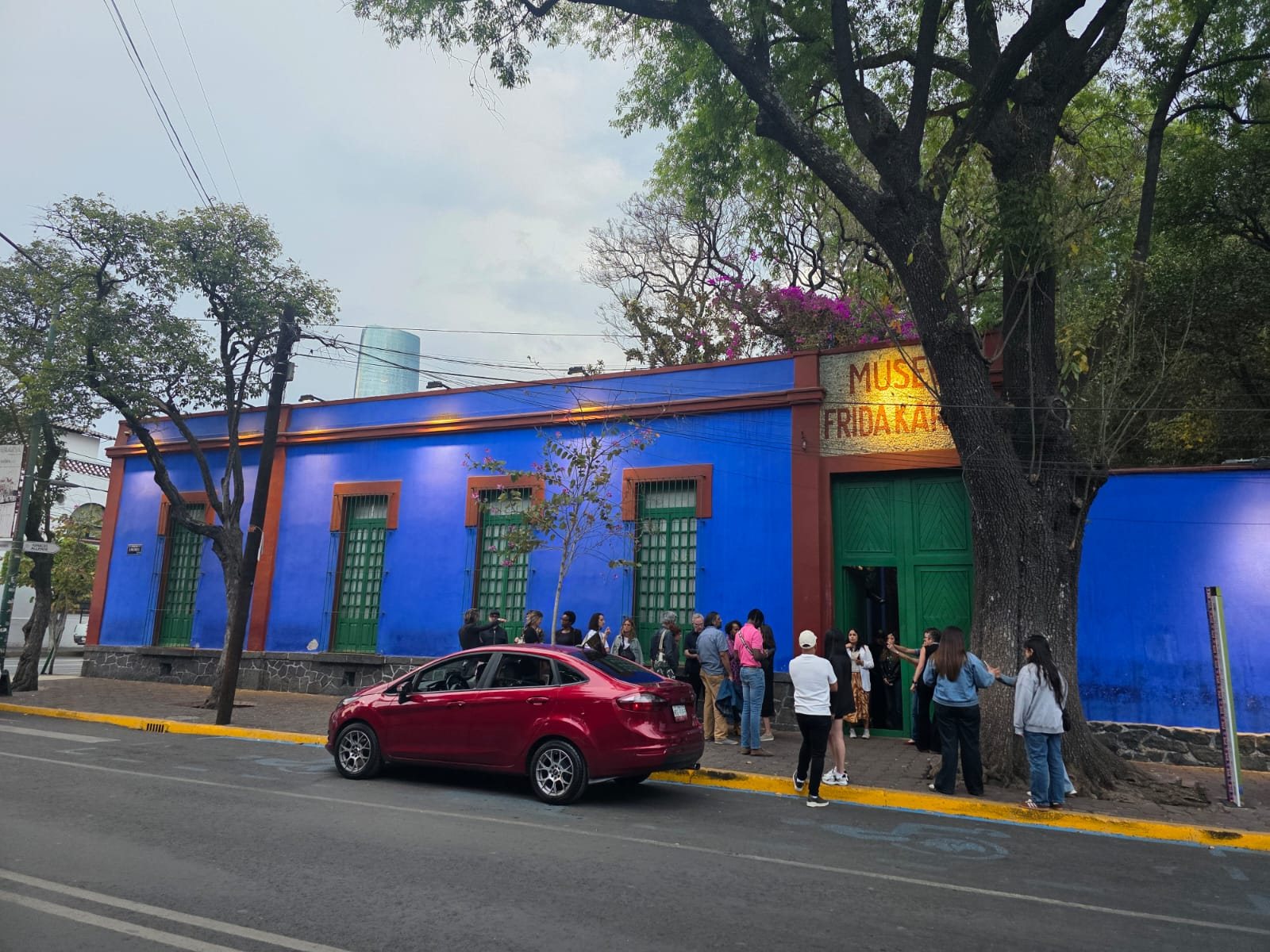
The Museo Dolores Olmedo, at Av. México 5843, La Noria, Xochimilco, Mexico City, preserves and shows works by Kahlo and Rivera alongside pre-Hispanic and Mexican popular art. Rivera's mural with La Catrina is at the Museo Mural Diego Rivera.
Exhibitions and visitor arrangements change at all three. Confirm tickets, hours and which works are on view with each museum before you go.
Frida Kahlo's skulls quiz
Answer every question to check.
Questions about Frida Kahlo's skulls
A few questions come up often about the skulls and skeletons in her work.
Why did Frida Kahlo paint skulls?
She used skulls and skeletons within a wider language of illness, mortality, Mexican popular art and her own experience, and no single meaning covers all of them. In *The Dream* the skeleton is a Judas she kept above her bed, while in *Girl with Death Mask* the skull is a mask worn by a child. Each one has to be read in its own painting.
What does the skeleton on Frida's bed mean?
It is a papier-mâché Judas that she turns into an image of mortality hovering over her sleeping body. The painting draws on her long periods of bed rest after the 1925 accident and on her awareness of death, which is why the bed is part of the reading too.
Was Frida Kahlo's bed skeleton a Day of the Dead skeleton?
No; Helena Chávez Mac Gregor identifies it as a Judas, a figure tied to Easter rather than to Día de Muertos. Judas figures are made to be burned or exploded during Easter rituals, which explains the explosive charges wrapped around it.
Why does Día de Muertos art so often feature Frida Kahlo?
One documented link is Diego Rivera's 1947 mural *Sueño de una tarde dominical en la Alameda Central*, which places her beside La Catrina, now one of the best-known symbols of the holiday. Kahlo and Rivera also collected Mexican popular art, including about 500 Judas made in cartonería.
More skeletons from Mexico
If Kahlo's mural neighbor caught your eye, read the full story of La Catrina, and for the holiday her skeleton now stands for, start with the guide to Día de Muertos. The word itself is explained in calavera meaning, and Kahlo's place among other skull artists is in famous skull art.
Terms in this story
Tap a term to see what it means.
Judas. Traditionally an effigy of Judas Iscariot made of cardboard or papier-mâché for Easter rituals, in which it may be burned or exploded. The skeleton in Kahlo's The Dream, 1940, is identified as one.
---