
No. 141
Skull Mask Meaning: From Mictlantecuhtli and Xantolo to the Battlefield
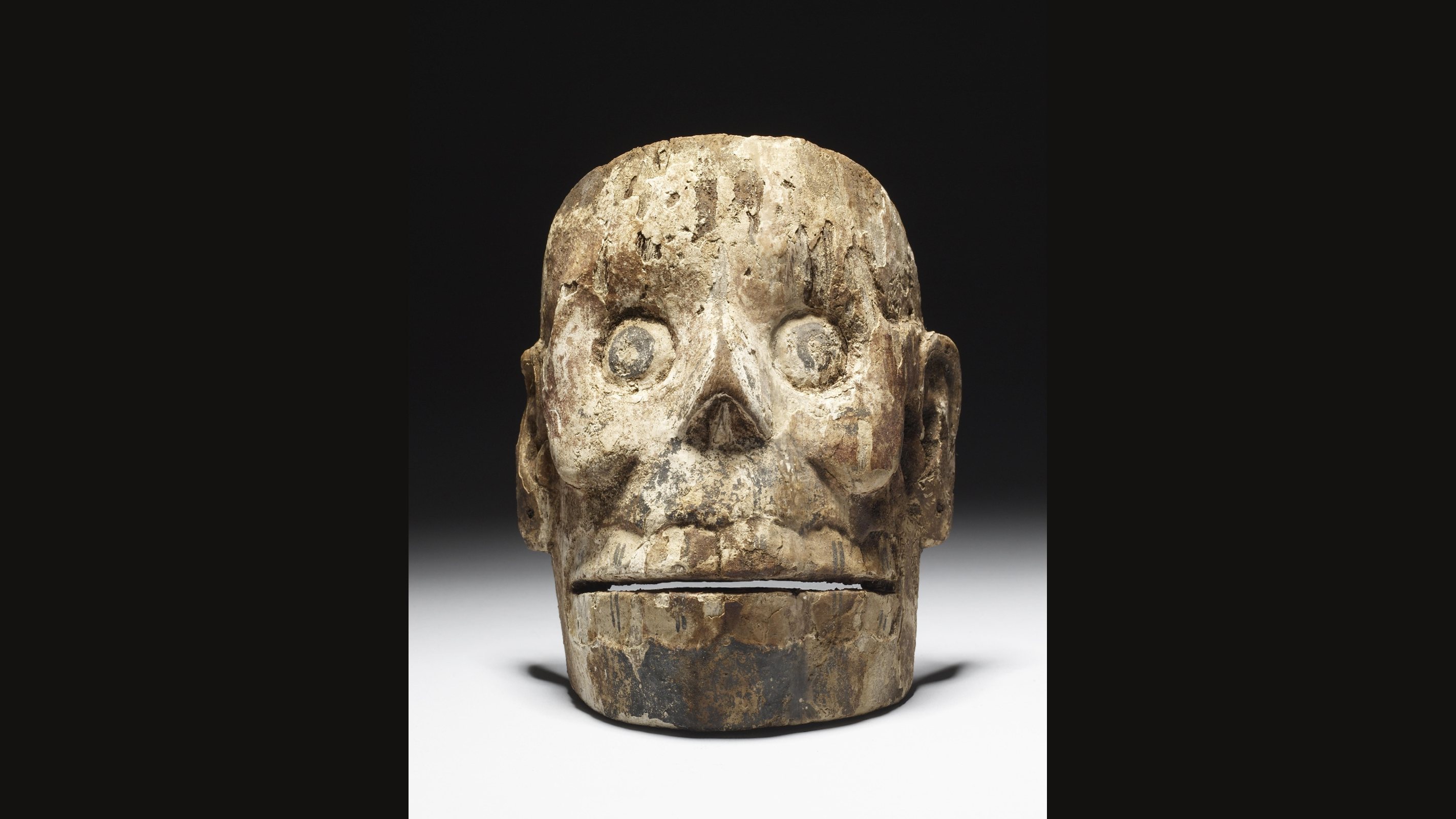
A skull mask has no single meaning, because people have carved, worn and printed the skull face for very different reasons. A Mexica wooden mask made between 1450 and 1521, now at the Walters Art Museum, shows Mictlantecuhtli, lord of the underworld. In Xantolo, the Days of the Dead of the Huasteca, masked dancers play calaveras alongside devils and old people. Late-medieval Europe gave skeletons the lead role in the Dance of Death.
Soldiers wear balaclavas for concealment, anonymity and protection from the weather, and a printed skull adds its own message on top. Since the 1970s, horror film has made the masked face one of the genre's great icons. What any one mask means comes from its design and from where it is worn.
So, if you are about to buy, make or put on a skull mask, here is where that face has been before, one place and period at a time.
The lord of the underworld's face
One of the most striking skull faces in any museum is a wooden skeletal mask at the Walters Art Museum. It is Mexica, made between 1450 and 1521, and it represents Mictlantecuhtli, the lord of the underworld (Walters Art Museum). The god himself has his own story in our page on Mictlantecuhtli.
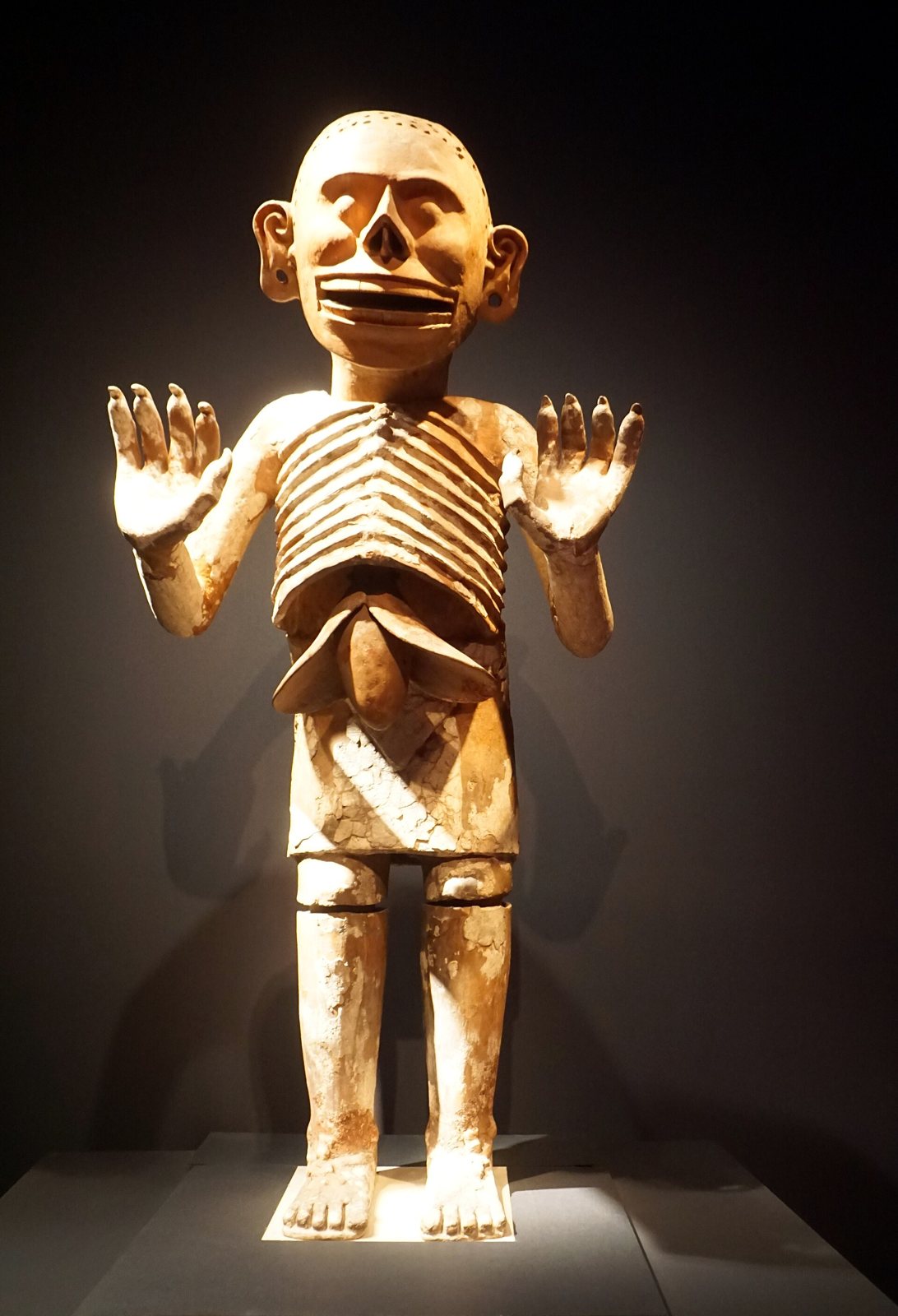
The Walters explains that masks could turn the wearer into a deity or mythic figure, and that in Mexica religious thought death was bound up with regeneration. This particular mask has a detail that changes how we should think of it: it has no eye holes. The museum suggests it may have been attached to a statue rather than worn by a person.
That makes it a powerful image of death and renewal from one people and one period, the Mexica of the fifteenth and early sixteenth centuries. It does not stand for every Mesoamerican mask, and it is not the ancestor of every skull mask sold today.
Calaveras in the Xantolo dance
Masks are a big part of how many communities in Mexico keep the Days of the Dead, and our story on Day of the Dead masks covers them region by region, from Oaxaca to the carved masks of Tempoal and the Catrina faces of the parades. Here it is worth adding what INAH and UNESCO say about Xantolo, where skull characters dance in the streets.
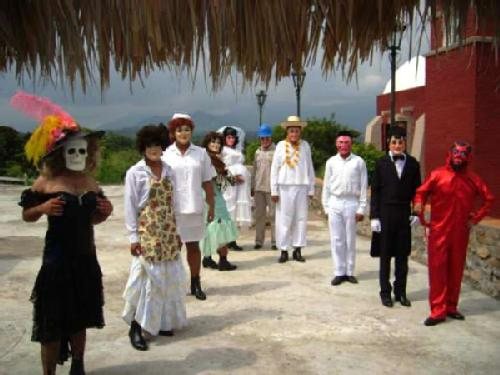
INAH, Mexico's national institute of anthropology and history, describes Xantolo as a regional Día de Muertos celebration of the Huasteca, especially in San Luis Potosí and neighboring states, with offerings, dances and masked characters. Among the dancers are devils, calaveras and old people (INAH).
UNESCO describes Xantolo in the Huasteca Potosina as a Teenek festival held from October 31 to November 2. It is tied to the ancestors, to hospitality within the community and to the annual cycle of maize (UNESCO). For the Teenek, then, a calavera dancer is one character in a festival for the ancestors, not a stand-alone symbol.
Xantolo is one living tradition in one region. Other towns and states keep Día de Muertos with no masks at all, and no single masked custom speaks for all of Mexico.
Carnival masks and the Dance of Death in Europe
Europe has its own long history of masked streets. In Nuremberg, the Schembartlauf, documented from 1449 to 1539, sent masked participants running through the city during carnival (Heidelberg University Library). Carnival masks there were about disguise, role reversal and public performance.
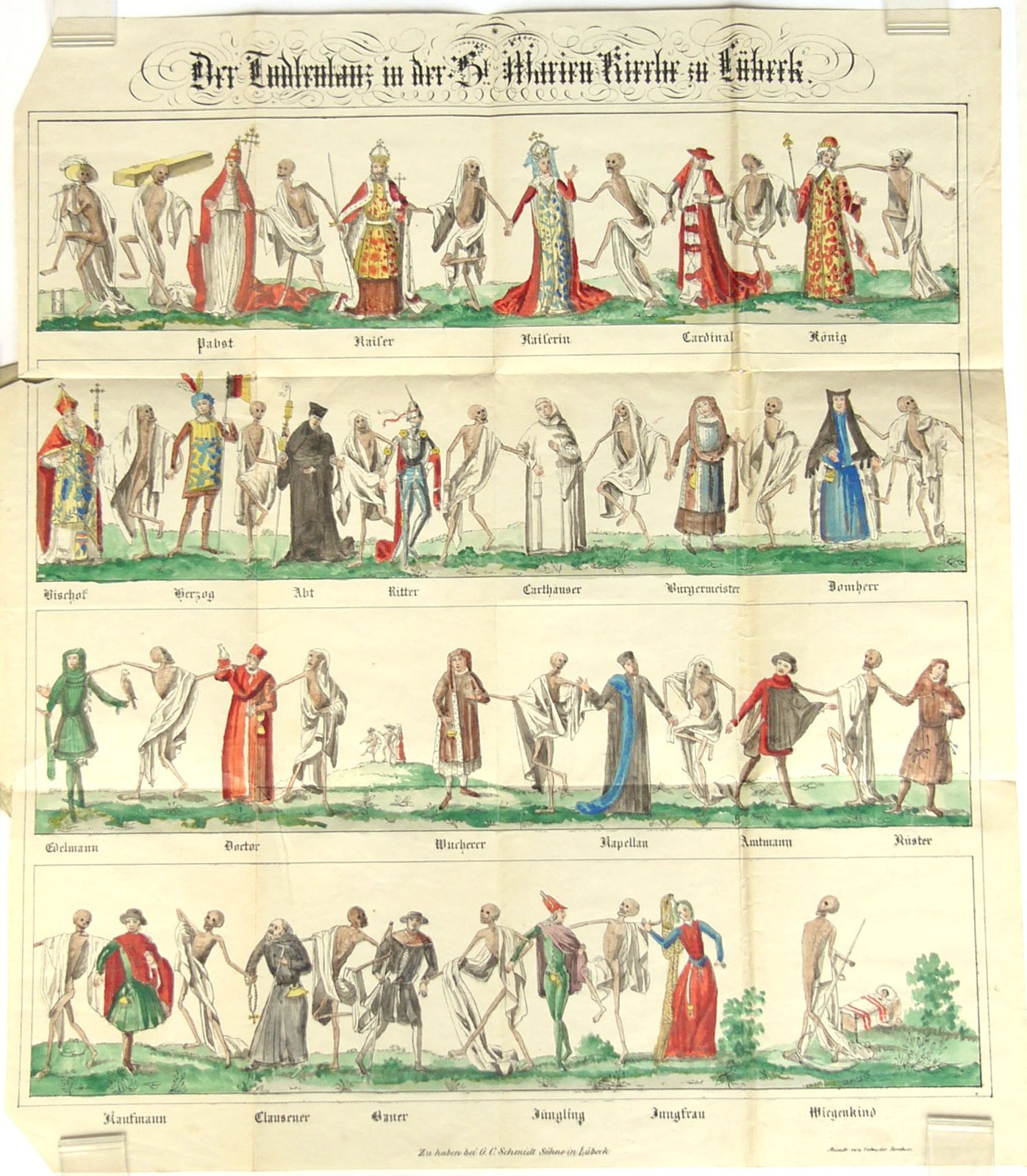
The skeleton got its starring role in the danse macabre, or Dance of Death. It grew up in late-medieval Europe as an allegory in which skeletons or Death himself summon people of every rank, from the powerful to the poor. The Library of Congress describes it as a morality play teaching that everyone must die and should be ready (Library of Congress). A major early version was painted at the Cemetery of the Holy Innocents in Paris in 1424 or 1425 (École du Louvre; LACMA).
The murals, manuscripts and prints of the Dance of Death are far better documented than any danced performance, so a modern skull mask is not a direct survival of the medieval dance. It shares the same idea, though: a skull face that points every viewer to the same ending. The full story of the dance is told in danse macabre.
The death's head in uniform
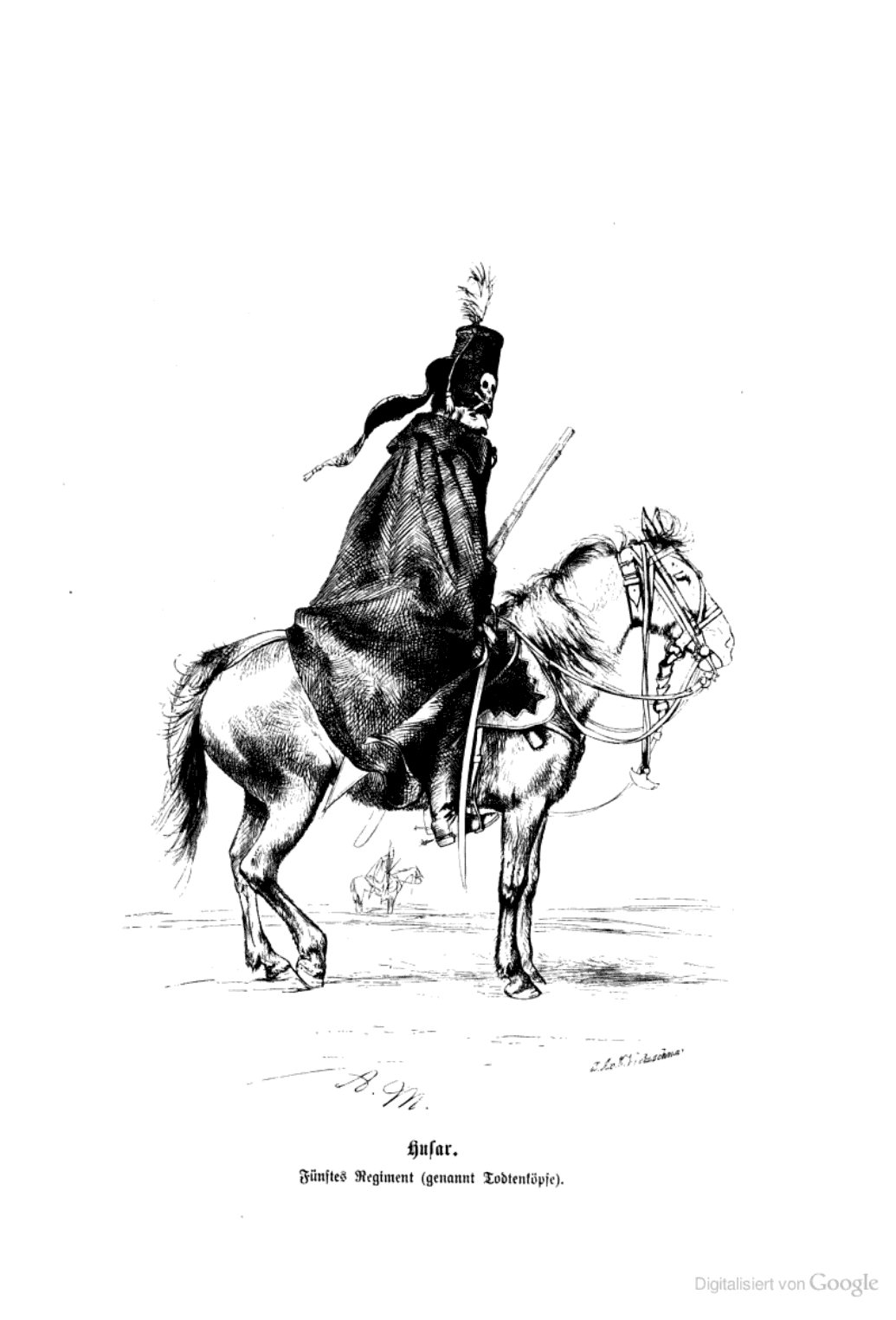
Skulls have been worn into battle for centuries. Totenkopf is German for "death's head." The Prussian hussars wore death's-head insignia in the eighteenth century, where it signaled military identity and defiance of death (Bellingcat).
The Nazi SS used its own specific Totenkopf design, and by the 1930s it was one of the organization's emblems. Bellingcat and the ADL note that the SS version is still used by far-right and neo-Nazi movements. It is a hate symbol, and it has no place on a mask anyone should wear. The full history, from the hussars to the camps and the laws against the symbol today, is in our story on the Totenkopf.
The point for anyone choosing a mask is simple. A skull emblem has to be read through its design and the history of the people who wore it, because the same basic shape can mean regimental tradition or Nazi allegiance.
Why soldiers wear skull balaclavas
The balaclava itself takes its name from Balaclava, near Sevastopol, a place tied to the Crimean War (Time). Its everyday jobs are practical: it hides a face, keeps a wearer anonymous, protects against wind and cold, and denies an opponent visual information.
Writing in Time in 2014, journalist Simon Shuster described masked Russian-backed or Russian-linked forces in eastern Ukraine and connected the masks to maskirovka, the military idea of concealment and deception. In that setting, the covered face is about hiding who you are and how many of you there are.
A printed skull on the fabric adds a message on top of the function. It might be a unit emblem, a personal decoration or a political symbol, and no single motive covers every soldier who wears one. The skull balaclava is a modern piece of gear with many wearers, and its print means what that wearer and unit intend. If yours carries a death's head with crossed bones, check the design against the SS version; our story on the skull and crossbones shows how many other histories that image has.
One skull face, many meanings
Tap a card to bring it forward.
- Mexica mask, 1450 to 1521: Mictlantecuhtli, lord of the underworld, with death linked to regeneration.
- Xantolo, Huasteca Potosina: Calavera dancers among devils and old people in a Teenek festival for the ancestors.
- Nuremberg carnival, 1449 to 1539: Masked runners in the Schembartlauf.
- Dance of Death: Skeletons summoning every rank, a lesson that everyone must die.
- Prussian hussars: A death's head for military identity and defiance of death.
- SS Totenkopf: A Nazi emblem and a hate symbol.
- Military balaclava: Concealment, anonymity and weather protection, with a printed skull as emblem or decoration.
- Horror film and Halloween: Fear, a character or simply a costume.
Horror films, Halloween and the big screen
If your skull mask came from a costume shop, its closest relatives are on the screen. A scholarly overview, *Masks in Horror Cinema*, identifies the 1970s onward, with *Halloween* and *The Texas Chain Saw Massacre*, as the period when masked killers became central to horror (JSTOR). The Science Museum Group collection records a skull-like zombie mask made for the 1973 film *The Vault of Horror* (Science Museum Group), so at least one film skull face is now a museum object.
Halloween costumes mix older disguise traditions with film imagery and licensed characters. That is why a skull mask on October 31 can be a skeleton costume, a horror character, a historical nod, a game avatar or just part of the seasonal decorating (JSTOR). The way skeleton costumes grew up is told in skeleton costume history, and the season's wider skeleton story is in skeletons and Halloween.
Film can even feed back into festival. As the Associated Press reported, the big Día de Muertos parade in Mexico City grew out of the one invented for the 2015 James Bond film *Spectre*. That story has its own page: the Spectre Day of the Dead parade.
The skull face through time
Tap or hover a step to follow the order.
1424 or 1425
A Dance of Death is painted at the Cemetery of the Holy Innocents in Paris.
1449 to 1539
Masked Schembartlauf carnival processions run through Nuremberg.
1450 to 1521
A Mexica wooden mask of Mictlantecuhtli is made, now at the Walters Art Museum.
Eighteenth century
Prussian hussars wear death's-head insignia.
1930s
The Nazi SS uses its own Totenkopf design, today a hate symbol.
1973
A skull-like zombie mask is made for the film The Vault of Horror.
2014
Time reports masked forces in eastern Ukraine and the idea of maskirovka.
2015
The James Bond film Spectre stages a Día de Muertos parade in Mexico City.
Choosing and wearing a skull mask well
Most skull masks are made for fun, and that is a fine thing for a mask to be. A few habits help you pick one that fits where you plan to wear it.
Start with a mask whose maker, design source and intended use are clear. A commercial skeleton mask for Halloween or cosplay is a different object from a mask made for a living Indigenous ceremony, so treat them differently. If a design is sold as "Aztec," "Mayan" or "Mexican," look for the community, place and period behind it; a mask that names none of those is a costume, not a cultural artifact.
For designs inspired by Día de Muertos or Xantolo, name the tradition they draw on and do not claim the mask reproduces a sacred object. If you want to know more about a design, ask the artist or a cultural institution how they describe it. Do not use real human remains or imitate funerary objects. At a cultural event, follow the organizers' guidance, and ask before you photograph dancers, altars or ceremonial objects. For Día de Muertos gatherings in particular, our Day of the Dead masks story has a fuller list of good habits.
If you are leaning toward face paint instead of a mask, Catrina makeup and skeleton makeup cover the looks.
How well do you know the skull mask?
Answer every question to check.
Frequently asked questions
Short answers to the questions that come up most about skull masks.
What does a skull mask mean?
A skull mask has no single meaning; it depends on the design, the people and the occasion. A Mexica mask of 1450 to 1521 shows Mictlantecuhtli and ties death to regeneration, Xantolo calavera dancers belong to a Teenek festival for the ancestors, and a Halloween or horror mask may simply signal death, fear or a character.
Is a Mexican skull mask the same as Día de Muertos makeup?
No, a mask is worn over the face, while many people paint a calavera or Catrina face onto their skin instead. Each has its own settings, from carved dance masks in the Huasteca to painted faces at parades, and our Catrina makeup story covers the painted look.
What does a Mexican calavera represent?
A Mexican calavera's meaning depends on the community and the occasion. In Xantolo a calavera is one masked character among devils and old people, while elsewhere the image can carry remembrance, satire or celebration; our page on calavera meaning follows the image further.
Do skull masks come from Día de Muertos?
Some skull masks come from Día de Muertos, but skull faces also come from Mexica art, European carnival and the Dance of Death, military insignia and horror film. A store-bought skull mask may draw on any of these, so its design is the best clue to its roots.
Behind every skull face, a place and a time
A skull mask can be a god's face, a dancer welcoming the dead, a medieval lesson, a soldier's disguise or a Saturday-night horror costume. Knowing which one you are holding is the most interesting part of wearing it. For the celebration behind so many of these faces, start with Día de Muertos, and for everything else the skull has meant, see skull symbolism.
Terms in this story
Tap a term to see what it means.
Mictlantecuhtli. The Mexica lord of the underworld. A wooden mask of him made between 1450 and 1521 is at the Walters Art Museum.