

No. 108
The Piltdown Man Hoax: How a Fake Skull Fooled Science for 40 Years
Piltdown Man was a scientific fraud. In December 1912, Charles Dawson and Arthur Smith Woodward announced remains from Piltdown, in Sussex, England, as an ancient human ancestor and named it Eoanthropus dawsoni. In reality it was pieces of human skull put together with an orangutan jaw whose teeth had been filed to look human, all stained to look old. Kenneth Oakley, Joseph Weiner and Wilfrid Le Gros Clark exposed the fake in November 1953, about four decades later. Nobody has ever proved who made it, but a 2016 study led by Isabelle De Groote names Dawson as the most likely single forger.
The 1912 announcement
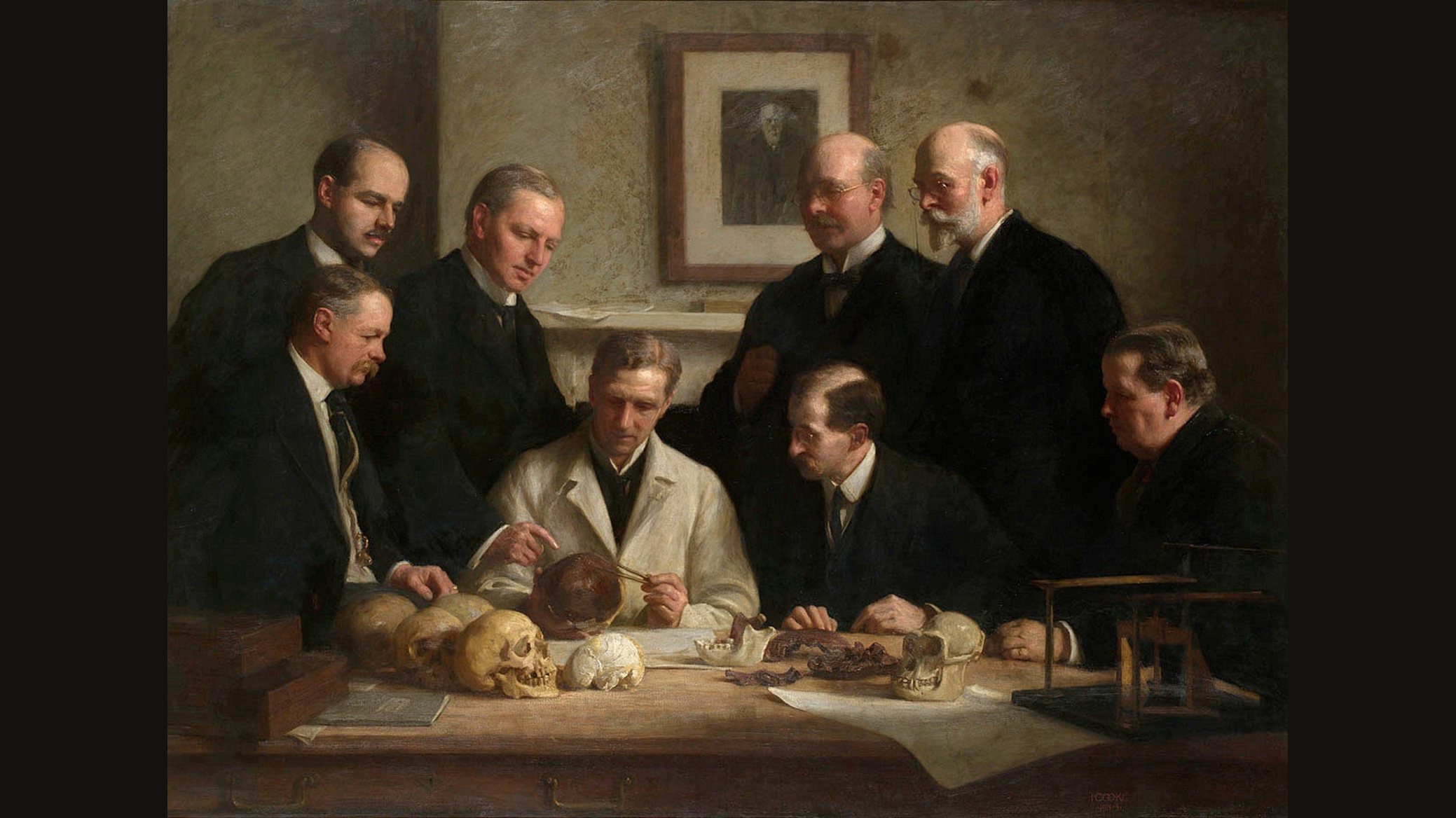
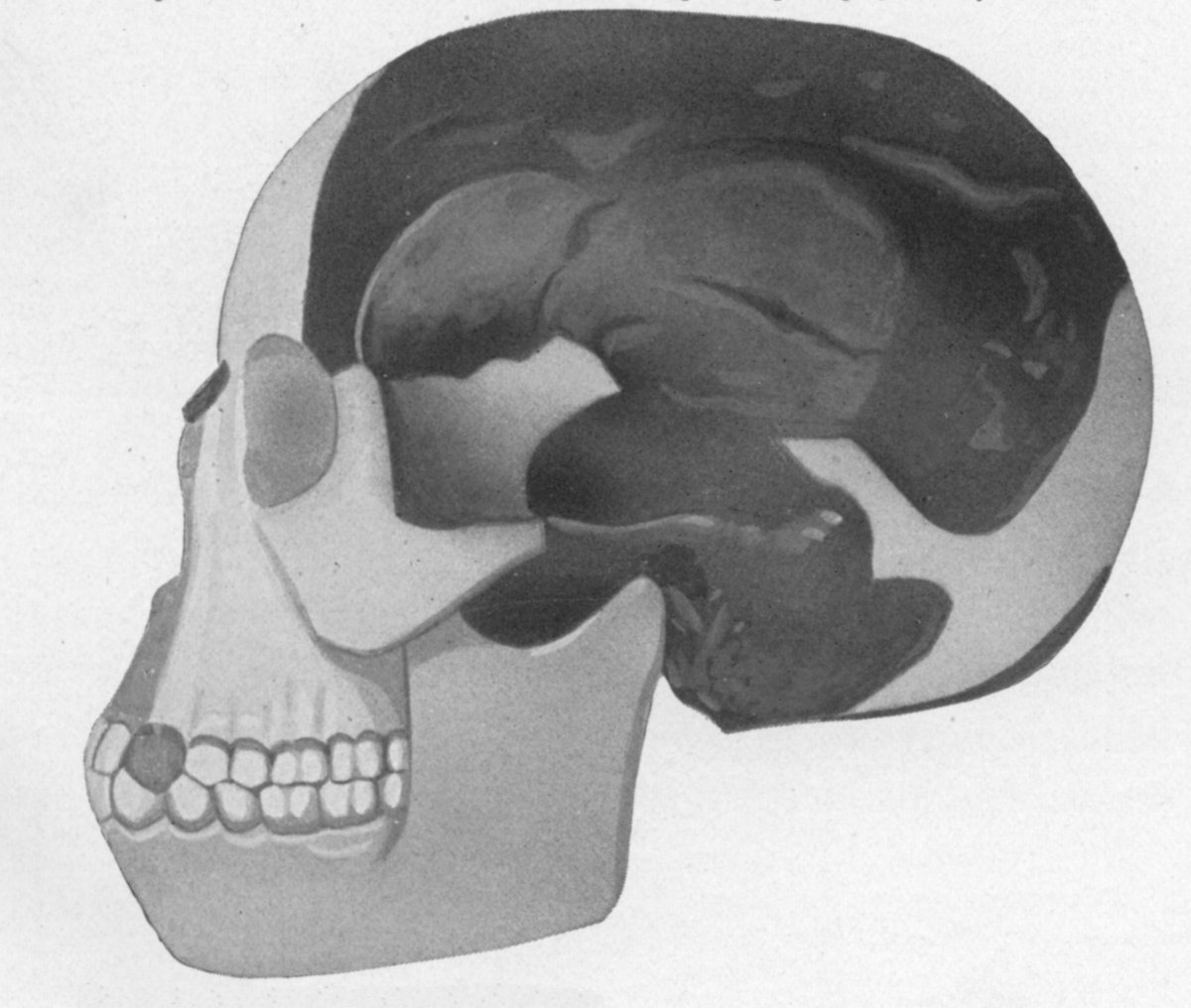
In December 1912, Dawson and Woodward presented their material to the Geological Society of London. They had a human-like skull, an ape-like jaw, teeth, animal fossils and stone tools, all said to come from Piltdown. Woodward reconstructed the skull and argued that it belonged to a human ancestor about 500,000 years old. The supposed new species was named Eoanthropus dawsoni (Natural History Museum).
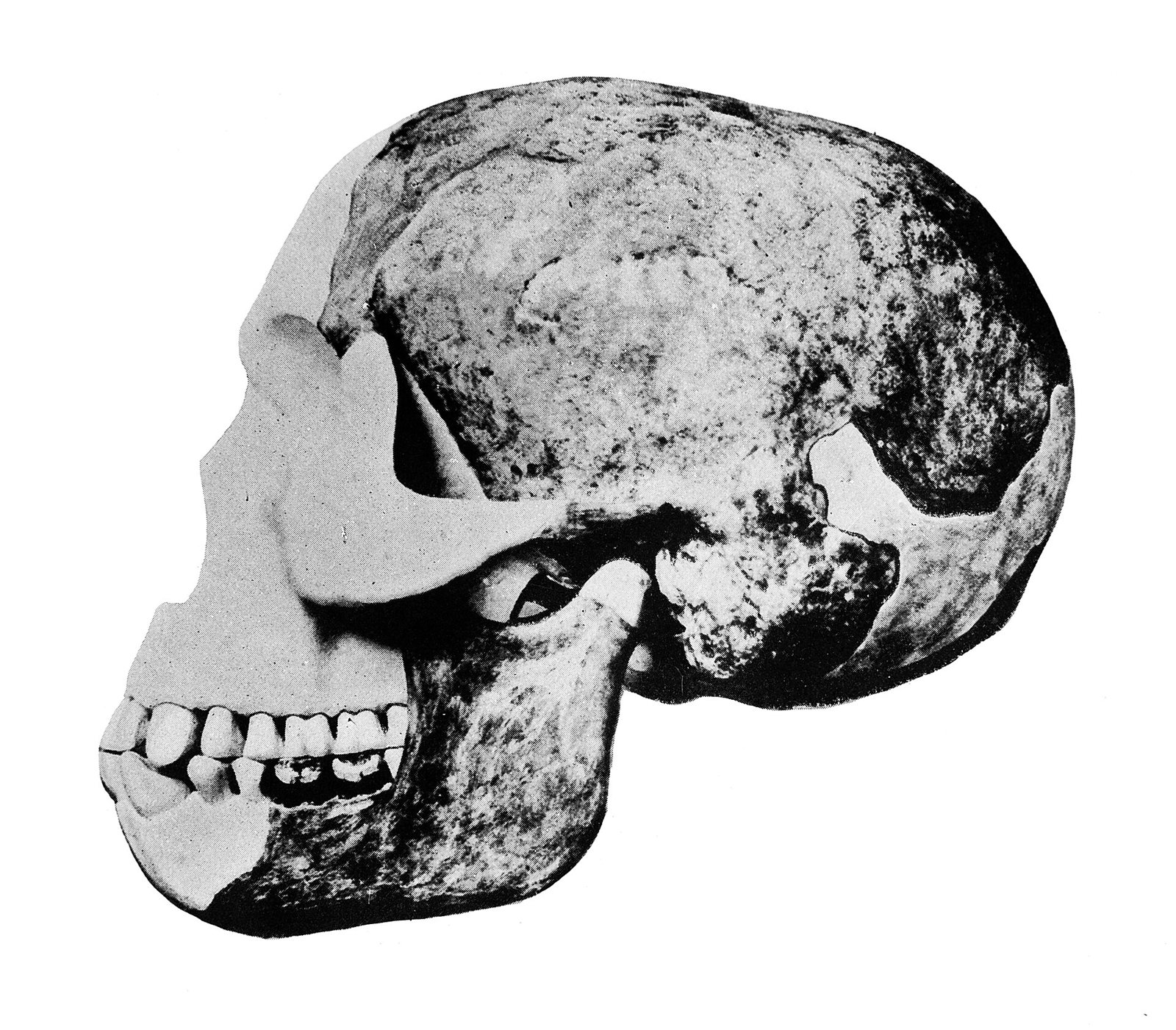
For a skull-loving audience, the appeal is easy to see. Here, apparently, was the creature halfway between ape and human that people had been waiting for: a big, human-like braincase on top of an ape's jaw.
Piltdown Man, from announcement to answer
Tap or hover a step to follow the order.
1912
Charles Dawson and Arthur Smith Woodward announce Eoanthropus dawsoni at the Geological Society of London.
30 August 1913
A canine tooth turns up at Piltdown, closely matching the model tooth in Woodward's reconstruction.
1915
Dawson reports more Piltdown material from a second site.
1916
Dawson dies, and no comparable Piltdown finds follow.
1949
Kenneth Oakley applies fluorine testing to the remains.
November 1953
Oakley, Joseph Weiner and Wilfrid Le Gros Clark report that Piltdown is a fraud.
1955
The Natural History Museum concludes that none of the Piltdown finds genuinely came from Piltdown.
2016
Isabelle De Groote and colleagues use DNA, CT scans, chemistry and anatomy to argue for one likely forger, probably Dawson.
Why so many experts believed it
Piltdown fit what many British scientists already expected. A powerful idea at the time held that human evolution had produced a large brain first, before a modern jaw and body. A fossil with a human-sized braincase and an ape's jaw looked like proof (Science History Institute).
National feeling played a part too. Piltdown gave Britain an English early human. The pieces also looked convincing: they appeared mineralized, like truly ancient bone, and they came with stone tools and animal fossils that seemed to place them in deep time. Prominent authorities, including Arthur Keith and Henry Fairfield Osborn, supported it.
Acceptance was never universal, though. Some anatomists objected from the start that the skull and jaw did not belong together. The fake lasted about four decades because influential supporters and the apparent geological setting kept that interpretation on top, even with the doubters in the room (Science History Institute).
The finds that kept coming
Piltdown also had a talent for producing exactly what it needed. After critics questioned Woodward's reconstruction, a canine tooth was "found" at the site on 30 August 1913. It closely matched the model tooth Woodward had already put into his reconstruction, which is the sort of luck that makes a modern reader raise an eyebrow (De Groote et al., 2016).
In 1915, Dawson reported more Piltdown material from a second site, which became known as Piltdown II. Then Dawson died in 1916, and no comparable finds appeared at Piltdown again (British Geological Survey).
How the fake was caught
The case broke open with chemistry. Bone buried in the ground slowly absorbs fluorine from the groundwater around it, so bones that lay together for the same length of time should carry similar amounts. From 1949, Kenneth Oakley applied fluorine testing to the Piltdown remains. The skull and jaw had absorbed very different amounts of fluorine, which meant they could not belong to the same ancient individual. By the first fluorine estimate, the cranium was no more than about 50,000 years old, and the jaw and teeth were much more recent (Natural History Museum; Science History Institute).
Joseph Weiner then looked closely at the teeth and noticed that they seemed artificially abraded, worn down in a way that did not look natural. Wilfrid Le Gros Clark examined the anatomy and agreed that the jaw was not human. Together the three men combined fluorine and nitrogen tests, microscopes, X-rays and anatomical comparison. In November 1953 they reported the fraud: the jaw had been chemically stained, the teeth had been filed, and the skull and jaw came from different species (Weiner and Oakley, 1954).
Later carbon dating placed the skull at roughly 520 to 720 years old, with the jaw slightly younger (Australian Museum). So, a creature presented as half a million years old was, on this dating, younger than many cathedrals. In 1955 the Natural History Museum concluded that none of the Piltdown finds had genuinely come from Piltdown at all. Our story on how old bones are dated covers how methods like these work.
What the skull and jaw really were
In 2016, Isabelle De Groote and colleagues published a fresh study in Royal Society Open Science, using DNA, CT scans, chemistry and anatomy. They concluded that the jaw came from one orangutan, probably from a population related to those of southwest Sarawak in Borneo. The skull pieces came from at least two different people. Those human bones may have been medieval, but the study could not establish their exact age or where they came from (De Groote et al., 2016).
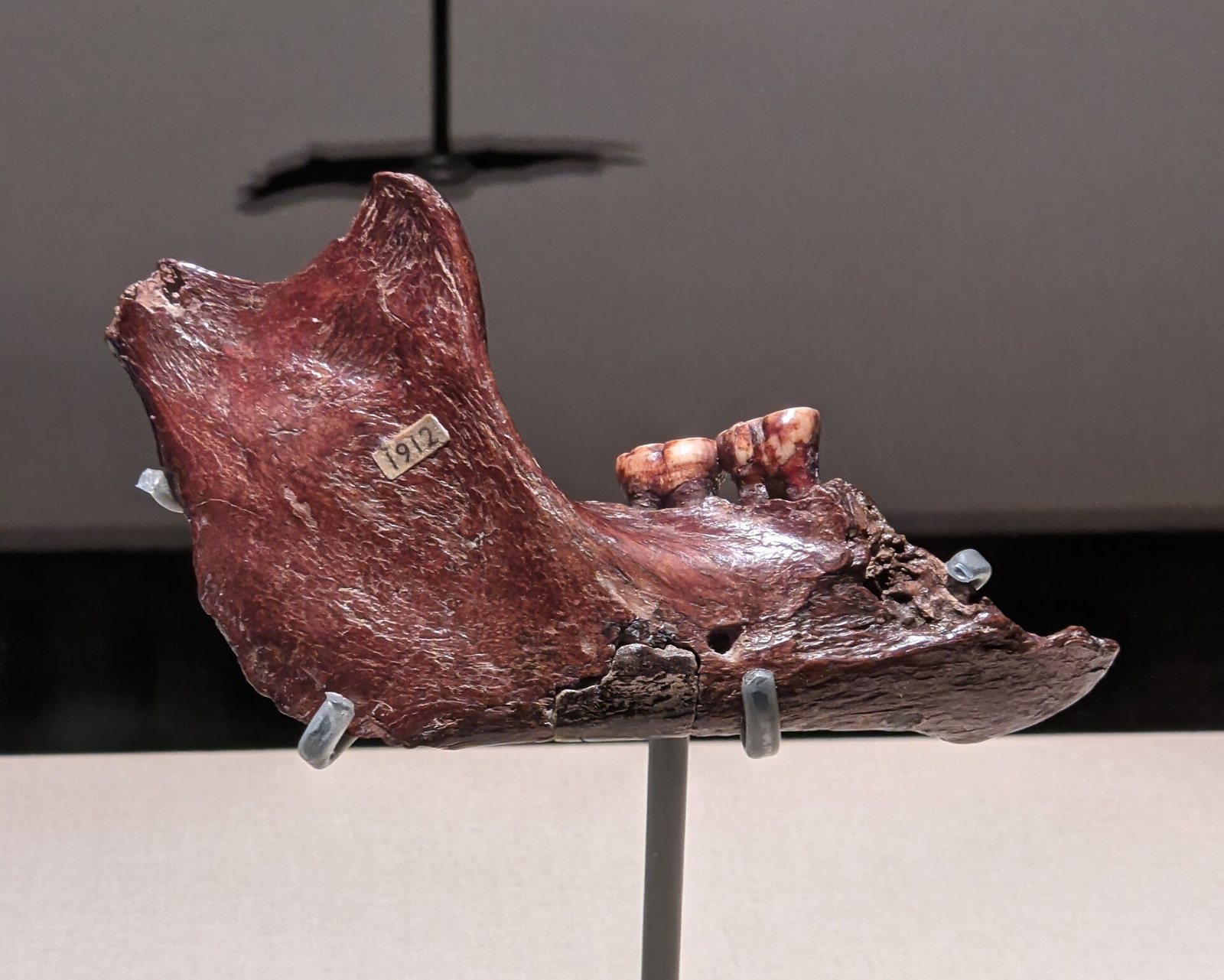
The CT scans reveal how the fake was put together. The orangutan jaw and teeth had been modified, stained and packed with gravel. The teeth had been filed to imitate human wear. Small pebbles had been used as plugs and putty held repairs in place. The same putty, pebble plugs and staining appear in material from both Piltdown I and Piltdown II, which suggests one person's hand behind both (Natural History Museum, 2016).
It is worth pausing on one fact. The skull pieces at the heart of the most famous fake in the history of human origins came from real people, at least two of them, whose names and lives are unknown. Their remains were used as props. That is part of the story too.
Who made Piltdown Man?
Nobody has been proved to be the forger. Over the decades, suspicion has fallen on a long list of people: Charles Dawson, Arthur Smith Woodward, Pierre Teilhard de Chardin, Martin Hinton, Grafton Elliot Smith, Arthur Keith, William Ruskin Butterfield and even the writer Arthur Conan Doyle (De Groote et al., 2016).
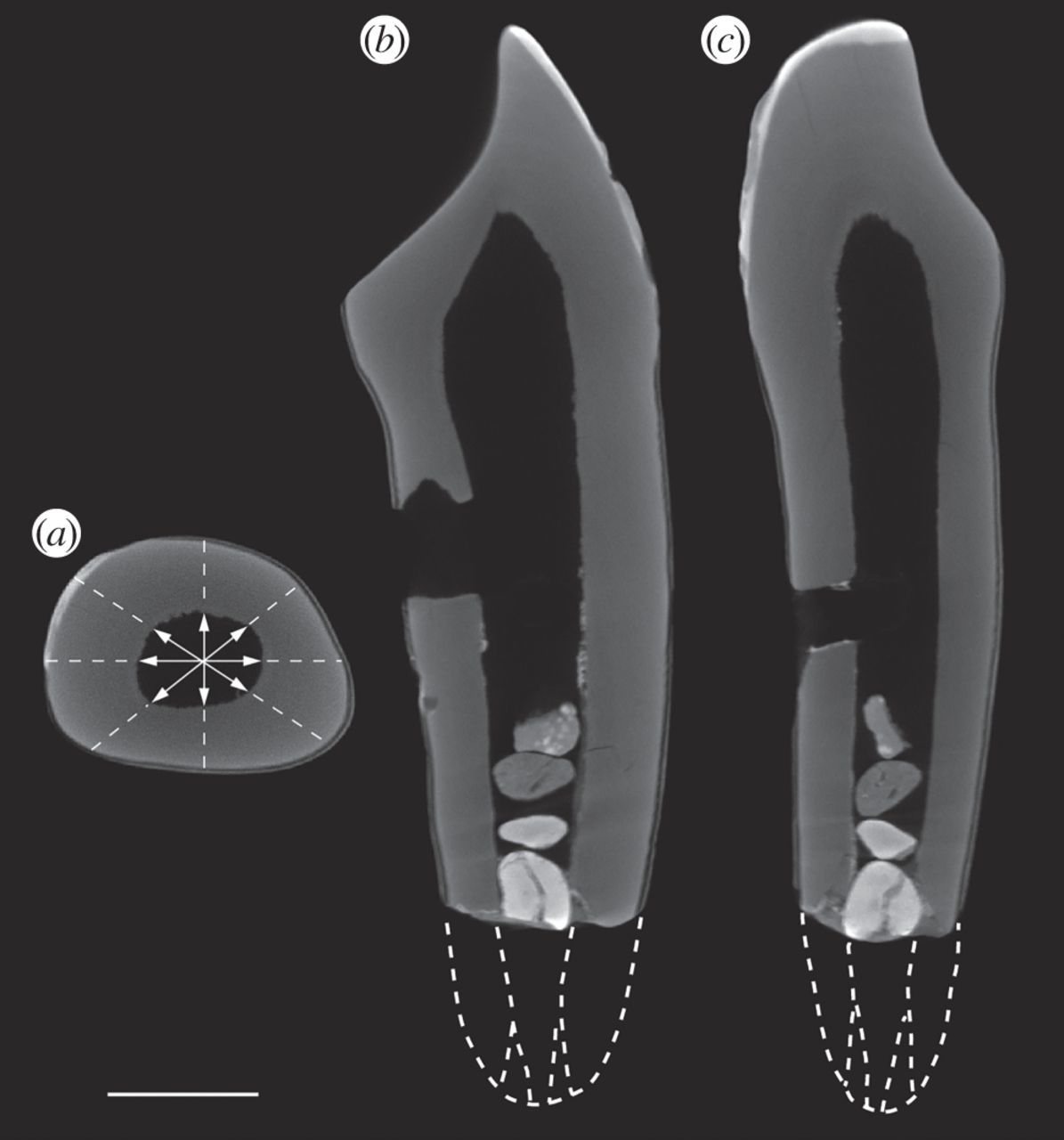
The 2016 study made the strongest case against Dawson. He brought the first material to Woodward. He was present whenever the important finds were made. He was the only person directly connected with the second Piltdown site, and he never revealed exactly where it was. After he died in 1916, the finds stopped. And the same preparation methods tie the material from both sites to one forger. Bournemouth University, which has studied Dawson's record, also links him to other suspected or demonstrated antiquarian forgeries (Bournemouth University).
That is an attribution, short of a courtroom verdict. The 2016 authors called Dawson the most likely single forger, while allowing that someone else could have supplied some of the material or helped him. The theories about Hinton, Teilhard de Chardin, Keith and the others remain part of the story's history, and none of them is established fact.
Was it a deliberate prank or a deliberate fraud? The staining, filing and gravel packing show that someone faked it on purpose. Why they did it has never been established.
Why Piltdown still matters
Piltdown shows how expectations can shape what scientists see. The fake seemed to confirm the idea of a "missing link," and the popular belief of the time that brain size and intelligence evolved before upright walking and human teeth. Today "missing link" is a historical phrase. Human evolution is understood as a branching bush with many species and populations, without a single ladder or one halfway creature (Science History Institute).
It also had real costs. Piltdown strengthened the theory that humans began in Europe or Asia, and it fed resistance to real African evidence. The clearest victim was the Taung Child, a real fossil from South Africa named in 1925, which many experts dismissed for decades partly because it did not match Piltdown. The African record has since given the world fossils like Lucy.
In the end, Piltdown became a lasting example of science correcting itself. Independent testing, better dating and comparison with a growing body of real fossils caught what prestige and expectation had let through. The ideas that people once read into skulls did not always survive scrutiny, as our story on the phrenology skull also shows.
Questions people ask about Piltdown Man
Short answers to the questions people ask most follow.
What was the Piltdown Man hoax?
The Piltdown Man hoax was a scientific fraud announced in England in 1912 as Eoanthropus dawsoni, a supposed ancient human ancestor. It combined altered human skull pieces with an orangutan jaw and filed teeth, and it was exposed in 1953.
What was Piltdown Man made of?
Piltdown Man was made from skull pieces of at least two humans and the jaw of one orangutan, probably related to orangutans of southwest Sarawak in Borneo. The human bones may have been medieval, and the teeth were filed and the pieces stained and packed with gravel.
Who created the Piltdown Man?
No one has been proved to be the forger. The 2016 study by De Groote and colleagues names Charles Dawson as the most likely single forger, because he was tied to both sites and the same methods appear throughout, while allowing that someone may have helped him.
How was Piltdown Man exposed?
Kenneth Oakley's fluorine testing showed that the skull and jaw were not the same age. Joseph Weiner and Wilfrid Le Gros Clark then identified filed teeth, artificial staining and the anatomical mismatch, and the three reported the fraud in November 1953.
Why was Piltdown Man a fraud?
It was a fraud because the remains had been deliberately altered and planted to look ancient and to look like one creature. Later tests showed the pieces came from different species and periods, and that the teeth had been filed.
Was Piltdown Man the missing link?
No, it was a fake presented as one. "Missing link" is a historical phrase, and human evolution is now understood as branching, with no single halfway creature.
Piltdown detective quiz
Answer every question to check.
Where to go next
Piltdown is the most famous fake in the story of human origins, and the real fossils it overshadowed are just as gripping. Start with the Taung Child, the African skull Piltdown helped push aside, then read about Lucy and the oldest human skull. For another famous skull mystery, see our piece on crystal skulls.
Terms in this story
Tap a term to see what it means.
Eoanthropus dawsoni. The scientific name given to Piltdown Man in 1912. The species never existed.