

No. 008
Are Crystal Skulls Real? What Museum Studies Found and Where They Came From
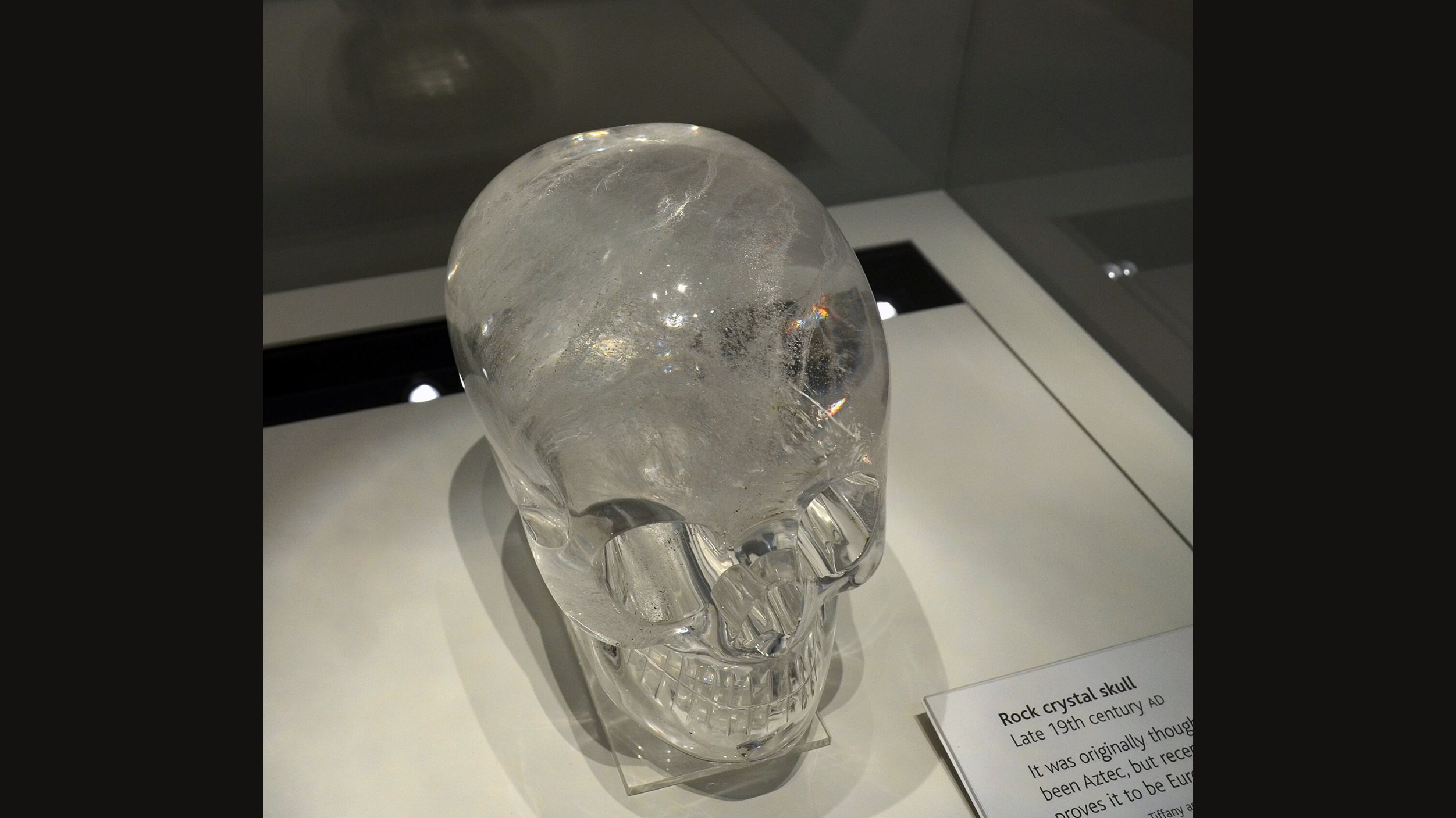
Crystal skulls are real objects. Skull carvings in quartz and other stone exist, and you can hold one in a shop or see one behind museum glass. What has not held up is the idea that the famous ones are ancient Aztec, Maya or Mixtec artifacts. The British Museum describes its skull as probably European and nineteenth-century, and a 2008 laboratory study of the British Museum and Smithsonian skulls found marks from modern carving tools. Their story is still a good one, with a Paris dealer, a London auction house, a film franchise and a lot of people who find meaning in them. Here is what the records show, and what people say about them.
The famous skulls and where they are
Four examples come up again and again.
- British Museum, London. A 25 cm rock-crystal skull, acquired in 1898 through Tiffany & Co. The museum's catalogue dates it broadly to before 1881 and calls its origin uncertain, probably European and nineteenth-century. It is currently listed as not on display, so check with the museum before planning a visit.
- Smithsonian National Museum of Natural History, Washington, D.C. A large skull of milky quartz that arrived anonymously by mail in 1992. A letter with it claimed it had been bought in Mexico in 1960 and was Aztec.
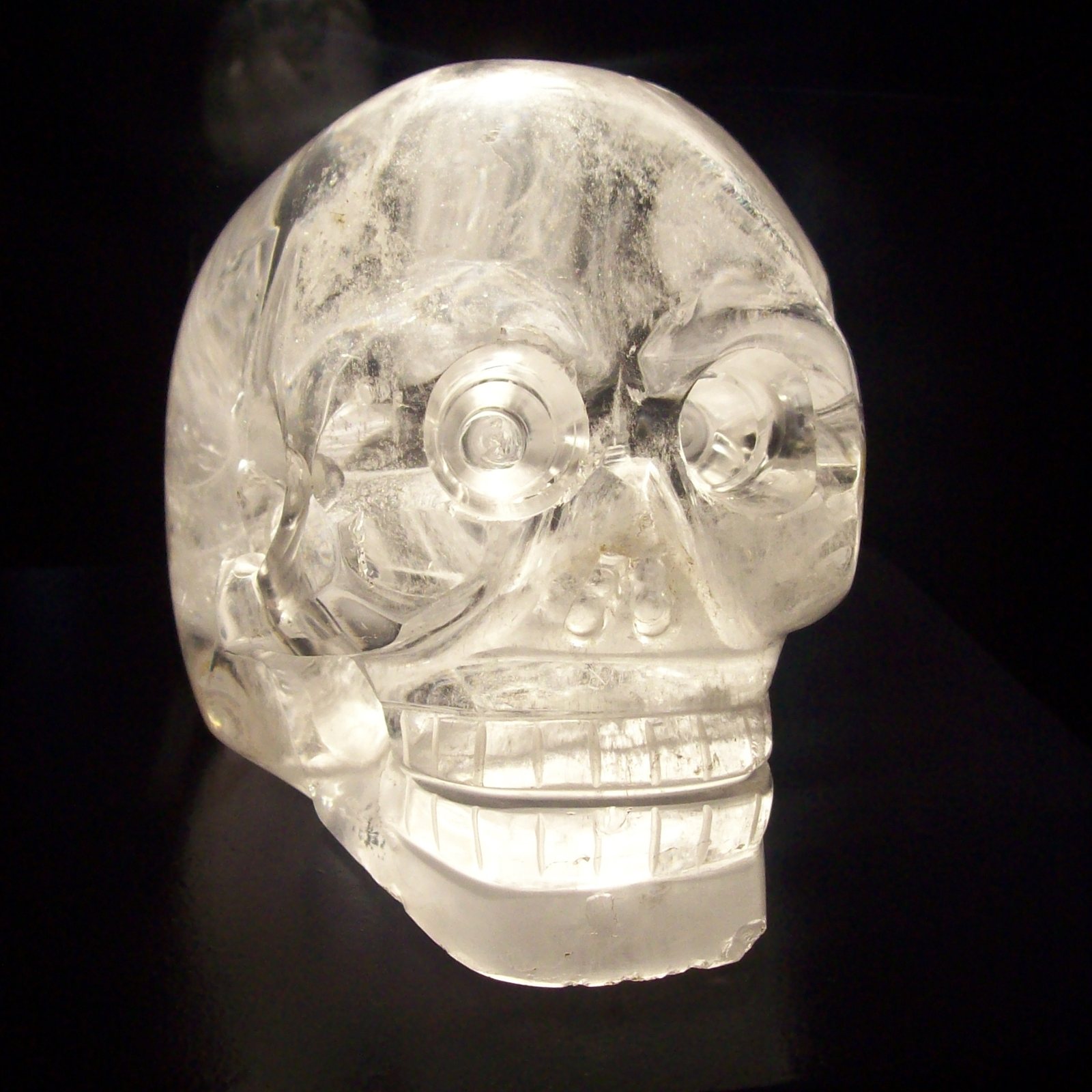
- Musée du quai Branly, Paris. The so-called Paris skull is clear quartz, about 11 cm high and more than 2.5 kilograms. Alphonse Pinart donated it to the Musée d'ethnographie du Trocadéro in 1878, and it is now in the quai Branly collections. For its current catalogue description, check the museum directly.
- The Mitchell-Hedges skull. This one is privately held and is not a museum object. After Anna Mitchell-Hedges died in 2007, it stayed with her husband, Bill Homann.
What the 2008 study found
In October 2008, Margaret Sax, Jane MacLaren Walsh, Ian Freestone, Andrew Rankin and Nigel Meeks published a study in the Journal of Archaeological Science of the British Museum and Smithsonian skulls. They used optical microscopy, scanning electron microscopy, Raman spectroscopy, X-ray diffraction and mineral analysis. This is the most useful single answer to "are crystal skulls ancient?"
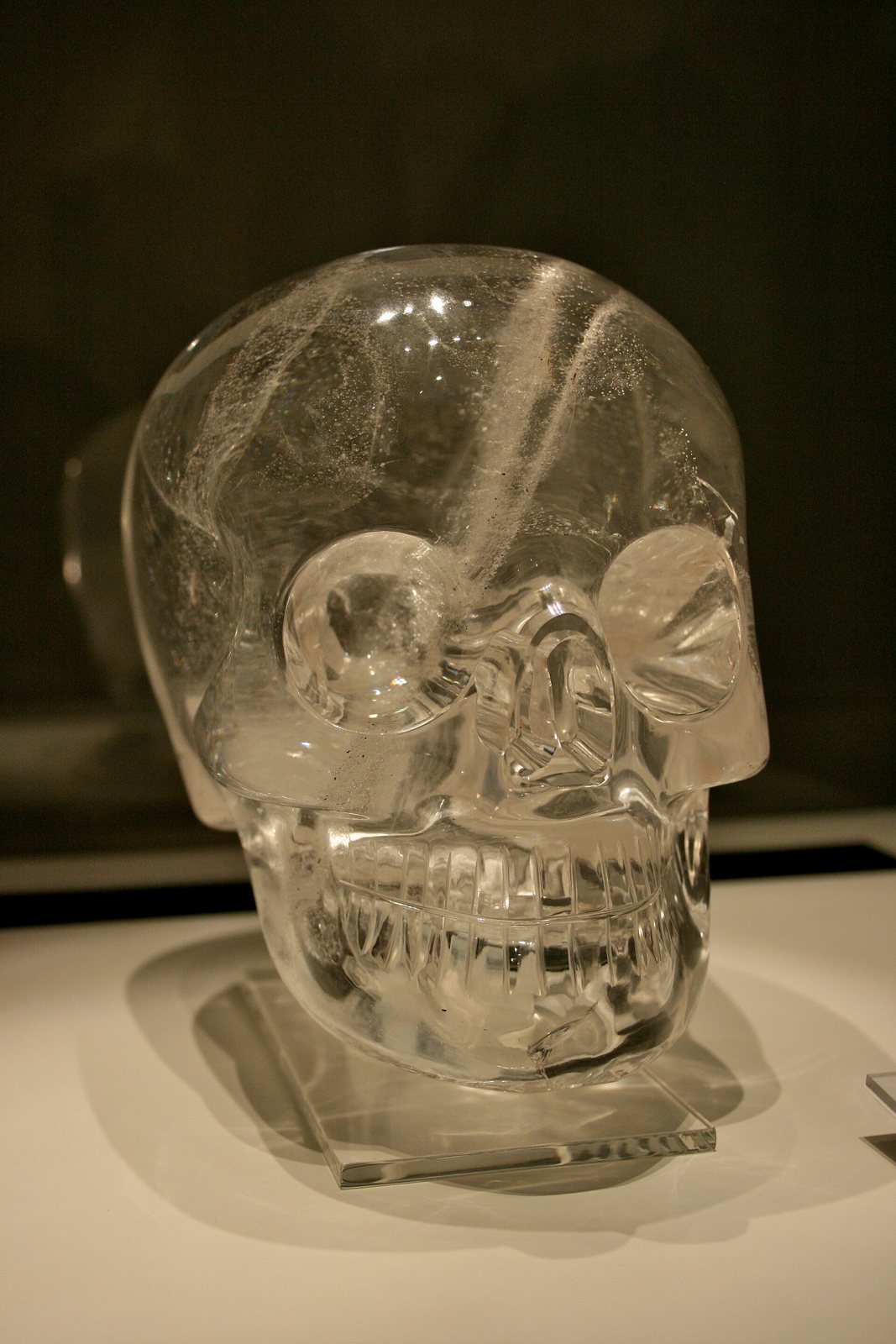
The tooth grooves and other marks had been cut with modern rotary tools carrying hard abrasives. Ancient Mesoamerican lapidaries worked with stone tools and sand abrasives, and the marks do not match them. The Smithsonian skull is milky quartz. The quartz of the British Museum skull is unlikely to have come from Mexico, with possible sources including Brazil, Madagascar and the European Alps. The paper concluded that neither skull is pre-Columbian. The British Museum skull was probably made close to its first appearance in 1881, and the Smithsonian skull shortly before it entered circulation. The British Museum's own catalogue adds that its tooth lines look as if they were cut with a jeweller's wheel and suggests Brazilian rock crystal.
So, are the Smithsonian and British Museum skulls ancient? No. Both are real carved quartz, made in modern times.
The dealer who sold them
Names in the nineteenth-century trail keep pointing to one person. Eugène Boban, also known as André Eugène Boban-Duvergé, was a French antiquities dealer active in Mexico, Paris and New York. The British Museum skull turned up in his Paris shop in 1881. Archives show that the Museo Nacional de México rejected it as a modern object when Boban offered it for sale in 1885. It then passed through George F. Kunz and Tiffany & Co. before entering the British Museum in 1898. Boban also sold crystal skulls to Alphonse Pinart, who donated the Paris skull and related objects to the Trocadéro in 1878.
The fullest account is Jane MacLaren Walsh and Brett Topping's 2019 book, *The Man Who Invented Aztec Crystal Skulls*. The evidence shows Boban as a major nineteenth-century distributor of these objects. It does not show whether he commissioned every skull himself or whether he knew each one was modern.
Crystal skulls from 1878 to 2008
Tap or hover a step to follow the order.
1878
Alphonse Pinart donates the Paris skull to the Musée d'ethnographie du Trocadéro
1881
The British Museum skull appears in Eugène Boban's Paris shop
1885
The Museo Nacional de México reportedly rejects it as modern
1898
The British Museum acquires it through Tiffany & Co.
1933
Sydney Burney is documented as owning the skull later linked to Mitchell-Hedges
1943
F. A. Mitchell-Hedges buys it at Sotheby's
1992
The Smithsonian receives its skull by mail
2008
The Sax et al. study is published
2008
Indiana Jones and the Kingdom of the Crystal Skull is released
The Mitchell-Hedges skull, a.k.a. the Skull of Doom
The popular story says Anna Mitchell-Hedges found this skull in 1924 beneath a fallen altar at the Maya site of Lubaantún in British Honduras, now Belize. Later tellings moved it inside a pyramid, a cave or a temple. Did Anna Mitchell-Hedges find it? The documents tell a different story.
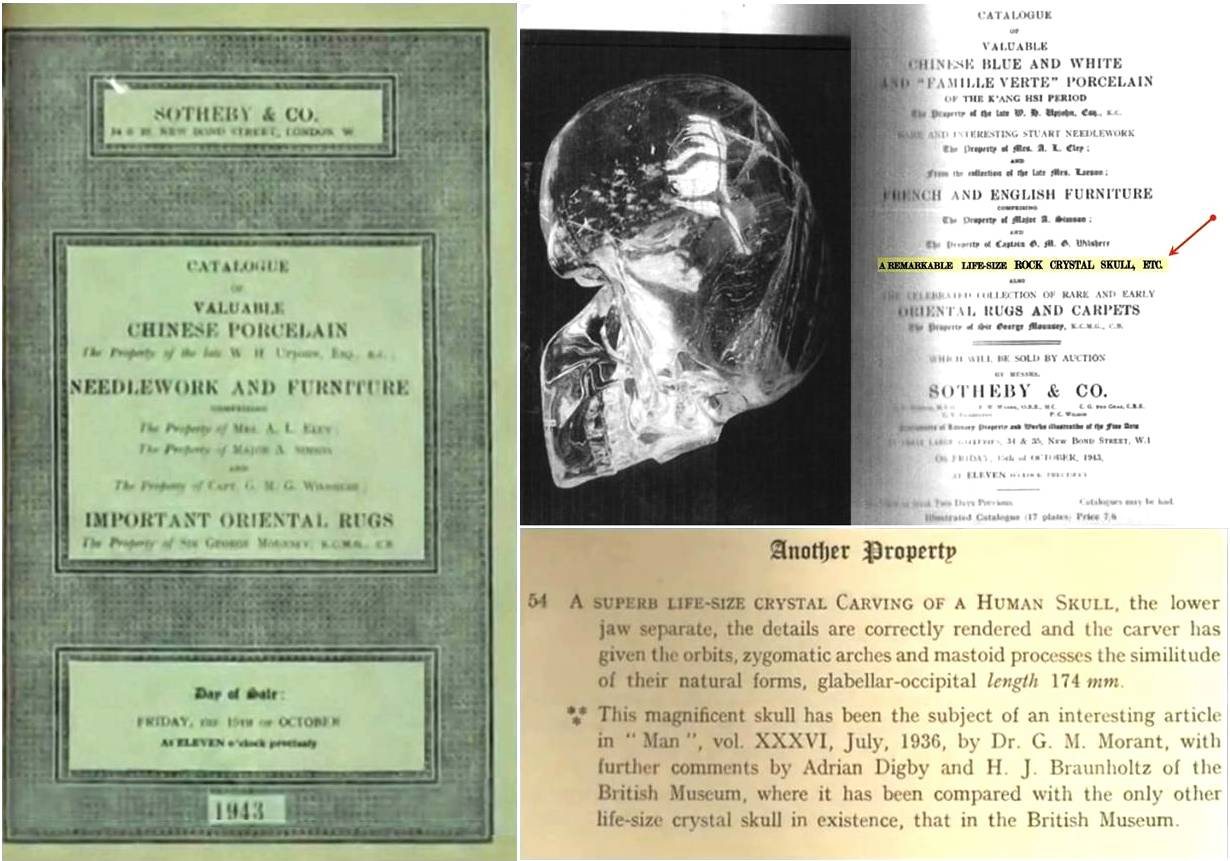
According to Walsh's account in Archaeology magazine, the skull was in the possession of the London art dealer Sydney Burney by 1933. Sotheby's offered it in London on October 15, 1943, where F. A. Mitchell-Hedges bought it for about £400. His 1954 book *Danger My Ally* mentions the skull briefly and does not say Anna found it at Lubaantún, and later editions drop it. The Lubaantún story became prominent from the 1960s. Walsh later examined the skull with silicone moulds and high-power microscopy and found marks from high-speed, diamond-coated rotary tools, so she concluded that it is a modern creation, probably twentieth-century. Its shape closely resembles the British Museum skull, and she suggested it may be an improved copy.
That also answers a common search: has a crystal skull ever been found in an excavation? No crystal skull in a museum collection has a documented excavation record, as Archaeology magazine reports.
How the legend grew
Most of the mystique was added in the twentieth century, through promotional writing, exhibitions and New Age publishing. The Musée du quai Branly's 2009 press kit records a legend of twelve skulls for twelve worlds, with a thirteenth tied to Earth. In that legend the skulls came from Atlantis, were kept by ancient peoples and could speak, sing or pass on knowledge. These are later esoteric stories, and they are not documented beliefs of ancient Maya or Aztec communities. So, are the 13 crystal skulls real? As a legend, it is well known, and as an archaeological claim it has no support.
Walsh documents how the Mitchell-Hedges skull was promoted by F. A. Mitchell-Hedges, Anna Mitchell-Hedges and the California dealer Frank Dorland. From the 1960s and 1970s, books and exhibitions linked it to Atlantis, the Knights Templar, extraterrestrials and supernatural powers. Then came Hollywood. *Indiana Jones and the Kingdom of the Crystal Skull*, directed by Steven Spielberg and released in 2008, gave a fictional skull mystical and extraterrestrial associations. It kept the subject in front of a mass audience, and the story it tells is action-movie fiction.
What people believe about them
Many people value crystal skulls for reasons that have nothing to do with museum testing. Practitioners and collectors attribute healing, divination, stored knowledge, spiritual power or help with meditation to them. Those are beliefs and practices held by the people who hold them, and the laboratory studies above do not address them one way or the other. A skull is also a very old image of mortality and remembrance, and a carved one can carry that meaning for its owner whatever its age.
So, do crystal skulls have powers? Museum analysis can tell you how and when an object was made, and it cannot measure what a person finds in it. If you are choosing one for yourself, the date and origin the seller gives are the facts to ask about.
Real Mesoamerican skull art, and real crystal
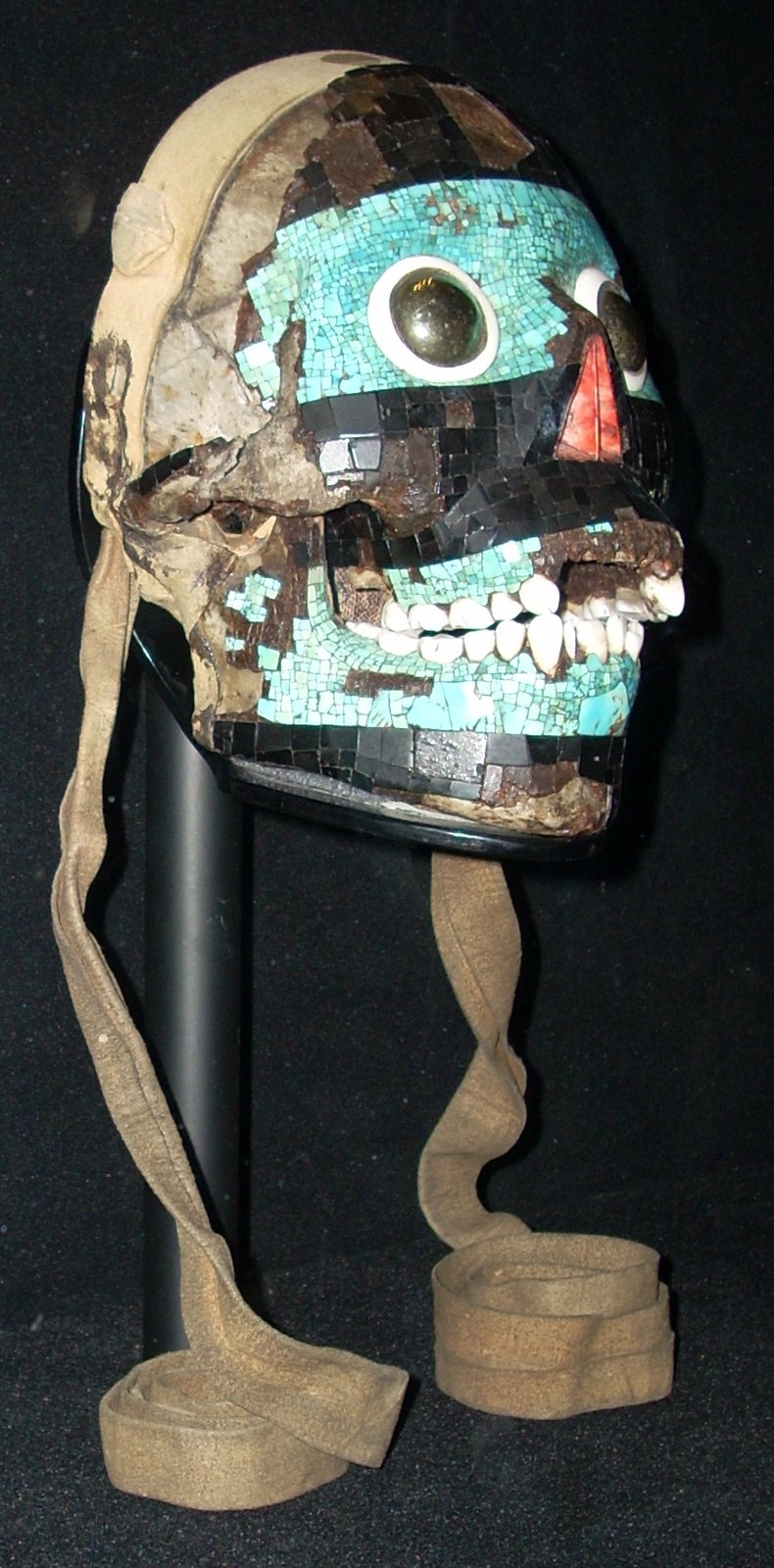
Mesoamerica has genuine skull art, and it looks quite different from a polished quartz skull. The British Museum holds a turquoise mosaic skull from Mexico, Aztec or Mixtec, dated 1400 to 1521. It is built on a real human skull covered in turquoise and lignite mosaic. Its eyes are polished pyrite set in white conch shell, red shell lines the nasal cavity, and the interior holds deerskin and maguey fibre. The museum says it probably represents Tezcatlipoca, the "Smoking Mirror," and suggests it may have been worn as a back ornament. As human remains, it is described and handled with care by the museum that keeps it. You can read the British Museum's record.
Rock crystal itself mattered in the ancient Maya world. Archaeological work by Brady and Prufer on caves in the southern Maya Lowlands shows crystal fragments used as valued objects linked to ritual specialists, curing and divination. That evidence does not show an ancient tradition of carving life-size crystal skulls.
How many are there?
Nobody has a total for every crystal skull carving, because carvings have been made for a long time, and new ones are made today. The famous group is small, with the British Museum, Smithsonian and quai Branly skulls plus privately held pieces. The documented history of these major examples begins in the nineteenth century, mostly through Boban. None of the specimens that have been studied in a laboratory has been authenticated as ancient Mesoamerican.
Tap or hover a row to highlight it.
| Skull | Material and size | Record |
|---|---|---|
| SkullBritish Museum | Material and sizeRock crystal, 25 cm | RecordAcquired 1898; the catalogue dates it before 1881 and calls the origin uncertain, probably European and nineteenth-century |
| SkullSmithsonian | Material and sizeMilky quartz | RecordReceived by mail in 1992; the 2008 study found modern tool marks |
| SkullMusée du quai Branly | Material and sizeClear quartz, about 11 cm and more than 2.5 kg | RecordDonated by Pinart in 1878 |
| SkullMitchell-Hedges skull | Material and sizePrivately held | RecordDocumented with Sydney Burney by 1933 and bought at Sotheby's in 1943 |
Crystal skull quiz
Answer every question to check.
Quick answers about crystal skulls
Are crystal skulls a real thing?
Yes, carved skulls of quartz and other stone exist. What has not been authenticated is the claim that the famous museum examples are ancient Aztec, Maya, Toltec or Mixtec artifacts; the British Museum calls its skull probably European and nineteenth-century.
Where did crystal skulls come from?
The documented history of the famous ones begins in the nineteenth century, largely through the dealer Eugène Boban in Paris. The British Museum skull appeared in his shop in 1881, and Pinart donated the Paris skull in 1878.
Has a crystal skull ever been found in an excavation?
No crystal skull in a museum collection has a documented excavation record. The Mitchell-Hedges skull's Lubaantún story is contradicted by records showing it was in London with Sydney Burney by 1933 and sold at Sotheby's in 1943.
How many actual crystal skulls have been found?
There is no total for all crystal skull carvings. The famous group is small, and none of the specimens studied in a laboratory has been authenticated as ancient Mesoamerican.
Do crystal skulls have powers?
People who own and make them often attribute healing, divination or spiritual power to them, and those are their own beliefs. Museum studies examine materials and tool marks, and they do not test for powers.
Where to go next
For the real thing in Mesoamerica, read about the tzompantli, the skull racks of Tenochtitlan documented by INAH archaeologists. For a living Mexican tradition built around remembrance, see the guide to Día de Muertos. If you like skulls as art, famous skull art follows the image through painting and sculpture, and skull symbolism shows how different cultures have read it.