

No. 029
What Is an Aztec Death Whistle? The Skull Whistles of Tlatelolco
An "Aztec death whistle" is a small ceramic whistle shaped like a skull, made in the Mexica (Aztec) world of central Mexico. The name is modern. The best-known pair came out of the ground at Tlatelolco, in what is now Mexico City, clasped in the hands of a young man who had been sacrificed and buried at the Temple of Ehecatl-Quetzalcoatl, a find generally reported in 1999. Hidden chambers inside the whistle turn a breath into a harsh, noisy shriek, and a 2024 study found that modern listeners hear it as frightening and partly like a human scream. Scholars connect the whistles with ritual. Exactly how they were played, and for whom, is still debated.
If the sound you heard online made the hair on your arms stand up, you are in good company. Here is where the whistles come from, what they may have been for, and why they sound the way they do.
Two whistles in a young man's hands
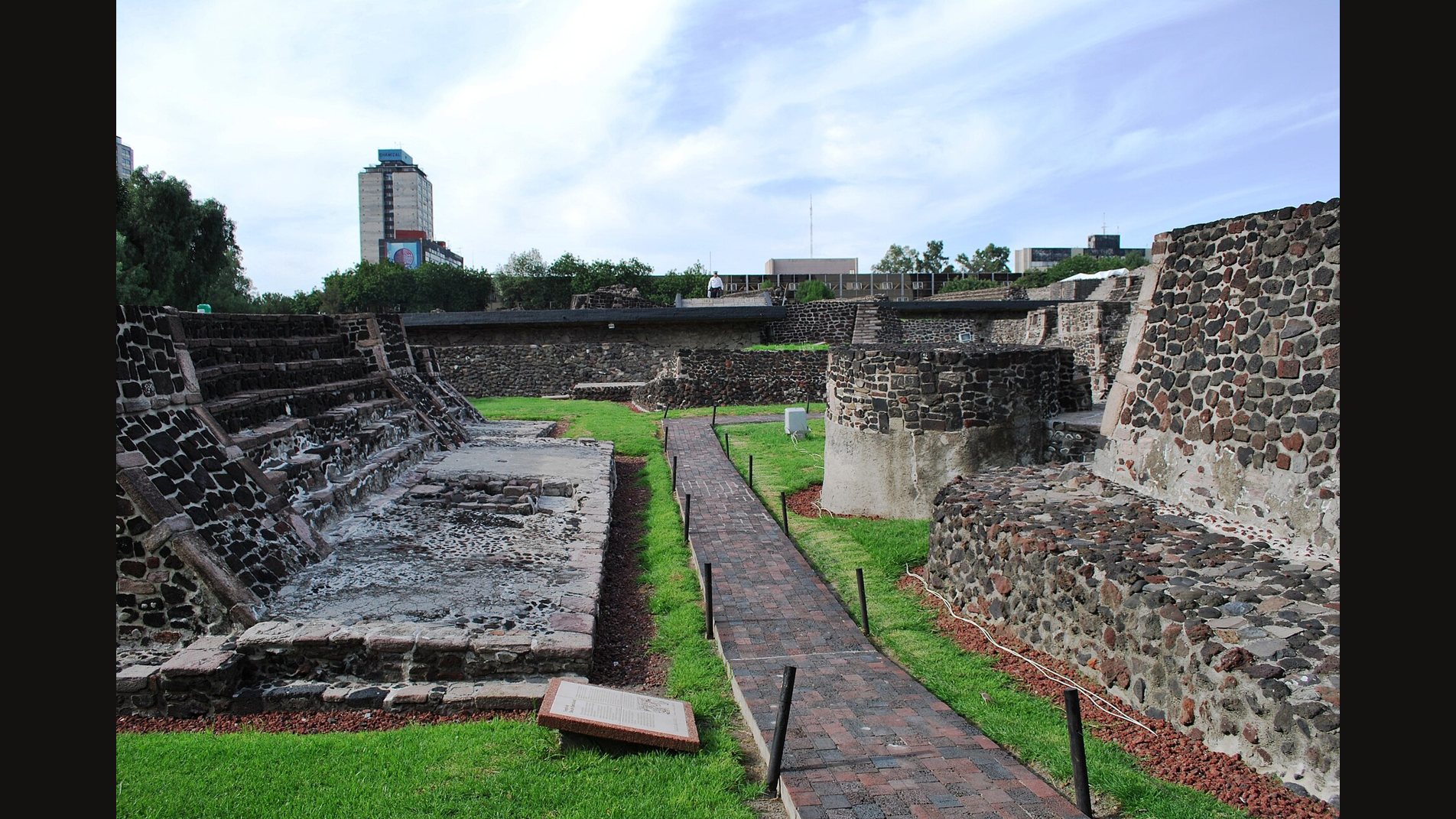
Tlatelolco lies in what is now Mexico City. Between 1987 and 2006, archaeologists of Mexico's national institute of anthropology and history, INAH, ran a long project there. During that work, in Excavation 7 at the Temple of Ehecatl-Quetzalcoatl, they uncovered the remains of a man about 20 years old. His body had been dismembered, and in his hands were two ceramic whistles with skull faces, described in Spanish as *silbatos con rostro de la muerte*, "whistles with the face of death."
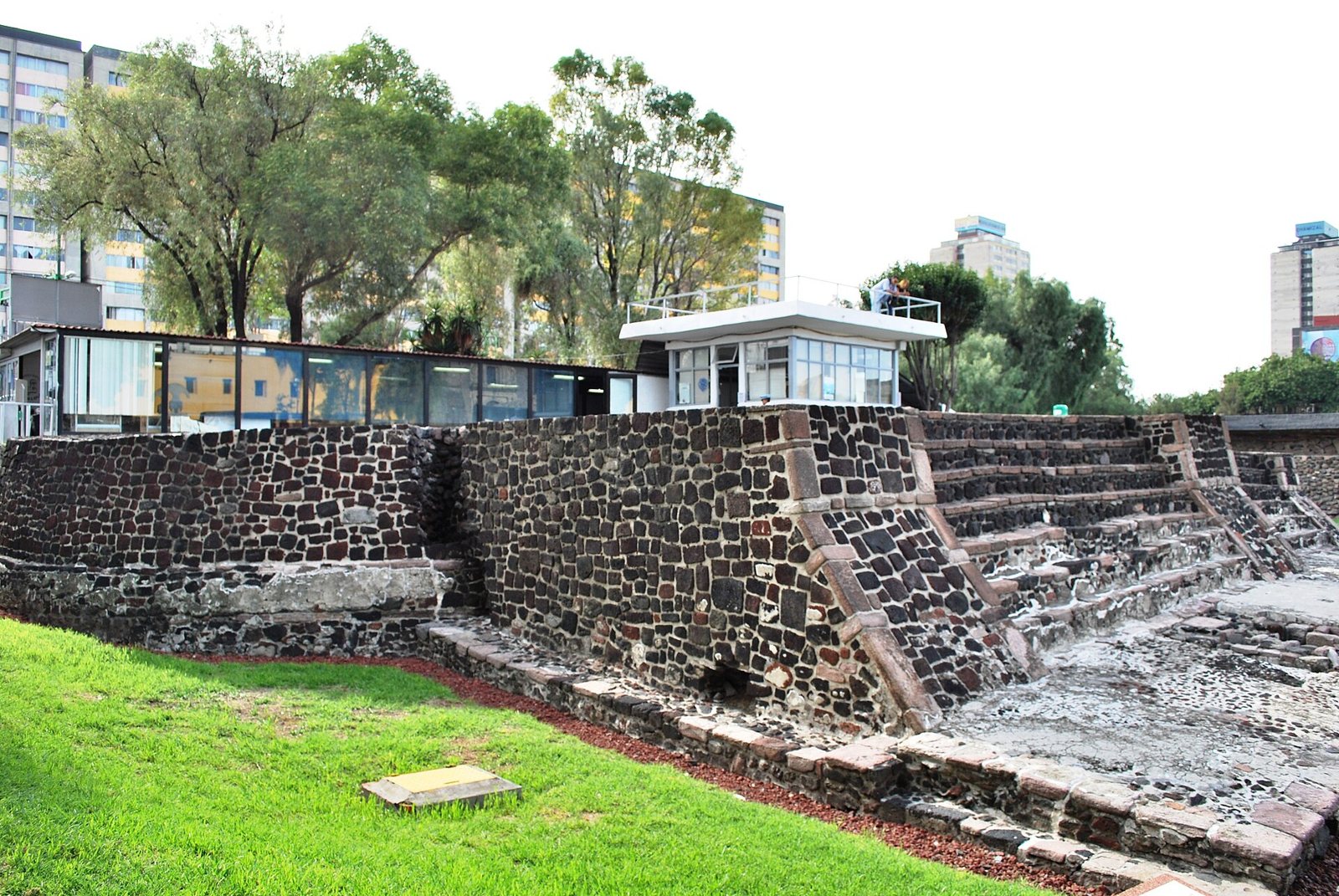
The archaeologist Salvador Guilliem Arroyo reported the burial in the Tlatelolco project's publications, and the find is generally dated to 1999. Other objects lay with him: a face resembling the wind god Ehecatl, obsidian blades and flakes, a censer for burning incense and a brazier. Roberto Velázquez Cabrera describes this burial and the objects with it in his 2009 article for INAH's archaeology journal.
This young man was a real person, and he is the reason the whistles are known at all. His burial is the strongest evidence linking skull whistles to a temple and a sacrifice. It shows where two of them ended up and with whom. It does not, on its own, tell us how they were blown, at what moment of a ceremony, or by whom.
The skull whistles, from the Valley of Mexico to the lab
Tap or hover a step to follow the order.
1250 to 1380
One ceramic skeleton-shaped whistle in a museum record is dated to this broad period.
1987 to 2006
INAH runs its archaeological project at Tlatelolco, in present-day Mexico City.
1999
Two skull whistles are reported from the Temple of Ehecatl-Quetzalcoatl, in the hands of a sacrificed young man.
2009
Roberto Velázquez Cabrera publishes an INAH article on the whistles, their acoustics, experimental models and proposed uses.
2024
Frühholz and colleagues publish a study of the sound and listeners' reactions in Communications Psychology.
Why the wind god's temple matters
The building where the whistles were buried was dedicated to Ehecatl-Quetzalcoatl, the form of the god Quetzalcoatl associated with wind. That setting has shaped how scholars think about the sound. A whistle is, after all, wind made audible.
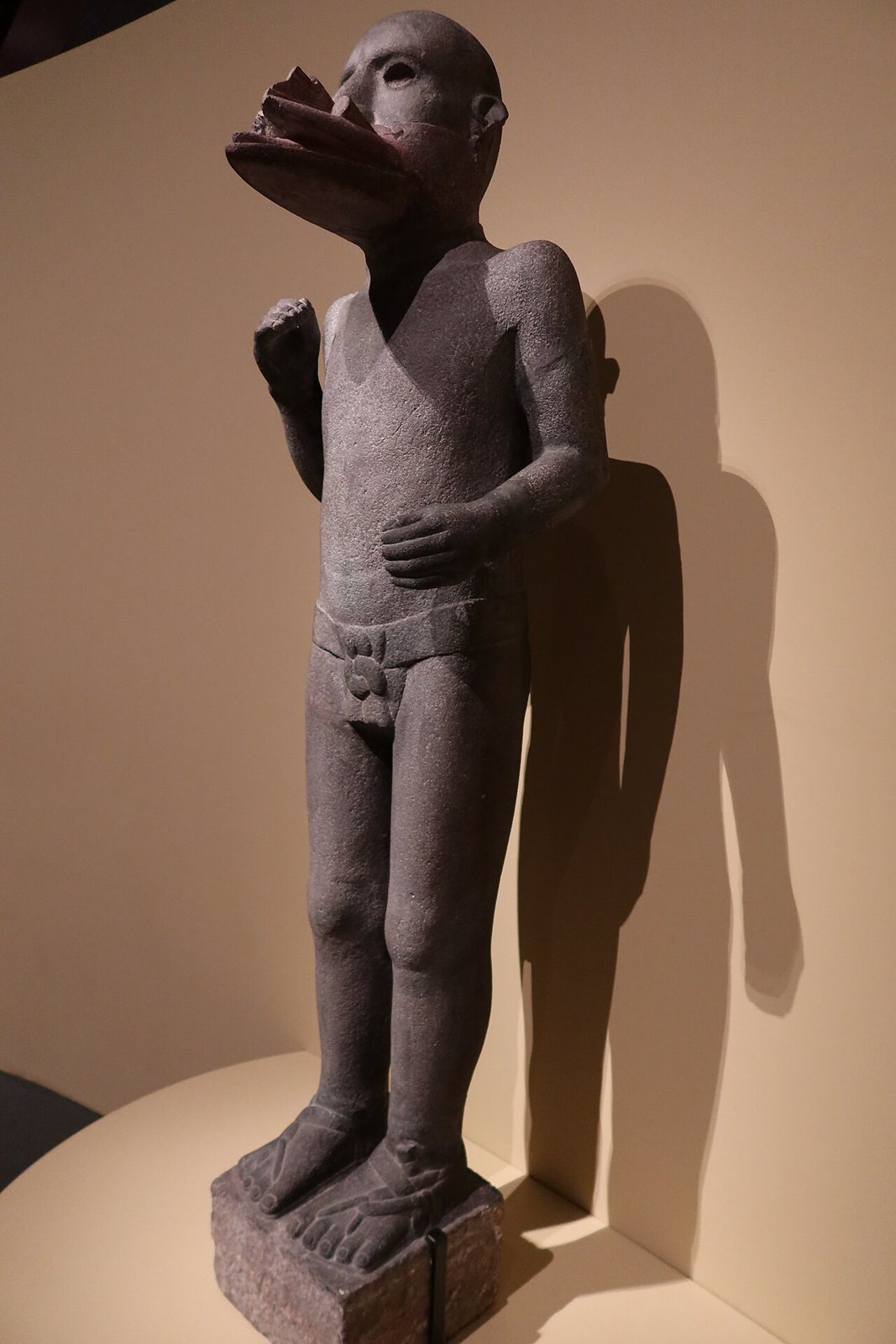
Arnd Adje Both has argued that the skull whistles may have imitated sacred wind, possibly the winds associated with Mictlan, the Mexica underworld, and with its lord, Mictlantecuhtli. It is an interpretation, not a reading of a label left behind by the Mexica, but it fits two things we can see: a skull face on the instrument and a burial at the temple of the wind.
How a clay skull makes that sound
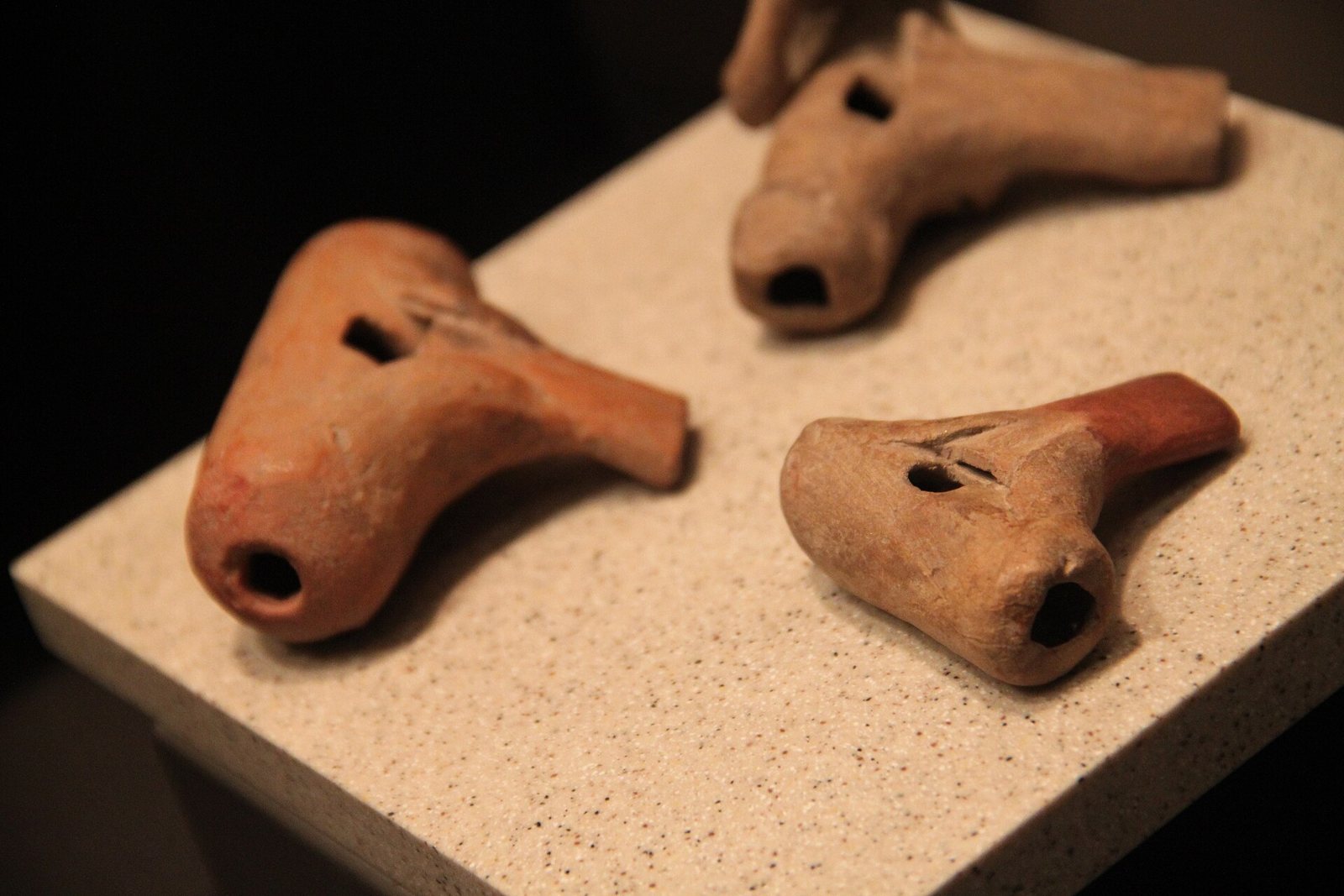
The secret is inside. A skull whistle has internal chambers that turn the player's breath into an irregular, noisy sound, one that can resemble a human scream or a gust of turbulent wind. It is less a tune than a cry.
Because the chambers are sealed inside the clay, nobody can simply look in. To study three original whistles held in Berlin, researchers scanned them in three dimensions, which let them reconstruct the hidden interior without cutting the objects open. Both had earlier described a CT scan of a Berlin skull whistle in his writing on Aztec music culture.
What a 2024 study learned about the scream
In 2024 Frühholz, Rodriguez, Bonard, Steiner and Bobin published a study in Communications Psychology that put the whistle's sound in front of modern listeners. They worked from original skull whistles in the Ethnological Museum in Berlin, using 3D scans, acoustic analysis, replicas, listening experiments, classification tests and functional MRI brain imaging.
Listeners generally rated the sounds as disturbing, aversive and frightening, and partly like human screams. They also judged the sound to have a hybrid quality, somewhere between natural and artificial, as if it were not quite a voice and not quite a machine. In the brain scans, the sounds engaged systems tied to strong emotional reactions and to more complex, symbolic interpretation, and the University of Zurich included the study in its best-of media releases for 2024.
That is a good explanation for why a video of the whistle can stop you mid-scroll. It is also where the study's reach ends. Modern listeners in a lab are not Mexica worshippers at a temple five centuries ago, and the study cannot tell us what those first listeners felt or prove a single purpose for the instruments. What it supports is the possibility that the whistles were made to produce a powerful effect in a ritual setting.
What were Aztec death whistles for?
Ritual is the best-documented answer, because the Tlatelolco pair was buried with a sacrificed man before a temple. From there, scholars have proposed several more specific roles, each with its own author and each still a proposal.
Proposed uses of the skull whistles, and who proposed them
Tap a card to bring it forward.
- Death-related ritual: Roberto Velázquez Cabrera connected the skull imagery and the sound with ceremonies tied to death.
- Sacred wind: Arnd Adje Both proposed that the whistles imitated sacred wind, possibly the winds of Mictlan and Mictlantecuhtli.
- Intensifying sacrifice: Frühholz and colleagues proposed that the aversive sound could have heightened sacrificial ceremonies or evoked death.
- Battlefield intimidation: Some museum descriptions suggest it; Both argues there is no firm archaeological, iconographic or ethnohistorical evidence for mass battlefield use.
The battlefield idea deserves a closer look, because it is the one most often repeated online. A museum record titled "Ehecachichtli. Whistle of Death" on Google Arts and Culture, describing a ceramic skeleton-shaped whistle from the Valley of Mexico, mentions battlefield use as a suggestion. Popular media have run with it, sometimes describing hundreds of warriors blowing whistles together. Both argues there is no firm archaeological, iconographic or ethnohistorical evidence for that kind of mass battlefield use, and HISTORY lays out the same ritual-versus-war debate. For now, the army of shrieking whistles belongs to modern imagination, while the temple burial belongs to the record.
The link to Mictlantecuhtli is interpretive too. A skull face and the underworld make a natural pair, and the idea is plausible, but no surviving evidence fixes one universal meaning or use. If you want to know more about the Mexica lord of the dead, his own story is told in our Mictlantecuhtli page, and the wider cast appears in gods of death around the world.
Where the name comes from
"Aztec death whistle" is a modern English nickname. It became popular through modern research and media, and it describes the object rather than quoting what the Mexica called it. In Spanish the usual terms are *silbato de la muerte* and *silbato con rostro de la muerte*, and some people search for *silbato mexica* or *silbato azteca*. The museum record mentioned above uses the title Ehecachichtli for one whistle; for the whole family of these instruments, "skull whistle" or "Aztec death whistle" works well as a plain description.
Where to see the originals
Three original skull whistles that served as models for the 2024 study are held by the Ethnologisches Museum in Berlin, with inventory numbers including IV Ca 2621u and IV Ca 2621z. The same study refers to related noise whistles built into Aztec fire-snake incense ladles in two Mexico City museums, the Museo Nacional de Antropología and the Museo del Templo Mayor.
The National Museum of the American Indian holds a whistle catalogued as probably Aztec and dated broadly to the Late Post-Classic period. It is made of animal bone, so it is a different kind of object from the ceramic skull whistles of Tlatelolco and Berlin. Collections rotate, and not every object is on display at any given time, so check each museum's current exhibitions before you plan a visit around one piece.
Replicas and the sounds you hear online
Most of the recordings online come from replicas, not from ancient whistles. That is not a trick; it is how people get to hear the sound at all, since museums do not hand out their originals to be blown.
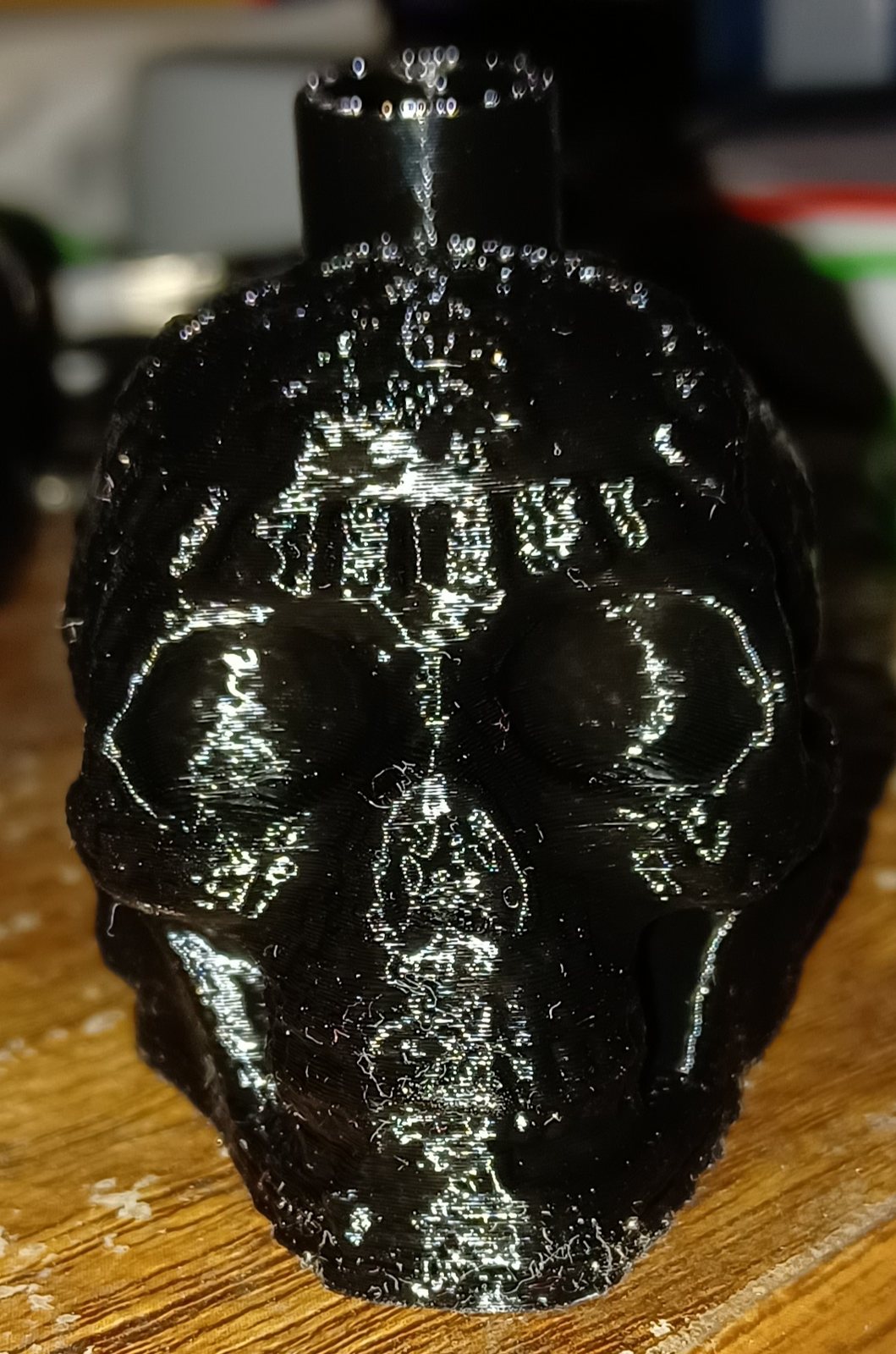
Roberto Velázquez Cabrera built experimental reconstructions to study the internal acoustics of pre-Columbian Mexican wind instruments. For the 2024 study, replicas of two Berlin whistles were made by Arnd Adje Both in collaboration with the ceramist and musician Osvaldo Padrón Pérez. Other modern versions are made for museum demonstrations, education, music and sale.
Those versions differ a lot in size, inner design, material and how hard the player blows, so one clip can sound quite different from another. A frightening recording is a good introduction, but it is not automatically an accurate copy of an archaeological original. The two openly licensed photographs on Wikimedia Commons, a modern reproduction and a 3D-printed copy.jpg), both show modern objects.
How well do you know the Aztec death whistle?
Answer every question to check.
Questions people ask about the Aztec death whistle
These are the questions that come up most often after people hear the sound.
What is an Aztec death whistle?
An Aztec death whistle is a ceramic whistle shaped like a skull, made in the Mexica world of central Mexico, that produces a harsh, scream-like sound. The name is a modern descriptive label; in Spanish it is often called *silbato de la muerte*.
What were Aztec death whistles used for?
They are most clearly linked with ritual, since two were buried with a sacrificed young man at the Temple of Ehecatl-Quetzalcoatl at Tlatelolco. Scholars have proposed death-related ceremonies, imitation of sacred wind and a role in heightening sacrifice. The same answer covers the Spanish question *para qué servía el silbato de la muerte*, and the related one about the circumstances of their original use.
Why is the death whistle so scary?
It sounds like a scream because its internal chambers turn breath into an irregular, noisy shriek. In the 2024 study, listeners rated it aversive and frightening, and their brains responded with both strong emotion and symbolic interpretation. That is also the short answer to *cómo suena el silbato de la muerte*: like a cross between a human cry and rushing wind.
Are Aztec death whistles real?
Yes, original skull whistles have been excavated in Mexico and are held in museums, including three in the Ethnologisches Museum in Berlin. Many of the sounds online, though, come from modern replicas that vary in design.
Were they used in sacrifice or in battle?
Sacrifice is the documented association, because the Tlatelolco pair lay in the hands of a sacrificed man, and Frühholz and colleagues propose the sound could have intensified such ceremonies. Battlefield use is unproven; Both argues there is no firm evidence for whistles used en masse in war.
Did the whistles summon spirits?
Nothing in the archaeological record shows a supernatural power, and that idea comes from modern storytelling. What scholars do propose is that the sound carried meaning in ritual, through associations with wind, death and the underworld Mictlan.
Is a death whistle illegal?
A modern replica is generally an ordinary whistle, but the rules depend on where you live, including noise rules, import controls and whether an item is presented as an archaeological artifact. Ancient Mexican archaeological objects are protected by cultural-property laws and should not be bought or exported without documented legal provenance. This is general information, not legal advice: confirm your local rules before importing, selling or blowing one in public.
Where to go next
The skull whistle belongs to a Mexica world where death had its own lord and its own monuments. Meet the lord of the underworld in Mictlantecuhtli, see how the Mexica displayed skulls in public in the tzompantli skull racks, and for the many meanings a skull image has carried across cultures, start with skull symbolism.
Terms in this story
Tap a term to see what it means.
Mexica. The people of the Aztec world of central Mexico; scholars use the name when writing about the skull whistles and Mictlantecuhtli.