

No. 336
Cenote Calavera: Why Tulum's Skull Cenote Has Its Name and What to Know Before You Go
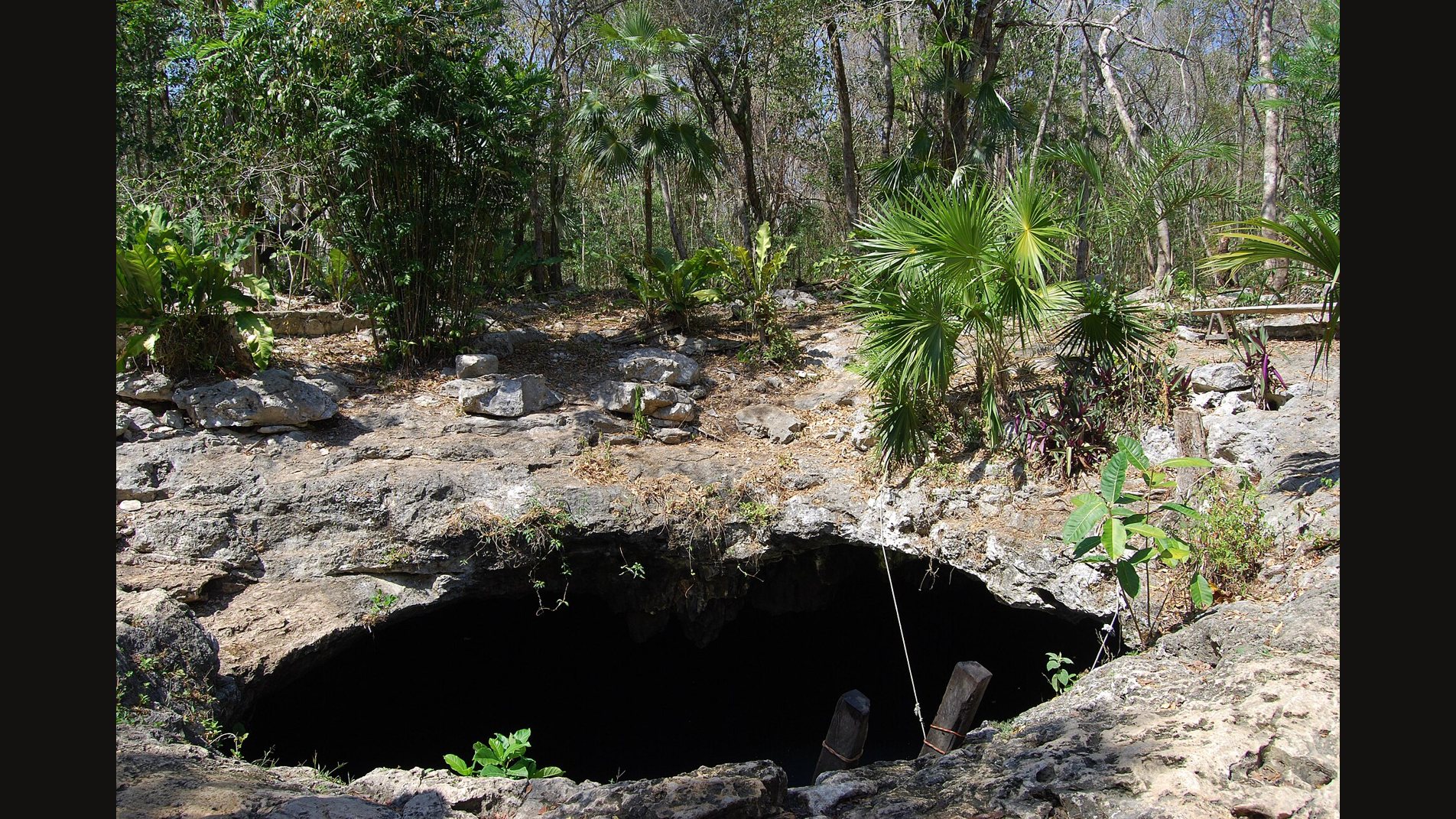
Calavera is Spanish for skull, and Cenote Calavera earns the name from above. Its limestone roof has three openings, two small ones like eye sockets and a larger one like a mouth, as Quadratín Quintana Roo described it in May 2022.
The cenote is semi-open and sits on the road from Tulum toward Cobá, about 2 to 3 kilometres from Tulum town, in Quintana Roo, Mexico.
Entry fees, opening hours and the rules for the famous jump are set at the gate, and they change, so confirm them there. The latest dated figures come from that May 2022 report, and the geology and Maya history behind the place make it worth a skull lover's afternoon.
Why it is called Calavera
Stand over the cenote and the face appears. Two smaller openings in the rock sit side by side like eye sockets, and a larger opening below them reads as a mouth. Underneath is a dark cavern of water, so the "skull" looks back at you with the cave as its hollow head. The name describes exactly that: the shape of the openings and the darkness beneath them. Tulum's own environmental planning document puts it in the municipality's words, describing the cenote's rock configuration as resembling a human skull.
The cenote has a second name too. In diving and travel coverage it is often called the "Temple of Doom", a modern nickname from that world rather than a recorded Maya name. Either way, it is a swimming spot where you can say you climbed into a skull's mouth. For the word itself and its many uses, our story on calavera meaning covers the rest.
Where Cenote Calavera is
Cenote Calavera is just outside Tulum, on the Tulum to Cobá road, about 2 to 3 kilometres from Tulum town.
Confirm the location and that the cenote is open locally before you set out.
Entry fee and opening hours
The most recent dated figures come from Quadratín Quintana Roo, which reported in May 2022 an entrance fee of about MX$250 and opening hours of 9:00 to 16:00 every day. Treat those as a 2022 report, not today's price.
Fees and hours are set at the gate, and they change. Bring Mexican pesos, and confirm the current fee, the opening time, how you can pay and the current rules with the gate operator before you pay.
A 5 p.m. closing time, where you meet one, is that operator's own schedule rather than one rule for every cenote, so the reason and the hour can differ from place to place. Treat the posted closing time, and any earlier last entry, as the one that counts on the day.
Sunscreen is part of the rules too. A 2026 study in Frontiers in Water names Tulum among the Quintana Roo municipalities that require biodegradable sunscreen in cenotes, and notes that Quintana Roo has no statewide sunscreen rule and that "reef-safe" is an unregulated label. Follow the posted rule, shower before you get in, and ask at the gate whether a biodegradable sunscreen is allowed or whether you should rinse it all off.
Tap or hover a row to highlight it.
| Detail | What has been reported |
|---|---|
| DetailName | What has been reportedCenote Calavera, also nicknamed Temple of Doom |
| DetailMeaning of the name | What has been reportedCalavera means skull in Spanish |
| DetailSkull shape | What has been reportedThree roof openings, like two eyes and a mouth |
| DetailLocation | What has been reportedOn the Tulum to Cobá road, Quintana Roo, Mexico |
| DetailDistance | What has been reportedAbout 2 to 3 kilometres from Tulum town |
| DetailEntry fee | What has been reportedAbout MX$250, reported May 2022 |
| DetailOpening hours | What has been reported9:00 to 16:00 daily, reported May 2022 |
| DetailWays into the water | What has been reportedLadder or jump, reported May 2022 |
| DetailCave diving | What has been reportedOnly with appropriate training and qualifications, per CREER |
| DetailAdministration | What has been reportedPrivately administered, per a 2024 academic inventory |
| DetailSafety flags | What has been reportedGreen favourable, yellow caution, red no swimming, under Tulum's civil-protection regulation |
Is Cenote Calavera safe to jump into?
The jump is one way in, not the only one. The May 2022 Quadratín report describes two ways into the water: a ladder, or a jump through one of the openings in the roof. The same report describes the swimming area as semi-open and about three metres deep, while dive descriptions give much greater depth in the submerged cavern below.
Whether a jump is safe depends on the day, the water and the rules in force, and those come from the operator. Ask about the current rules for jumping, swimming and life jackets before you get in, and use the ladder if you are unsure. Swimming at the surface and diving into the cavern are two different activities, and the second needs its own training.
Swimming in a managed cenote near Tulum can be safe when you follow the posted rules, though water quality and depth vary from site to site. Tulum's civil-protection regulation requires cenotes to display safety rules, warning signs and coloured flags: green for favourable conditions, yellow for caution and red for no swimming.
Water quality is worth asking about as well. La Jornada Maya reported in July 2022 that June 2022 results from Cofepris, Mexico's health-risk agency, showed high contamination levels at Calavera, Casa Cenote and Cenote Cristal. That is a 2022 result, not a reading of today's water, so ask the operator or Tulum's civil-protection office about current conditions before you swim.
Diving below the openings
The cavern beneath the skull draws divers, and the regional cave-diving organization CREER is clear about who should go in. In its February 2024 update, CREER said cave diving should be limited to divers with appropriate training and qualifications, and that it was monitoring conditions at Cenote Calavera.
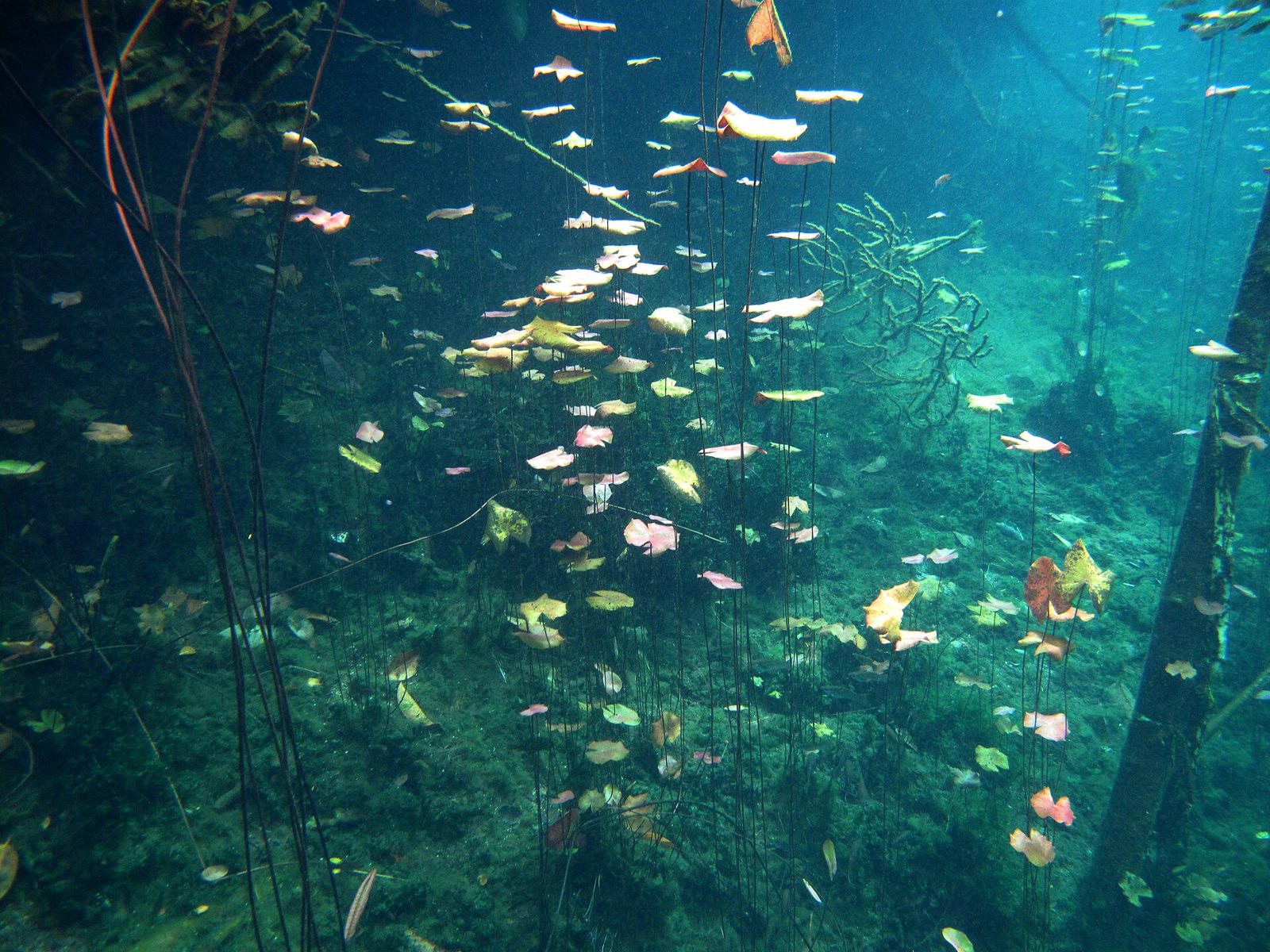
The cenote's record shows why. CREER's manual for cenote dive guides records a fatal cave-diving incident there in March 2016, after divers went beyond the marked cavern area without a continuous guide line. On July 1, 2024, Riviera Maya News reported that divers recovered the body of a person who drowned at the cenote. Overhead passages are for trained cave divers with proper supervision, and nobody else.
Before you go
Tap a card to bring it forward.
- Bring pesos: Carry Mexican pesos for the entry fee, and ask at the gate how you can pay.
- Confirm the fee and hours: The latest dated figures are from a May 2022 report, so check the current fee and opening time at the gate.
- Check it is open: Confirm the location and that the cenote is operating locally before you set out.
- Ask about the jump: Ask the operator about current rules for jumping, swimming and life jackets before you get in.
- Use the ladder if unsure: The ladder is the other way into the water.
- Check the flag and the water: Green means favourable, yellow caution, red no swimming; ask about current water conditions.
- Ask about sunscreen: Tulum requires biodegradable sunscreen in cenotes; ask whether you should rinse it all off.
- Leave the cavern to trained divers: Overhead passages only with trained cave-diving supervision.
How a cenote like this forms
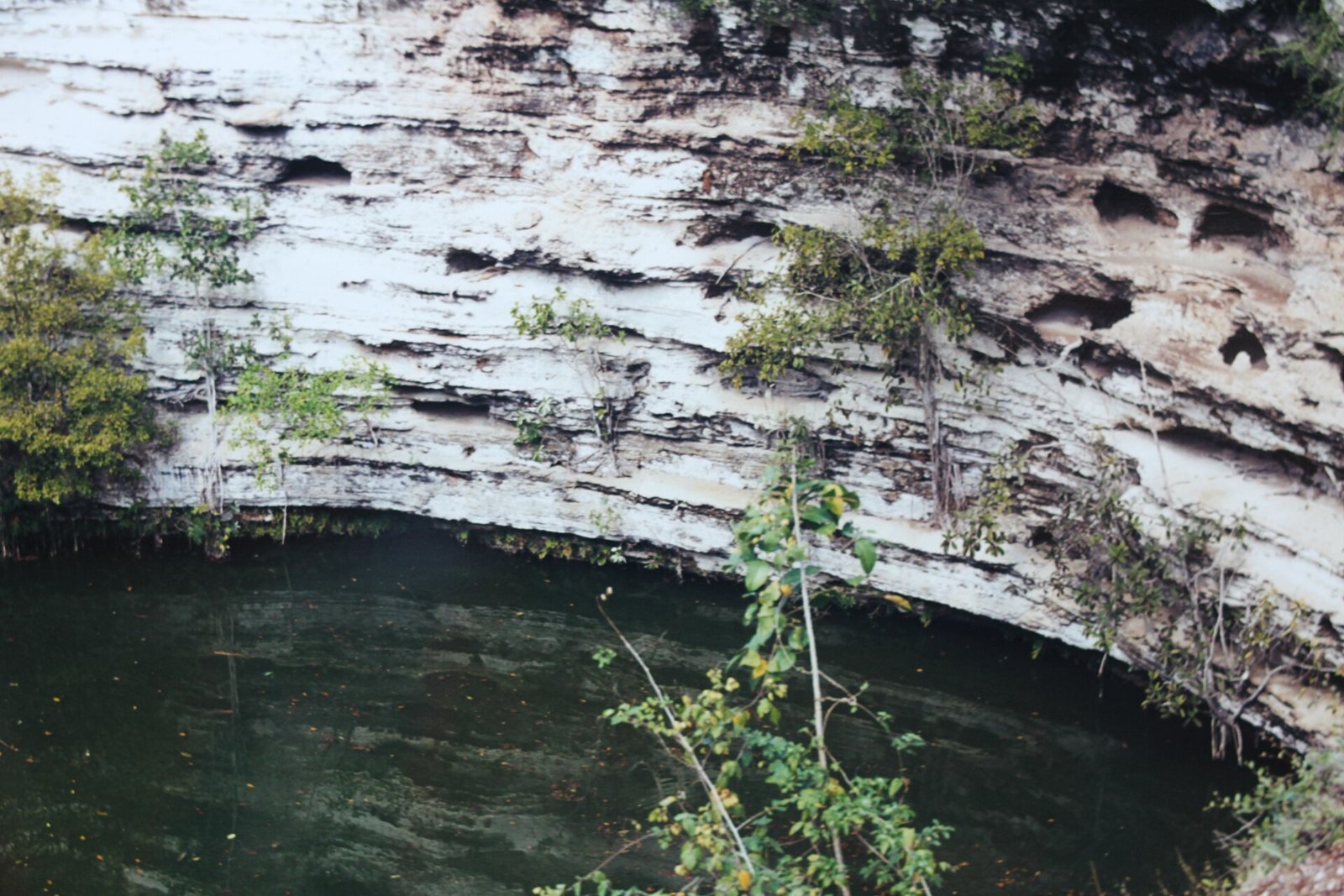
The skull's eyes and mouth are windows into a cave, and the cave tells the story of the whole peninsula. The Yucatán Peninsula is a low, porous platform of limestone built from ancient marine carbonate sediments, as Ciencia UNAM explains. Rainwater picks up carbon dioxide from the air and the soil, turns mildly acidic and slowly dissolves the limestone as it seeps down. Over long periods that carves underground channels and caves.
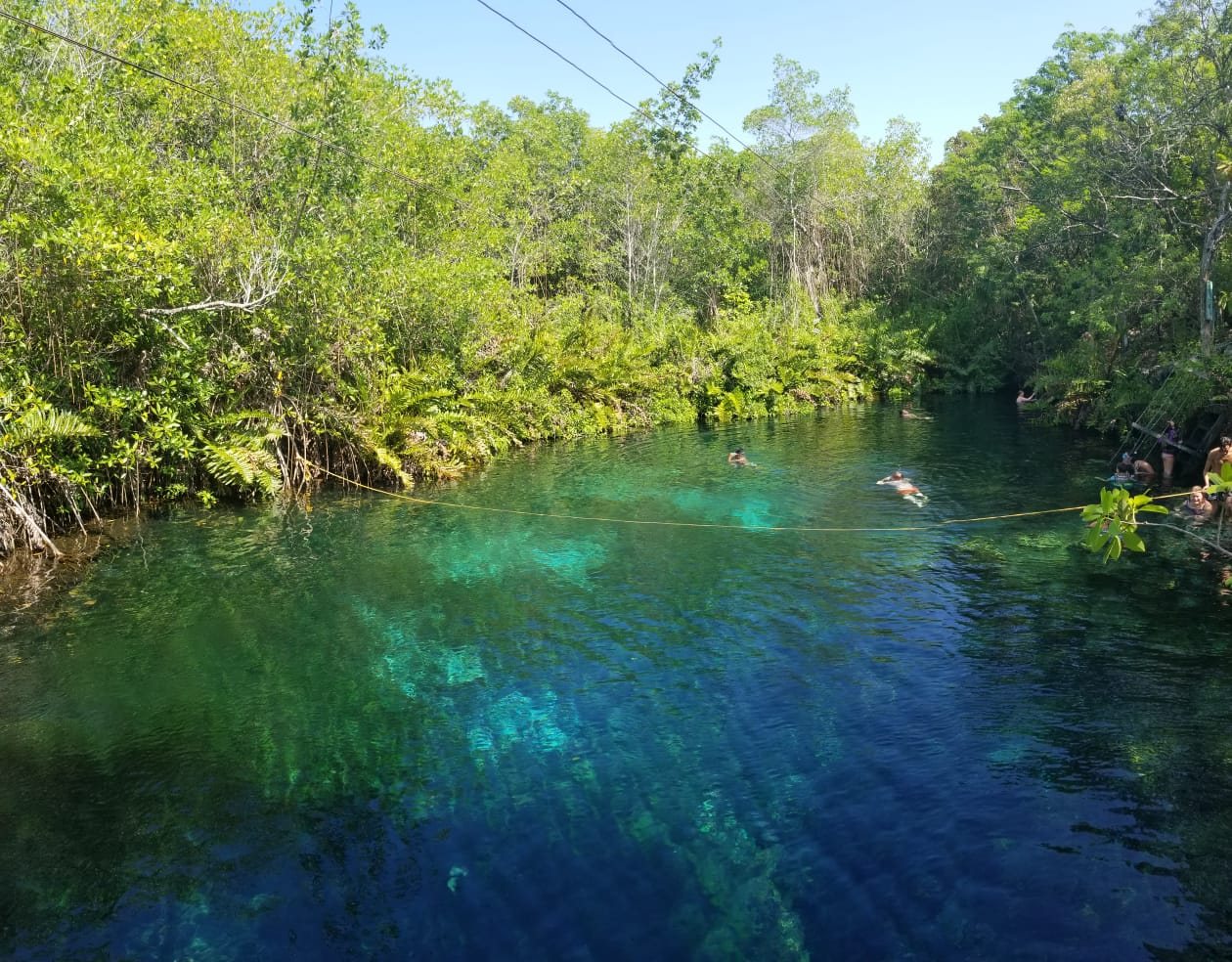
A cenote opens when the roof of one of those cavities collapses or breaks through to the surface and exposes the groundwater below. In 1980, Salvador Gaona-Vizcayno, Tuchée Gordillo-de Anda and Miguel Villasuso-Pino proposed in the Revista Mexicana de Ciencias Geológicas that carbon dioxide produced by organic activity in cenote water adds to the dissolving. Researchers B. B. Hanshaw and W. Back of the USGS described extra dissolution where fresh water and salt water mix near the Yucatán coast.
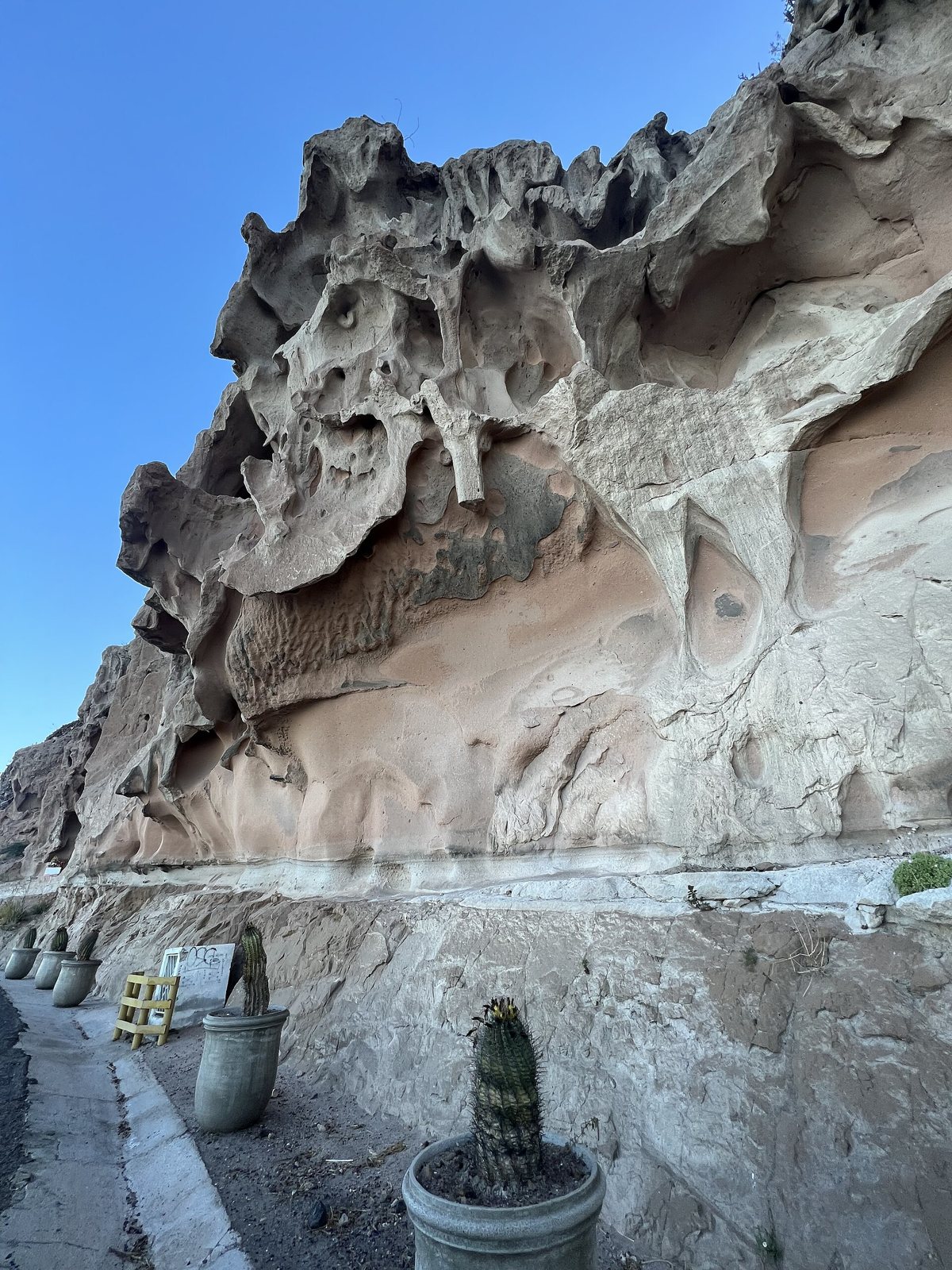
Seen that way, Calavera's three holes are places where the roof of such a cavity has opened to the sky. Nature made the face; people only noticed it.
Cenote Calavera through the years
Tap or hover a step to follow the order.
1980
Gaona-Vizcayno, Gordillo-de Anda and Villasuso-Pino publish their study of how cenotes form.
March 2016
CREER records a fatal cave-diving incident at Cenote Calavera, after divers went beyond the marked cavern area.
May 2022
Quadratín Quintana Roo reports the three openings, the ladder and the jump, an entry fee of about MX$250 and hours of 9:00 to 16:00.
February 2024
CREER advises that cave diving be limited to trained, qualified divers and says it is monitoring conditions at Cenote Calavera.
July 1, 2024
Riviera Maya News reports that divers recovered the body of a person who drowned at the cenote.
Cenotes in Maya belief
Long before anyone named this one for a skull, cenotes mattered to Maya communities across the Yucatán Peninsula. They supplied fresh water, and they were tied to caves, to origins, to death and to the underworld. Arturo Montero García, an archaeoastronomer and historian associated with UNAM, has described cenotes as connected with the underworld, and ethnohistorian Tania Santillán has described a continuity between ancient and present-day Maya relationships with cenotes, including ritual activity and care for their preservation, both in Ciencia UNAM's report on the Kilix Ha reserve.
Writing in Arqueología Mexicana, archaeologist Luis Alberto Martos López says ancient Maya rulers understood cenotes as both water sources and symbols of political and religious power. He also records beliefs among some contemporary Maya communities that rain deities called chacs, aluxes and other beings live in cenotes and caves. These beliefs differ from community to community, and they belong to cenotes and caves in general, not to Cenote Calavera in particular.
For how Maya families in Yucatán remember their dead, our story on Hanal Pixán follows that living tradition. And for what the water in these caves can preserve, the story of Naia and Hoyo Negro, a flooded cave in Quintana Roo, is worth reading before any trip.
Other places named for skulls
Cenote Calavera is not alone in wearing a face. In California, Skull Rock in Joshua Tree is a boulder with a skull's face, and in Mexico several hills share the name Cerro de la Calavera. Rock and water keep giving people skulls, and people keep naming them.
How well do you know Cenote Calavera?
Answer every question to check.
Quick answers about Cenote Calavera
A few more questions tend to come up while planning the day.
Do you have to jump into Cenote Calavera?
No, you do not have to jump; the May 2022 report describes a ladder as well as the jump through one of the openings. Ask the operator about the rules on the day, and take the ladder whenever you prefer.
How deep is Cenote Calavera?
The May 2022 report describes the swimming area as about three metres deep, while dive descriptions give much greater depth in the submerged cavern. Those deeper passages are where CREER limits diving to trained, qualified divers.
What time does Cenote Calavera open?
Quadratín Quintana Roo reported in May 2022 that it was open from 9:00 to 16:00 every day. Hours change, so confirm the opening time with the operator before you leave Tulum.
Can you visit Cenote Calavera without a tour?
Whether independent visitors can walk in is the operator's decision, so ask before you go whether you can enter on your own, whether you need a reservation and whether a guide is required for any cave section. A 2024 inventory of Tulum's cenotes by Arias, Arroyo Arcos and Hernández Aguilar lists Calavera as privately administered, with accredited specialized diving among its services, so ask about swimming and diving as separate activities.
Are there crocodiles in cenotes near Tulum?
Some cenotes near Tulum do have crocodiles: the same 2024 inventory lists crocodiles, manatees and mangroves at Casa Cenote. Its entry for Calavera lists jungle vegetation instead. Ask staff about recent sightings and any restrictions before you get in.
Before you go
Cenote Calavera gives a skull lover the rare chance to swim inside the shape they love, in water that took ages to carve. Confirm the fee, the hours and the jump rules at the gate, bring pesos, leave the cavern to trained divers, and enjoy the view of the sky through a skull's eyes.
Terms in this story
Tap a term to see what it means.
Cenote. A natural sinkhole in the limestone of the Yucatán Peninsula that exposes groundwater. Cenotes form when the roof of an underground cavity collapses or opens.
---