No. 028
What Is Hanal Pixán? Yucatán's Maya Days of the Dead and Food for the Souls
Hanal Pixán is the Yucatec Maya name for the days of the dead in Yucatán, and it means "food for the souls." In Yucatán the official spelling is Janal Pixán: *janal* means food and *pixan* means soul or spirit. Families keep three days. October 31 is for children who have died, November 1 for adults and November 2 for all souls. They set a table altar with jícaras, candles, photographs and the foods their relatives loved, bake the big tamal called mucbipollo, which is traditionally cooked underground, and pray and visit the cemetery. It is the Yucatecan Maya way of keeping the same season much of Mexico knows as Día de Muertos.
What follows is what each of those days means, what goes on the table and how families in Mérida, in villages such as Cholul and in Pomuch, Campeche, keep the custom today.
The name, and why you see two spellings
The words are plain and warm. In Yucatec Maya, *janal* means food or eating and *pixan* means soul or spirit, so Janal Pixán is food for the souls. The Yucatán Congress, in its 2024 proposal to declare Janal Pixán intangible cultural heritage, says the food set out for the dead feeds their souls symbolically and keeps them present in the family's memory.
You will see the name written two ways. Current official writing standards for the Maya language favor *janal*, so Janal Pixán is the spelling Yucatán's official language guidance supports. Hanal Pixán, the older spelling, is still everywhere in public use and in English, as Yucatán Today notes. Both refer to the same days.
Three days: children, adults and all souls
Hanal Pixán gives each group of the dead its own day. In Yucatán communities, October 31 is U Hanal Palal, the day for children. November 1 is U Hanal Nucuch Uinicoob, the day for adults. November 2 is U Hanal Pixanoob, also called *misa pixán*, the day for all souls, usually marked with prayers, Masses and visits to the cemetery.
Each day has its own altar. The Secretaría de Cultura, describing a Hanal Pixán altar shown at the Museo Nacional de Culturas Populares, lists colored candles, toys, fruit and chocolate for the children's altar, and white candles with the person's favorite foods, drinks and objects for the adults'. The season does not always end on November 2, either. Yucatán Today records that some communities keep up prayers and special meals through the month of November.
Tap or hover a row to highlight it.
| Date | Yucatec Maya name | For whom | What families do |
|---|---|---|---|
| DateOctober 31 | Yucatec Maya nameU Hanal Palal | For whomChildren's souls | What families doChildren's altar with colored candles, toys, sweets and special foods |
| DateNovember 1 | Yucatec Maya nameU Hanal Nucuch Uinicoob | For whomAdult souls | What families doAdult altar with white candles, favorite foods, drinks and personal objects |
| DateNovember 2 | Yucatec Maya nameU Hanal Pixanoob or misa pixán | For whomAll souls | What families doPrayers, Masses, cemetery visits and remembrance |
Mucbipollo, the tamal cooked in the ground
If one dish stands for Hanal Pixán, it is mucbipollo, also called pib or pibipollo. It is a large, round Yucatecan tamal. Yucatán's tourism authority, Yucatán Travel, describes it as corn masa filled with chicken, achiote, tomato, onion, bell pepper and lard; some recipes use pork as well. Families may add *espelón*, a local black bean, and *k'óol*, a thick sauce made from masa, broth and spices. The whole thing is wrapped in banana leaves.
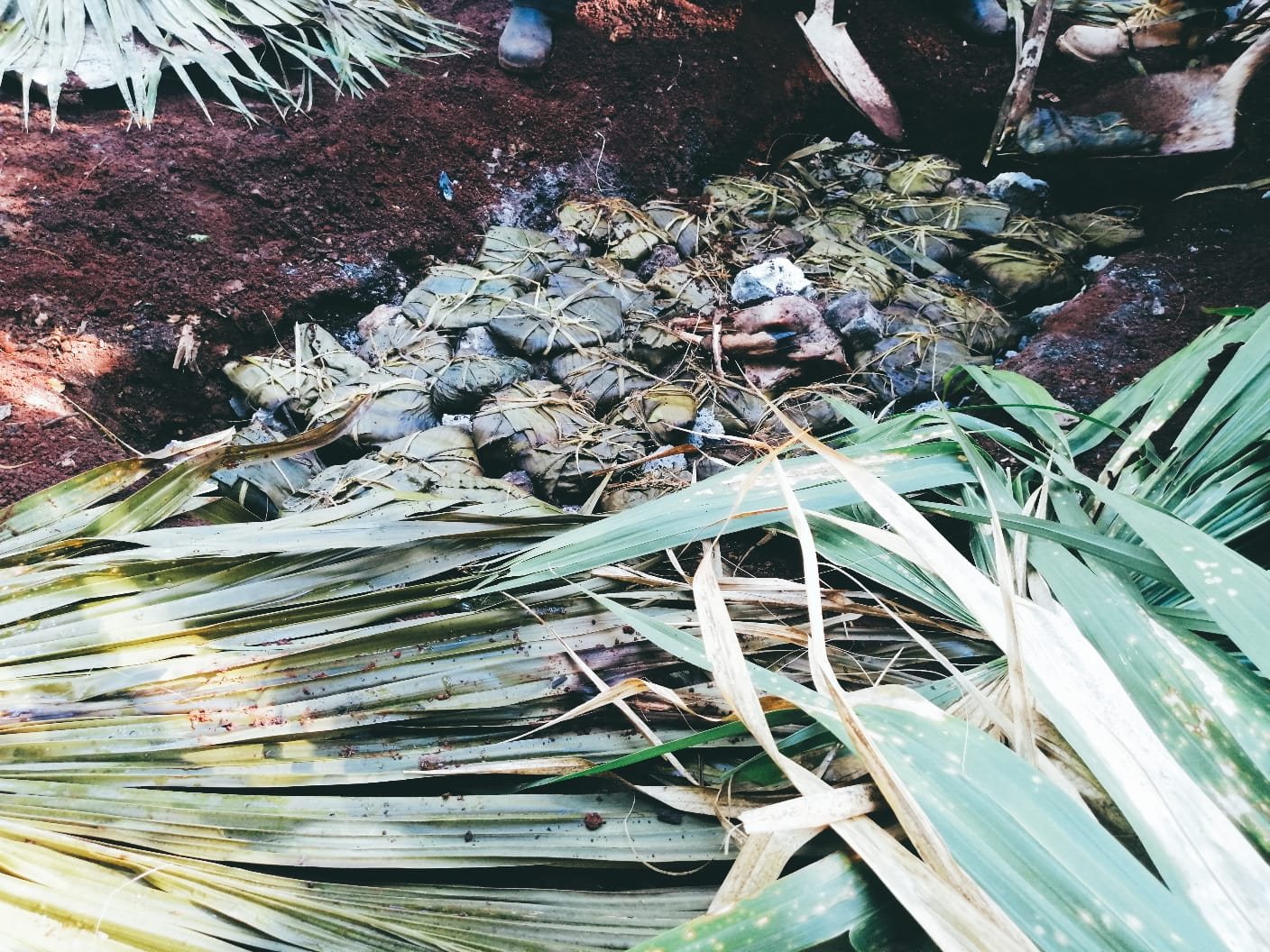
Then it goes into the ground. Traditionally, mucbipollo is cooked in a píib, an underground pit heated with red-hot wood. The name is commonly explained as referring to something buried, which matches how it is made. Not every family digs a pit anymore. Many now bake their mucbipollo in an oven or buy it from cooks who specialize in it, and the Yucatán state cultural archive's study of Cholul notes how cooking practices have changed.
The rest of the table
Mucbipollo has plenty of company. Other dishes documented for the season include relleno negro, escabeche, tamales, tostadas, beans with pork, yuca, sweet pumpkin, papaya sweets and seasonal fruit. To drink there is chocolate, atole, *tan-chucuá*, balché and xtabentún. What actually goes on a family's table depends on the family, the town and, very often, on what the person being remembered liked to eat. Recipes differ from kitchen to kitchen, as they do with the holiday bread of central Mexico; see what pan de muerto means.
The Yucatecan altar: a table, jícaras and a cross
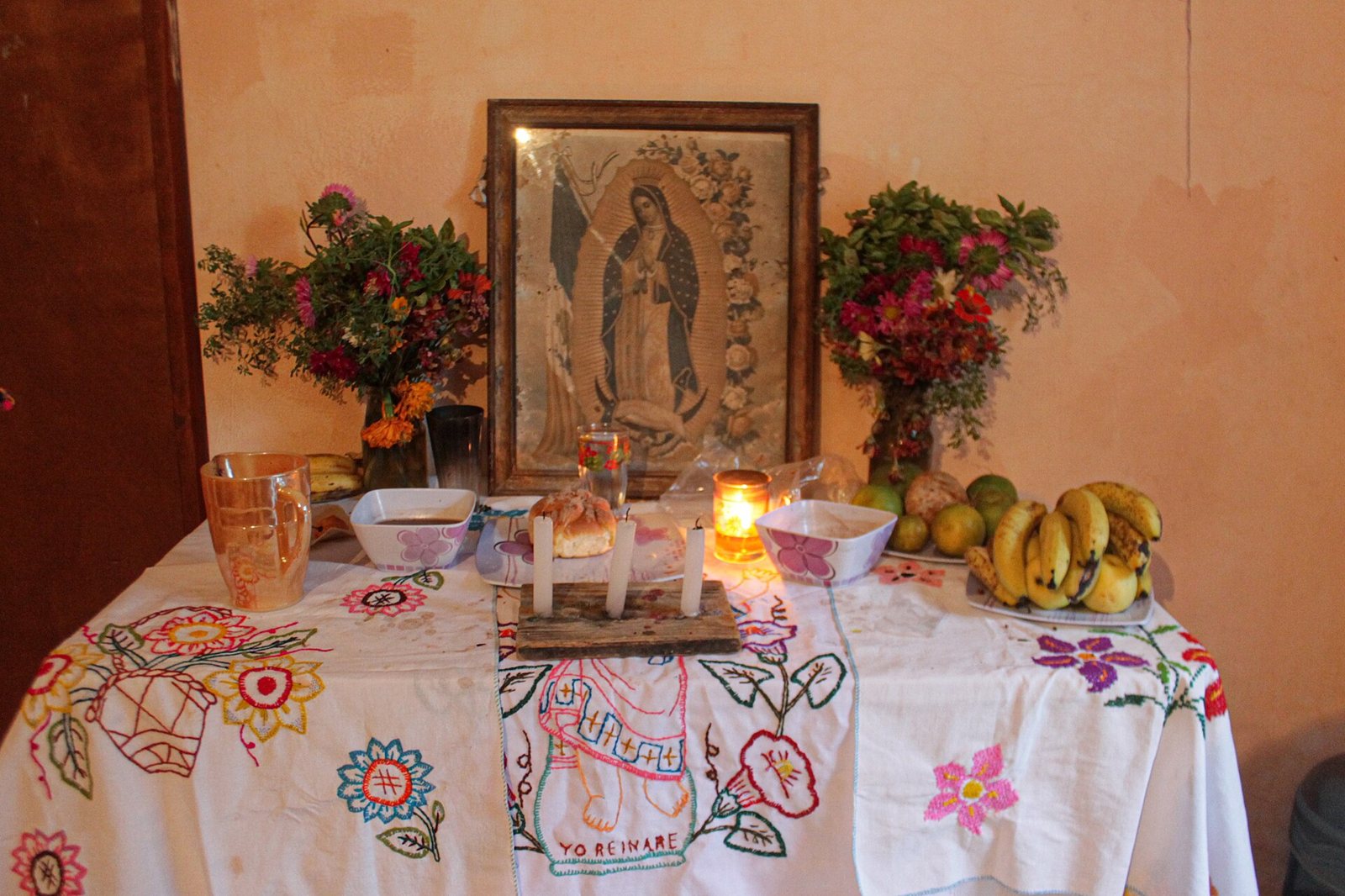
A Hanal Pixán altar is usually a table. Families in Yucatán commonly cover it with a cloth or with banana leaves, rather than building the stepped, multilevel altar many people associate with other regions of Mexico. The Secretaría de Cultura documents Yucatecan Maya altars with banana-leaf coverings, jícaras, candles, food, photographs and the person's household or work objects. The Yucatán Congress's 2021 altar exhibition shows the same jícaras and banana leaves, along with foods and drinks.
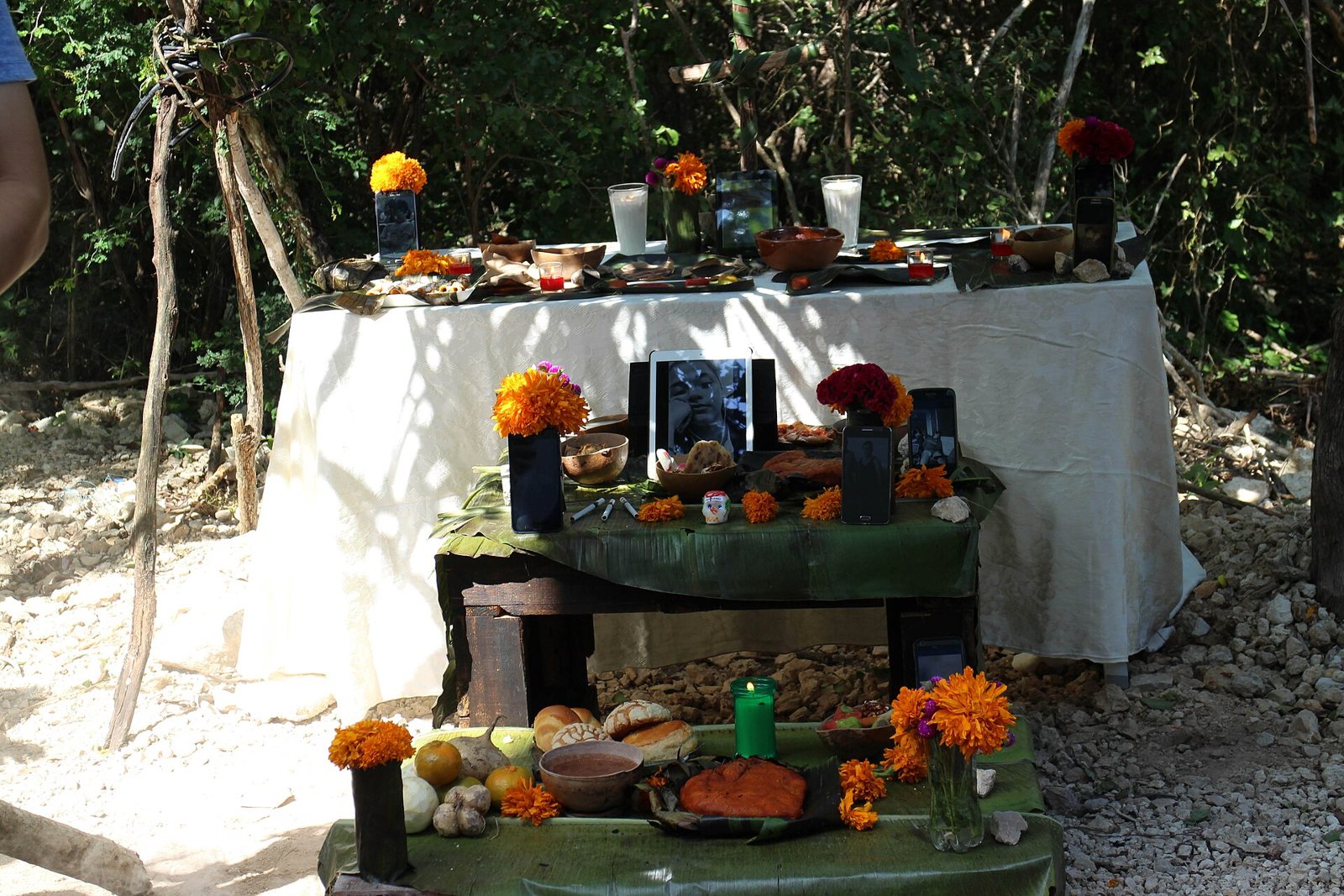
Jícaras are natural containers made from gourds. On the altar they hold water, drinks, salt, fruit, sweets and other food for the dead. Alongside them you may see mucbipollo, relleno, tamales, tostadas, chocolate, pan dulce and atole.
A cross, often green in Yucatecan altars, brings Catholic and Maya elements together on the same table. On a children's altar, the Secretaría de Cultura describes a cross embroidered on a white cloth, with colored candles, toys, fruit and chocolate. An adult's altar usually has white candles and the foods or objects that belonged to that person's life. If you want to set up an altar of your own, the guide to making an ofrenda covers the elements families use.
The red or black thread on children's wrists
In some rural communities of the Yucatán Peninsula, and especially in Campeche, children wear a red or black thread bracelet during the season of the dead. Accounts tie it to protecting children from harmful effects attributed to wandering souls. N+ reported on the red thread in 2024, and PorEsto described the red and black bracelets still used in Campeche in 2025. It is a belief kept by particular communities and families, so if you ask about it, ask in the town where it is practiced.
Pomuch, Campeche: cleaning the bones of loved ones
In Pomuch, a community in the municipality of Hecelchakán, Campeche, some families prepare for the season by caring for the bones of their relatives. After a period of burial, the remains are carefully exhumed. Family members clean each bone with a small brush, wrap the bones in embroidered cloths, sometimes stitched with the person's name, crosses or other designs, and return them to a box in the cemetery. INAH, Mexico's national institute of anthropology and history, describes the brushing and the embroidered cloths in its notes on Pomuch and the cleaning of bones and on Janal Pixán and bone cleaning.
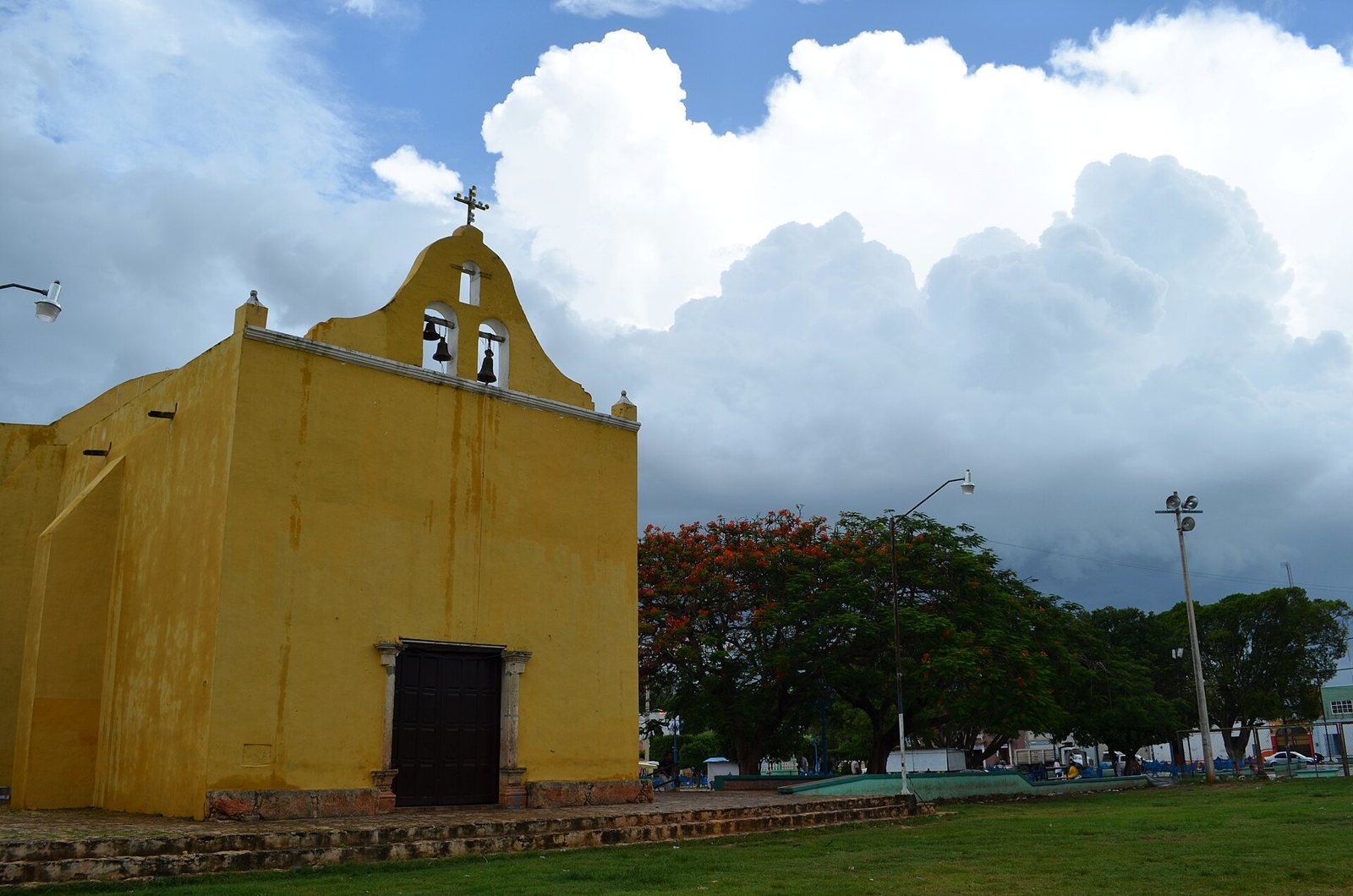
It is an act of remembrance and care. The work is intimate and done by relatives for their own dead, and it belongs to Pomuch rather than to every Maya community. INAH also notes that in Pomuch the observances run through November, not only on November 1 and 2.
If you are ever in Pomuch during the season, stay outside a family's ritual unless you are invited in, never touch remains, ask before photographing anyone and follow the cemetery's instructions. For current access, photography rules and local guidance, ask the Centro INAH Campeche or the cemetery authorities. Bone houses elsewhere in the world have their own customs; see ossuaries around the world.
Mérida and the villages today
In Mérida, Hanal Pixán happens in two places at once: at home, where families set their altars, and in the streets, where the city puts on public events. According to Yucatán Today, altar displays in the Plaza Grande began in 1995. The Paseo de las Ánimas, a procession, began in 2008. It runs from the General Cemetery through La Ermita toward San Juan Park, with participants in regional clothing and faces painted as skulls.
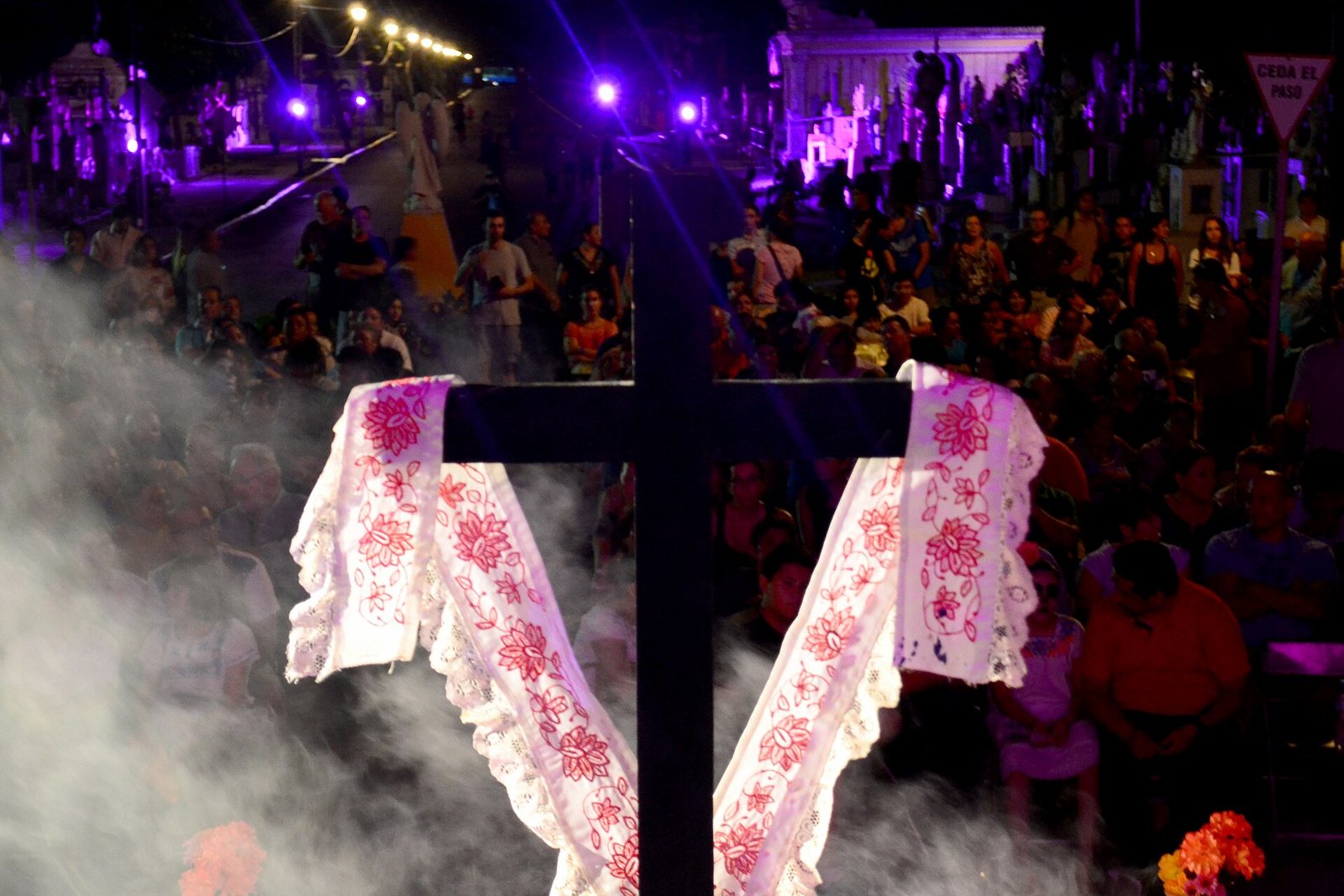
Mérida's recent programs have included altar exhibitions, mucbipollo fairs, processions, bicycle rides, cemetery activities, music, dance and neighborhood events. The 2024 program opened with a mucbipollo fair and monumental altar in the Plaza Grande on October 27, followed by a Vaquería de las Ánimas on October 28 and more activities into early November. Dates change each year, so check the current program with the Mérida city government before you plan a visit.
Hanal Pixán in Mérida's public calendar
Tap or hover a step to follow the order.
1995
Altar displays begin in Mérida's Plaza Grande.
2008
The first Paseo de las Ánimas runs from the General Cemetery toward San Juan Park.
October 27, 2024
A mucbipollo fair and monumental altar open the city's program in the Plaza Grande.
October 28, 2024
The Vaquería de las Ánimas.
Outside the city, the observance is more domestic. The study of the village of Cholul records household altars, cemetery visits, cleaning graves, shared food and a children's custom: going from house to house asking for *caridad pixán* and coming home with fruit, sweets or a piece of pib. Mérida, Cholul and other villages each do things their own way, and families within a village differ too. For how other parts of Mexico keep these days, see Day of the Dead by region.
How well do you know Hanal Pixán?
Answer every question to check.
Common questions about Hanal Pixán
What does Hanal Pixán mean?
Hanal Pixán means "food for the souls" in Yucatec Maya. It is the Yucatecan Maya observance for remembering the dead through food, prayers, altars and family gatherings, held mainly from October 31 to November 2.
What does hanal mean?
*Hanal* is a widely used spelling of the Yucatec Maya word for food or eating. Current official Maya-language writing standards favor *janal*, which is why Yucatán's official guidance spells the observance Janal Pixán.
What is mucbipollo?
Mucbipollo is a large Yucatecan tamal of corn masa with a seasoned filling, commonly chicken and sometimes pork, wrapped in banana leaves. It is traditionally cooked underground in a píib and is especially tied to Hanal Pixán, though many families now bake it in an oven.
Where to go next
Hanal Pixán shares its dates with Día de Muertos across Mexico while keeping its own Maya language, food and altar. For the wider holiday, start with the guide to Día de Muertos, and for the cheerful skeleton figures that turn up across the season, see calacas.