

No. 096
Pomuch Bone Cleaning: Why Families in Campeche Clean Their Relatives' Bones for Día de Muertos
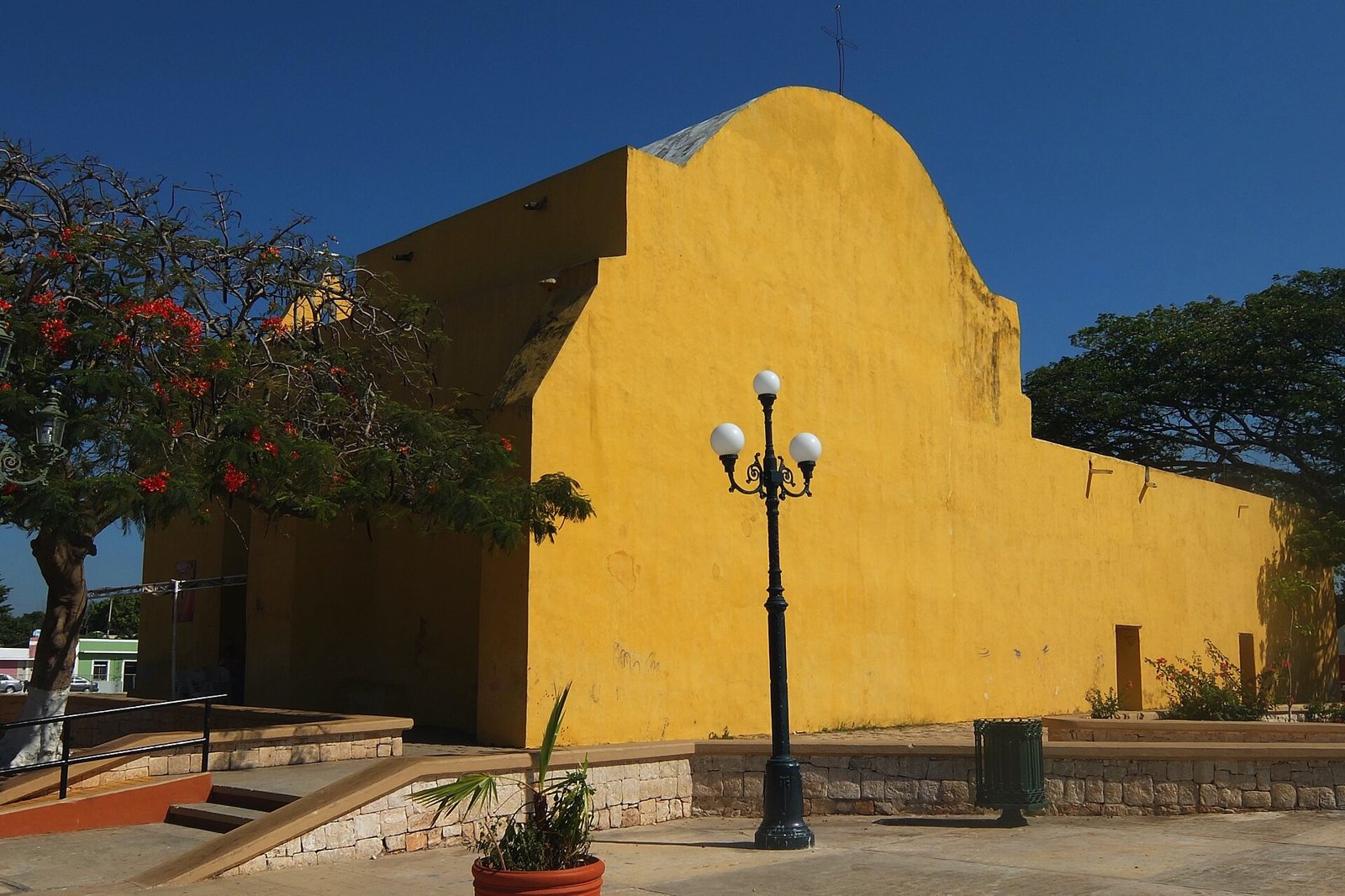
In Pomuch, a community in the municipality of Hecelchakán, Campeche, families clean the bones of their own relatives every October, ahead of Hanal Pixán and Día de Muertos. In Pomuch it is called Choo Ba'ak, also written Cho'o Ba'ak.
About three years after a death, the remains are exhumed and placed in a small wooden box in the town's municipal cemetery. Each year after that, the family brushes the bones clean, lays them on a fresh embroidered cloth and returns them to their niche.
Families describe it as bathing their dead and changing their clothes before the dead come home to visit. It is a custom of Pomuch, kept by Pomuch families, rather than something done all over Mexico.
What the families say it means
The best way to understand the cleaning is to listen to the people who do it. Speaking to BBC News Mundo in a 2021 report republished by El Informador, Pomuch residents Ricardo Yam, Venancio Tuz and Carmen Naal described the work as bathing their dead and putting fresh clothes on them. Ricardo Yam explained it as a way of caring for relatives, honoring and remembering them, and getting them ready for the days when the dead return.
It is also a conversation. Don Domingo told Quintana Roo Hoy that he talks with his relatives while he cleans, touches their bones and remembers the happy moments they shared.
And it is something parents pass on. In a 2025 AFP report carried by Grupo Animal, Carmita Reyes brought her eight-year-old daughter to the cemetery because she wanted the girl to learn the ritual, and María Couoh spoke of the cleaning as sacred memory. Seen through their eyes, the photos that bring many readers here show a family looking after a grandmother, a father or a child they lost.
Choo Ba'ak: the name, the place and the season
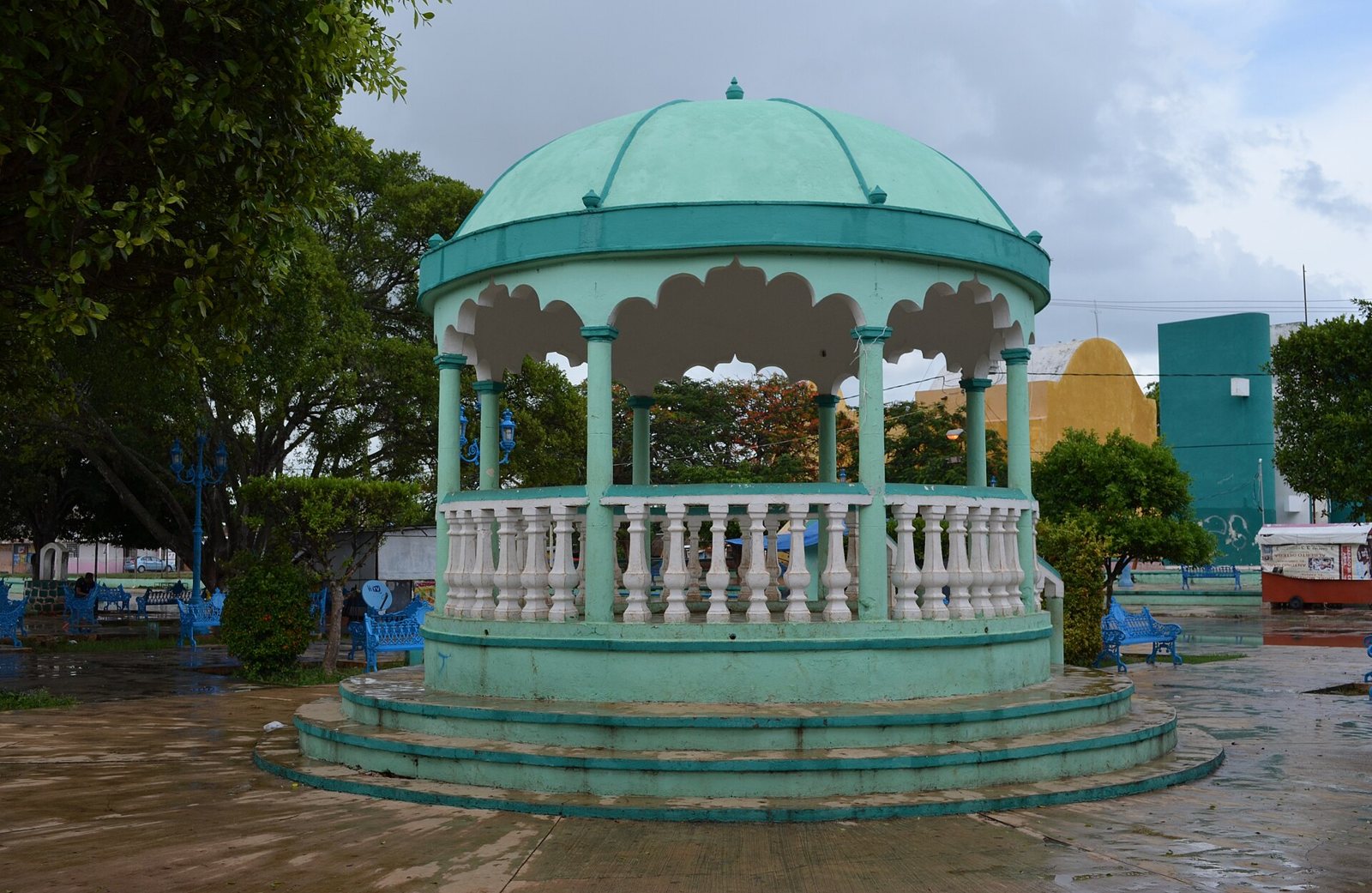
Choo Ba'ak is the name Pomuch gives to its yearly cleaning of family bones. In Spanish you will also hear *limpieza de huesos*, *limpia de huesos* and *limpieza de los santos restos*, the cleaning of the holy remains. The cleaning takes place in the municipal cemetery of Pomuch, usually during October, in the weeks before Día de Muertos.
INAH, Mexico's national institute of anthropology and history, describes the Pomuch custom as an annual cleaning in which the bones are wrapped in hand-embroidered cloths that carry the person's name or religious designs. The practice has official standing at home too: according to El Informador, it was recognized in 2017 as Intangible Cultural Heritage of the State of Campeche.
From burial to the bone box, about three years later
The cleaning is one step in a longer sequence of care. Anthropologist María Fernanda Apipilhuasco Miranda, who has written about Pomuch's funeral customs in Temas Antropológicos, describes it this way: first the burial, with Catholic prayers and gifts for the dead; then an observance when the first year has passed; and then, about three years after the death, the exhumation.
The timing can vary from family to family. Once only the bones remain, they are placed in an ossuary, a small box for bones, and from then on they are cleaned every October. That three-year wait is Pomuch's own custom, not a rule followed in cemeteries across Mexico.
The Pomuch bone cleaning through time and the year
Tap or hover a step to follow the order.
1836
A document in the Hecelchakán parish archive describes a sung Mass during the cleaning of the Santos Restos.
About three years after a death
The family exhumes the remains and carries out the first cleaning.
Every October
Families clean the bones and give them a new paño, their change of clothes.
October 31 to November 2
Hanal Pixán is kept across the Maya communities of the peninsula, and in Pomuch the cleaning is part of getting ready.
2017
The practice is recognized as Intangible Cultural Heritage of the State of Campeche.
How a family cleans and dresses the bones
The work is done by hand, one bone at a time. Families use a small brush to lift away the dust that has gathered over the year. Then the bones go back into the small wooden box in a set order, which Pomuch families describe as arranging them like a standing body: the limbs and ribs first, and the skull last, at the top. Wilberth Chablé described that order to La Jornada Maya in 2025.
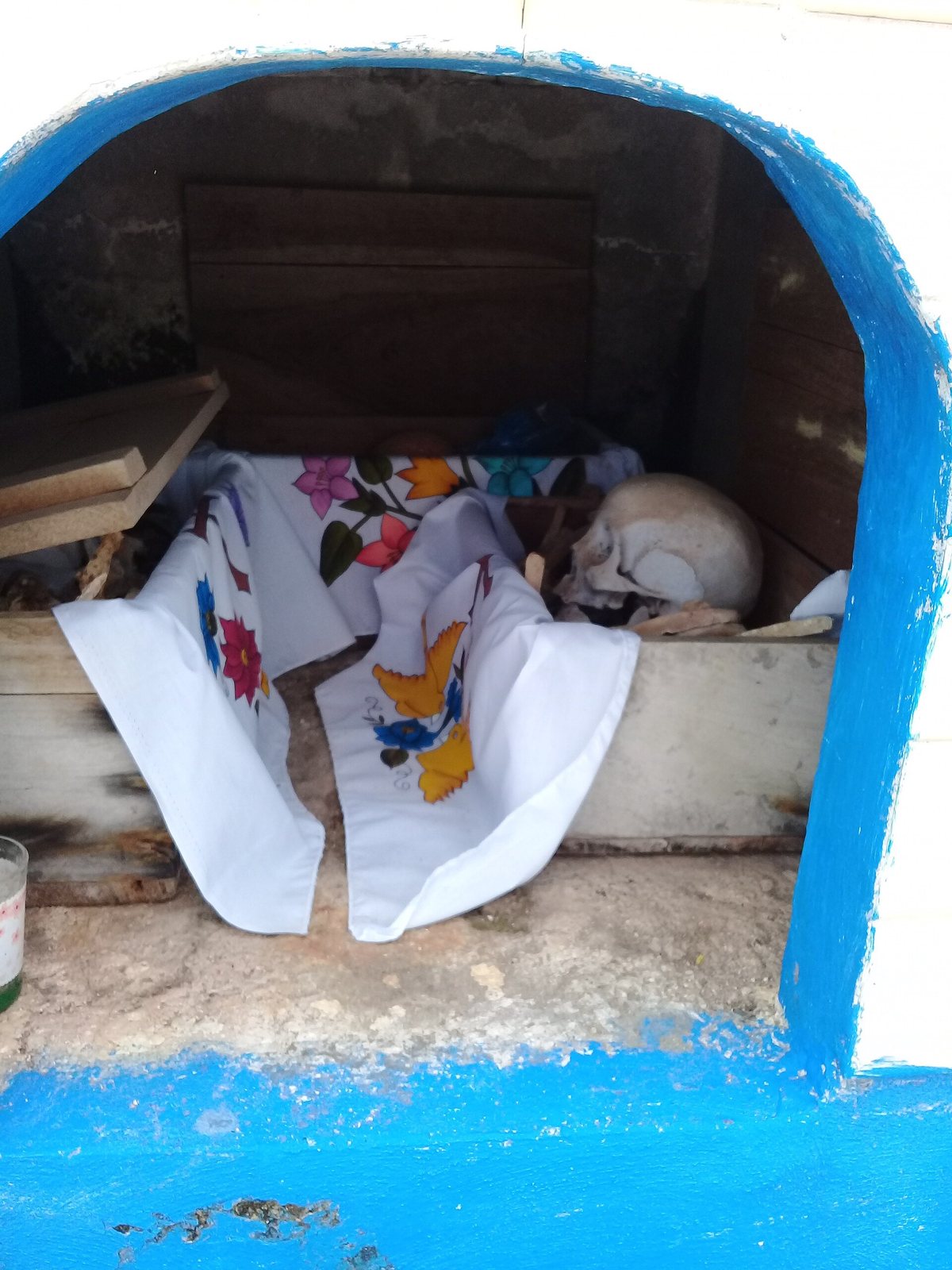
The cloth matters as much as the cleaning. A new white cloth, the *paño*, goes beneath or around the bones, and it may be embroidered or painted with flowers, crosses, the person's name or their initials. This is the change of clothes the families speak of. The box is sometimes left partly open, so the skull or other bones can still be seen.
Families also look after the little ossuary itself. They repaint or decorate it, bring flowers and candles, and prepare food for the dead. Venancio Tuz, speaking to El Informador in 2015, described the wooden boxes and the brightly colored small houses that hold them.
How Pomuch families care for the bones
Tap a card to bring it forward.
- Brush: Each bone is cleaned with a small brush to lift the year's dust.
- Arrange: The limbs and ribs go back into the wooden box first.
- Crown: The skull is placed last, at the top.
- Dress: A new white paño, embroidered or painted with flowers, crosses, a name or initials, goes beneath or around the bones.
- Decorate: The ossuary is repainted or decorated, with flowers and candles brought for the dead.
Roots in Maya and Catholic practice
How old is the custom? Lázaro Hilario Tuz Chi, a historian and anthropologist from Pomuch, told La Jornada Maya in 2022 that it has pre-Hispanic roots joined with the Spanish Catholic devotion to the dead. He points to a document in the parish archive of Hecelchakán that describes a sung Mass during the cleaning of the "Santos Restos" in 1836.
That 1836 document is the earliest dated record he cites, and it places the cleaning alongside Catholic worship nearly two centuries ago. It is a record of the custom being kept in 1836, not a date for when it began.
Getting ready for Hanal Pixán
The cleaning has a purpose on the calendar. Across the Yucatán Peninsula, Hanal Pixán, "food for the souls," is kept around October 31, November 1 and November 2, and in Pomuch, cleaning the bones is part of preparing to receive the *pixanes*, the souls of the dead. A clean box, a new paño, flowers and candles are the welcome. For the days themselves, the altar and the food families make, read our story on Hanal Pixán.
INAH ties the two together in its note on Janal Pixán and the cleaning of bones, and the Pomuch custom joins Maya ideas about ancestors who stay present with Catholic prayers, cemetery visits and the dates of Día de Muertos. Apipilhuasco Miranda, in a 2025 article, describes it as a local ritual, connected to the wider observance of the season without being the same thing.
Other towns and regions keep these days in their own ways, from the night vigil of Janitzio to the days for children who have died; Day of the Dead by region gathers more of them.
Visiting the Pomuch cemetery with respect
Pomuch's cemetery is an active family cemetery, not a display put on for visitors. If you go during the season, keep your voice low, do not interrupt families at work, dress modestly, and never touch the ossuaries, bones, cloths or the food and flowers left for the dead. Ask before you photograph anyone, and before you photograph their relatives' remains.
Families differ in how they feel about visitors. Some Pomuch residents welcome visitors and journalists; others prefer privacy, or come to the cemetery early in the day to avoid crowds. In 2025, La Jornada Maya reported a family's distress after a skull went missing from an ossuary, which is a plain reason why a family's permission and the safety of their relatives' remains come before any photo.
Before you travel, confirm current access, hours, any fees and photography rules with the municipal cemetery or the local authorities in Pomuch.
If you visit Pomuch during the season
Tap a card to bring it forward.
- Keep quiet: Speak softly and let families work.
- Do not interrupt: The cleaning is private family care.
- Dress modestly: This is a cemetery in daily use.
- Ask first: Ask before photographing anyone or their relatives' remains.
- Hands off: Never touch ossuaries, bones, cloths or anything left for the dead.
- Check ahead: Confirm access and rules with the municipal cemetery or local authorities.
How well do you know the Pomuch bone cleaning?
Answer every question to check.
Questions about the Pomuch bone cleaning
A few more answers about the custom and its place in the season.
What does limpieza de huesos mean?
*Limpieza de huesos* means "cleaning of bones," and in Pomuch it names the yearly cleaning and re-dressing of the bones of family members who have died. Families treat it as care for their ancestors, which is why they speak of bathing them and changing their clothes.
Where do families clean bones for Día de Muertos?
The best documented example is the municipal cemetery of Pomuch, in the municipality of Hecelchakán, Campeche. Families do the cleaning at the open ossuaries where their relatives' bones are kept, and the custom belongs to Pomuch rather than to Mexico as a whole.
How often do families clean the bones?
Once a year, in October, before Hanal Pixán and Día de Muertos. The first cleaning comes with the exhumation, about three years after the death, and the bones are cleaned and given a new paño every year from then on.
Can you take photos during the bone cleaning?
Only with the family's permission, and only after checking the cemetery's current rules with local authorities. Families differ: some accept visitors and journalists, while others prefer privacy with their dead.
More ways families keep their dead close
Pomuch's cleaning is one answer to a question many cultures have asked: how do you go on caring for someone after they die? For the Maya days this cleaning prepares for, start with Hanal Pixán, and for the wider season, our guide to Día de Muertos. If you want to set out an altar of your own, see how to make an ofrenda.
Farther afield, the painted skulls of the Hallstatt Bone House in Austria carry names and flowers, and the Toraja Ma'nene is another custom of tending the dead. More places where bones are kept with care are gathered in ossuaries around the world.
Terms in this story
Tap a term to see what it means.
Pomuch. A community in the municipality of Hecelchakán, in the Mexican state of Campeche, where families clean their relatives' bones each October.
---