

No. 079
Calavera con Penacho: Where the Skull with an Aztec Headdress Comes From
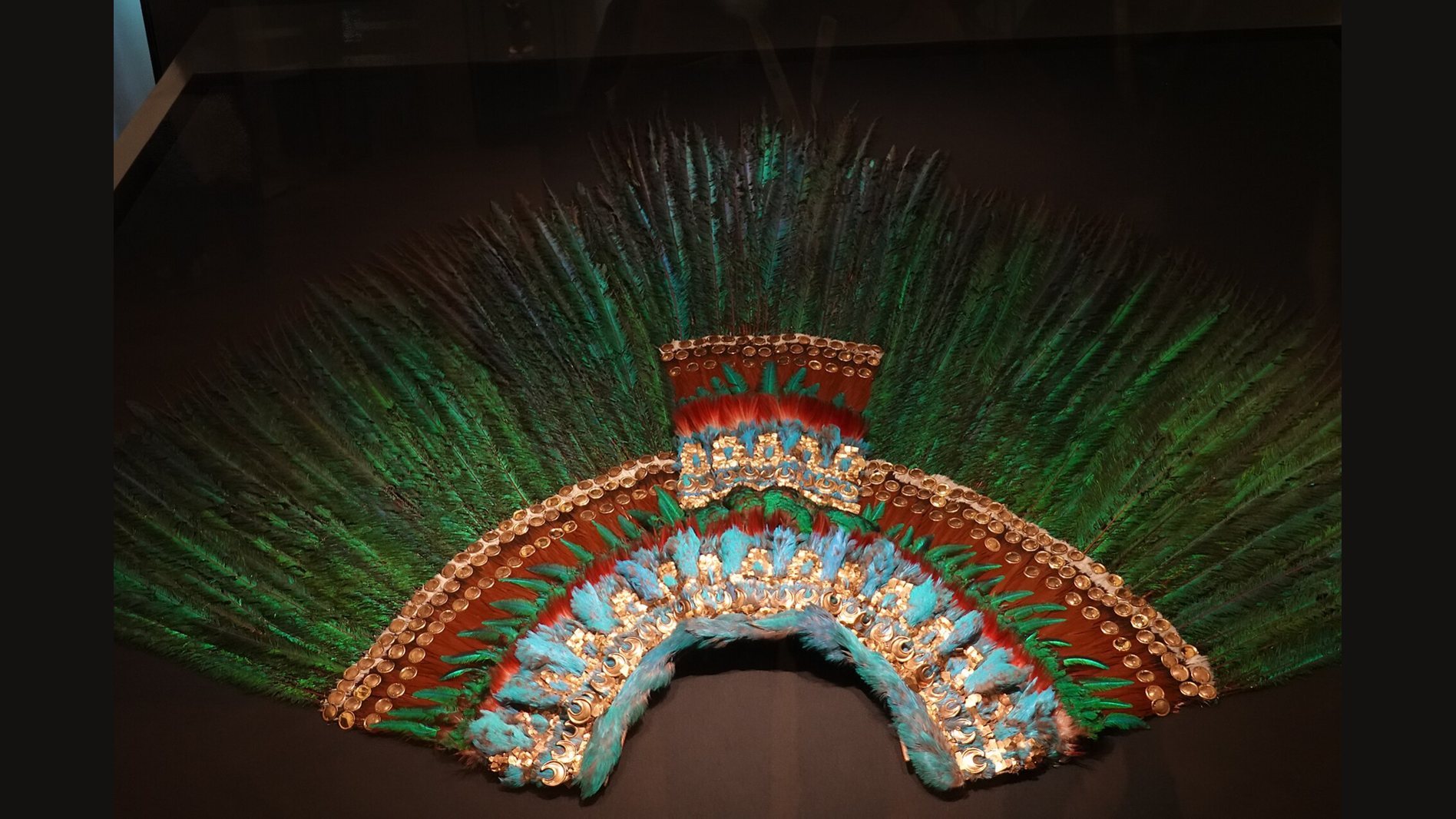
The skull wearing a big feathered headdress, the calavera con penacho you see on tattoos, shirts and Día de Muertos art, is a modern image built from older pieces. Its skull comes from a long line of Mexica skull imagery, such as the tzompantli skull racks and Mictlantecuhtli, lord of the land of the dead. Its feathers recall the penacho, the feathered headdress best known from the one kept in Vienna. And its style owes a great deal to the Día de los Muertos art Chicano artists made in East Los Angeles from the 1970s. Today it can stand for remembrance, Mexican or Chicano identity, Indigenous ancestry or mortality, and the wearer's own reason comes first.
The short answer: one image, several roots
Mexica art had skulls, death gods and feathered regalia, each with its own place and purpose. The large feathered skull on a forearm or a T-shirt puts them together in a way that is modern, and it has picked up new layers in Chicano art, tattoo flash and Día de Muertos merchandise along the way. That is why the same design can mean very different things to different people.
The table below sorts out the main pieces of the image and where each one is documented.
Tap or hover a row to highlight it.
| Element | Where it is documented | What it meant there |
|---|---|---|
| ElementSkull rack (tzompantli) | Where it is documentedMexica Tenochtitlan and Calixtlahuaca, per INAH | What it meant thereA wall of skulls tied to sacrifice, fertility and renewal |
| ElementMictlantecuhtli | Where it is documentedMexica religion, per INAH | What it meant thereLord of Mictlan, the land of the dead, his open mouth receiving souls |
| ElementFeathered headdress | Where it is documentedWeltmuseum Wien, around 1515 | What it meant thereA headdress of quetzal feathers and gold, likely a priest's |
| ElementChicano Día de los Muertos prints | Where it is documentedSelf Help Graphics & Art, East Los Angeles, from 1973 | What it meant thereCalaveras, Indigenous references and social-justice themes |
| ElementDanza azteca regalia | Where it is documentedSome Mexico City groups, 1930s to the early 1960s and after | What it meant thereCodex-inspired outfits with feathered warrior imagery |
| ElementTattoo flash and merchandise | Where it is documentedToday | What it meant thereA recombined skull, headdress and Aztec-style pattern with personal meanings |
What a penacho is, and the headdress in Vienna
"Penacho" is Spanish for a feathered headdress or plume. The most famous one in the world sits in Austria. The Weltmuseum Wien describes it as a feathered headdress from ancient Mexico, dated to around 1515. According to the museum's exhibition guide, it holds hundreds of quetzal feathers and more than 1,000 gold plaques. Its first written appearance in Europe is an inventory from 1596, listing it in the collection of Archduke Ferdinand II of Tirol at Ambras Castle, near Innsbruck.
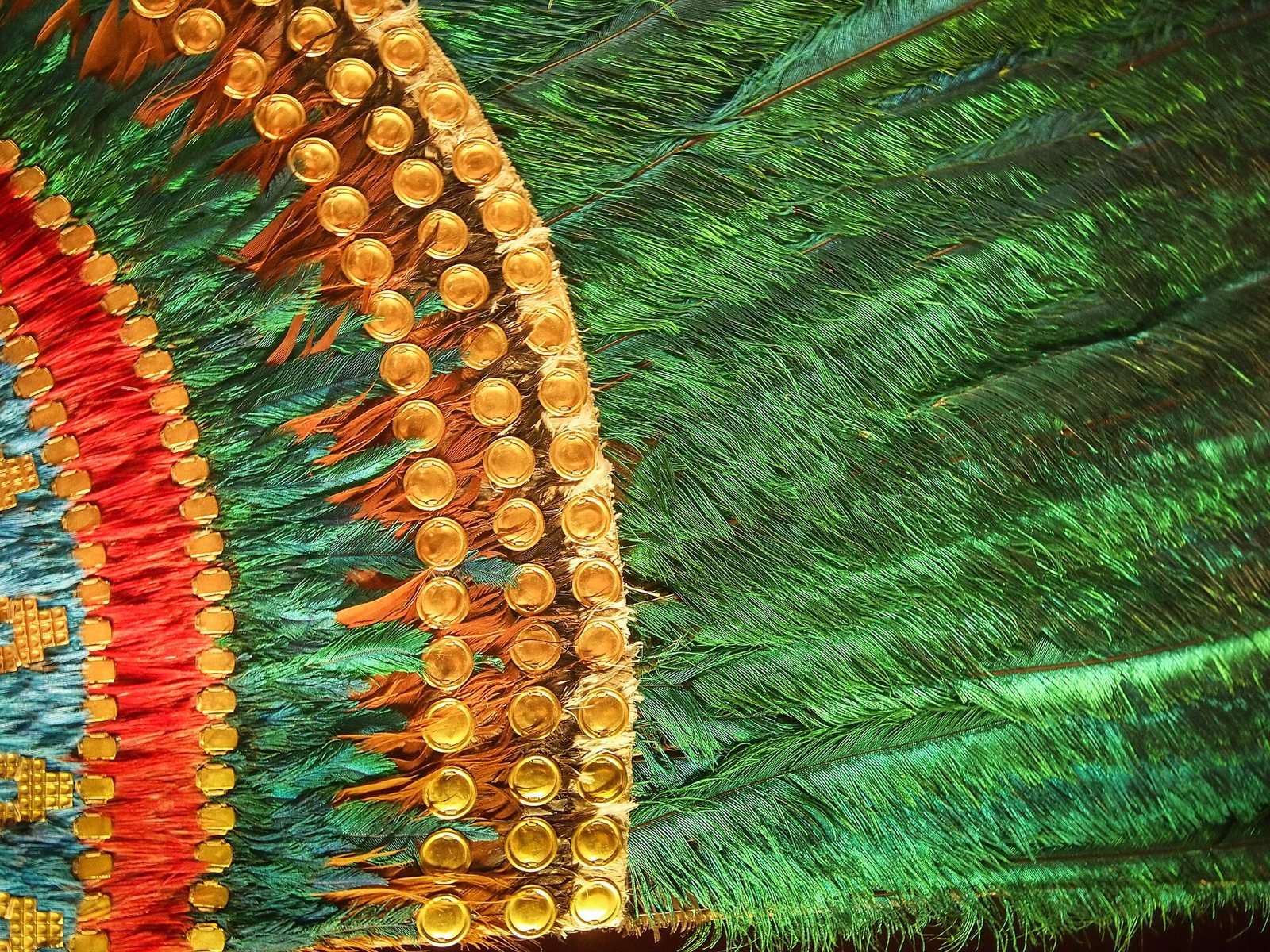
Many people know it as the "penacho de Moctezuma." That name became common in Mexico after the Mexican Revolution, but the Weltmuseum says there is no evidence connecting the headdress personally to Moctezuma. Its director, Christian Schicklgruber, told El Universal that it was more likely a priest's headdress. The museum historian Gerard van Bussel told El País that no surviving evidence shows Moctezuma owned it. A replica is held at the Museo Nacional de Antropología in Mexico City.
So, the headdress is real and about five hundred years old. The name attached to it is the part that is uncertain.
Why the penacho is still in Vienna
Mexico has asked for the headdress to come home, or at least to travel on loan, since the 1990s. The answer so far has turned on the feathers themselves. A Mexico-Austria research and conservation project from 2010 to 2012 concluded that vibration during transport could cause serious damage, as the Weltmuseum's guide explains. Mexican officials have continued to talk about a future trip if conservation technology improves, and El Universal has set out why moving it remains so difficult.
The two positions sit side by side. Mexico's cultural-heritage position treats pre-Hispanic movable objects from Mexican territory as national property, while Austria keeps physical custody of a very fragile object. After restoration, the Mexican Foreign Ministry reported the headdress on exhibit again in Vienna. For anyone wearing a penacho on a shirt, it is worth knowing that the real one is the subject of a long, serious conversation between two countries.
Skulls in Mexica art
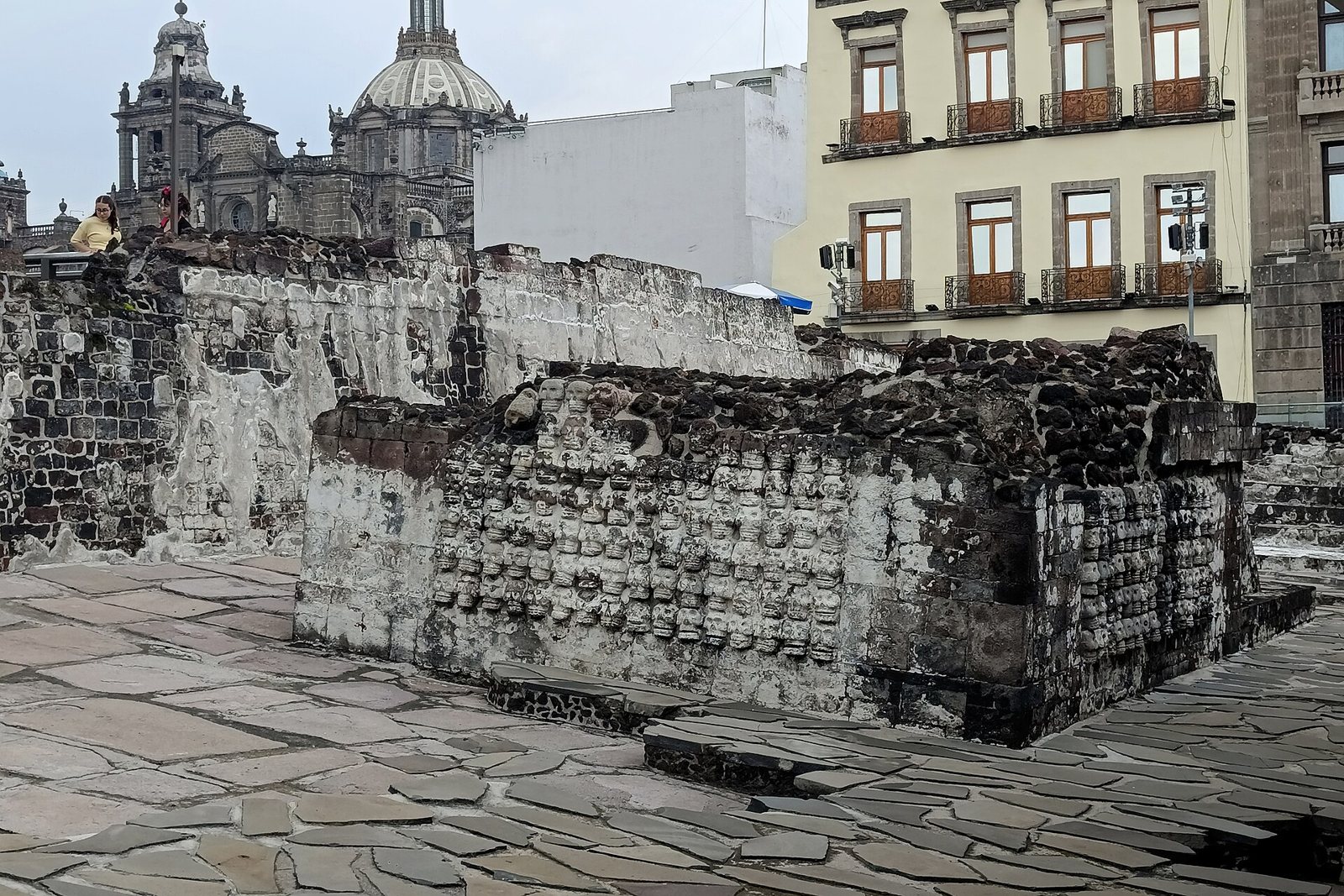
The skull half of the image has deep roots. A tzompantli was a structure for displaying human skulls, including the famous skull racks of Tenochtitlan. INAH, Mexico's national institute of anthropology and history, describes the tzompantli as a "muro de calaveras," a wall of skulls, and connects it with sacrifice, fertility and the relationship between death and renewal. At Calixtlahuaca, INAH describes a tzompantli with carved skulls. Our tzompantli story goes further into the skull racks.
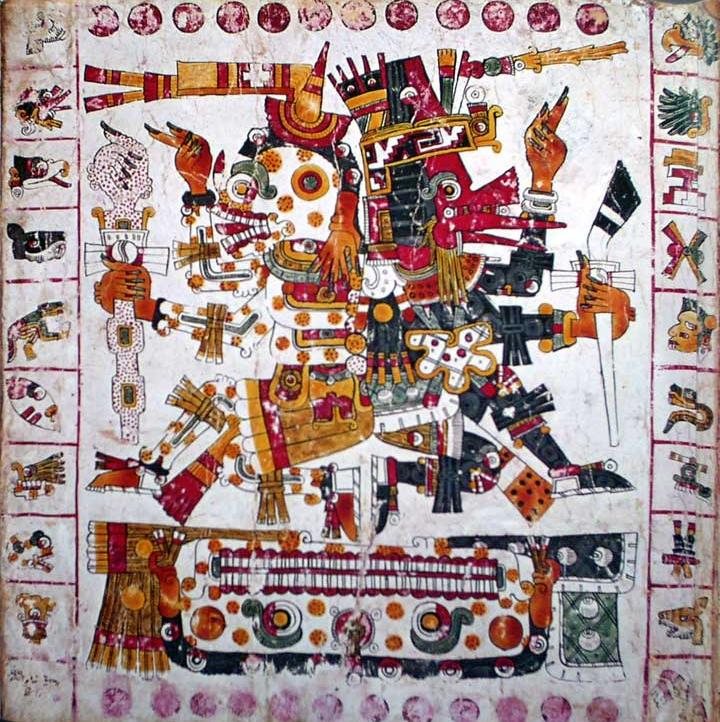
Mictlantecuhtli was the Mexica lord of Mictlan, the land of the dead. INAH explains that his open mouth represents the receiving of souls, and he is often shown skeletal or partly skeletal, with exposed ribs and bones and a skull-like face. He has his own story in our Mictlantecuhtli piece, and he appears among other death figures in gods of death.
In Mexica art these skulls, death gods and feathered regalia appear as separate elements. The skull crowned with an enormous feathered headdress, as it looks on today's tattoos, is a later combination of them.
How the image reached Chicano art and tattoo flash
The modern calavera con penacho grew up north of the border as much as south of it. In the United States, Chicano artists brought Día de los Muertos into public cultural life in the 1970s, especially through Self Help Graphics & Art in East Los Angeles. Self Help Graphics began its Día de los Muertos program in 1973, and it became an annual event in 1974, according to California State University, San Bernardino's exhibition on the organization. Since 1983 it has commissioned an annual Día de los Muertos commemorative print from a local artist.
Those prints helped make calaveras, skeletons, Indigenous references and social-justice themes part of Chicano visual culture. The art historian Sybil Venegas describes this as a Chicano reinterpretation of Mexican and Indigenous history, set in Aztlán. Colin Gunckel of UCLA traced the program's early years in "Giving Birth to a Tradition", and the scholar Lara Medina describes East Los Angeles celebrations as spiritual, communal and political practices tied to healing and resistance. Over the years the prints were increasingly reproduced, exhibited and sold.
Tattoo flash and merchandise then simplified and recombined the pieces: a skull, a feathered headdress, an Aztec-style pattern, some Día de Muertos decoration. The result can refer to Chicano identity, Mexicanidad, remembrance, mortality or Indigenous ancestry, or it can simply be a commercial "Aztec" look. For how the holiday is kept north of the border, see Day of the Dead celebrations in the USA, and for the holiday in Mexico, our Día de Muertos story.
From a feathered headdress to a tattoo
Tap or hover a step to follow the order.
Around 1515
The feathered headdress now in Vienna is made in ancient Mexico.
1596
It appears in an inventory at Ambras Castle, near Innsbruck, its first written record in Europe.
1930s
Some conchero groups begin wearing more "Aztec" clothing, a change Jacques Galinier calls "Aztecization."
Late 1950s to early 1960s
Codex-inspired outfits with feathered warrior imagery become prominent in some Mexico City groups.
1973
Self Help Graphics & Art starts its Día de los Muertos program in East Los Angeles.
1974
The program becomes an annual event.
1983
Self Help Graphics begins commissioning an annual commemorative print by a local artist.
2010 to 2012
A Mexico-Austria project studies and conserves the Vienna headdress.
Danza azteca and conchero regalia today
A feathered headdress can also be seen in motion, at a danza azteca or conchero performance. These are living traditions, and they differ from place to place. The INAH documentation center's catalogue entry on danza azteca names Guanajuato, Querétaro, Estado de México, Morelos, Tlaxcala, Puebla, Guerrero, Jalisco, San Luis Potosí and Mexico City, and notes that the dances go by different names by region, including concheros, danza de conquista, chichimeca and tolteca.
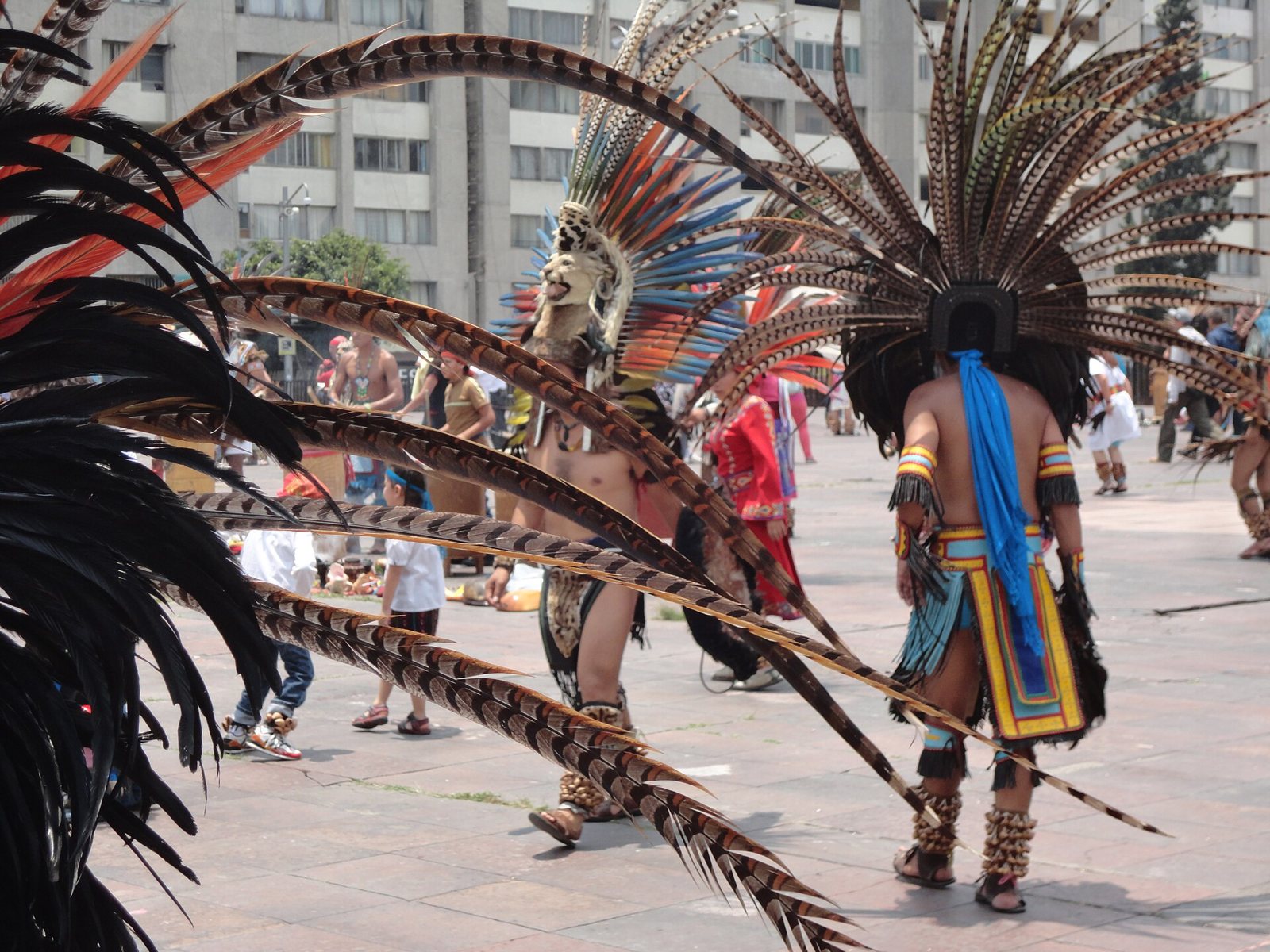
The anthropologist Jacques Galinier describes an "Aztecization" of some conchero clothing that began in the 1930s. By the late 1950s and early 1960s, some Mexico City groups had taken up shorter, codex-inspired outfits with feathered warrior imagery. That history does not mean every dancer claims to wear exact Mexica clothing. Regalia, dance, rank, music and religious obligations vary between mesas, the dance groups, and between communities. A study in INAH's anthropology journal looks at concheros and the dance called mitotiliztli. For dancers, the headdress is part of a practice with its own obligations, which is worth keeping in mind when the same feathers turn up on a skull design.
What a calavera con penacho tattoo means today
A skull in a feathered headdress has no single tattoo meaning. In contemporary tattoo culture, the skull is commonly linked to mortality, remembrance, ancestry, change or defiance, and the feathers to Indigenous or "Aztec" identity, strength and heritage. Those are modern readings of a modern design, not an ancient Mexica definition of it.
Scholarship on Chicano Día de los Muertos gives the image more grounding. Sybil Venegas emphasizes memory, identity and self-preservation in Chicano observances, and Lara Medina writes about healing and resistance in East Los Angeles. That is why a calavera con penacho can be a way of honoring family, heritage or someone who has died.
The wearer's explanation is the one that counts. A generic design is best described for what it is, a modern image, rather than as an authentic ancient Aztec symbol or as a copy of a sacred headdress. If you are planning one, it is worth talking with your artist about which parts of this history you want it to carry. Our stories on sugar skull tattoo meaning, skull tattoo meaning and calavera meaning cover related designs.
How well do you know the calavera con penacho?
Answer every question to check.
Questions people ask about the calavera con penacho
What does a skull with an Aztec headdress mean?
A skull with an Aztec headdress has no single fixed meaning; it usually combines skull symbolism with Mexican, Mexica or Chicano identity, Día de los Muertos, remembrance, Indigenous ancestry or personal ideas about mortality. The meaning depends on who wears it, in which community and why.
Where did the Aztec skull tattoo come from?
The Aztec skull tattoo grew out of Chicano art of the 1970s and later tattoo flash and merchandise, which recombined Mexica skull imagery, feathered regalia and Día de los Muertos design. Self Help Graphics & Art in East Los Angeles, whose program began in 1973, did much to put calaveras and Indigenous references into Chicano visual culture.
What is the penacho de Moctezuma?
The penacho de Moctezuma is a feathered headdress from ancient Mexico, dated to around 1515, kept at the Weltmuseum Wien in Vienna. It is made of hundreds of quetzal feathers and more than 1,000 gold plaques, and the museum considers it possibly a priest's headdress.
Did the headdress belong to Moctezuma?
No evidence shows the Vienna headdress belonged to Moctezuma, according to the Weltmuseum Wien and its historian Gerard van Bussel. The name became common in Mexico after the Mexican Revolution, long after the headdress reached Europe.
Is the Aztec headdress in Vienna real?
Yes, the headdress in Vienna is a genuine feathered headdress from ancient Mexico, dated to around 1515 and first recorded in Europe in 1596. The copy in Mexico City's Museo Nacional de Antropología is a replica.
Why is the penacho still in Vienna?
The penacho stays in Vienna mainly because a 2010 to 2012 Mexico-Austria study concluded that vibration during transport could seriously damage it. Mexico, which has sought its return or a loan since the 1990s, treats pre-Hispanic objects from its territory as national property, and officials continue to discuss a future move if conservation technology allows.
A skull with five centuries behind it
The calavera con penacho is young as a design and old in its pieces: a Mexica wall of skulls, a lord of the dead with an open mouth, a headdress of quetzal feathers made around 1515, and prints pulled in East Los Angeles every fall since the 1970s. Knowing where each piece comes from lets you wear it, or admire it, with its whole story intact.
Terms in this story
Tap a term to see what it means.
Calavera. Spanish for skull, used for the skull images of Día de Muertos and Día de los Muertos art.
---