No. 010
The Sedlec Ossuary: Whose Bones Are in the Bone Church of Kutná Hora
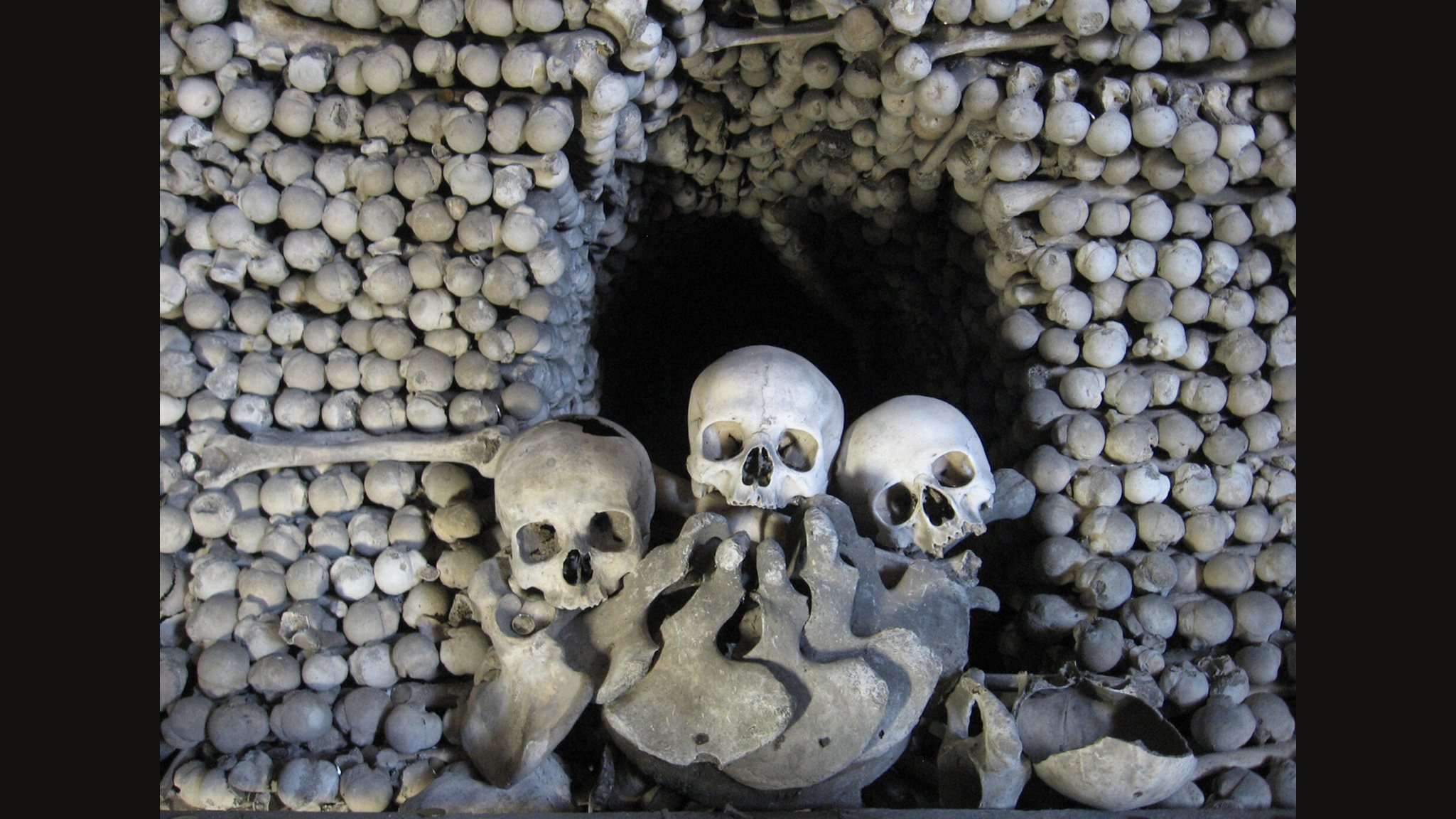
The bones in the Sedlec Ossuary are real human remains. They belong to people who were buried in the cemetery at Sedlec, a district of Kutná Hora in Central Bohemia, Czechia, most of them medieval inhabitants of the town and the surrounding area. When that cemetery ran out of room, older graves were exhumed and the bones were kept in the lower chapel of the Cemetery Church of All Saints. The chandelier, garlands and pyramids that appear in photographs came much later, completed in 1870 by František Rint for the Schwarzenberg family. Estimates of how many people are represented run into the tens of thousands.
That is the short version. The longer one begins with a monastery, a legend about soil from Jerusalem, and a series of catastrophes that filled a cemetery faster than anyone could manage.
Whose bones these are
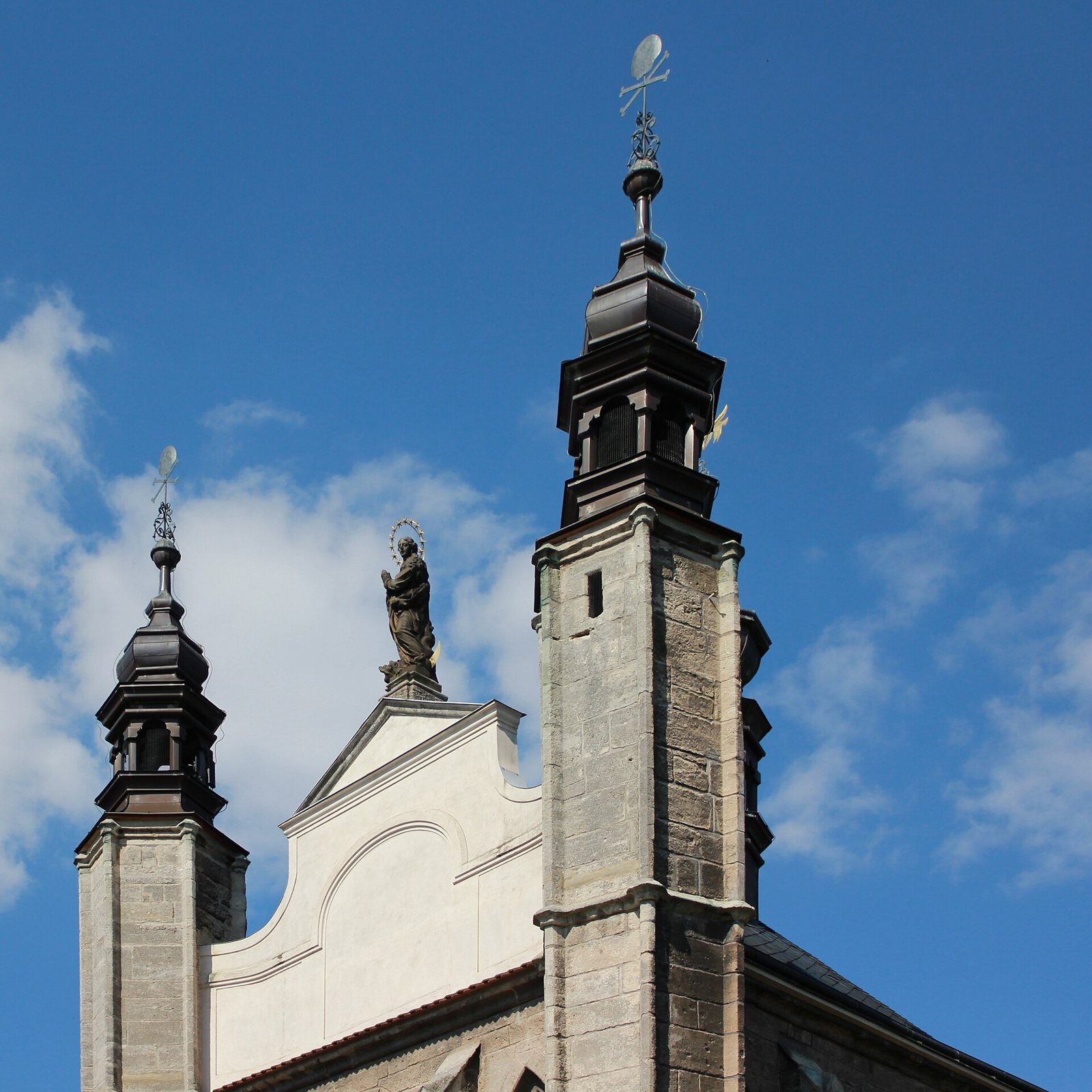
The church belonged to the Cistercian monastery at Sedlec, founded in 1142. The cemetery around it received the dead of famine, plague, mining accidents, poor hygiene and war. According to the official Sedlec history, up to 20,000 people died in a famine in 1318, about 30,000 in a later outbreak of plague, and roughly 10,000 during the Hussite conflicts around Kutná Hora at the start of the 15th century.
These were Christian burials, and the people who keep the site today describe the remains that way: as the dead of a particular town in a particular age, resting in consecrated ground. They are not anonymous decoration. The history of the place is a history of Kutná Hora's own families, miners, monks, farmers and soldiers, whose graves were later opened to make room for new ones.
A cemetery that grew too large
Sedlec's burial ground had a reputation that reached well beyond Bohemia. The official history relates a story that Abbot Heidenreich brought soil from Hakeldama, traditionally identified with Golgotha near Jerusalem, and scattered it over the cemetery. The site presents this as a legend, not as an established fact, but the reputation was real enough that people wanted to be buried there. By the end of the 14th century the cemetery had grown to about 3.5 hectares.
Even that was not enough. As space ran out, older graves were exhumed and the remains were placed respectfully around and beneath the chapel.
Why the ossuary exists
The Cemetery Church of All Saints was built in the first half of the 14th century as a two-storey building. The lower chapel served as an ossuary, a place for the pious storage of the exhumed remains, and the upper chapel was used for commemorative services. So, the original purpose was practical and reverent at once: keep the dead of an overcrowded cemetery close to the altar rather than scatter them.
The bone decoration came in stages, and it came long after the first bones were stored.
The Sedlec Ossuary from 1142 to 2025
Tap or hover a step to follow the order.
1142
Cistercian monastery founded at Sedlec
First half of the 14th century
Cemetery Church of All Saints built
1318
Famine, up to 20,000 deaths per the official history
Early 18th century
Jan Blažej Santini-Aichel repairs the church
1783
Joseph II dissolves the monastery
1870
František Rint completes the decoration for the Schwarzenberg family
1995
Kutná Hora inscribed on the UNESCO World Heritage List
2014
Current restoration begins
June 2024
Northwest bone pyramid completed
2025
Southwest pyramid reassembled
Who arranged the bones, and the half-blind monk
Czech tourism material tells a popular story that a half-blind Cistercian monk stacked the bones into pyramids around 1511. It is told as a tradition. The official Sedlec history does not name the monk or present the story as documented fact, so it is best treated as a legend attached to the earliest sorting of exhumed bones.
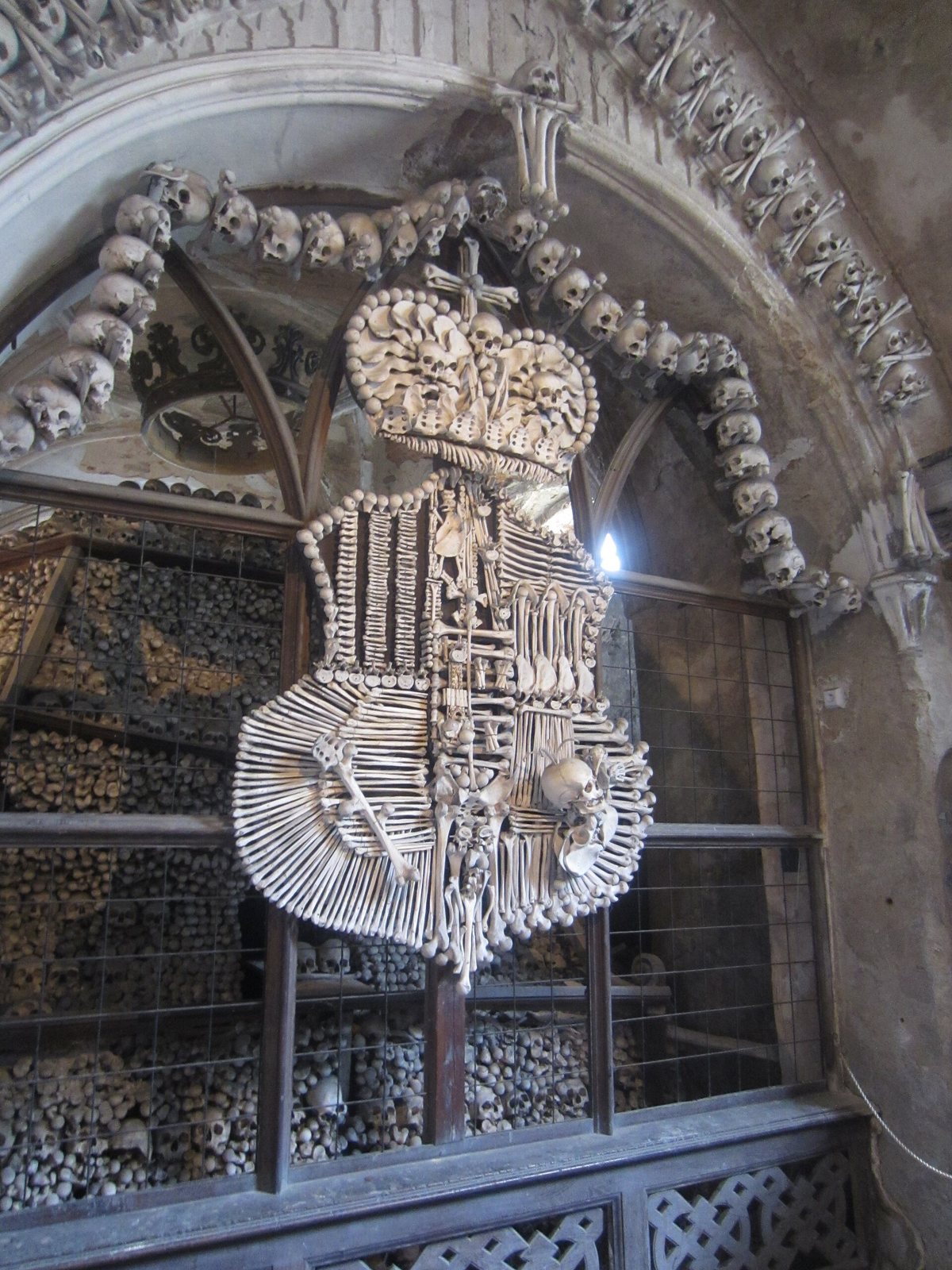
The documented sequence starts in the early 18th century, when Jan Blažej Santini-Aichel repaired the church and is credited with the first major bone-decoration concept. In 1783 Emperor Joseph II dissolved the monastery, and the Schwarzenberg family took over as patrons of the church and ossuary. Their 19th-century reconstruction and reorganization of the bone decoration was completed by František Rint, whom the family invited, in 1870. That is the decoration most people see today.
What you see inside
The features most closely tied to Rint's work are:
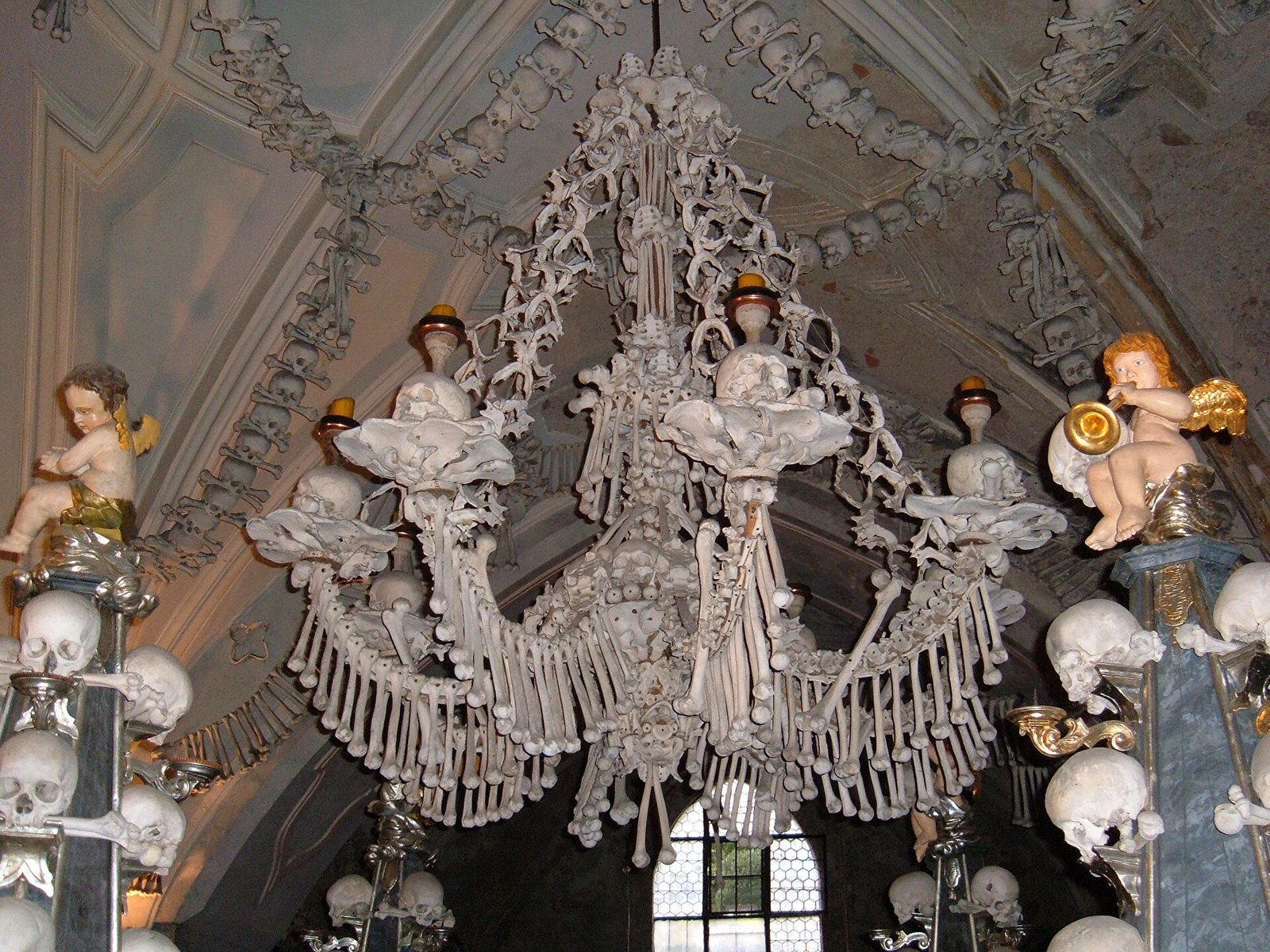
- The central chandelier made of bones.
- The Schwarzenberg family coat of arms, formed from human bones.
- Hanging garlands of bone.
- Large bell-shaped piles, or pyramids, of bones.
- Rint's signature, made of bones, near the entrance.
The official history credits Rint specifically with the chandelier, the coat of arms and the garlands. CzechTourism's description adds crosses, chalices and a monstrance to the list of bone arrangements. So, the famous chandelier is not medieval at all. It is a 19th-century design made from much older remains.
How many people, and what it all means
The figure depends on who is counting. The official visitor regulations describe the site as the resting place of approximately 60,000 people. CzechTourism's description uses approximately 40,000, Wikimedia Commons captions commonly give 40,000 to 70,000, and a 2023 radiocarbon study published in the journal *Radiocarbon* estimates about 50,000 individuals. These are estimates of people, not counts of bones. The remains came from many graves over several centuries, were mixed together and are now built into pyramids and decorations, so the safest wording is "tens of thousands."
The meaning is not a mystery either. An ossuary has no single universal symbolism, but at Sedlec the Sedlec institution connects the skeletal decoration with *memento mori*, the Christian reminder that every person dies, and with the hope of resurrection. It presents the lower chapel as a place of remembrance and expectation, not a death cult. The dead are equal there, and they wait together.
Tap or hover a row to highlight it.
| Source | Estimate of people |
|---|---|
| SourceSedlec official visitor regulations | Estimate of peopleApproximately 60,000 (estimate) |
| SourceCzechTourism | Estimate of peopleApproximately 40,000 (estimate) |
| Source2023 radiocarbon study in Radiocarbon | Estimate of peopleAbout 50,000 (estimate) |
| SourceWikimedia Commons captions | Estimate of people40,000 to 70,000 (estimate) |
Restoration and UNESCO
The building has needed care. Restoration began in 2014 after the structure had leaned nearly half a metre from vertical and heavy humidity had begun to damage the lower chapel, the masonry, the plaster and the bone decorations. The Roman Catholic Parish of Kutná Hora-Sedlec is the sole investor in the programme, and the work is phased so the ossuary can stay open.
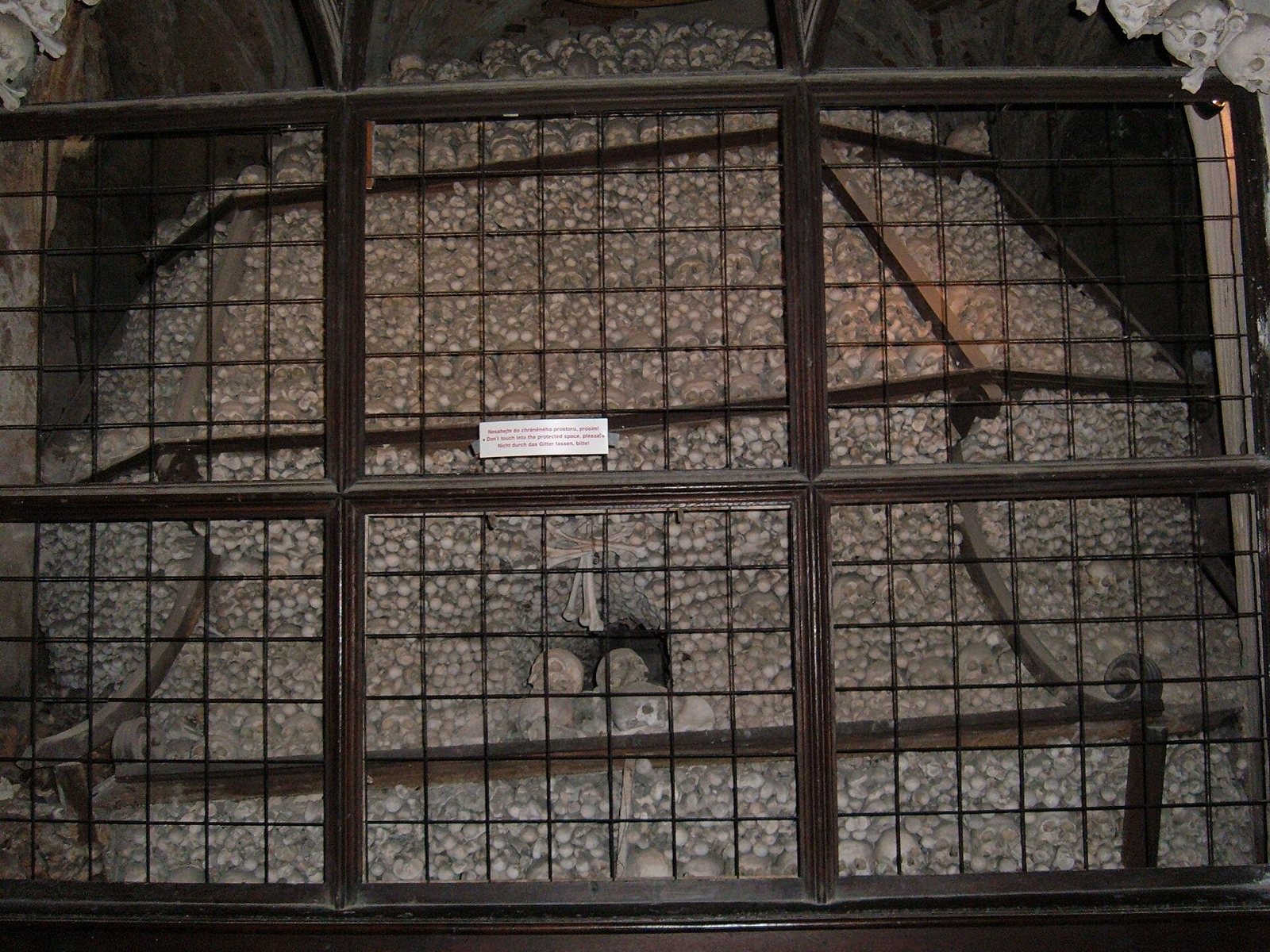
In 2024 the work included structural underpinning, repairs to vaults and floors, restoration of Santini-Aichel's stucco, and the northwest bone pyramid, which was completed in June 2024. In 2025 the parish invested more than CZK 13 million, bringing the total since 2014 to CZK 136 million. The southwest pyramid was reassembled that year, and an archaeological survey uncovered three complete Baroque-period burials. The official site says the restoration will continue at least until 2030.
Kutná Hora's historic centre, with the Church of St Barbara and the Cathedral of Our Lady at Sedlec, was inscribed on the UNESCO World Heritage List in 1995. The listing names the former Cistercian monastery church at Sedlec as part of the property. The ossuary belongs to the same church complex, although the listing title names the cathedral and does not list the ossuary separately.
Visiting
On October 5, 2026, the official Sedlec site gave the following details. The address is Zámecká 279, Kutná Hora-Sedlec. Sedlec Area tickets cover the lower and upper chapels of the Cemetery Church of All Saints and the nearby Cathedral of the Assumption of Our Lady and St. John the Baptist. Adult admission was 220 CZK, seniors and students 150 CZK, and children and disabled visitors 80 CZK. Hours were 9 AM to 6 PM from April through September, 9 AM to 5 PM in March and October, and 9 AM to 4 PM from November through February, and the ossuary closes on December 24. The visit to the lower chapel is limited to 30 minutes, and a timed ticket for a specific date is recommended because capacity is limited.
The ossuary is a cemetery and a church, and the rules say so. Photography is prohibited throughout the church, visitors may not touch the bones, eat, drink, smoke or bring animals, and respectful clothing is required. Since October 1, 2025, both chapels have been reachable only by stairs during reconstruction, and barrier-free access is unavailable while the works continue. Prices, hours and access change, so confirm everything on sedlec.info before you plan a trip.
Frequently asked questions
Are the bones in the Sedlec Ossuary real?
Yes, they are real human remains. They come mainly from medieval residents of Kutná Hora and the surrounding area whose graves were exhumed, and the Sedlec institution describes them as people buried in a Christian cemetery.
Why was the Sedlec Ossuary built?
It was built to give bones from an overcrowded cemetery a respectful resting place. The lower chapel of the 14th-century Cemetery Church of All Saints held the exhumed remains, while the upper chapel was used for commemorative services.
Is the Sedlec Ossuary worth visiting?
It suits anyone drawn to medieval burial customs, Catholic *memento mori* traditions or the story of a bone chapel, as long as they come ready for a small, self-guided sacred space. The lower-chapel visit is limited to 30 minutes, photography is prohibited, and timed tickets are recommended.
What does an ossuary symbolize?
There is no single universal meaning, but at Sedlec an ossuary stands for both practical reburial and Christian reflection on mortality. The Sedlec institution links the decoration with *memento mori*, the equality of the dead and the belief that they await resurrection.
How many people are buried in the Sedlec Ossuary?
Estimates run from about 40,000 to 70,000 people. The official visitor regulations say approximately 60,000, and a 2023 radiocarbon study gives about 50,000, so "tens of thousands" is the safest wording.
Sedlec Ossuary quiz
Answer every question to check.
Where to go next
Sedlec is one of several famous bone places. The ossuary in Paris holds remains moved from the city's cemeteries, the friars' chapels of the Capuchin Crypt in Rome arrange bones into walls and arches, and ossuaries around the world goes further afield. The Christian idea behind Sedlec has a long tradition of its own, explained in skulls in Christianity and in the guide to memento mori. For something to wear, our Memento Mori skull tee borrows the same idea.