

No. 016
The Paris Catacombs: Why Millions of Bones Lie Under the City
The bones under Paris came from the city's own cemeteries. By the 1780s the oldest burial grounds, above all the Cimetière des Innocents in the Les Halles district, were so crowded and unhealthy that Paris closed them and moved the dead to a safer place. That place was a set of abandoned limestone quarries south of the city. The first transfers ran from 1785 to 1787, the quarries were consecrated as the Paris Municipal Ossuary on April 7, 1786, and the famous walls of skulls and thigh bones came decades later.
So, the Catacombs are not an ancient tomb and not a mass grave from a single disaster. They are a municipal ossuary, a storage place for the remains of several million Parisians, set inside a small corner of a much larger quarry network. Each part of that story has a date and a name attached, and it starts with the stone.
The quarries under the city
Paris is built on limestone, and for centuries the city built itself out of it. According to the official Catacombes de Paris history, Lutetian limestone was cut for Parisian buildings from Antiquity through the Middle Ages, and the stone went into churches, the Louvre and the city walls. As the surface beds ran low, quarrying moved underground, following the deeper layers.
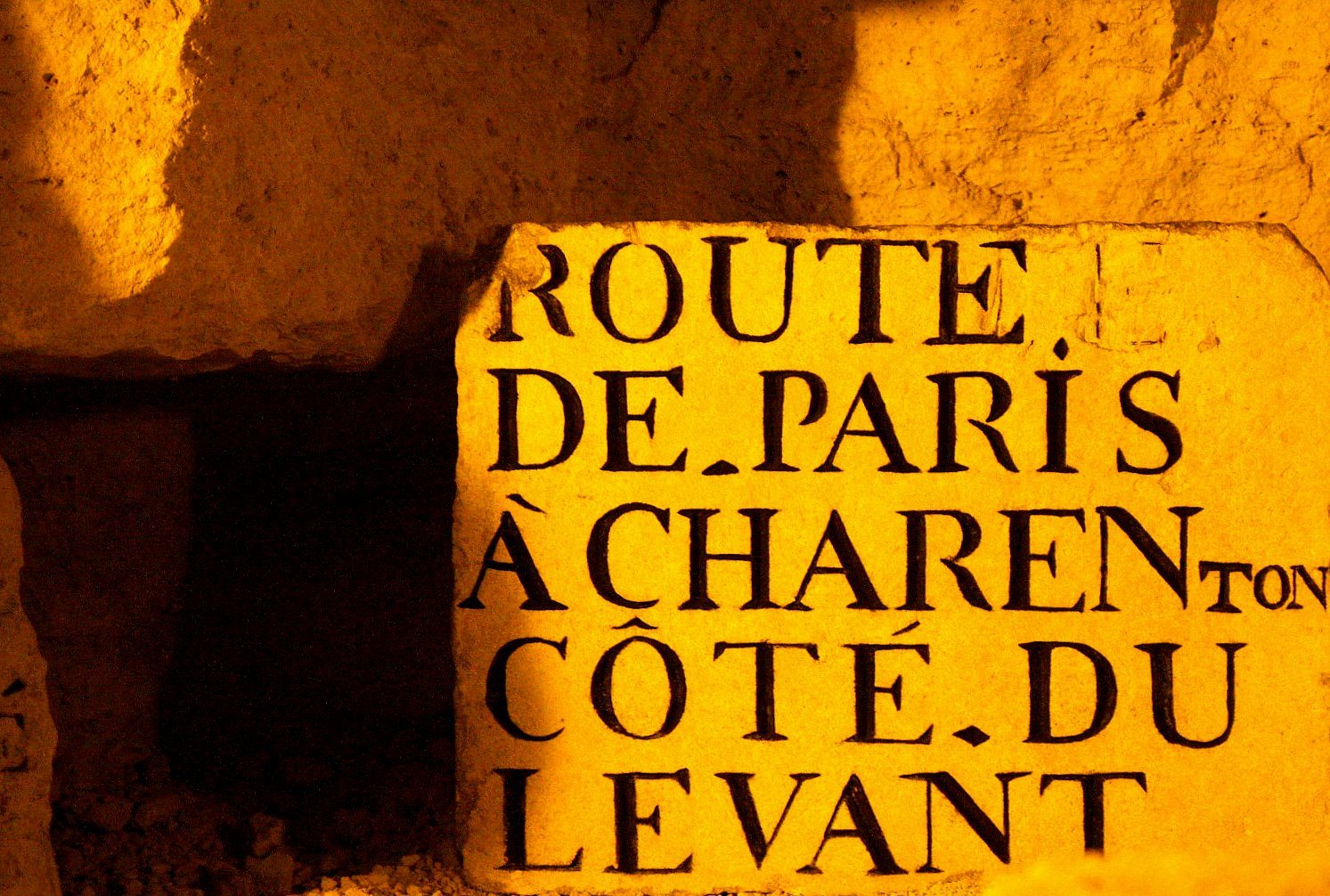
Older methods were poorly regulated. Some galleries removed nearly all the supporting stone and relied on dry-stone pillars, retaining walls and backfill to hold up the ceiling. The ground above held for a long time, and then it did not. A severe collapse in 1774 at what is now rue Denfert-Rochereau swallowed 300 metres of ground, and it focused official attention on the empty spaces beneath the streets.
The response came in two steps. On September 15, 1776, Louis XVI prohibited extraction beneath public roads. On April 4, 1777, he created the Department of General Quarry Inspection to map and stabilize the underground workings. The quarries stretched beneath roughly 800 hectares, and the official site is careful to separate two things that people often blur together: the Catacombs proper, which is the ossuary, and the far wider quarry network.
Why Paris emptied its cemeteries
The Cimetière des Innocents had served Paris for nearly ten centuries before it closed in 1780. Overcrowding and the public-health problems that came with it made the old system of parish burial unsafe. The city needed somewhere for the remains, and the stabilized quarries of Tombe-Issoire, beneath the plain of Montrouge, sat outside the capital's boundary at the time.
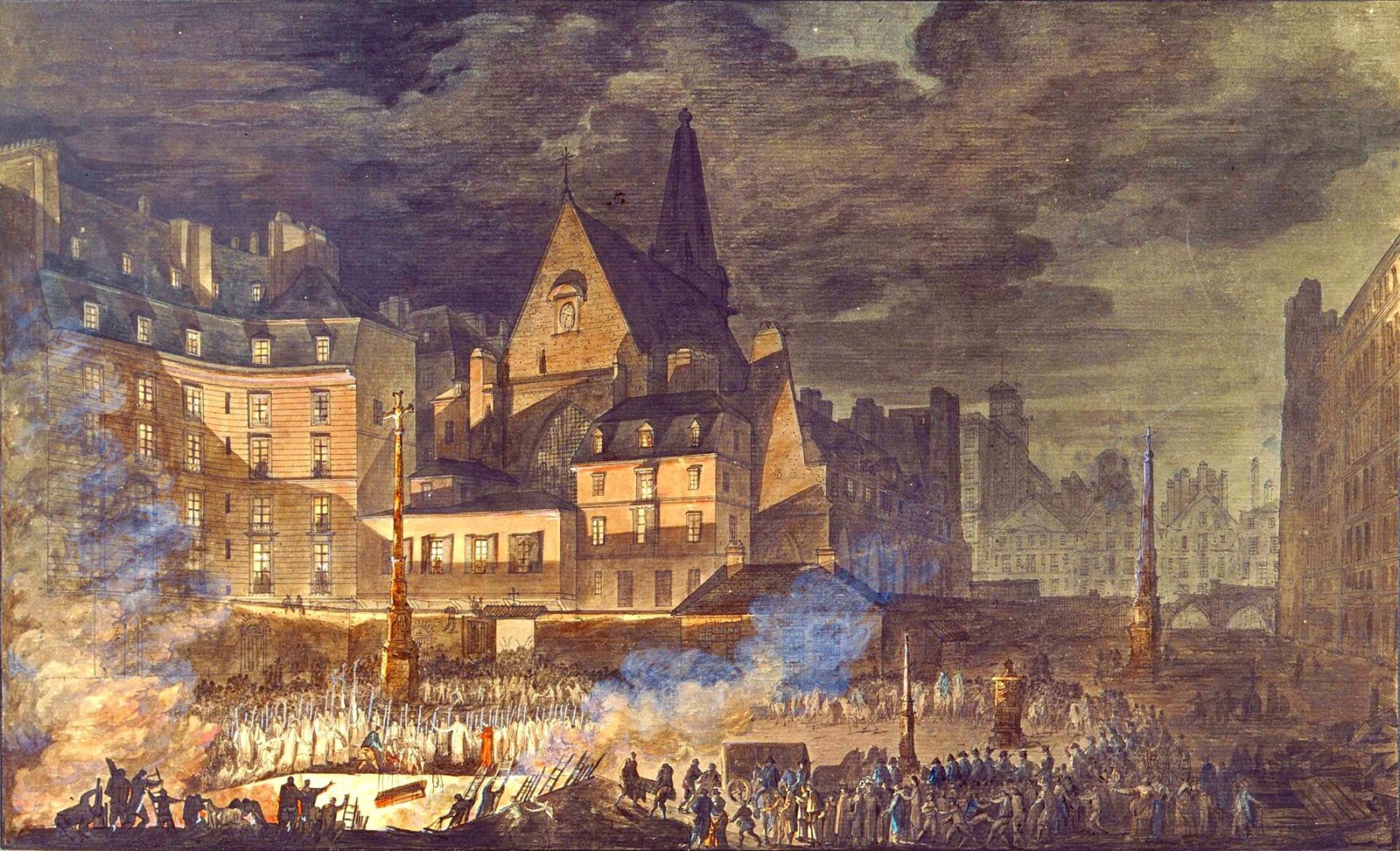
The first evacuations concerned the Saints-Innocents cemetery. Tombs, common graves and the charnel house were emptied between 1785 and 1787. Officials expected hostile reactions from parts of the Parisian population and from the Church, so the bones were carried at night. They were tipped down two quarry wells and then spread through the galleries by quarry workers. Charles-Axel Guillaumot, an inspector in the quarry service, prepared the site and organized the transfers.
It did not stop there. Transfers continued after the French Revolution until 1814, resumed in 1840, and carried on through the rebuilding of Paris under Louis-Philippe and Haussmann. The official chronology gives 1860 as the date of the last deposits tied to Haussmann's works.
The Paris Catacombs from 1774 to 2004
Tap or hover a step to follow the order.
1774
Severe collapse at rue Denfert-Rochereau
September 15, 1776
Louis XVI prohibits extraction beneath public roads
April 4, 1777
Department of General Quarry Inspection created
1780
Cimetière des Innocents closes
1785 to 1787
First bone transfers
April 7, 1786
Quarries consecrated as the Paris Municipal Ossuary
1809
Public opening
1810 to 1814
Héricart de Thury rearranges the ossuary
1840
Transfers resume
1860
Last deposits tied to Haussmann's works
2004
Police come across an unauthorized cinema in the wider quarries
From a heap of bones to a monument
At first there was no design at all. The bones were thrown into the shafts in a disorderly mass. The ossuary opened to the public by appointment in 1809, and between 1810 and 1814 the Inspector General of the Quarries, Louis-Étienne Héricart de Thury, reorganized it.
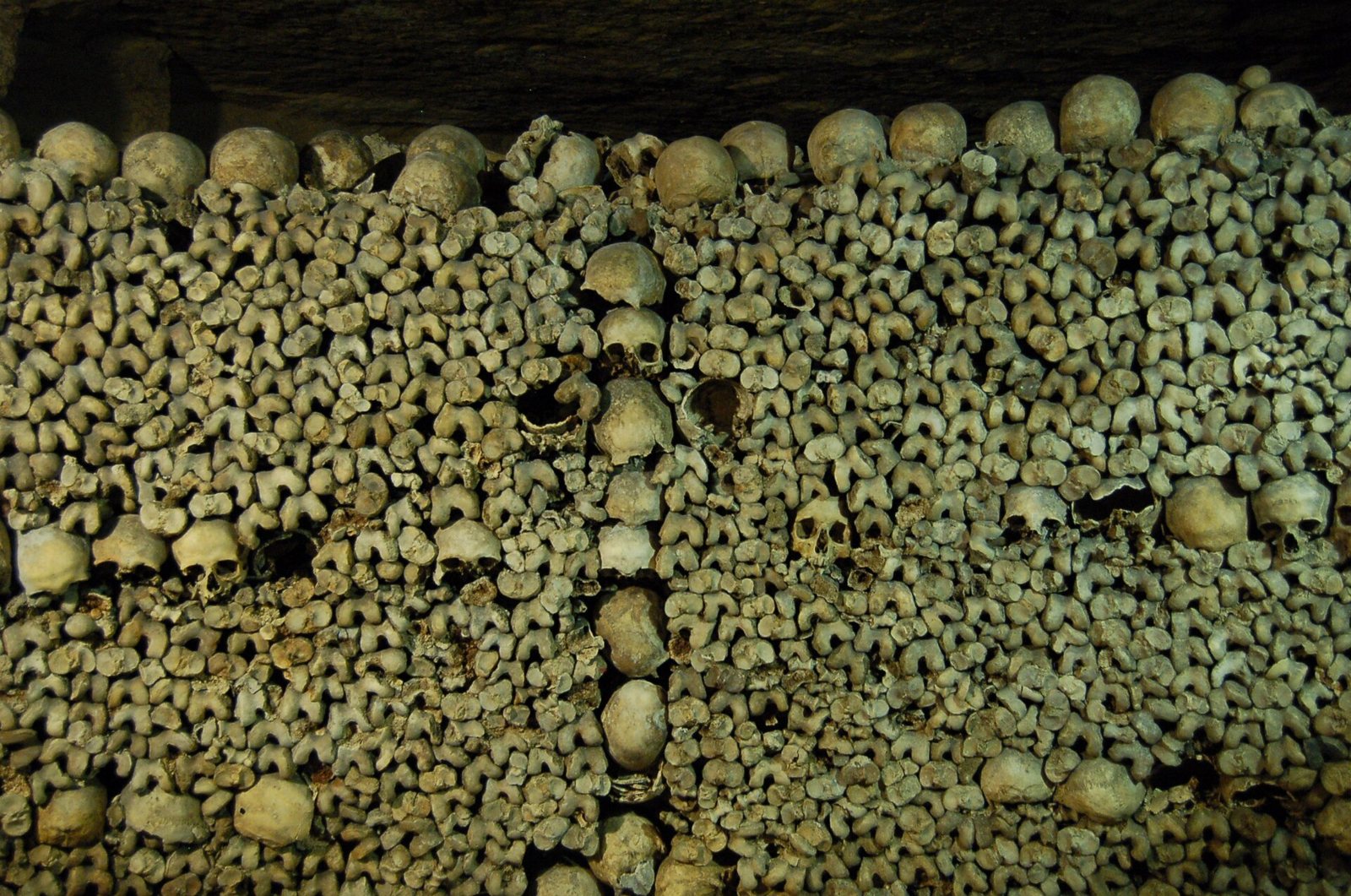
Héricart de Thury arranged the long bones, mostly femurs and tibiae, in front-facing rows that alternate with skulls. The smaller and broken bones went into piles behind that visible face. The walls are called *hagues*, a word borrowed from quarry work, where it names retaining walls built from leftover stone. So, the walls that look like decoration also copy the way the quarrymen held back loose material. It also means the walls do not show who is there. Skulls and long bones are the front of the display, and the rest of the remains sit behind them.
He did not stop at the walls. He added Doric-style pillars, altars, steles, tombs, plaques naming the cemetery each deposit came from, and religious and poetic texts about mortality. The inscription over the entrance reads *Arrête, c'est ici l'empire de la mort*, which means "Stop, this is death's empire." Elsewhere on the route the walls carry quarry inscriptions from an earlier era. One reads "65 G. 1781," and it marks Guillaumot's 65th intervention in 1781, a worksite number and a year carved by an engineer.
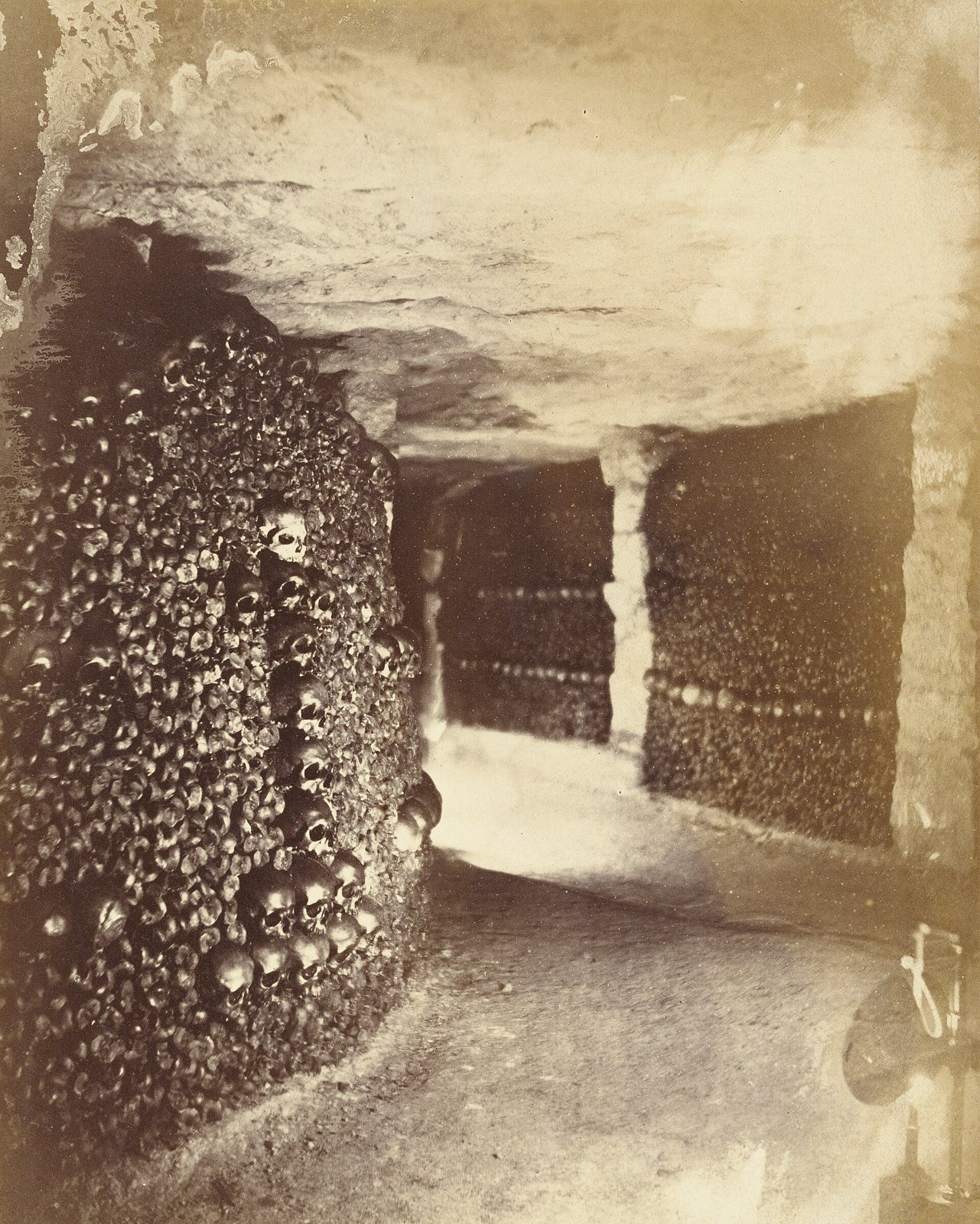
The place has been photographed since the early days of the medium. In 1861 Félix Tournachon, known as Nadar, spent three months experimenting with artificial light underground. Exposure times were long, so mannequins stood in for workers in some of the scenes. Museums now hold his images, and several are openly licensed, including a Nadar view from the Getty collection on Wikimedia Commons.
How many people are there
No exact number exists. The Catacombes de Paris site generally describes the ossuary as holding the remains of "several million Parisians." The City of Paris educational booklet is more specific and gives approximately six million. In 2024 Le Monde quoted the Catacombs administrator Isabelle Knafou with a range of roughly three to six million people.
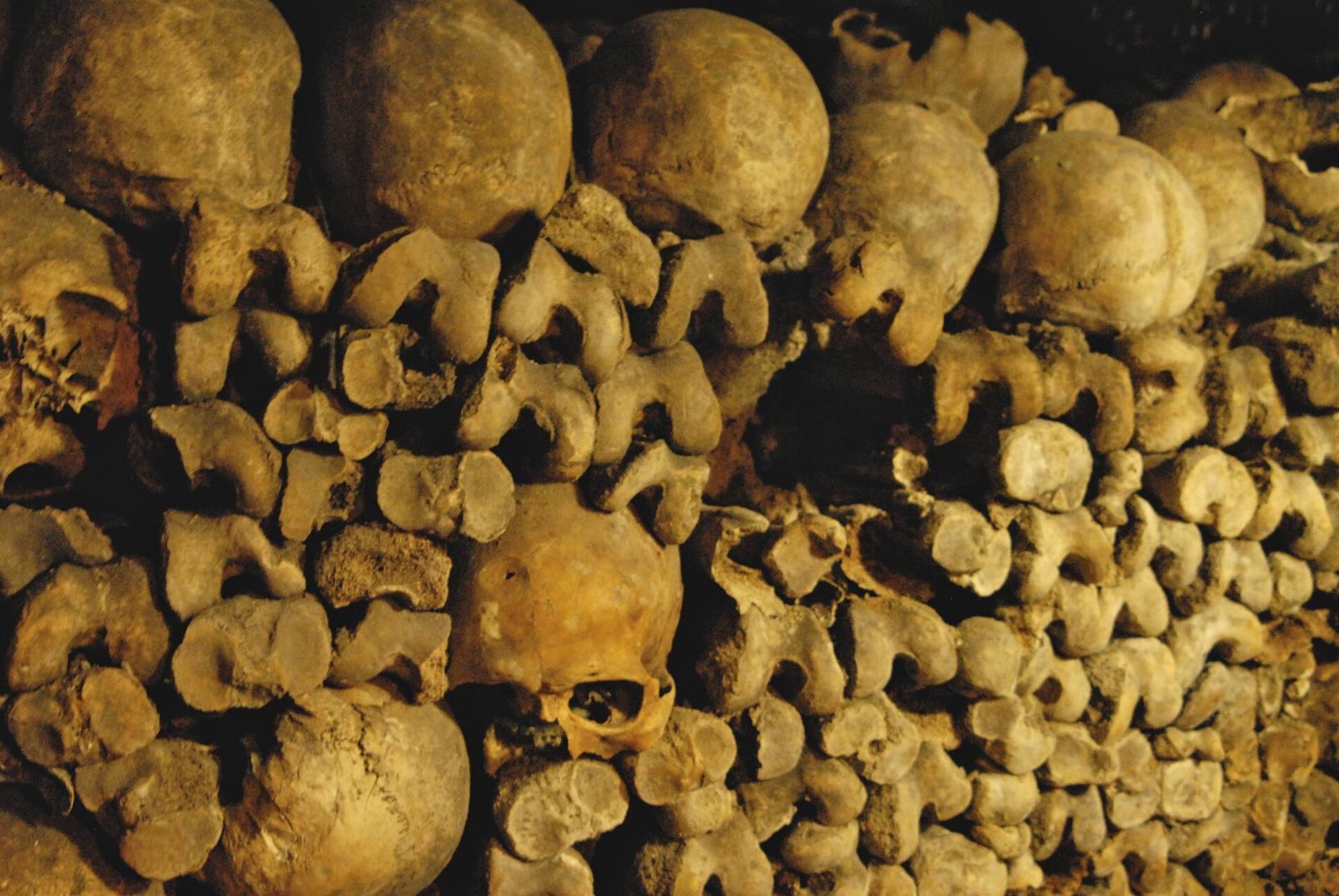
The reason for the spread is simple. The remains came from many cemeteries over several periods, moved in bulk, tipped down shafts and later arranged into walls. No one counted skeletons one by one, and the official materials do not identify individuals. The honest wording is "the remains of several million Parisians," with "approximately six million" attributed to the educational booklet.
Tap or hover a row to highlight it.
| Measure | Figure |
|---|---|
| MeasureRoute length | Figure1.5 km |
| MeasureDepth | FigureAbout 20 m |
| MeasureSteps | Figure131 down and 112 up |
| MeasureTemperature | FigureAbout 14°C |
| MeasureVisitors at once | FigureUp to 200 |
| MeasureRemains | FigureSeveral million Parisians; approximately six million in the City of Paris educational booklet |
| MeasureWider quarry network | FigureAbout 280 km of galleries, per the French Interior Ministry's June 5, 2025 Senate response |
The official route today
The public entrance is at 1 avenue du Colonel Henri Rol-Tanguy, 75014 Paris. The route is 1.5 kilometres, takes about an hour and runs roughly 20 metres underground. Visitors descend 131 steps and climb 112 on the way out, and the temperature stays around 14°C. The route is not accessible to wheelchair users or anyone who needs step-free access, and the site admits no more than 200 visitors at a time.
The rules reflect what the place is. Visitors may not touch the bones, eat or drink, bring alcohol or animals, or use a tripod. Private photography without flash is allowed. Suitcases and large bags are not permitted. The official site also warns that theft or attempted theft of remains will be prosecuted, citing article 225-17 of the French Penal Code on the violation or desecration of tombs, which it lists with a penalty of one year in prison and a fine of 15,000 euros.
On October 5, 2026, the official site listed opening hours of Tuesday to Sunday, 9:45 to 20:30, with last admission at 19:30, and a full ticket price of €31, with reduced and child rates below that and free entry for ages 0 to 7. Booking guidance on the official pages varies: one page strongly recommends timed online booking, and another says online booking is required seven days in advance. Hours, prices and booking rules change, so confirm them on catacombes.paris.fr before you plan anything.
The tunnels beyond the museum
The official route is a small, managed section of a much larger underground world. The French Ministry of the Interior said in a Senate response published June 5, 2025, that the Paris quarry network holds about 280 kilometres of galleries. The Catacombs ossuary is only a part of it.
The ministry also states that access outside the official route has been formally prohibited since a prefectural order of November 2, 1955, because of the risks of getting lost, cave-ins and falls into shafts. It describes police patrols, the sealing of access points and rescue operations, and it reports 342 citations in 2024 for violating the order. Since November 2024 the standard fine has been €135. The straightforward way in is the official entrance.
Still, people have always been curious about the rest. Cataphiles, as news reports call the underground enthusiasts who wander the closed quarries, have a long and well-documented presence. The best-known story dates to 2004, when Paris police came across an unauthorized cinema in a cavern of about 400 square metres, roughly 18 metres down, beneath the Palais de Chaillot near the Trocadéro. The Guardian reported a full-sized screen, projection equipment, seating, and a bar and restaurant area with tables and chairs, and nearby a cave with whisky and a pressure cooker. When police returned three days later, the electricity had been cut, the equipment was gone, and someone had left a note that read, "Do not try to find us." The report did not name the people behind it. The cinema sat in the wider quarries and had no connection to the public ossuary.
Frequently asked questions
What is the story behind the Catacombs in Paris?
They are a municipal ossuary created in former limestone quarries to take bones from overcrowded Paris cemeteries. The first transfers ran from 1785 to 1787, the site was consecrated on April 7, 1786, and it opened to the public in 1809.
Why are the bones stacked?
Officials turned a loose heap into an organized ossuary. Under Héricart de Thury, between 1810 and 1814, long bones and skulls were set in front-facing walls that also helped retain the deposits, with smaller and broken bones piled behind.
What did police find in the Catacombs in 2004?
They came across an unauthorized cinema, bar and restaurant in a cavern beneath the Palais de Chaillot, with a screen, projection equipment and seating. It was in the wider quarries, not the public ossuary.
How much of the underground network can visitors see?
The public route is a small managed section of a much larger quarry network of about 280 kilometres of galleries, so the Catacombs and the quarries should not be treated as one place. Only the official 1.5 kilometre route is open to visitors.
Is it legal to enter the Paris Catacombs?
Yes, through the official entrance and under the official conditions. Touching the bones is not allowed, and the French Interior Ministry says that access to the wider quarries outside the route is prohibited under the 1955 order.
Paris Catacombs quiz
Answer every question to check.
Where to go next
The Paris ossuary belongs to a larger tradition of bone places that ask the visitor to think about death. The chapel of skulls and bone chandeliers at Sedlec and the friars' chapels in the Capuchin Crypt in Rome are two close companions, and ossuaries around the world maps others. The idea behind them has a name in art and philosophy, memento mori, and the old European image of the dead leading the living is the subject of the danse macabre. Our Memento Mori skull tee takes its name from the same Latin phrase.