

No. 126
Mixquic Day of the Dead: What Happens in San Andrés Mixquic, Day by Day
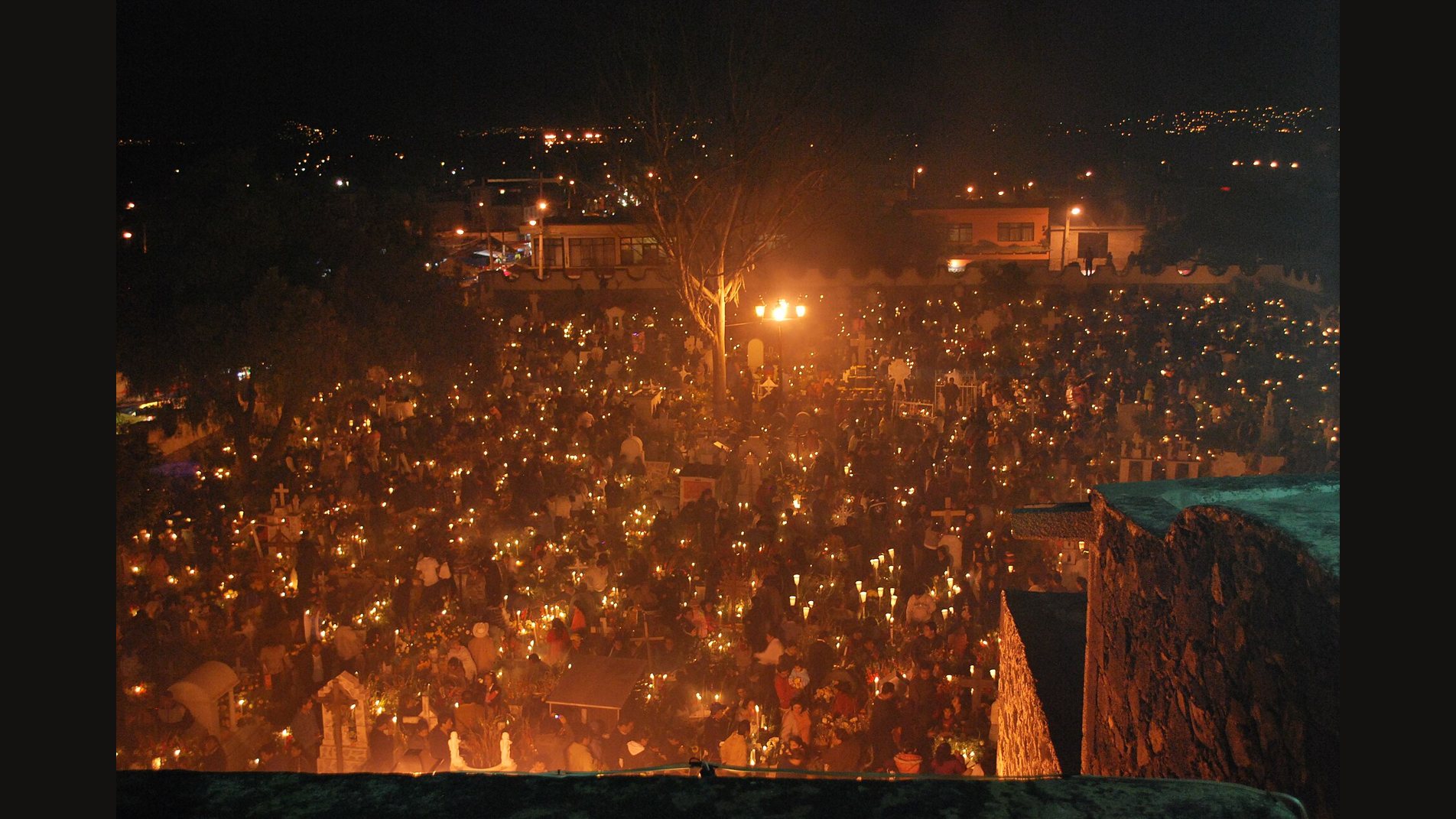
In San Andrés Mixquic, a town of Nahua roots in the Tláhuac borough of southeastern Mexico City, Día de Muertos unfolds over several days. Families welcome the souls of children on October 31 and the souls of adults on November 1. On the night of November 2 they gather at the cemetery beside the church of San Andrés Apóstol for La Alumbrada, when thousands of candles light the family graves.
The Mexico City government's 2026 guide lists the public celebration in Mixquic from October 31 to November 2, 2026. The families' own cycle starts much earlier, on September 29, with the Llamado a las Ánimas, the call to the souls.
Each day has its own guests, its own flowers and its own sound of bells, and the city asks visitors to keep a few simple courtesies among the families' graves.
Where Mixquic is, and where the name comes from
San Andrés Mixquic is one of Tláhuac's seven original settlements, close to the border with the State of Mexico. The city's page on Mixquic describes it as an island settlement that was part of the chinampa system of the former Lake Chalco. The name comes from the Nahuatl word *mizquitl*, and the city gives its meaning as "place of mezquites."
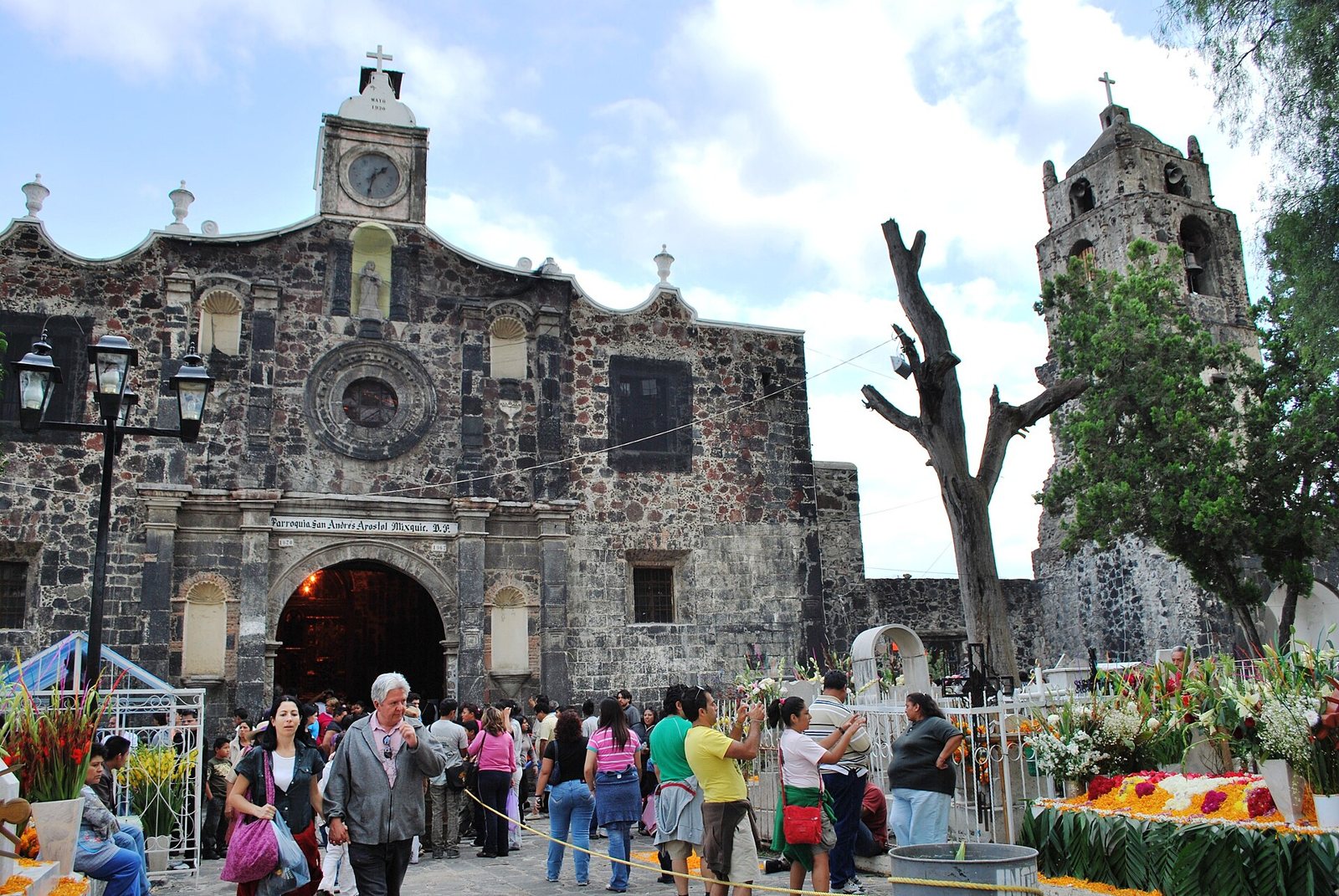
The town's history runs deep. Its pre-Hispanic past includes Chichimeca, Chalca and Cuitlahuaca peoples, and it was later conquered by Xochimilco and then by Tenochtitlan. The Augustinians built the present church and monastery over an earlier ceremonial center. The city speaks of a worldview with more than 500 years of history in Mixquic, while older local history, as the Tláhuac borough tells it, places the island settlement there by the 11th or 12th century.
That long history is part of why the town's Día de Muertos is so closely tied to its cemetery, its church and its families. The celebration described here belongs to Mixquic. Other towns keep other dates and other customs, and our story on Day of the Dead by region follows several of them.
The days, from September 29 to November 2
Mixquic's season starts more than a month before the candles. On September 29 comes the Llamado a las Ánimas, when families clean the graves of their relatives and invite the dead to return.
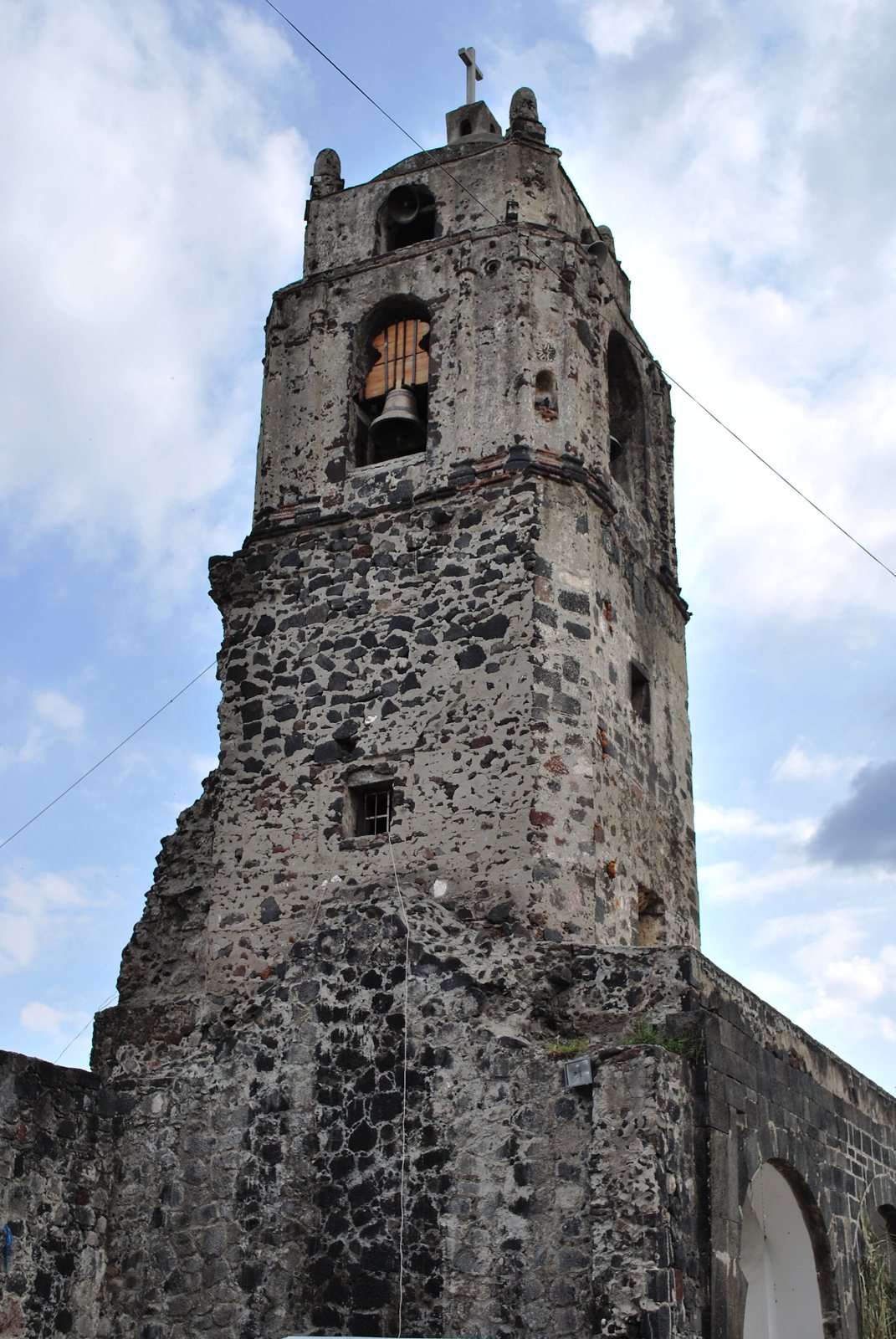
October 31 belongs to the children. The 2026 city guide calls it "El Susurro de los Angelitos," the whisper of the little angels, and describes the children's souls being welcomed with white petals, sweets, fruit, chocolate, toys, copal and candles. The Tláhuac monograph adds an older detail: the church bells ring at noon to announce that the children have arrived. Our story on Día de los Angelitos is a fuller account of how different communities remember children who died.
November 1 brings the adults. Families welcome them with orange cempasúchil petals and the foods they liked best, a moment the 2026 guide names "El gran reencuentro," the great reunion. The monograph lays out the rhythm of that day: a morning breakfast for the children's souls, a midday change as the children leave and the adults arrive, and later prayers for the forgotten souls, the ones who have no one to remember them.
November 2 is the last day. Families share a final breakfast with their dead, prepare food for them to take on the way back, and close the cycle in the cemetery with La Alumbrada.
Mixquic's Día de Muertos calendar
Tap or hover a step to follow the order.
September 29
Llamado a las Ánimas: families clean the graves and invite the dead to return.
October 31
El Susurro de los Angelitos: the children's souls are welcomed with white petals and sweets.
November 1
El gran reencuentro: the adults' souls are welcomed with cempasúchil and their favorite foods, and the Campanero visits homes.
November 2
La Alumbrada: families keep vigil at the graves with candles, prayers and songs.
The Campanero, the bell ringers
One of Mixquic's own customs is the Campanero. Groups go from house to house ringing small bells, pray for the dead at each home and receive food from the family's ofrenda in return. It is an exchange: prayers for the household's dead, and a share of what was set out for them.
The two local records give the timing in different ways. The Tláhuac monograph describes children carrying small bells and visiting homes, with the custom beginning around 7 p.m. The city's Ofrenda Infinita publication describes the Campanero on November 1. If you want to know when the groups will be out in a particular year, local residents are the people to ask.
What a Mixquic ofrenda holds
Every home altar in Mixquic belongs to a family, and what goes on it depends on who is being remembered. Local and official descriptions, gathered in the Tláhuac monograph and the city's 2025 Día de Muertos guide, mention water, salt, candles or cirios (tall church candles), white flowers for the children and cempasúchil for the adults. There is copal or incense, fruit, sweets and toys, and the favorite dishes and drinks of the person remembered.
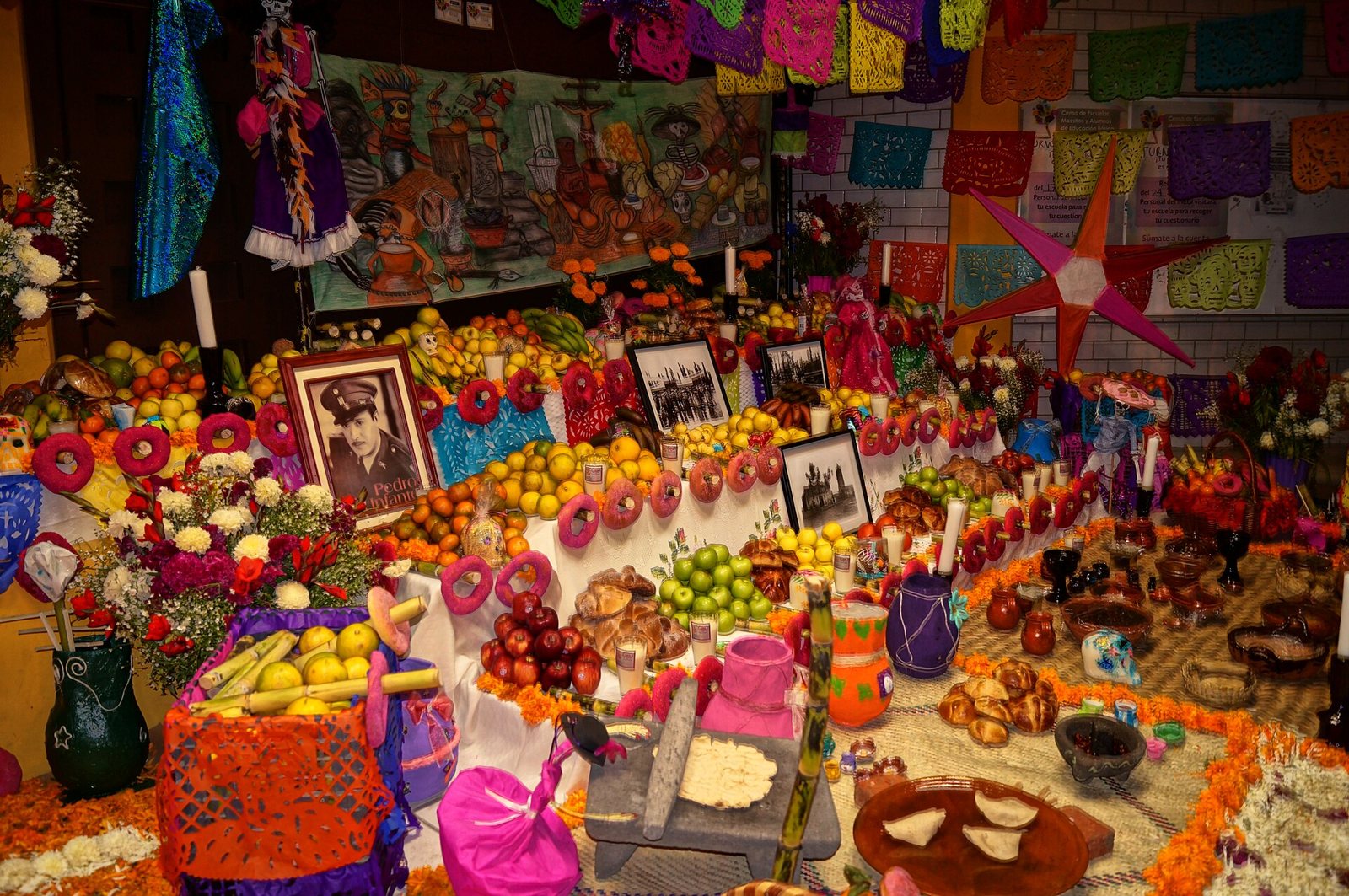
The 2025 guide gives examples of those foods for the adults: mole, tamales, pulque or beer. If the person remembered liked beer, beer goes on the altar. That is the point of the altar, a meal laid for someone the family knew.
The smoke on many of these altars comes from copal, a tree resin burned on charcoal. Our story on copal on the Día de Muertos ofrenda explains what it is and how families use it, and the orange flowers have a story of their own in cempasúchil, the marigold of the dead. If you would like to set up a home altar yourself, see how to make an ofrenda.
La Alumbrada, the night of November 2
On the night of November 2, the cemetery beside the church of San Andrés Apóstol becomes the center of the town. Families have already cleaned and decorated their relatives' graves with candles, flowers, incense and food. As darkness falls, the electric lights are dimmed or switched off, and thousands of candles light the graves.
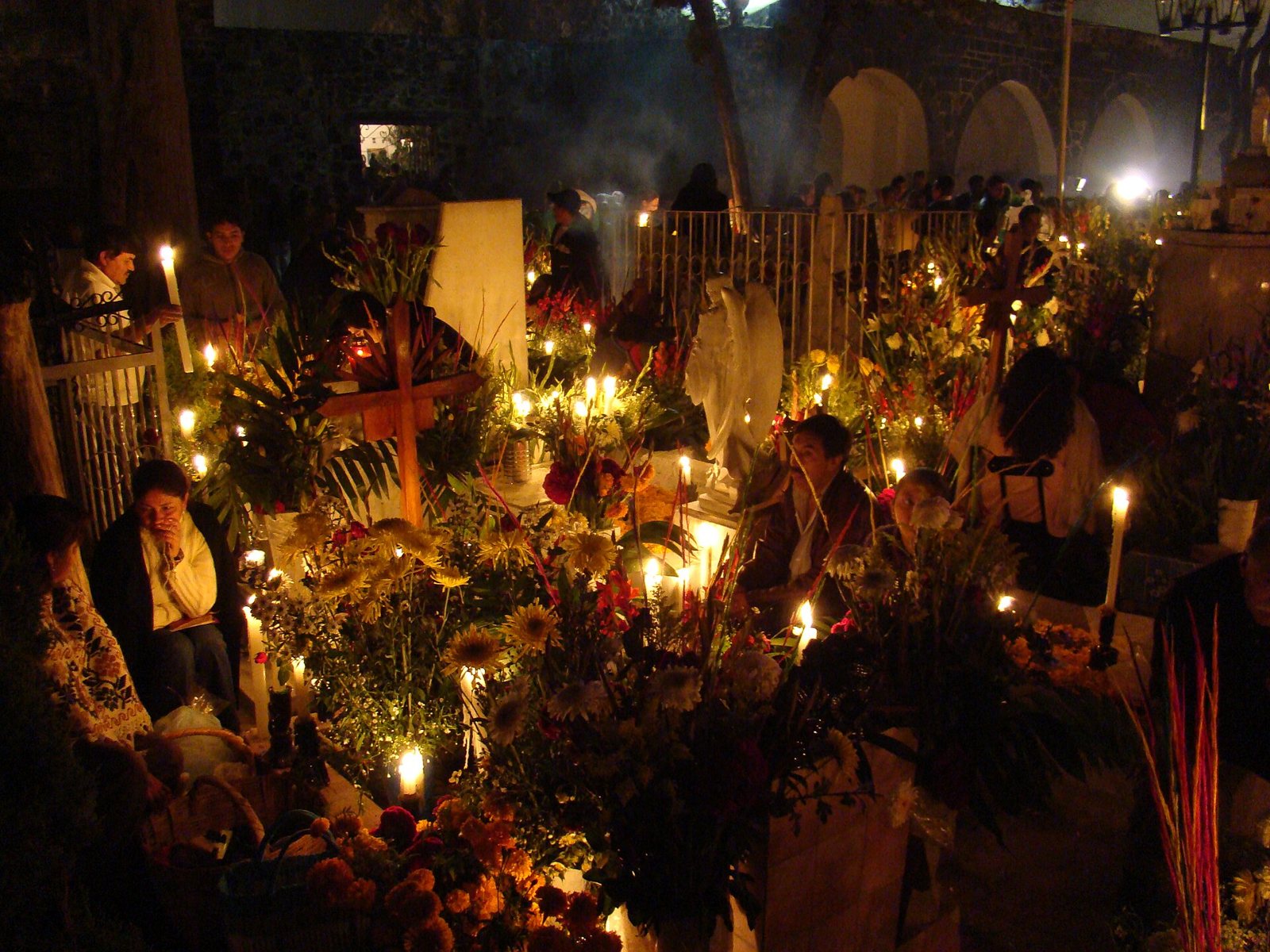
The candles have a purpose. Local explanations describe them as guiding the returning souls and keeping them company as they leave again. The bells traditionally announce the moment to come to the cemetery, and families stay for hours, praying, telling stories and sharing food beside the graves.
Residents interviewed by anthropologist Verónica Zamora Jiménez for an INAH journal article describe La Alumbrada as remembrance and coexistence with the dead, not simply a spectacle. The cemetery itself reflects that. The 2025 city guide describes it as organized around family spaces reused across generations, so a single plot can hold several generations of one family. On this night, the families are keeping company with their own grandparents, parents and children.
For another lakeside town that spends a night with its dead by candlelight, read about the Night of the Dead on Janitzio, in Michoacán.
Visiting Mixquic in 2026
Visitors come to Mixquic for these days, and the Mexico City government publishes guidance for them in its 2026 guide and on its venue pages.
The 2026 guide lists activities in Mixquic from October 31 to November 2, 2026, with La Alumbrada on the night of November 2. It advises arriving hours early because of traffic. In the cemetery, it asks visitors to request permission before taking photographs, to stay quiet during La Alumbrada and never to sit on or step over graves.
The city's venue page gives the town-center address as Plaza Juárez, Los Reyes, Tláhuac, San Andrés Mixquic, 13610 CDMX. The usual route by public transport is Metro Line 12 to the Tláhuac station, then local transport or a taxi; the venue page puts the taxi ride from Metro Tláhuac at a little under 40 minutes. The same page says that most outside visitors cannot enter the cemetery after 10 p.m. on November 2. That limit applies to visitors; families may have their own arrangements.
Plans and access can change from year to year, so confirm current transport and access with the Mexico City or Tláhuac authorities before you travel.
Before you go to Mixquic
Tap a card to bring it forward.
- Arrive hours early: The city's 2026 guide warns of heavy traffic.
- Metro Line 12 to Tláhuac: Then local transport or a taxi, a little under 40 minutes by taxi.
- Ask before photographing: People, graves and family altars belong to the families.
- Keep silent during La Alumbrada: The vigil is a time of prayer and remembrance.
- Do not sit on or step over graves: Each grave is a family's space.
- Confirm access and transport: Check with the Mexico City or Tláhuac authorities before travelling.
The museum and the market
Mixquic has more to see than the cemetery. The Museo Andrés Quintana Roo de Mixquic opened in 1992, and its collection began with archaeological objects donated by local researcher Socorro Bernal Roque. According to the city's museum page, it now holds 279 artifacts from the area, among them objects associated with the Toltec and Teotihuacan cultures, a Chac Mool, clay and stone stamps, a cylindrical serpent and a pre-Hispanic calendar. The museum also has a public library and a cybercenter. The city lists its hours as Tuesday to Sunday, 10 a.m. to 6 p.m., at Avenida Independencia esquina Perú, San Miguel, Tláhuac, 13640 CDMX.
For food, the Mercado Mixquic stands at Canal Seco and 20 de Noviembre, about five minutes on foot from the town center. The city's listing describes it as open all year, with seasonal local foods, and a 2017 study by the UAM counted about 101 vendors there. It is a good place to eat regional food between visits to the church and the cemetery.
How well do you know Mixquic's Día de Muertos?
Answer every question to check.
Questions about Día de Muertos in Mixquic
A few practical answers for anyone planning to be in Mixquic this year.
What day is La Alumbrada in Mixquic?
La Alumbrada takes place on the night of November 2, in the cemetery of San Andrés Mixquic. Bells traditionally call families to the graves, and the city's venue page says most outside visitors cannot enter the cemetery after 10 p.m. that night.
What can you do in Mixquic on November 1?
On November 1 families welcome the adult souls with cempasúchil and their favorite foods, and the Campanero groups visit homes to pray and receive food, as Ofrenda Infinita describes. Visitors can also see the Museo Andrés Quintana Roo, open Tuesday to Sunday, and eat at the Mercado Mixquic near the town center.
How do you get to Mixquic and back at night?
The usual route is Metro Line 12 to Tláhuac, then local transport or a taxi to Mixquic, a little under 40 minutes by taxi according to the city. The city's 2026 guide advises arriving hours early because of traffic, so plan your return before you set out and confirm current transport with the Mexico City or Tláhuac authorities.
What are the cemetery hours during Día de Muertos?
The city's venue page says most outside visitors cannot enter the cemetery after 10 p.m. on November 2. Hours for other days are set locally, so confirm them with the Tláhuac borough before you go.
Can visitors go into the cemetery, and is it too touristy?
Yes, visitors are welcome at La Alumbrada, as guests of the families who keep vigil there, and the city's 2026 guide asks them to request permission before photographs, stay quiet and never sit on or step over graves. Residents describe the night as remembrance and coexistence with the dead, so the experience depends a great deal on visitors keeping to that spirit.
Where to go next
Mixquic is one town's way of keeping these days. For the wider tradition, start with our guide to Día de Muertos, and for how the customs change from place to place, read Day of the Dead by region. The children's day has its own story in Día de los Angelitos, and if you are setting up an altar at home, how to make an ofrenda and our story on copal cover the steps and the smoke.
Terms in this story
Tap a term to see what it means.
Tláhuac. A borough in southeastern Mexico City; San Andrés Mixquic is one of its seven original settlements.
---