

No. 094
Janitzio Day of the Dead: The Night of the Dead on Lake Pátzcuaro
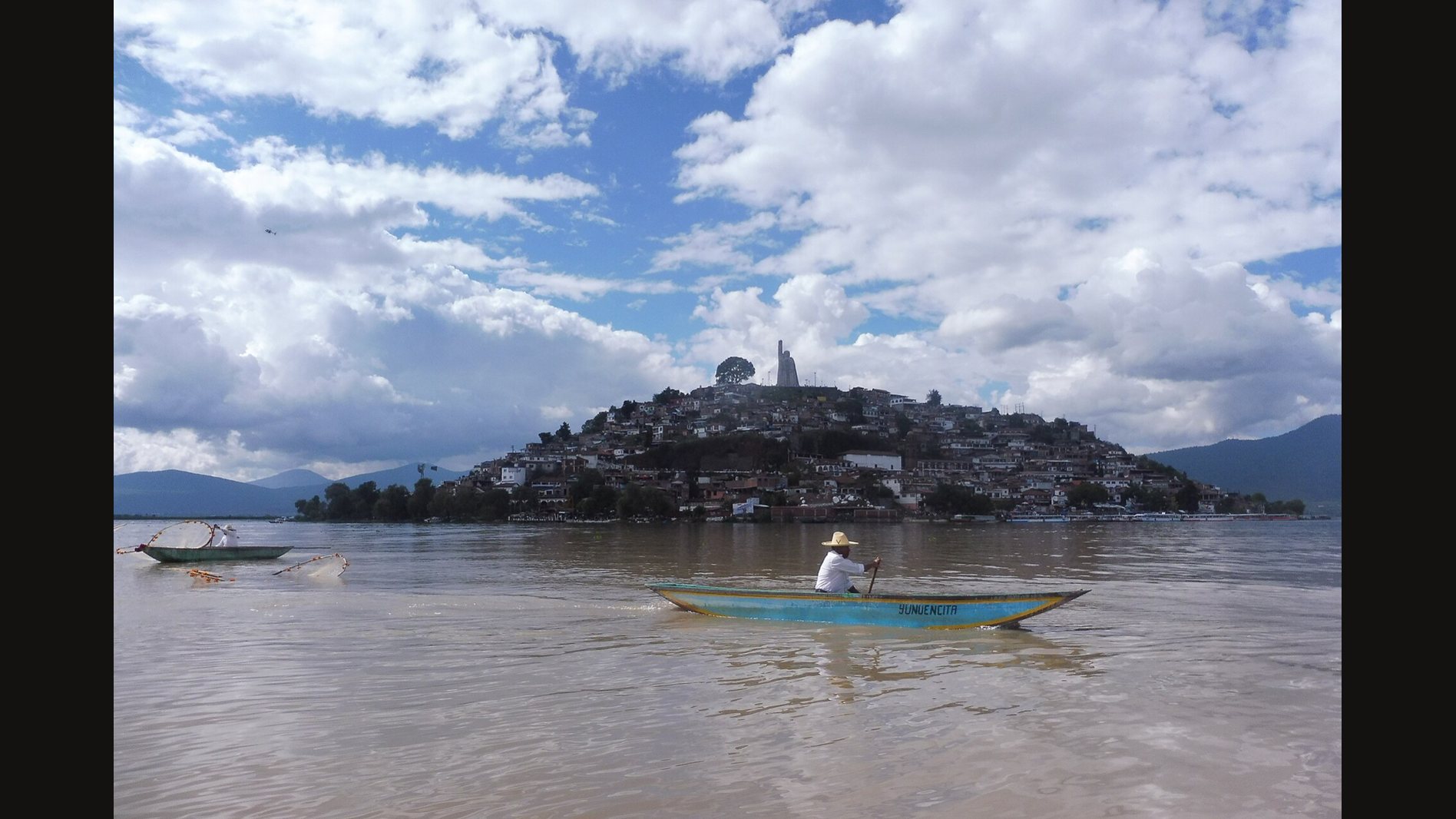
On Janitzio, a Purépecha island community in Lake Pátzcuaro, Michoacán, families spend the night of November 1 into November 2 in the cemetery with their dead. They bring flowers, candles and food to the graves, pray and sing, and stay through the night to receive and remember the relatives they have lost. The community calls the observance Animecha Kejtzitakua, which Michoacán's Secretaría de Cultura translates as "Fiesta de Ánimas." In Spanish it is Noche de Muertos, the Night of the Dead.
If you are planning to go this year, one thing is different. EL PAÍS reported on October 22, 2026 that the Michoacán government is closing the Janitzio cemetery to the general public on November 1 and 2, 2026, because of rehabilitation work after a landslip beside it. Local families keep their access for their rituals, and visitors can look on from a controlled panoramic walkway.
The night itself is unchanged: the vigil, the ofrendas, the fishermen with their butterfly nets on the lake, and the boats from Pátzcuaro carrying people across to the island.
What Animecha Kejtzitakua means on Janitzio
Animecha Kejtzitakua is a religious and cultural observance for receiving and remembering deceased relatives. That is how the Secretaría de Cultura de Michoacán describes it in its "Vive la Noche de Muertos" podcast bulletin, presented by Ireri Huacuz and Francisco Bautista. Families prepare two kinds of altar: private altars at home and ofrendas at the graves in the cemetery. Both belong to the same night of welcome.
Janitzio is an island in the lake, and the State of Michoacán's page on the community describes it as Purépecha, with fishing, crafts and tourism among its ways of life. The night belongs to this island and to particular lakeside communities around Lake Pátzcuaro. It is their way of keeping Día de Muertos, not a single custom shared in the same form across Mexico, and not something every Purépecha town does identically.
UNAM researcher Sandra Irais Romero Gallardo describes the celebration as two things at once: a local ritual and a major gathering of visitors during the short period each year when it takes place. Both are true on the island every November, and both shape what a visitor sees.
The night in the cemetery, November 1 into November 2
The principal observance runs from November 1 to November 2. Families carry flowers, candles, food and other gifts for the dead to the graves, and then they stay. Through the night they pray, sing, remember their relatives and wait for them to return, as Michoacán's Secretaría de Cultura describes it. The candles light the whole cemetery and mark each grave as a place of welcome and remembrance.
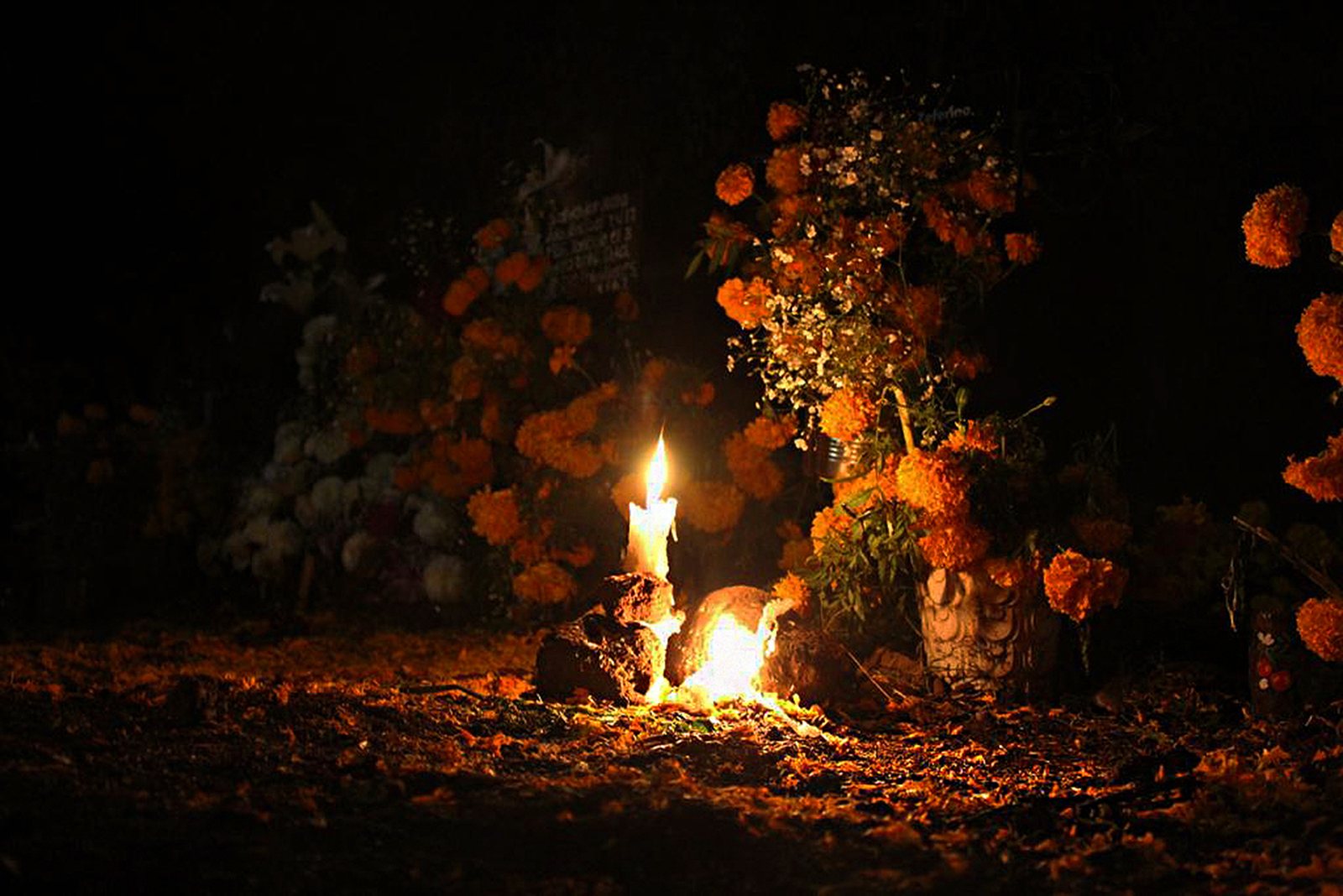
That candlelight is the image most people know from photographs of Janitzio, and it is easy to forget that every flame belongs to a family. INAH's Janitzio collection, the photo archive of Mexico's national institute of anthropology and history, holds historical photographs of the vigil: women seated at graves, women sleeping beside the graves of their relatives, and people gathered together in the cemetery through the Noche de Muertos. They show families keeping company with their dead through the night.
Our guide to Day of the Dead by region introduces Janitzio residents in their own words, along with the other communities around the lake.
Ofrendas at home and at the graves
An ofrenda on Janitzio welcomes and remembers members of the family who have died. The Secretaría de Cultura de Michoacán describes both the home altars and the cemetery ofrendas as part of Animecha Kejtzitakua, set with flowers, fruit, copal (a fragrant resin burned as incense), bread and sugar figures, and with foods including pozole, atole and tamales. Together those things make a place of family connection for the night.
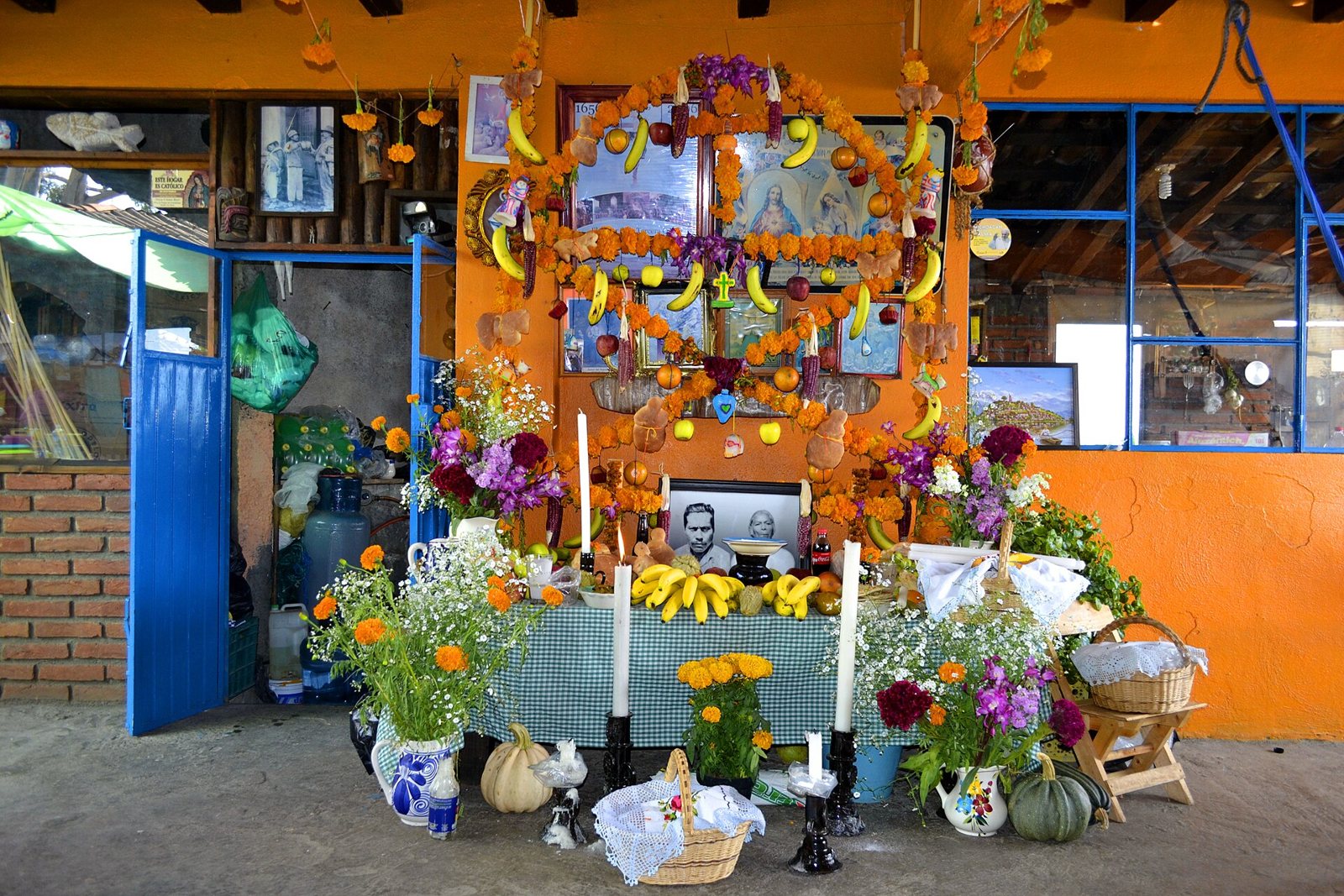
Yellow flowers are part of it, the seasonal color of Día de Muertos, and the story of the cempasúchil marigold explains why. The bread of the season has its own history in pan de muerto, and the sugar figures belong to the same sweet tradition as sugar skulls. On the island, as everywhere, the details change from one household to the next. A family sets out what its own dead loved, and no two altars are exactly alike.
If the Janitzio altars make you want to build one at home, the guide to how to make an ofrenda walks through the elements families use and how to keep candles safe.
The butterfly nets on Lake Pátzcuaro
The butterfly-shaped fishing net is a longstanding symbol of Janitzio's fishing community. During the Noche de Muertos period, fishermen may appear on the water with illuminated nets, and EL PAÍS and official accounts describe these demonstrations for visitors.
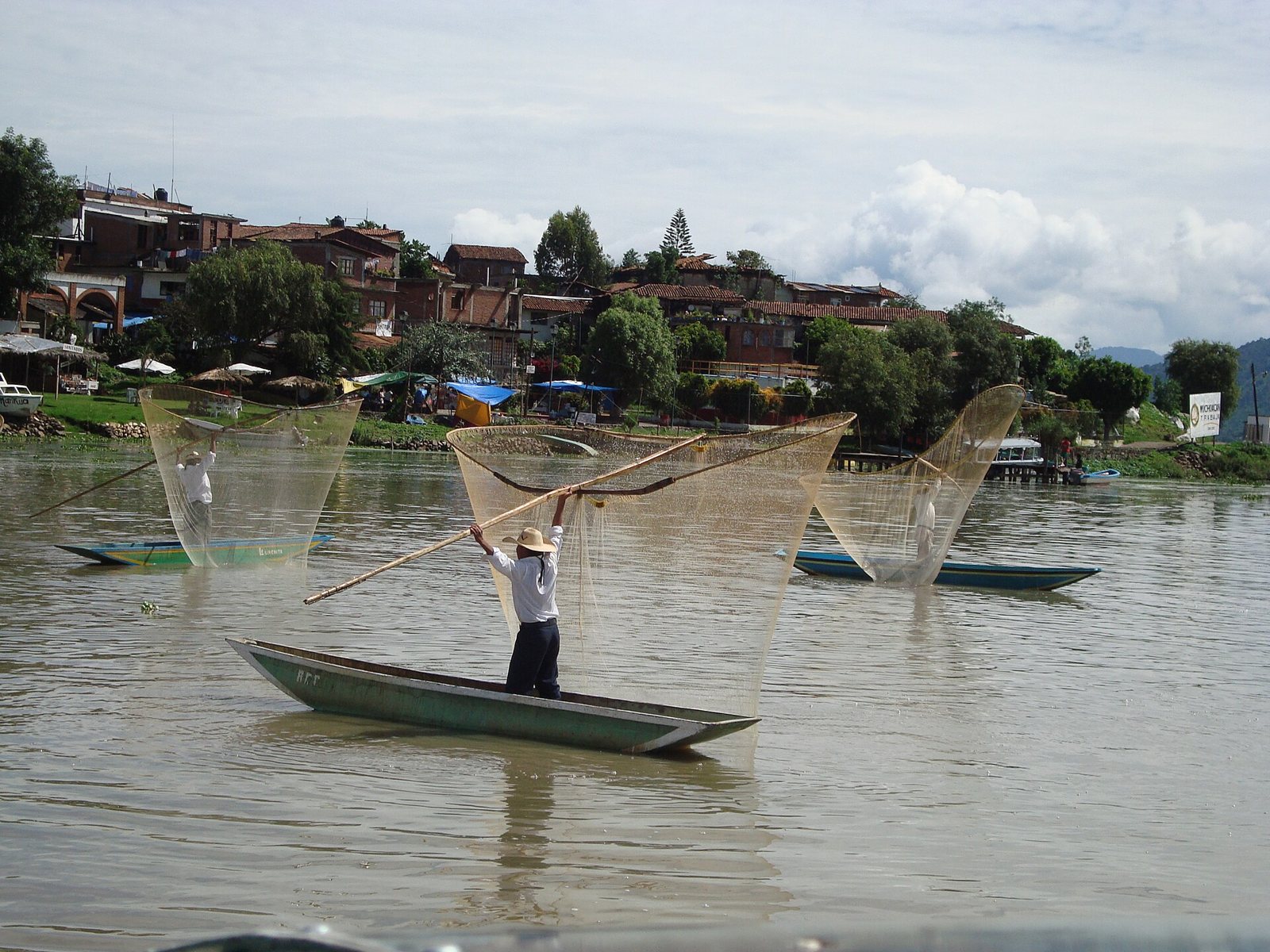
The nets are more than a seasonal image. The State of Michoacán lists fishing, including fishing for charal and pescado blanco, among the island's continuing activities. The men on the lake with their butterfly nets come from a working fishing life, and the demonstration is that life shown to guests.
How a family vigil became famous
Tourism has changed the scale of the night and how it is shown to the world. Romero Gallardo's UNAM study names Janitzio as a place where local ritual meets "tanatoturismo," tourism centered on death and its observances. That is a fair description of an island where families keep a private vigil while visitors arrive by boat in large numbers.
The fame has a history. EL PAÍS, reporting on UNAM research, says that tourism promotion during the government of Lázaro Cárdenas and the 1948 film *Maclovia* helped turn the night vigil into a widely publicized visual event. A night that began as families keeping vigil became a scene known far beyond the lake, and the families still come for the same reason: to be with their own dead.
Janitzio's Night of the Dead and its visitors
Tap or hover a step to follow the order.
1948
The film Maclovia helps make the Janitzio vigil a widely publicized visual event, according to EL PAÍS.
2023
A report gives a 100-peso round-trip boat fare from Pátzcuaro's Muelle General, with 24-hour service on November 1 and 2.
2025
The Muelle General cooperative again reports 24-hour service and a 100-peso round trip to Janitzio.
2026
General visitors are kept out of the cemetery on November 1 and 2; local families keep access; visitors use a panoramic walkway.
2027
General access to the cemetery is expected to return after restoration.
What is different in 2026
EL PAÍS reported the Michoacán government's decision on October 22, 2026. For November 1 and 2, 2026, the Janitzio cemetery is closed to the general public. The reason is rehabilitation work after a landslip beside the cemetery. Local families keep access so they can hold their rituals at the graves as they always have. Visitors may view the cemetery from a controlled panoramic walkway instead of walking among the graves.
The report describes the restriction as temporary, with general access expected to return in 2027 once the restoration is finished. Arrangements like these can change close to the date, so confirm them with the Michoacán state government's own announcements before you travel.
For the families, this year's vigil is the same night it has always been. For visitors, it means watching from a little farther away, which leaves the cemetery to the people who came to sit with their dead.
How people reach the island, and how to be a good guest
Janitzio is reached by boat. Boats leave from Pátzcuaro's Muelle General and from other embarcaderos around the lake. In 2023, Grupo Marmor reported a Día de Muertos fare of 100 pesos per person for the round trip from the Muelle General, with boats running 24 hours on November 1 and 2. In 2025, Cambio de Michoacán reported the same 100-peso round trip and 24-hour service from the Muelle General cooperative. Fares and schedules change, so confirm the current fare and operating hours at the Muelle General ticket counter before you board.
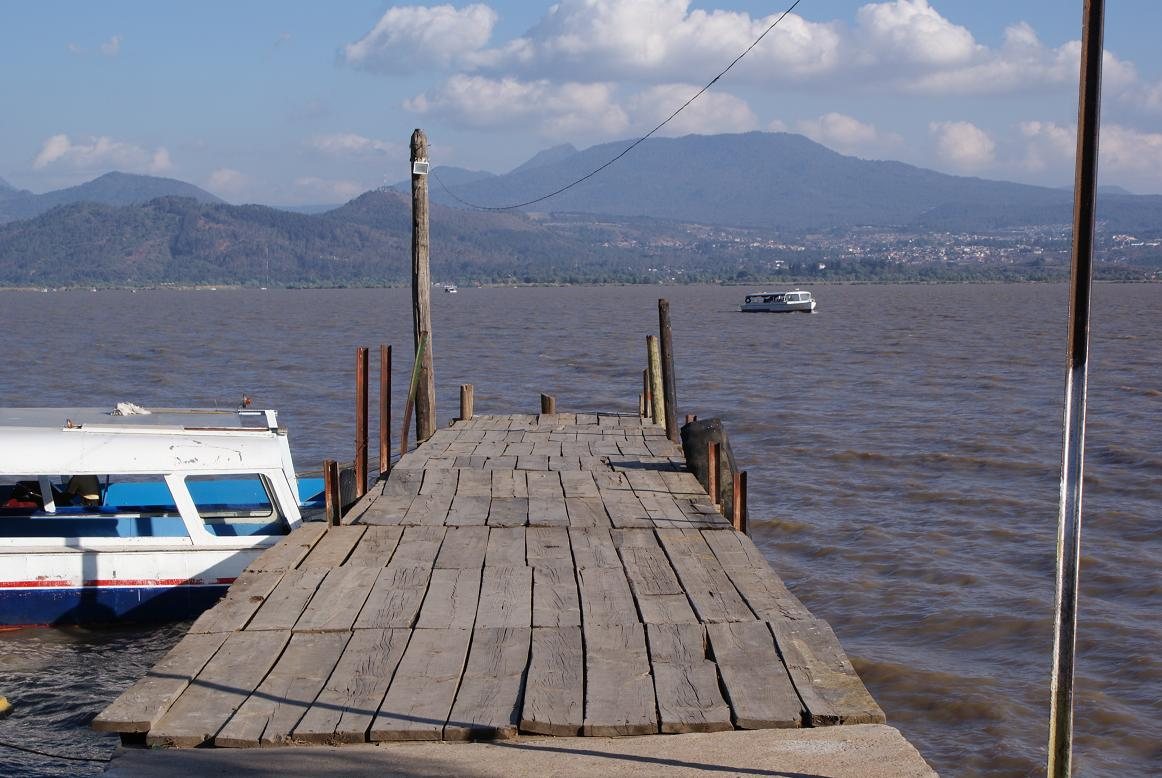
These two nights draw a major gathering of visitors, as Romero Gallardo notes, so expect crowds. Janitzio is also not the only place on the lake that keeps the night; the Michoacán Secretaría de Cultura lists several lakeside communities, and our regional guide names some of them.
Whatever the year, the cemetery is a place of family remembrance first, and good manners there follow from that.
Visiting Janitzio with respect
Tap a card to bring it forward.
- Family remembrance: Treat the cemetery as the place where families are with their dead.
- Crowd instructions: Follow the directions of the people managing the crowds.
- Restricted areas: Stay out of them; in 2026, stay outside the cemetery and use the panoramic walkway.
- Prayers and meals: Do not interrupt families while they pray or eat.
- Photographs: Ask before photographing people, graves or ofrendas.
- Boat fare: Confirm the current fare and hours at the Muelle General ticket counter.
A quiet presence goes a long way. The people around you are remembering someone, and you are there as their guest.
How well do you know Janitzio's Night of the Dead?
Answer every question to check.
Questions about the Night of the Dead on Janitzio
The dates, the 2026 rule and the boat fare are the practical points most visitors need first.
When is the Night of the Dead on Janitzio?
The principal observance runs from the night of November 1 into November 2, when families keep vigil in the cemetery with candles, prayers, flowers and food. In 2026, the cemetery is closed to general visitors on those dates while local families keep their access, as EL PAÍS reported on October 22, 2026.
Can visitors go into the Janitzio cemetery in 2026?
No, not on November 1 and 2, 2026: EL PAÍS reported that the Michoacán government is closing it to the general public for rehabilitation work after a landslip. Visitors can view the cemetery from a controlled panoramic walkway, and general access is expected to return in 2027. Confirm the arrangements with the state government before you go.
How much does the boat to Janitzio cost?
The most recent reported fare is 100 pesos per person for the round trip from Pátzcuaro's Muelle General, from Cambio de Michoacán in 2025; the same price was reported in 2023. Both years also reported boats running 24 hours on November 1 and 2. Confirm this year's fare and hours at the ticket counter.
What does the Janitzio ofrenda mean?
The ofrenda welcomes and remembers members of the family who have died. Its flowers, candles, food and copal make a place of family connection during the vigil, at home and at the grave.
What goes on a typical ofrenda in Michoacán?
In the lakeside communities of Michoacán, ofrendas may hold yellow flowers, fruit, copal, bread, sugar figures, candles and foods such as pozole, atole and tamales. What goes on each one varies by community and by household, since families set out what their own dead enjoyed.
Where to go next
Janitzio is one island's way of keeping the season. For the holiday as a whole, start with Día de Muertos, and for the other communities of Michoacán, Oaxaca, Mexico City and the Yucatán, read Day of the Dead by region. Children who died are remembered in their own way during these days, in Día de los Angelitos. And for another community's own way of caring for its dead, read about bone cleaning in Pomuch, Campeche.
Terms in this story
Tap a term to see what it means.
Janitzio. A Purépecha island community in Lake Pátzcuaro, Michoacán, known for its all-night cemetery vigil on November 1 and 2.
---