

No. 030
Day of the Dead by Region: How Oaxaca, Michoacán, Mixquic and Yucatán Celebrate
Across Mexico, the heart of Día de Muertos falls on October 31 to November 2, but each place keeps those days in its own way. In Oaxaca's Central Valleys, comparsas and muerteadas fill the streets with music and costumed characters. On the island of Janitzio in Lake Pátzcuaro, Purépecha families spend the night at the cemetery with candles and their relatives' favorite foods. In San Andrés Mixquic, on the edge of Mexico City, the cemetery is lit for the alumbrada on the night of November 2. Maya communities of the Yucatán peninsula keep Hanal Pixán, and in Pomuch, Campeche, some families clean their ancestors' bones. The Huasteca calls its observance Xantolo, Aguascalientes holds a festival for José Guadalupe Posada, and Mexico City now has a giant parade. Inside each region, customs still change from town to town and family to family.
If you grew up with one family's way of keeping the Día de Muertos, what follows is a tour of how other communities do it, with the place, the people and the dates attached to each.
Tap or hover a row to highlight it.
| Place and community | Local name or event | What happens | Dates or period |
|---|---|---|---|
| Place and communityCentral Valley Oaxaca, including San Agustín Etla | Local name or eventComparsas and muerteadas | What happensProcessions, music, costumes, theatrical characters, cemetery and household observances | Dates or periodMainly October 31 to November 2, with some events later |
| Place and communityJanitzio, Michoacán | Local name or eventNoche de Ánimas | What happensPurépecha family food, candles and an all-night cemetery vigil | Dates or periodAround November 1 and 2 |
| Place and communitySan Andrés Mixquic, Mexico City | Local name or eventAlumbrada | What happensGraves cleaned and decorated, then candles and copal lit in the cemetery | Dates or periodNight of November 2 |
| Place and communityPomuch, Campeche | Local name or eventHanal Pixán or Janal Pixan | What happensSome families clean and rewrap ancestral bones, then prepare food for the dead | Dates or periodPreparations in October; principal dates October 31 to November 2 |
| Place and communityAguascalientes city | Local name or eventFestival Cultural de Calaveras | What happensPublic festival honoring José Guadalupe Posada, with art, music, theater and altar contests | Dates or periodBegan in 1995; dates vary each year |
| Place and communityMexico City | Local name or eventGran Desfile de Día de Muertos | What happensCivic parade with catrinas, masks, floats, music and cempasúchil | Dates or periodModern event from the 2010s; dates vary each year |
Oaxaca's Central Valleys: comparsas, muerteadas and three-level altars
Oaxaca is many celebrations at once. In Oaxaca de Juárez and the Central Valley towns around it, household and cemetery observances center on October 31 to November 2, while public events usually start in late October and can run well into November. The state's 2025 program ran from October 25 to November 16, with comparsas, muerteadas, food events and artisan markets. The 2024 city program listed activities from October 26 to November 3, including a traditional convite on November 1, cemetery and altar activities, food and craft fairs, and comparsas.
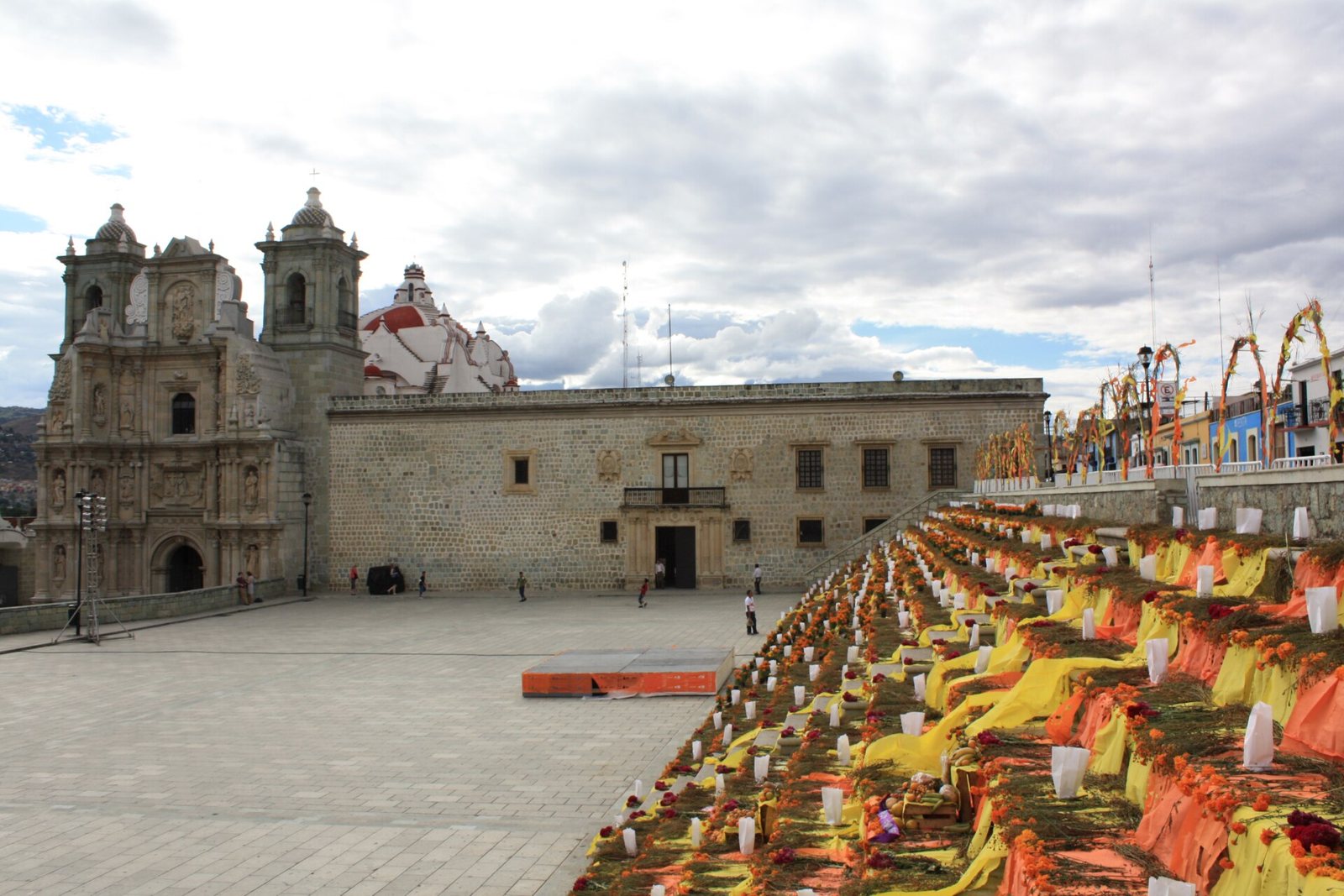
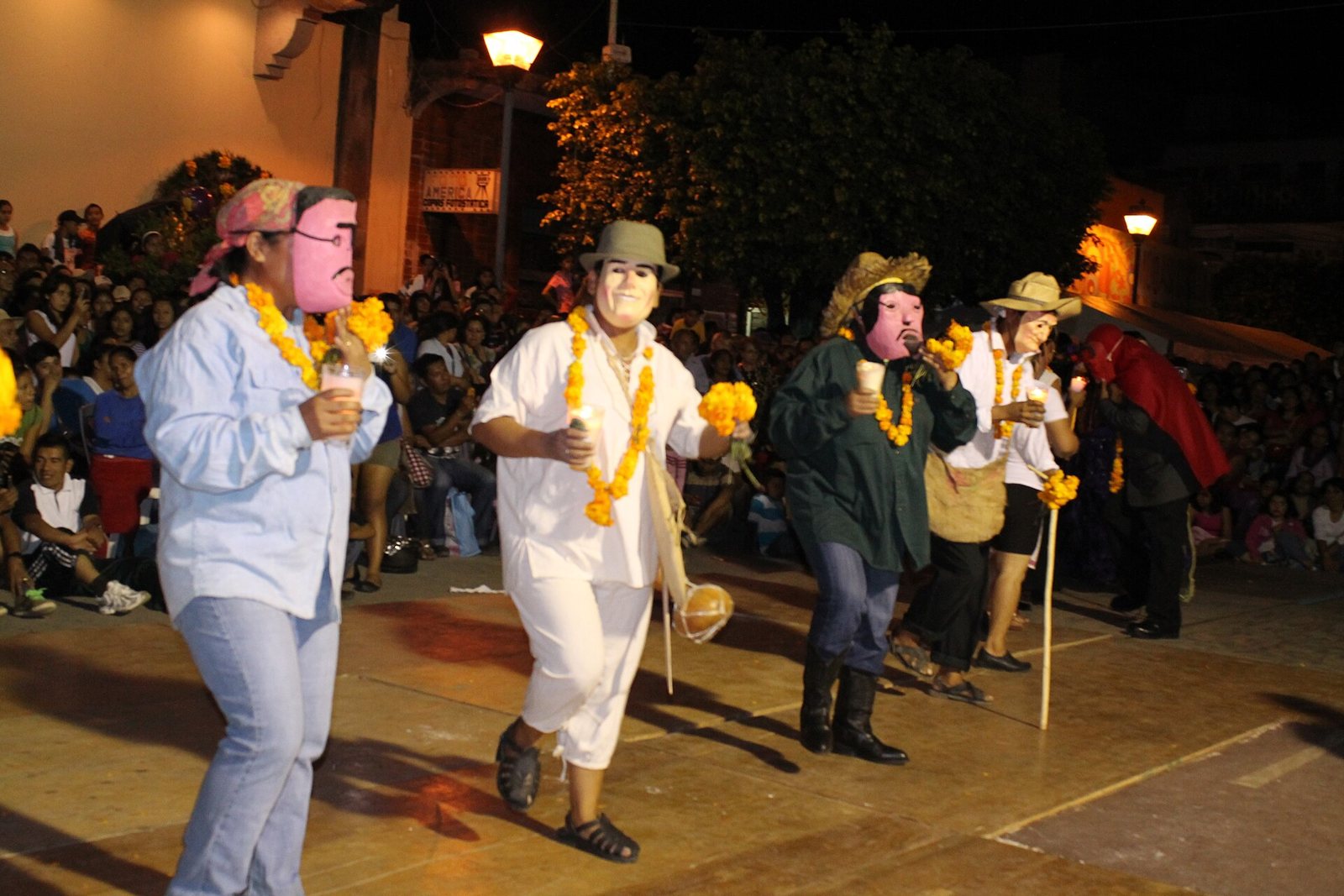
A comparsa is a community procession with music, costumes, dancing and calaveras. A muerteada takes that idea and adds theater. Muerteadas are documented especially in the Etla communities: San Agustín Etla, Soledad Etla, Guadalupe Etla and Santiaguito Etla. The Associated Press described San Agustín Etla's November 1 muerteada as a humorous, theatrical procession with characters such as a dead man, a devil and a spiritist, including a comic scene of bringing the dead man back to life. Music, dancing and visits to homes follow. It is a neighborhood event with its own cast, not a generic parade.
Altars in Oaxaca vary by community. The Museo Nacional de Antropología documented a three-level altar from Ocotlán de Morelos, Oaxaca. Its lowest level held mole, chocolate, mezcal, tamales, fruit and the local bread called "de carita." Saints and virgins stood on the second level, and photographs of the family's dead sat on the third. On November 2, families in Ocotlán received visitors and went to the cemetery with comparsas and traditional bands.
Before any of that, people go to market. The Oaxaca government describes the markets as the place families buy flowers, food, bread, chocolate, mezcal, candles and everything else the altar needs. A 2024 state catalogue of Día de Muertos crafts even included a cartonería piece called "Día de muerto en el mercado," treating the crowded market as part of how a community gets ready. The holiday's sweet bread has its own story; see what pan de muerto means.
Michoacán: the night vigil on Janitzio and Lake Pátzcuaro
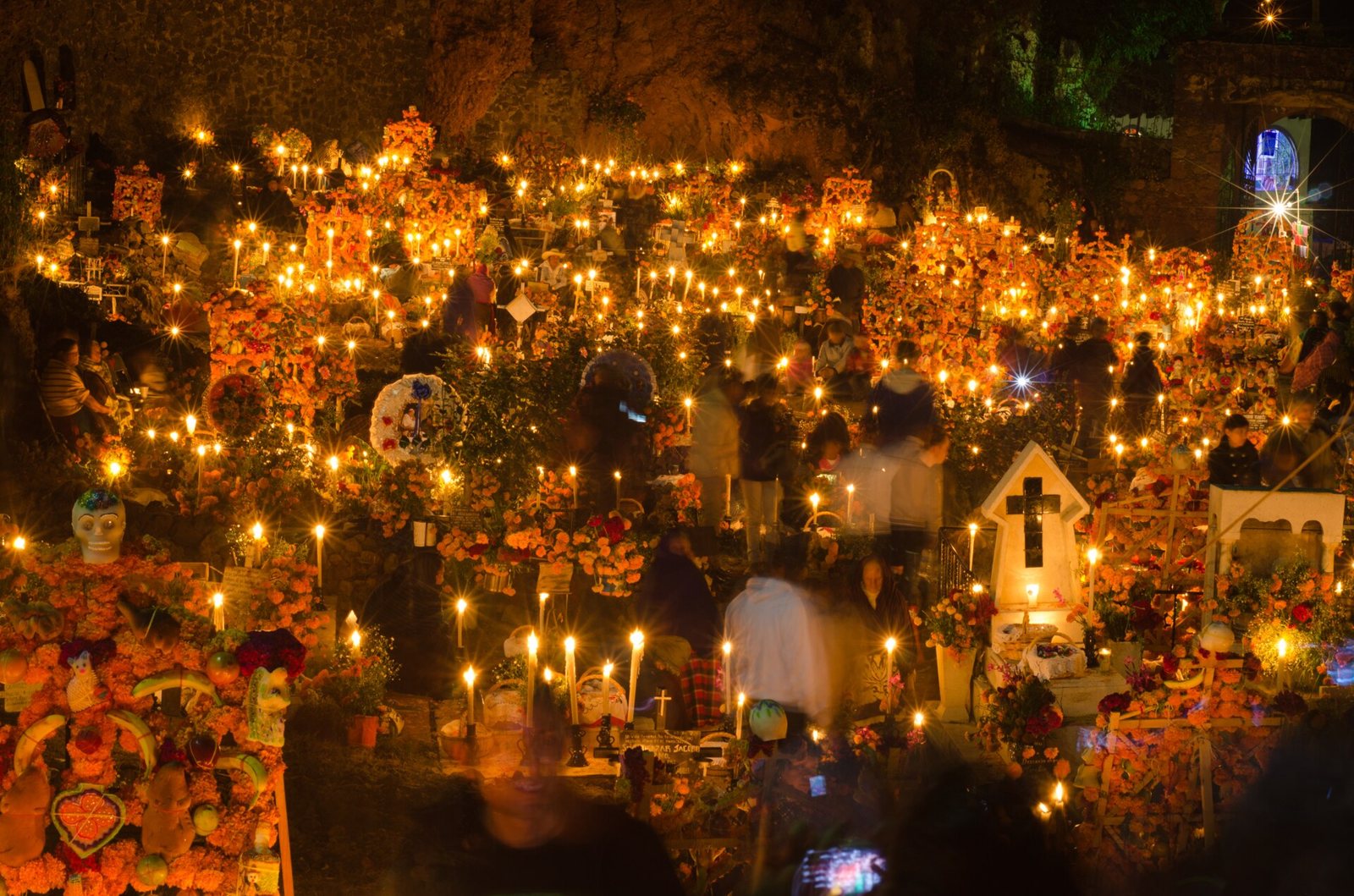
Around Lake Pátzcuaro, the observance is often called Noche de Ánimas or Fiesta de las Ánimas in local and state cultural materials. The Michoacán Culture Secretariat lists celebrations in Pátzcuaro, Janitzio, Pacanda, Erongarícuaro and other lakeside communities, and practice differs from one town and family to the next.
Janitzio is a Purépecha island community, and its vigil is above all a family matter. In 2024 the Secretariat followed Lourdes Trinidad of Janitzio as she prepared tamales, bread and other foods her relatives enjoyed in life, then spent the night at the cemetery with them. Candles and the food she made were set out at the graves for the people she was remembering.
Purépecha singer Juan de la Cruz of Janitzio explained the meaning in words the Secretariat used as its headline: "Nosotros no festejamos la muerte, festejamos la vida", "We don't celebrate death, we celebrate life." He described the dead as returning to the earth, and the night as a continuation of relationships rather than a spectacle about death.
UNESCO, which recognized the Indigenous festivity dedicated to the dead in Mexico, describes it as the temporary return of deceased relatives to the land of the living. Families may mark the route between home and cemetery with flower petals, candles and food. That inscription speaks for Indigenous communities across Mexico in general, so it frames Janitzio's vigil without describing every detail of it.
San Andrés Mixquic: the alumbrada on the night of November 2
San Andrés Mixquic is a community of Indigenous origin in Tláhuac, on the southeastern edge of Mexico City. Its best-known ritual is the alumbrada, the lighting of the cemetery on the night of November 2.
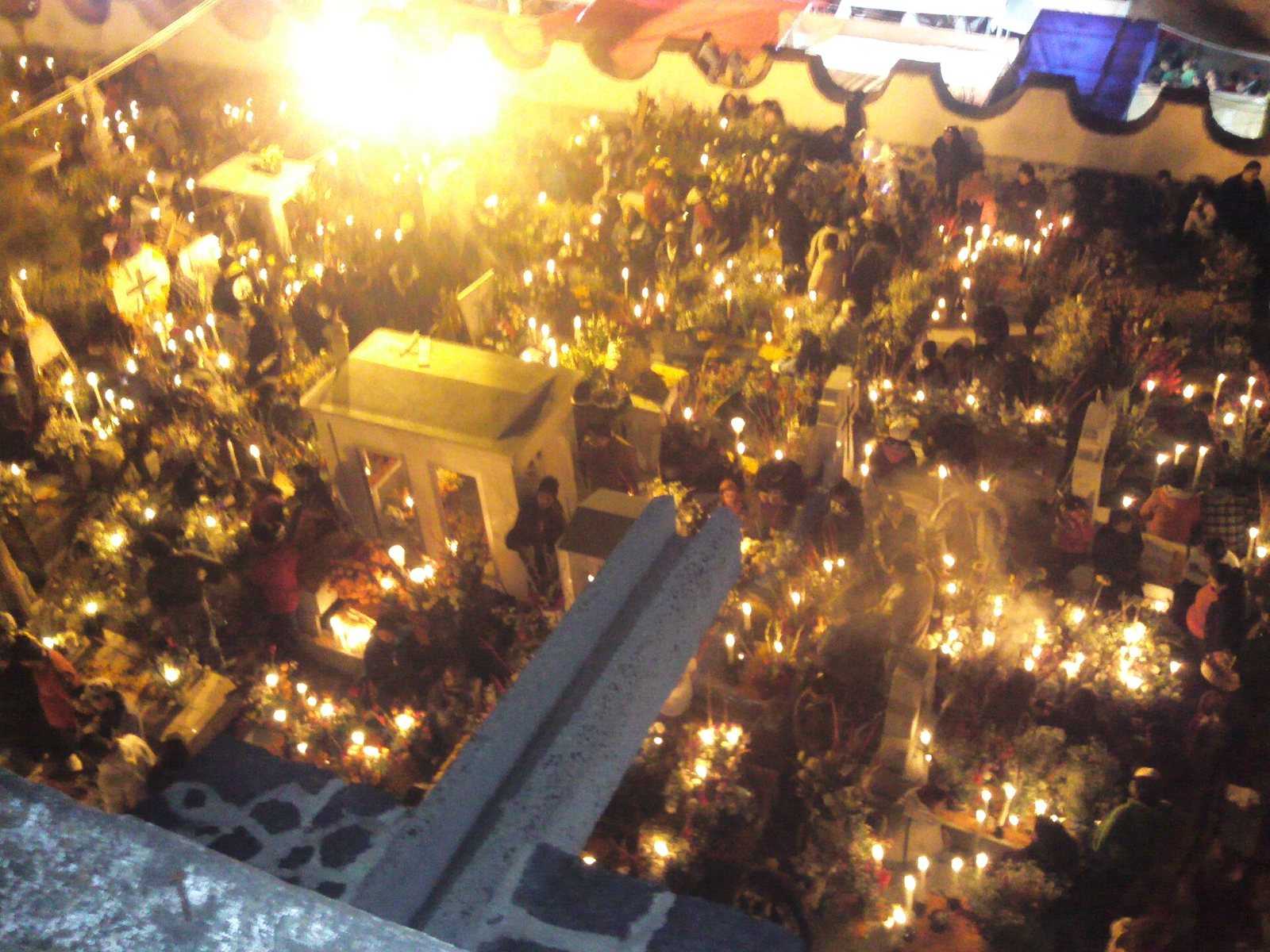
Anthropologist Verónica Zamora Jiménez described the day in an ethnographic study published by INAH, Mexico's national institute of anthropology and history. In the afternoon, families clean the graves and decorate them with flowers, copal and candles. After dark, candles and wax lights are lit on every grave. For the people of Mixquic, the alumbrada marks the farewell of the dead, who return to the place where they stay until the following year. Zamora records the local explanation that the candles light the way for them, and that November 2 is the night they leave.
Mexico City's Culture Secretariat describes the same night as one when the cemetery fills with candlelight. It is beautiful to see, and it draws visitors, but for the families tending those graves it is a goodbye. If you go, ask before photographing anyone, leave the graves and what is on them untouched, and remember that the people around you are remembering someone, not performing.
Yucatán and Campeche: Hanal Pixán and the bones of Pomuch
Among Maya communities in Yucatán, Campeche and Quintana Roo, the observance is commonly called Hanal Pixán or Janal Pixan, "food of the souls." INAH gives its principal dates as October 31 to November 2, and local calendars and family customs can stretch beyond them. Food for the dead is central, as the name says. The full tradition has its own story: read about Hanal Pixán.
In Pomuch, a Maya community in the municipality of Hecelchakán, Campeche, some families prepare in a way that belongs to their own community. INAH describes relatives taking the remains of their dead from the ossuary, brushing the bones carefully, changing the cloth they rest on and returning them to small wooden boxes. The cloths are sometimes hand embroidered with the person's name or with religious designs. It is careful, private work, done by families for their own relatives.
A 2014 article in an INAH journal by Paola Hernández Patricio, Miriam Rea Sunza and Paulina Rodríguez Iglesias connects the practice to Maya identity, agricultural cycles, Catholic liturgy and the ties between families in the community. It is Pomuch's own custom, not something every Yucatecan family does. INAH also notes that in Pomuch the observance can last through November, with graves decorated, fresh food prepared and weekly food set out for the dead.
The Huasteca: Xantolo
In the Huasteca, the region that spreads across parts of Hidalgo, San Luis Potosí, Veracruz, Puebla and Tamaulipas, the major observance of the dead is Xantolo. The word covers many local practices rather than one ritual, and the term and customs differ by Indigenous community. Altars, music, dance, masks, food and the visit of the dead appear again and again.
One documented example comes from the Tepehua community of Pisaflores, in Ixhuatlán de Madero, Veracruz. INAH's 2025 exhibition on how the Tepehua honor their dead described flowers, copal, food, drink, sones, dances and huapangos. Other Huasteca towns keep Xantolo differently, and for details about a particular town, the state, municipal or community cultural office is the best place to ask.
Aguascalientes: a festival for Posada's calaveras
Aguascalientes is the birthplace of the printmaker José Guadalupe Posada, known for his calavera prints. In 1995 the city started the Festival Cultural de Calaveras in his honor. The Secretaría de Cultura's Sistema de Información Cultural lists music, literature, dance, theater, routes through the historic center, popular festivities and altar contests among its events. The official 2026 listing gives October 30 to November 8 as the dates; confirm the schedule with the festival itself before you plan around it.
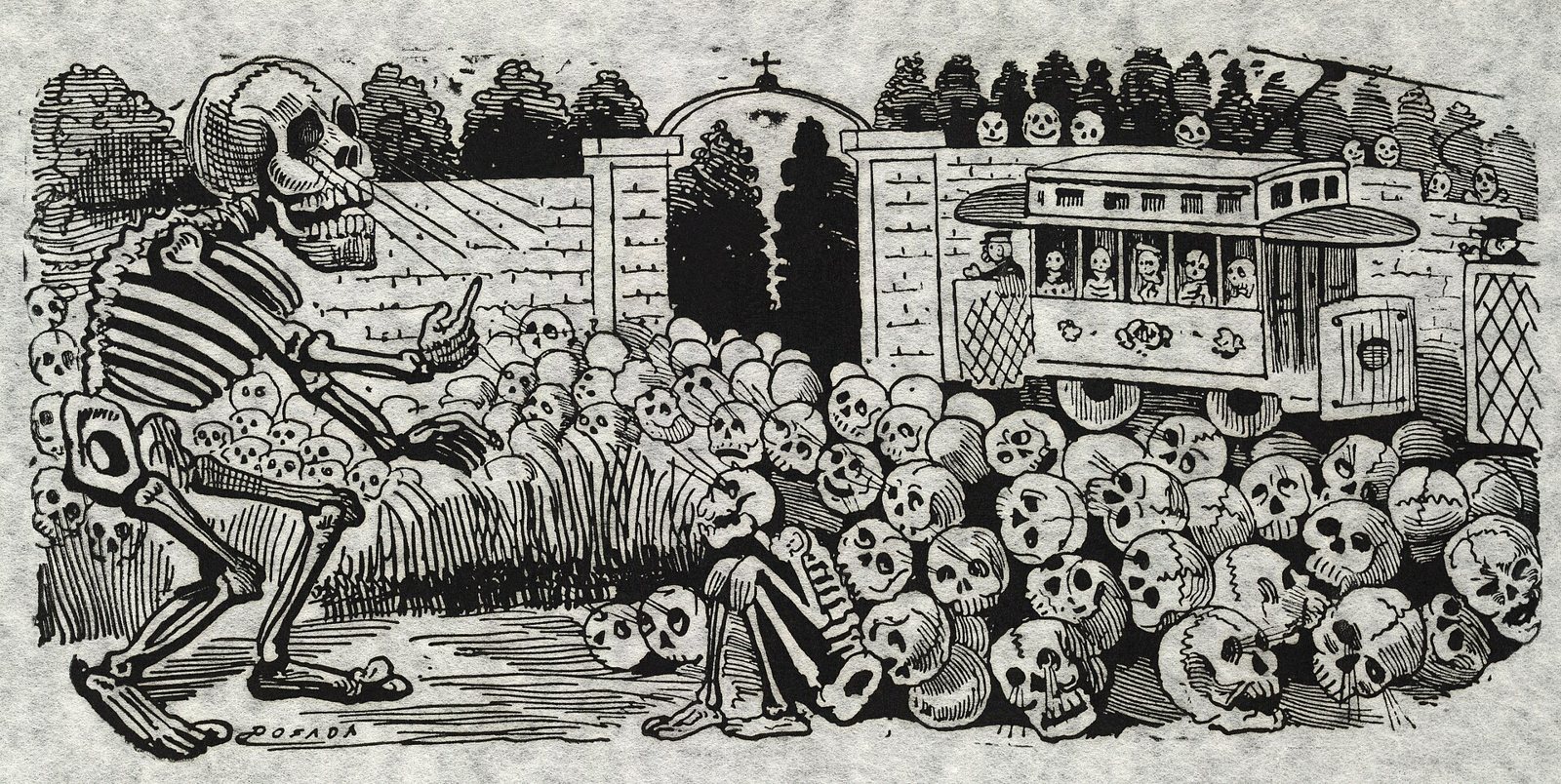
It is a modern public festival built on a local hero, and it sits alongside the household altars and cemetery visits families in Aguascalientes keep on their own.
Mexico City: the Gran Desfile
Mexico City's giant Día de Muertos parade is a modern civic and cultural event. Its format grew in the 2010s, after the 2015 James Bond film *Spectre* showed a fictional Día de Muertos parade in the city, as the Associated Press has reported. The city has kept it going since, and it has grown large: the city government reported that the 2024 Gran Desfile drew about 1.3 million people, with catrinas, masks, floats, music and cempasúchil, the orange marigolds of the season.
So, is the parade traditional? It is a new public event that borrows the holiday's imagery, and it is very popular. The older observances in the city, such as household altars and Mixquic's cemetery alumbrada, continue on their own terms. Parade dates and routes change each year, so confirm them with the Mexico City government.
Modern public events around Día de Muertos
Tap or hover a step to follow the order.
1995
Aguascalientes begins the Festival Cultural de Calaveras to honor José Guadalupe Posada.
2015
The James Bond film Spectre opens with a fictional Día de Muertos parade in Mexico City.
2016 onward
Mexico City develops its own large public parade.
2024
The Gran Desfile draws about 1.3 million people, according to the city government.
2025
Oaxaca's state program runs from October 25 to November 16.
2026
The official listing for Aguascalientes' festival gives October 30 to November 8.
Altars across regions, and the seven-level question
Every region builds altars, and no two look exactly alike. INAH documents many real altars with three or four levels, like the Ocotlán de Morelos altar in Oaxaca with food below, saints in the middle and photographs on top.
You may also hear that an ofrenda should have seven levels. Some Mexican educational and cultural materials, including a document from the Aguascalientes state government, describe the seven levels as stages an alma, a soul, passes through before reaching rest. Other explanations tie the number to the seven deadly sins or to local Indigenous teachings. It is one interpretation among several, taught in some places and not in others. If you want to build one yourself, the guide to making an ofrenda covers the elements families use.
Visiting with care
People planning a visit tend to ask the same things: when it happens, how to behave in a cemetery and whether they can take photographs. The dates change every year, so check the current state, municipal or festival calendar for the place you have in mind. In cemeteries, keep a quiet presence, ask before photographing people, and do not touch the graves, flowers, food or candles families have set out. Many of these nights are family vigils that happen to be open to view. Treat them that way.
If you are in the United States, many cities hold their own public events; see Day of the Dead celebrations in the USA.
How well do you know Día de Muertos by region?
Answer every question to check.
Common questions about Día de Muertos in different regions
How is Day of the Dead celebrated in Oaxaca? (¿Cómo se celebra el Día de Muertos en Oaxaca?)
In Oaxaca de Juárez and the nearby Central Valley towns, families build altars with food, drinks, flowers, candles, copal and photographs, visit the cemetery and join comparsas. In places such as San Agustín Etla they also hold muerteadas, theatrical processions with music, costumes and characters. Customs and dates vary by municipality and by family.
When is the Day of the Dead festival in Oaxaca? (¿Cuándo es el festival de Día de Muertos en Oaxaca?)
The central days are October 31 to November 2, but public programs change every year and differ by municipality. Oaxaca's 2025 state program ran from October 25 to November 16, and the 2024 city program ran from October 26 to November 3. Check the current state or municipal calendar for this year's dates.
What are three traditions of the Day of the Dead?
Three widely documented traditions are building a home altar with food, water, candles, flowers and photographs; visiting and decorating graves; and holding community vigils, processions or dances. Each takes a local form, such as the alumbrada in Mixquic, the Purépecha cemetery vigil on Janitzio and the comparsas and muerteadas of Central Valley Oaxaca.
What do the 7 levels of an ofrenda represent?
There is no single national meaning; some Mexican educational materials teach the seven levels as stages a soul passes through before reaching rest, while others link them to the seven deadly sins or to local Indigenous teachings. Many real altars documented by INAH have three or four levels instead, such as the three-level altar from Ocotlán de Morelos, Oaxaca.
Where to go next
Each of these places adds something to a holiday you may already know well. For the holiday as a whole, start with the guide to Día de Muertos. For the Maya tradition of the Yucatán peninsula, read the full story of Hanal Pixán, and for the skeleton humor that runs through Posada's festival, see calaveras literarias and sugar skulls.